
Fake Grass Installation: Top 5 Tips for Success 2025
Fake grass installation is a practical, cost-effective solution for changing your outdoor space with minimal maintenance. By replacing natural lawns with artificial turf, you gain a vibrant, green lawn that stays lush in every season without the need for watering, mowing, or fertilizing. Here’s a quick overview of what you need to know about fake grass installation:
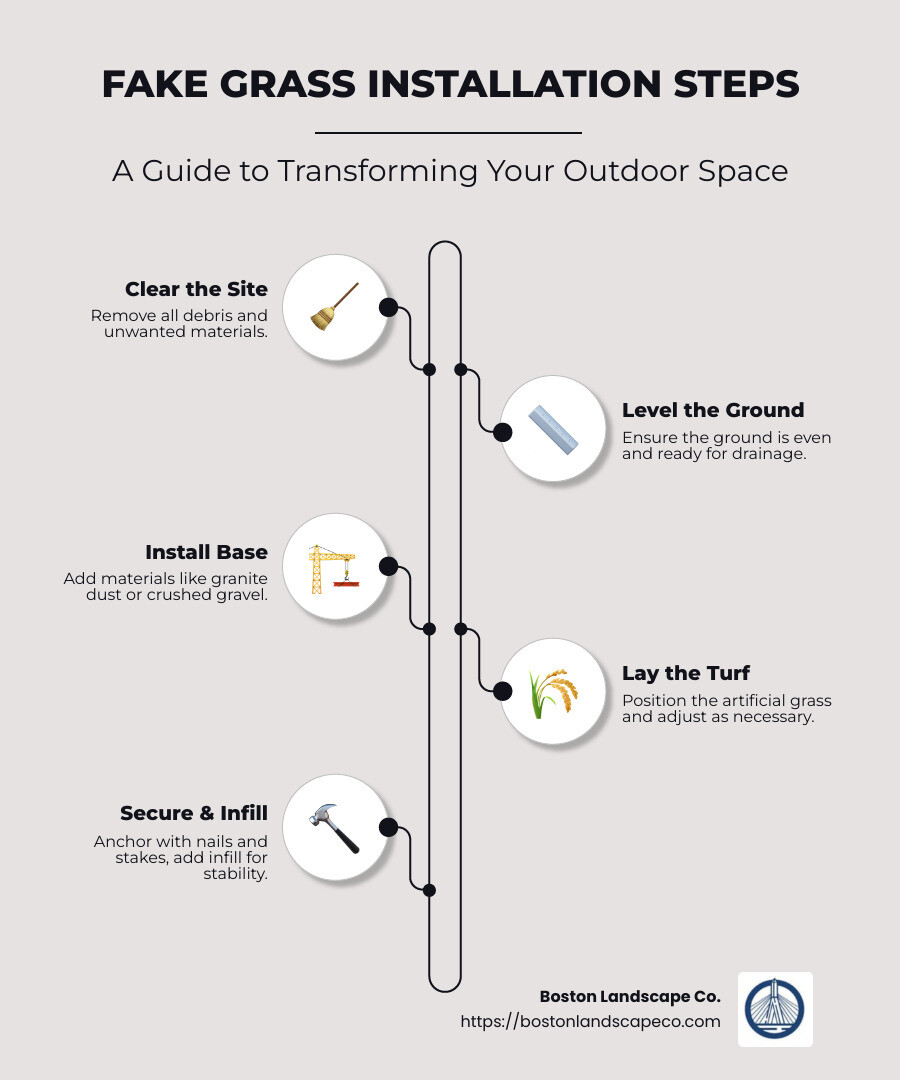
- Choose a site and clear the area of debris.
- Level the ground and install proper drainage.
- Lay down the base using materials like granite dust or crushed gravel.
- Secure the turf with nails or stakes, adding infill as needed.
Artificial turf offers numerous benefits, such as durability, safety, and aesthetic appeal. Ideal for busy homeowners and property managers, it provides a lush look without the hassle of regular upkeep. It’s tough enough to handle heavy foot traffic, making it great for kids, pets, and even various outdoor activities.
I’m Steve Schumacher, owner-operator of Boston Landscape Co. With over 30 years of experience in landscaping, I’ve overseen countless fake grass installation projects around the Greater Boston area. My goal is to provide a seamless blend of beauty and functionality in every outdoor space.
Preparing the Ground for Fake Grass
Before diving into the fake grass installation, it’s crucial to prepare the ground properly. This ensures your artificial turf looks great and lasts for years. Here’s how to get started:
Ground Clearing
First, clear the area of any existing grass, weeds, rocks, and debris. For larger spaces, using a mechanical turf cutter can make this task easier. Removing all organic material is important to prevent any growth that could disrupt the turf later.
Leveling
Once cleared, leveling the ground is the next step. Use a vibrating plate compactor or roller to flatten the soil. This creates a stable base for your turf. Pro tip: Start at the highest point and work outward to ensure the surface is as level as possible.
Drainage
Proper drainage is key to preventing water pooling on your artificial lawn. A slight slope in the base layer helps water flow naturally. This is especially important in areas with heavy rainfall. Consider installing a drainage system if needed.
Tools and Materials Needed
Having the right tools and materials on hand will make the installation process smoother:
- Granite Dust: Provides a solid base and aids in drainage.
- Limestone Dust: Offers stability and helps prevent shifting.
- Crushed Gravel: Adds structure and further improves drainage.
- Sand: Used as a top layer to smooth out the base and support the turf.
Here’s a quick list of tools you’ll need:
- Compactor or Roller: For leveling the ground.
- Utility Knife: To cut and trim the turf.
- Hammer and Nails/Spikes: For securing the turf.
- Drop Spreader: To evenly distribute infill material.
By carefully preparing the ground and using the right materials, you’ll set a strong foundation for your synthetic lawn. This preparation ensures a smooth installation and a beautiful, long-lasting finish. Next, we’ll explore the step-by-step process of laying your fake grass.
Step-by-Step Fake Grass Installation
Laying the Base
Once you’ve prepared the ground, it’s time to lay the base for your fake grass installation. This step is crucial for ensuring stability and longevity.
- Aggregate Layer
Start by spreading a 2- to 4-inch layer of crushed aggregate, like decomposed granite or limestone dust, over the cleared area. This helps with drainage and provides a solid foundation for the turf.
- Depth and Stability
Ensure the aggregate layer is evenly spread and compacted. Use a vibrating plate compactor to achieve a firm and level surface. This prevents future bumps and uneven spots.
- Pro Tip: Lightly wet the area before compacting to help bind the materials together.
- Final Check
Once compacted, the finished grade should be slightly below the surrounding area. This prevents water from pooling on your artificial turf.
Securing the Turf
With the base ready, it’s time to lay and secure the artificial grass.
- DIY Installation
Roll out the turf over the prepared base. If you’re using multiple pieces, ensure the blades of grass face the same direction for a natural look. Use a utility knife to trim the turf to fit your space precisely.
- Pro Tip: Take your time with trimming to ensure a neat finish.
- Nails and Stakes
Secure the turf using 6-inch galvanized nails or stakes. Place them ½ to 1 inch from the edge and every 4 to 6 inches along the perimeter. This keeps the turf in place and prevents shifting.
- Infill Application
Spread infill material, such as silica sand or antimicrobial sand, over the turf. Use a drop spreader for even distribution. The infill helps keep the blades upright and provides cushioning.
- Infill Rate: Apply at a rate of 2 pounds per square foot.
- Pro Tip: Brush the turf with a medium-bristled broom to work the infill into the fibers, brushing against the grain for best results.
By following these steps, your fake grass installation will be secure and durable, providing a lush, green space that requires minimal maintenance. Next, we’ll dive into the cost considerations for installing fake grass.
Cost Considerations for Fake Grass Installation
When planning a fake grass installation, it’s important to understand the costs involved. Let’s break it down into three main areas: installation cost, professional vs DIY, and long-term savings.
Installation Cost
The cost of installing artificial grass can vary widely based on several factors. Here’s a quick breakdown:
- Material Costs: The type of synthetic grass you choose affects the price. Nylon is durable but more expensive, while polyethylene is softer and more affordable. Expect to pay between $3,100 and $8,400 for a typical installation.
- Labor Costs: Professional installation usually ranges from $4 to $25 per square foot. This includes site preparation, laying the turf, and securing it properly.
- Additional Expenses: Don’t forget about the cost of base materials like crushed gravel and sand, which are essential for proper drainage and stability.
Professional vs DIY
Deciding between hiring a professional and doing it yourself can impact your budget and the quality of the installation.
- Professional Installation: Hiring a pro ensures a high-quality finish and saves you time. Professionals have the tools and expertise to handle complex installations, like those on uneven surfaces or around pools.
- DIY Installation: If you’re handy and have the right tools, doing it yourself can save you money. However, it requires time and effort to achieve a professional-looking result. Be prepared for the physical labor involved in preparing the base and securing the turf.
Long-Term Savings
While the initial cost of artificial grass is higher than real grass, the long-term savings make it a smart investment:
- Maintenance Costs: With synthetic turf, there’s no need for mowing, watering, or fertilizing. This means zero yearly maintenance costs compared to natural grass, which can be costly to maintain.
- Water Conservation: Artificial grass helps conserve water, which is especially valuable in areas with water restrictions. This can significantly reduce your water bill.
- Lifespan: A well-installed synthetic lawn can last 15-20 years, providing a lush, green appearance year-round without the hassle of regular upkeep.
By considering these cost factors, you can make an informed decision about your fake grass installation. Next, we’ll address some frequently asked questions about artificial grass installation.
Frequently Asked Questions about Fake Grass Installation
How much does it cost for someone to lay artificial grass?
The cost of professional installation for artificial grass can vary significantly, but let’s break it down to give you a clearer picture:
- Cost per Square Meter: Typically, professional installation costs range from $4 to $25 per square foot. This translates to roughly $40 to $250 per square meter. The wide range accounts for factors like the complexity of the installation site and the quality of the turf chosen.
- Professional Installation Benefits: Hiring professionals ensures the job is done correctly, minimizing the risk of mistakes. They have the expertise to handle challenging terrains and intricate designs, which might be difficult for a DIY enthusiast.
What do you put under artificial grass?
A proper base is crucial for a successful fake grass installation. Here’s what you need:
- Base Materials: The foundation typically consists of crushed gravel or decomposed granite, which provides a stable and well-draining base. These materials help prevent weed growth and ensure the turf remains level over time.
- Drainage Solutions: Good drainage is essential to prevent waterlogging. A layer of sand or limestone dust can be spread over the base materials to aid in drainage. In areas with poor natural drainage, installing a drainage system beneath the turf may be necessary.
Can I install fake grass myself?
Yes, you can install fake grass yourself, but it requires careful planning and the right tools. Here’s how to get started:
- DIY Tips: Begin by clearing the area of any existing grass or debris. Level the ground and ensure proper drainage before laying the base materials. Use a compactor to create a firm foundation.
- Planning: Measure the area accurately to purchase the correct amount of turf. Plan for seams and edges, ensuring a seamless look.
- Tools Needed: Essential tools include a utility knife for cutting the turf, a shovel for base preparation, and a compactor for leveling. For securing the turf, galvanized stakes or nails and a hammer are necessary.
- Physical Labor: Be prepared for some heavy lifting and manual work, especially when preparing the base layer.
By understanding the costs, base materials, and DIY tips, you can make an informed decision about your fake grass installation. Whether you choose to hire professionals or take on the project yourself, the result will transform your outdoor space into a beautiful, low-maintenance oasis.
Conclusion
At Boston Landscape Co., we pride ourselves on changing outdoor spaces into stunning, functional areas that improve the beauty and usability of your property. Our expertise in fake grass installation ensures that you receive a high-quality, long-lasting solution custom to your specific needs.
Why Choose Boston Landscape Co.?
- Comprehensive Services: We offer a full range of landscaping services, from initial design to installation and maintenance. This holistic approach ensures that every aspect of your outdoor project is handled with precision and care.
- Expertise in Artificial Turf: Our team has experience in installing synthetic lawns that blend seamlessly with the local aesthetics of Boston and its surrounding areas. We understand the unique climate and soil conditions, allowing us to provide installations that stand the test of time.
- Quality Assurance: We use only the best materials and follow industry-leading practices to ensure your artificial grass looks and feels natural. Our commitment to quality means that your new lawn will remain vibrant and green, regardless of the season.
- Customer-Centric Approach: At Boston Landscape Co., your satisfaction is our priority. We work closely with you to understand your vision and bring it to life, ensuring that the final result exceeds your expectations.
Choosing Boston Landscape Co. for your artificial turf needs means investing in a company that values craftsmanship, attention to detail, and customer satisfaction. Let us help you create an outdoor space that not only looks great but is also easy to maintain.
For more information on our services and to see how we can improve your property, visit our Synthetic Artificial Lawns page. Let’s work together to make your dream outdoor space a reality!
