
Drip Irrigation System Installation 2025: Easy DIY
Why Drip Irrigation System Installation is a Game-Changer for Your Garden
A drip irrigation system installation delivers water directly to plant roots, using up to 50% less water than traditional sprinklers. This efficient method eliminates waste from evaporation and wind, targeting only your plants’ root zones, not surrounding weeds or walkways.
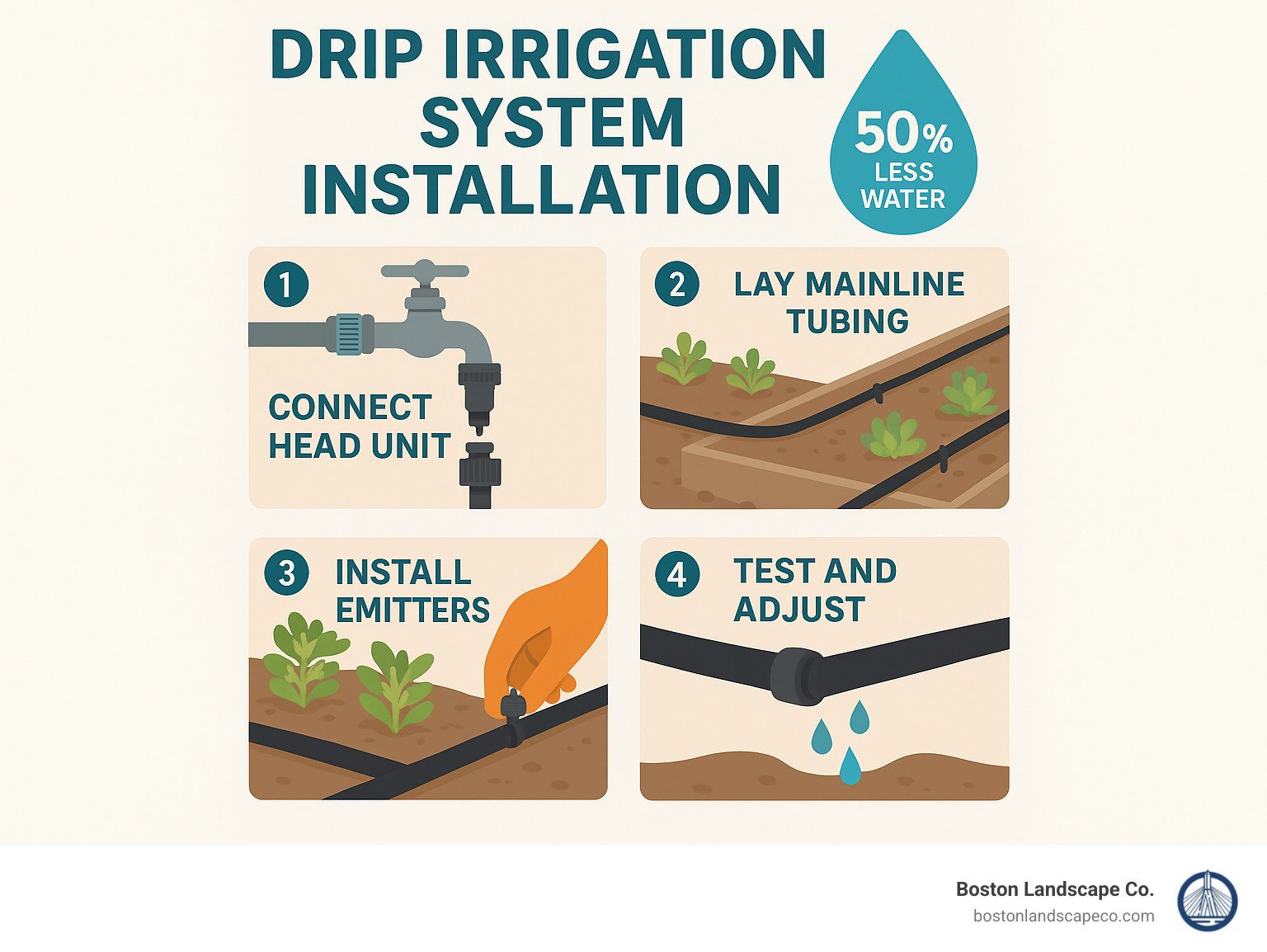
Quick Installation Overview:
- Connect the head unit: Attach the backflow preventer, filter, and pressure regulator to your outdoor faucet.
- Lay mainline tubing: Run 1/2-inch tubing along garden beds and secure it with stakes.
- Install emitters: Punch holes in the tubing and attach drippers or micro-sprayers near each plant.
- Test and adjust: Flush the system, cap the ends, and check for proper water flow.
You can install a basic drip system in just a few hours with no special plumbing skills. For homeowners in the Greater Boston area, water conservation is key. Drip irrigation not only saves water but also promotes healthier plants by keeping foliage dry, which helps prevent fungal diseases.
With over 30 years of landscaping experience at Boston Landscape Co., I’ve seen many homeowners succeed with this as their first major garden project. This guide will walk you through every step to ensure your DIY installation is a success.
Explore more about drip irrigation system installation:
- how are irrigation systems installed
- watering and irrigation systems
- Lawn watering system installation
Why Choose a Drip Irrigation System?
For smart homeowners across Massachusetts, drip irrigation system installation is a popular choice because it solves the problem of water waste from traditional sprinklers. Instead of spraying water everywhere, drip systems deliver it precisely to the plant’s root zone.
Key benefits include:
- Water Efficiency: This targeted approach leads to up to 50% water savings compared to conventional methods, which can lower your water bill.
- Reduced Evaporation: By applying water directly to the soil, you lose very little to wind and evaporation.
- Minimized Weed Growth: Since water only goes to your desired plants, surrounding weeds don’t get the moisture they need to thrive, meaning less weeding for you.
- Healthier Plants: Direct root watering encourages deeper, stronger root systems. Keeping foliage dry also prevents fungal disease, a common issue with overhead watering.
- Adaptability: Drip systems are highly customizable for any Landscape Design, from container plants and vegetable rows to established shrubs and trees.
- Environmental Benefits: Conserving water reduces strain on local water supplies.
Understanding the Essential Components
Familiarizing yourself with the parts of a drip irrigation system installation will make the process much smoother. Each component has a specific role in creating an efficient watering system.
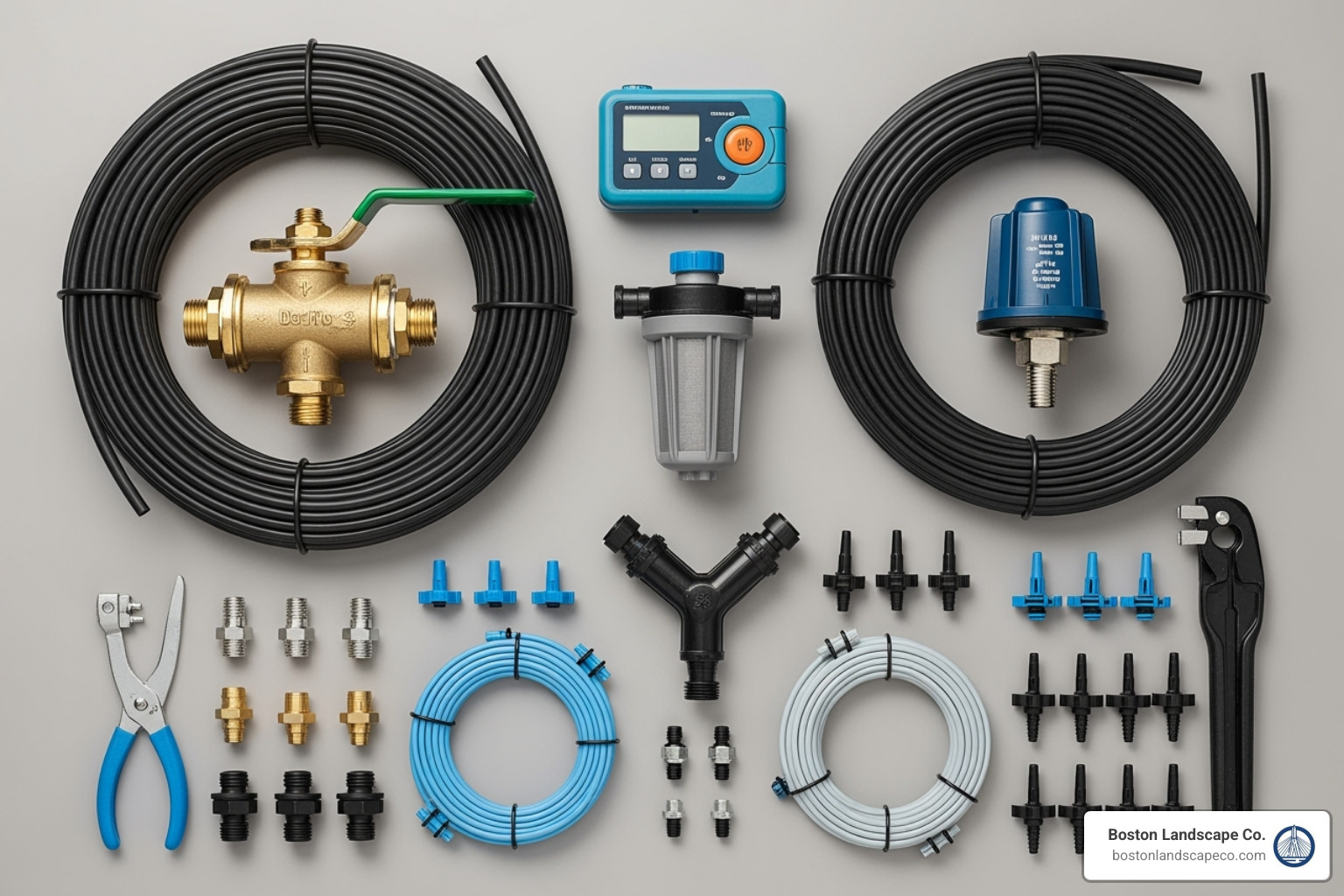
- Backflow Preventer: Prevents irrigation water from flowing back into your home’s drinking water. This is a critical safety component.
- Water Timer: Automates your watering schedule, ensuring consistency even when you’re away.
- Filter: Catches tiny particles in the water that could clog emitters.
- Pressure Regulator: Reduces high household water pressure to the low pressure (20-30 PSI) that drip systems require.
- Tubing Adapter: Connects the head assembly (filter, regulator, etc.) to the mainline tubing.
- Mainline Tubing: The primary 1/2-inch tubing that carries water from the source throughout your garden.
- Distribution Tubing: Smaller 1/4-inch tubing that branches off the mainline to reach individual plants.
- Emitters and Drippers: Small devices that release water at a slow, precise rate (e.g., 0.5 to 2 gallons per hour).
- Micro-Sprayers: An alternative to drippers that creates a gentle spray for ground cover areas.
- Barbed Connectors and Fittings: Used to connect tubing sections, create branches, and make turns.
- Tubing Stakes: Secure the tubing to the ground, keeping your layout in place.
- Hole Punch Tool: Creates clean holes in the mainline tubing for inserting emitters and fittings.
- End Caps or Clamps: Seal the ends of tubing runs to build pressure in the system.
Planning and Designing Your System
Proper planning is the key to a successful drip irrigation system installation. A good plan prevents mid-project trips to the store and ensures your system works efficiently.
- Sketch Your Garden: Draw a simple bird’s-eye view of your garden, marking the locations of plants, trees, and garden beds. This will be your roadmap for laying out the tubing.
- Measure the Area: Measure the spaces you plan to irrigate to estimate how much tubing and how many emitters you’ll need.
- Group Plants by Water Needs: Group thirsty plants like tomatoes separately from drought-tolerant plants like lavender. This allows you to create different watering “zones” for plants with similar needs. Also, consider sun and shade exposure, as sunny areas will require more water.
- Calculate Water Flow Rate: Use the bucket test method to determine how much water your faucet can supply. Time how long it takes to fill a 5-gallon bucket. If it takes one minute, your flow rate is 5 gallons per minute (GPM), or 300 gallons per hour (GPH). This number determines how many emitters your system can support at once.
- Consider Water Pressure: Most homes have 40-80 PSI, but drip systems need 20-30 PSI. A pressure regulator is essential to step down the pressure.
- Assess Your Soil Type: Soil type affects emitter spacing and watering duration. Sandy soil drains quickly, so emitters should be closer (11-12 inches). Clay soil absorbs water slowly, so emitters can be spaced further apart (20-24 inches). Loamy soil is in the middle (17-18 inches).
| Soil Type | Emitter Flow Rate (GPH) | Emitter Spacing (inches) |
|---|---|---|
| Sandy | 1 – 2 | 11 – 12 |
| Loamy | 0.5 – 1 | 17 – 18 |
| Clay | 0.5 | 20 – 24 |
For detailed planning resources, you can Download The Guide.
Essential Tools and Materials for Drip Irrigation System Installation
For a drip irrigation system installation, you won’t need expensive equipment. Most tools are common household items.
- Essential Tools: Tubing cutter (or sharp scissors), hole punch tool, tape measure, safety glasses, and work gloves. A shovel or trowel is optional if you plan to bury tubing.
- System Components: You can buy a pre-packaged drip irrigation kit or purchase individual components for a more customized layout. Kits are great for beginners, while individual parts offer more flexibility.
Step-by-Step Drip Irrigation System Installation Guide
This section provides a straightforward guide to your drip irrigation system installation. The process is manageable for most beginners and can typically be completed in an afternoon. For visual learners, video guides on Youtube can provide additional support.
Step 1: Assemble the Head Unit at the Water Source
The head unit is the control center of your system. It’s crucial to connect the components in the correct order for safe, efficient operation.
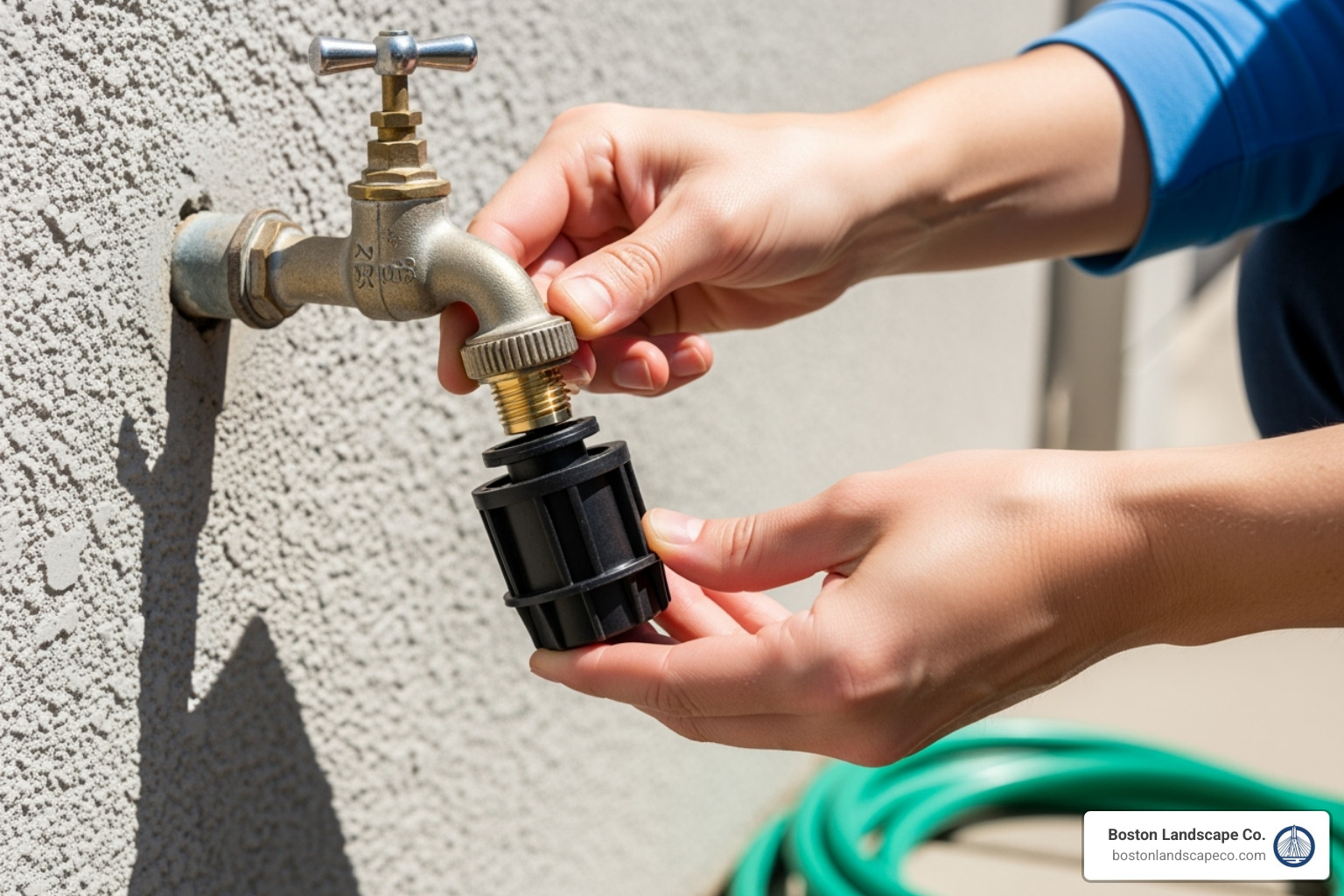
- Backflow Preventer: Attach this directly to your outdoor faucet to protect your drinking water.
- Filter: Screw the filter on next. Ensure the arrow indicating water flow points away from the faucet.
- Pressure Regulator: Attach this to reduce your home’s water pressure to a drip-safe level (20-30 PSI).
- Tubing Adapter: This final piece connects the head assembly to your mainline tubing.
For convenience, consider adding a Y-splitter to keep one side of the faucet free for a hose and an automatic timer to automate your watering schedule.
Step 2: Lay Out the Mainline and Branch Tubing
Now it’s time to run the tubing that will carry water to your plants. A helpful tip: let your 1/2-inch mainline tubing sit in the sun for an hour to make it more flexible and easier to work with.
- Connect the mainline tubing to the tubing adapter on your head assembly.
- Run the tubing along your garden beds according to your plan.
- Secure the tubing every few feet with tubing stakes, especially around curves.
- To create branches, cut the tubing and insert T-fittings. For sharp 90-degree turns, use elbow fittings to prevent kinks that restrict water flow.
Step 3: Install Emitters and Distribution Lines
This is where you bring water directly to your plants.
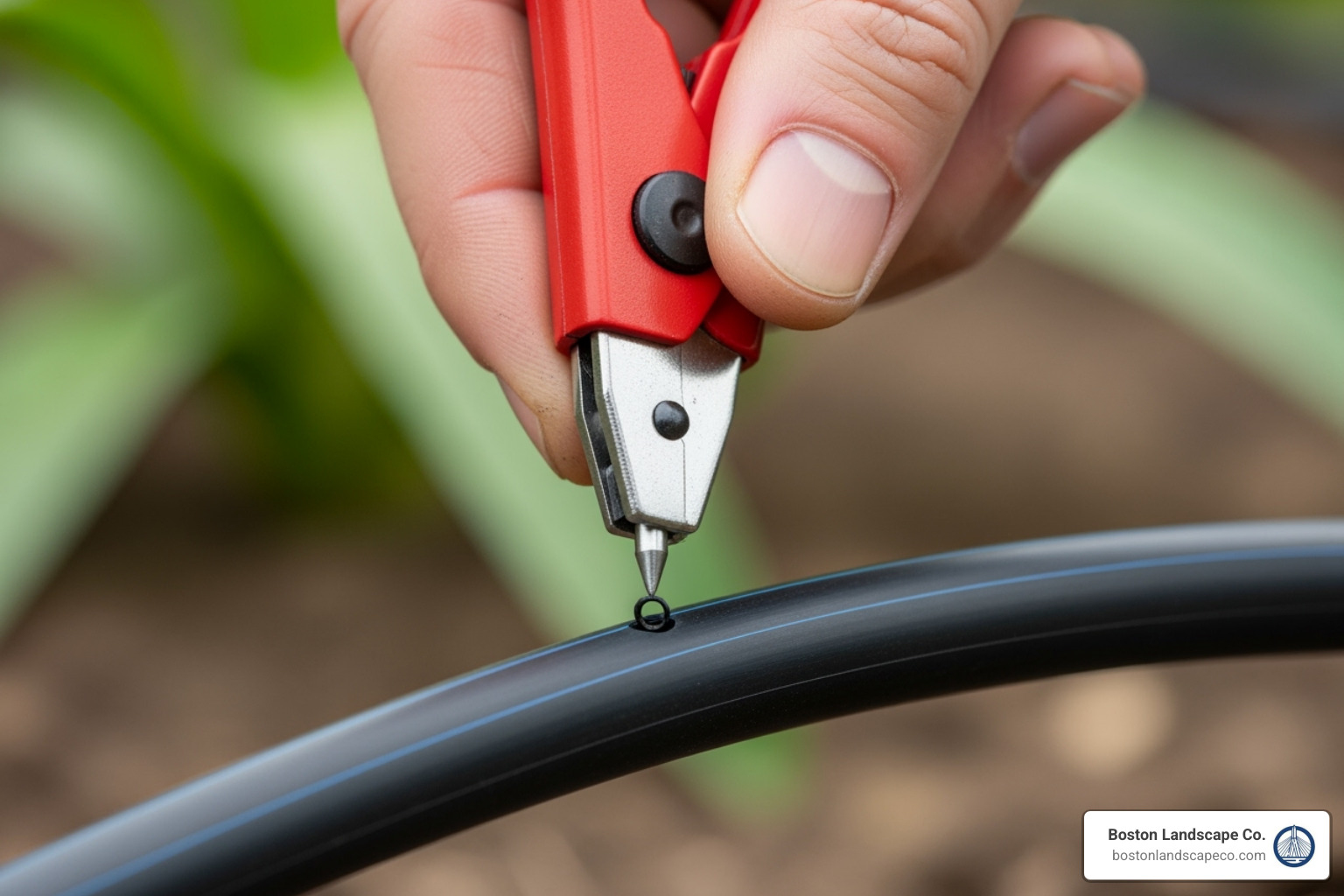
- Use the hole punch tool to make holes in the mainline tubing near each plant or watering zone.
- Firmly insert a barbed connector into each hole.
- For plants not located directly next to the mainline, attach a length of 1/4-inch distribution tubing to the barbed connector and run it to the plant’s base.
- Attach an emitter to the end of the distribution tubing or directly into the mainline’s barbed connector.
Emitter placement depends on the plant. For trees and large shrubs, use multiple emitters around the drip line (the edge of the canopy). For vegetable rows, space emitters according to your soil type. For container plants, run a dedicated 1/4-inch line to each pot.
Step 4: Flush, Cap, and Test the System
This final step ensures your system is clean and working correctly.
- Flush: Before capping any ends, turn the water on slowly and let it run for several minutes to flush out any dirt or debris from the tubing.
- Cap: Once the water runs clear, turn it off. Seal the end of each tubing run with an end cap or figure-eight clamp.
- Test: Turn the water back on slowly. Walk the length of your system to check for leaks at all connections. Ensure each emitter is delivering a slow, steady drip that soaks into the soil without creating runoff.
Congratulations! You have completed your drip irrigation system installation.
System Maintenance and Troubleshooting
With a little regular attention, your drip irrigation system will perform reliably for years. Maintenance is simple and requires no special skills.
- Clean the Filter: Check the filter monthly during the growing season. Unscrew the housing, remove the screen, and rinse it to prevent clogs.
- Make Seasonal Adjustments: Increase watering duration during peak summer heat and reduce it in the cooler spring and fall months. An automatic timer makes this easy.
- Winterize the System: In Massachusetts, winterization is crucial. Before the first hard freeze, disconnect the system from the faucet, drain all tubing, and store the timer, filter, and head assembly indoors.
- Perform Regular Inspections: Walk your system monthly to check for damage, kinks, or clogged emitters. Catching problems early prevents bigger issues later.
- Expand as Needed: Drip systems are easy to modify. To add a new plant, simply punch a new hole and add an emitter. To add a new garden bed, extend the mainline with a T-fitting. For homeowners who prefer professional upkeep, our Lawn Maintenance services can include seasonal irrigation checks.
Common Problems During Drip Irrigation System Installation
Most issues that arise during a drip irrigation system installation are easy to fix. For visual aids, How to Install a Drip Irrigation System (with Pictures) – wikiHow offers helpful photos.
- Clogged Emitters: This is the most common issue. First, clean your main filter. If an emitter is still clogged, try cleaning it with a paperclip or simply replace it.
- Low Water Pressure or Uneven Watering: Ensure your water source is fully on. Check for kinks in the mainline tubing. If you’ve added too many emitters, your system may exceed your faucet’s flow rate. The solution is to divide your system into two or more zones and run them at different times.
- Leaks at Fittings: A leak usually means a fitting needs to be pushed in more firmly. For threaded connections, ensure the hose washer is in place or re-apply Teflon tape. Avoid over-tightening plastic parts.
- Tubing Blowouts: Fittings that pop off or burst tubing usually indicate that the water pressure is too high. Check that your pressure regulator is installed correctly and functioning.
- Mistakes: If you punch a hole in the wrong place, use a “goof plug” to seal it.
Frequently Asked Questions about Drip Irrigation
Here are answers to some of the most common questions we hear about drip irrigation system installation.
How much does a DIY drip irrigation system cost?
The cost of a DIY drip irrigation system installation depends on your garden’s size and the complexity of the system. Based on internet data, materials can range from around $40 for a simple starter kit to $300 or more per 100 square feet for a more comprehensive system. These are average estimates, and actual costs may differ significantly based on your specific needs and component choices.
Start small with a single garden bed and expand later. A modest initial investment can be built upon over several seasons.
How long should I run my drip irrigation system?
This depends on your soil type, plants, and the weather. A good starting point is 20-30 minutes, 2-3 times per week. Then, adjust based on observation.
- Check the soil: A few hours after watering, dig 4-6 inches down. The soil should be moist, not soggy. Adjust watering time accordingly.
- Consider soil type: Clay soils hold water longer and need less frequent, deeper watering. Sandy soils drain quickly and benefit from more frequent, shorter watering cycles.
Deep, infrequent watering is generally best as it encourages strong, drought-resistant root systems.
Can I connect a drip system to my existing sprinklers?
Yes, this is an excellent way to improve water efficiency in specific areas. You can convert a sprinkler head to a drip line using a conversion kit.
The process involves removing the existing sprinkler head and attaching a special adapter that includes a filter and a pressure regulator. From there, you can connect your drip tubing. This allows you to keep your lawn sprinklers for turf areas while using precise drip irrigation for garden beds, shrubs, or perennial gardens, all on your existing irrigation system.
Conclusion
You now have the knowledge to complete a drip irrigation system installation, a project that can save up to 50% more water than traditional sprinklers. This is more than just a garden upgrade; it’s a smarter way to care for your landscape, saving you money and protecting the environment.
The benefits are clear: healthier plants, reduced water waste, fewer weeds, and freedom from daily hand-watering. Completing this empowering DIY project provides a great sense of accomplishment and delivers results season after season.
While many homeowners in the Greater Boston area enjoy this DIY project, we understand that some situations require professional expertise. For large properties, complex layouts, or as part of a larger landscaping projects, professional help ensures efficiency and longevity.
Boston Landscape Co. offers expert irrigation solutions custom to New England’s climate and soil conditions. We design and install systems that keep gardens from Stoneham to Wellesley thriving with minimal fuss.
Whether you choose the DIY route or seek professional services, you’re making a wise investment in your landscape’s health. Contact us for a professional irrigation system installation that guarantees a lush, healthy, and water-efficient outdoor space.
