
Why Winter Weather Can Freeze Your Business Operations
Snow removal for businesses is critical to maintaining operations, protecting employees and customers, and avoiding costly liability claims during winter months. Here’s what you need to know:
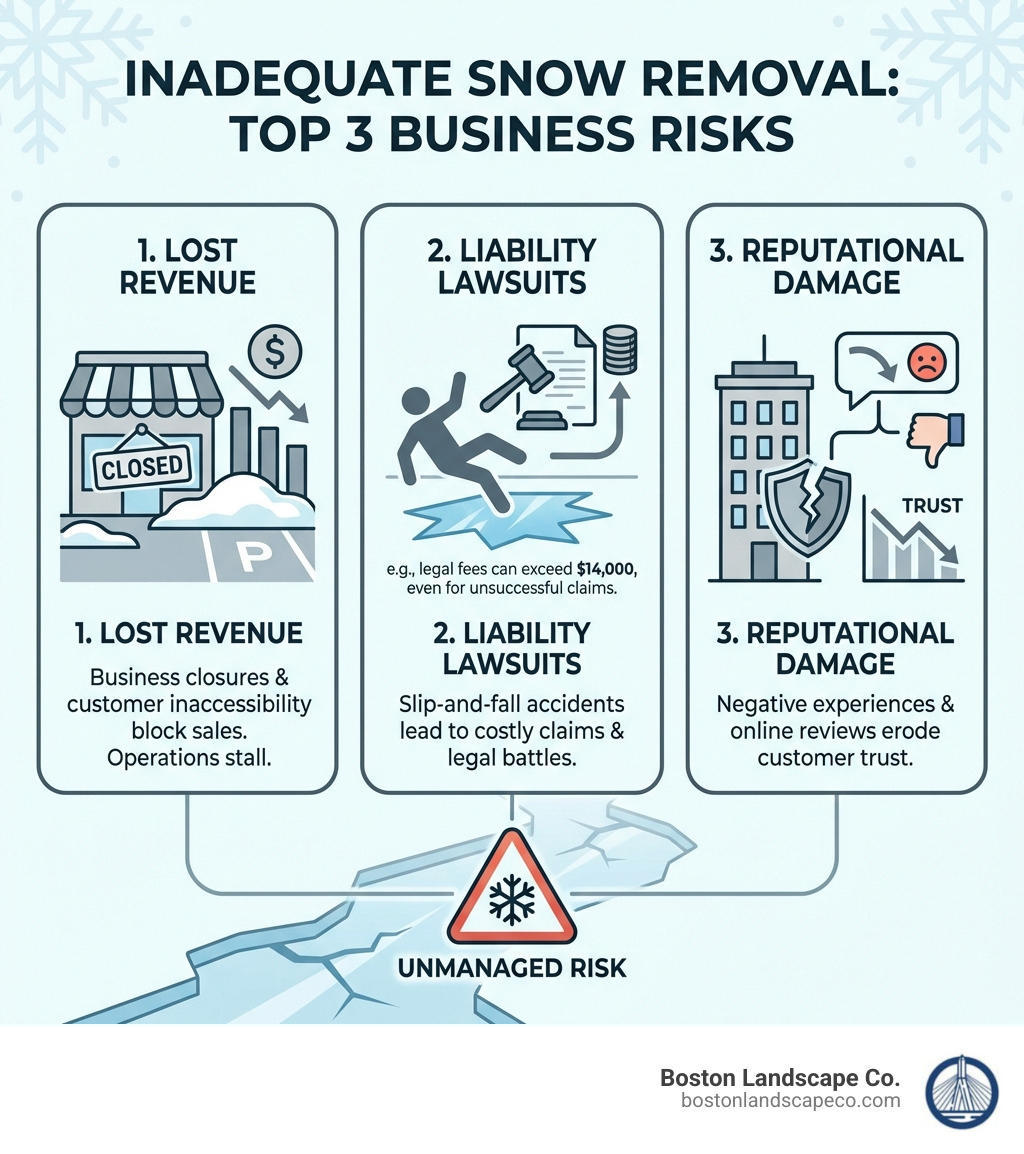
- Safety First: Clear walkways, parking lots, and entryways prevent slip-and-fall accidents that can cost your business $14,000-$25,500 in legal fees alone—even for unsuccessful claims.
- Legal Compliance: Many municipalities require property owners to clear sidewalks by 10 AM following a snowfall, with fines for non-compliance.
- Business Continuity: Blocked entrances and unsafe conditions can force closures, costing thousands in lost revenue per day.
- Proactive Planning: Start procurement in spring or summer to secure reliable contractors, better pricing, and priority service when storms hit.
Winter weather in the Boston area can be unpredictable. One day you’re looking at clear roads and accessible parking lots. The next, eight inches of snow have buried your entrances, and your first customers are arriving in two hours. For businesses, this isn’t just an inconvenience—it’s a threat to operations, safety, and your bottom line.
Even minor frost can lead to costly slip-and-fall claims. In some regions, even unsuccessful claims drain businesses of tens of thousands in legal fees and administrative burden. When claims succeed, settlements can reach hundreds of thousands of dollars, not including the long-term impact of rising insurance premiums. Add in potential fines for violating local snow removal bylaws, and the cost of not having a solid snow management plan becomes painfully clear.
The good news? With proactive planning and the right commercial snow removal partner, you can keep your business running smoothly all winter long. This means starting your procurement process well before the first flake falls, understanding your contract options, and knowing exactly what triggers should activate your snow removal service.
I’m Steve Schumacher, owner-operator of Boston Landscape Co. since 1991, and over three decades, we’ve helped countless businesses maintain safe, accessible properties through comprehensive snow removal for businesses and ice management programs. Our approach focuses on proactive planning, reliable execution, and keeping your operations moving when winter hits hardest.
Important snow removal for businesses terms:
- commercial building maintenance costs
- commercial property maintenance inspection checklist
- commercial property repairs and maintenance
The Winter Gauntlet: Key Challenges and Liabilities for Businesses
Winter in Massachusetts can be a beautiful sight, but for businesses, it often feels like navigating a treacherous obstacle course. The primary challenges businesses face with snow removal for businesses include operational disruptions, ensuring the safety of employees and customers, and the potentially devastating financial and legal implications of slip-and-fall accidents.
Imagine your busiest morning, but customers can’t access your parking lot, or your employees are delayed because the sidewalks are impassable. This isn’t just an inconvenience; it’s lost revenue and a hit to productivity.
The High Cost of Inadequate Snow Removal for Businesses
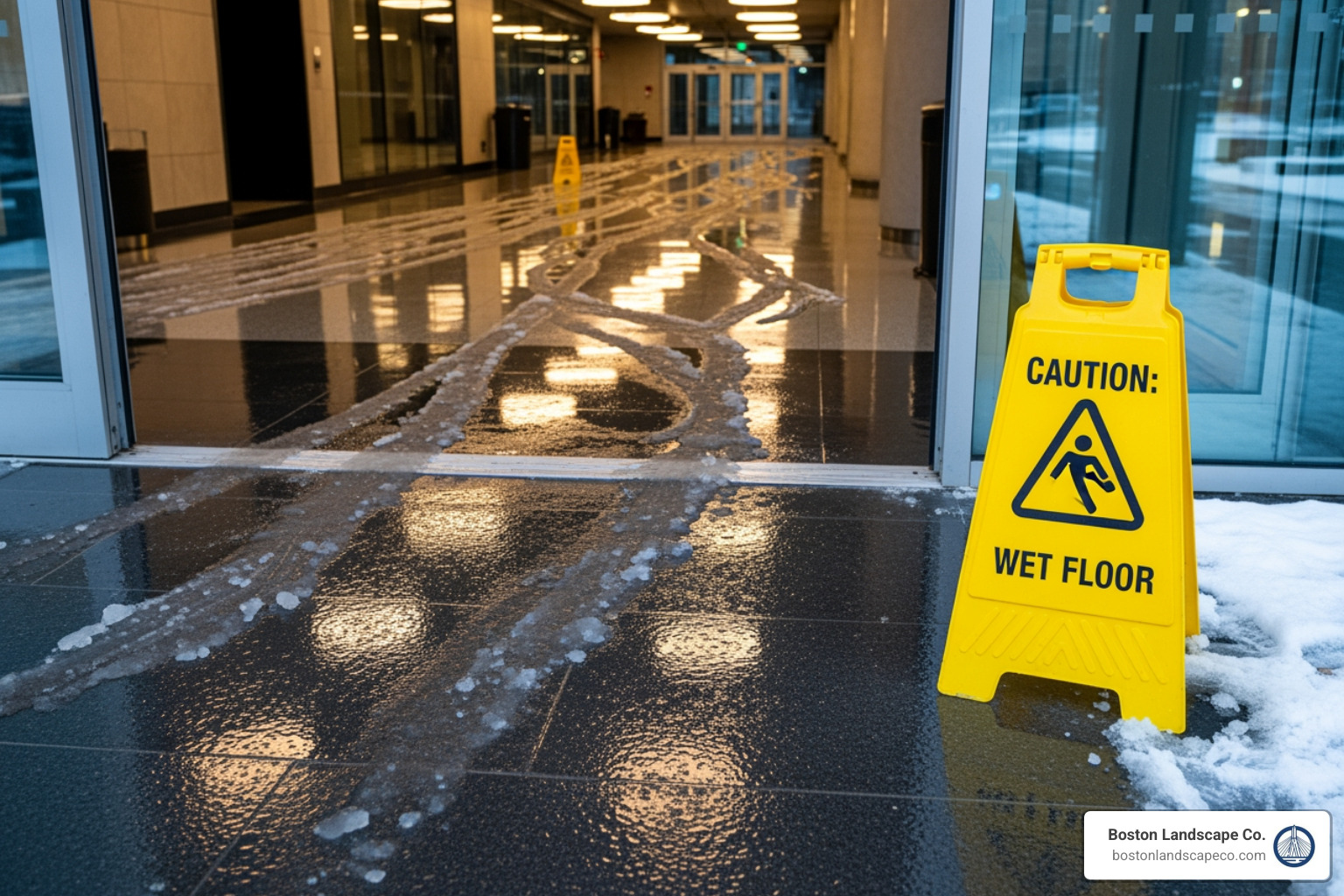
The accumulation of snow and ice on walkways, stairs, driveways, and parking lots can lead to unsafe conditions and slip-and-fall injuries. These incidents are not just unfortunate accidents; they can quickly escalate into serious legal and financial burdens for your business.
We know that even minor frost can create significant hazards. In the Boston area, even unsuccessful slip-and-fall claims can drain a business of tens of thousands of dollars in legal fees, insurance headaches, and administrative burden. When these claims do succeed, settlements can soar to hundreds of thousands of dollars, not including the long-term impact of rising insurance premiums. This is why addressing potential lawsuits, and insurance headaches is paramount for any business operating in snowy climates.
Beyond the direct costs of litigation, businesses also face potential fines for failing to comply with local bylaws. Many municipalities, including those in our service area like Boston, Medford, and Waltham, require property owners and tenants to clear snow and ice from sidewalks by a certain time (often by 10 am the morning following a snowfall). Failure to do so can result in significant fines, adding another layer of financial risk.
Moreover, inadequate snow removal for businesses can severely damage your reputation. Customers and employees expect a safe environment. A property that consistently struggles with snow and ice sends a message of carelessness, which can deter potential clients and even impact employee morale and retention.
Understanding Winter’s Hazards
To effectively manage snow and ice, we must first understand the specific hazards winter throws our way:
- Heavy Snowfall: While seemingly straightforward, heavy snowfall can quickly overwhelm in-house efforts or unprepared contractors, leading to prolonged closures and accessibility issues.
- Ice Storms: These are particularly insidious. Freezing rain and freezing drizzle (distinguished only by the size of the drops) fall as liquid and freeze on contact with surfaces, creating a slick, treacherous glaze that’s incredibly difficult to remove.
- Drifting Snow: Even after the snow stops falling, strong winds can cause snow to drift, piling up in unexpected areas like building entrances, loading docks, and fire exits, creating new hazards.
- Wind Chill: Even if the ambient temperature is relatively mild, the wind chill can make conditions feel much colder, increasing the risk of frostbite and hypothermia for anyone exposed, including your employees and snow removal crews.
- Black Ice Formation: This nearly invisible layer of ice is one of winter’s most dangerous hazards. It often forms when melted snow refreezes on pavements or when freezing drizzle and freezing rain occur. Black ice can turn your parking lot into a skating rink, leading to severe slip-and-fall incidents.
Navigating these challenges requires foresight, the right equipment, and a reliable partner.
Proactive Planning: Your Year-Round Strategy for Snow Removal for Businesses
The biggest problem with commercial snow removal isn’t the snow itself; it’s often the procurement process, specifically waiting too long to hire a contractor. This can lead to less competitive pricing, potential for property damage, and unclear expectations.
When to Start Planning
We can’t stress this enough: the best time to start planning for snow removal for businesses is not when the first snowflake falls. It’s during the warm months, ideally starting the process as early as May and no later than July. This allows ample time for evaluation and contract finalization.
By planning ahead, you gain several significant benefits:
- Access to Top Contractors: Reputable snow removal companies are often booked solid by late summer or early fall. Starting early ensures you have your pick of experienced professionals, like us, who have the resources and expertise to handle the toughest New England winters.
- Better Pricing and Terms: When contractors aren’t scrambling to fill their schedules, they’re more likely to offer competitive rates and flexible contract terms. Waiting until the last minute often means paying a premium for whatever service you can find.
- Thorough Evaluation: An early start gives you the luxury of time to properly vet potential contractors, review their proposals, check references, and ensure they meet your specific needs.
- Peace of Mind: Knowing your snow management is handled before winter arrives frees you up to focus on your core business operations, rather than worrying about the weather forecast.
The Critical Role of Pre-Season Site Visits
One of the most crucial steps in proactive planning is a comprehensive pre-season site visit. This isn’t just a quick walk-around; it’s a detailed assessment conducted by our experienced team, ideally on a sunny day when every detail of your property is visible.
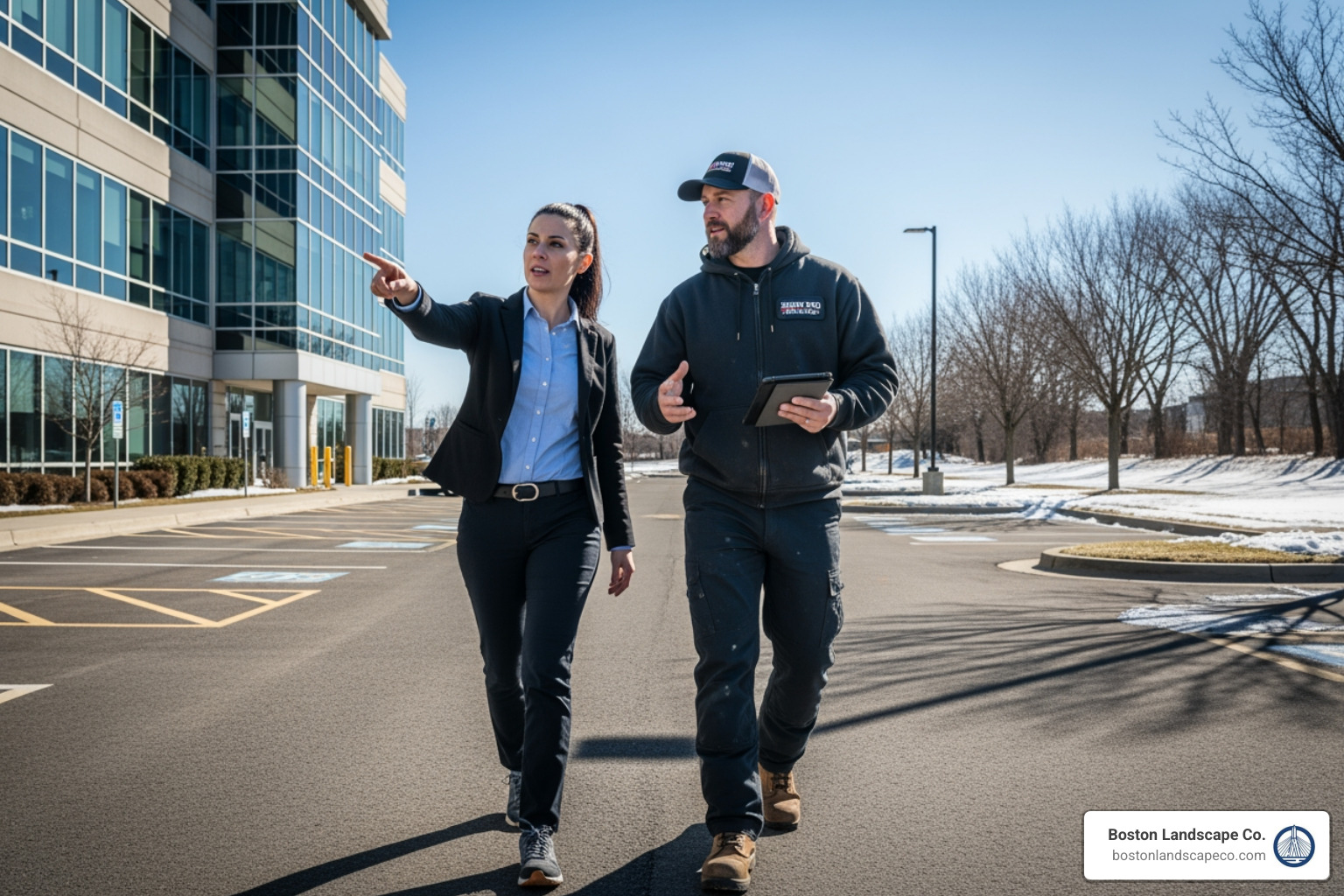
During these visits, we work closely with you to:
- Map the Property: We create detailed maps of your property, marking all areas that require snow clearing, including parking lots, sidewalks, entryways, loading docks, and emergency exits.
- Identify Existing Damage: We document any existing cracks, potholes, or landscape damage. This protects both parties by preventing disputes over damage caused during snow removal.
- Locate Key Features: We pinpoint crucial elements like fire hydrants, storm drains, sensitive landscaping, and potential obstacles. This ensures these areas remain accessible and protected throughout the winter.
- Plan Snow Pile Locations: We determine strategic locations for snow piles that won’t obstruct visibility, block access, or interfere with drainage. For properties with limited space, we discuss snow hauling options.
- Assess Traffic Flow: Understanding your business’s peak traffic times helps us schedule services to minimize disruption. For example, a coffee shop might need its parking lot cleared before dawn, while a retail store might prioritize clearing before opening hours.
- Discuss Hardscaping Protection: If your property features decorative elements like pavers, retaining walls, or other hardscaping, we’ll discuss specific measures to protect them from snow removal equipment.
These detailed site assessments are key to developing a customized and effective snow management plan, and they form the foundation of a solid contract. For more information on year-round property needs, you can explore our resources on commercial property maintenance.
Crafting the Right Agreement: Contracts and Service Models
Choosing the right snow removal partner is only half the battle; ensuring you have the right agreement in place is equally vital. A well-structured contract defines expectations, outlines responsibilities, and protects your business.
Proactive Contract vs. On-Demand Service
When it comes to snow removal for businesses, you generally have two main service models: proactive (seasonal) contracts and on-demand (per-event) services. Understanding the differences is crucial for making the best decision for your business.
| Feature | Proactive (Seasonal) Contracts | |
|---|---|---|
| Cost Predictability | High (fixed price for the season) | Low (variable pricing based on each snow event) |
| Service Priority | High (contracted clients typically get priority) | Low (often serviced after contracted clients) |
| Response Time | Fast (pre-scheduled or automatic dispatch based on triggers) | Slower (dependent on availability and queue) |
| Overall Reliability | High (guaranteed service as per contract) | Variable (subject to demand and contractor availability) |
For most businesses in the Boston area, a proactive, seasonal contract is the most reliable option. It ensures your property is always a priority, minimizing downtime and liability risks. Residential vs. Commercial Snow Removal Best Practices highlights that commercial jobs often necessitate immediate snow removal, especially for critical facilities.
Key Components of a Comprehensive Contract for Snow Removal for Businesses
A robust snow removal for businesses contract is your blueprint for a smooth winter. It should leave no room for ambiguity. Here’s what we ensure is included in our agreements:
- Scope of Work: Clearly defines all areas to be serviced (parking lots, sidewalks, entryways, loading docks, fire lanes) and the specific services to be performed (plowing, shoveling, de-icing, snow hauling).
- Service Triggers: Specifies the conditions that activate service, such as a set amount of snowfall (e.g., 2 inches, 4 inches). Some contracts also include triggers for ice events, regardless of snowfall.
- De-icing Protocols: Outlines when and where de-icing agents will be applied, the type of materials used, and application frequency.
- Response Times: Establishes guaranteed response times once a service trigger is met.
- Post-Storm Inspections: Details procedures for post-storm checks to ensure satisfaction and identify any issues.
- Insurance Requirements: Crucially, this section verifies the contractor carries adequate liability insurance (we recommend at least $1 million) and names your business as an additional insured. It should also include indemnification clauses, protecting your business from claims arising from the contractor’s actions. This is a vital part of managing snow and ice removal programs effectively.
- Communication Plan: Defines how weather alerts, service updates, and any issues will be communicated between our team and yours.
- Contract Duration and Termination: Specifies the length of the agreement (typically seasonal, ending in March) and conditions for early termination.
- Site Documentation: Includes provisions for pre-season and post-season site inspections to document property conditions and any changes.
Understanding De-Icing Materials and Equipment
Choosing the right de-icing materials and equipment is not a one-size-fits-all decision. It depends on temperature, surface type, environmental concerns, and budget.
De-Icing Materials:
- Rock Salt (Sodium Chloride): This is the most common and cost-effective de-icer. It’s effective down to about 15°F (-9°C). However, it can be corrosive to concrete, metal, and harmful to vegetation if overused.
- Calcium Chloride: Works well in lower temperatures, effective down to -10°F to -15°F (-23°C to -26°C). It’s faster-acting than rock salt and less corrosive, making it a preferred choice for many commercial properties.
- Magnesium Chloride: Less corrosive than calcium chloride and effective down to 0°F (-18°C). It’s often used in environmentally sensitive areas.
- Liquid De-icers (Brine): Often a pre-treatment, liquid brine (like Eco-brine) can be applied before a storm to prevent ice from bonding to surfaces. This makes subsequent snow removal much easier and more efficient.
- Sand and Sand/Salt Mix: Sand doesn’t melt ice but provides excellent traction on slippery surfaces. A mix combines the melting power of salt with the traction of sand, ideal for specific areas like shaded cul-de-sacs or ramps.
We carefully select the appropriate materials based on your property’s specific needs, environmental considerations, and the prevailing weather conditions.
Equipment Types:
Commercial snow removal requires a diverse fleet of specialized equipment to handle different areas and snow volumes efficiently. Our equipment includes:
- Snow Plow Trucks: For clearing large parking lots and access roads.
- Skid Steer Loaders and Compact Wheel Loaders: Equipped with snow pushers or buckets, these are ideal for clearing large areas, moving snow, and piling it efficiently.
- Snow Blowers: Essential for clearing sidewalks, pathways, and tight spaces where larger equipment cannot maneuver.
- ATVs with Plows: Agile and effective for clearing narrower paths and managing snow in specific zones.
- Salt Spreaders: Mounted on trucks or walk-behind units, these ensure even and efficient application of de-icing agents.
- Shovels and Manual Tools: For detailed work around entrances, stairs, and areas requiring precision.
Having the right equipment is just the first step. Regular maintenance and inspections are equally important to keep our gear in top shape throughout the winter season, ensuring reliability when you need it most. Some advanced snowplows even use infrared cameras to detect ice patches and obstacles, improving safety and efficiency, especially during nighttime operations.
Frequently Asked Questions about Commercial Snow Removal
We often get asked similar questions by businesses looking to optimize their winter management. Here are some of the most common ones:
What factors should I consider when choosing a snow removal contractor?
Choosing the right partner for snow removal for businesses is a critical decision. Here’s what we recommend you look for:
- Experience and Reputation: Look for a company with a proven track record in commercial snow removal in your specific area. Local expertise is invaluable. We, at Boston Landscape Co., have been serving the Boston area since 1991.
- Equipment Fleet Size and Condition: A reliable contractor should have a diverse, well-maintained fleet of equipment suitable for various property sizes and snow conditions. We pride ourselves on having the right tools for every job.
- Insurance and Liability Coverage: Verify that the contractor carries comprehensive liability insurance and is willing to name your business as an additional insured on their policy. This is non-negotiable for your protection.
- Storm Management Plan: Inquire about their weather monitoring capabilities, dispatch procedures, and how they handle large-scale snow events or back-to-back storms. Do they have a clear plan?
- Client References: Ask for references from other commercial clients. A reputable contractor will be happy to provide them.
- Communication Protocols: How will they communicate with you before, during, and after a storm? Clear and consistent communication is key.
- Proactive Approach: Do they offer pre-season site visits and help you develop a detailed plan, or are they just reactive? A proactive partner is a better partner.
How much does commercial snow removal cost?
The cost of snow removal for businesses can vary significantly based on several factors. It’s not a simple flat fee, but rather a custom service. Pricing models typically fall into a few categories:
- Seasonal Contracts: A fixed price for the entire winter season, regardless of the amount of snow. This offers budget predictability.
- Per-Inch Pricing: You pay based on the amount of snowfall, often with tiers (e.g., one rate for 2-4 inches, another for 4-8 inches).
- Per-Push/Per-Event Pricing: You pay a set fee each time the contractor services your property.
- Hybrid Models: A combination of the above, perhaps a base seasonal fee plus per-inch charges for heavier snowfalls.
Factors affecting cost include:
- Property Size and Layout: Larger properties and those with complex layouts (many sidewalks, tight corners, numerous obstacles) will cost more due to increased labor and equipment time.
- Service Level: Do you require zero-tolerance clearing (clear to pavement) or is a certain amount of accumulation acceptable before service? Do you need immediate response or can you wait a few hours? Higher service levels command higher prices.
- De-icing Requirements: The type and frequency of de-icing applications significantly impact costs.
- Snow Hauling: If snow needs to be removed from your property due to limited space, this is an additional service.
- Location: Costs can vary slightly by specific town due to local labor rates and travel time.
Average Budget Ranges:
While we cannot provide Boston Landscape Co.’s specific rates here, based on online industry data and general trends for comprehensive commercial snow management, businesses in our service area might budget anywhere from $3,000 to $25,000+ per winter season for full coverage. This wide range reflects the variability in property size, service needs, and chosen contract types. Please remember, these figures are average costs based on online data and are not the actual prices of Boston Landscape Co. We always provide a personalized estimate after a thorough site assessment.
What is the difference between snow plowing and snow hauling?
These two terms are often used interchangeably, but they refer to distinct services in snow removal for businesses:
- Snow Plowing: This involves using a plow truck or other equipment to push snow from operational areas (parking lots, driveways) to designated piles on your property. The goal is to clear traffic lanes and access points quickly, making your property functional. Think of it like rearranging furniture within a room.
- Snow Hauling (or Snow Relocation): This is the process of physically loading snow from your property onto trucks and transporting it off-site to a designated snow dump or melting facility. This service becomes necessary when on-site snow piles become too large, obstruct visibility, block parking spaces, or create safety hazards. Think of it as taking the furniture out of the room entirely.
Snow hauling is crucial for businesses with limited space, especially in urban areas like Boston, Medford, or Woburn, where massive snow piles can quickly become unmanageable.
Keep Your Business Moving This Winter
Winter in the Boston area doesn’t have to bring your business to a halt. With proactive planning and the right partner for snow removal for businesses, you can ensure your property remains safe, accessible, and operational, no matter what Mother Nature throws our way.
We believe in building long-lasting relationships with our commercial clients, offering peace of mind through reliable, professional, and comprehensive snow management solutions. Our local expertise, dedication to safety, and commitment to clear communication mean you can trust us to keep your business moving forward all winter long.
For comprehensive and reliable winter services in Stoneham, Billerica, and throughout the Boston landscape, explore our snow removal solutions or request an estimate today. Let us help you steer the winter season with confidence.
