
Commercial Property Maintenance Inspection Checklist 2025: Pro
Why Commercial Property Maintenance Inspections Protect Your Investment
A commercial property maintenance inspection checklist serves as your roadmap to protecting one of your most valuable investments. Whether you’re managing office buildings, retail spaces, or industrial facilities, systematic inspections help identify problems before they become costly emergencies.
Essential Components of a Commercial Property Maintenance Inspection Checklist:
- Exterior Systems – Roofing, walls, windows, doors, landscaping, and drainage
- Interior Elements – Common areas, restrooms, flooring, ceilings, and structural components
- Mechanical Systems – HVAC, electrical panels, plumbing, and fire safety equipment
- Site Features – Parking lots, sidewalks, lighting, signage, and accessibility compliance
- Documentation Review – Permits, certificates, maintenance logs, and previous inspection reports
- Frequency Schedule – Daily, weekly, monthly, quarterly, and annual inspection tasks
The power of checklists is proven; a simple hospital checklist that included basic steps like handwashing saved lives by ensuring critical procedures weren’t overlooked.
These inspections are more comprehensive than residential ones, examining everything from structural integrity to mechanical systems to help you avoid expensive repairs from neglect.
I’m Steve Schumacher, and with over 30 years in the landscaping industry, I’ve seen how a well-structured commercial property maintenance inspection checklist can prevent costly surprises and extend the life of your property’s exterior systems. At Boston Landscape Co, we’ve helped countless property managers develop maintenance strategies that protect their investments while keeping their properties looking professional year-round.
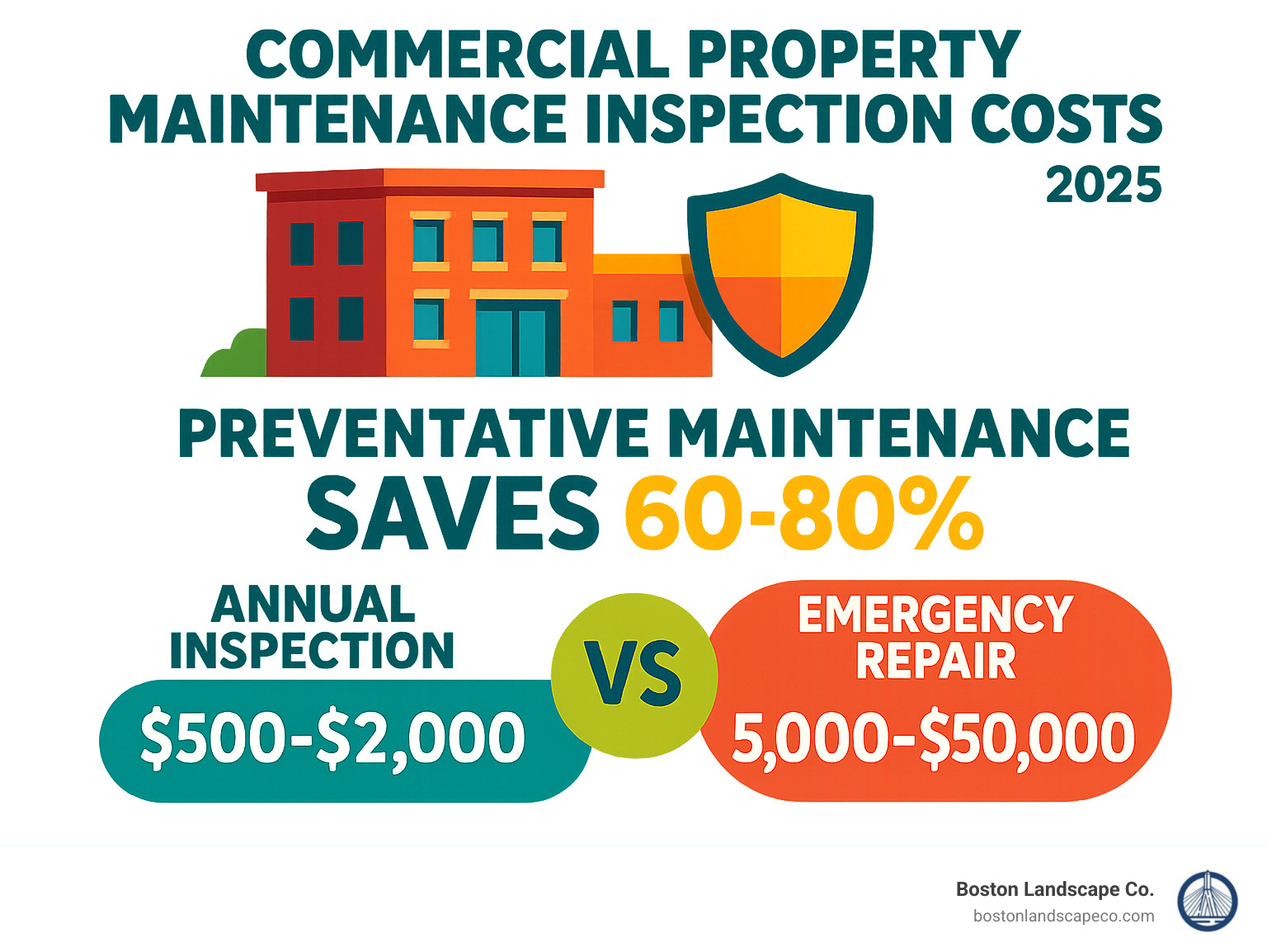
Commercial property maintenance inspection checklist terminology:
- commercial building maintenance costs
- commercial repair and maintenance work
- commercial building repairs
The “What” and “Why” of Commercial Building Inspections
Think of a commercial property maintenance inspection checklist as your building’s annual physical. Regular check-ups are essential to keep your property healthy and valuable.
A commercial building inspection is a comprehensive evaluation of your property’s condition from foundation to rooftop, identifying current and potential problems before they become expensive headaches.
The scope of commercial inspections far exceeds residential ones, covering specialized systems like industrial HVAC units, complex electrical panels, fire suppression systems, and ADA compliance features that simply don’t exist in most homes.
Commercial vs. Residential Inspections: Key Differences
- Scope: Commercial inspections cover multiple systems and compliance requirements
- Time: 1-6 hours versus 2-3 hours for residential
- Cost: $0.50-$2.00+ per square foot versus flat residential fees
- Systems: Industrial HVAC, fire safety, elevators, and specialized equipment
For property owners, a thorough inspection is smart business and a due diligence foundation, ensuring you understand what you own or are considering purchasing.
The Benefits of a Thorough Inspection
Here’s where inspections really prove their worth. When you’re armed with a detailed inspection report, you hold serious negotiation power. If that report uncovers serious structural problems or significant mechanical issues, you can negotiate a lower purchase price or request seller repairs.
Think about it – finding a failing HVAC system during inspection might save you $15,000 in unexpected costs after purchase. That’s money you can either save or invest in improvements that actually add value.
Beyond the financial benefits, inspections help you budget for future repairs with confidence. Instead of being blindsided by a roof leak during the next storm, you’ll know it needs attention and can plan accordingly.
Most importantly, inspections ensure occupant safety by catching preventable hazards from overlooked maintenance before they cause harm.
The peace of mind alone is worth the investment. You’ll sleep better knowing your property is safe, compliant, and maintaining its value.
Ensuring Safety, Security, and Compliance
Safety isn’t negotiable in commercial properties, and inspections play a crucial role in occupant safety. Fire protection systems, including sprinklers, alarms, and suppression equipment, require regular evaluation to ensure they’ll work when needed.
Egress routes must remain clear and properly marked – something that seems obvious but often gets overlooked as storage needs grow. ADA compliance isn’t just about doing the right thing; it’s legally required and protects you from costly lawsuits.
Local building codes and the International Building Code (IBC) set minimum standards for everything from electrical safety to structural load requirements. Regular inspections verify you’re meeting these standards and help identify areas needing updates.
Structural integrity assessments catch problems like foundation settling, beam stress, or deteriorating support elements before they become dangerous. In commercial properties, structural failures don’t just risk lives – they can shut down your business operations entirely.
The bottom line? A comprehensive commercial property maintenance inspection checklist isn’t just about maintaining your building – it’s about protecting everyone who walks through your doors while safeguarding your investment for years to come.
Building Your Comprehensive Commercial Property Maintenance Inspection Checklist
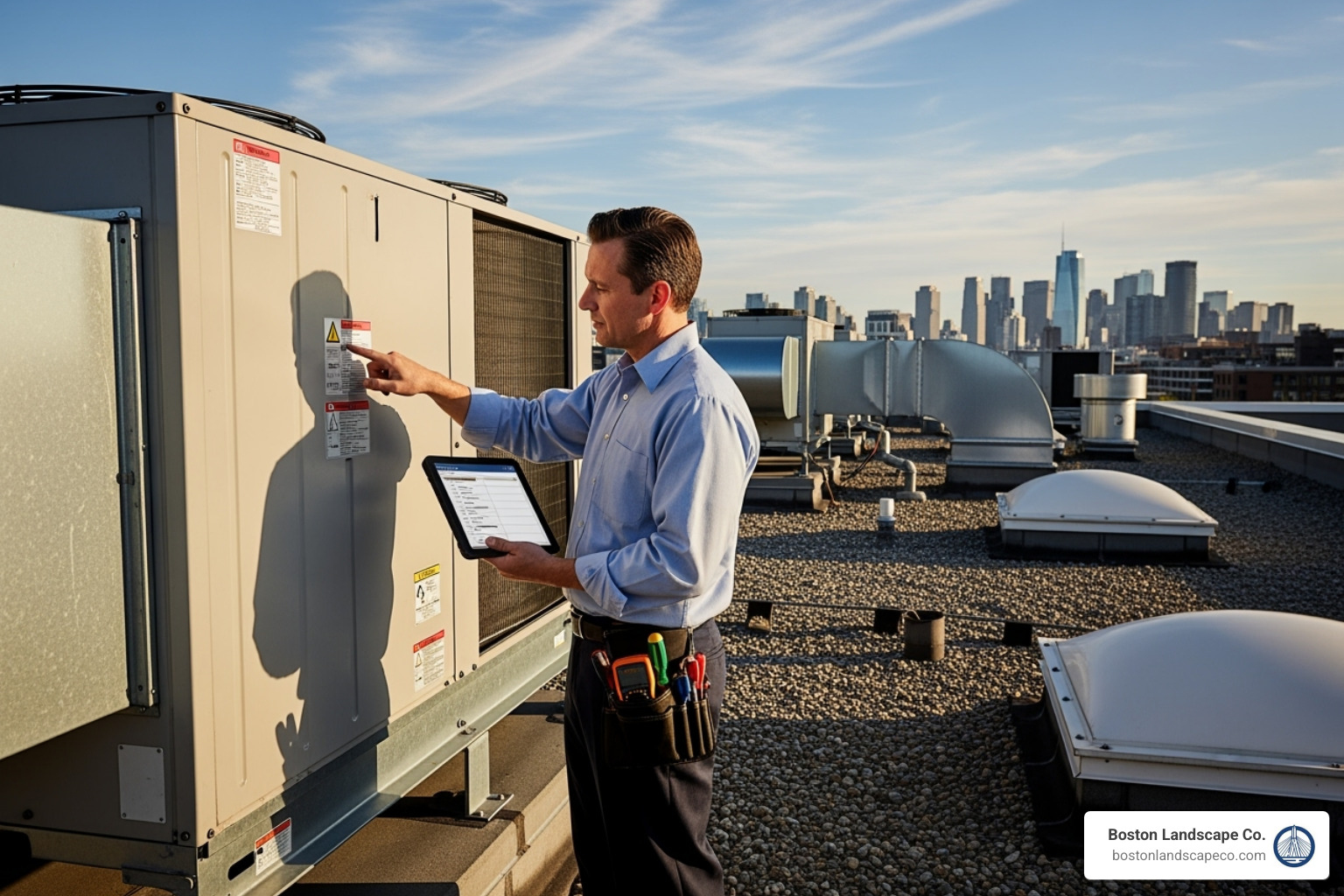
Creating your commercial property maintenance inspection checklist is like building a roadmap to protect your investment. The key is organizing tasks by frequency and customizing them for your property type. Some tasks are daily (clearing walkways), while others are annual (checking roof integrity).
After three decades in property maintenance, I’ve learned the most effective approach is categorizing tasks into daily, weekly, monthly, quarterly, and annual schedules. An office in Boston has different needs than a warehouse in Burlington, so we tailor each checklist.
While old-school paper checklists still work, digital tools have revolutionized how we track and document maintenance tasks. They let you attach photos, create instant reports, and never lose track of what’s been done. Plus, your team can access everything from their phones – no more clipboards getting soggy in the rain!
Key Components of an Exterior Commercial Property Maintenance Inspection Checklist
Your building’s exterior is working 24/7 to protect everything inside from New England’s unpredictable weather. That’s why our exterior commercial property maintenance inspection checklist starts with the building envelope – those walls, windows, and doors that keep the elements out. We look for cracks, water stains, and any signs that your building’s protective shell is compromised.
The roofing system deserves special attention, especially here in Massachusetts where winter can be brutal. We check the membrane, flashing, and drains at least twice yearly – ideally before and after winter hits. A small issue like ponding water or loose flashing can turn into thousands of dollars in damage if you miss it.
Site characteristics like paving, curbs, and sidewalks might seem minor, but they’re actually huge liability concerns. Cracks and potholes aren’t just eyesores – they’re lawsuit waiting to happen. We’ve seen too many slip-and-fall incidents that could have been prevented with regular inspections.
Your grounds and landscaping do more than look pretty. Proper grading directs water away from your foundation, while trimmed trees prevent damage to your roof and siding. We also keep an eye on drainage systems – clogged gutters and storm drains can cause serious water damage.
Don’t overlook exterior lighting and signage either. Poor lighting creates security risks and makes your property less welcoming to customers. Meanwhile, damaged or faded signage hurts your professional image. Fencing and gates round out our exterior checklist, ensuring your property stays secure and attractive.
For properties with hardscaping elements like patios, walkways, and retaining walls, we inspect these features for stability and safety. A shifting retaining wall or cracked walkway can become expensive problems quickly.
Crafting an Interior Commercial Property Maintenance Inspection Checklist
Inside your building, first impressions matter just as much. Common areas like lobbies and hallways set the tone for visitors and tenants. We check for worn flooring, scuffed walls, and adequate lighting – small details that make a big difference in how people perceive your property.
Restrooms require special attention because they’re high-use areas where problems show up fast. Leaky fixtures, broken tiles, and malfunctioning dispensers create maintenance headaches and unhappy tenants. Regular plumbing maintenance here can save you significant money and energy costs down the road.
Interior finishes throughout the building tell important stories. Water stains on ceilings often signal roof leaks, while cracks in walls might indicate settling or structural issues. We also inspect structural elements like beams and columns for any visible signs of stress or damage.
Life safety systems are non-negotiable. We test smoke detectors, fire alarms, and emergency lighting regularly, and ensure all egress routes stay clear and accessible. Windows and doors get checked for proper operation, drafts, and security, while lighting fixtures throughout the building are tested and cleaned as needed.
Essential Systems and Equipment Checks
The mechanical systems running behind the scenes keep your building comfortable and functional. HVAC systems need attention at least twice yearly – we check filters, coils, and belts during seasonal inspections. Clean systems run more efficiently and last longer, saving you money on energy bills and replacement costs.
Electrical systems can be dangerous when they fail, so we inspect panels, outlets, and wiring annually for signs of wear, corrosion, or overloading. Older buildings especially need careful attention since their electrical systems might not handle modern demands.
Heating and plumbing systems keep your building livable and functional. We look for leaks, check water pressure, and ensure boilers and water heaters are operating safely. Catching small issues early prevents catastrophic failures that can shut down your entire operation.
Fire protection and life safety systems literally save lives, so there’s no room for shortcuts here. Sprinkler heads, control panels, and pull stations must work perfectly when needed. We also check standpipes and pressure relief valves to ensure everything meets code requirements.
While we don’t service elevators and escalators ourselves, our checklist reminds you to keep up with professional inspections and maintenance for these critical systems. Sump pumps get annual attention too – a failed pump can flood your basement and cause massive damage.
The Inspection Process: From Scheduling to Negotiation
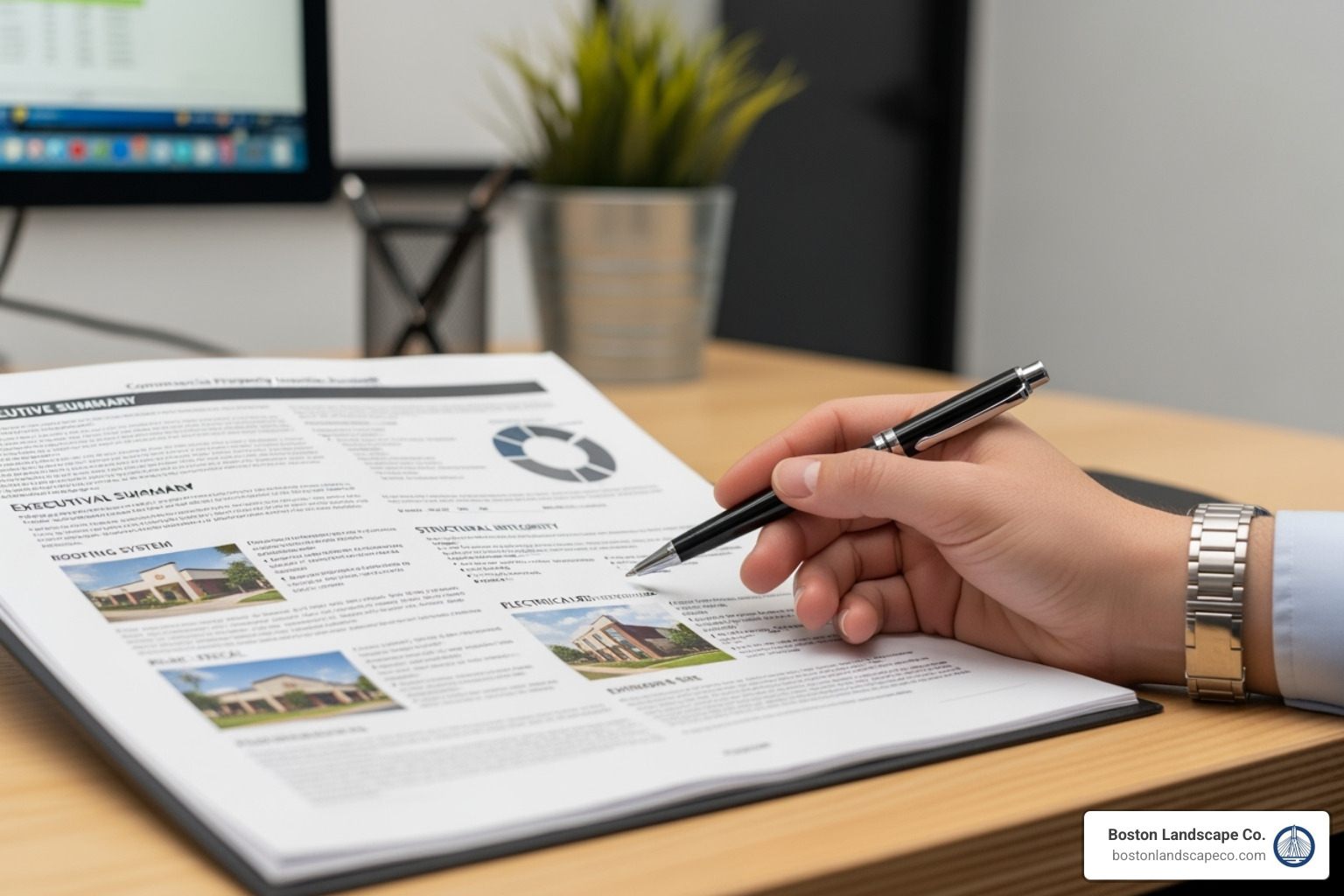
The commercial property inspection process is more than a simple walk-through; it’s a comprehensive health checkup for your property that can save you thousands.
The inspection journey begins with careful planning and ends with actionable insights that can dramatically impact your negotiating position and maintenance strategy.
How Often, How Long, and How Much?
Inspection frequency isn’t one-size-fits-all; it depends on your building’s age, type, and local climate.
In Massachusetts, where we deal with harsh winters that can wreak havoc on commercial properties, many of our clients benefit from bi-annual inspections in spring and fall, plus comprehensive annual reviews. A newer office building might get away with annual inspections, while an older industrial facility could need quarterly attention for specific systems.
Pre-purchase inspections are obviously a one-time necessity, but they’re arguably the most critical inspection you’ll ever schedule for a property.
When it comes to duration, plan for anywhere from 1-6 hours depending on your property’s size and complexity. A small retail space might take an hour, while a multi-story office building with complex mechanical systems could easily consume a full day. Don’t rush this process – thoroughness pays dividends.
Cost factors include your property’s size, complexity, and location. A simple warehouse inspection costs far less than evaluating a multi-tenant office building with sophisticated HVAC zones and elevator systems. Based on internet data, average costs range from $0.50 to $2.00+ per square foot, though complex properties can run $6.00+ per square foot. Please note, these are average costs based on internet data and not actual costs for Boston Landscape Co.
Finding a Qualified Inspector and Reviewing Documents
Choosing the right inspector is like hiring a detective for your building – you want someone with the right credentials and sharp eyes for detail. Look for certified professionals with extensive commercial property experience, proper insurance coverage, and a track record with properties similar to yours.
Don’t be shy about asking pointed questions: How many buildings like mine have you inspected? What does your inspection process include? How detailed will my final report be? A qualified inspector welcomes these questions because they demonstrate you understand the process’s importance.
Before the inspector arrives, gather your property’s essential documentation. This includes certificates of occupancy, construction permits, previous inspection reports, maintenance logs, blueprints and surveys, and evacuation plans.
These documents provide your property’s history, alerting the inspector to past issues and helping them know where to look closely.
The on-site process involves the inspector systematically examining every major system and component according to their commercial property maintenance inspection checklist. They’ll document findings with photos and detailed notes, creating a comprehensive record of your property’s current condition.
Common Problems and How to Use the Report
Even well-maintained commercial properties can surprise you with hidden issues. The most common problems we see include roof leaks or compromised roofing systems, HVAC system failures or inefficiencies, electrical hazards from outdated wiring, structural defects in foundations or framing, and plumbing issues like leaks or drainage problems.
Once you receive your detailed report with cost-to-cure estimates, it’s time to strategize. Prioritize safety-critical issues first – faulty electrical systems or structural problems can’t wait. Next, address problems that could cascade into more expensive damage if ignored, like small roof leaks that could become major water damage.
The real power of your inspection report lies in negotiation leverage. If you’re purchasing a property, significant findings can help you negotiate a lower price or request seller repairs before closing. For existing properties, the report becomes your roadmap for budgeting future repairs and ensuring occupant safety.
An inspection report isn’t just a list of problems – it’s your guide to protecting your investment and making informed decisions about one of your most valuable assets.
Specialized Checklists for Different Properties

Here’s the reality about commercial property inspections: a one-size-fits-all commercial property maintenance inspection checklist doesn’t work.
Each property type has unique challenges. A retail store’s demands differ from an office or warehouse, which is why we customize our checklists to match the specific needs of each property.
Think about it this way – a warehouse manager worries about loading dock safety and heavy machinery wear, while an office building manager focuses more on HVAC comfort zones and professional appearance. Both are valid concerns, but they require different approaches and attention to different details.
Warehouse and Industrial Facility Consideraditions
Warehouses and industrial facilities are the workhorses of the commercial property world. They take a beating from heavy equipment, constant traffic, and demanding operational schedules. Our commercial property maintenance inspection checklist for these properties reflects these harsh realities.
Loading docks get special attention in our inspections because they’re genuinely dangerous places. With 25 percent of all warehouse accidents happening right at the loading dock, we examine every detail – from structural integrity to safety mechanisms and clear access routes. A small crack in a loading dock platform today could become a major safety hazard tomorrow.
High-traffic flooring in warehouses isn’t just about looks; it’s about safety and functionality. We look for cracks, uneven surfaces, and wear patterns that could trip up workers or damage equipment wheels. Industrial concrete floors might seem indestructible, but they’re not immune to the constant stress of forklifts and heavy loads.
Storage rack integrity is another critical focus area. When a storage rack fails, it’s not just an inconvenience – it can shut down operations entirely. We check for proper installation, signs of damage, and adherence to safety standards because a broken rack doesn’t just prevent storage; it creates downtime that costs money.
Specialized ventilation systems often handle more than just air circulation in industrial settings. If your facility deals with chemicals, dust, or other airborne contaminants, proper ventilation isn’t optional – it’s essential for worker safety and regulatory compliance.
For facilities handling hazardous materials storage, we follow strict protocols to ensure proper containment, labeling, and ventilation. We reference OSHA’s warehouse safety inspection checklist pdf as our guide because when it comes to hazardous materials, there’s no room for guesswork.
High-voltage electrical systems in industrial facilities require specialized attention from qualified electricians. These aren’t systems you want to leave to chance, and our checklist ensures they get the professional oversight they demand.
Retail and Office Building Focus Areas
Retail spaces and office buildings play by different rules. Here, first impressions matter enormously, and occupant comfort can make or break a business relationship. Our approach to these properties reflects these priorities.
Curb appeal and entryways are make-or-break elements for retail and office properties. Your landscaping and entrance create that crucial first impression for clients, customers, and tenants. As landscaping professionals, we understand how proper maintenance of walkways, plantings, and exterior aesthetics directly impacts your property’s success and value.
Public restrooms in these facilities need to be spotless and fully functional. We inspect for hygiene standards, fixture functionality, and ADA compliance because a broken soap dispenser or non-compliant accessibility feature can create real problems for your business.
ADA accessibility isn’t just good practice; it’s the law. We ensure ramps, doorways, restrooms, and all common areas meet Americans with Disabilities Act standards. This protects you from legal issues while making your property welcoming to everyone.
Parking lot condition and lighting deserve special attention because they affect both safety and property value. We look for cracks, potholes, proper drainage, and adequate lighting. And in Massachusetts winters, our snow removal for commercial lots services become essential for properties throughout our service areas, ensuring safe access even in harsh weather.
Tenant-specific HVAC zones in multi-tenant buildings require careful monitoring. Each zone needs to function independently and efficiently to keep tenants comfortable while managing energy costs. A malfunctioning zone doesn’t just create uncomfortable tenants – it can lead to lease disputes.
Data and communication wiring infrastructure might be hidden, but it’s the nervous system of modern office buildings. We verify that network infrastructure has the integrity and capacity to support today’s technology demands, because in our connected world, reliable internet isn’t a luxury – it’s a necessity.
Frequently Asked Questions about Commercial Property Inspections
Here are answers to frequently asked questions about commercial property inspections.
What types of commercial properties require inspections?
Here’s the simple truth: all types of commercial properties benefit from regular inspections. Whether you own office buildings in downtown Boston, retail stores in Burlington, warehouses in industrial Woburn, apartment complexes, hotels, or even specialized facilities like medical clinics, the need for thorough evaluation is universal.
While the scope varies, the principle is the same: every commercial property is a significant investment deserving protection through due diligence and maintenance oversight.
We’ve worked with properties ranging from small professional offices to large industrial complexes, and each one has unique characteristics that require attention. The key is understanding that while the specific commercial property maintenance inspection checklist items may differ, the underlying need to protect your investment never changes.
What is the difference between a maintenance inspection and a pre-purchase inspection?
This question comes up constantly, and for good reason – the two serve completely different purposes in your property management strategy.
A maintenance inspection is your ongoing health check system. Property managers or owners conduct these regularly – daily walk-throughs, weekly system checks, monthly deep dives, and annual comprehensive reviews. Think of it as preventative medicine for your building. The goal is catching small problems before they become expensive disasters and keeping all your systems running smoothly.
A pre-purchase inspection, also called a Property Condition Assessment, is an entirely different beast. This is the comprehensive, third-party evaluation you get before buying a property. It’s like getting a complete physical before a major life insurance policy – you want to know exactly what you’re getting into.
The pre-purchase inspection digs deep into every system, every structural element, and every potential liability. It provides detailed cost-to-cure estimates and often becomes a powerful tool for negotiating a lower price or requesting seller repairs. This inspection can literally save you tens of thousands of dollars by revealing hidden problems before you sign on the dotted line.
Can I perform a commercial property inspection myself?
I love this question because it shows you’re thinking like a hands-on property owner. The answer is both yes and no, depending on what we’re talking about.
Absolutely yes to routine visual checks as part of your regular maintenance routine. Walking your property, noting obvious issues, and keeping an eye on things is not just encouraged – it’s essential. You know your building better than anyone, and you’re likely to notice when something seems off.
However, when it comes to comprehensive annual inspections or pre-purchase evaluations, you need a qualified, licensed commercial building inspector. These professionals have specialized training and certifications that allow them to spot complex issues with structural, mechanical, and electrical systems that even experienced property managers might miss.
Consider the stakes involved. A missed structural issue could cost tens of thousands to repair. An overlooked electrical problem could pose serious safety risks to your tenants. HVAC inefficiencies that go undetected can drain your budget through excessive energy costs.
Professional inspectors understand building codes, safety regulations, and can provide detailed reports with accurate cost estimates. This information becomes invaluable for budgeting future repairs and, if you’re buying, for negotiation purposes. For the safety of your occupants and the protection of your investment, trust the experts for these critical assessments while maintaining your own regular oversight routine.
Conclusion
We’ve covered the essentials of commercial property maintenance inspection checklists, from understanding why they matter to what makes an effective inspection program work.
The key takeaway here is simple but powerful: proactive maintenance saves money. Those small issues you catch during a routine inspection? They’re like finding a loose thread on a sweater – much easier to fix now than after the whole thing solves. We’ve seen property owners save thousands by catching a minor roof leak before it becomes a major structural problem, or identifying HVAC inefficiencies before they lead to complete system failure.
A checklist is truly a powerful tool – just like that hospital example we mentioned earlier where something as basic as “wash your hands with soap” saved lives. Your commercial property deserves that same systematic approach. Whether you’re managing a warehouse in Woburn or an office building in Burlington, having a structured way to assess your property’s condition keeps you ahead of problems instead of chasing them.
Here’s what we know from our 30 years in the business: the importance of professional services for both inspections and maintenance cannot be overstated. While you can certainly handle daily visual checks yourself, bringing in qualified professionals for comprehensive inspections and specialized maintenance work is where the real value lies. They catch what you might miss and bring expertise that protects your investment.
At Boston Landscape Co., we provide comprehensive commercial property maintenance that goes far beyond just keeping your grass trimmed (though we do that exceptionally well too!). From hardscaping that prevents water damage to snow removal that keeps your property accessible and safe, we understand how all the pieces of property maintenance fit together.
Your commercial property is likely one of your biggest investments. Don’t leave its care to chance or hope that problems will just go away – they rarely do, and they usually get more expensive with time.
Ready to take the next step? Request an estimate for your commercial property maintenance needs today. Let’s work together to create a maintenance strategy that keeps your property looking great and functioning smoothly for years to come.
