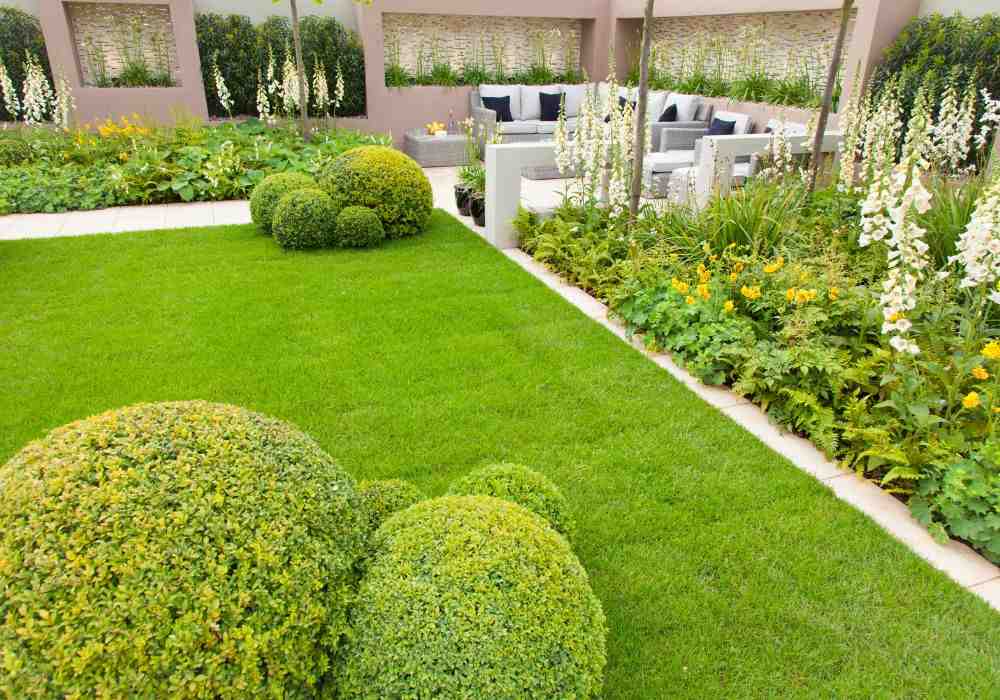
Contemporary Garden Design: 5 Marvels to Adore
Why Contemporary Garden Design Transforms Your Outdoor Living Space
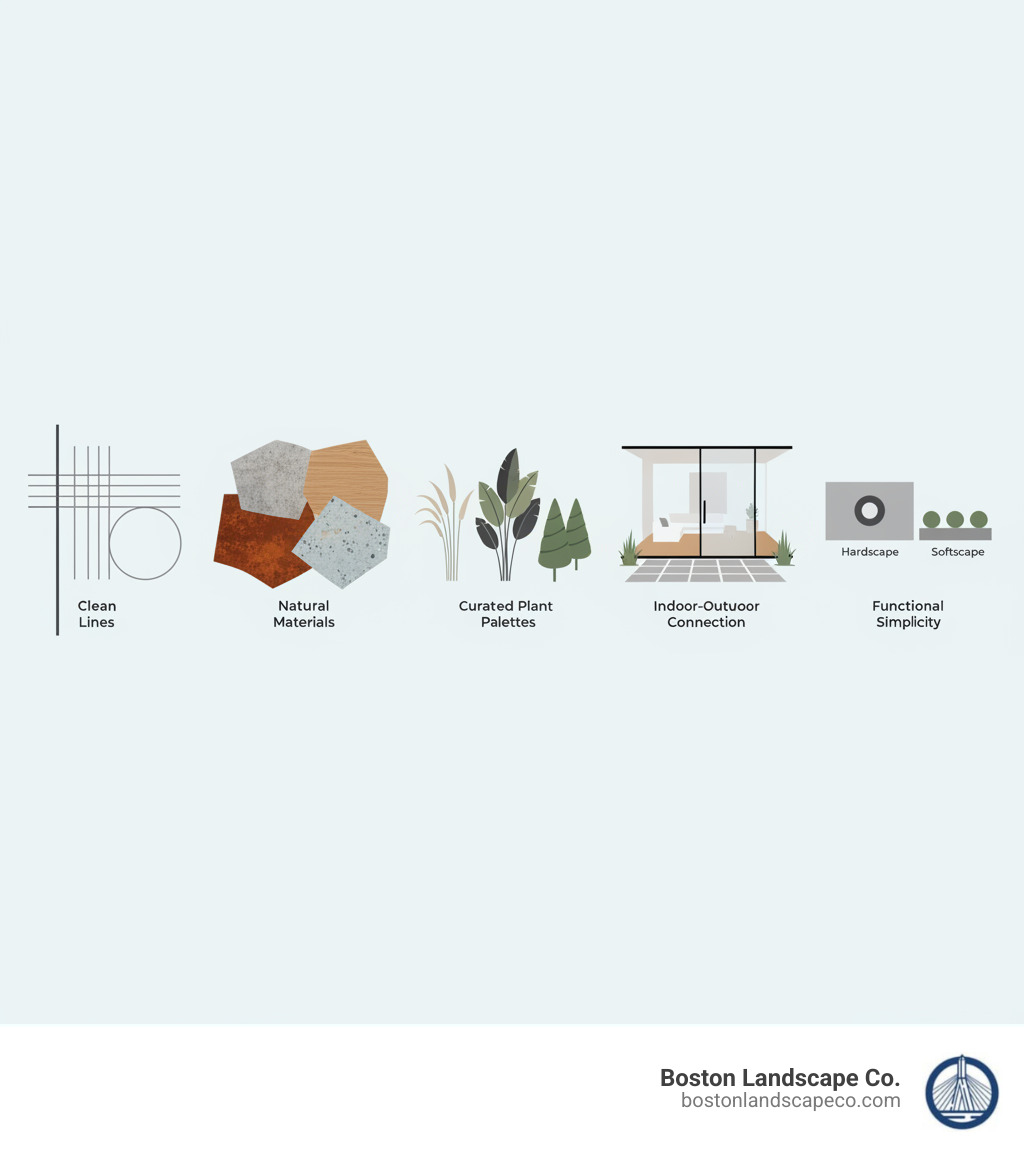
Contemporary garden design creates outdoor spaces that feel like natural extensions of your home. It blends clean lines, natural materials, and purposeful simplicity to make your backyard more organized, usable, and connected to your interior. This approach focuses on:
- Clean geometric lines and structured layouts
- Natural materials like wood, stone, and steel
- Curated plant palettes with bold forms and textures
- Seamless indoor-outdoor flow
- Functional simplicity where every element serves a purpose
This style isn’t about cold minimalism; it’s about creating inviting spaces that work beautifully year-round through careful curation. Instead of clutter, each element is chosen to make an impact. A single specimen tree becomes a focal point, a simple stone patio anchors the space, and hedges provide structure while softening hard edges.
This spring, as New England homeowners plan outdoor projects, contemporary design is gaining momentum for its blend of sophisticated aesthetics and practical functionality. These gardens often require less maintenance while providing more usable space for entertaining or relaxing.
I’m Steve Schumacher, and for over three decades with Boston Landscape Co., I’ve helped Greater Boston homeowners apply contemporary garden design principles that suit New England’s climate. The contemporary approach adapts to any space, from a compact urban lot to a sprawling suburban yard.
The Hallmarks of Contemporary Garden Design
A contemporary garden has a distinct clarity and purpose. Nothing feels random or cluttered; instead, clean lines guide your eye, natural forms echo the landscape, and a purposeful openness invites you to use the space. At Boston Landscape Co., we create outdoor areas that feel like genuine extensions of your home by emphasizing restraint over excess.
Rather than filling every corner, we focus on quality over quantity. A single sculptural tree becomes a statement, a simple stone path creates rhythm, and hedges provide structure. The goal is to balance clean aesthetics with livability, creating refined yet welcoming spaces. As the New England landscape awakens this spring, a well-designed contemporary garden provides the perfect backdrop for outdoor living. This approach to designing a garden for a contemporary home that seamlessly blends inside and out considers sight lines, sun exposure, and how different areas connect.
Modern vs. Contemporary: What’s the Difference?
Many people use the terms modern and contemporary interchangeably, but they describe distinct design approaches.
Modern garden design refers to a specific mid-20th-century style influenced by the Bauhaus movement. It’s known for strict geometry, industrial materials, and rigid minimalism, following a “form follows function” philosophy that could sometimes feel stark. Plant palettes were often limited and arranged in precise, architectural masses.
Contemporary garden design, however, is always evolving with current trends. It softens modernism’s clean lines with organic curves and naturalistic plantings. The material palette blends manufactured elements like concrete with natural wood and stone, creating a feel that is inviting rather than austere.
| Characteristic | Modern Garden Design | Contemporary Garden Design |
|---|---|---|
| Era/Origin | Mid-20th century (1920s-1970s), Bauhaus influence | Current and evolving trends (late 20th century to present) |
| Philosophy | Strict minimalism, “form follows function,” rigid geometry | Softer minimalism, more fluid, adaptable, incorporates naturalism |
| Key Features | Strong geometric shapes, stark, often industrial materials, limited plant palettes | Clean lines with organic curves; blend of natural and manufactured materials; varied plant textures |
| Planting Style | Very structured, architectural, often mass plantings of single species | Curated palettes, textural plants, naturalistic drifts, emphasis on form and foliage over flowers |
| Overall Feel | Grounded, sometimes perceived as cold or stark | Welcoming, inviting, integrates warmth and personality |
For your Greater Boston home, contemporary design offers the visual clarity of modernism with the warmth and livability that makes outdoor spaces truly functional.
The Core Principle: Connecting Indoor and Outdoor Spaces
The heart of contemporary garden design is the seamless connection between your home’s interior and the landscape. We view your entire property as a single, integrated environment, which is especially important as spring arrives in Massachusetts.
Imagine opening panoramic glass doors to a patio that flows from your kitchen. Material continuity—such as echoing interior wood flooring with outdoor decking—makes both spaces feel larger. The color palette can also extend from your living room into the garden, creating visual harmony.
This harmonious flow extends your living areas into “outdoor rooms.” A covered patio becomes an outdoor living room, a dining area under a pergola serves as a summer dining room, and an outdoor kitchen functions just like its indoor counterpart. These spaces give you new ways to use your property throughout the warmer months, whether for hosting parties or working from a shaded lounge.
We design these areas with the same care as any interior room, considering traffic flow, privacy, and how different zones relate. The result is a garden that functions as a true extension of your home. If you’re ready to create this seamless connection, learn more about our residential design and build services.
Building Your Modern Oasis: Key Elements and Materials
The magic of contemporary garden design lies in the right mix of hardscape (the structural backbone) and softscape (the living plants). The goal is to create visual impact through textural contrast: the warmth of weathered steel against cool concrete, or soft ornamental grasses beside structured stone.
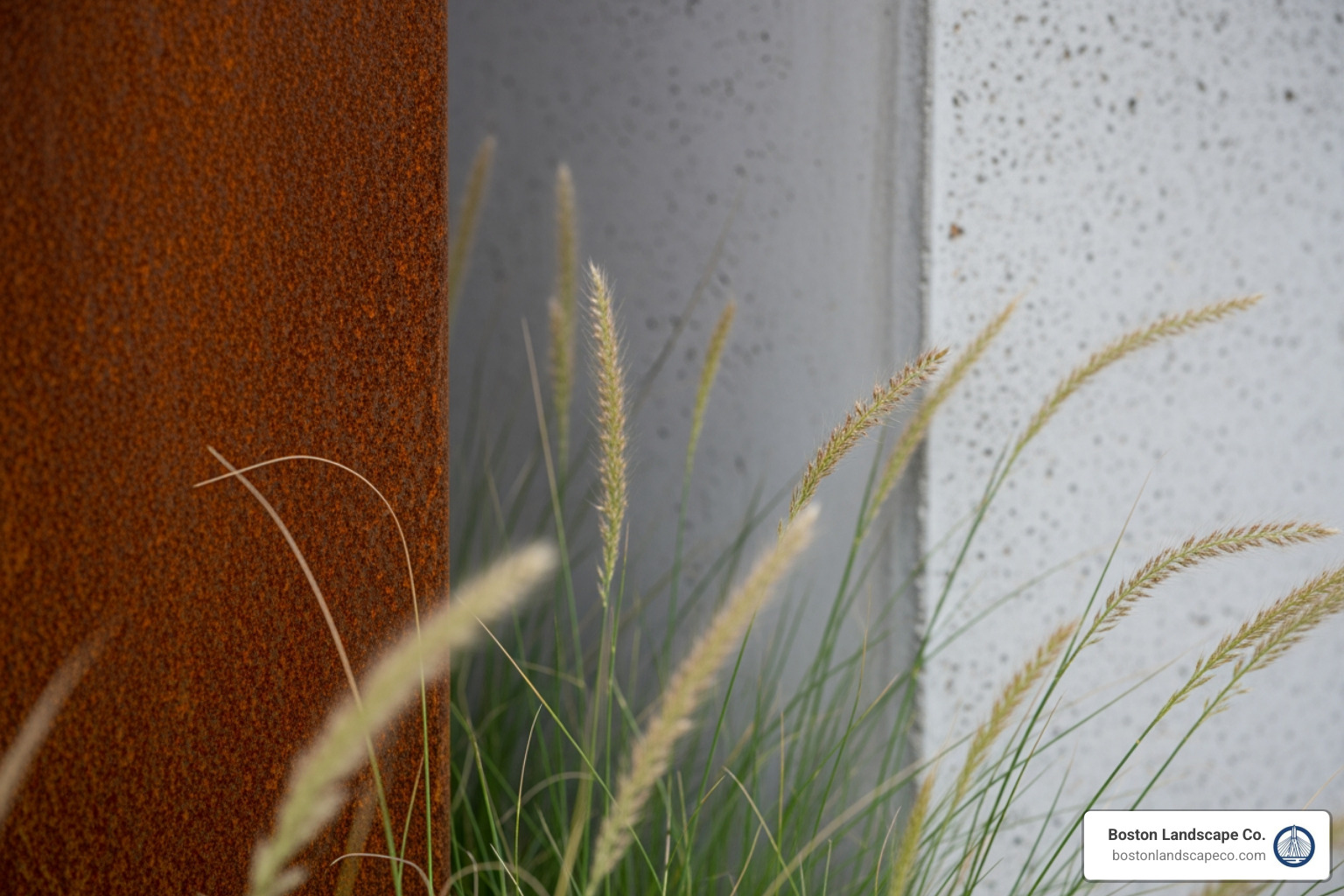
In New England, materials must be stunning yet durable enough to withstand our weather. This interplay of materials transforms a simple yard into something special.
Hardscaping: The Architectural Foundation
Hardscaping defines your space and creates usable outdoor rooms. Choosing the right materials is key for both aesthetics and longevity.
- Concrete pavers offer crisp, clean lines in a range of tones. They are a versatile and popular choice for patios and walkways. Based on online data, average paver patio costs can range from $7 to over $30 per square foot, depending on complexity and materials.
- Natural stone like bluestone and granite connects your garden to the New England landscape, offering a timeless feel for patios, steps, and walls.
- Weathered Cor-Ten steel develops a warm, rust-colored patina that adds a modern edge. We use it for edging, planters, and sculptural focal points.
- Oiled wood brings natural warmth to decks and fences, softening harder elements and protecting the wood from weather extremes.
- Gravel pathways provide a casual, permeable surface with excellent drainage, creating a pleasing sound and textural contrast to paved areas.
- Retaining walls manage slopes and create terraced levels or garden rooms. We often design them to double as built-in seating, maximizing function.
- Pergolas add architectural structure, define outdoor rooms, and provide filtered shade, extending your time outdoors.
These elements work together to create a beautiful and practical framework. If you’re curious about integrating these materials, check out our hardscaping services.
Softscaping: Bringing the Design to Life
Planting brings the hardscape foundation to life. Contemporary garden design is selective, choosing plants for their form, texture, and structure over just their blooms.
- Hedges are the unsung heroes, bridging hard and soft elements. Boxwood, Hicks Yew, and Beech can be shaped to define spaces, create privacy, and add rhythm.
- Ornamental grasses like Feather Reed Grass and Japanese Forest Grass bring movement and lightness, contrasting beautifully with rigid hardscapes. They offer interest from spring growth through winter.
- Architectural plants like Allium provide bold, sculptural statements with their spherical purple blooms in late spring.
- Evergreens, including dwarf varieties and specimens like ‘Sky Pencil’ Japanese Holly, provide essential year-round structure, which is vital for a four-season New England garden.
We curate a plant palette that works with your home’s architecture and thrives in our climate (typically USDA Zones 5-7), ensuring every plant earns its place.
Infusing Warmth, Ambiance, and Personality
Many clients ask, “I love the clean look, but won’t it feel cold?” It’s a fair question, but a well-executed contemporary garden design should feel warm and welcoming, not stark. Think of the clean lines as a canvas that makes your personal touches stand out more beautifully.
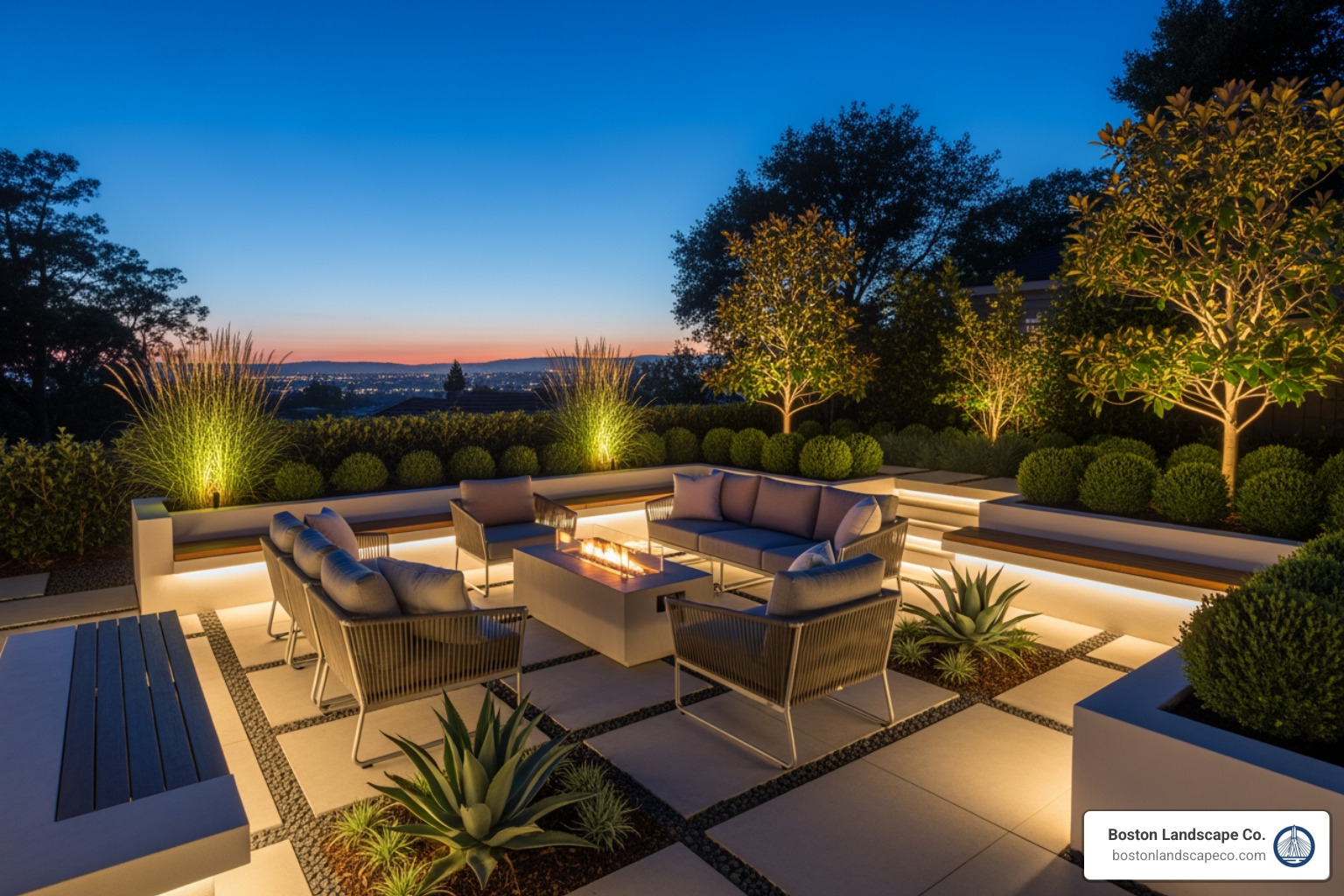
This spring, consider how lighting and personal touches can transform a structured garden into an inviting retreat, finding the sweet spot between architectural clarity and human warmth.
The Role of Layout and Lighting
The layout of a contemporary garden guides you through the space with purpose. Pathways and seating areas create a natural, intentional flow from one zone to another.
However, lighting transforms everything after sunset. A well-lit garden extends your outdoor season into those beautiful spring nights. Warm-toned LED lighting is essential to avoid a cold, sterile feel. We use layered lighting techniques to create depth and ambiance:
- Recessed lights in steps or walls provide safety without visual clutter.
- Path lighting guides visitors while highlighting the garden’s geometry.
- Uplighting a specimen tree or grazing a textured stone wall adds drama and showcases key features.
Even the fixtures can be sculptural elements, adding to the design day and night. This thoughtful approach turns your garden into an enchanting evening retreat.
Adding Personality with Art and Furnishings
This is where your garden becomes uniquely yours. Sculptural elements, like an abstract metal piece or a carefully placed boulder, act as focal points. Water features are also perfect, adding soothing sounds and movement.
Furniture selection is also key. Choose pieces with natural materials like wood to bring organic warmth. Floating benches offer modern style, while a sleek fire pit creates an instant gathering spot on cool spring evenings. For cohesion, repeat a color from your planting palette in cushions or accessories.
Modern outdoor kitchens make entertaining effortless, turning your garden into a true living space. These aren’t just functional additions; they are invitations to live in your outdoor space. The key is balance: a garden that is structured but not rigid, simple but not sterile, and both architecturally beautiful and genuinely comfortable.
Adapting Contemporary Garden Design for Every Yard
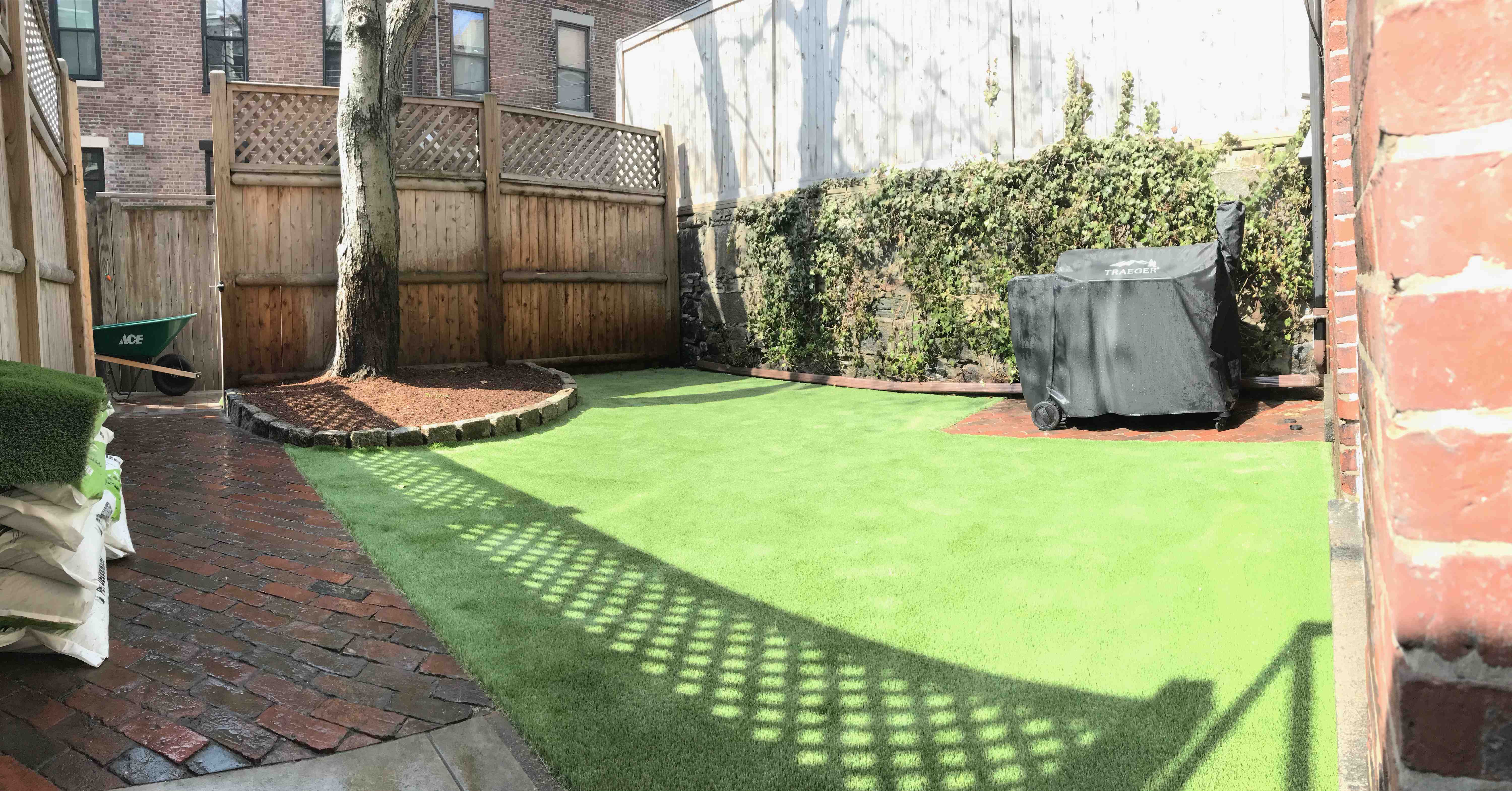
What’s great about contemporary garden design is its flexibility. It works beautifully whether you have a sprawling landscape in Concord or a cozy backyard in Somerville. The principles scale up or down without losing impact, making any space feel sophisticated and intentional.
Strategies for Small Backyards and Urban Settings
Small urban backyards are a creative challenge. The trick is to think vertically and make every element count.
- Vertical gardens and green walls add lushness without using ground space.
- Built-in furniture, like benches integrated into retaining walls, provides seating with a minimal footprint and can include hidden storage.
- Large containers create a bold, cohesive look that is less cluttered than many small pots. They are also flexible, especially on rooftop terraces.
- A limited color palette for hardscaping, plants, and furnishings makes a space feel more expansive.
- Subtle level changes, like a raised planter or a sunken seating area, define distinct zones and add interest without requiring much square footage.
Tackling Slopes and Unique Topography
New England’s rolling terrain offers opportunities for dramatic design. Contemporary garden design thrives on these variations.
Terraced gardens are the go-to solution for slopes, turning unusable hillsides into functional outdoor rooms on level platforms. This also solves practical issues like erosion and water runoff, which are critical during our spring thaws. The retaining walls themselves become architectural statements, built from materials like clean-lined concrete, natural bluestone, or weathered Cor-Ten steel. Our hardscaping expertise ensures these structures are engineered for New England’s climate.
Steps are designed as integral features, not just functional connectors. Wide, shallow steps made from contrasting materials can create gathering spots and visual rhythm. Strategic planting with deep-rooted perennials and groundcovers helps stabilize soil naturally. This layered approach of hardscaping and softscaping creates landscapes that are both beautiful and resilient.
Frequently Asked Questions about Contemporary Gardens
As spring arrives, homeowners from Winchester to Waltham often ask us how to bring contemporary garden design to their backyards. Here are some of the most common inquiries we address.
How do I make a contemporary garden low-maintenance?
Low maintenance is a cornerstone of this style. The design is meant to work with your lifestyle, not against it.
- Focus on hardscaping: Patios, walkways, and gravel areas reduce lawn and weeding.
- Choose the right plants: Slow-growing and native plants require less pruning and are more resilient in our climate.
- Install an irrigation system: This takes the guesswork out of watering, saving time and ensuring plant health.
- Use mulch: A 2-3 inch layer suppresses weeds and retains soil moisture.
- Select drought-tolerant species: These plants require less supplemental water once established, perfect for summer dry spells.
What is the best way to balance simplicity with functionality in a contemporary garden?
This balance is at the heart of the design. It’s about ensuring every element serves a purpose in a cohesive, livable space.
- Design with purpose: Every feature should have a clear reason for being there. Avoid clutter.
- Give elements multiple roles: A retaining wall can also be a bench; a privacy screen can be a backdrop for art.
- Create multi-functional spaces: A single patio can be used for dining, lounging, or as an outdoor kitchen.
- Use built-in storage: Keep tools and cushions neatly tucked away to maintain clean lines.
- Keep the layout uncluttered: A simple, open layout feels serene but must still accommodate your lifestyle needs for entertaining or relaxation.
Can I mix contemporary design with other garden styles?
Absolutely. We often blend contemporary elements with other styles, especially in Greater Boston where homes have diverse architecture.
- Use contemporary structures as a base: Clean patios and linear pathways can provide a modern framework.
- Introduce softer plantings: A contemporary patio can be softened by a border of lush, cottage-style perennials.
- Blend modern elements into historic settings: A sleek fire pit or water feature can be a refreshing focal point for a traditional home.
- Maintain a cohesive palette: Repeating materials (like bluestone) or a consistent color scheme unifies the landscape, even with varied styles. This allows for a personalized garden that respects your home’s architecture while embracing modern aesthetics.
Your Contemporary Garden Awaits
Spring in New England is the perfect time to imagine your outdoor space as a contemporary sanctuary. As we’ve explored, contemporary garden design uses clean lines, natural materials, and purposeful layouts to create functional, beautiful spaces that feel like genuine extensions of your home.
These gardens are not just visually stunning; they are low-maintenance, functional, and provide year-round beauty. Contrary to some beliefs, contemporary design is not cold—it’s intentional, inviting, and uniquely yours. The principles can be adapted to any property, from a compact urban lot in Somerville to a sloped yard in Concord, changing not just your property but your lifestyle.
At Boston Landscape Co., our thirty years of experience in New England means we understand how to create designs that thrive in our climate. We know which plants survive our winters and how to manage spring thaws, ensuring your garden is beautiful in every season.
This spring is your opportunity to start fresh. Contemporary garden design offers a clear path to a space that balances beauty with practicality and sophistication with warmth.
Your personal oasis is within reach. Our team is committed to bringing your vision to life with quality craftsmanship and attention to detail.
Contact us to start designing your residential landscape today. Let’s make this the spring you transform your outdoor space.