Introduction: Why Your Property’s Health is Your Business’s Wealth

Commercial property repairs and maintenance is the ongoing care and upkeep of business buildings and grounds. It includes three main types:
- Preventive Maintenance – Scheduled tasks to prevent problems (like seasonal HVAC servicing)
- Routine Maintenance – Regular upkeep activities (like landscaping, cleaning, inspections)
- Corrective Maintenance – Fixing issues when they occur (like repairing a leaky roof or broken equipment)
Imagine arriving at your commercial property on a crisp Monday morning to find water dripping from the ceiling. This scenario plays out more often than you’d think—and it’s almost always preventable.
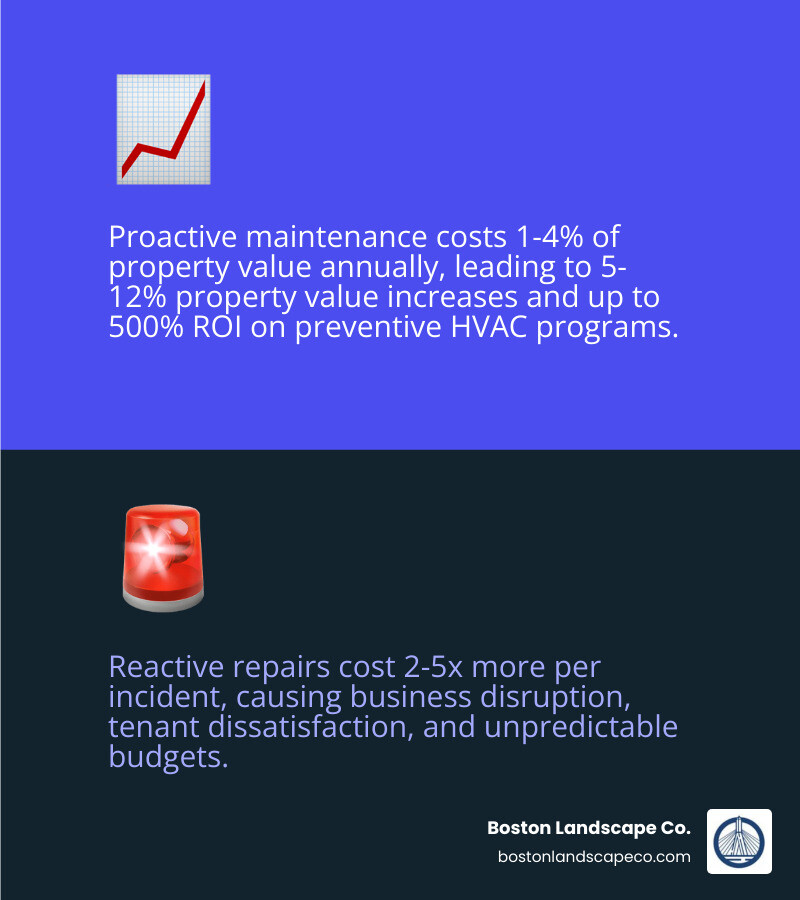
The financial stakes are real. Properties with professional maintenance programs see value increases of 5-12%, according to industry research. More importantly, preventive care costs 2-5 times less than reactive repairs. When you skip routine maintenance, you’re not saving money—you’re gambling with your investment.
Your property’s condition affects everything from tenant satisfaction to your bottom line. Well-maintained buildings command premium rental rates, experience higher occupancy, and create the kind of first impression that attracts quality tenants. Neglected properties bleed money through emergency repairs, tenant turnover, and declining property values.
Winter in New England makes maintenance even more critical. As we head into the colder months, properties face unique challenges: ice dam prevention, snow load management, and protecting vulnerable systems from freezing temperatures. The properties that weather these challenges best are the ones with a solid maintenance plan in place.
I’m Steve Schumacher, and I’ve spent over three decades helping property owners protect their investments through strategic commercial property repairs and maintenance. Since founding Boston Landscape Co. in 1991, I’ve seen how a proactive approach to property care saves money, prevents headaches, and preserves value for the long term.
Common commercial property repairs and maintenance vocab:
- commercial property maintenance inspection checklist
- commercial building maintenance costs
- building maintenance agency
The Three Pillars of Property Upkeep: From Routine to Repair
Effective commercial property repairs and maintenance isn’t just about fixing things when they break; it’s a strategic approach to preserving and enhancing your investment. We categorize maintenance into several key types, each playing a vital role in a comprehensive property management strategy.
- Routine Maintenance: These are the daily, weekly, or monthly tasks that keep your property looking its best and functioning smoothly. Think of them as the basic hygiene for your building – regular cleaning, landscaping, and minor upkeep. For instance, our teams perform weekly landscaping in areas like Bedford or Carlisle, ensuring a pristine appearance.
- Preventive Maintenance: This is our proactive shield against future problems. Instead of waiting for an HVAC system to fail in the dead of a Boston winter, we schedule regular inspections and servicing. The Jones Lang LaSalle preventive maintenance study demonstrated an astounding return on investment of over 500% from preventive maintenance programs, even when assuming zero downtime costs. That’s a return you can’t ignore!
- Corrective Maintenance (Repairs): This is what most people think of as “maintenance” – fixing issues after they occur. A broken window in Malden, a leaky faucet in Lexington, or a faulty electrical outlet in Woburn all fall under corrective repairs. While necessary, our goal is to minimize these through effective preventive and routine care.
- Predictive Maintenance: Taking preventive a step further, predictive maintenance uses data and technology (like sensors in HVAC systems) to monitor equipment performance and predict when maintenance is needed, before a failure occurs. This maximizes equipment lifespan and minimizes unexpected downtime.
- Condition-Based Maintenance: Similar to predictive, this approach bases maintenance decisions on the current condition of an asset, determined through regular monitoring and inspections. A 2004 study in Building and Environment found that condition-based maintenance in high-rise office buildings increased Mean Time Between Failures by 90-175 hours, leading to expected profit increases of 210.5-265.1% compared to reactive maintenance. These numbers clearly show the financial benefits of a forward-thinking approach.
Preventive vs. Corrective Maintenance
The choice between a proactive (preventive) and reactive (corrective) approach to commercial property repairs and maintenance profoundly impacts your budget, property value, and tenant satisfaction.
A reactive strategy means we’re constantly putting out fires. An unexpected roof leak during a heavy snowfall in Stoneham, a boiler breakdown in Reading, or a burst pipe in Somerville are all examples of corrective maintenance. These emergency repairs are almost always more expensive, disruptive, and stressful. They often require overtime rates, lead to business interruption, and can even result in costly tenant complaints or lost revenue.
Preventive maintenance, on the other hand, involves scheduled tasks designed to prevent these emergencies. It’s about taking small, consistent steps – like annual HVAC tune-ups, regular roof inspections, and seasonal gutter cleaning – to extend the lifespan of your assets and catch minor issues before they escalate. It’s not just about fixing; it’s about anticipating and avoiding.
| Feature | Preventive Maintenance | Corrective Maintenance |
|---|---|---|
| Approach | Proactive, planned, scheduled | Reactive, unplanned, emergency-driven |
| Cost | Generally lower, predictable, part of operating budget | Significantly higher (2-5x more), unexpected, budget-straining |
| Downtime | Minimal, scheduled, can be planned around operations | Unpredictable, potentially significant, disrupts business |
| Asset Lifespan | Extended | Shortened, accelerates wear and tear |
| Risk | Reduced risk of major failures and safety hazards | Increased risk of catastrophic failures, safety issues |
| Tenant Impact | Minimal disruption, high satisfaction | High disruption, potential dissatisfaction, lost tenants |
| Example (HVAC) | Bi-annual inspections, filter changes, coil cleaning | Emergency repair of a failed unit in peak season |
The Financial Impact of a Proactive Strategy
The numbers speak for themselves: a proactive approach to commercial property repairs and maintenance is a smart financial decision.
- Lower Operating Costs: Regular maintenance, like keeping your HVAC system clean and efficient, reduces energy consumption. Upgrading to energy-efficient lighting, for example, can reduce electricity costs by 50-70% while also decreasing maintenance needs.
- Reduced Downtime: By preventing breakdowns, you avoid disruptions to your tenants’ businesses. This means happier tenants, fewer complaints, and a steady revenue stream for you.
- Higher Property Valuation: Well-maintained properties are simply worth more. They attract and retain tenants, command premium rental rates, and demonstrate a commitment to quality. Properties with professionally maintained landscapes typically see value increases of 5-12%.
- Tenant Retention: Satisfied tenants are loyal tenants. When we prioritize their comfort and safety through consistent maintenance, we foster positive relationships and reduce costly turnover.
- Budget Predictability: Planned maintenance allows for accurate budgeting. We can anticipate costs for regular servicing and minor repairs, avoiding the sudden, large expenses that come with emergency fixes.
- Improved Safety and Reduced Liability: Regular inspections and timely repairs address potential hazards, reducing the risk of accidents and associated liability claims. This is especially crucial in Massachusetts, where safety standards are rigorous.
Building Your Annual Maintenance Blueprint
A comprehensive maintenance plan is the backbone of any successful commercial property. It’s not just a wish list; it’s a strategic document that guides our actions, anticipates needs, and protects your investment. Our annual blueprint for commercial property repairs and maintenance includes detailed checklists, a precise scheduling system, and a realistic budget.
We start by identifying all critical assets and systems on your property, from the roof down to the irrigation system. Then, we determine the optimal frequency for inspections and maintenance tasks – daily, weekly, monthly, quarterly, bi-annually, or annually.
Seasonal needs are paramount, especially in New England. As we transition from fall to winter, our focus shifts to preparing properties for harsh weather. This means checking heating systems, ensuring proper insulation, inspecting roofs for vulnerabilities, and developing robust snow and ice management plans for areas like Burlington, Waltham, and Winchester. Tracking equipment lifespan helps us plan for capital expenditures, ensuring we replace aging systems before they fail. Prioritizing tasks based on safety, regulatory compliance, and potential for disruption ensures we address the most critical items first.
Essential Exterior Commercial Property Repairs and Maintenance
The exterior of your commercial property is its handshake with the world. It’s the first impression for clients and tenants, and it sets the tone for your business. Neglecting it can deter visitors and lead to costly structural issues down the line.

- Landscaping and Groundskeeping: A well-maintained landscape signals professionalism and attention to detail. As one property manager we work with puts it, “Our landscaping is the first thing people notice. It’s not just maintenance – it’s marketing.” Our services in areas like Stoneham and Billerica include mowing, mulching, pruning, and seasonal plantings. Seasonal clean-ups are essential, especially in spring and fall, to prepare the lawn and beds for upcoming weather, ensuring they remain healthy and vibrant. For more details on how we can transform your outdoor spaces, check out our commercial landscape maintenance services.
- Parking Lot and Pavement Care: Cracks, potholes, and poor drainage in your parking lot are not just unsightly; they’re safety hazards. Regular inspections and timely repairs are crucial. We ensure proper drainage, repair asphalt, and repaint lines annually for safety and aesthetics.
- Roof and Façade Upkeep: Your roof is your property’s primary defense against the elements, especially with New England’s varying weather. We conduct inspections at least twice a year, checking for damaged shingles, membrane tears, and clogged drainage. The façade – walls, windows, and doors – also requires attention, including annual pressure washing and checking for cracks or deterioration.
- Gutter Cleaning: Often overlooked, clean gutters are vital for proper water diversion, preventing water damage to your roof, foundation, and landscaping. Regular cleaning, especially after fall foliage, is a must.
- Hardscaping Maintenance: Beyond softscapes, hardscaping elements like walkways, patios, and retaining walls also require maintenance. For information on our hardscaping expertise, visit our hardscaping services page.
- Snow and Ice Management: With winters in Massachusetts, robust snow removal is non-negotiable for safety and accessibility. We develop comprehensive snow removal plans to ensure your property remains operational and safe. Learn more about our snow removal services.
Key Interior Commercial Property Repairs and Maintenance Strategies
While the exterior makes the first impression, the interior ensures comfort, safety, and productivity. Our interior maintenance strategies focus on critical systems and areas that directly impact your tenants and operations.
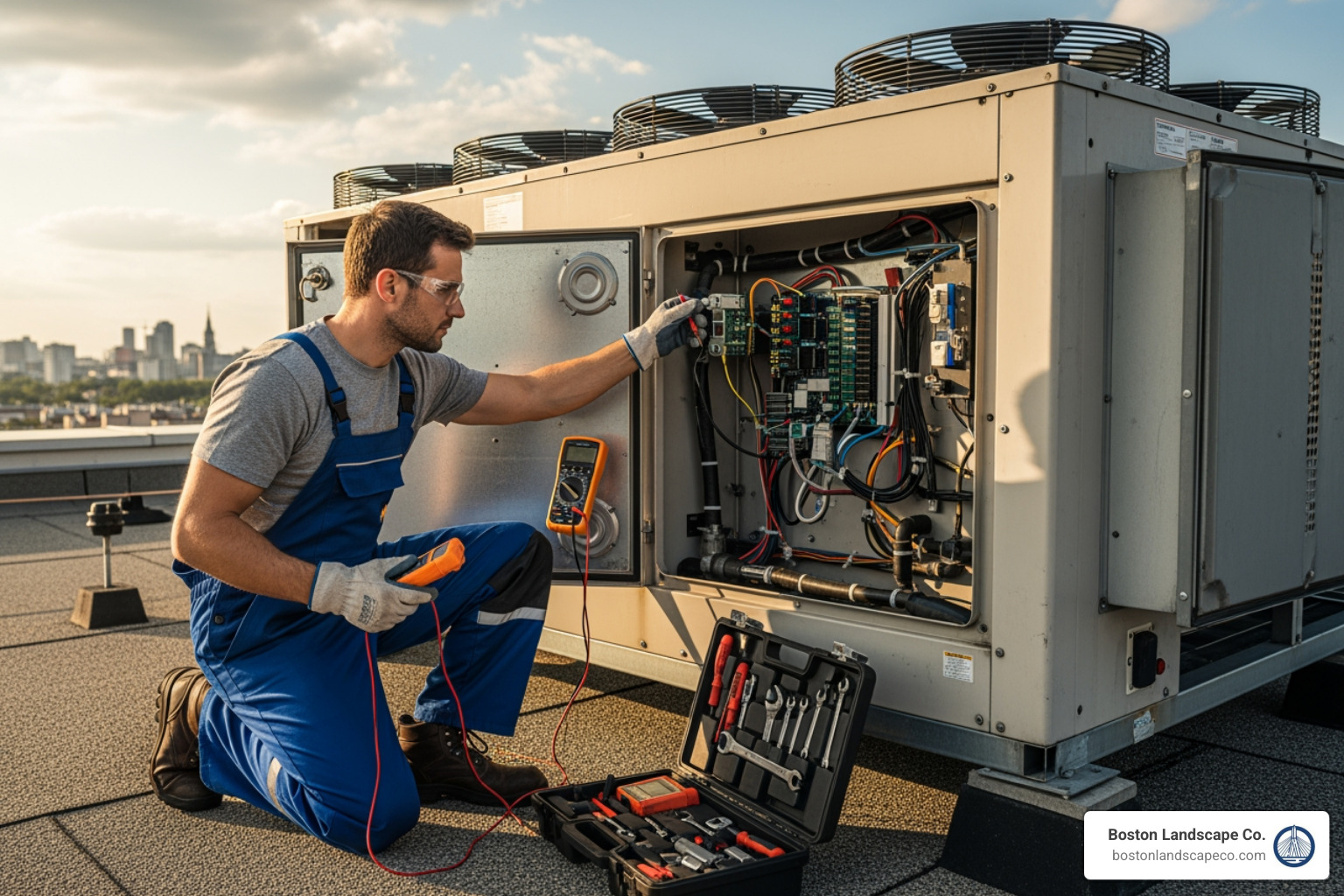
- HVAC Systems Management: HVAC systems are the lungs of your building, providing heating, ventilation, and air conditioning. Regular commercial maintenance tasks such as cleaning, lubricating, and adjusting equipment help prolong the life of critical building systems. HVAC systems require periodic filter changes (monthly or quarterly), duct cleanings, and professional tune-ups to operate efficiently. We recommend professional HVAC servicing at least twice a year – once in spring for cooling and once in fall for heating – to ensure they’re ready for the extreme temperatures we experience in Massachusetts.
- Electrical and Lighting Upkeep: Faulty wiring or inadequate lighting can be hazardous and inefficient. We conduct quarterly inspections of electrical systems, checking for hot spots and ensuring all emergency lighting systems are functioning. Upgrading to energy-efficient lighting can significantly reduce electricity costs by 50-70% while decreasing maintenance needs.
- Plumbing and Water Systems: Leaks and clogs can lead to significant water damage and mold issues. We perform quarterly inspections for leaks, corrosion, and proper water pressure. Implementing water conservation measures and installing smart water meters can save money and help detect leaks early.
- Fire Safety and Sprinkler Systems: The safety of your occupants is paramount. Annual inspections should include testing fire alarms, sprinkler systems, and other emergency equipment to ensure they are in working order and functioning under safety regulations.
- Restroom Sanitation: Restrooms are often a reflection of the entire property’s cleanliness. We implement detailed cleaning checklists, ensuring fixtures, lights, mirrors, and partitions are spotless, and supplies are always stocked. Deep cleaning quarterly is a common best practice.
- Flooring Care: High-traffic areas require consistent attention. This includes daily sweeping and weekly mopping for hard flooring, and daily vacuuming with quarterly deep cleaning for carpets. Using walk-off mats at entrances significantly reduces dirt tracked inside.
Differentiating Commercial vs. Residential Maintenance
While both commercial and residential properties require care, the scale, complexity, and implications of commercial property repairs and maintenance are vastly different.
- Scale and Complexity: Commercial buildings are typically more sophisticated, featuring commercial-grade HVAC systems, industrial plumbing, and specialized electrical installations. A large office building in Boston has far more complex systems than a single-family home.
- Compliance and Codes: Commercial properties must adhere to stringent safety regulations that protect occupants and visitors. This includes fire codes, accessibility standards (ADA), and occupational safety regulations (OSHA). The scrutiny and potential penalties for non-compliance are much higher for commercial properties.
- Tenant vs. Homeowner Impact: In a commercial setting, maintenance issues can directly impact multiple businesses, leading to lost revenue, productivity, and tenant dissatisfaction. In contrast, residential issues typically affect only one household.
- Equipment Grade: Commercial properties use heavy-duty, specialized equipment designed for continuous use and larger capacities, requiring specialized knowledge for maintenance and repair.
- Faster Response Times: Due to the potential impact on business operations and safety, response times for issues in commercial properties are typically faster and more critical than in residential settings.
The Business Side of Commercial Property Repairs and Maintenance
Beyond the physical tasks, managing commercial property repairs and maintenance involves strategic business considerations. It’s about clear communication, smart vendor choices, understanding legalities, and allocating resources effectively.
Navigating Lease Agreements and Responsibilities
One of the most crucial aspects of commercial property ownership and tenancy is understanding who is responsible for what when it comes to repairs and maintenance. This is typically outlined in the lease agreement, specifically within the “Repairs and Maintenance Clause.”
- Landlord vs. Tenant Duties: Generally, landlords are responsible for the structural integrity of the building and common areas, while tenants handle day-to-day maintenance within their leased space. However, this is highly negotiable. We’ve seen situations where a tenant finds a burst pipe and is told they are responsible, despite only signing the lease a few months prior.
- Lease Types: The type of lease significantly impacts these responsibilities.
- Some leases are “gross,” meaning the tenant pays base rent and maybe some utilities, with the landlord covering most other costs.
- At the other end of the spectrum are “triple net (NNN) leases,” where the tenant pays rent, utilities, and a portion of real estate taxes, property insurance, and maintenance. There are also variations like modified gross and double net leases in between.
- Negotiation: Many small business owners don’t realize these clauses are negotiable. Before signing any lease, we recommend a thorough review. Tenants can negotiate for the landlord to cover major repairs like roof or HVAC replacement, or set dollar limits on their own repair costs.
- Role of Building Surveyors: Building surveyors play a vital role here. They can decode complex lease terms, identify specific maintenance clauses, and conduct property assessments to highlight potential issues before they become your responsibility.
Ensuring Safety and Regulatory Compliance
Compliance isn’t just about avoiding fines; it’s about protecting lives, maintaining your reputation, and securing your investment. Commercial property repairs and maintenance must always align with local, state, and federal regulations.
- Local Building Codes: In Massachusetts, our properties must adhere to strict building codes. Regular inspections are critical to ensure structural integrity, electrical safety, and proper plumbing.
- Health and Safety Inspections: These assessments help identify potential hazards before they cause accidents or violations. This includes fire safety, accessibility standards (ADA), and occupational safety.
- Environmental Standards: Many jurisdictions now require commercial properties to meet specific environmental standards related to water usage, energy consumption, and carbon emissions. This may involve regular reporting and audits.
- Documentation and Record-Keeping: Thorough documentation of all maintenance activities, inspections, and compliance efforts is essential. It provides a clear record for audits, liability defense, and planning future maintenance. Regular inspections form the backbone of compliance, helping identify potential hazards.
Choosing Your Maintenance Partner
Deciding whether to handle commercial property repairs and maintenance in-house or outsource it is a critical decision.
- In-house vs. Outsourced Services:
- In-house: Offers more direct control and potentially faster response for minor issues. However, it requires significant investment in staff, training, equipment, and insurance.
- Outsourced: Provides access to specialized expertise, reduces overhead, and offers scalability. Reputable providers carry their own insurance and certifications, reducing your liability. For instance, companies like ours specialize in exterior maintenance, allowing your internal teams to focus on interior systems.
- Vetting Providers: When choosing an outsourced partner, thorough vetting is crucial. Prioritize providers with proper licensing, insurance, and certifications.
- Credentials and Insurance: Always verify that contractors are fully licensed and insured in Massachusetts. This protects you from liability in case of accidents or damages.
- Experience and References: Look for providers with a proven track record in commercial properties similar to yours. Ask for references and check their portfolio of past work.
- Technology Use: Modern maintenance providers often leverage technology for scheduling, tracking, and communication. This can streamline processes and improve transparency.
Here are some key questions to ask a potential maintenance provider:
- What is your experience with commercial properties of our size and type?
- Can you provide proof of insurance (liability and worker’s compensation) and relevant licenses?
- How do you communicate with clients regarding scheduled work, issues, and emergencies?
- What technology do you use to manage work orders and track progress?
- Can you provide references from other commercial property managers or owners in Massachusetts?
- What are your response times for routine maintenance vs. emergencies?
- How do you ensure quality control for your services?
The Future is Smart: Technology in Maintenance
Technology is revolutionizing commercial property repairs and maintenance, moving us towards more efficient, predictive, and cost-effective solutions. We’re embracing these advancements to provide superior service to our clients in the Boston area.
- Computerized Maintenance Management Systems (CMMS): A CMMS is a software system that centralizes and streamlines maintenance operations. It allows us to track work orders, schedule preventive maintenance, manage assets, and monitor inventory. This ensures that no task is missed and that we can efficiently deploy our teams across multiple properties in Medford, Wellesley, and beyond.
- Smart Building Technology (IoT): The Internet of Things (IoT) brings intelligence to your building. Sensors can monitor everything from HVAC performance and energy consumption to plumbing leaks and security breaches. This real-time data allows for immediate alerts and proactive intervention.
- Predictive Analytics: By analyzing data from smart building systems and historical maintenance records, we can predict when equipment is likely to fail. This allows us to schedule maintenance precisely when it’s needed, maximizing asset lifespan and minimizing unexpected breakdowns.
- Automation: Smart systems can automate routine tasks, such as adjusting lighting or HVAC based on occupancy or outside temperature, further reducing energy waste and manual oversight.
- Energy Efficiency: Technology plays a massive role in improving energy efficiency. Property managers who leverage smart technologies in maintenance report annual maintenance cost savings of 10-30%. This is not just good for your wallet; it’s good for the environment.
Frequently Asked Questions about Commercial Property Maintenance
What are the most critical maintenance tasks for a commercial property?
While all maintenance is important, some tasks are absolutely critical for safety, functionality, and protecting your investment. For our properties in Massachusetts, these include:
- HVAC Systems: Essential for tenant comfort and air quality, especially with our hot summers and cold winters. Regular inspections, filter changes, and seasonal tune-ups are non-negotiable.
- Roofing: Your primary defense against weather. Annual inspections and prompt repairs prevent costly water damage.
- Plumbing: Leaks can quickly escalate into major structural damage. Regular checks for leaks and proper drainage are vital.
- Electrical Safety: Faulty electrical systems are fire hazards. Regular inspections of wiring, panels, and emergency lighting are crucial.
- Fire Protection Systems: Annual testing of fire alarms, sprinklers, and emergency exits is a legal requirement and paramount for safety.
- Exterior Grounds for Safety and Curb Appeal: Especially during winter, snow removal, de-icing, and addressing slip-and-fall hazards are critical for safety and liability. Throughout the year, well-maintained landscaping improves your property’s value and appeal.
How much should I budget for commercial property maintenance?
Budgeting for commercial property repairs and maintenance can be tricky, but a good rule of thumb is to allocate 1-4% of your property’s value annually. This is an average based on internet data, and not an actual cost for Boston Landscape Co. For example, a $5 million commercial property might budget $50,000 to $200,000 per year for maintenance.
Factors that influence this budget include:
- Age and Condition of the Property: Older buildings typically require more maintenance.
- Type of Property: Retail, office, industrial, or multi-family properties each have unique needs.
- Location: Weather conditions (like New England winters) can increase maintenance demands.
- Quality of Materials and Systems: High-quality systems might have higher upfront costs but lower maintenance over time.
- Capital Expenditures (CapEx) vs. Operating Expenses (OpEx): Your budget should differentiate between routine maintenance (OpEx) and major replacements or upgrades (CapEx), such as a new roof or HVAC system.
The cheapest option rarely delivers the best value in maintenance. Proactive budgeting prevents costly surprises.
How do I create a basic maintenance checklist?
Creating a comprehensive maintenance checklist doesn’t have to be overwhelming. Here’s how we approach it:
- Identify All Assets: List every major component of your property – roof, HVAC units, plumbing fixtures, electrical panels, windows, doors, parking lot, landscaping, elevators, etc.
- Determine Frequency: For each asset, decide how often it needs inspection or service.
- Daily/Weekly: Cleaning common areas, trash removal, minor landscaping (e.g., in Stoneham or Concord).
- Monthly: Pest control, elevator checks, fire extinguisher checks.
- Quarterly: Gutter cleaning, interior deep cleaning, plumbing inspections, electrical checks.
- Bi-Annually: HVAC servicing (spring and fall).
- Annually: Roof inspection, fire alarm testing, parking lot striping, detailed structural inspection.
- Assign Responsibility: Clearly designate who is responsible for each task – in-house staff, external contractors, or property management.
- Document Everything: Keep detailed records of when tasks were performed, by whom, and any issues found. This helps track equipment lifespan and provides a history for future planning.
- Start with Critical Systems: Prioritize systems that impact safety, compliance, and core operations first. This includes HVAC, fire safety, roofing, and structural integrity.
Conclusion: Your Partner in Property Excellence
Managing commercial property repairs and maintenance might seem like a daunting task, but it’s a strategic investment that pays dividends in property value, tenant satisfaction, and peace of mind. By adopting a proactive approach, leveraging technology, and partnering with experienced professionals, you transform potential risks into opportunities for growth and stability.
At Boston Landscape Co., we understand the unique challenges faced by commercial property owners in Massachusetts. From meticulous landscape maintenance in Burlington to critical snow removal in Woburn, our expertise ensures your property is not just maintained, but truly thrives. We’re committed to protecting your assets, enhancing their value, and making sure your business ship remains shipshape, no matter the season.
Ready to secure your investment with a comprehensive maintenance plan?