
Clean Straw Mulch: Flawless Garden, 99% Weed-Free
Why Clean Straw Mulch Matters for Your Spring Garden
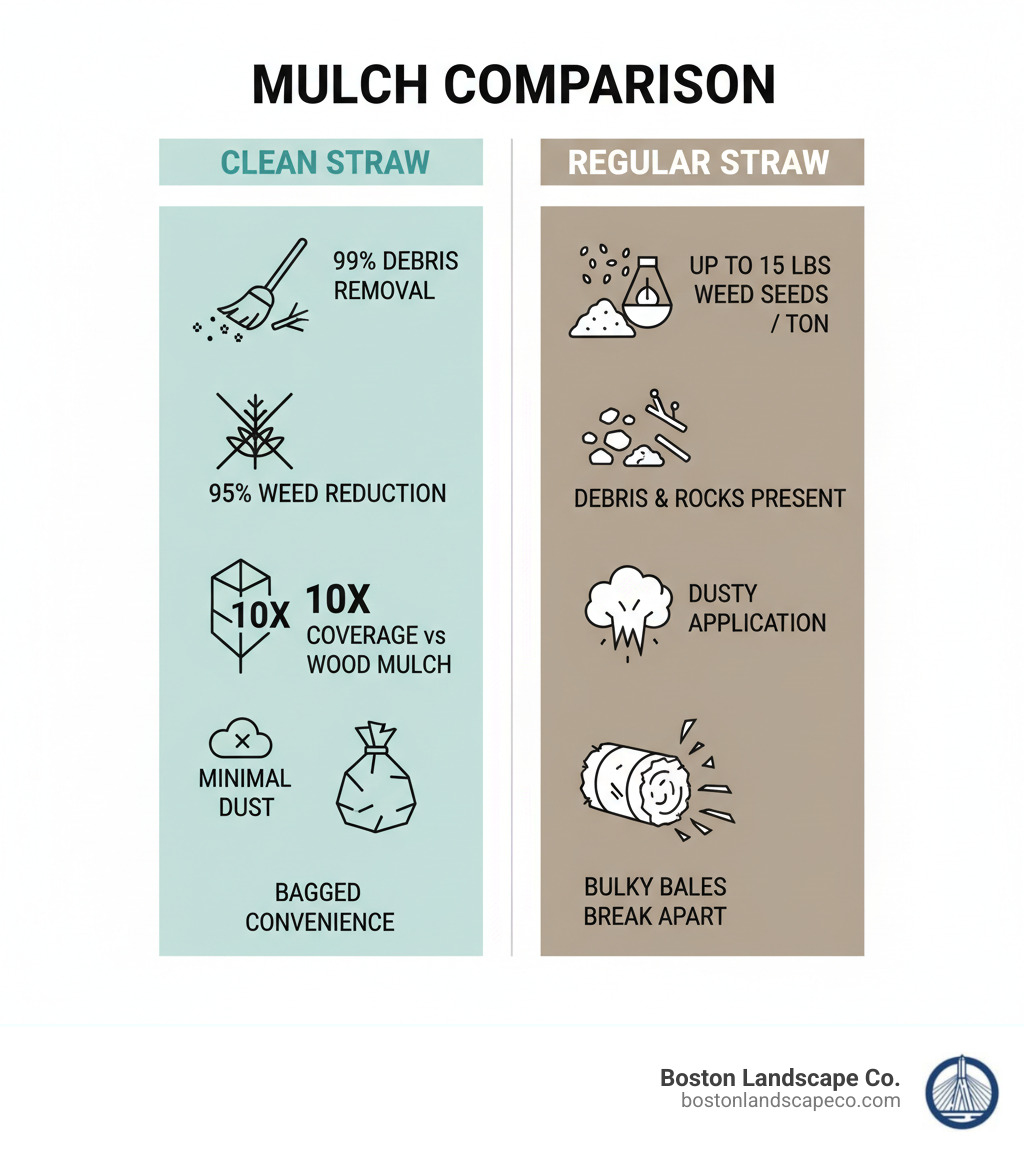
Clean straw mulch is straw that has been mechanically processed to remove 99% of sticks, stones, weed seeds, and dust. It’s ready for immediate use in garden beds, around trees, and in landscaping projects.
Quick Answer: What Makes Mulch “Clean”?
- Debris-Free: Processed to remove 99% of sticks and stones.
- Weed-Free: Contains no unwanted seeds that will sprout in your garden.
- Dust-Free: Minimizes mess during application.
- Ready to Use: Bagged for easy transport and storage.
- Superior Coverage: Provides 10x the coverage of wood mulch and 2x that of a traditional bale.
As spring arrives in the Greater Boston area, preparing garden beds while controlling weeds and conserving water is a top priority. Clean straw mulch solves these problems by creating a protective layer that suppresses weeds by up to 95%, retains soil moisture, and gives your landscape a neat, professional look. Unlike regular field straw, which can contain up to 15 pounds of weed seed per ton, processed clean straw delivers pure mulching power without the mess or unwanted surprises.
I’m Steve Schumacher, and in my three decades with Boston Landscape Co, I’ve seen how switching to clean straw mulch transforms struggling gardens into thriving, low-maintenance landscapes. Whether you’re mulching perennials, protecting a new lawn, or controlling erosion, choosing the right mulch is the foundation of success.
What Makes Straw Mulch “Clean”?
When we talk about “clean” straw mulch, we’re describing a product processed to give your garden exactly what it needs—and nothing it doesn’t. The difference between raw field straw and a cleaned product can be the difference between a thriving garden and one overrun with weeds.
From Field to Garden: Types of Straw Mulch
Straw is the dried stalks left after harvesting grain, but not all types perform the same. Understanding the differences helps you choose the right material for your Massachusetts landscape.
- Wheat straw is the classic choice. It breaks down at a moderate pace, adding valuable organic matter to improve your soil structure over the season.
- Pine straw—technically longleaf pine needles—is popular for its clean look and longevity. Its high resin content means it decomposes slowly, making it cost-effective for perennial beds. As it breaks down, it gently acidifies the soil, perfect for azaleas, rhododendrons, and other acid-loving plants common in New England.
- Rice straw is less common here but is known for its durability due to high silicate content. It’s more brittle and doesn’t integrate into the soil as easily.
- Barley straw is softer and more absorbent than wheat straw, offering great moisture retention but breaking down a bit faster.
All these materials act as effective soil amendments as they decompose, improving your garden’s long-term health.
The “Clean” Factor: Processing and Certification
Raw field straw requires processing to become a premium landscaping material. This is what makes it “clean.”
First is debris and dust removal. Quality products are mechanically processed to remove 99% of sticks and stones and minimize dust, making application cleaner and more pleasant.
The most critical factor is weed-free certification. Unprocessed field straw can contain up to 15 pounds of weed seeds per ton. Certified weed-free straw is guaranteed not to contain seeds of noxious weeds. When sourcing mulch, look for products with this certification, as explained in resources like this guide on weed-free forage.
Clean straw is also pathogen-free, so it won’t introduce fungal diseases to your vulnerable spring plants.
Finally, there’s convenience. Clean straw typically comes bagged rather than baled, making it easier to transport, store, and handle. Bags prevent the mess of traditional bales that fall apart. Some are even vacuum-packaged, fluffing up beautifully once opened. When you invest in clean straw mulch, you’re buying peace of mind, knowing exactly what you’re putting into your landscape.
The Unbeatable Benefits of Using Clean Straw Mulch
Spreading a layer of clean straw mulch sets your landscape up for healthier growth and easier maintenance. Here’s exactly what this simple addition does for your Greater Boston garden.
Superior Weed Prevention and Moisture Retention
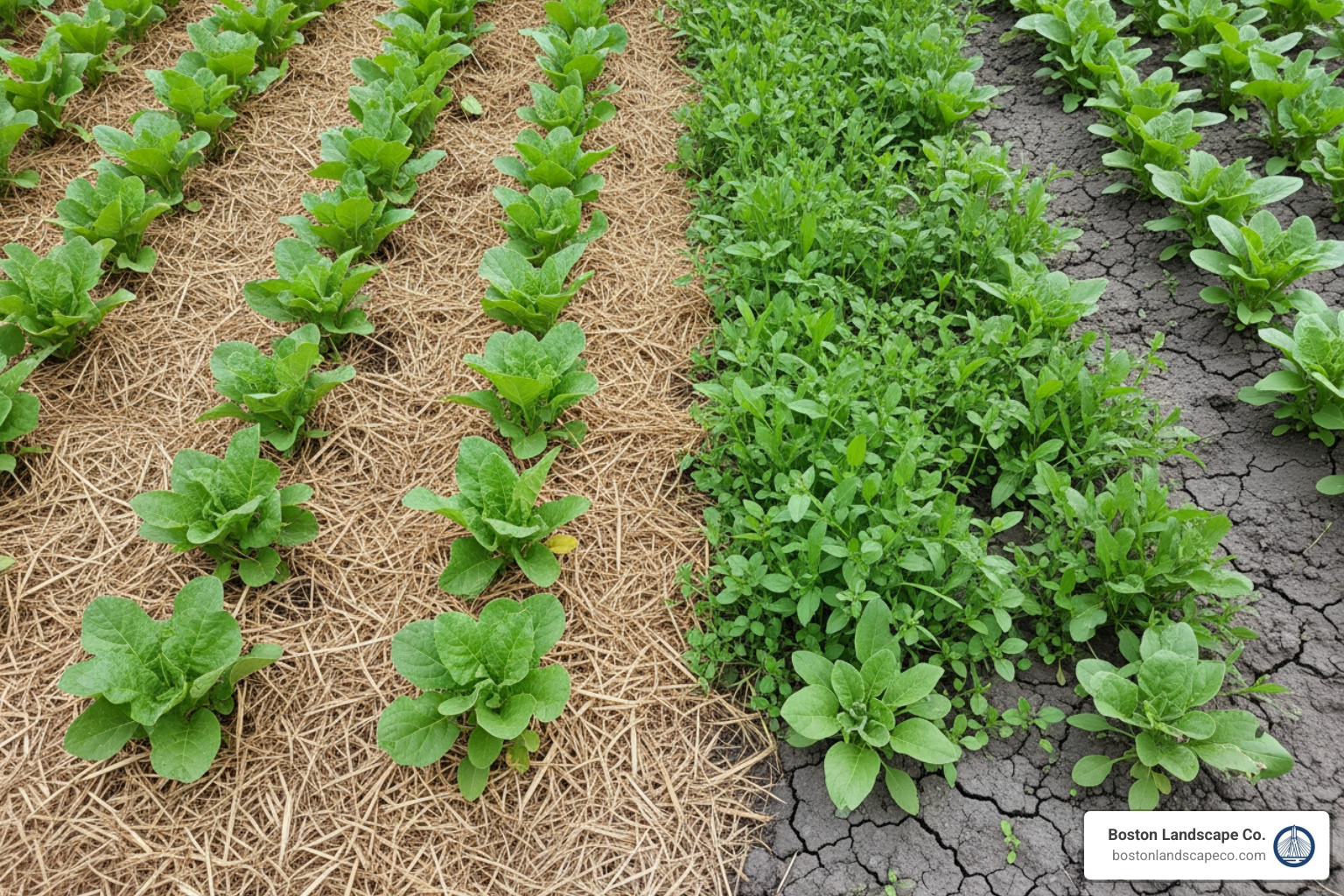
Clean straw mulch blocks sunlight from reaching the soil, reducing weed germination by up to 95%. This means far less time spent pulling weeds and more time enjoying your garden.
That same protective layer acts as insulation for your soil. It buffers against the temperature swings of a Massachusetts spring and, in summer, keeps soil cooler while reducing water evaporation. Your plants’ roots stay consistently moist, meaning less frequent watering and healthier, less-stressed plants.
For a professional approach to landscape health, our team offers mulching services custom to your needs. You can learn more about our mulching services and how we ensure proper coverage.
Enhancing Soil Health and Structure
Unlike synthetic landscape fabrics, organic straw mulch constantly works to improve the soil beneath it. As the straw slowly decomposes, it releases nutrients like nitrogen, phosphorus, and potassium, acting as a slow-release fertilizer.
The fibrous material also improves soil aeration, which is vital for the heavy clay soils common in our region. It prevents compaction and helps roots breathe. In sandy soils, it adds organic matter that retains moisture and nutrients.
This process encourages beneficial microbial activity and earthworms, creating a healthy soil ecosystem. Most grain-based straws maintain a neutral pH, making them suitable for any garden. Pine straw, however, gently acidifies the soil, making it an excellent choice for acid-loving plants like azaleas and blueberries.
Pest Deterrence and Plant Protection
Clean straw mulch also defends your plants from common threats. It absorbs the impact of heavy rain, preventing soil compaction and stopping soil splash-back onto lower leaves. This is a primary way fungal diseases spread, so a layer of mulch reduces infections like early blight on tomatoes.
For those dealing with slugs and snails, certain mineral-enriched straw mulches create a surface these pests dislike crossing. The overall effect is a garden that performs better with less intervention. Plants experience less stress and disease, allowing them to focus their energy on producing lush flowers and fruit.
A Practical Guide to Sourcing and Applying Your Mulch
Now that you understand the benefits of clean straw mulch, let’s cover the practicalities of sourcing and applying it correctly for a professional finish.
Sourcing High-Quality Clean Straw Mulch
Quality clean straw mulch is available at local garden centers and landscape suppliers throughout Massachusetts. Brands like CleanStraw are often stocked at hardware stores like Lowe’s and Ace Hardware.
When shopping, choose bagged mulch. It’s far more manageable than traditional bales, which are messy and difficult to transport. Before buying, inspect the product: it should be dry and free of musty odors. Read the packaging for terms like “weed-free” or “99% stick and stone free” to confirm you’re getting a premium product. For more details, consult resources like this guide on weed-free forage.
Calculating Coverage: Bags vs. Bales
To avoid running out of mulch or buying too much, proper calculation is key. Aim for a depth of 2-3 inches for effective weed suppression and moisture retention.
Here’s where clean straw mulch stands out: a 2.5 cubic foot bag of processed pine straw can cover approximately 80 square feet at a 3-4 inch depth. This is 10 times the coverage of a standard bag of wood mulch and twice the coverage of a traditional bale, offering better value and requiring less labor.
Step-by-Step Application for a Flawless Finish
Applying clean straw mulch correctly ensures success all season long.
- Start with a clean slate. Pull all existing weeds, roots and all. For a crisp look, use an edging tool to define your beds. For more on preparation, see our weeding and edging services page.
- Add a weed barrier (optional). For very weedy areas, lay down overlapping flattened cardboard or newspaper before mulching. This barrier suppresses weeds and biodegrades over time.
- Water first. Apply mulch to damp, not dry, soil. Water your beds thoroughly a day or two beforehand to lock in moisture.
- Spread evenly. Aim for an even 2-3 inch layer across the bed. Use a rake for large areas and your hands for delicate work around plants.
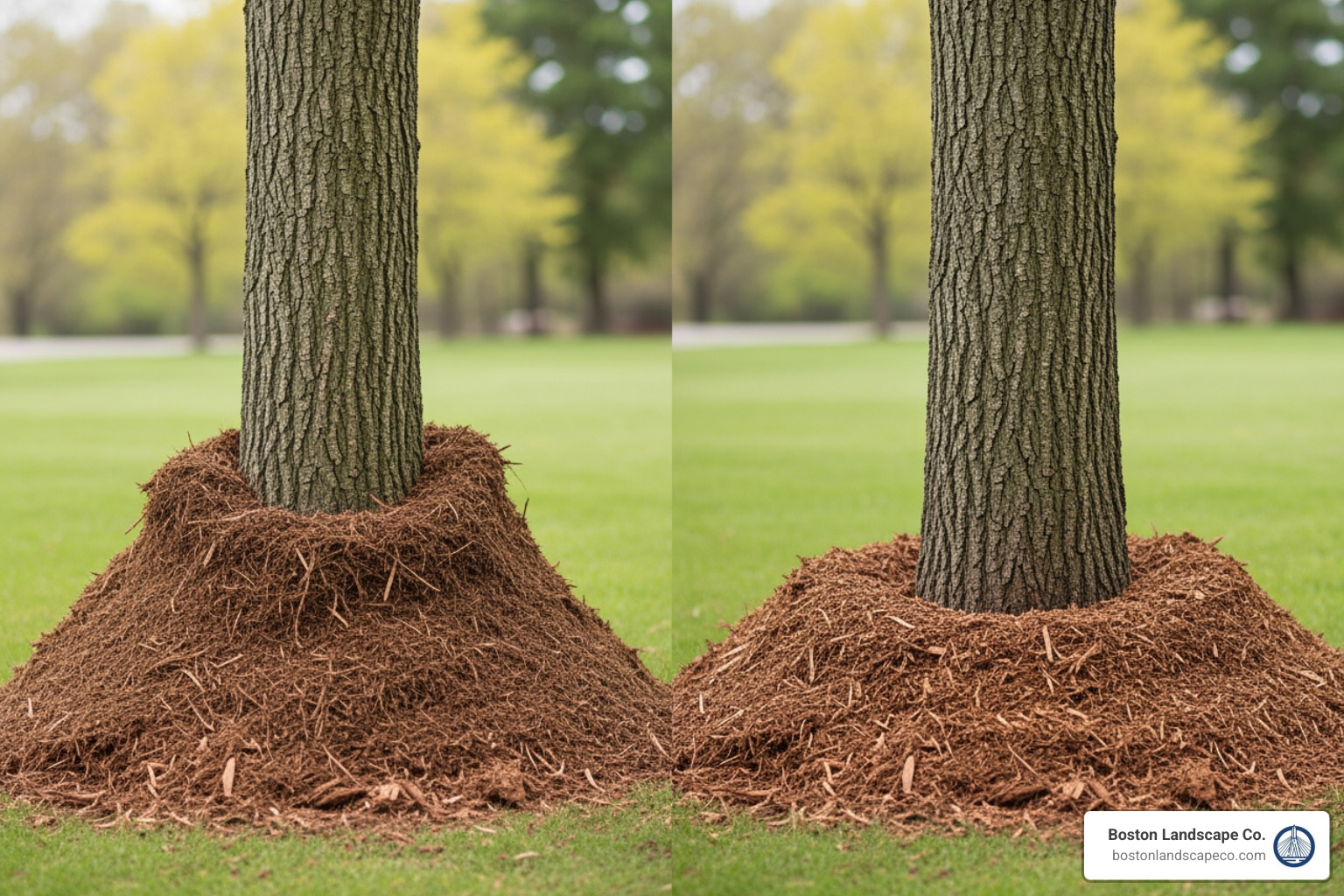
- Protect your plants. This is the most important rule: keep mulch at least 3 inches away from plant stems and tree trunks. Piling mulch against the base—a “mulch volcano”—traps moisture and can cause rot, pests, and disease.
- Water again. A light watering after spreading helps settle the mulch and keeps it from blowing away on breezy spring days.
For comprehensive mulching solutions, explore our full range of mulching services.
Beyond the Garden Bed: Versatile Uses for Straw
Clean straw mulch is a versatile landscaping material that solves problems all over your property, especially with the unpredictable spring weather in Massachusetts.
Erosion Control on Slopes and Disturbed Areas
If you’ve watched spring rains wash away your topsoil, you know how frustrating erosion can be. Clean straw mulch offers an immediate solution. Spread across a slope, the fibrous strands create a protective blanket that stabilizes the soil. It absorbs the impact of raindrops, preventing them from dislodging soil particles.
Pine straw is especially effective because its long needles interlock and stay in place, slowing water runoff and allowing it to soak in. We use it on newly graded areas to provide protection while permanent vegetation establishes. For more technical details, the USDA offers a helpful guide on straw mulching for erosion control.
Seeding Cover for New Lawns
Planting a new lawn is a gamble against birds, rain, and wind. Clean straw mulch is your secret weapon. A light covering—thin enough to see the soil through it—creates a perfect nursery for new grass. It protects grass seed from washout and birds while retaining the moisture and warmth needed for germination.
The straw acts like a mini-greenhouse, speeding up germination. As the new grass grows, the straw simply biodegrades into the new lawn, requiring no cleanup. Using certified weed-free straw is crucial to avoid introducing competition for your new grass seedlings.
Other Practical Applications
Clean straw has many other creative uses:
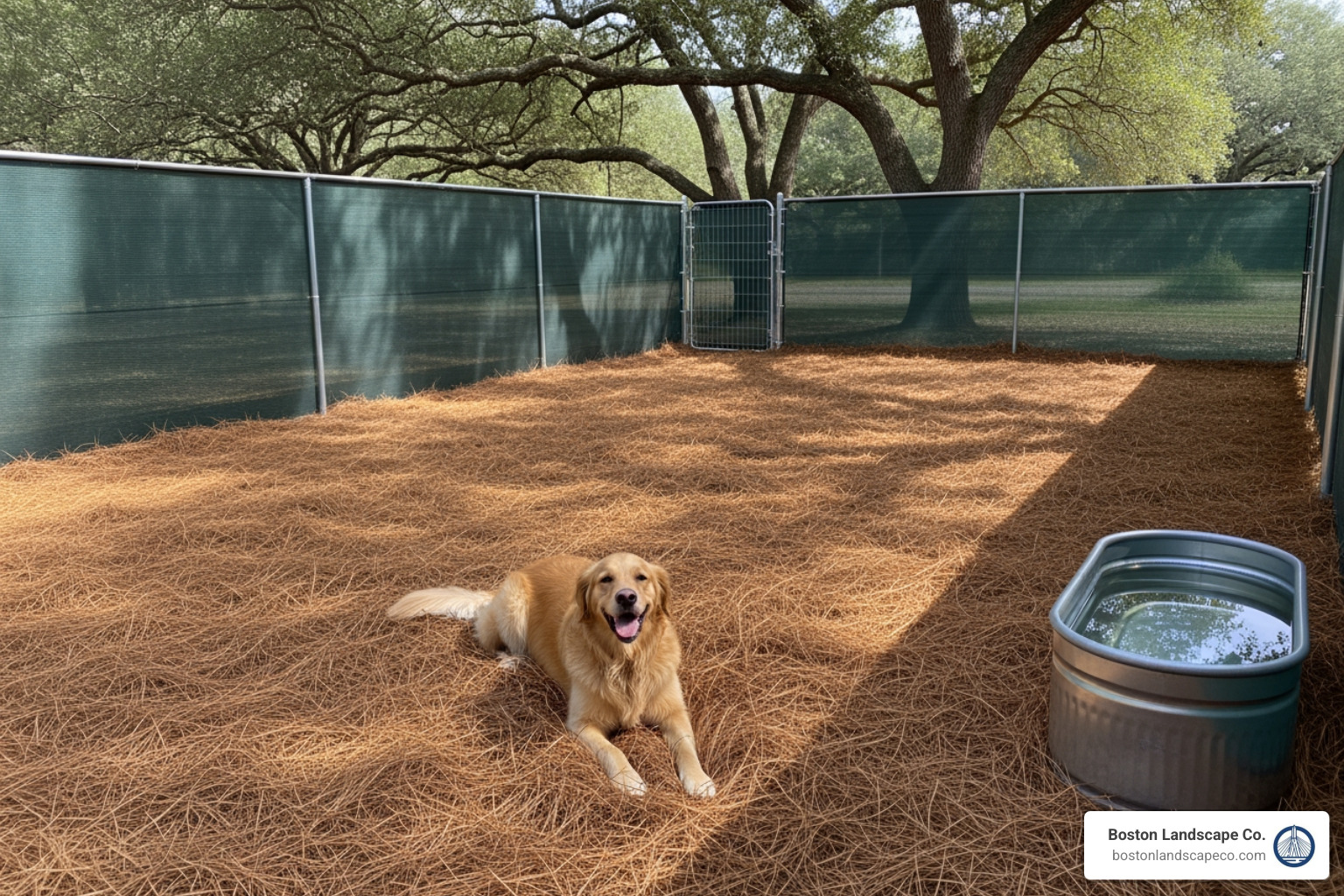
- Pet Bedding: For outdoor dog runs, clean pine straw provides comfortable, well-draining bedding that stays cleaner than bare dirt.
- Winter Insulation: A loose layer of straw applied after the ground freezes provides insulation for tender perennials, protecting them from damaging freeze-thaw cycles.
- Garden Pathways: In vegetable gardens, straw creates clean, dry pathways that prevent soil compaction and keep produce free from mud splash. At the end of the season, it can be tilled into the soil as organic matter.
Frequently Asked Questions about Clean Straw Mulch
Here are answers to the most common questions we hear from homeowners in the Greater Boston area about using clean straw mulch.
What should I put down before mulching?
Start with a clean foundation. We always recommend pulling all existing weeds first. For particularly weedy beds, laying down a layer of cardboard or newspaper (no glossy paper) provides an excellent biodegradable barrier. It suppresses weeds now and adds organic matter to the soil as it breaks down. Loosening the top inch of soil also improves aeration and drainage.
How long does straw mulch last?
The longevity depends on the type. Processed longleaf pine straw is very durable, often lasting a year or more. Specialty products like Strulch (mineral-enriched wheat straw) are designed to last up to two years. Lighter options like standard wheat or barley straw typically last one growing season (about six months) before needing a refresh. Their faster decomposition adds organic matter to your soil more quickly.
Is straw mulch a fire hazard?
Like any dry organic material, clean straw mulch is flammable. However, the risk is easily managed with common-sense precautions. Keep mulched areas well-watered, especially during dry summer spells. Maintain a few feet of clearance between mulch and any fire source, like a grill or fire pit. We also recommend creating a non-combustible zone (using gravel or bare soil) around your home’s foundation. Finally, ensure cigarettes are always extinguished in proper receptacles, never tossed into a mulched bed.
Transform Your Landscape with the Right Mulch
Choosing clean straw mulch is an investment in a healthier, more beautiful, and lower-maintenance landscape. A high-quality, debris-free product delivers superior weed control, moisture retention, and long-term soil health, addressing the key challenges our Greater Boston landscapes face.
From the dry spells of summer to heavy spring rains, clean straw mulch protects your soil and plants, giving your property a polished, professional appearance. It reduces time spent watering and weeding, giving you more time to simply enjoy your outdoor space.
At Boston Landscape Co., we have decades of experience serving properties across Stoneham, Billerica, Lexington, Winchester, and throughout the region. We understand the local soil conditions and help you select the right mulch for your specific plants and goals. Our expertise ensures your landscape doesn’t just survive—it thrives.
Ready to experience the benefits of professional landscaping services custom to your property? Let’s discuss your vision.
Request an estimate for your landscaping project and find how Boston Landscape Co. can transform your outdoor space.
