
Can you install your own irrigation system: Save $1000s!
Why Installing Your Own Irrigation System Makes Sense
Can you install your own irrigation system? Yes, you can. For a homeowner with intermediate DIY skills, installing an underground sprinkler system is a rewarding project that can be completed over a weekend or two. While trenching is physically demanding and connecting to the main water line is technically challenging, the benefits are significant. You can save thousands, conserve water, and boost your home’s curb appeal.
Professional installation costs can range from $2,500 to over $10,000, while a DIY project typically costs under $1,500 in materials. These are average costs based on internet data and not actual costs for Boston Landscape Co. Your actual expenses may vary.
Spring is the perfect time to install an irrigation system in New England. The ground is soft and workable, and your system will be ready before the summer heat arrives. As a landscaper with over three decades of experience in the Greater Boston area, I’ve seen many successful DIY projects. Proper planning is the key to ensuring your system works beautifully and saves you time and money in the long run.
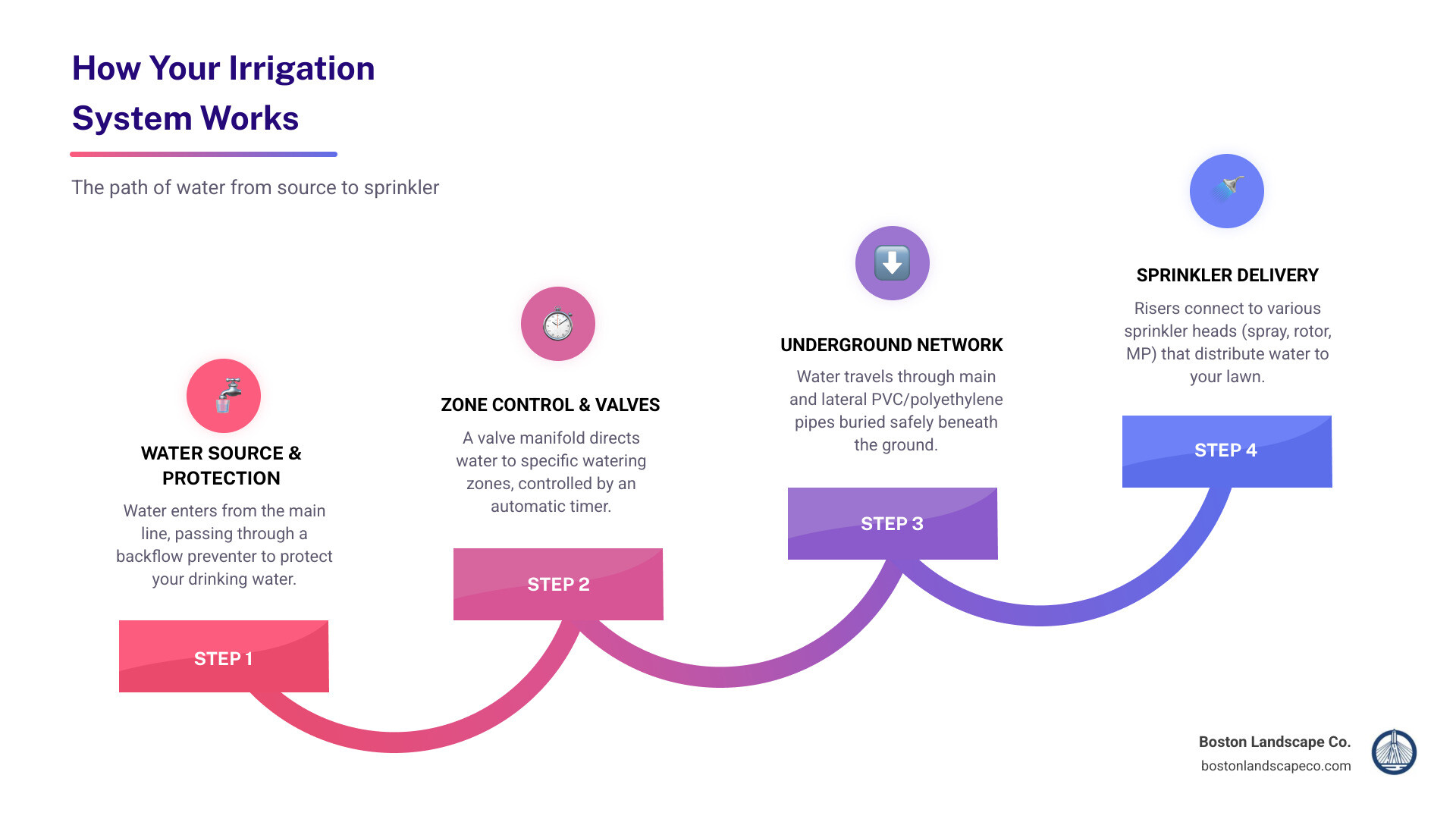
Can you install your own irrigation system terms explained:
- cost to install irrigation system
- how are irrigation systems installed
- how long does it take to install irrigation system
Step 1: Planning Your System for a Perfect New England Lawn
Here’s the truth: this planning phase is absolutely the most critical part of your entire installation. Rushing this step, especially with New England’s varied terrain, can lead to uneven coverage, wasted water, and a system that doesn’t work right. A proper blueprint now will save you headaches all summer.
How to Map Your Yard and Create Watering Zones
Before you dig, grab graph paper and a measuring tape. Sketch your property to scale, including your house, driveway, and walkways. Then, mark all landscaping elements: trees, shrubs, flower beds, and slopes. Critically, note which areas get full sun versus shade, as their water needs will differ significantly.
Next, create watering zones by grouping plants and areas with similar sun exposure and water needs. Your lawn, vegetable garden, and perennial beds should all be in separate zones. Once your zones are defined, place sprinkler heads on your map to achieve “head-to-head coverage,” meaning the spray from one sprinkler reaches the next. This ensures uniform watering without dry spots. Map out your property thoroughly for the best results.
Determining Your Home’s Water Capacity
Your home’s water supply dictates your system’s design. You need to measure two things:
- Water Pressure (PSI): Use a pressure gauge on an outdoor spigot. Most systems need 40-65 PSI to operate effectively.
- Flow Rate (GPM): Time how long it takes to fill a 5-gallon bucket from an outdoor spigot. The formula is: (5 / time in seconds) x 60 = GPM.
These numbers determine how many sprinkler heads can run on a single zone without losing pressure. Also, note your main water service line size (typically 3/4 or 1 inch). For more complex needs, see our guide on irrigation for large lawns.
Choosing Your System: Sprinklers, Drip, and Head Types
The right equipment depends on what you’re watering. There is no one-size-fits-all solution.
| Area Type | Best System Choice | Why It Works |
|---|---|---|
| Open lawn areas | In-ground sprinklers with rotor heads | Even coverage over large spaces, adjustable spray distance |
| Small lawn sections, tight corners | Pop-up spray heads | Precise coverage in confined areas |
| Garden beds, perennials | Drip irrigation | Water-efficient, targets roots, keeps foliage dry |
| Foundation plantings, shrubs | Drip lines or bubblers | Deep watering, minimal waste, flexible placement |
| Trees | Bubblers or drip rings | Slow, deep watering for root development |
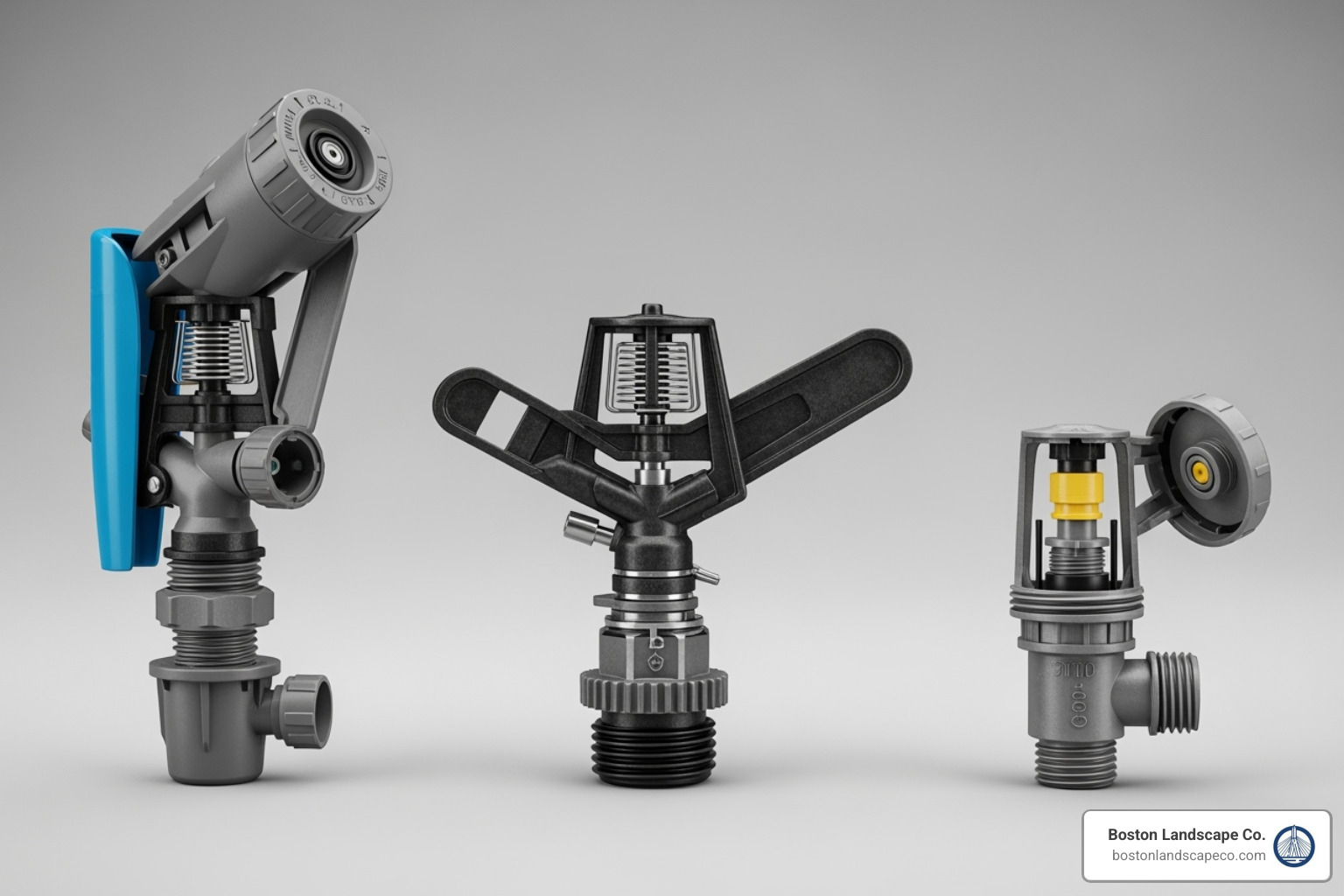
- Pop-up spray heads are great for smaller lawns and irregular shapes.
- Rotor heads cover larger areas and include water-efficient MP Rotators that reduce runoff on slopes.
- Drip irrigation is highly efficient for gardens and flower beds, delivering water directly to the roots. Learn more in our drip irrigation system installation guide.
Step 1: Planning Your System for a Perfect New England Lawn
A detailed plan is the blueprint for a successful system, especially in New England. Start by mapping your property on graph paper, noting all features, landscaping, and sun/shade patterns. Group areas with similar watering needs into zones to ensure each plant type gets the right amount of water.
Next, determine your home’s water pressure (PSI) with a pressure gauge and flow rate (GPM) using the bucket test. These figures dictate how many sprinkler heads can operate per zone. Finally, choose the right equipment: pop-up sprinklers for lawns, and water-efficient drip systems for gardens and shrubs. Matching the hardware to your landscape’s needs is essential for an effective system. For more details, see our guides on irrigation for large lawns and our drip irrigation system installation guide.
Step 2: Gathering Your Tools and Materials
Having all your tools and materials ready will prevent multiple trips to the hardware store and make the installation process much smoother.
Essential Tools for Sprinkler Installation
Most tools can be found in your garage, but some may need to be rented or purchased.
- Trenching: A power trencher is highly recommended for New England’s rocky soil and is worth the rental fee, which can range from $75 to $250 per day. A trenching shovel works for smaller, softer yards.
- Pipe Work: You’ll need a dedicated pipe cutter for clean cuts, along with PVC primer and cement for watertight bonds.
- Wiring: Wire strippers and a multimeter are essential for connecting the low-voltage controller wires and troubleshooting any electrical issues.
- General Landscaping: Shovels, trowels, stakes, and string will be needed for digging, backfilling, and marking your layout.
- Safety Gear: Always use gloves, safety glasses, and sturdy boots.
What to Buy: A DIY Irrigation Shopping List
Your shopping list is based on the plan you created in Step 1.
- Piping: Use durable Schedule 40 PVC pipe (3/4″ or 1″) for main lines and flexible polyethylene (poly) pipe for lateral lines, which is more forgiving in our freeze-thaw cycles.
- Sprinkler Heads: Purchase a mix of pop-up sprays, rotors, and drip emitters based on your zone plan. Buy a few extras.
- Controller: A smart controller, while more expensive upfront (average costs of $170 to $530), can save over 7,000 gallons of water annually by using local weather data to adjust schedules. This often pays for itself within two seasons.
- Valves & Backflow Preventer: You’ll need a valve manifold, a protective valve box, and a backflow preventer, which is a critical safety device required by most Massachusetts codes.
- Fittings & Wires: Stock up on extra fittings (tees, elbows), risers, low-voltage wire, and Teflon tape.
A typical DIY system costs between $800 and $2,500 in materials. For more on costs, see our guide on installation costs. Note: All prices are averages based on internet data and not actual costs for Boston Landscape Co.
Step 3: Can you install your own irrigation system? The Step-by-Step Installation Process
With planning complete, it’s time to get your hands dirty. This is the most hands-on part of the project, so take your time with each step to ensure a reliable system.
Before You Dig: Safety, Permits, and Marking

This step is non-negotiable for safety.
- Check Local Codes: Before starting, check with your local town office (e.g., Boston, Lexington, Concord) for permit requirements. Permit costs can range from $35 to $250, and ignoring them can lead to fines.
- Call 811: At least 72 hours before digging, dial 811 or visit call811.com. This free service marks underground utility lines. Hitting a line is dangerous and can lead to costly repairs.
- Mark Your Layout: Use stakes or marking paint to transfer your plan from paper to the yard. This visual guide helps prevent mistakes.
Digging Trenches and Laying the Pipe
This is the most physically demanding part. In New England’s rocky soil, a power trencher is a wise investment.
- Trench Depth: Dig trenches 8 to 12 inches deep to protect pipes from winter freezes.
- Pipe Assembly: Lay pipes alongside the trenches and assemble sections above ground. For PVC, use primer and cement for a permanent bond. For flexible poly pipe, use barbed fittings and clamps.
- Placement: Once assembled, carefully place the pipe network into the trenches. To run pipe under a walkway, use water pressure from a hose and nozzle to bore a path. Connect the ends carefully to prevent future leaks.
How do I connect the system to the main water supply?
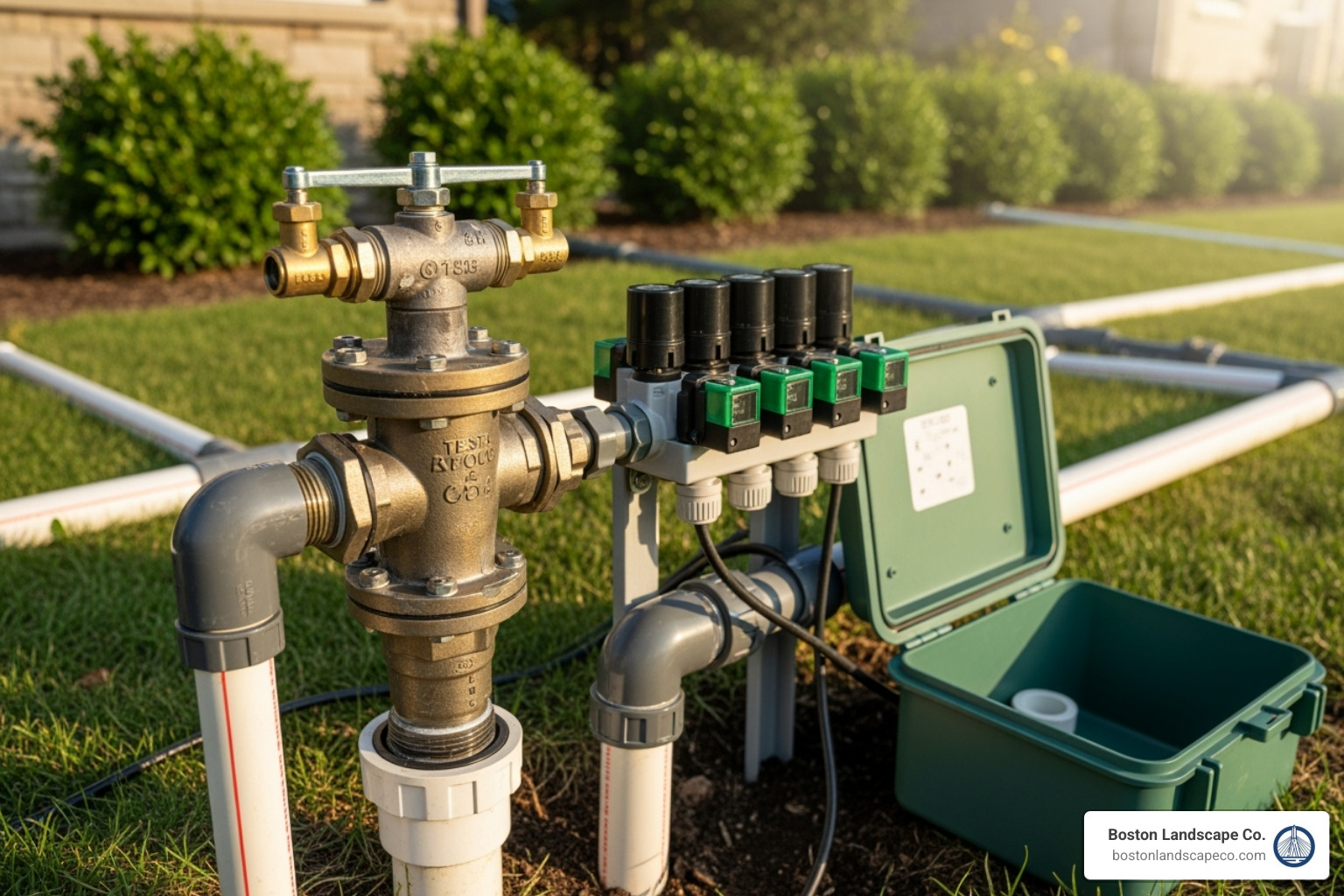
This is the most complex step. We highly recommend hiring a licensed plumber for this connection.
- Shut Off Main Water: Turn off your home’s main water supply.
- Tap the Line: A plumber will safely splice a T-connector into your main water line.
- Install Backflow Preventer: This crucial device prevents irrigation water from contaminating your drinking water. It’s required by law in Massachusetts and must be installed correctly.
- Assemble Valve Manifold: Group your zone valves in a protective box, connecting the main line and the lateral lines for each zone. For more details, see our guide on how irrigation systems are installed.
How do I install sprinkler heads and the automatic timer?
- Install Heads: Attach sprinkler heads to the pipes using risers. Set them flush with the ground in lawn areas to avoid mower damage.
- Wire the Controller: Run low-voltage wire from the valve manifold to your controller, typically mounted in a garage or on a covered porch. Connect each zone wire and the common wire to the correct terminals.
- Program the System: Set watering schedules for the early morning (4 AM to 8 AM) to minimize evaporation and prevent fungus. Use a smart controller or rain sensor to automatically skip watering when it rains, which can save 15-30% on water usage according to EPA research.
Note: All prices mentioned are averages based on internet data and not actual costs for Boston Landscape Co.
Step 4: Final Steps, Troubleshooting, and Seasonal Maintenance
Your system is installed, but proper testing and ongoing maintenance are key to ensuring it runs efficiently for years to come.
The First Run: Flushing, Testing, and Adjusting
Before backfilling the trenches, perform a “first run” test.
- Flush the System: Before installing sprinkler heads, run water through each zone to flush out any dirt and debris from the pipes.
- Test for Leaks: Install the heads, then run each zone one by one. Walk the yard and check every connection for leaks.
- Adjust Spray Patterns: Fine-tune each sprinkler’s spray arc and distance to achieve “head-to-head” coverage, ensuring no dry spots. Make sure you’re watering your lawn, not your driveway.
- Backfill: Once you’ve confirmed there are no leaks, carefully backfill the trenches.
Common DIY Troubleshooting Tips
- Low Pressure: Check for clogged nozzles, leaks, or a partially closed main valve.
- Clogged Heads: If a head sprays erratically, the nozzle is likely clogged. Unscrew it, clean it with a toothpick, and rinse.
- Zone Won’t Turn On: Check the controller programming and wiring connections at the controller and the valve. The issue could also be a faulty valve solenoid.
- Leaks: For persistent damp spots, dig down to the pipe. Repair PVC with a new section and couplings; for poly pipe, tighten clamps or replace the fitting.
How do I maintain my irrigation system in Massachusetts?
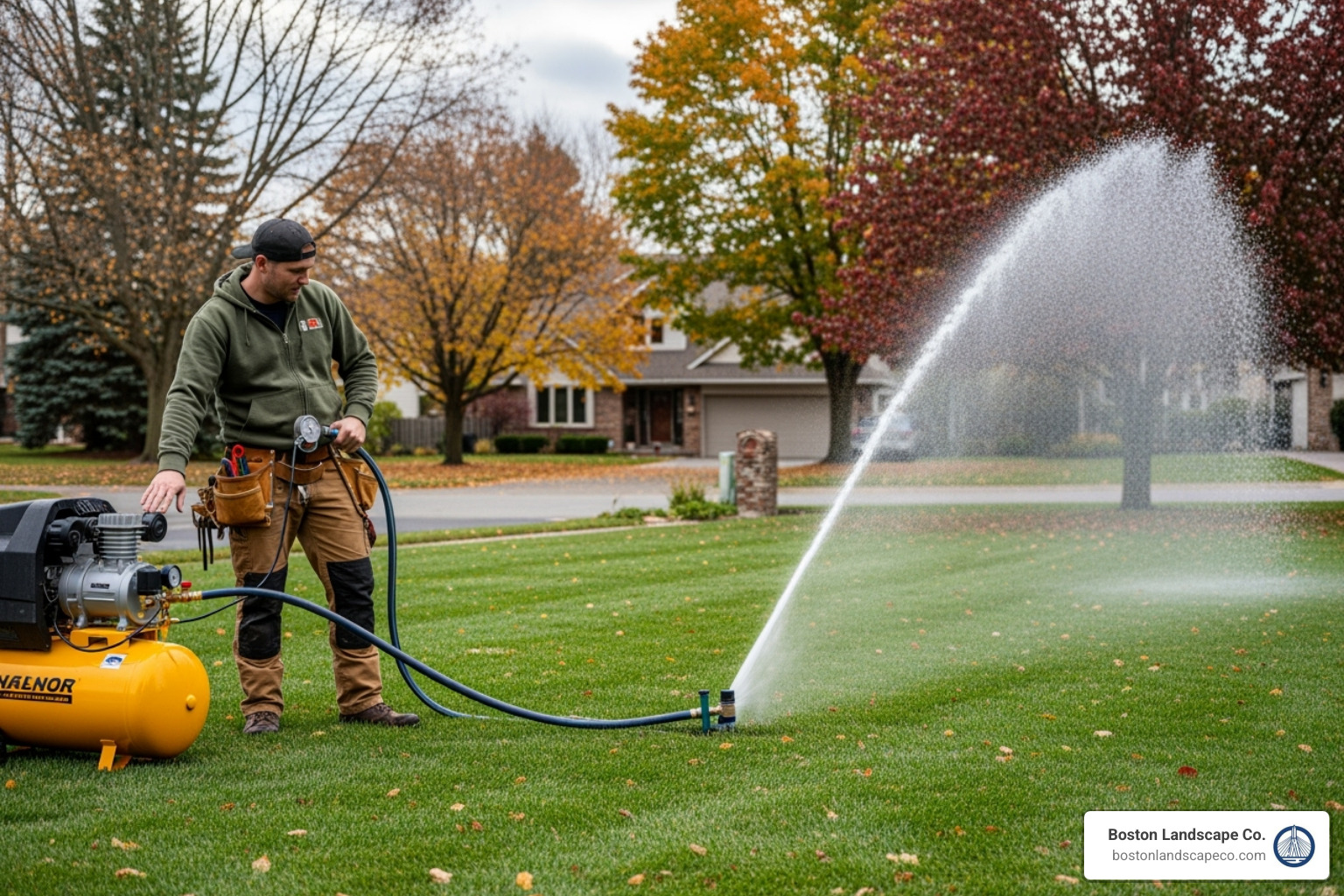
Seasonal maintenance is essential in our climate.
- Spring Start-Up (April-May): Slowly turn the water back on to avoid pressure surges. Run each zone to check for leaks or damage from winter frost heave. Professional start-up services average $75-$250 based on internet data.
- Winterization (Oct-Nov): This is non-negotiable in Massachusetts to prevent freeze damage, which can cost $200 to over $3,000 per zone to repair. The system must be completely drained of water. The best method is a “blow-out” using an air compressor. If you’re not comfortable with this process, professional winterization is a wise investment, with average costs of $60-$300.
Consider a professional inspection every few years to test your backflow preventer and ensure peak efficiency.
Note: All prices mentioned are averages based on internet data and not actual costs for Boston Landscape Co.
Frequently Asked Questions about DIY Irrigation
How much money can you save with a DIY installation?
The savings are significant. Professional installation can cost from $2,500 to over $10,000, while a DIY project can often be completed for under $1,500 in materials. For a typical quarter-acre lot, a DIY project might cost $1,600-$2,500, compared to $3,500-$5,500 for professional installation.
Note: These are average costs based on internet data and not actual costs for Boston Landscape Co. Our estimates are provided after a personalized property assessment.
How long does it take to install a sprinkler system yourself?
For a small yard (under 5,000 sq ft), plan for a full weekend (16-20 hours). A medium-sized or complex property can take 20-40 hours, while very large properties could require 60+ hours. Thorough planning is the best way to ensure an efficient installation.
What is the hardest part of installing a sprinkler system?
The most physically demanding part is digging the trenches, especially in New England’s rocky soil; renting a power trencher is highly recommended. The most technically challenging part is connecting the system to your main water line. Due to the risks of water damage and code violations, we advise hiring a licensed plumber for this specific task.
Is a DIY Sprinkler System Right for You?
Can you install your own irrigation system? Absolutely. Installing your own irrigation system is a challenging but achievable project that can save you thousands and give you a deep sense of accomplishment. With careful planning, the right tools, and a willingness to get your hands dirty, you can create a system that keeps your lawn lush and healthy all season. It’s a fantastic way to invest in your home and enjoy a beautiful outdoor space.
However, we understand that not everyone has the time, the physical capability, or the desire to tackle such a comprehensive project. For complex properties, navigating local codes, safely connecting to the water main, or if you simply want a guaranteed professional result without the stress, the expert team at Boston Landscape Co. is here to help. We bring decades of experience to the Greater Boston area, ensuring your irrigation system is designed and installed for optimal efficiency and longevity.
Ready to ensure your lawn is the envy of the neighborhood without the hassle? Explore our professional Irrigation System Installation services.
