
Can I Put a Normal Trampoline in the Ground? 5 Risks
Can I put a normal trampoline in the ground? The short answer: Technically yes, but it’s not recommended. Here’s why:
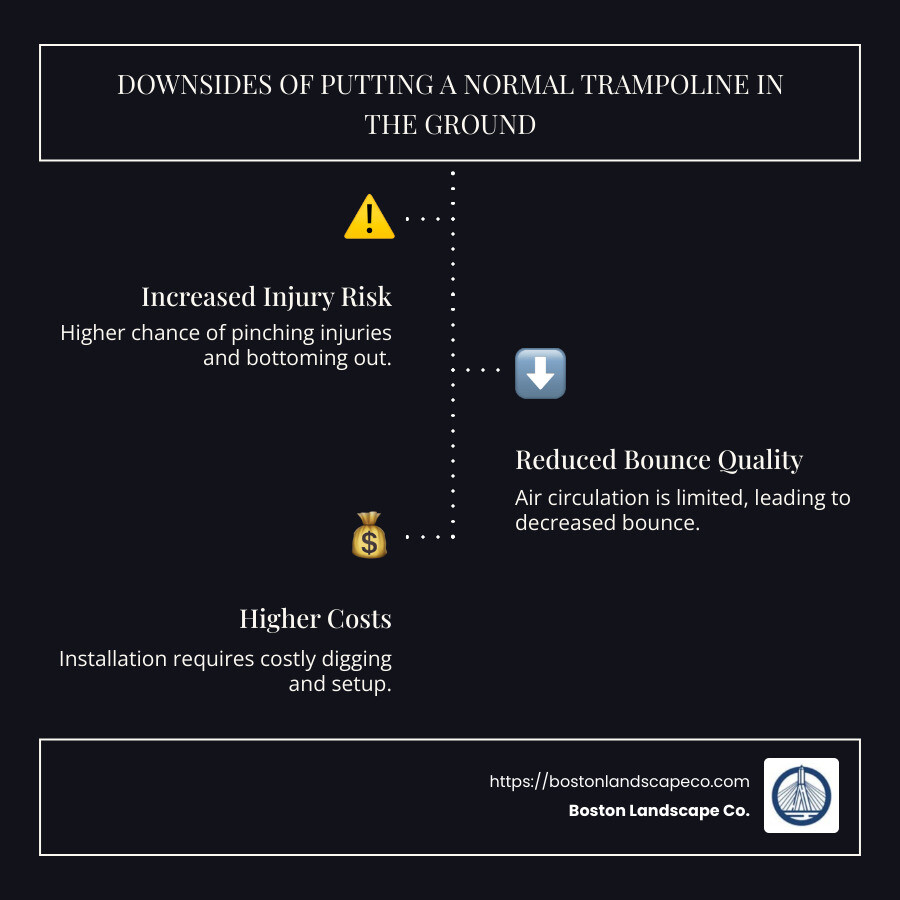
- Costly Installation: The digging and setup can be labor-intensive and expensive.
- Safety Concerns: Increased risk of injury due to exposure of metal parts and potential soil erosion.
- Bounce Quality Decrease: Reduced bounce as air cannot circulate freely.
The idea of having a trampoline in your backyard is quite exciting. It offers endless fun for kids and even adults. However, when contemplating the installation of a trampoline, specifically placing a normal trampoline in the ground, safety should be your top priority. Normal trampolines are designed for above-ground use, and altering their position can lead to unexpected safety hazards and additional costs without proper preparation.
I’m Steve Schumacher, and with over three decades in the landscaping industry, I’ve witnessed many attempts at integrating trampolines into beautiful landscapes. My journey with Boston Landscape Co. has equipped me with crucial insights into the question: can I put a normal trampoline in the ground?
Key terms for can i put a normal trampoline in the ground:
– how to build trampoline in ground
– how to install an in ground trampoline
– putting a trampoline into the ground
Can I Put a Normal Trampoline in the Ground?
When considering the idea of placing a normal trampoline in the ground, there are several safety risks and cost implications to keep in mind. Let’s explore why this might not be the best option.
Safety Risks
Exposed Metal Parts: Placing a normal trampoline underground can expose its metal components, such as springs and frames. This exposure increases the risk of injuries, as jumpers might come into contact with these parts. Soil erosion around the trampoline can also cause these metal parts to deteriorate over time, further compromising safety.
Soil Erosion: The ground surrounding the trampoline can erode, leading to gaps around the frame. This can result in pinching injuries to toes and feet, especially if the springs become exposed. Additionally, soil erosion can lead to the trampoline becoming unstable, increasing the risk of accidents.
Increased Effort
Labor-Intensive Installation: Installing a normal trampoline in the ground is not a simple weekend project. It involves extensive digging, which can be both time-consuming and physically demanding. You might also need to install a retaining wall to support the surrounding soil, adding to the complexity.
Cost Implications
Higher Expenses: The cost of digging and preparing the ground often exceeds the price of the trampoline itself. Hiring professionals to ensure proper installation can double your initial investment. In the long run, you may find that purchasing a purpose-built inground trampoline is more cost-effective, as it is designed to withstand underground conditions and requires less maintenance.

Understanding these factors, it’s clear that while you technically can put a normal trampoline in the ground, the risks and costs involved make it a less appealing option. Instead, consider alternatives that offer safer and more cost-effective solutions for outdoor fun.
Understanding the Risks of Underground Trampoline Installation
Installing a normal trampoline underground might seem like a creative idea, but it comes with significant risks that can compromise both safety and the trampoline’s integrity. Let’s explore these risks in detail.
Increased Injury Risk
Metal Exposure: When you bury a trampoline, its metal components, such as springs and frames, can become exposed. This exposure is dangerous because jumpers might accidentally come into contact with these parts, leading to severe injuries.
Soil Erosion: Over time, the soil around the trampoline can erode. This erosion can create gaps around the frame, which might lead to pinching injuries as toes and feet can get caught in these spaces. Moreover, soil erosion might cause the trampoline to become unstable, increasing the likelihood of accidents.
Bottoming Out: As the soil erodes or compacts, the trampoline may sink lower into the ground. This increases the risk of “bottoming out,” where jumpers hit the ground beneath the trampoline, posing a serious injury risk.
Compromised Trampoline Integrity
Rust and Structural Weakness: Trampolines are designed to withstand outdoor elements, but when placed underground, they are in constant contact with damp soil. This environment accelerates rusting of the metal frame and springs, which can weaken the trampoline’s structure over time. Rust not only reduces the trampoline’s lifespan but also increases the risk of structural failure during use.
Frame Gaps: The natural settling of soil can create gaps between the trampoline frame and the ground. These gaps not only increase the risk of injury but also compromise the trampoline’s structural integrity. As the frame shifts, it may lead to uneven tension on the springs, further weakening the trampoline and diminishing its performance.
Understanding these risks highlights why placing a normal trampoline underground is not advisable. Instead, explore safer and more durable alternatives that ensure a fun and secure experience for everyone involved.
Alternatives to Sinking a Normal Trampoline
While sinking a normal trampoline into the ground might seem like an appealing idea, the risks often outweigh the benefits. Luckily, there are excellent alternatives that provide safety, aesthetic appeal, and durability without the hassle.
Benefits of Inground Trampoline Kits
Inground Trampoline Kits are specifically designed to be installed in the ground, offering a safer and more reliable solution. These kits come with built-in features that address the common pitfalls of burying a regular trampoline.
- Safety Features: Inground kits include retaining walls that prevent soil from collapsing into the jumping area. This feature not only maintains the trampoline’s integrity but also reduces the risk of injury from exposed springs or frame gaps.
- Aesthetic Appeal: An inground trampoline sits flush with the ground, creating a sleek and unobtrusive look in your backyard. This design is more visually pleasing compared to a half-buried above-ground trampoline.
- Durability: Made with materials designed to withstand underground conditions, these trampolines resist rust and structural weakening. They’ll hold up better over time compared to standard trampolines exposed to damp soil.
Why Above-Ground Trampolines Are Preferable
If you’re not ready to commit to an inground setup, above-ground trampolines have their own set of benefits that make them an attractive choice.
- Ease of Relocation: Above-ground trampolines are easy to move. Whether you’re rearranging your garden or moving to a new home, you can relocate your trampoline without the need for extensive digging.
- Maintenance Simplicity: With an above-ground trampoline, maintenance is straightforward. You can easily inspect the springs and frame for rust or damage and replace parts as needed without dealing with soil erosion or water drainage issues.
- Trampoline Anchors: For those concerned about stability, especially in windy areas, trampoline anchors can secure your trampoline in place. This option provides extra stability without the need to bury the trampoline.
Both inground kits and above-ground trampolines offer unique advantages. Whether you choose the sleek integration of an inground kit or the flexibility of an above-ground model, both options provide safer and more aesthetically pleasing alternatives to sinking a normal trampoline into the ground.
Installation Tips for Those Considering the Underground Route
Thinking about installing a normal trampoline underground? It’s not as simple as just digging a hole. Here’s what you need to know to do it safely and effectively.
Proper Excavation Techniques
Digging Requirements
First things first, you’ll need to dig a hole that’s slightly larger than the trampoline itself. This ensures there’s enough room for proper installation and maintenance. The hole should be about 3 feet deep, but the exact depth can vary depending on the trampoline size and the retaining wall system you plan to use.
Soil Management
Managing the soil you dig out is crucial. You’ll have a large amount of earth to deal with, so plan where you’ll put it. Some people use it for landscaping elsewhere in their yard, while others may need to have it removed.
Digging Tools
For smaller projects, a shovel might suffice. But for larger installations, consider renting excavation equipment like a small backhoe. This can make the process faster and more efficient, saving you time and effort.
Hiring the Right Professionals
Professional Installation
Hiring professionals can be a smart move. Not only do they have the right tools and experience, but they can also ensure the trampoline is installed safely. This includes making sure the retaining walls are properly constructed and that the trampoline sits level.
Retaining Walls
Retaining walls are essential for preventing soil collapse into the trampoline area. Using materials like blocks or specially designed panels can help maintain the integrity of the installation. A well-built retaining wall will keep your trampoline safe from soil erosion and provide a stable jumping surface.
Landscape Experts and Trampoline Installation Specialists
Consider consulting with landscape experts who understand the nuances of soil types and drainage. They can offer insights into the best practices for your specific yard conditions. Trampoline installation specialists, on the other hand, are familiar with the unique challenges of installing a trampoline underground. They can ensure that all safety measures are in place, reducing the risk of injury and increasing the lifespan of your trampoline.
By following these tips and possibly hiring the right professionals, you can minimize risks and enjoy a safer, more durable underground trampoline installation. Next, let’s explore the long-term considerations for maintaining your new setup.
Conclusion
When considering the long-term implications of installing a normal trampoline in the ground, it’s crucial to weigh the potential challenges against the benefits. While the idea of a flush-to-ground trampoline might be appealing for aesthetic reasons, the risks and maintenance involved can be substantial.
Longevity and Maintenance
Installing a trampoline underground requires ongoing vigilance. Regular checks for soil erosion and rust are necessary to ensure safety and performance. Over time, metal parts may corrode due to moisture exposure, potentially leading to structural weaknesses. This means more frequent inspections and possible part replacements, adding to the long-term costs.
Safety First
Safety should always be the priority. As mentioned earlier, improper installation can lead to increased injury risks, such as pinching injuries or bottoming out. Ensuring that safety measures are in place, like using retaining walls and professional installation, can mitigate these risks. However, above-ground trampolines often offer similar enjoyment with fewer concerns.
Boston Landscape Co. Expertise
At Boston Landscape Co., we understand the intricacies of creating a safe and beautiful outdoor space. Our expertise in landscaping and property maintenance means we can provide valuable insights and services custom to your needs. Whether you decide on an inground trampoline or prefer the simplicity of an above-ground setup, we’re here to help you make an informed decision.
For those interested in inground trampoline solutions, we offer professional installation services that ensure safety and longevity. Our team is equipped to handle every aspect, from excavation to final installation, ensuring your trampoline is both a fun and secure addition to your backyard.
Explore our inground trampoline services to find how we can transform your outdoor space into a safe and enjoyable haven for family fun.
By considering these long-term factors and leveraging professional expertise, you can make the best choice for your family’s trampoline needs.
