Lawn Improvement Articles
Is It Too Late to Hydroseed in Late Fall? What Massachusetts Homeowners Should Know Before Waiting Until Spring
The short answer
- For most Massachusetts yards, late fall is too late to hydroseed. Cold soil stalls germination, and young roots rarely make it through winter.
- Hydroseed slurry is a poor match for frozen or saturated ground. It can freeze, wash off, or sit unused until spring.
- Use the off-season to protect bare soil, test it, and note drainage problems so a spring application starts strong.
- Late summer into early fall is the best seeding window. Mid-spring is the fallback if you need grass sooner.
Why late fall is usually too late to hydroseed
For most lawns around Acton and the surrounding towns, late fall is past the point where hydroseeding makes sense. The cool-season grasses that do well here need warm soil to germinate. That group includes Kentucky bluegrass, tall fescue, fine fescues and perennial ryegrass. After sprouting, they also need several weeks of mild weather to build roots. A sunny afternoon can still feel pleasant, but the soil cools faster than most people expect once the nights get long.
Germination slows sharply once soil temperatures fall below roughly 50°F. Some seed may still sprout, but those seedlings go into winter with short, shallow roots. Repeated freezing and thawing can push young plants up out of the ground, which is called frost heaving. A thin stand of new grass also has little stored energy to recover from ice, long snow cover or a soggy spring. Seeding this late often ends with a patchy lawn in April and a second round of seeding anyway.
At Boston Landscape Co., we work with homeowners in Acton and the surrounding towns, from Concord and Bedford to Andover. The same rule holds across the area. Seed that goes down in late summer or early fall has time to fill in. Seed that goes down after the leaves drop rarely gets a fair start. Coastal yards may stay a little milder than hill towns farther inland, but by late fall nearly every yard in the region is running out of growing days.
A warm late-fall afternoon doesn't mean warm soil. A simple soil thermometer pushed a few inches into the ground tells you far more than the forecast does.
Why hydroseed and cold ground don't mix
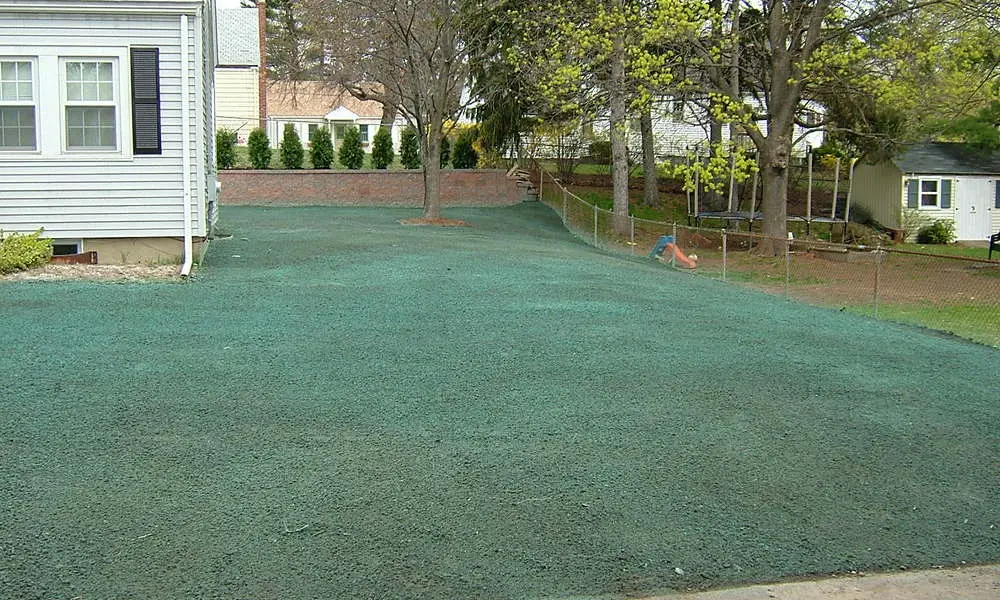
Hydroseeding sprays a slurry of water, seed and wood or paper mulch fiber onto prepared soil. The mix often includes starter fertilizer and a tackifier that helps it stick. The mulch exists to keep the seed evenly moist through germination. That makes the method excellent in warm weather and much less useful in the cold.
What goes wrong late in the season
- The slurry can freeze. A water-based mix sprayed onto cold ground can form a crust before it settles into the soil surface.
- Frozen or saturated soil can't absorb it. When heavy rain or snowmelt arrives, the mulch and seed can wash into low spots, storm drains or the neighbor's yard.
- Seed sits idle in a wet mat. Seed that doesn't germinate for months is exposed to rot, birds and washouts the whole time.
- Fertilizer goes to waste. Nutrients in the mix are meant to feed seedlings right away. On cold, bare soil there is nothing to use them, so much of that fertilizer drifts off-site.
Equipment is another factor. Tanks, pumps and hoses have to be protected from freezing. Many installers wind down hydroseeding for the year once overnight temperatures settle below freezing.
If your yard slopes toward a stream, pond or wetland, ask questions before any late-season application, because runoff from cold, saturated ground carries seed and fertilizer straight off the property.
What about dormant seeding?
You may have heard of dormant seeding. The idea is to sow seed once the soil is too cold for it to germinate, so it lies inactive through winter. Freeze-thaw cycles work the seed into the surface, and it sprouts as the soil warms in spring. Dormant seeding is usually done with dry seed spread on loosened, bare soil after the ground has cooled for good and before heavy snow.
The approach has real risks. Birds eat exposed seed, and runoff moves it around. Sometimes a warm spell in late winter tricks part of the seed into sprouting, and the next hard freeze kills those seedlings. Hydroseed isn't designed for this job either. Its moisture-holding mulch does nothing useful over winter and can break down before the seed ever wakes up.
When dormant seeding is worth a conversation
- The area is small, flat and drains well.
- You can live with some thin spots and plan to touch them up in spring.
- No crabgrass preventer or other weed control will go on that area in early spring.
- You mainly want some head start on a few bare patches, and a full lawn renovation isn't the goal.
For a whole yard, a slope or a newly graded lot, waiting for a proper spring or late-summer application usually gives more predictable results. An installer who can look at your sun, slope and drainage in person is the best judge of whether a dormant approach is reasonable.
What to do with bare soil right now
If you have bare or freshly graded ground heading into winter, your job now is to protect it so you aren't starting from a worse spot in spring.
- Keep leaves from matting down. Rake leaves off any young grass and bare seedbeds so a wet layer doesn't sit on them all winter.
- Cover exposed slopes. A light, even layer of clean straw mulch can slow erosion through winter storms. Hay usually carries weed seed, so skip it.
- Stay off soggy or frozen ground. Walking on saturated soil compacts it. Walking on frozen young grass can crush the growing points. A few garden stakes or flags will remind family and delivery drivers to go around.
- Watch where water collects. After a heavy rain or snowmelt, take photos of puddles and washouts. Those spots will need attention before any seed goes down.
If a slope is actively eroding, or water is running toward your foundation, call a professional. Don't try to regrade it yourself in wet late-season conditions. Moving saturated soil by hand or with rented equipment is hard and can be unsafe, and it usually compacts the very ground you want grass to grow in.
Use the off-season to set up a better spring lawn
Winter gives you time to fix the things that most often sink a new lawn. The big three are poor soil, poor grade and poor timing. Here's how to use the slow months.
- Test the soil. You can pull samples any time the ground isn't frozen and send them to a university extension or private soil lab. The results tell you about pH and nutrients so lime or amendments can be planned ahead of seeding. Our guide to testing your soil before a new lawn walks through it.
- Match the grass to the yard. Fine fescues handle shade well. Kentucky bluegrass and perennial ryegrass suit sunny, high-traffic areas. Tall fescue holds up better in dry spells. Think about kids, dogs and how much you plan to water.
- Hold off on crabgrass preventer where you plan to seed. Many common pre-emergent weed products stop grass seed from germinating too. Make sure nobody treats that area in early spring without checking with your installer first.
- Measure and note access. Rough square footage, gate widths, and the distance from the driveway or street all help an installer plan the job.
- Get on the schedule early. Our hydroseeding service page explains how we approach new lawns for residential and commercial properties.
Tell your installer about any weed or crabgrass products applied to the area in recent months, because some can block new seed long after they go down.
Spring or late summer: choosing your next window
Once late fall is off the table, you have two realistic options. Each comes with trade-offs.
Spring
Spring hydroseeding can start once the ground has thawed, dried enough to work, and warmed toward germination temperatures. Inland and hill towns tend to get there later than yards near the coast. The upside is grass before summer, which matters if you're dealing with mud or erosion, or getting a house ready to list. The downside is competition. Crabgrass and other summer weeds germinate around the same time, and your young lawn meets its first heat and dry spells with short roots. Expect steady watering into summer.
Late summer to early fall
This is generally the strongest window for cool-season grass in Massachusetts. Soil is still warm, nights are cooler, weed pressure drops, and fall rain helps with watering. The new grass gets the rest of fall and all of the following spring to root before its first summer.
How to decide
If bare ground is causing problems now, plan for spring. You can overseed any thin spots the following late summer. If you can wait and want the best odds, aim for late summer. Either way, you can request an estimate with your town, rough square footage and any drainage concerns, so the plan fits your yard. Once the seed is down, the first few weeks of watering matter more than anything else. Our first-month hydroseeding timeline shows what healthy progress looks like.
A spring hydroseed followed by a late-summer overseed of thin spots is a practical way to get both quick cover and a denser lawn.
Common questions
I hydroseeded in early fall and the grass looks thin. Should I add more seed now?
No. New seed this late is unlikely to establish, and raking it in can disturb the seedlings you already have. Keep leaves off the young grass, stay off it when it's frozen, and look at it again once it greens up in spring. Thin areas can be overseeded then or in late summer.
Can young hydroseeded grass survive snow?
Seedlings with a few weeks of root growth usually handle snow cover well, since snow actually insulates the ground. The bigger threats are ice sheets, frost heaving and seedlings that sprouted too late to root. Avoid piling shoveled snow onto new grass, especially snow mixed with salt.
Is sod an option this late in the year?
Sod can sometimes go down later in fall than seed, as long as the ground isn't frozen. It still needs time to knit its roots into the soil before hard freezes, though, and supply often tightens late in the season. Whether it makes sense depends on your site, so ask an installer to look at it before deciding.
How early in spring can hydroseeding start?
Soil conditions decide it, not the calendar. The ground needs to be thawed, dry enough to grade without making mud, and warming toward germination temperatures. That timing varies from year to year and between coastal and inland towns.
Should I fertilize my bare yard before winter?
Generally no. With nothing growing, the nutrients have no roots to feed and tend to wash away with rain and snowmelt. Save fertilizer and any lime your soil test calls for until seeding time, when they can do some good.