Artificial Lawn Articles
The No-Nonsense Guide to Fake Lawn Grass Installation
Why Fake Lawn Grass Installation Is Worth Considering in Massachusetts
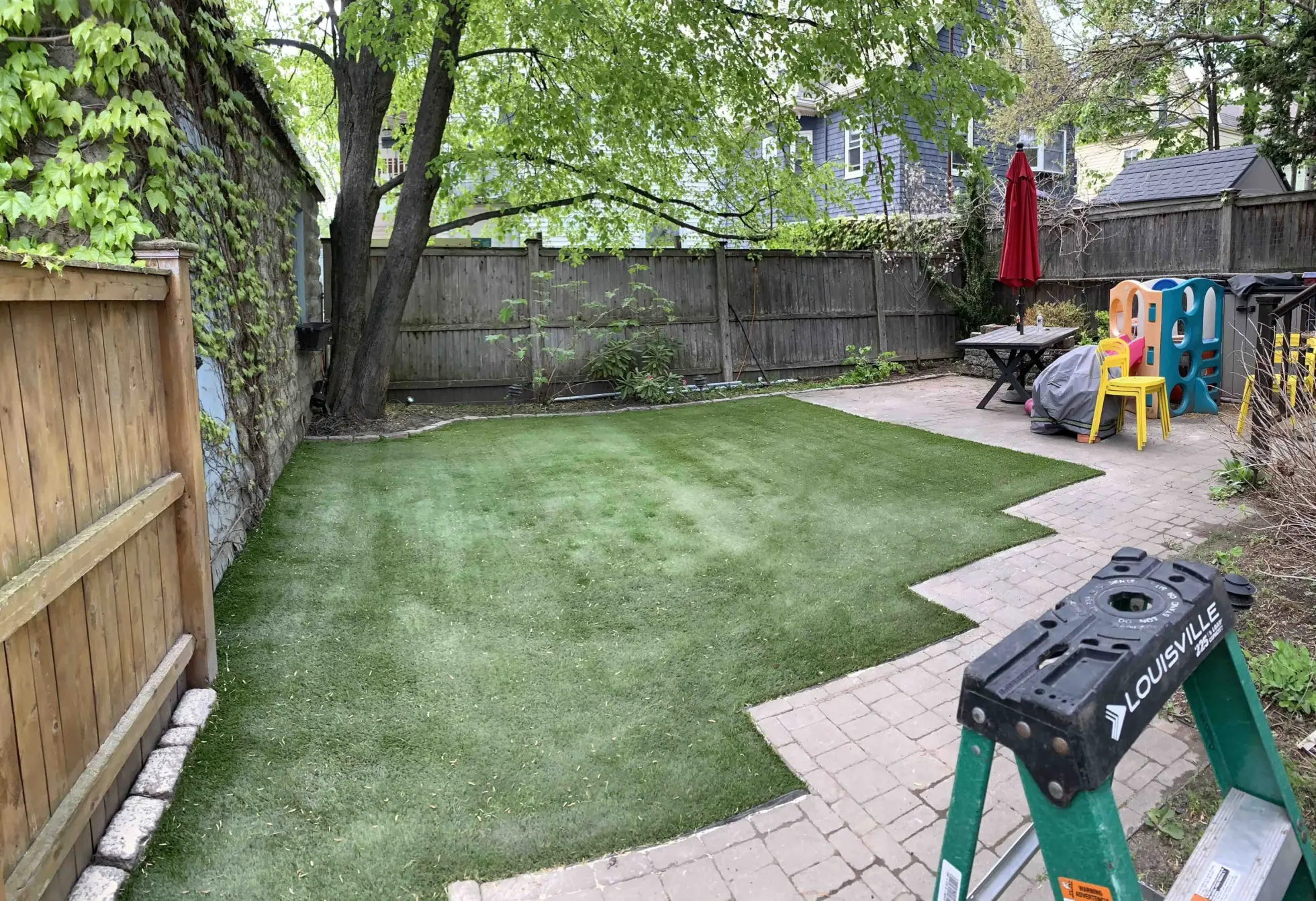
Fake lawn grass installation is one of the fastest-growing landscaping upgrades for residential and commercial properties across Greater Boston and it’s easy to see why.
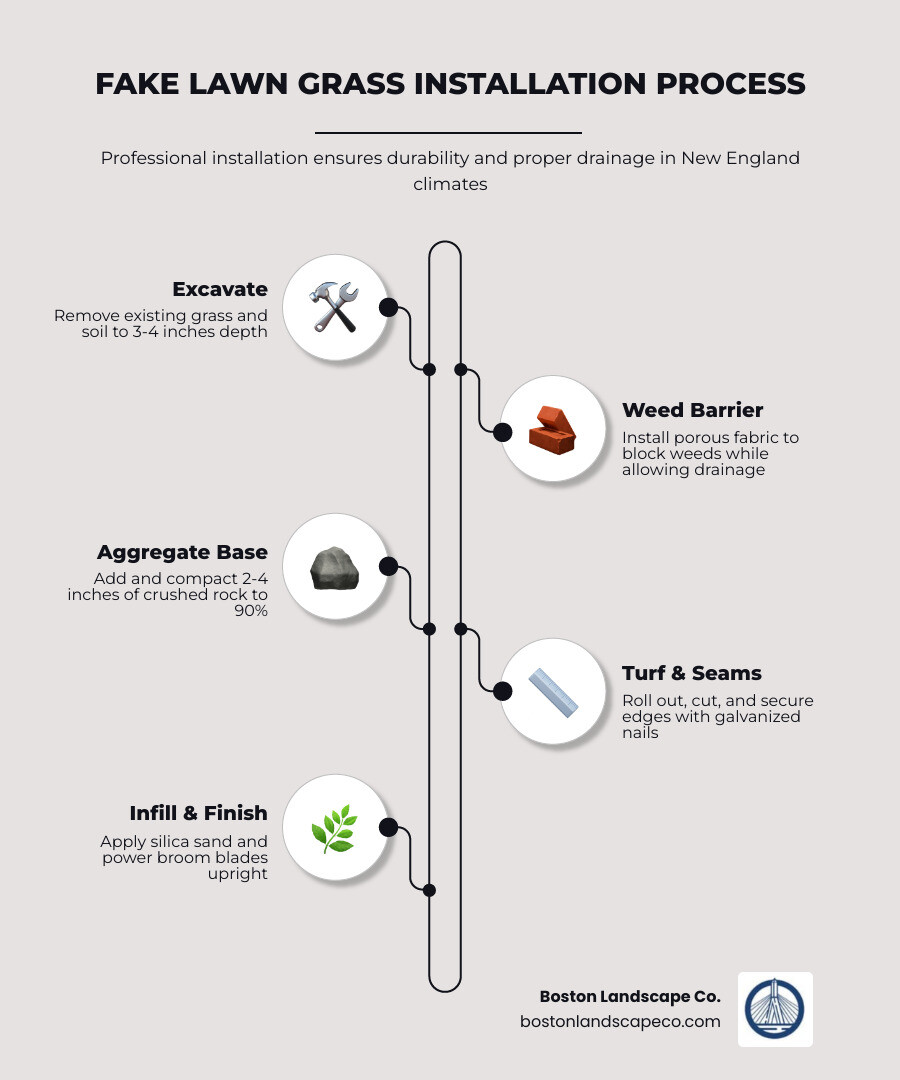
Here’s a quick overview of how it’s done:
- Remove existing grass and soil excavate 34 inches deep
- Install a weed barrier porous fabric to block weeds while allowing drainage
- Add and compact an aggregate base 24 inches of crushed rock, compacted to 90%
- Roll out and cut the turf align grain direction, trim to fit
- Secure the edges and seams galvanized nails every 34 inches along the perimeter
- Apply infill material silica sand spread evenly with a drop spreader
- Power broom the turf stand the blades upright for a natural finish
That’s the process in a nutshell. But each step has details that can make or break the final result especially in a New England climate where soil conditions, drainage, and freeze-thaw cycles add real complexity.
Synthetic turf can reduce water demand, last 1525 years with proper care, and keep your property looking green year-round whether you’re in Lexington, Billerica, Burlington, or Bedford. For property owners and managers dealing with patchy grass, muddy conditions, or high maintenance costs, it’s a practical upgrade.
That said, a great-looking, long-lasting result depends almost entirely on how well the installation is executed. This guide will walk through every stage at a high level so you understand what’s involved and why professional installation usually delivers the best long-term value.
I’m Steve Schumacher, owner of Boston Landscape Co., and I’ve spent over 30 years transforming outdoor spaces across Massachusetts including dozens of fake lawn grass installation projects for both residential and commercial clients. If you’d like expert help, call +781-438-6690 or request a free estimate. You can also explore our related services, including Lawn Installation Services, Lawn sprinkler installation, and Lawn improvement services.
Fake lawn grass installation word list:
The Benefits of Upgrading to Synthetic Turf
For residential and commercial properties seeking a cleaner, lower-maintenance landscape, synthetic turf offers a strong long-term solution. Across Lexington, Billerica, Burlington, and Bedford, property owners are choosing to replace lawn with artificial turf to reduce irrigation demand, improve year-round curb appeal, and minimize ongoing grounds maintenance.
One of the most immediate advantages of synthetic turf is its water efficiency. According to industry statistics, artificial turf can reduce water usage substantially compared to natural grass. In Massachusetts communities where seasonal water restrictions can affect landscape planning, this conservation can make a meaningful difference to both operating costs and environmental impact.
Beyond water savings, high-quality synthetic grass is engineered to withstand heavy foot traffic, pet activity, and harsh New England winters. Modern products feature advanced molecular technologies that make them look and feel like real grass while delivering durability natural sod often cannot match. For instance, top-tier products feature Super Yarn technology, which incorporates three crucial features at the molecular level:
- DualChill IR Reflective Technology: This improves infrared (IR) reflectivity by up to 42%, significantly reducing heat absorption so the turf stays cooler under the summer sun.
- Sanitized Antimicrobial Protection: This built-in protection eliminates bacteria and prevents mold growth, keeping the surface hygienic.
- StatBlock Anti-Static Technology: This molecular additive delivers up to a 17x reduction in static levels, preventing uncomfortable shocks during dry weather.
For properties with dogs, opting for artificial grass and pet friendly systems helps create a cleaner, odor-resistant outdoor area. The rapid drainage design allows waste and rinse water to move through efficiently, reducing mud and surface mess. To learn more about how these synthetic fibers perform under stressful environmental conditions, you can review the Scientific guidelines on synthetic turf performance.
The Real Cost and Value of Fake Lawn Grass Installation
Investing in a synthetic lawn is a significant financial decision. While the upfront cost is higher than laying down traditional sod, synthetic turf can deliver long-term value over its 15-to-25-year lifespan by reducing the ongoing costs of mowing, weeding, fertilizing, aerating, and watering.
To help put this into perspective, let’s look at a typical cost comparison over a 10-year period for a standard residential or commercial landscape area:
| Expense Category | Natural Sod & Maintenance | Premium Artificial Turf |
|---|---|---|
| Initial Installation | Moderate | High |
| Annual Water Costs | High | Minimal |
| Mowing & Lawn Care Equipment | Ongoing cost | $0 |
| Fertilizers, Pesticides & Seeding | Consistent annual cost | $0 |
| Time / Labor Investment | High | Minimal |
| 10-Year Estimated Total | Highly Expensive | Potential Long-Term Value |
When researching the artificial grass cost, you will find a wide range of pricing estimates online.
Disclaimer: All prices mentioned below are average costs sourced from publicly available internet data and industry averages, and are not the actual prices of Boston Landscape Co.
According to general online data and industry averages, pricing can vary dramatically based on square footage, grading complexity, drainage requirements, access, and product selection. For Massachusetts projects, a broad planning range for professional fake lawn grass installation may run from $20,000 to $50,000+ for smaller or simpler sites, while larger or more complex installations in places like Concord, Billerica, Burlington, or Bedford can range from $40,000 to $100,000+.
A lower initial budget may appear attractive, but installation errors in grading, compaction, drainage, or seam work can lead to wrinkling, low spots, and water pooling. Correcting those issues often requires removing and reinstalling the system. Professional installation helps protect the investment, improve long-term performance, and support applicable product warranties.
High-Level Overview of the Installation Process

Achieving a flawless, natural-looking synthetic lawn requires meticulous planning and specialized installation. A successful fake grass installation is built from the ground up. If the base underneath the turf is uneven or poorly drained, the final surface will reflect those flaws.
The installation process begins with comprehensive site preparation. In our Massachusetts service areas like Burlington, Bedford, Billerica, and Lexington, this involves identifying underground utility lines, capping off existing irrigation systems, and clearing out all native vegetation. Once the surface is clear, a multi-layered aggregate base must be constructed to mimic natural soil drainage while providing a stable foundation.
Preparing the Base for Fake Lawn Grass Installation
The preparation of the sub-base is the most physically demanding and most critical part of the entire project.
- Excavation: The existing lawn and soil are excavated to a depth of 3 to 4 inches. This depth creates room for the aggregate base so the finished turf sits flush with surrounding hardscapes, walkways, or borders.
- Addressing Pests: In areas with a history of moles, voles, or similar burrowing pests, a protective wire rodent barrier may be installed directly over the excavated soil.
- Applying Aggregate: A dual-layer aggregate base is then spread. First, 2 to 2.5 inches of clean, crushed drain rock facilitate rapid water movement. On top of that, 1 to 1.5 inches of class II road base or decomposed granite provide a smooth, bindable surface.
- Moistening and Compaction: The aggregate is lightly misted with water and compacted with a heavy vibrating plate compactor to a minimum 90% compaction rate.
- Weed Prevention: Finally, a commercial-grade geotextile weed barrier is installed over the compacted base to help prevent weeds from pushing through the drainage holes of the new turf.
For a deeper dive into these sub-surface requirements, you can read this Step-by-step base preparation guide.
Step-by-Step Guide to Fake Lawn Grass Installation
Once the base is perfectly graded, smooth, and compacted, the transformation begins. The actual laying of the synthetic turf must be done with precision to ensure a seamless finish:
- Acclimation: Before cutting or securing anything, the synthetic turf is unrolled and allowed to acclimate under the sun with the blades facing down for 1 to 2 hours. This allows the backing to relax and lose any memory of being rolled up.
- Grain Direction: Each roll of turf is positioned so the grain direction of every section faces the same way, ideally toward the primary viewing area. If the grain directions are mismatched, the seams will be highly visible.
- Cutting and Seaming: The excess turf is trimmed from the edges using a sharp utility knife, cutting from the backside along the stitch rows. To join two pieces together, professional-grade seam tape is used and the joint is secured with 11-gauge landscape staples spaced 4 inches apart.
- Securing the Perimeter: The outer edges of the turf are secured using 40D or 60D galvanized nails spaced 3 to 4 inches apart along the perimeter, taking care not to drive them in so deeply that they create visible dips in the turf.
- Infill and Grooming: To keep the blades standing upright and protect the backing from UV damage, a high-quality infill such as rounded silica sand is applied with a drop spreader. The project is then finished with a heavy-duty power broom to groom the fibers into an upright position.
Because this work requires specialized tools, precise grading, and proper compaction, it is best handled by an experienced contractor rather than treated as a DIY weekend project. To explore more about the professional techniques used during this stage, take a look at our guide on artificial lawn installation.
Frequently Asked Questions about Synthetic Turf
How long does artificial grass last in Massachusetts?
When properly installed, high-quality synthetic turf easily lasts between 15 and 25 years. In Massachusetts, these systems must endure extreme climate shiftsfrom freezing, snow-heavy winters to hot, humid summers. Premium turf products are built with UV-stabilized backings and highly resilient fibers that hold up through freeze-thaw cycles. Because the aggregate base allows water to drain rapidly, the finished surface remains stable in communities like Concord, Lexington, Burlington, and Bedford.
Is artificial turf safe for pets and children?
Absolutely. High-quality synthetic turf is manufactured using non-toxic, lead-free materials. When paired with specialized antimicrobial infills, it creates a hygienic surface that resists bacteria, mold, and mildew. Furthermore, because there is no need for chemical fertilizers, weed killers, or pesticides, it can be an excellent fit for family spaces and pet areas.
Why should I hire a professional instead of doing a DIY installation?
While the installation sequence may sound straightforward, the physical demands and technical precision required are substantial. Moving tons of soil and aggregate base requires specialized equipment, and achieving a 90% compaction rate is difficult without commercial tools. Professional installers use vibrating plate compactors, power brooms, and turf cutting equipment to ensure the lawn is graded correctly, drains properly, and has clean, low-visibility seams. Hiring professionals protects your investment and supports a result designed to perform for decades.
Conclusion
A fake lawn grass installation is a powerful way to transform your Massachusetts property into a low-maintenance, year-round green space. Whether the goal is to improve the appearance of a commercial site, reduce landscape upkeep at a residential property, or create a clean, durable outdoor area, synthetic turf offers an elegant long-term solution.
At Boston Landscape Co., we have decades of experience providing premium landscaping, hardscaping, and property maintenance services to residential and commercial clients throughout Bedford, Billerica, Burlington, Chelmsford, Concord, Lexington, and Wilmington. We understand the drainage and climate challenges unique to Massachusetts, and we have the specialized equipment and expertise to install a synthetic lawn designed to stand the test of time.
Ready to upgrade your outdoor space? Call +781-438-6690 or Request a free estimate today to discuss your project. For more details on our full range of turf options, visit our dedicated artificial grass installation services page.