
Bioswales: 7 Powerful Benefits for Sustainable Stormwater
Why Bioswales Matter for Stormwater Management
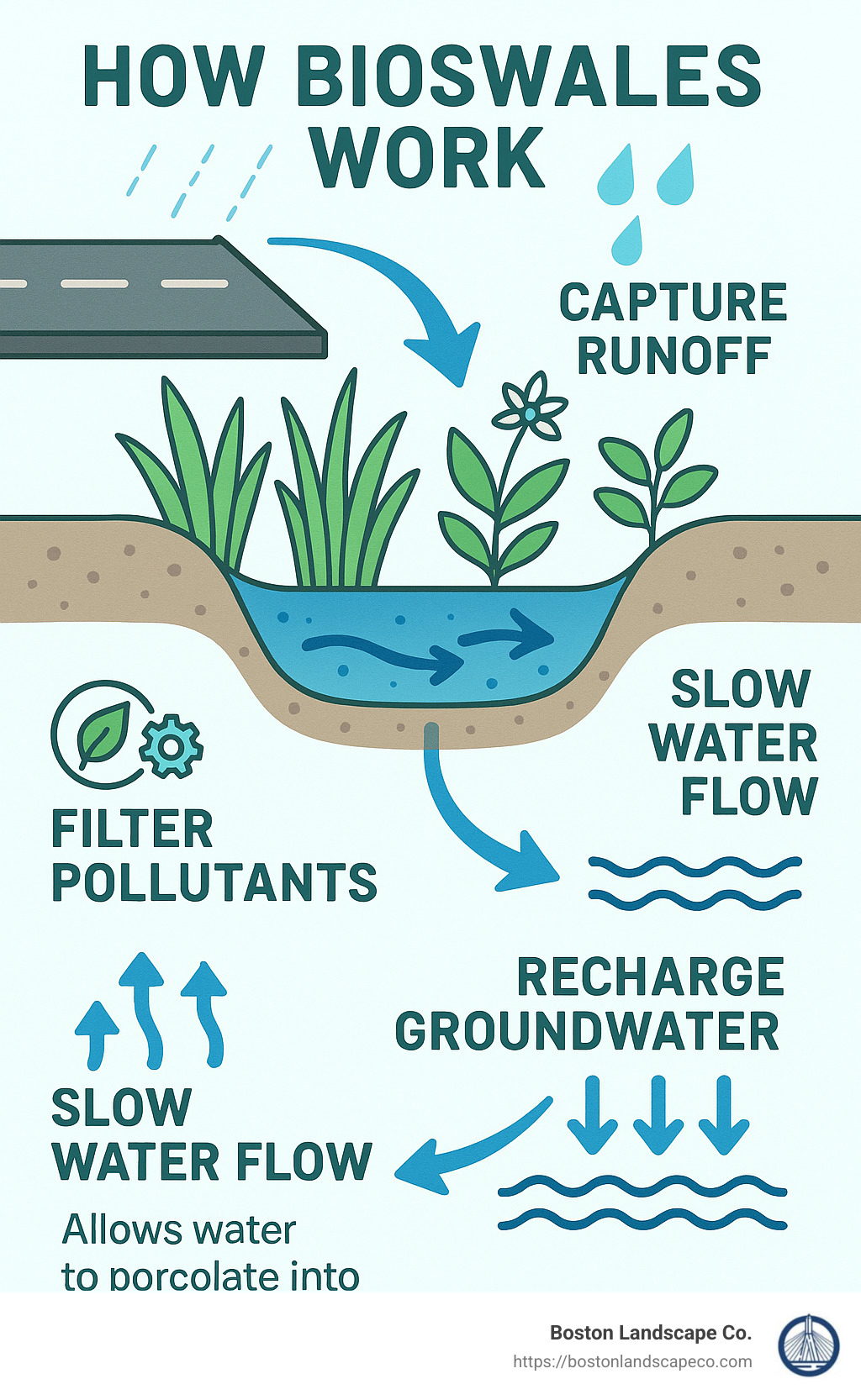
Bioswales are vegetated, shallow ditches designed to capture, filter, and slowly release stormwater runoff, reducing pollution and helping protect local waterways.
Here’s a quick overview of what bioswales do:
- Capture runoff: Collect stormwater from roads, parking lots, and sidewalks.
- Filter pollutants: Use plants and specialized soil to clean water naturally.
- Slow water flow: Prevent flooding by slowing down water movements into streams and rivers.
- Recharge groundwater: Allow filtered water to seep back into underground aquifers.
Many urban and suburban areas struggle with excess stormwater, causing flooding, pollution, and erosion. Imagine heavy rains washing oils, fertilizers, and other pollutants straight into Boston’s rivers and ponds. That’s where bioswales come in—acting like sponges, naturally cleaning up runoff, and reducing environmental damage.
I’m Steve Schumacher, owner-operator of Boston Landscape Co since 1991, with extensive experience designing and installing green infrastructure like bioswales throughout Greater Boston. I’ve seen how well-designed bioswales can truly transform urban landscapes for the better.
Glossary for bioswales:
– constructed wetlands in the sustainable landscape
– wetland design landscape architecture
– what is a rain garden
What are Bioswales?
Have you ever walked along a city street after heavy rain and seen channels full of lush greenery instead of concrete gutters? Those attractive, planted depressions are called bioswales, and they’re more than just pretty landscaping—they’re smart, eco-friendly solutions for stormwater management.
A bioswale is essentially a shallow, vegetated channel designed specifically to slow down, filter, and absorb stormwater runoff. Rather than just pushing water quickly off roads and properties into storm drains (along with all the pollutants it picks up), bioswales use plants, soil, and gentle slopes to naturally clean and infiltrate the water back into the ground.
According to the National Association of City Transportation Officials, “Bioswales are the most effective type of green infrastructure facility in slowing runoff velocity and cleansing water while recharging the underlying groundwater table.”
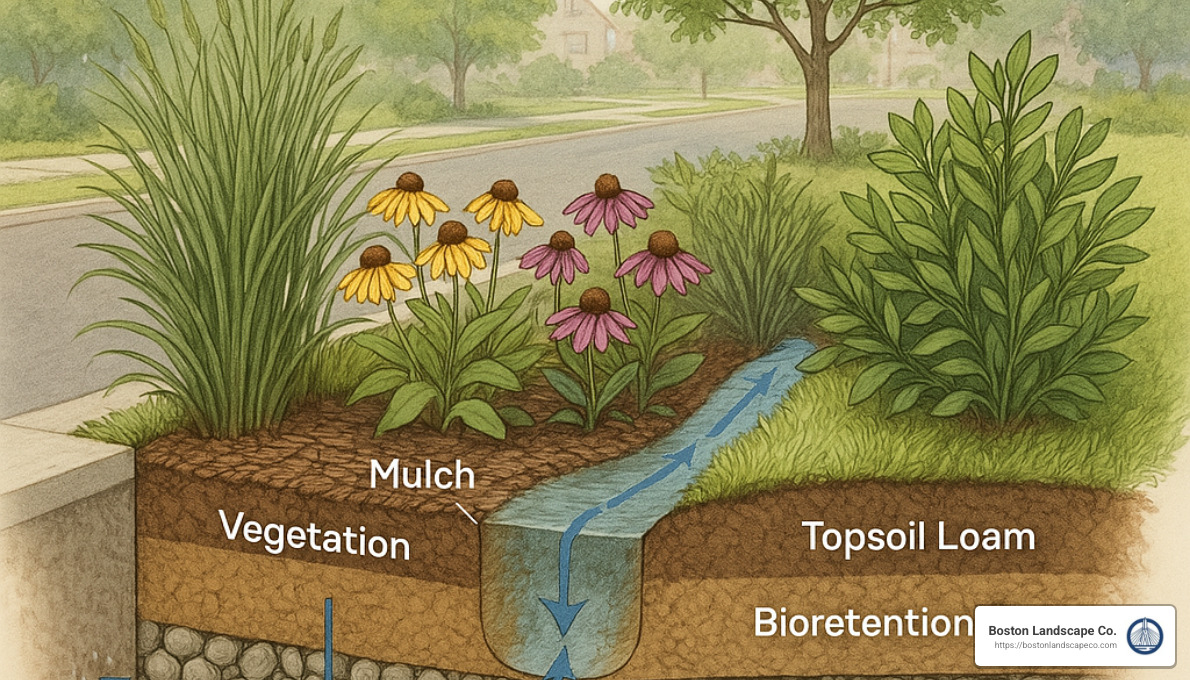
A typical bioswale includes several essential parts working together. At the surface, you’ll find carefully selected native vegetation with deep root systems, ideal for filtering pollutants and taking up excess water. Beneath these plants lies an engineered soil mixture specially designed to encourage water infiltration and pollutant filtration. Depending on the site, a bioswale may also include gravel layers and perforated pipes beneath the soil to further direct and manage water flow. In locations with steeper slopes, you might also see small structures known as check dams, which help slow runoff and reduce erosion.
In our landscaping projects throughout Greater Boston—including communities like Medford, Burlington, and Winchester—bioswales have become not only practical stormwater solutions but also beautiful urban improvements.
Here’s a look at how all these components come together in a typical bioswale design:

How Do Bioswales Work?
Think of bioswales as nature’s own water purifiers. When rain hits hard surfaces like roads, driveways, or parking lots, it picks up pollutants like oil, fertilizers, dirt, and debris. Without proper management, this contaminated water rushes into storm drains and eventually into our rivers and lakes, causing water pollution.
But when stormwater flows into a bioswale, things slow down dramatically. Vegetation creates friction, gently slowing the water and allowing heavier particles like dirt and sand to settle. This settling process—called sedimentation—removes a lot of pollutants right away.
Next, water trickles down through the layers of plants and soil, where physical filtering removes debris, beneficial microorganisms break down organic pollutants, and chemical processes bind contaminants like heavy metals to the soil. After this natural filtration, clean water gradually soaks into the ground, refilling underground aquifers and groundwater resources.
During heavy rainstorms, a well-designed bioswale can effectively handle overflow, safely directing excess water to downstream areas or specialized overflow structures, preventing flooding and reducing erosion risk.
If you’re wondering how effective this natural system truly is, consider this: a properly designed bioswale can typically reduce about 25% of the total rainfall runoff in a typical urban street setting. That’s a significant reduction—protecting local waterways, reducing flooding, and adding beauty to neighborhoods at the same time.
Types of Bioswales
There are several kinds of bioswales, each suited for different locations and stormwater management needs. Let’s explore a few common types.
Grassed Swales are the simplest and most budget-friendly type. Covered mostly with turf grass, these swales handle smaller runoff volumes and require minimal maintenance. They’re ideal for low-pollution areas like residential neighborhoods or parks.
Moving up in complexity, Dry Swales include an engineered soil mix above a gravel bed and usually have perforated pipes or underdrains. Dry swales drain completely between rainstorms, making them great for sites with less permeable native soils. They also offer higher pollutant removal rates compared to basic grassed swales.
For locations with high groundwater or areas that naturally remain wetter, Wet Swales are an excellent choice. These swales maintain a shallow pool of water and function as miniature linear wetlands. Not only do they address stormwater management concerns, but they also provide valuable habitat for birds, insects, and aquatic life.
Finally, Vegetated Swales incorporate a more diverse array of native plants, including trees, shrubs, grasses, and flowers. With deeper root systems and varied plantings, vegetated swales offer superior filtration of pollutants, increased biodiversity, and improved visual appeal.
At Boston Landscape Co., we’ve successfully installed all these types of bioswales throughout towns like Somerville, Lexington, and beyond—carefully tailoring each project to site-specific conditions and client preferences.
Want to learn more about other eco-friendly landscape solutions? Check out our articles on constructed wetlands in the sustainable landscape, wetland design landscape architecture, and what is a rain garden.
Benefits of Implementing Bioswales
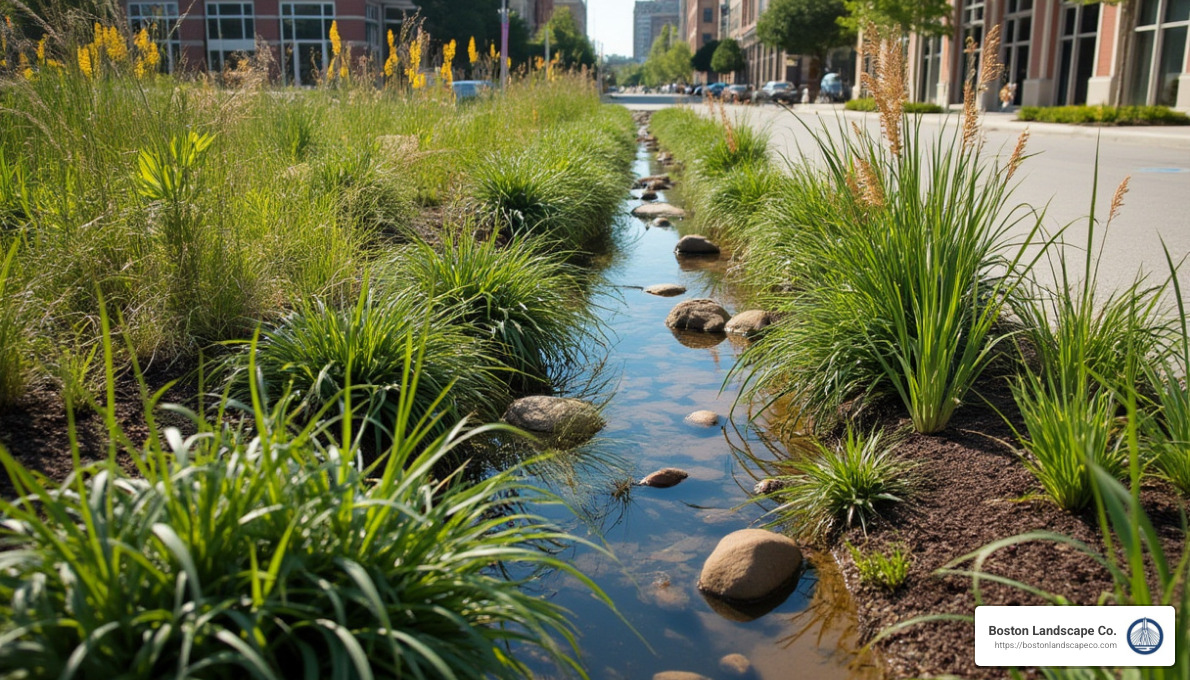
When you think about stormwater management, you might picture drains or concrete gutters—not exactly exciting, right? But here’s the good news: bioswales offer a much more attractive, eco-friendly, and even budget-friendly alternative. Incorporating bioswales into your landscape brings a host of environmental, economic, and community benefits, turning something practical into something truly enjoyable.
Environmental Benefits
Water Quality Improvement
One of the biggest benefits of bioswales is their remarkable ability to keep water clean. Studies have shown grassed bioswales can remove 65-71% of total suspended solids, 30-60% of zinc and other heavy metals, 25-40% of nitrogen, 30-70% of phosphorus, and a striking 70-90% of hydrocarbons (think oils and greases from cars). Thanks to this impressive pollution reduction, bioswales help protect local waterways from harmful runoff.
This is especially important in the Greater Boston area, where urban runoff often impacts rivers, lakes, and coastal habitats. The Environmental Protection Agency estimates that urban runoff contaminates about 5,000 miles of estuaries, 1.4 million acres of lakes, and 30,000 miles of rivers nationwide. By installing bioswales, communities like Waltham, Malden, and Medford can significantly reduce this environmental pressure.
Flood Prevention and Erosion Control
Flooding can be a real headache in urban areas, especially after heavy rains. The good news is, bioswales are great at capturing and slowing stormwater runoff. A typical bioswale measuring about 13 feet long can cut total rainfall runoff by around 25%. That means less flooding, less erosion, and fewer property headaches—especially important for neighborhoods around Greater Boston, where impermeable surfaces like roads and sidewalks dominate.
Groundwater Recharge
Traditional concrete stormwater drains whisk water away quickly, often leading to dry soils and depleted groundwater. Bioswales, on the other hand, allow filtered rainwater to slowly soak back into the earth, recharging local groundwater supplies. This benefit is a real bonus in areas experiencing drought conditions or declining aquifers, helping keep water available for drinking, irrigation, and wildlife.
Biodiversity Support
Here’s another perk: bioswales are fantastic for supporting local wildlife. When planted with diverse native vegetation, your bioswale can attract butterflies, birds, bees, and other beneficial insects. At Boston Landscape Co., we’ve seen how bioswales installed in communities like Winchester and Lexington quickly become buzzing ecosystem hubs. They’re a great way to support pollinators, create habitats, and improve biodiversity—all right in your own neighborhood.
Economic and Social Benefits
Cost-Effective Stormwater Solution
Let’s face it—traditional stormwater pipes and concrete systems aren’t cheap. Compared to these methods, bioswales offer a more economical solution. According to typical online data (not actual costs for Boston Landscape Co.), installing a bioswale generally costs anywhere from $5 to $25 per square foot, depending on the complexity of your site and your chosen plantings. By contrast, traditional stormwater infrastructure can easily run several times higher when you factor in ongoing maintenance, repairs, and eventual replacements. In short, bioswales often offer better value over the long term.

Enhancing Property Values
Here’s more good news for property owners: beautiful landscaping with green features like bioswales can boost your property value—sometimes by as much as 20%! Studies show that homes and commercial buildings with sustainable landscaping sell faster and at higher prices than similar properties without these features. So not only will you improve the beauty of your outdoor spaces, you’ll also make your property more attractive to potential buyers down the road.
Community Engagement and Education
Installing bioswales is more than just landscaping—it’s an opportunity to engage and educate your community. Bioswales can become outdoor classrooms where students learn about ecology, sustainability, and water conservation. Community groups might participate in planting events or ongoing maintenance, adding a sense of ownership and pride. Adding interpretive signs explaining how bioswales work can improve the educational experience, making sustainability accessible and fun for everyone.
Improved Aesthetics and Quality of Life
Lastly, let’s not overlook one of the simplest yet most rewarding benefits—bioswales just look beautiful! Featuring colorful native plants and providing year-round interest, these landscape elements improve urban aesthetics in a big way. They also help reduce the “urban heat island” effect common in densely built areas, creating cooler and more comfortable environments.
In towns like Somerville, Burlington, and Wellesley, we’ve seen simple street corners transformed into vibrant green corridors that residents genuinely enjoy and appreciate. It’s amazing how quickly neighborhoods perk up when a bioswale is added to the streetscape.
In a nutshell: Bioswales are a win-win solution—good for the environment, beneficial for your budget, and wonderful for your community. What’s not to love?
Design Considerations for Constructing Effective Bioswales
Designing effective bioswales isn’t as simple as digging a ditch and planting some pretty flowers (though wouldn’t that be nice?). It requires careful thought and planning to ensure your bioswale works hard for your landscape—and looks great while doing it.
At Boston Landscape Co., we’ve handled countless bioswale installations across Greater Boston, and we’ve learned a thing or two about getting it right. Let’s explore the essential design considerations you need to keep in mind.
“Bioswales are vegetated, shallow, landscaped depressions designed to capture, treat, and infiltrate stormwater runoff as it moves downstream.”
Site Selection and Soil Requirements
Picking the right spot is the first crucial step. You’ll want to choose an area where stormwater naturally flows, but other factors matter too.
Soil type and infiltration rate are critical. Your soil should ideally absorb at least ½ inch of water per hour. If native soils aren’t cooperative, no worries—you can use engineered soil mixtures that let rainwater seep through at rates between 5 and 10 inches per hour. Just try to keep clay content below 5%, as too much clay restricts water movement.
You’ll also want to pay attention to groundwater levels, keeping at least a 5-foot clearance from the bottom of your bioswale to the seasonal high water table. If groundwater levels are too high or soils aren’t ideal, you’ll need to explore alternative designs, like lined swales or overflow systems.
Then there’s the issue of contamination. Before constructing your bioswale, have the underlying soil tested to make sure it’s safe. If contamination is present, you’ll need to add a safe liner to prevent pollutants from escaping.
Finally, think about how big a contributing area (e.g. parking lot, rooftop, driveway) your bioswale can handle. Typically, your bioswale surface should be around 1% of the total area it drains. If you’re managing runoff from larger areas, consider multiple smaller bioswales or supplementary stormwater features, like rain gardens.
At Boston Landscape Co., we carefully review these factors, testing soils and analyzing sites thoroughly before we ever break ground. It’s a little preparation that goes a long way toward bioswale success.
Slope and Grading
Proper grading ensures your bioswale does its job without causing erosion or drainage issues.
Ideally, the longitudinal slope (that’s the lengthwise slope along your bioswale) should be between 1% and 4%. Too flat (below 0.5%), and water won’t drain properly. Too steep (above 6%), and you’ll risk erosion and water bypassing the filtration process. If you have a steeper slope and can’t avoid it, installing check dams, berms, or weirs will slow things down nicely.
Side slopes matter too. Gradual slopes around 4:1 (horizontal to vertical) are best for safety, ease of maintenance, and erosion control. Steeper than 3:1 is usually a no-go—it’s harder to maintain, and soil erosion becomes risky.
Your bioswale shape should be gently curved or trapezoidal with a flat bottom 2 to 8 feet wide (600-2400 mm). Aim for a maximum ponding depth of 6 to 12 inches. Keeping these measurements in mind helps water spread out, slows the flow, and allows infiltration without overflowing.
Erosion is always something to watch, especially in the early stages. Using erosion control blankets during establishment, adding gravel strips at inflow points, and incorporating energy dissipaters can help ensure your swale stays stable and effective.
Our landscape pros use careful grading techniques to make sure each bioswale blends seamlessly into your property while working effectively to manage stormwater.
Vegetation Selection
Plants aren’t just for decoration—they’re the heart of every successful bioswale. Choosing the right plants ensures your bioswale thrives while looking beautiful year-round.
Always start with native plants. These species are naturally adapted to Massachusetts weather conditions, making them lower-maintenance once established (a big bonus for busy homeowners and property managers). Plus, they support local wildlife and biodiversity—win-win!
Think about plants’ root structures too—deep-rooted species boost infiltration, stabilize soil, and keep your bioswale functioning well over time. A nice mix of fibrous roots (like grasses) and tap-rooted plants (like wildflowers) is ideal.
Make sure your plants can handle variable water conditions. The bottom of your bioswale will likely stay damp longer, while the sides dry out faster. Select species suited to different moisture zones.
You’ll also want to limit plant choices to those with simple maintenance needs—species that don’t need frequent pruning, division, or complex care routines are best. Plants grow, so pick ones that fit the available space when they’re mature.
Need some inspiration? For wet bottoms, New England Aster, Fox Sedge, Blue Flag Iris, and Swamp Milkweed are excellent choices. For side slopes, consider Little Bluestem, Prairie Dropseed, Butterfly Weed, or Black-Eyed Susan. And higher, drier edges do well with Switchgrass, Northern Sea Oats, and Red-Twig Dogwood.
At Boston Landscape Co., we specialize in custom plant selections designed specifically for Massachusetts bioswales. Our wetland services team gets pretty excited (okay—we seriously geek out) helping customers pick beautiful, functional plants that bring their bioswales to life.
By carefully considering these factors—site selection, soil and groundwater conditions, grading, slope, and vegetation—you’ll create bioswales that don’t just look nice—they’ll be hardworking, eco-friendly additions to your landscape for years to come.
Comparing Bioswales to Other Stormwater Management Solutions
When it comes to managing stormwater runoff, bioswales are a fantastic option—but they’re not the only solution out there. Each stormwater management approach has its strengths and can be the right choice depending on your specific site conditions, property layout, and project goals. Let’s take a friendly, down-to-earth look at how bioswales stack up against other popular green infrastructure options like rain gardens, retention ponds, and green roofs.
| Feature | Bioswales | Rain Gardens | Retention Ponds | Green Roofs |
|---|---|---|---|---|
| Cost Range* | $5-25/sq ft | $3-20/sq ft | $8-30/sq ft | $15-50/sq ft |
| Pollutant Removal | High | Medium-High | Medium | Medium |
| Space Required | Linear areas | Small-medium areas | Large areas | Rooftop only |
| Maintenance | Moderate | Moderate | Moderate-High | High |
| Aesthetics | High | High | Medium | High |
| Wildlife Habitat | Medium-High | Medium | High | Low-Medium |
| Runoff Reduction | 25% typical | 40% typical | 50-100% | 50-80% |
*These costs are average ranges from internet data, not actual prices from us at Boston Landscape Co. Real-world costs can vary widely based on your unique site and project details.
Bioswales vs. Rain Gardens
Bioswales and rain gardens are like cousins in the stormwater family—they look similar, but each has its own charm. Bioswales are linear, shallow channels often found along roadsides or parking lots, guiding water along their length and treating runoff on its journey. Rain gardens, on the other hand, are usually small, bowl-shaped areas designed to capture water in one spot and soak it straight down.
If you’re dealing with runoff from larger areas or longer stretches like streets or sidewalks, bioswales are generally the better pick. They often include special soil blends and sometimes underdrain systems to handle larger volumes effectively. Rain gardens, meanwhile, fit nicely into smaller residential yards or tight urban spaces and can be easier to integrate into your existing landscaping. (Curious about rain gardens? Check out our guide on what is a rain garden.)
Bioswales vs. Retention Ponds
Retention ponds have been around for a while and can handle lots of stormwater all at once—they’re essentially big, water-holding basins. Because they’re so large, retention ponds need plenty of open space, making them more common in suburban or rural areas than in busy city streets. While ponds can store large volumes of water (often reducing runoff by 50-100%), they generally don’t filter pollutants as effectively as bioswales.
Bioswales, with their specialized plants and engineered soils, typically offer superior water quality treatment by naturally filtering out pollutants like oils, metals, and excess nutrients. They’re also easier to weave into existing urban landscapes, adding beauty and wildlife-friendly greenery instead of an expansive pond that can sometimes become a maintenance headache.
Bioswales vs. Green Roofs
Green roofs are exactly what they sound like—gardens planted right on top of your roof. They’re fantastic at catching rainfall exactly where it lands, cutting runoff by 50-80% while also insulating buildings and reducing air conditioning costs. However, green roofs come with higher installation and maintenance costs (usually $15-50 per square foot), and not all roofs can handle the additional weight.
Bioswales handle runoff once it hits the ground, managing stormwater from roads, parking lots, and sidewalks. Plus, they provide visible, accessible green spaces that improve neighborhood aesthetics. While green roofs help cool buildings and save energy, bioswales actively improve ground-level landscapes and wildlife habitats. Often, combining green roofs and bioswales into one property can create a powerful one-two punch for sustainable stormwater management.
Choosing the Right Solution
At Boston Landscape Co., we’ve found that there’s often no single “best” choice—it’s about what works for your unique space, budget, and goals. Sometimes, the smartest approach is to combine multiple green infrastructure techniques for maximum benefits. For example, we’ve successfully helped commercial properties in towns like Reading, Lexington, and Stoneham integrate green roofs, bioswales, and permeable pavements into cohesive stormwater solutions.
If you’re considering bioswales or other stormwater management options around Greater Boston, our team is here to help you figure out the ideal strategy. Check out our wetland design landscape architecture and constructed wetlands in the sustainable landscape pages to learn more about our work. As always, connect with us directly—we love talking about sustainable landscaping almost as much as we love doing it!
Maintenance Requirements for Bioswales
Proper maintenance is the secret sauce that keeps your bioswales working their magic year after year. Although they’re typically lower-maintenance compared to traditional stormwater systems, bioswales still need regular TLC to stay at their best. Let’s explore the essential maintenance steps to ensure your bioswale continues protecting your local waterways and looking fantastic.
Essential Maintenance Tasks
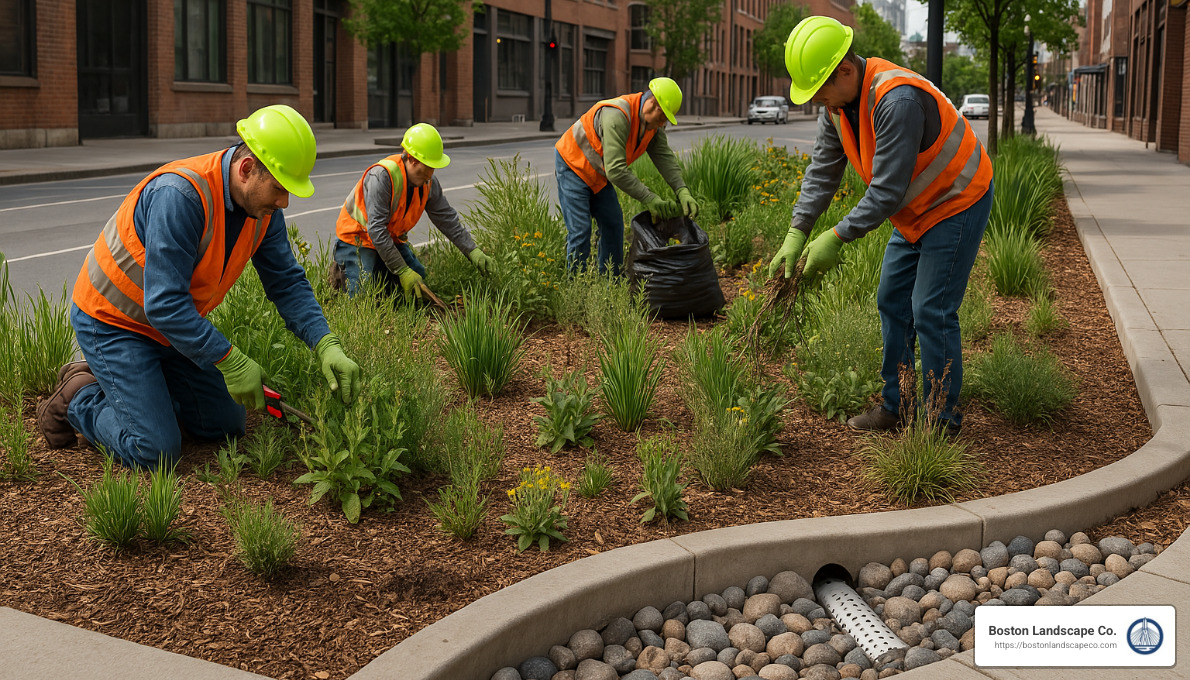
First things first, regular inspections are crucial. It’s a good idea to give your bioswale a quick check after any big storm, just to make sure everything is flowing smoothly. At least once a year, perform a detailed inspection. Look closely for signs of erosion, sediment buildup, plant health issues, and any blockages at inlets or outlets. Spotting issues early makes fixes easier (and cheaper).
One key maintenance task is sediment management. Over time, dirt, sand, and debris build up in your bioswale. When sediment fills about 25% of your bioswale’s design volume, it’s time to remove it. You’ll also want to clear out any pre-treatment areas more often since they collect dirt faster. After removing sediment, remember to restore grades, replant vegetation as needed, and safely dispose of collected material according to your local regulations.
Next up is vegetation care—the plants in your bioswale are its hardworking helpers. For grassed bioswales, keep the grass height around 3-4 inches and remove grass clippings to avoid clogging. For vegetated bioswales, regularly trim or prune woody plants to maintain proper shape and function. Keep an eye out for weeds or invasive species and remove them promptly before they spread. Replace dead or unhealthy plants quickly, and water new plants during establishment or periods of drought to keep them healthy.
Don’t forget about structural maintenance either. Quickly repair any signs of erosion and maintain check dams or other flow-control features. Clear out blockages from inlet and outlet structures, and replace mulch every 2-3 years to keep the bioswale performing optimally.
Seasonal Maintenance Considerations
Maintenance needs change with the seasons, so here’s your quick seasonal guide to keeping your bioswale healthy year-round:
In Spring, clean up debris accumulated through winter, inspect the area for winter damage, cut back dead perennial vegetation, and add fresh mulch if required. This is also the perfect time to add replacement plants if needed.
During Summer, focus on monitoring your bioswale for drought stress, controlling weeds before they spread, and inspecting after heavy rains to ensure proper drainage and prevent erosion.
Fall is about tidying up—remove excess leaf litter, mow grass one final time, and clean pre-treatment areas thoroughly before winter arrives. You can also cut back certain perennials now, depending on your bioswale’s plant choices.
In Winter, take care to avoid piling snow directly into your bioswale, minimize salt application nearby, and clearly mark the bioswale boundaries to avoid accidental damage from snow removal equipment.
Maintenance Tips for Long-Term Success
For a bioswale that ages beautifully, having a solid maintenance plan is key. Clearly document maintenance tasks, schedules, and responsibilities, and train anyone who will be working on-site. Keep thorough records of inspections, maintenance activities, and observations to track your bioswale’s performance over time.
Always be ready to adapt your maintenance approach based on changing conditions or performance results. Use gentle tools and equipment to avoid damaging the bioswale’s structure or compacting the soil. Minimizing chemical use—especially fertilizers and pesticides—is also important to ensure your bioswale continues effectively filtering pollutants rather than adding new ones.
Finally, educating property owners, neighbors, and the community about bioswales and their benefits helps build long-term support and appreciation for these wonderful green infrastructure solutions.
At Boston Landscape Co., we’ve designed, installed, and maintained bioswales throughout communities like Burlington, Woburn, and Winchester. Our experienced maintenance teams ensure that the bioswales we build keep performing beautifully for years to come, protecting local waterways and enhancing your landscape.
Bioswales in Sustainable Urban Planning
Cities around Greater Boston—and beyond—are embracing bioswales as an essential part of sustainable urban development. With urban areas facing the challenges of aging infrastructure, climate change impacts, and water quality concerns, green solutions like bioswales offer multiple benefits that make them increasingly appealing.
At Boston Landscape Co., we’ve seen how integrating bioswales into urban landscapes can significantly improve both function and beauty. Let’s explore how these green spaces fit seamlessly into various city settings, what policies support their use, and look at some successful examples close to home and across the country.
Integration with Urban Landscapes
One of the great things about bioswales is how adaptable they are to diverse urban environments. Whether it’s a busy city street or a quiet neighborhood park, there’s a spot for a well-designed bioswale.
In street designs, bioswales can transform curb extensions, median strips, sidewalks, and parking lane planters into attractive stormwater management features. They blend seamlessly with urban infrastructure, helping cities manage runoff while making streets safer and more inviting.
Public spaces like parks, playgrounds, school campuses, and community gardens also benefit significantly from bioswales. These green features help keep public areas both visually attractive and environmentally healthy, creating mini-habitats for local wildlife and improving water quality.
Commercial properties can easily incorporate bioswales into parking lot islands, corporate campuses, retail centers, and industrial parks. The presence of lush vegetation and natural water filtration improves property values, reduces flooding, and contributes positively to community well-being.
Even residential areas throughout Massachusetts—whether single-family neighborhoods or multifamily developments—can integrate bioswales comfortably along sidewalks, roadsides, and community green spaces. At Boston Landscape Co., we’ve created attractive, practical bioswale designs for communities in Medford, Lexington, Winchester, and many others around Greater Boston.
For detailed guidelines on thoughtfully integrating bioswales into urban street designs, check out the National Association of City Transportation Officials.
Policy Implications
Communities across Massachusetts and nationwide recognize that bioswales are more than just pretty landscaping—they’re key elements of effective stormwater management and climate resilience. Many municipalities now encourage—or even require—green infrastructure through updated stormwater regulations, green building standards, and climate adaptation strategies.
Cities are increasingly requiring new developments to manage stormwater runoff on-site. They offer incentives such as stormwater fee credits for properties that add green features like bioswales. By reducing impervious surfaces and promoting infiltration, these rules help prevent flooding and improve local water quality.
Green building certification programs like LEED (Leadership in Energy and Environmental Design) reward developers who incorporate sustainable site strategies—including bioswales—into new construction and major renovations. These standards help make sustainability rewarding for property owners and builders alike.
As communities plan for climate resilience, bioswales are increasingly recognized as critical tools to mitigate flood risks, improve water quality, and even reduce harmful urban heat island effects. By planting trees and vegetation in bioswales, cities can cool neighborhoods, create wildlife habitats, and improve residents’ quality of life.
At Boston Landscape Co., we stay current with all local policies and regulations, ensuring our designs offer maximum benefits while meeting or exceeding community standards.
Case Studies: Successful Bioswale Projects
Across the country—and right here in Greater Boston—bioswales are making a real difference. Let’s highlight a few standout examples that show just what’s possible:
In Portland, Oregon, the city’s Green Streets Program has installed over 2,000 green facilities, many of them bioswales. These installations manage millions of gallons of stormwater every year, turning ordinary streets into beautiful, functional green spaces. The NE Siskiyou Green Street project is one great example: parking lanes were transformed into lush bioswales, greatly reducing stormwater runoff and enhancing neighborhood appeal.
In Seattle, Washington, the SEA Street (Street Edge Alternatives) project is another inspiring model. By reducing paved surfaces by 18% and adding bioswales along residential streets, Seattle achieved impressive results—in fact, SEA Street now manages 98% of runoff locally, dramatically improving water quality and neighborhood aesthetics.
New York City has developed a robust Green Infrastructure Program, constructing thousands of right-of-way bioswales throughout dense urban neighborhoods. These green installations manage stormwater right at the source, protecting nearby waterways and creating attractive green pockets throughout the city.
Locally, the Alewife Reservation Stormwater Wetland project in Cambridge isn’t technically a bioswale, but it shows the power of green infrastructure in action. This project manages stormwater runoff from a large urban watershed while creating beautiful, wildlife-rich recreational space for residents.

Closer to home, Boston Landscape Co. has completed numerous bioswale installations throughout communities like Malden, Medford, Somerville, and Lexington. We’ve seen how thoughtful design and careful installation can solve stormwater challenges, improve ecological health, and boost neighborhood pride.
If you’re interested in bringing the benefits of bioswales to your property or community, our team at Boston Landscape Co. is here to help. Together, let’s create sustainable urban landscapes that look great and work even better.
Frequently Asked Questions about Bioswales
What is the Cost of Installing a Bioswale?
One of the top questions we get at Boston Landscape Co. is about the cost of installing bioswales. Like many landscaping projects, the cost can vary significantly based on a few key factors, such as the size of the project, the complexity of the design, and specific site conditions.
Based on average internet cost data (not specific pricing for Boston Landscape Co.), here are some general ranges to keep in mind:
A simple, grass-covered bioswale typically costs around $5 to $15 per square foot. These are usually straightforward installations without extensive engineering or specialized plantings.
If you’re looking for something more visually appealing with diverse vegetation, native plants, and improved filtration, a vegetated bioswale could range from $10 to $30 per square foot.
For more complex designs requiring engineered soils, drainage layers, and underdrain systems, costs can rise to $15 to $45 per square foot or even more.
These numbers are broad averages based on publicly available internet data, and final costs can sometimes reach at least triple the average quoted range due to unique project challenges. Factors like site preparation, engineered soils, the type of vegetation selected, drainage features, accessibility, and permitting requirements can all influence these costs significantly.
While the upfront investment for bioswales might seem higher compared to traditional drainage systems, they often provide substantial long-term savings. By reducing flooding, lowering downstream infrastructure maintenance, and improving water quality, bioswales become a cost-effective and environmentally friendly solution over time.
How Effective are Bioswales at Reducing Pollution?
Another common question is about how well bioswales actually work. Do they really make a difference in reducing pollution? The short answer—absolutely!
Scientific research consistently supports the effectiveness of bioswales. According to a comprehensive study published in the journal Water, bioswales can achieve impressive pollutant removal rates. For example, they typically remove around 65% to 95% of total suspended solids, contaminants like dirt and sediment that can cloud waterways.
Additionally, bioswales effectively reduce heavy metals such as zinc, copper, and lead by approximately 30% to 90%. Nutrients like nitrogen and phosphorus, which can cause harmful algae blooms in ponds and lakes, are similarly reduced by about 25% to 70%.
Bacteria and harmful pathogens are also significantly reduced by bioswales, typically by around 30% to 90%. And when it comes to hydrocarbons—those oils and greases washing off roads and driveways—bioswales can remove roughly 70% to 90%.
That said, the exact effectiveness of any given bioswale can depend on multiple factors, including its design, how well it’s maintained, its age, storm intensity, and even local climate conditions.
In one notable study, grassed bioswales demonstrated a remarkable 95% pollutant removal rate and an impressive 88% reduction in stormwater volume. Bottom line? These systems really do work wonders for cleaning up urban runoff.
Can Bioswales be Implemented in Residential Areas?
Yes—bioswales can absolutely be used in residential landscapes, and they can be a great choice for homeowners looking to manage stormwater sustainably. At Boston Landscape Co., we’ve designed and installed many residential-scale bioswales throughout neighborhoods like Lexington, Winchester, and Wellesley.
Residential bioswales can be strategically placed along property boundaries, beside driveways and sidewalks, or throughout common green spaces in subdivisions. With thoughtful design, they beautifully blend into existing landscaping—looking less like “stormwater management features” and more like attractive, natural gardens.
When creating bioswales for residential areas, we carefully consider the property’s size and layout. We select native plants and flowers that complement the home’s existing style, ensuring the end result is both functional and beautiful. Maintenance requirements are kept manageable, so homeowners aren’t burdened with intensive upkeep.
Residential bioswales also offer some added perks: they help reduce localized flooding issues, support local wildlife like birds and butterflies, and can even boost property values by enhancing your home’s curb appeal. Plus, they provide ongoing opportunities for families to learn about sustainability and environmental stewardship.
For homeowners with smaller properties or limited space, a rain garden can offer similar benefits in a more compact footprint. Curious about rain gardens? You can learn more about what is a rain garden on our website.
Whether you’re addressing drainage concerns, looking to improve your landscape, or just doing your part for the environment, residential bioswales and rain gardens can be wonderful additions to your property.
Conclusion
Bioswales represent a powerful solution to many of the stormwater management challenges facing our communities today. They’re not just functional landscape features—they’re nature’s allies in our increasingly developed world. By mimicking natural processes, these thoughtfully engineered channels effectively manage runoff while delivering benefits that extend far beyond basic drainage.
I’ve seen how well-designed bioswales transform properties throughout Greater Boston. From residential neighborhoods in Winchester to commercial developments in Burlington, these green infrastructure elements are making a real difference in how we manage water.
The beauty of bioswales lies in their multifaceted benefits. They protect our environment by capturing pollutants before they reach waterways and helping replenish groundwater supplies. They mitigate flooding by absorbing and slowing stormwater during heavy rains. In our increasingly concrete world, bioswales create precious habitat corridors for birds, butterflies, and beneficial insects that struggle to find homes in urban settings.
Let’s not overlook their aesthetic value either—changing ordinary streets, parking lots, and medians into vibrant, living landscapes that change with the seasons. As climate patterns shift and we experience more intense rainfall events, bioswales provide communities with increased resilience and adaptability.
Of course, success doesn’t happen by accident. Effective bioswales require thoughtful design that considers soil conditions, proper grading, and appropriate plant selection. They need careful construction to ensure layers function as intended. And yes, they require ongoing maintenance—though typically less than conventional stormwater systems.
At Boston Landscape Co., we’re passionate about implementing sustainable stormwater solutions throughout Greater Boston. Our team understands the unique challenges of New England’s climate, soils, and regulatory environment. We work closely with property owners, from homeowners in Lexington to municipal managers in Medford, designing and installing bioswales that meet specific site needs while maximizing environmental benefits.
Whether you’re considering a simple grassed swale for a residential property or a complex vegetated system for a commercial development, bioswales offer versatile solutions that improve both functionality and beauty. Our wetland services team specializes in designing stormwater features that work with nature rather than against it.
By embracing solutions like bioswales, we can create more resilient, sustainable, and beautiful communities throughout Massachusetts—one project at a time. The ripple effects of these thoughtful landscape elements extend far beyond property lines, contributing to healthier watersheds and more livable neighborhoods for generations to come.
