
Artificial Grass Border: 1 Essential Guide
Why an Artificial Grass Border is the Foundation of a Great Lawn
An artificial grass border is the unsung hero of a successful synthetic turf installation. Without it, your new lawn can sink, shift, and fray at the edges, wasting your investment and creating a maintenance headache. An artificial grass border is the edging material installed around the perimeter of synthetic turf to provide structural support, create a clean aesthetic finish, and act as a weed barrier.
Common border materials include:
- Plastic or composite bender board
- Metal edging (steel or aluminum)
- Pressure-treated wood
- Concrete or stone
As spring arrives in New England, it’s the perfect time to plan outdoor projects and understand what makes artificial turf last. Many homeowners focus on the grass but overlook the border, leading to costly repairs when edges fail.
I’m Steve Schumacher, owner of Boston Landscape Co. since 1991. Over three decades, I’ve seen how a quality artificial grass border transforms an average installation into a professional, long-lasting landscape feature. Our team has installed countless turf projects across Greater Boston, and we know the border is just as important as the grass itself.

Why a Border is Non-Negotiable for Your Artificial Lawn
As spring returns to Greater Boston, many homeowners are considering artificial turf for its lush look and low maintenance. But a successful installation depends on a crucial, often overlooked element: the artificial grass border. It isn’t just a finishing touch—it’s the foundation that makes the entire system work.
Aesthetics are a major benefit. A professionally installed border creates crisp, clean lines that define your turf area from garden beds or patios. This separation gives your property a polished, intentional look that boosts curb appeal.
The border’s most critical role, however, happens below the surface. Your turf sits on a base of compacted crushed stone, which must remain stable, especially with New England’s freeze-thaw cycles. The border acts as a small retaining wall, holding the base materials in place and preventing erosion or settling that causes dips and bumps in your lawn.
This containment also keeps the turf itself from shifting or curling at the edges from foot traffic. Furthermore, it prevents the infill materials (like sand or rubber granules) from spilling onto walkways and garden beds, keeping your landscape tidy. A solid border also blocks weeds and soil from creeping into your turf, working with a quality weed barrier fabric to keep your lawn pristine without chemicals.
A proper artificial grass border protects your investment. It prevents the common issues that lead to premature wear and costly repairs, ensuring your artificial lawn installation remains structurally sound and beautiful for years.
Choosing Your Material: A Guide to Artificial Grass Border Options
When designing artificial lawns for homeowners in areas like Lexington and Winchester, the border material is a key decision affecting budget, style, and long-term durability. The right artificial grass border must suit your home and withstand New England’s weather. After three decades of installations, we’ve worked with every option.
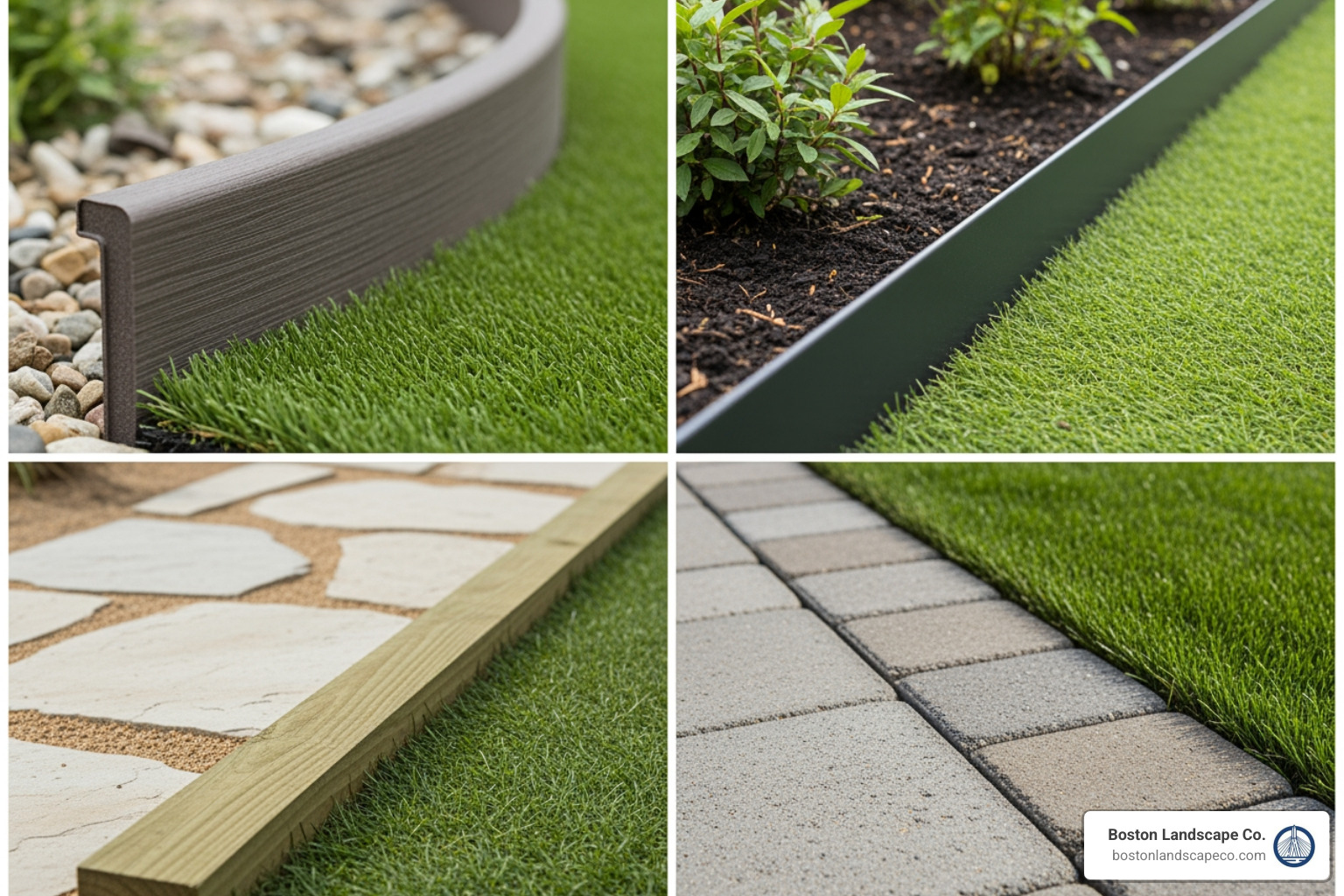
Let’s walk through the most common materials we install.
Plastic and Composite Edging
This is the go-to choice for its unbeatable combination of flexibility and durability. Bender board, as it’s known, can easily form curves around trees and garden beds. It’s also the most cost-effective option, making it popular for larger projects. Modern composite edging is made from recycled materials, is UV-resistant, and can last 25 years or more. It’s the most forgiving material for DIY projects, though professional installation is always recommended for best results.
Metal Edging
For a clean, contemporary look popular in modern homes around Concord and Wellesley, metal edging is a perfect match.
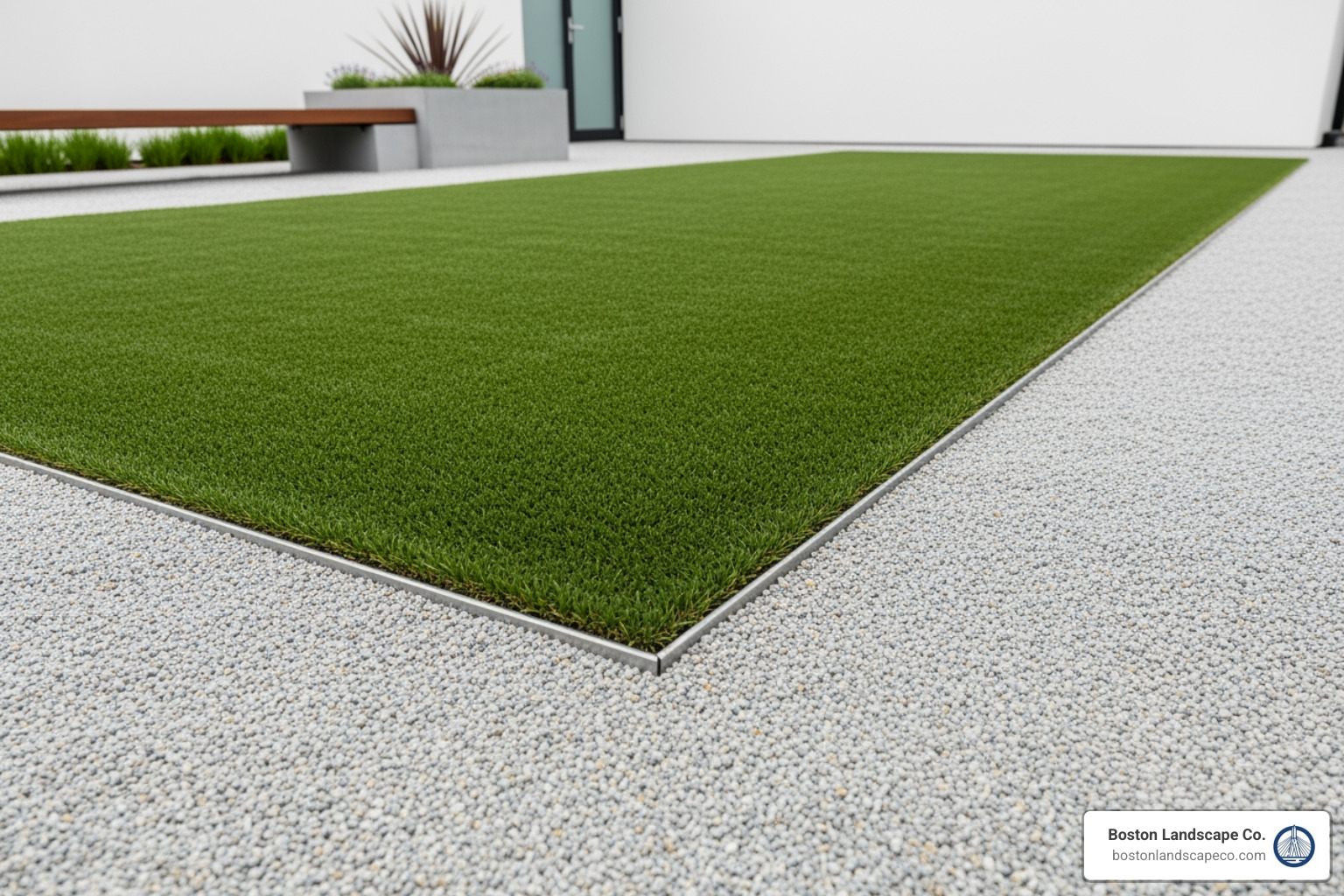
Steel and aluminum options offer incredible strength and rust resistance, ideal for our climate. Metal creates a thin, almost invisible line that defines the space with a minimalist aesthetic. While it holds its shape exceptionally well, metal typically comes with a higher initial investment.
Wood Edging
For a more traditional New England garden aesthetic, wood edging offers a natural, rustic charm. We typically use pressure-treated timber to resist moisture and rot. Thicker timber sleepers can even create a low retaining wall. Wood has a mid-range cost but will eventually need replacement (often within 10-15 years) and is less flexible than plastic, working best for straight lines.
Concrete and Stone Edging
For a permanent, high-end statement, we turn to concrete and stone. This includes poured concrete curbing, pavers, bricks, and natural stone. The durability is best, lasting for generations and creating the most solid barrier possible for your turf base. These materials offer a sophisticated appearance that adds significant value to your property and integrates seamlessly with other hardscaping projects. However, installation is labor-intensive and represents the highest investment in materials and labor.
Comparing Artificial Grass Border Materials
Choosing the right artificial grass border means balancing aesthetics, durability, and budget. Here’s how the main options stack up:
| Material Type | Average Cost per Linear Foot (Installed)* | Durability | Aesthetic | Flexibility for Curves |
|---|---|---|---|---|
| Plastic/Composite | $4 – $15 | Excellent | Versatile, can mimic wood, modern | Very high |
| Metal | $10 – $30 | Superior | Sleek, modern, minimalist | Medium to high |
| Wood | $15 – $75 | Moderate | Natural, rustic, traditional | Low |
| Concrete/Stone | $20 – $100+ | Exceptional | High-end, custom, classic, blends with nature | Low (concrete can be molded) |
Please note, these are national averages based on internet data and not actual costs for Boston Landscape Co. Pricing can vary widely based on material quality, project complexity, and local labor rates in Massachusetts.
Installation 101: How to Install an Artificial Grass Border
Understanding how an artificial grass border is installed highlights why professional attention to detail is so important. While techniques vary by material, the fundamental approach is consistent. Think of it as building a sturdy picture frame for your lawn.
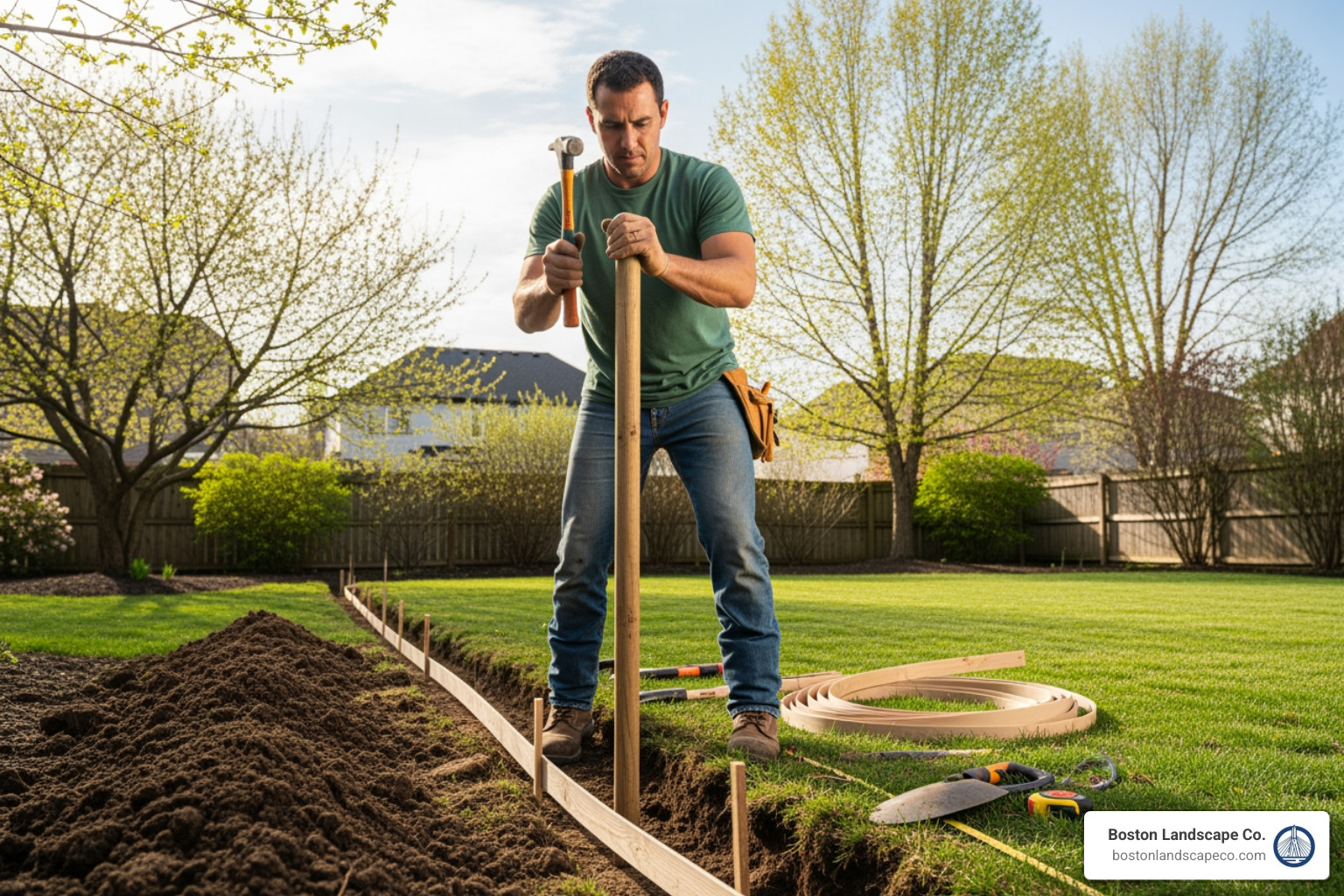
Preparation and Layout
Proper prep work is essential for a border that will withstand New England’s weather.
- Clear the Area: We remove all grass, weeds, and rocks from the perimeter.
- Mark the Boundary: Using spray paint or string, we outline the exact shape of the turf area, ensuring curves are smooth and lines are straight.
- Dig the Trench: A trench is dug to a depth appropriate for the border material, wide enough to accommodate it and backfill.
- Level the Base: The bottom of the trench is compacted and leveled to create a stable foundation.
Securing the Border
With the trench prepared, the border is installed.
- Place the Edging: The material is set in the trench, following the marked lines. Flexible materials like bender board are shaped into curves.
- Secure with Stakes: For plastic, wood, and most metal edging, heavy-duty stakes are driven into the ground behind the border to prevent outward movement. Stakes are placed closer together on curves for added support.
- Adjust Height: The top of the border must be set at the correct height—flush with or slightly below the finished turf level to avoid a trip hazard while still containing the base.
- Backfill the Trench: Soil or base material is packed firmly on both sides of the border to lock it in place.
Finishing the Turf Edge
The final steps integrate the turf with the border for a seamless look.
- Lay and Trim Turf: The artificial turf is laid over the base, extending past the border. The excess is then carefully trimmed with a utility knife for a precise fit.
- Tuck and Fasten: The turf edge is tucked against the border and secured every 4-6 inches with non-galvanized nails or staples. This final step ensures the edges of your artificial lawn installation remain taut and clean.
Beyond the Basics: Creative Edging Ideas for Your Landscape
A well-chosen artificial grass border is more than functional—it’s a chance to add unique flair to your outdoor space. As Boston landscape designers, we love using creative edging to make a yard stand out. Here are a few ideas to consider this spring.
- Create a Walkway: Use a wide 2- to 3-foot border of decorative pavers around your turf. This creates an integrated path that provides easy access to garden beds and prevents muddy edges after spring rains.
- Integrate Lighting: Recessed LED strip lighting or small uplights can be built into concrete or wood edging. This transforms your yard into an enchanting retreat for summer evenings, extending your outdoor living hours.
- Add Elevation: For dramatic visual impact, create a raised lawn effect using stacked timber sleepers. This can lift your turf 6 to 18 inches, adding architectural interest and defining different “rooms” in your landscape, like a play area or pet zone.
- Alternate Materials: For a bespoke look, try alternating materials, such as sleek metal segments interspersed with natural stone blocks. This creates a dynamic, textured edge that adds custom character.
- Design a Putting Green: Use a low-profile, flexible composite border to create the precise contours of a custom putting green. This ensures a smooth transition for putts and can accommodate unique shapes for a challenging practice facility in your own backyard.
Frequently Asked Questions about Artificial Grass Borders
As homeowners across Reading and Waltham plan their spring and summer projects, we get many questions about the artificial grass border. Here are answers to the most common ones.
What factors should I consider when choosing an artificial grass border?
The best choice balances several key factors:
- Budget: Plastic or composite options offer great value, while custom stone is a premium investment.
- Landscape Style: A modern home in Concord may suit sleek metal, while a classic colonial in Bedford might call for natural wood or stone.
- Climate: High-quality composites, metal, and properly installed stone or concrete stand up well to New England’s freeze-thaw cycles.
- Use: High-traffic areas with kids and pets need a durable, securely anchored border.
- Installation: Consider whether you’re comfortable with a DIY project (best with plastic edging) or prefer professional landscaping services for a guaranteed result.
How much does an artificial grass border cost?
Cost depends on the material, design complexity, and labor.
Please note, these are national averages based on internet data and not a quote for services from Boston Landscape Co.
- Plastic/Composite Edging: Generally the most budget-friendly, from $4 to over $15 per linear foot installed.
- Wood Edging: A mid-range option, from $15 to over $75 per linear foot installed, depending on the type of timber.
- Stone/Concrete Edging: The highest investment, from $20 to over $100 per linear foot installed, with custom stone being at the top of the range.
These estimates typically include materials and professional installation. We always recommend a detailed estimate for your specific project.
Can I install artificial grass without a border?
While technically possible, we strongly advise against it. Installing turf without a border is like building a house without a foundation—problems are inevitable. You will face:
- Base Material Erosion: The crushed stone base will wash away, creating a lumpy, uneven lawn.
- Shifting Turf: The edges will lift, curl, and pull away from adjacent surfaces.
- Weed Intrusion: Weeds and grass will creep in from the sides, creating more maintenance.
- Unfinished Appearance: Without clean, defined edges, the installation looks incomplete and unprofessional.
Skipping the border compromises the longevity of your investment, leading to more costs and frustration down the road. A border is a crucial component of any quality residential landscaping project.
Conclusion
As you plan your outdoor projects this spring, investing in a beautiful, low-maintenance lawn is a great choice. As we’ve explored, the secret to a successful artificial lawn is the artificial grass border that frames it.
A properly installed border transforms your turf into a professional landscape feature. It protects your investment by maintaining structural integrity, preventing erosion and shifting, and creating the crisp, finished look that makes your property stand out. Whether you prefer the flexibility of composite, the modern lines of metal, the warmth of wood, or the permanence of stone, there is a perfect option for your New England home.
At Boston Landscape Co., we’ve been helping homeowners across Greater Boston create stunning outdoor spaces since 1991. Our team has the experience to guide you through every step, ensuring your new lawn performs flawlessly through New England’s challenging seasons.
Ready to enjoy a perfect lawn this summer without the hassle? Let’s make it happen together.
Request an estimate for your artificial grass installation today!
