
Residential snow shoveling: 2 Safe Options 2025
Why Winter Property Safety Should Be Your Top Priority
Residential snow shoveling isnt just a choreits a safety responsibility, especially for homeowners over 50. When winter storms hit Greater Boston, you need a plan to keep driveways, walkways, and sidewalks clear and accessible.
Quick Answer for Residential Snow Shoveling Options:
- DIY Shoveling: Use proper technique, take breaks, warm up first
- Professional Services: $25-$100+ per hour, $30-$150+ per storm
- Equipment Options: Ergonomic shovels, snow pushers, electric snow blowers
- Safety Priority: Heart attack risk increases significantly for adults over 50
The risk is real: if you move a 5 kg shovel load every 5 seconds for 15 minutes, youll lift over 1,000 kgall while balancing on slippery, uneven ground.
Cold weather constricts arteries and raises blood pressure, making your heart work harder. Add age-related joint and muscle strain, and injuries become much more likely.
The good news: you have safer options than grabbing an old shovel and hoping for the best.
Im Steve Schumacher. After three decades in landscaping and winter property maintenance with Boston Landscape Co., Ive helped Greater Boston homeowners manage residential snow shoveling safely and effectively through planning, proper tools, and smart execution.
The Hidden Dangers of Shoveling Snow, Especially for Seniors
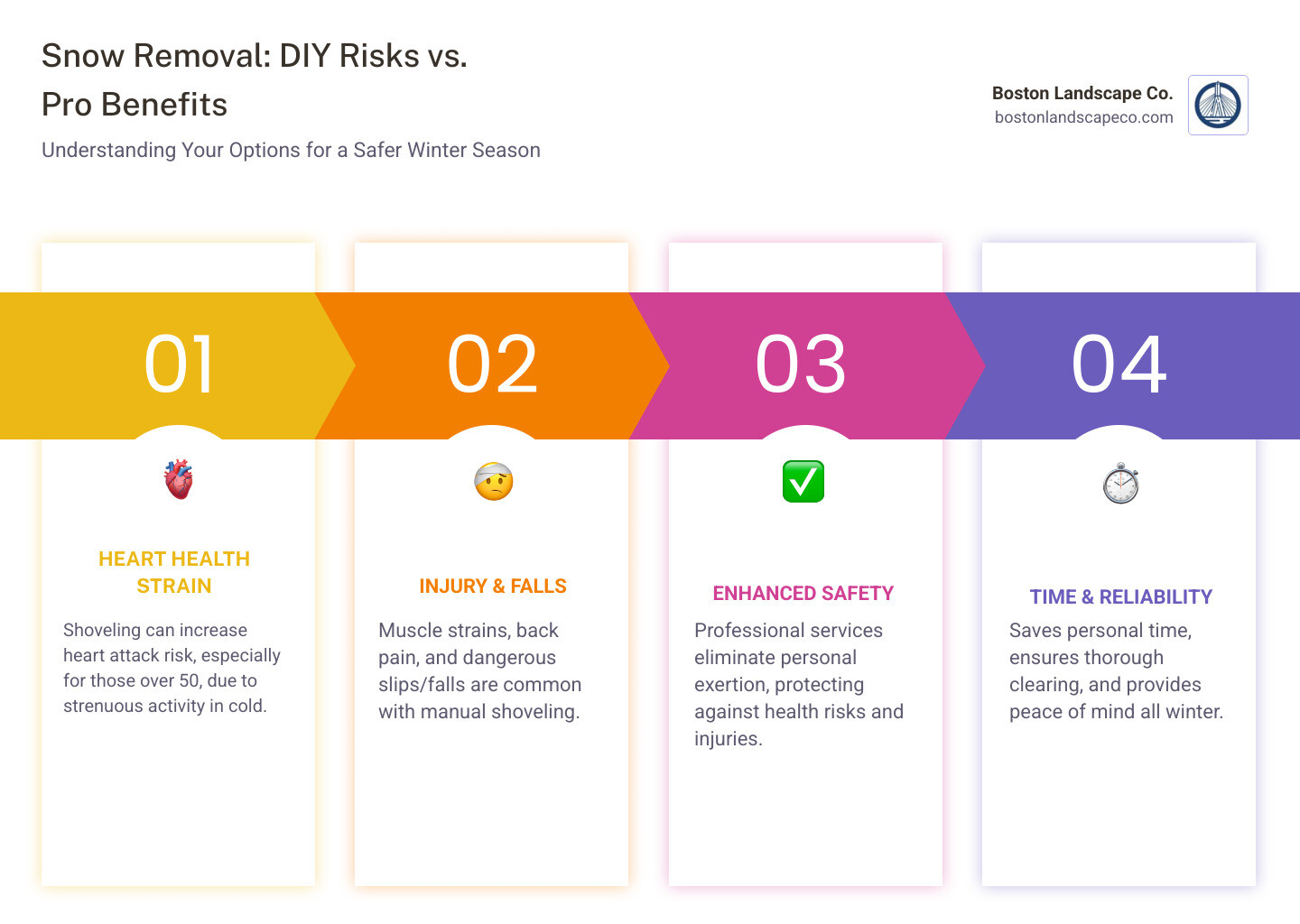
Residential snow shoveling sends thousands to the ER every winter. Its essentially heavy weightlifting in freezing temperatures on slick surfaces. Even short sessions can mean lifting more than a metric ton of snow.
Heart risks rise sharply for adults over 45, and even more for those 50+. Cold constricts blood vessels and lifts blood pressure; heavy exertion adds strain. Slips, falls, and back injuries are common, and many people only feel the damage the next day.
Warning Signs of a Heart Attack
Stop shoveling and call 911 if you notice:
Chest discomfort (pressure, squeezing, or pain) that may come and go.
Shortness of breath with or without chest pain, beyond normal exertion.
Pain in arms, back, neck, or jaw that may appear without chest pain.
When to seek immediate medical attention: Dont wait for symptoms to improve. Minutes matter.
Why Cold Weather Increases Risk
Cold triggers artery constriction, so your heart works harder to move blood. Blood pressure rises under exertion in the cold. And dehydration risk is higher than many expect because dry air and exertion drain fluids even when you dont feel thirsty.
Bottom line: the combination of cold, heavy lifting, and age-related changes creates a perfect stormespecially if you have underlying conditions.
The DIY Approach: Safe and Effective Residential Snow Shoveling
Many Greater Boston homeowners handle residential snow shoveling themselves. If youre up for it, treat it like a workout: prepare, use the right tools, and follow smart technique.
Before You Start: Preparation is Key
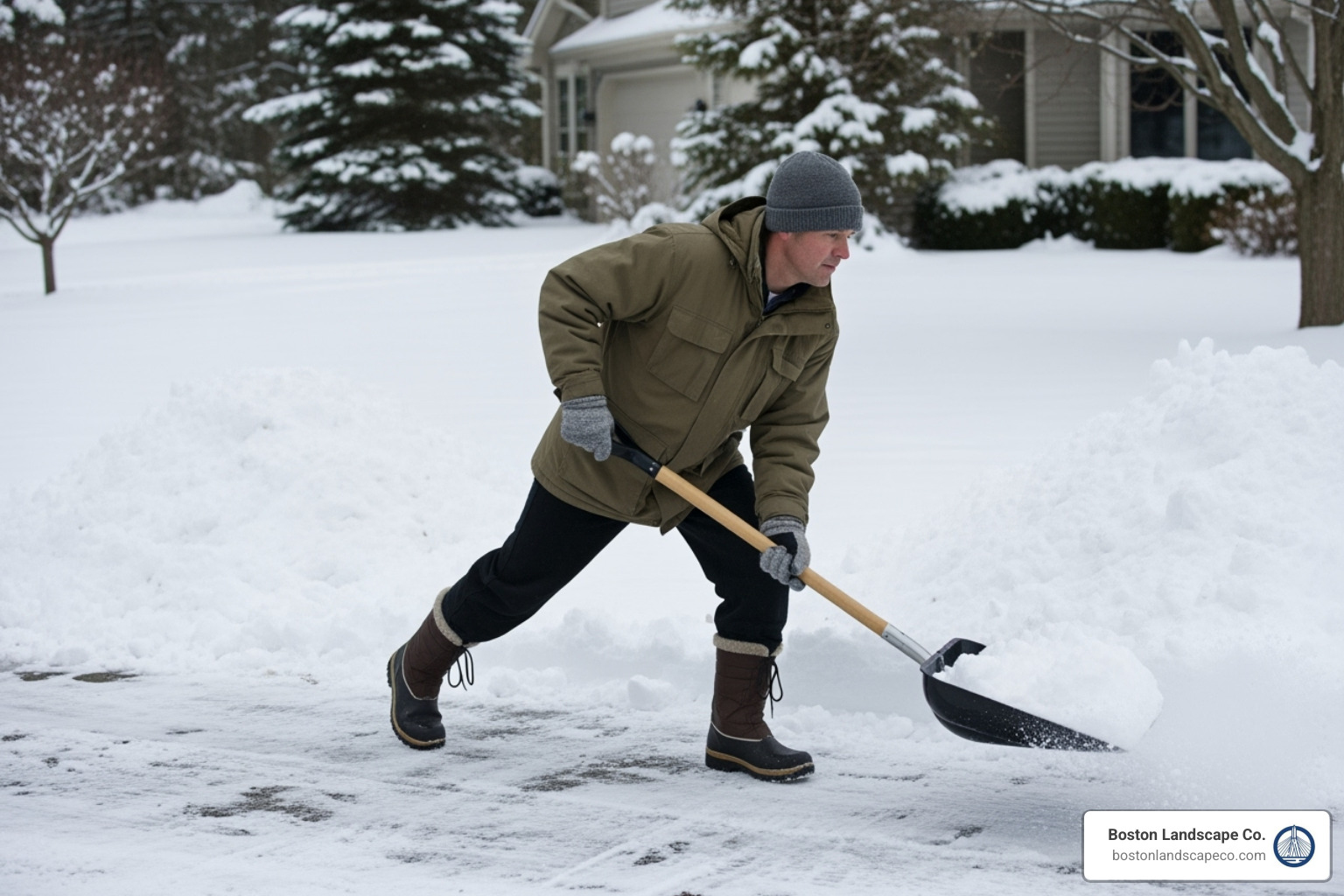
Warm up 52 minutes with light stretches. Dress in moisture-wicking layers under a waterproof shell. Wear water-resistant boots with good tread and insulated, waterproof gloves. Hydrate with warm, non-alcoholic fluids before and during breaks.
Choosing the Right Tools for Residential Snow Shoveling
Upgrade from old, heavy shovels. Ergonomic shovels (about 1.5 kg, chest-high handles) reduce strain; bent shafts and add-on handles help. Use snow pushers for light snow on flat areas and traditional shovels for tight spots or deeper accumulation. Prefer lightweight materials and smaller blades (2535 cm) to avoid overloading. A quick non-stick spray on the blade prevents snow from sticking. Keep ice scrapers handy, and choose de-icers wisely: rock salt works but can damage concrete and irritate pets; pet-safe ice melt (like calcium magnesium acetate) is gentler.
Proper Shoveling Technique to Avoid Injury
See the Canadian Centre for Occupational Health and Safety guidance.
- Push, dont lift whenever possible.
- If lifting, bend knees, keep back straight, and lift with legs.
- Avoid twisting; turn your whole body, including feet.
- Take breaks every 1520 minutes and stay hydrated.
- Shovel small loads; split deep snow into multiple passes.
- Pile snow smartly: keep it off sidewalks/streets, away from foundations and shrubs, and always clear around fire hydrants for emergency access.
When to Call the Pros: The Benefits of Professional Snow Removal
Theres a point where DIY no longer makes sense. For many homeownersespecially those over 50 or with health concernsprofessional residential snow shoveling is the safer, faster choice.
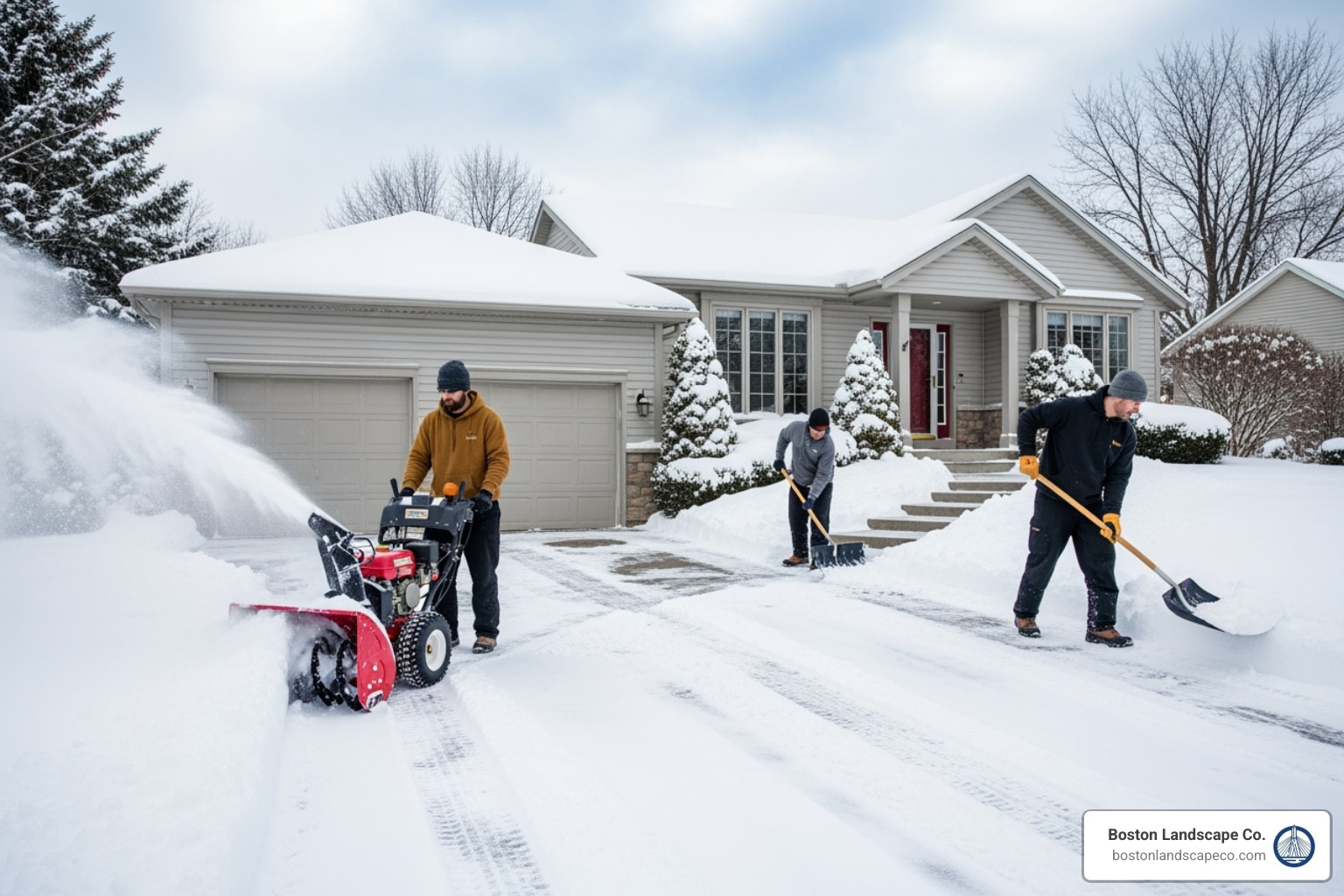
Pros deliver major time savings, reduced injury risk, and thorough clearing with proper ice management. Reliable teams monitor storms, arrive on schedule, and keep access open during extended weather events. Explore our snow removal services.
What to Look for in a Snow Removal Service
- Insurance/liability coverage: ask for proof.
- Reputation: reviews, referrals, and references. See our portfolio of completed projects.
- Equipment quality: modern, well-maintained machines.
- Clear contracts: scope, timing, pricing.
- Full-service offerings: plowing, shoveling, and de-icing.
Hiring a Professional for Residential Snow Shoveling
Pros excel with heavy, wet snow and large properties where DIY becomes an all-day task. For seniors, professional clearing supports independence and safety. Proper snow placement and ice prevention ensure ongoing accessibility. Consider pairing winter services with professional hardscaping for durable, easy-to-maintain surfaces.
Understanding the Costs and Local Obligations
When it comes to residential snow shoveling, understanding both the financial investment and your legal responsibilities as a homeowner is crucial for making the right decision. Nobody likes surprises when it comes to winter expenses or unexpected fines from the city!
Average Costs of Snow Removal Services
Note: The following are average costs based on industry data and do not reflect the specific pricing of Boston Landscape Co. Always request a direct quote for accurate pricing.
The cost of professional snow removal varies quite a bit depending on your specific situation. Think of it like ordering pizza – the price changes based on size, toppings, and where you live!
Hourly rates for manual shoveling or smaller equipment typically run $25 to $100+ per hour. The wide range reflects different factors like snow conditions, accessibility of your property, and local market rates. Heavy, wet snow that requires more effort will naturally cost more than light, fluffy powder.
For per-storm pricing, most homeowners pay $30 to $150+ per event for standard driveways. If you have a longer driveway, steep slopes, or gravel surfaces that require special care, expect to pay on the higher end of this range. The depth matters too – a light dusting under three inches is much quicker to clear than eight inches of heavy snow that takes several hours to properly remove.
Many homeowners find seasonal contracts offer the best value and peace of mind. These typically range from $300 to $900+ for the entire winter season, covering all snowfalls regardless of how many storms hit. It’s like buying insurance for your winter accessibility – you pay upfront and don’t worry about individual storm costs.
If you’re considering buying your own equipment instead, electric snow shovels start around $100-$500, while single-stage gas blowers run $350-$800. For serious snow removal power, two-stage machines can cost $1,000-$3,500 or more.
For more detailed cost information, you can check out How Much Does Snow Removal Cost? for additional industry data.
Your Responsibility as a Homeowner
Here’s where things get serious – and potentially expensive if you’re not careful. Most Greater Boston area municipalities have strict bylaws about snow removal, and ignoring them can hit your wallet hard.
Sidewalk clearing deadlines are typically the biggest concern for homeowners. Most cities require you to clear the full width of sidewalks adjacent to your property by 10 AM the day after snowfall ends. Miss this deadline, and you could face fines starting around $250, escalating to $750 or more if the snow remains uncleared for over 24 hours.
You also can’t just shovel your problems onto someone else’s property. Shoveling snow onto public roads or freshly plowed streets is prohibited in most areas. This creates dangerous conditions for drivers and can result in additional fines. Always pile snow on your own property, away from roads and walkways.
Fire hydrant access is another critical responsibility. If there’s a hydrant near your property, clearing around it isn’t just good citizenship – it could literally save lives. Emergency responders need immediate access during fires, and a buried hydrant can cost precious minutes.
The good news? Many communities offer “Snow Angels” programs that connect volunteers with seniors or others who need assistance with snow removal. These programs recognize that not everyone can safely handle residential snow shoveling and provide community support during tough winter weather.
Remember to check your specific city or town’s website for exact requirements in your area, as regulations can vary between municipalities in the Greater Boston region.
Frequently Asked Questions about Residential Snow Removal
After helping countless Greater Boston homeowners, here are straight answers to the most common questions.
How much should I pay someone to shovel my driveway?
Note: The following are average costs based on industry data and do not reflect the specific pricing of Boston Landscape Co. Always request a direct quote for accurate pricing.
Manual/small equipment work typically runs $25 to $100+ per hour. Per-storm pricing for a standard driveway is often $30 to $150+ per event, with higher costs for long, steep, or gravel driveways and deeper snow. Get a local quote to confirm your specific cost.
Is it better to shovel snow or use a snow blower?
Use a shovel for light, fluffy snow under 4 inches and small areas. Snow blowers are better for deeper snow and larger properties and are much easier on your body. For anyone over 50 or with health concerns, a snow blower (yours or a pros) is usually the safer choice.
How often should I shovel during a big snowstorm?
Start early and shovel often: clear every few hours or every 34 inches of accumulation. Multiple light passes are far safer and easier than tackling a foot of compacted snow at once. Many services also return during heavy storms to maintain access.
Conclusion: Stay Safe and Clear This Winter
Winter in Greater Boston is beautifuland demanding. Residential snow shoveling carries real risks for adults over 50, including heart strain and injuries from heavy lifting in the cold. With preparation, ergonomic tools, and smart technique, DIY can be manageable. For many, especially seniors, professional service offers the safest, most reliable path.
Plan ahead: stock the right gear, line up neighborhood help, or secure a seasonal contract before the first major storm.
At Boston Landscape Co., we tailor winter solutions for homes across Boston, Bedford, Billerica, Burlington, Carlisle, Concord, Lexington, Malden, Medford, Reading, Somerville, Stoneham, Waltham, Wellesley, Winchester, and Woburn.
For comprehensive, reliable winter maintenance, explore our Boston, MA snow removal services. Stay safe, stay clear, and enjoy the season.
