
Wetland Restoration: 7 Powerful Benefits in 2025
Why Wetland Restoration is Nature’s Most Powerful Climate Solution
Wetland Restoration is the process of returning degraded or destroyed wetlands to their natural state, bringing back the water, plants, and wildlife that make these ecosystems so valuable.
What it involves:
- Re-establishing natural water flow patterns
- Removing invasive species and replanting native vegetation
- Restoring the physical structure of wetland habitats
- Creating self-sustaining ecosystems that require minimal maintenance
Why it matters:
- Climate protection: Wetlands store more carbon than any other ecosystem
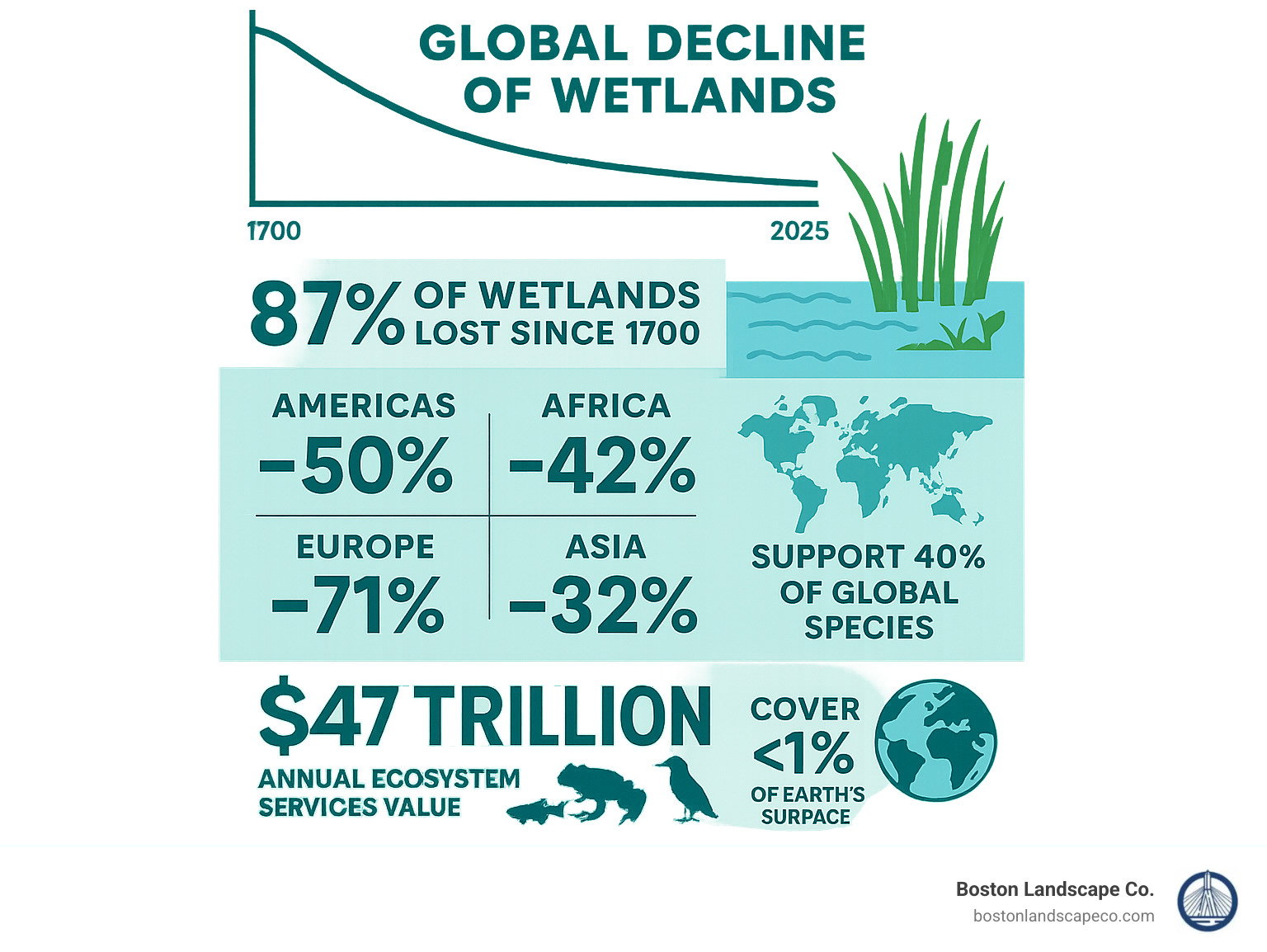
- Biodiversity: Support 40% of all species despite covering less than 1% of Earth’s surface
- Flood control: Can hold about 1 million gallons of water per acre
- Water quality: Filter pollutants and improve drinking water sources
The numbers tell a sobering story. More than half of the 221 million acres of wetlands that existed in the lower 48 states in the late 1700s have been destroyed. California has lost about 95% of its historic wetlands, while globally, we’ve lost 87% of wetlands since 1700.
Yet there’s hope. Wetlands provide over $47 trillion in services worldwide each year and support more than one billion jobs. When we restore them, we’re rebuilding nature’s most efficient flood barriers, water filters, and carbon storage systems.
I’m Steve Schumacher, and with over three decades in the landscaping industry, I’ve seen how Wetland Restoration projects can transform both properties and communities. Through Boston Landscape Co., we’ve worked on numerous ecological restoration projects that demonstrate how proper planning and execution can bring these vital ecosystems back to life.
Key terms for Wetland Restoration:
What Are Wetlands and Why They Matter
Wetlands are areas where water sits at or near the surface long enough to support plants that have adapted to life with perpetually “wet feet.” These remarkable ecosystem hubs are nature’s overachievers. Despite covering less than 1% of Earth’s surface, wetlands support an astounding 40% of all known species.
What makes wetlands so incredibly valuable? They’re flood storage powerhouses that can hold about one million gallons of water per acre. When storms hit or rivers rise, wetlands act like giant sponges, soaking up excess water that would otherwise cause flooding.
Wetlands are also carbon sink champions. They store more carbon than any other ecosystem on the planet, with peatlands, mangroves, and seagrasses particularly skilled at locking away carbon for centuries.
The water filtration these ecosystems provide is remarkable. Wetlands can remove 40% of nitrogen and phosphorus from agricultural runoff and groundwater flow, though they need to cover at least 10% of a catchment area to make a meaningful difference in water quality.
Food security depends heavily on wetlands. More than one billion people worldwide rely on fish harvested from wetlands as their primary protein source. Rice cultivation in wetland areas feeds billions more.
The cultural value runs deep as well. Wetlands tourism accounts for 8.9% of global employment, providing recreational opportunities and cultural connections that span generations.
The Ramsar Convention, an international treaty for wetland conservation, recognizes these ecosystems as “among the world’s most productive environments.” When we lose wetlands through development or neglect, we lose all these incredible benefits.
For more detailed information about protecting these vital ecosystems, check out our wetland protection services.
Wetland Restoration 101: Types, Benefits & Climate Impact
When we talk about Wetland Restoration, we’re really talking about bringing back nature’s most hardworking ecosystems. There are different approaches depending on what we’re working with.
Re-establishment is like hitting the reset button on a piece of land. We’re bringing wetlands back to areas where they existed naturally before being drained or filled. This approach often works best because those special hydric soils are usually still there, just waiting to do their job again.
Rehabilitation is more like giving a struggling wetland a helping hand. Maybe the water flow got disrupted by development, or invasive plants have taken over. We’re fixing what’s broken so the wetland can get back to doing what it does best.
Improvement takes existing wetlands and makes them even better. This might mean creating deeper spots for ducks to dive, or adding native plants to support more wildlife.
The types of wetlands we can restore are as varied as the landscapes they call home. Coastal marshes act like natural breakwaters, protecting shorelines from storms while providing rest stops for migrating birds. Freshwater swamps become nurseries for frogs and salamanders while soaking up floodwater. Peatlands are the ultimate carbon storage champions, locking away greenhouse gases for centuries.
Here’s where things get really exciting from a climate perspective. Wetland Restoration delivers a one-two punch against climate change. These ecosystems sequester massive amounts of carbon – coastal wetlands alone could capture 0.76-1.00 gigatons of carbon dioxide by 2050. That’s equivalent to taking millions of cars off the road permanently.
The scientific research on coastal blue carbon shows just how powerful these “blue carbon” ecosystems can be. They’re five times more effective at carbon storage than tropical forests, and they keep working for centuries without slowing down.
What’s fascinating is how diverse groups have rallied around Wetland Restoration. Hunters, through their license fees and taxes, fund more wetland conservation than gets destroyed each year.
The economic impact is staggering too. Wetlands provide $47 trillion in services worldwide each year. When we restore them, we’re not just helping wildlife; we’re rebuilding critical infrastructure that protects communities and supports livelihoods.
For comprehensive information about the services wetlands provide, visit our wetland services page.
Wetland Restoration & Biodiversity Boost
The speed at which wildlife returns to restored wetlands never fails to amaze me. Within weeks of Wetland Restoration, tiny invertebrates start moving in. These create a busy underwater community that supports everything else.
Amphibians usually show up within the first year. Frogs and toads need wetlands for breeding, so their return tells us the restoration is working. Birds often arrive even faster, with some species appearing within days of water being restored.
Wetland Restoration creates habitat corridors that connect fragmented landscapes, allowing species to move between areas for breeding, feeding, or seasonal migration. A single restored wetland might serve as a crucial stepping stone for migrating waterfowl or a nursery for fish.
Wetland Restoration & Climate Resilience
Wetland Restoration gives us a powerful double benefit in the fight against climate change. These ecosystems both reduce greenhouse gas emissions and help us adapt to climate impacts we can’t avoid.
On the carbon storage side, wetlands are absolute champions. Mangroves can sequester 6.58 tons of carbon per hectare per year, while salt marshes and seagrasses store 0.93 and 0.99 tons respectively. Unlike forests, wetlands can keep sequestering carbon for centuries.
For climate adaptation, wetlands serve as natural infrastructure that gets better with age. Coastal wetlands buffer storm surge during hurricanes, while inland wetlands provide flood control by storing excess water during heavy rainfall events.

The Restoration Playbook: From Site Assessment to Long-Term Care
Successful Wetland Restoration is like conducting an orchestra – every element needs to work in harmony, and timing is everything. After three decades in the landscaping industry, I’ve learned that the best restoration projects start with careful planning and never really end.
Site selection makes or breaks a project. We always look for areas with existing hydric soils first. These special soils develop under saturated conditions over thousands of years, and they’re nearly impossible to recreate from scratch.
Reference wetlands become our roadmap to success. We spend time studying nearby natural wetlands to understand what we’re aiming for. These reference sites become our measuring stick – if we can recreate 70-80% of what we see in a healthy natural wetland, we’re doing well.
Hydrology fixes are where the real magic happens. Most wetland restoration projects succeed or fail based on getting the water right. Sometimes this means removing or crushing sections of drainage tiles that have been pulling water away from the area for decades. Other times we need to plug ditches with earthen barriers or breach old levees to restore natural water flow patterns.
Installing water control structures like risers and spillways gives us the ability to fine-tune water levels as the wetland establishes. These aren’t meant to be permanent management tools, but they’re invaluable during the first few years.
Invasive species control often happens before we even start moving dirt. Purple loosestrife, reed canary grass, and phragmites can quickly take over a restoration site if we don’t deal with them early. We use targeted herbicide treatments, controlled burning, or mechanical removal depending on what we’re fighting.
The earthwork and grading phase is where we literally reshape the landscape. We create gentle slopes – typically 1:10 or gentler – because steep banks erode quickly. We also design varied depths throughout the wetland. Shallow areas less than 2 feet deep support emergent plants like cattails and sedges, while deeper areas of 3-6 feet provide open water habitat for fish and diving ducks.
Native plant installation can happen actively through planting, or passively by letting nature do the work. Often, we’re amazed by what comes up naturally once we restore proper water conditions. Dormant seeds that have been waiting in the soil for years suddenly spring to life.
Bioswales and other green infrastructure elements can be woven into restoration projects to manage stormwater runoff from surrounding areas. Learn more about bioswales and how they complement wetland restoration projects.
Adaptive management means we watch what happens and make adjustments as needed. This might involve tweaking water levels, spot-treating invasive species, or replanting areas that didn’t establish well.
Stakeholder engagement throughout the process ensures community support and taps into local knowledge. Projects with strong community involvement tend to be more successful long-term.
Monitoring continues long after construction is complete. We track water levels, plant establishment, wildlife use, and water quality. This data helps us understand what’s working and what needs attention.
For specialized design services that integrate all these elements, explore our wetland design and landscape architecture capabilities. For ongoing maintenance and repairs after restoration, check out our wetland repair services.
| Regulatory Restoration | Voluntary Restoration |
|---|---|
| Required by law (Clean Water Act Section 404) | Undertaken by choice |
| Compensatory mitigation for unavoidable impacts | Proactive conservation |
| Strict performance standards | Flexible goals |
| Long-term monitoring required | Monitoring optional but recommended |
| Limited site selection options | Can choose optimal sites |
| Higher costs due to regulatory requirements | More cost-effective approaches possible |
Wetland Restoration Best Practices Checklist
Here’s our field-tested approach to Wetland Restoration success:
Hydric soils assessment comes first, always. We confirm the presence of hydric soils through detailed soil surveys and test soil permeability and organic matter content. During construction, we preserve existing topsoil and seed banks.
Passive restoration opportunities should be evaluated before major construction. Sometimes the best approach is simply removing the stressors that are preventing natural recovery. We’ve seen amazing results from simply plugging a drainage ditch and letting nature take its course.
Self-sustaining design is the goal of every project. We design water control structures that require minimal long-term maintenance and choose native plant species perfectly adapted to local conditions. Creating diverse topography supports multiple plant communities.
Success criteria development gives us clear targets. We establish measurable goals like achieving 70% native plant cover by year three, using reference wetlands to set realistic expectations. Long-term monitoring and adaptive management are built into the plan from day one.
Buffer zone planning protects our restoration investment. We maintain 100-300 foot vegetated buffers around restored wetlands to filter runoff and provide upland wildlife habitat.

Challenges, Costs & Funding: Making Restoration Happen
Wetland Restoration isn’t always simple or cheap. But understanding the challenges upfront helps us plan better projects and find creative solutions.
The permitting maze can feel overwhelming at first. Even voluntary restoration projects often require permits under the Clean Water Act Section 404 if they involve work in existing wetlands or waterways. The good news? Many agencies now have streamlined processes for restoration projects.
Climate change stressors add complexity to restoration planning. We can’t just recreate what existed 50 years ago and expect it to thrive. Changing precipitation patterns, temperature shifts, and sea level rise all affect how our restored wetlands will function over time.
Invasive species management is like playing defense in a never-ending game. Species like purple loosestrife and phragmites can quickly dominate restored wetlands if not controlled. The key is early detection and rapid response.
Cost realities vary dramatically based on project complexity and location. Based on publicly available internet data, restoration costs can range from under $300 per acre for simple agricultural wetland restoration to over $300,000 per acre for complex urban projects requiring extensive earthwork and infrastructure.*
Several factors drive these costs: Site complexity makes a huge difference – urban sites with contaminated soils cost far more than rural agricultural sites. Hydrology restoration involving water control structures adds significant expense. Access challenges at remote sites can double costs. Regulatory requirements for permitting and monitoring create ongoing expenses.
Funding sources are more diverse than many people realize. The EPA Water Finance Clearinghouse helps identify federal grant opportunities, while many states offer wetland restoration grants and tax incentives. Mitigation banks provide credits for restoration projects. Private foundations often fund restoration projects, especially those with educational components.
Community science programs are changing how we monitor and maintain restored wetlands. Volunteers can collect valuable data while reducing project costs and building long-term stewardship.
For comprehensive restoration services that steer these challenges effectively, explore our ecological restoration offerings.
Wetland Restoration Costs and Funding Options
Understanding Wetland Restoration costs helps property owners and communities plan realistic projects. Based on publicly available internet data:*
Simple agricultural restoration typically runs $300-$1,500 per acre. This includes removing drainage tiles, plugging ditches, basic earthwork, and allowing natural revegetation.
Moderate complexity projects range from $1,500-$15,000 per acre. These involve water control structures, invasive species control, native plant installation, and basic monitoring.
Complex urban restoration can cost $15,000-$300,000+ per acre. These projects require extensive earthwork, contaminated soil remediation, advanced water management systems, and long-term monitoring.
Funding strategies that work start with thinking small. Pilot projects demonstrate success and build support for larger efforts. Partnering with schools opens doors to education grants while providing volunteer labor. Tax incentives can significantly reduce project costs through programs like the Conservation Reserve Program (CRP).
Public-private partnerships are increasingly common for larger restoration projects, combining public funding with private expertise and efficiency.
Community Roles & Stakeholder Engagement
Wetland Restoration works best when communities are involved from the beginning. The most successful projects feel like community efforts rather than something imposed from outside.
Landowners are often the most important stakeholders. Private landowners control about 60% of managed wetlands in some states. Building relationships with landowners and understanding their goals is crucial.
Indigenous knowledge brings invaluable insights to restoration projects. Traditional ecological knowledge often includes information about historical wetland conditions and effective management techniques that complement modern science.
Schools and educational institutions can provide volunteer labor, monitoring assistance, and long-term stewardship. Student involvement also builds the next generation of wetland advocates.
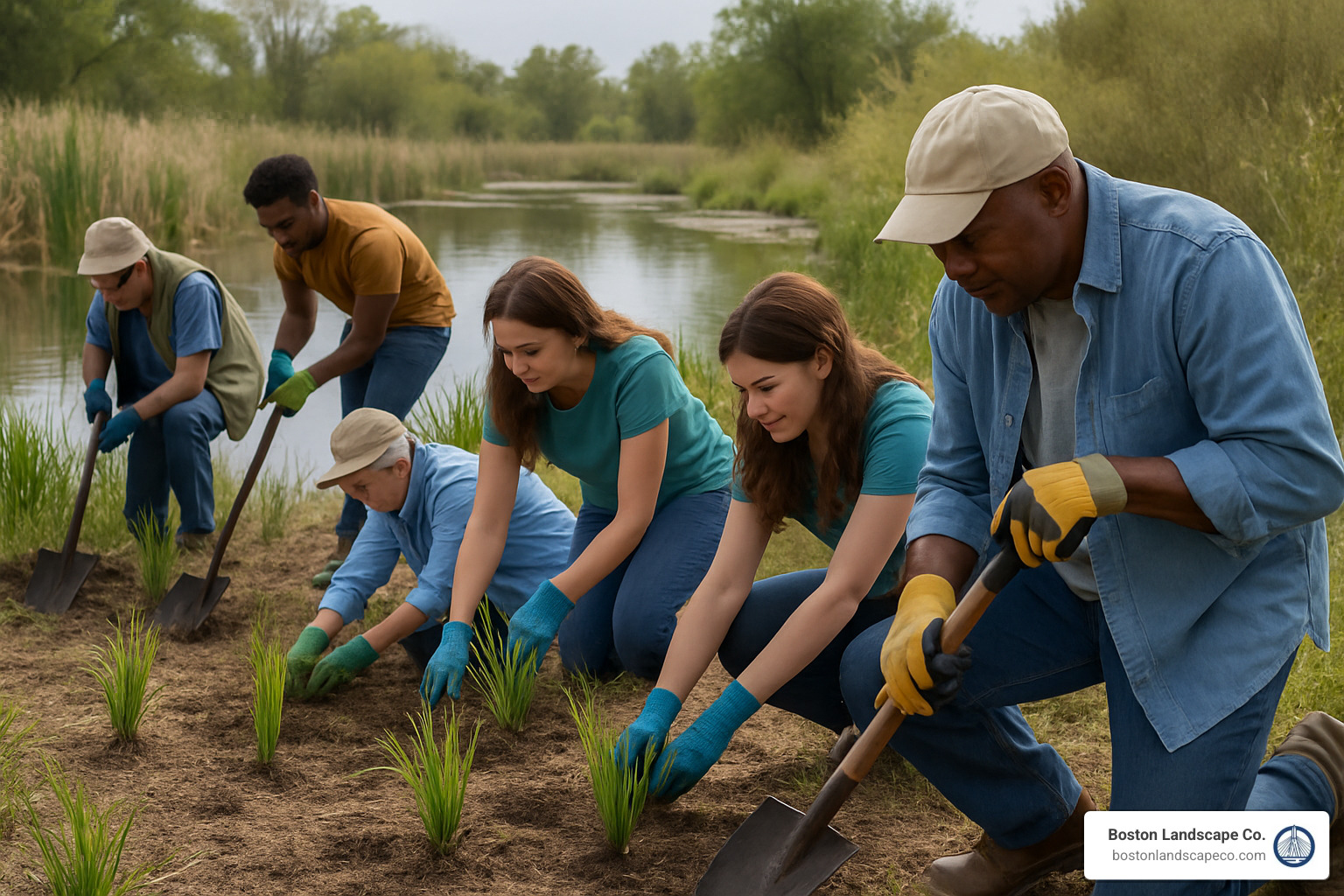
Volunteer programs can significantly reduce project costs while building community ownership. Community nurseries can propagate native plants, volunteer teams can remove invasive species, and citizen scientists can collect monitoring data.
Local governments can provide permitting assistance, funding, and policy support. Many communities are finding that wetland restoration is more cost-effective than traditional stormwater infrastructure.
Frequently Asked Questions about Wetland Restoration
How long does a restored wetland take to function like a natural one?
One of the most exciting things about Wetland Restoration is how quickly nature responds when we get the conditions right.
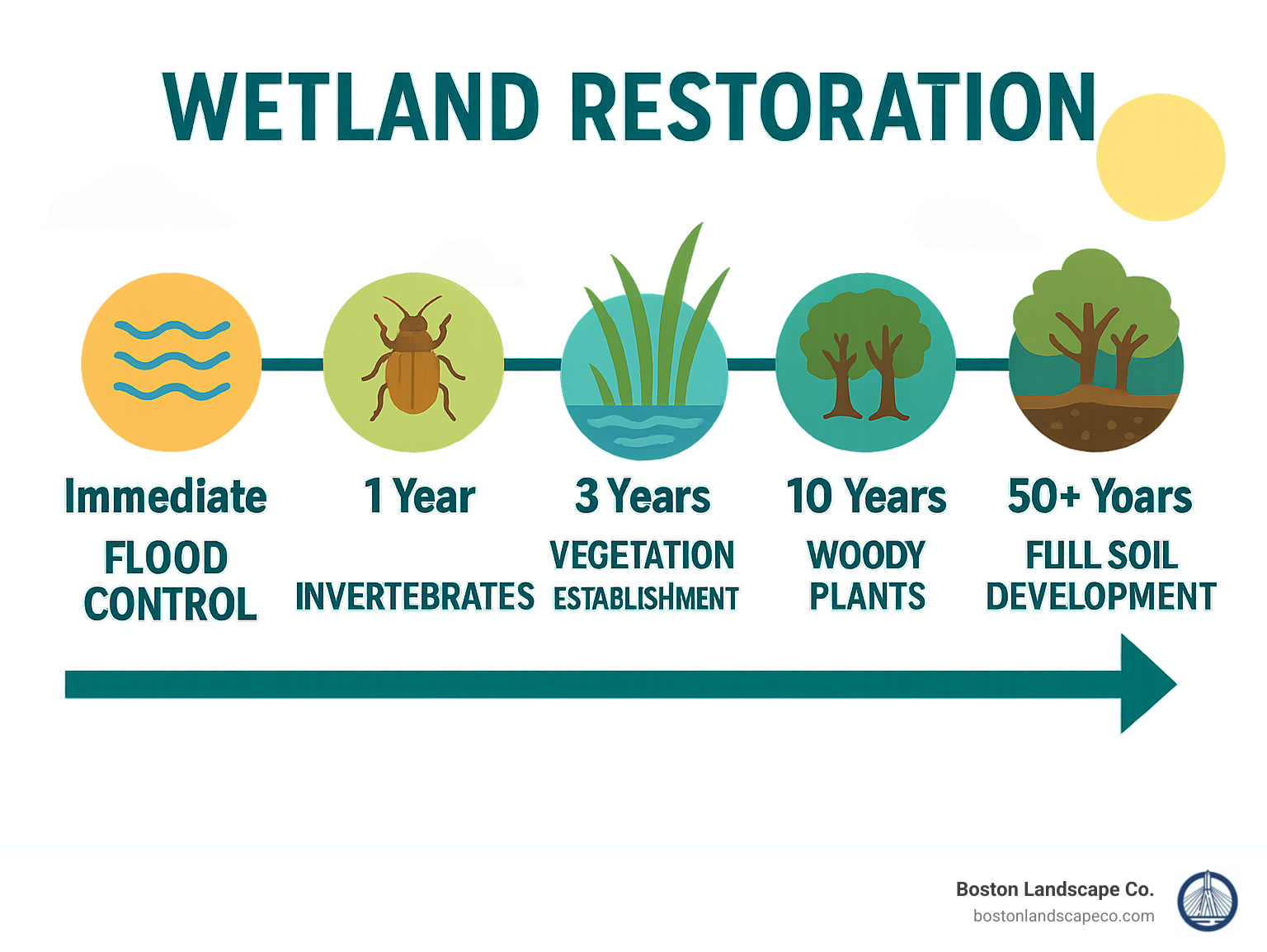
The good news comes fast. As soon as water returns to a restoration site, you’ve got flood storage capacity. Within just a few months, invertebrates start moving in, and these tiny creatures are the foundation of the entire food web. I’ve seen frogs calling from newly restored wetlands within their first spring, and birds often find new water sources within weeks.
The first few years bring dramatic changes. Most emergent plants like cattails and sedges establish themselves within 1-3 years if conditions are right. Amphibians return for breeding, and you’ll start seeing improvements in water quality as plants take root and begin filtering runoff. Plant diversity often matches that of natural wetlands after 2-5 years.
But patience pays off for the long haul. If you’re restoring a forested wetland, those trees need 10-30 years to really mature. The soil keeps developing for decades, and the complex web of relationships between plants, animals, and microorganisms takes time to establish. Full carbon sequestration potential might take 50 years or more to develop.
The key insight is that we can’t recreate thousands of years of natural development overnight, but we can restore many critical wetland functions surprisingly quickly when we get the hydrology right.
Do I need permits for voluntary Wetland Restoration on my land?
This is probably the question I get asked most often, and I understand why – nobody wants to accidentally run afoul of regulations while trying to do something good for the environment.
The honest answer is: it depends on your specific situation. You’ll likely need permits if your Wetland Restoration project involves working in existing wetlands or waterways, discharging fill material, changing stream channels, or working in mapped floodplains. These activities fall under Clean Water Act regulations, even for restoration projects.
However, many restoration activities don’t require permits. Simple removal of drainage tiles on your own property, plugging ditches that don’t connect to waters of the U.S., or planting native vegetation in upland areas often don’t need permits.
My strong recommendation is to check first, act second. Contact your local Conservation District office, state environmental agency, or the Army Corps of Engineers before starting any restoration work. They’re not trying to stop restoration projects – many agencies now have staff specifically dedicated to helping landowners steer the permitting process for restoration projects.
The permitting process for restoration is often streamlined and may even be eligible for expedited review. Agencies recognize that restoration projects provide environmental benefits, so they’re generally supportive when projects are done properly.
How can I get involved if I don’t own wetland property?
Not owning wetland property doesn’t mean you can’t be part of the Wetland Restoration movement. Some of our most successful projects have involved passionate community members who didn’t own the land but brought energy, skills, and dedication to the effort.
Volunteer opportunities are everywhere. Local restoration workdays are great ways to get your hands dirty while learning about wetland ecology. Many organizations need help with invasive species removal, which is perfect for beginners. Citizen science monitoring programs let you contribute to long-term research while spending time in beautiful restored wetlands.
Your professional skills might be exactly what a project needs. We’ve worked with volunteers who contributed engineering expertise, helped with grant writing, provided project management skills, or assisted with documentation and monitoring. Pro bono services can make the difference between a project happening or not.
Financial support and advocacy matter too. Donations to wetland conservation organizations, contributions to community restoration fundraising efforts, and support for mitigation banking projects all help fund restoration work. Writing letters to local newspapers, attending town meetings to support restoration projects, and sharing information about wetland benefits on social media all help build community support.
Educational involvement creates lasting impact. Participating in wetland education programs, volunteering at nature centers, or helping with school field trips to restored wetlands helps build the next generation of wetland advocates.
The beauty of wetland restoration is that it truly takes a community. Whether you’re pulling invasive plants, writing grant applications, or simply spreading the word about why wetlands matter, you’re contributing to this important work.
Conclusion & Next Steps
Wetland Restoration represents one of our most powerful tools for addressing climate change, biodiversity loss, and community resilience. From small agricultural wetlands that reduce local flooding to large coastal marshes that protect entire cities from storm surge, these projects deliver benefits that far exceed their costs.
The science is clear: wetlands provide over $47 trillion in services annually, support 40% of global species, and can sequester carbon more effectively than forests. When we restore wetlands, we’re rebuilding the natural infrastructure that our communities depend on.
At Boston Landscape Co., we’ve seen how proper planning and execution can bring these vital ecosystems back to life. Whether you’re a homeowner interested in managing stormwater runoff, a municipality looking for cost-effective flood control, or a developer required to provide compensatory mitigation, Wetland Restoration offers solutions that work with nature rather than against it.
The restoration of America’s wetlands is a story still being written, and every property owner, community leader, and concerned citizen can play a role. From the smallest backyard rain garden to the largest coastal marsh restoration, these projects represent hope in action.
Think about the stewardship call we all share – the responsibility to leave our natural world better than we found it. Every restored wetland becomes a living classroom, a climate solution, and a gift to future generations.
Getting expert help makes all the difference in successful restoration. The permitting process, site assessment, and long-term management require specialized knowledge and experience. What might seem overwhelming to tackle alone becomes manageable with the right team guiding you through each step.
Ready to explore how Wetland Restoration might work for your property or community? Our team at Boston Landscape Co. brings decades of experience in ecological restoration to communities throughout the Boston area, including Bedford, Billerica, Burlington, Carlisle, Concord, Lexington, Malden, Medford, Reading, Somerville, Stoneham, Waltham, Wellesley, Winchester, and Woburn.
The path forward starts with a conversation. Whether you’re curious about a small backyard project or planning a large-scale restoration, we’re here to help you understand your options and steer the process. Contact us today to discuss your project and learn more about our comprehensive wetland services. Together, we can help write the next chapter in nature’s comeback story.
*Average prices based on publicly available internet data; actual project costs vary widely and are not quotes from Boston Landscape Co.
