
Building Repair: 10 Proven Ways for Successful 2025 Results
Understanding Building Repair: Why It Matters for Property Value and Safety
Building repair is the process of fixing, restoring, or replacing damaged components of a structure to maintain its safety, functionality, and value. Whether you’re dealing with minor fixes or major overhauls, addressing building issues promptly is crucial for preventing further deterioration.
Key Building Repair Facts:
| Repair Type | Importance | Typical Timeframe |
|---|---|---|
| Preventive | Avoids costly future repairs | Scheduled annually |
| Minor | Addresses small issues before they worsen | 1-7 days |
| Major | Resolves structural or systemic problems | 2 weeks – 3 months |
| Emergency | Prevents immediate safety hazards | Same day – 48 hours |
Buildings require regular maintenance and repair to ensure safety, functionality, and value retention. Most property managers recommend annual inspections and preventive maintenance to avoid costly repairs down the road. Waiting too long can transform a simple fix into a major project that costs 3-5 times more.
Common building repairs include:
- Structural reinforcement
- Roof and gutter repairs
- Foundation crack fixes
- Façade and masonry restoration
- Window and door replacements
- Plumbing and electrical system updates
- Waterproofing and leak mitigation
The consequences of delaying necessary repairs can be severe, including increased safety risks, higher utility costs, reduced property value, and potential code violations leading to fines.
I’m Steve Schumacher, and with over three decades of experience in property maintenance, I’ve overseen countless building repair projects that have extended the life and value of commercial and residential structures throughout the Greater Boston area.
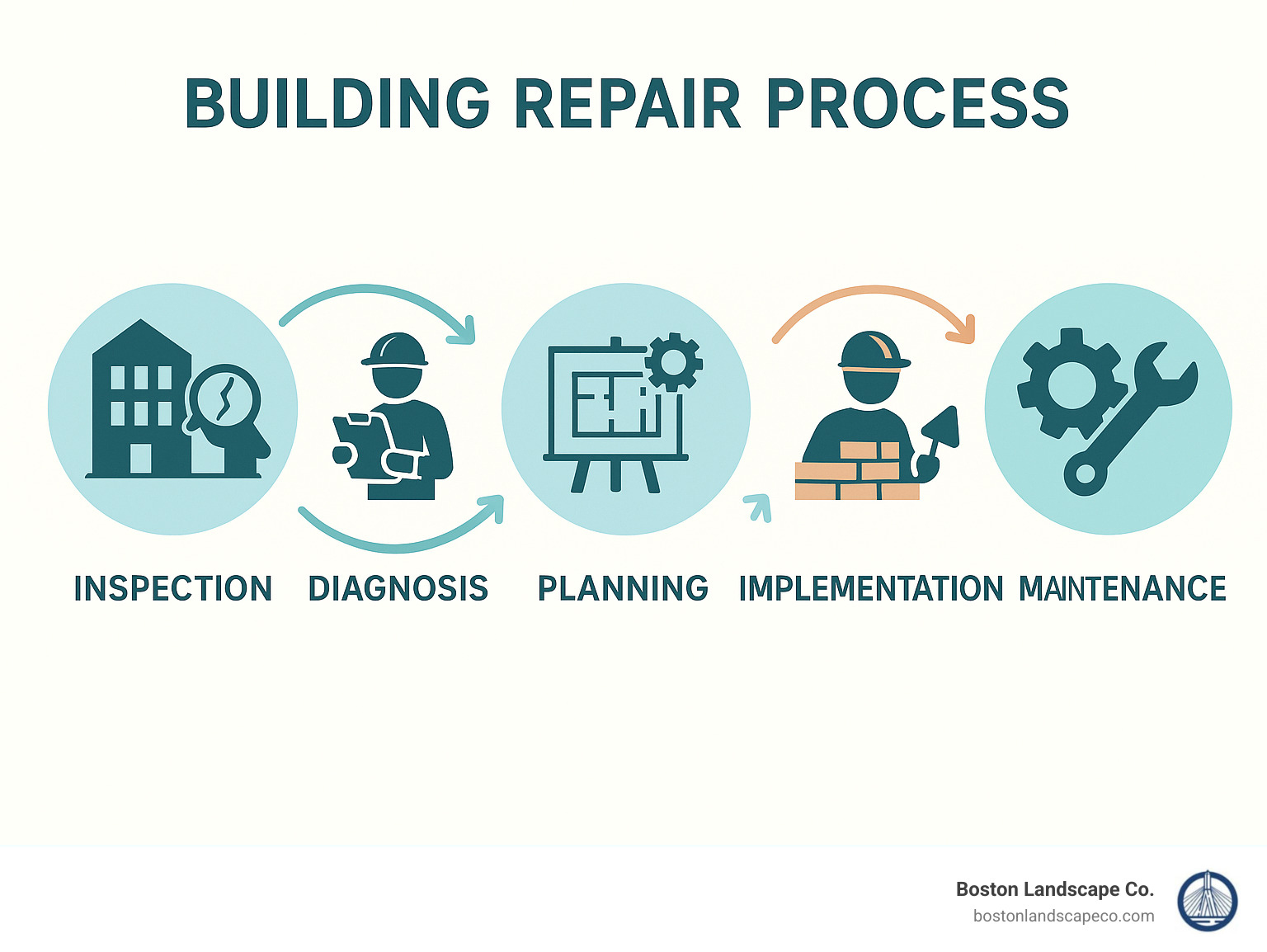
Important building repair terms:
– building maintenance agency
– building maintenance near me
1. Structural Inspections & Audits
The foundation of any effective building repair strategy starts with a comprehensive structural inspection. These aren’t just routine checkups—they’re your first line of defense against potentially devastating and expensive structural failures.
As Tom, our senior structural inspector, often tells clients: “Most building owners are surprised to learn that serious problems often hide in plain sight. Natural aging, design flaws, maintenance gaps, and environmental factors all contribute to structural issues that can sneak up on you.”
When our team conducts a thorough structural audit, we’re looking for the silent troublemakers that plague Boston-area buildings: corrosion quietly eating away at support beams, concrete spalling that weakens foundations, and sneaky water leakage that can undermine an entire structure.
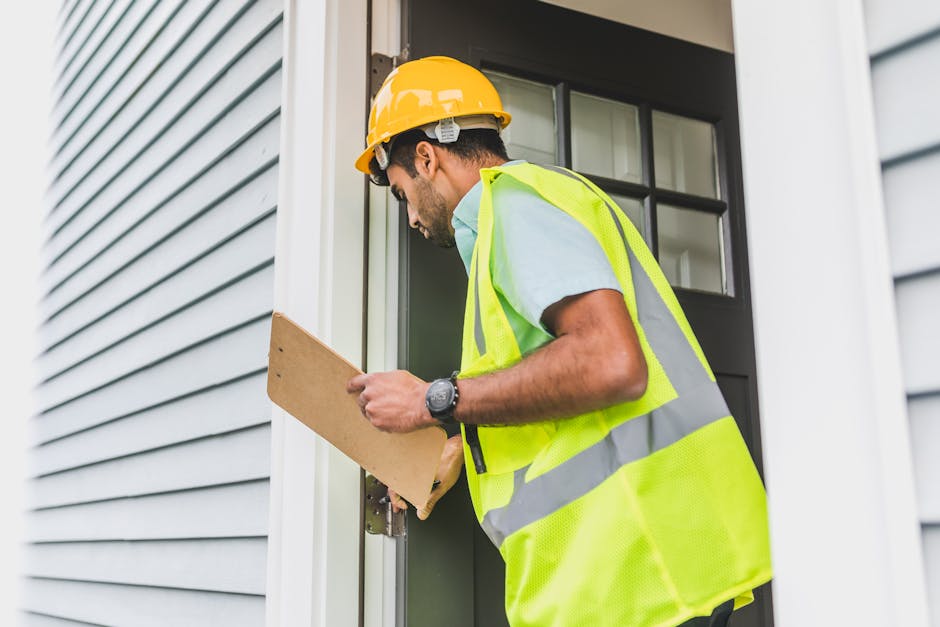
A professional structural assessment isn’t just a quick walk-through. Our comprehensive audits include risk mapping to identify potential failure points, detailed load analysis to verify structural capacity, and non-destructive testing methods like ultrasonic pulse velocity tests that reveal hidden weaknesses. We also evaluate seismic code compliance and provide a detailed report prepared by licensed structural engineers.
How often should you schedule these critical inspections? It depends on your building’s age:
| Building Age | Recommended Audit Frequency |
|---|---|
| 0-7 years | Every 7 years |
| 8-15 years | Every 5 years |
| 15-30 years | Every 5 years |
| 30+ years | Every 3 years |
| After major weather events | Immediate inspection |
For relatively young buildings (8-12 years), simple maintenance like crack filling and painting often suffices to prevent more serious damage. However, for older structures or those showing signs of distress, more extensive repairs under professional engineering guidance become necessary.
Why early structural building repair saves 30-50% on future costs
There’s an old saying in the building repair business: “Pay a little now or pay a lot later.” This isn’t just industry wisdom—it’s a financial reality we’ve seen play out countless times across properties in Stoneham, Burlington, and throughout the Boston area.
Let me share a recent example that illustrates this perfectly. A commercial property owner in Burlington noticed some hairline cracks in their foundation. Instead of hoping they wouldn’t get worse, they called us for an assessment. We identified early settlement issues and reinforced the affected area for about $3,800. Had they waited just one more year, those same problems would have required extensive underpinning work costing well over $12,000. That’s real savings of more than 68%!
Beyond the immediate cost savings, early structural intervention delivers several other significant benefits:
Reduced liability exposure from potential safety incidents protects both your finances and reputation. Many of our commercial clients have noted that lower insurance premiums often follow proactive maintenance, as carriers recognize and reward risk reduction. Perhaps most importantly, timely repairs can extend your building’s lifespan by 15-20 years—that’s potentially decades of additional return on your original investment.
Early intervention also means minimized business disruption during repairs. As Sarah, our project coordinator, puts it: “Fixing a small problem might take a day. Fixing that same problem after it’s caused three more? That could shut down your operations for weeks.”
Our approach to structural repairs isn’t just about following a checklist. “Creative problem-solving is essential for successful remediation,” explains our structural specialist. “We plan each repair project carefully because safe, reliable access builds confidence for everyone involved—from our repair teams to your employees and customers.”
2. Roof Reskinning & Gutter Fixes
Your building’s roof is like a protective helmet—it’s your first defense against everything Mother Nature throws your way. Here in New England, where we experience everything from heavy snow to summer downpours, proper roof and gutter building repair isn’t just maintenance—it’s essential protection for your investment.
We’ve seen it all when it comes to roof issues. Most property owners call us when they’re dealing with steel panels that have seen better days, mysterious leaks that appear after every rainfall, or corrosion that’s starting to compromise structural integrity. Flashing problems around vents and chimneys are also common culprits for water intrusion, while poor drainage can create cascading problems throughout your building.

For post-frame and pole barn structures, complete roof replacement isn’t always necessary. Reskinning offers a budget-friendly alternative that breathes new life into your building. This process involves carefully removing those weathered exterior metal panels while preserving the underlying structure—think of it as giving your building a new protective coat while keeping its bones intact.
What might this cost? While prices vary widely based on size, materials, and labor requirements, internet data suggests reskinning a standard 30′ x 40′ pole barn typically ranges from $8,000 to $25,000 (not Boston Landscape Co. pricing). For more detailed information about pole barn reskinning costs, check out this helpful article on reskinning costs.
Don’t forget about your gutters! These unsung heroes channel water away from your foundation, preventing potentially devastating water damage. Your gutters likely need attention if you notice any sagging sections, water marks staining your siding, troublesome erosion below downspouts, or those pesky ice dams forming during our Massachusetts winters.
As our roofing specialist likes to say, “We don’t just fix problems—we document everything with photographs so you can see exactly what’s happening with your building.” This transparency builds trust and helps you understand the value of the work being done.
DIY vs. pro gutter building repair: when to call a contractor
Some property owners enjoy tackling minor gutter maintenance themselves. Clearing out leaves and debris, tightening loose brackets, or applying sealant to small leaks can indeed be DIY-friendly tasks for the handy building owner.
However, there’s a clear line where professional building repair services become necessary. When gutters are pulling away from the fascia, you’re looking at multiple sections needing replacement, or your building stands taller than one story, it’s time to call in the experts. Safety risks multiply quickly when you’re balancing on a ladder two stories up! Additionally, if you spot rot in the fascia boards behind your gutters or want integrated leaf protection systems installed properly, professional help will save you headaches and potential injuries.
I remember one commercial client in Billerica who attempted to fix sagging gutters himself, only to find significant rot in the underlying fascia—what started as a simple gutter adjustment turned into a much larger project requiring specialized equipment and expertise. The lesson? Sometimes calling professionals first actually saves money in the long run.
For comprehensive property services including expert gutter repair and maintenance, visit our property maintenance services page to learn how we can help protect your building from water damage year-round.
3. Concrete & Foundation Crack Repair
When it comes to serious building repair challenges, foundation issues often top the list. Even those tiny hairline cracks you might be tempted to ignore can develop into major structural headaches if left untreated.
I’ve seen it happen countless times – what starts as a small crack in spring becomes a costly nightmare by winter. At Boston Landscape Co., we regularly help property owners address common concrete and foundation problems like concrete spalling (that flaky surface deterioration), settlement cracks, frost heave damage, water seeping where it shouldn’t, and corroding rebar.
The good news? Modern repair techniques have come a long way from the old “tear it out and start over” approach. Today we can offer solutions that fix the problem with minimal disruption to your property or business.

For hairline cracks, we often use epoxy injection – it seals and stabilizes the crack while preventing water infiltration. More serious structural issues might call for carbon fiber reinforcement strips, which provide incredible strength without major construction. When sections of concrete have sunk, polyurethane foam can fill voids and actually lift the concrete back to its proper position. And for ongoing moisture problems, crystalline waterproofing compounds create an effective barrier against future water damage.
What might this cost you? Based on internet data (not Boston Landscape Co. pricing), foundation repairs typically range from $750 for simple crack repairs to $6,000 or more for complex structural issues. The wide range reflects just how varied foundation problems can be.
I remember a commercial project we completed in Lexington where significant foundation cracks were causing serious water problems. Using a combination of epoxy injection and exterior waterproofing, we solved the issue while allowing the business to stay open throughout the repairs. The owner was thrilled to save about 40% compared to the more invasive methods they’d been quoted by others.
Identifying structural vs. cosmetic cracks
Not every crack means you’re facing a structural emergency. Learning to tell the difference between serious and cosmetic cracks can help you prioritize your building repair needs and sleep better at night.
Structural cracks demand immediate attention and typically share certain characteristics: they’re wider than 1/4 inch, run horizontally across foundation walls, form stair-step patterns in brick or block walls, leak water during rain, or appear alongside bulging or bowing walls. These aren’t the kind you want to “wait and see” about.
On the flip side, cosmetic cracks are less urgent but still worth monitoring. These tend to be hairline cracks, vertical cracks under 1/8 inch wide, typical shrinkage cracks in concrete slabs, or surface crazing (those networks of fine lines you often see on concrete surfaces).
When our foundation specialists evaluate a building, they look beyond what’s immediately visible. We use several assessment methods including careful visual inspection and measurement, sounding tests (tapping concrete to find hollow areas), moisture readings to detect hidden water issues, and sometimes even installing crack monitors to track movement over time.
“When evaluating a building, we look beyond the obvious,” our foundation specialist often says. “What looks like a minor crack to the untrained eye can actually signal deeper issues with soil movement or water pressure. Those require comprehensive solutions, not quick fixes.”
With the right approach to foundation repair, you can protect your property investment and avoid the cascading problems that come from letting small issues grow into big ones.
4. Façade & Masonry Restoration
The exterior façade of your building isn’t just about curb appeal—it’s your structure’s shield against New England’s notoriously harsh weather. When it comes to building repair, few elements are as critical as maintaining your masonry, especially in our region where freeze-thaw cycles can wreak havoc on brick and stone.

“I’ve seen buildings lose decades of life simply because owners waited too long to address crumbling mortar,” says our masonry specialist Mike. “What starts as a small repair can quickly turn into a complete façade rebuild if ignored.”
Your building might be telling you it needs masonry attention if you notice deteriorating mortar joints between bricks, spalling (when brick faces crack and pop off), corroded steel lintels sagging above windows, failed sealants around expansion joints, or that telltale white powdery substance called efflorescence that signals moisture problems.
At Boston Landscape Co., we don’t just patch and go. Our masonry restoration process digs deeper:
- We carefully assess damage patterns to understand the root causes
- For historic properties, we match original mortar composition—an art as much as a science
- When replacing bricks, we source salvaged materials or perfect matches to maintain visual continuity
- We replace or reinforce failing lintels that could otherwise lead to dangerous collapses
- Finally, we apply appropriate water repellents that allow the masonry to breathe while keeping bulk water out
Working in historic districts brings additional considerations. In places like Boston’s Guide Hill or Lexington’s historic center, we partner closely with historical commissions to ensure our building repair work preserves architectural character while upgrading structural performance. It’s a delicate balance of respecting the past while preparing buildings for the future.
Sustainable façade upgrades that cut HVAC bills 10–30%
Smart façade restoration does more than fix what’s broken—it can dramatically improve your building’s energy performance.
“One of my favorite projects was for a commercial client in Cambridge,” shares our sustainability specialist. “What started as a simple repointing job evolved into energy upgrades that slashed their summer cooling costs by 26%. The owner couldn’t believe the difference.”
When we approach sustainable building repair for façades, we consider several innovative approaches:
Modern low-VOC coatings reflect solar heat while allowing the building to breathe. Unlike paint that traps moisture, these specialized products can extend masonry life while reducing cooling loads.
For buildings with serious thermal issues, we can install insulated panels behind existing façades, creating a more efficient envelope without changing the exterior appearance—perfect for historic structures.
We also use thermographic analysis—essentially thermal cameras—to identify hidden air leaks and thermal bridges where heat escapes. This scientific approach ensures we address real problems, not just symptoms.
Improved flashing and weather barriers at transition points stop water infiltration before it starts. And for buildings with persistent moisture issues, we often integrate rainscreen systems that create a pressure-equalized cavity behind the façade, virtually eliminating water penetration.
A commercial client in Waltham who followed our recommendations saw summer cooling costs drop by 22% after comprehensive façade work. The initial investment paid for itself in just under four years—not counting the added benefit of avoiding future emergency building repair costs.
“Maintaining the building envelope is about more than aesthetics,” our masonry specialist often reminds clients. “It’s about creating a durable barrier that manages moisture, temperature, and air movement efficiently. Get it right, and everything else works better.”
5. Door, Window & Envelope Upgrades
Those doors and windows aren’t just entries and exits—they’re the vulnerable points where your building’s comfort and security are most at risk. When we talk about building repair, upgrading these components delivers some of the best bang for your buck.
I’ve seen how these issues can impact a commercial property:
Air sneaks in around those old frames, creating drafts and driving up energy bills. Foggy windows with failed seals not only look terrible but signal moisture problems. Then there’s the frustration of wrestling with sticky doors or windows that barely open. Many older buildings struggle with doorways that don’t meet current ADA standards, creating both accessibility and compliance headaches. Outdated hardware poses security risks, and all these issues combine to drain your energy efficiency.
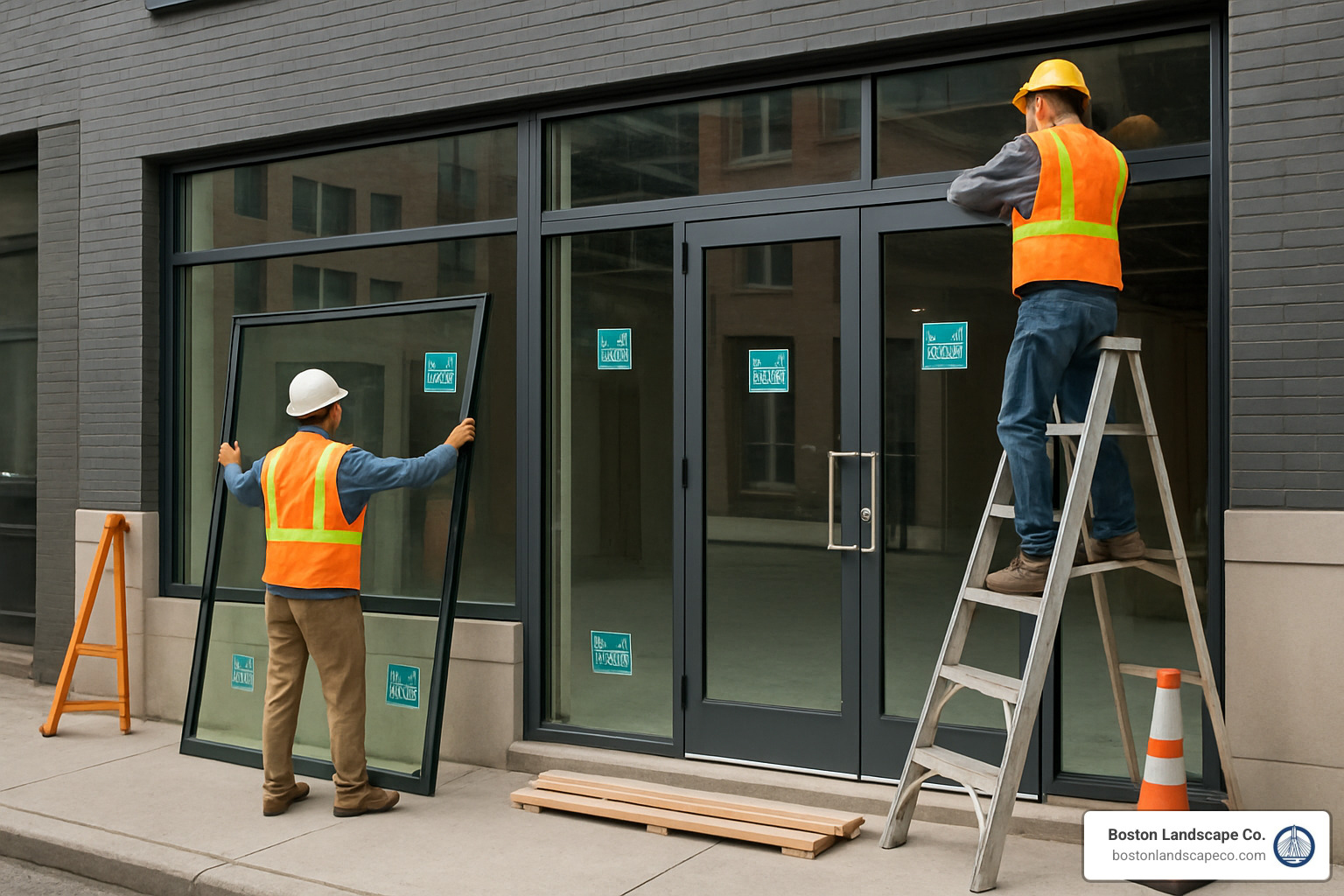
When we approach envelope upgrades for our commercial clients, we’re balancing several priorities at once. Energy efficiency is always top of mind—those utility savings add up quickly. But we’re also thinking about beefing up security features, giving your building a fresh, modern appearance that impresses visitors, ensuring everything meets current building codes, and for our coastal clients, making sure those openings can stand up to hurricane conditions.
I remember a retail client in Burlington who was dealing with an outdated storefront. Their old system was bleeding energy and looking tired. We replaced it with modern, thermally-broken aluminum frames and low-E insulated glass. Not only did the store look dramatically better, but they called me the following quarter excited about their 15% reduction in heating and cooling costs!
Budgeting $350–$4,000 per opening (internet data)
When planning your budget for door and window replacements, you’ll find quite a range in pricing. Based on internet research (not Boston Landscape Co. pricing), here’s what you might expect:
A standard commercial door replacement might run $350–$1,200, while fully ADA-compliant door systems typically cost $1,200–$3,000. For windows, basic commercial options start around $500–$1,500 per opening, and high-performance storefront systems range from $1,000–$4,000 per opening.
Why such a wide range? It comes down to the choices you make. Material selection makes a huge difference—aluminum, steel, wood, or composite each have different price points and benefits. Glazing specifications impact both price and performance—are you going with single, double, or triple pane? Security features like impact resistance and electronic access add value but also cost. Energy performance ratings and installation complexity round out the major factors affecting your bottom line.
The good news? Most envelope upgrades pay for themselves within 3-7 years through energy savings alone. That’s not even counting the added value from improved comfort, reduced maintenance headaches, and the improved aesthetics that can help attract and retain tenants or customers.
As our envelope specialist likes to say, “When we approach door and window replacements, we’re thinking about the entire building system. Each opening affects air movement, thermal performance, and moisture management throughout the structure.”
6. Mechanical, Electrical & Plumbing Fixes
When it comes to building repair, the systems hidden behind walls and ceilings are often the unsung heroes. HVAC, electrical, and plumbing networks are the lifeblood of any functional building, affecting not just comfort but also safety and your monthly bills.
I’ve seen how addressing these mechanical issues promptly can save property owners thousands in the long run. Just last month, we helped a commercial client in Billerica who had been ignoring strange noises from their HVAC system. What could have been a simple $500 repair turned into a $4,000 emergency replacement when their compressor finally failed during a heat wave.
Common problems we regularly address include inefficient heating and cooling systems, electrical systems struggling to meet modern technology demands, mysterious plumbing leaks, and poor indoor air quality that affects tenant comfort and health.
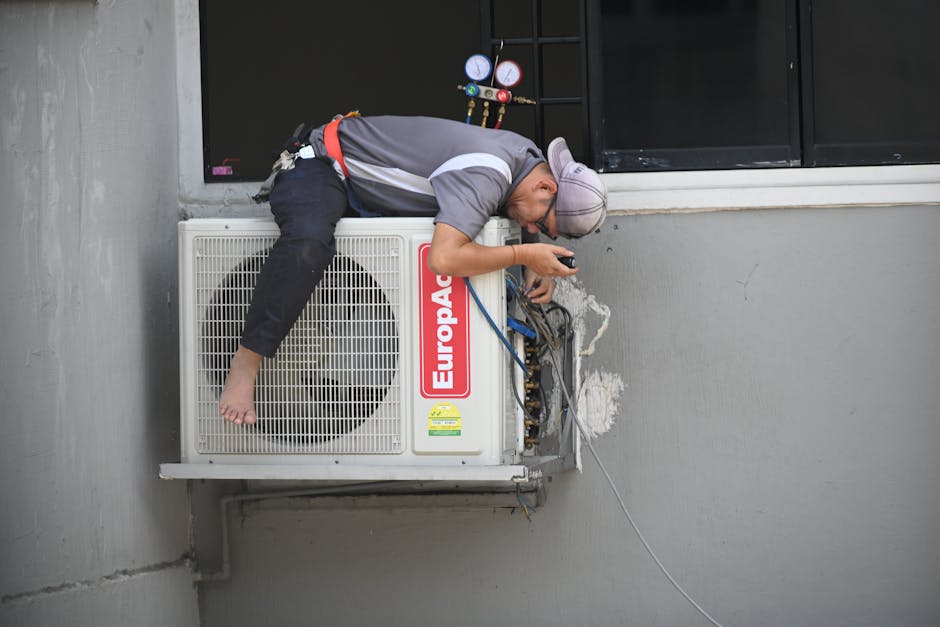
When we approach MEP building repair, we don’t just patch things up and leave. Our team performs comprehensive diagnostics first, focusing on targeted repairs that restore functionality while looking for strategic upgrade opportunities. We’re big believers in documenting everything properly for code compliance too—because the last thing you need is an inspector finding issues later.
Some of the most valuable improvements we recommend include boiler retrofits (which typically cut energy use by 15-30%), LED lighting upgrades (slashing lighting costs by 50-75%), and smart sensors that can reduce HVAC expenses by 10-20%. Many of our commercial clients are also installing water-saving fixtures that reduce consumption by 20-30%—particularly valuable with rising water rates in the Greater Boston area.
According to research from the International Facilities Management Association (IFMA), well-maintained mechanical systems don’t just run more efficiently—they last 25-50% longer. That’s serious money saved over a building’s lifetime.
Certifications your MEP repair team should hold
Not all building repair technicians are created equal, especially when it comes to complex mechanical systems. When you’re hiring professionals to work on these critical building functions, credentials matter.
For HVAC work, look for technicians with proper HVACR certification through recognized apprenticeship programs or North American Technician Excellence (NATE) certification. These professionals understand not just the mechanics but also the physics of airflow and thermal dynamics.
Electrical work should always be performed by licensed Master Electricians—this isn’t an area to cut corners. Some specialized certifications like Certified Lighting Efficiency Professional (CLEP) can be valuable for projects focused on energy reduction.
With plumbing, a Master Plumber license is essential, but also ask about Backflow Prevention Assembly Tester certification if your building has complex water systems.
Beyond trade-specific credentials, the best technicians will have general safety training like OSHA-30 certification and Building Systems Maintenance certification from BOMI International. These show a commitment to safe, professional work practices.
“Building maintenance work happens behind the scenes, but it’s absolutely critical,” explains our MEP coordinator. “Most employees simply expect a comfortable, functional building without thinking about the complex systems making it possible. Well-maintained mechanical systems are like good health—you don’t appreciate them until something goes wrong.”
The good news is that addressing these hidden systems properly doesn’t just prevent emergencies—it can substantially reduce your operating costs while improving indoor comfort for everyone who uses your building.
7. Waterproofing & Leak Mitigation
Water is sneaky. It finds the tiniest cracks, the smallest openings, and before you know it, you’re dealing with serious damage. That’s why effective waterproofing and leak mitigation are among the most valuable building repair services we provide at Boston Landscape Co.
“Water always wins eventually—unless you have the right protection in place,” says our waterproofing specialist Mike. “Most building owners don’t realize that where they see the damage isn’t necessarily where the water is getting in.”
Common water intrusion problems we regularly tackle include basement walls that weep moisture during rainstorms, roof membranes that have deteriorated over time, failed caulking around windows and doors, hairline foundation cracks that let water seep in, and poorly designed landscaping that directs water toward your building instead of away from it.

Our approach to waterproofing is both thorough and thoughtful. We start by tracking water to its true entry point—which often surprises building owners. One Medford business had spent thousands with other contractors trying to fix basement flooding before we identified the actual culprit: deteriorated foundation drainage tiles completely missed by previous inspections. After installing new exterior drainage and applying interior waterproofing, their chronic flooding issues disappeared completely, even during the heaviest Nor’easters.
The waterproofing technologies we use are selected specifically for your building’s unique challenges:
Crystalline waterproofing becomes part of the concrete itself, creating a permanent barrier. Elastomeric membranes provide flexible protection that can accommodate minor structural movement. For below-grade applications, bentonite clay systems expand when wet to create impenetrable barriers. Cementitious coatings work wonders on masonry surfaces, while polyurethane injection effectively seals even the most stubborn cracks.
“The right solution depends entirely on where and how water is entering,” explains our project manager Sarah. “Sometimes it’s as simple as redirecting downspouts. Other times, we need comprehensive exterior excavation and drainage installation.”
Emergency response timeline: the first 48 hours
When water damage strikes, time is literally money. The first two days determine whether you’re dealing with a straightforward cleanup or a mold-infested renovation project. Here’s our proven emergency response timeline for effective building repair after water damage:
During the first 4 hours, our priority is stopping the bleeding: shutting off the water source, documenting everything with photos (crucial for insurance), removing standing water, contacting your insurance provider, and setting up industrial air movers and dehumidifiers to begin the drying process.
Between hours 4 and 24, we conduct thorough moisture mapping to identify every affected area, remove any materials that are beyond saving, create contained drying chambers if necessary, continue documenting everything for your insurance claim, and begin sanitizing affected areas to prevent microbial growth.
By the 24-48 hour mark, we’re monitoring moisture levels and adjusting equipment accordingly, assessing structural components for damage, developing a comprehensive restoration plan, coordinating with insurance adjusters, and implementing strategies to prevent mold—which can begin growing within 48 hours of water exposure.
“The biggest mistake building owners make is underestimating how quickly water damage escalates,” notes our emergency response coordinator. “Waiting even 24 hours can double or triple your restoration costs, not to mention creating health hazards from mold growth.”
Property preservation experts recommend keeping all documentation for at least seven years, as some effects of water damage may not become apparent immediately. For more detailed information about emergency response protocols, visit Property Preservation Repairs & Damages.
Whether you’re dealing with a sudden pipe burst or slowly developing moisture issues, our team is ready to identify the source, implement effective solutions, and protect your building from one of its most persistent enemies—unwanted water.
8. Post-Frame & Pole Barn Building Repair
There’s something special about post-frame and pole barn structures that dot the Massachusetts landscape. Whether they’re housing equipment, livestock, or serving as commercial spaces, these buildings have unique characteristics that require specialized knowledge when it comes to building repair.
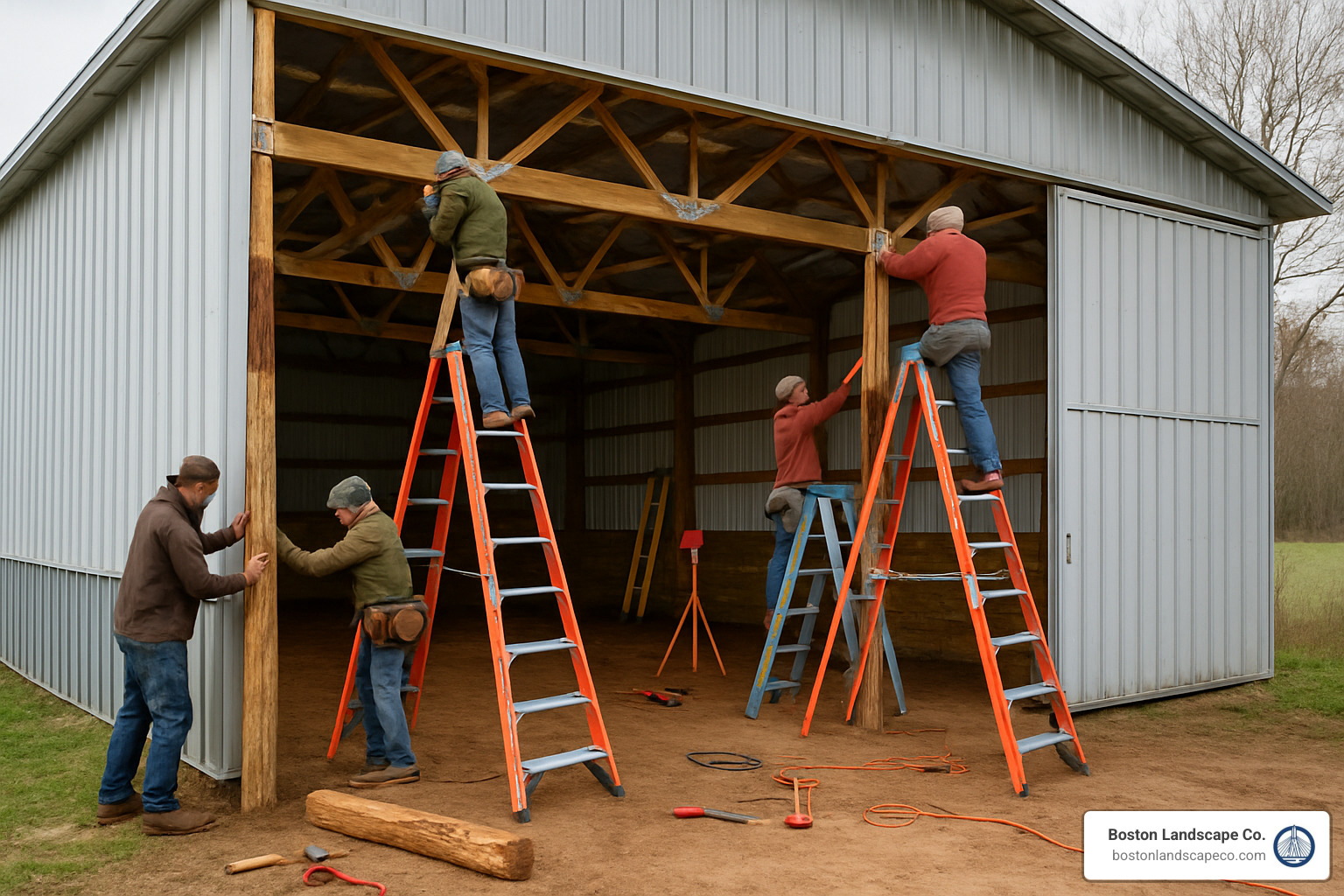
I’ve seen it all when it comes to pole barn issues. The most common problems we encounter include column rot at ground level where moisture wreaks havoc on wood posts. Truss damage is another frequent concern, especially after heavy snow loads or strong windstorms that test the structural integrity. Steel panel corrosion and loose or popped fasteners are telltale signs of aging metal siding, while ridge light deterioration can significantly reduce natural illumination inside the structure. And let’s not forget those frustrating door track and hardware malfunctions that can make a simple task like opening a sliding door feel like a workout!
When we approach a post-frame repair project, we don’t just patch things up—we think comprehensively. First, we conduct a thorough structural assessment to understand what’s happening with the entire frame system. Then we might reinforce or replace columns using modern preservative treatments that far outlast older methods. For compromised trusses, we implement proper repair or reinforcement techniques to address load concerns.
Many clients opt for complete re-skinning with higher-quality steel panels that offer better corrosion resistance. And those old, yellowed ridge lights? We replace them with modern translucent options that allow beautiful, even light distribution throughout the interior.
For aging pole barns that have seen better days, we often recommend a more comprehensive restoration approach. This might include reinforcing existing columns to extend the structure’s life by 15-20 years, installing side-by-side trusses to resolve structural span issues, or adding wider doors to accommodate today’s larger equipment.
One of the most impactful improvements we make is installing proper gutters and downspouts. You’d be amazed at how much damage uncontrolled water runoff can cause to a pole barn’s foundation and columns! For detailed information on this critical upgrade, check out How to Install Gutters on an Existing Pole Barn.
Specialized crews vs. general carpenters for barn building repair
“I hired a general contractor to fix my pole barn, and now it’s worse than before!” That’s a comment I hear far too often. The truth is, post-frame building repair requires specialized knowledge that goes beyond what most general carpenters possess.
Dedicated post-frame repair crews bring specialized knowledge that makes all the difference. They understand engineered truss systems and load paths in ways general carpenters simply don’t encounter in typical residential construction. They’re familiar with modern post-frame construction standards and specialized fastening systems for metal panels. And they know which pressure-treated wood grades will stand the test of time in challenging ground-contact applications.
These specialists also come equipped with the right tools for the job. Hydraulic lifting equipment allows for safely raising structures without causing additional damage. Metal-cutting and forming equipment enables creation of custom flashings that prevent water intrusion. And specialized scaffolding systems provide safe access to high work areas that might otherwise be dangerous to reach.
Perhaps most importantly, post-frame specialists bring engineering expertise to the table. They can properly evaluate span requirements and load calculations, understanding how wind and snow loads impact the structure in our New England climate. They know the importance of proper bracing and diaphragm action in maintaining structural integrity.
“Not just anyone works on repairing barns,” explains our post-frame specialist with a chuckle. “General home builders rarely focus on pole-barn structures, and pole-barn builders typically handle only large new builds. That’s why we’ve developed a specialized service team that ensures all repair types are covered.”
When it comes to your post-frame building, don’t settle for a jack-of-all-trades approach. The specialized knowledge and equipment required for proper pole barn repairs makes all the difference between a quick fix that won’t last and a proper repair that extends your building’s life for decades.
9. Interior Finish & Safety Code Updates
When it comes to building repair, the interior spaces often need just as much attention as the exterior. Updating interior finishes and safety features not only refreshes the look and feel of your commercial space but ensures it meets current code requirements—keeping both occupants and your business protected.
“We often find that business owners focus on what customers can see, but overlook critical safety updates until an inspection forces their hand,” shares our interior renovation specialist. “A proactive approach saves money and prevents potential liability issues down the road.”

In our years of serving commercial clients throughout Greater Boston, we’ve addressed numerous interior issues, including:
Outdated fire doors that no longer provide adequate protection during emergencies. These vital safety components deteriorate over time and may no longer meet current fire-rating requirements.
Emergency lighting systems with failing batteries or outdated technology that won’t perform when needed most. Modern LED systems offer better reliability and lower maintenance costs.
Damaged drywall, flooring, and ceiling systems that not only look unprofessional but can harbor moisture, leading to mold growth and poor indoor air quality.
Non-compliant accessibility features that could expose you to ADA violations and potential lawsuits. Doorway widths, ramp slopes, and bathroom configurations often need updating as requirements evolve.
Anti-slip flooring is another critical safety upgrade we frequently install, especially in entryways and high-traffic areas prone to moisture. One client in Stoneham saw workplace slip-and-fall incidents drop to zero after we installed textured commercial flooring in their warehouse entryway.
Our team takes a thoughtful, systematic approach to interior building repair projects:
First, we conduct a thorough code compliance assessment to identify required updates, especially those affecting life safety systems.
Next, we help you prioritize improvements, placing safety-related upgrades at the top of the list while planning cosmetic updates that can be phased in over time.
We then develop a realistic implementation schedule designed to minimize disruption to your daily operations. For many clients, this means weekend work or carefully coordinated evening shifts.
Throughout the project, we maintain detailed documentation for code officials, insurance providers, and your records.
Based on internet data (not Boston Landscape Co. pricing), interior commercial renovations typically range from $5 to $25 per square foot. This wide range reflects the significant variation in scope and quality of finishes. Safety-focused updates often represent 15-25% of renovation costs but deliver tremendous value through risk reduction and potential insurance savings.
A recent office building project in Waltham showcases our approach perfectly. We updated all fire doors, emergency lighting, and egress signage while simultaneously refreshing worn finishes—all completed during weekends so the business maintained normal weekday operations throughout the three-month project.
Documentation & permits you’ll need
The paperwork side of interior building repair can feel overwhelming, but proper documentation protects both you and your investment. Here’s what you’ll typically need:
Before your project starts, secure building permits from local authorities. Depending on the scope, you may need architectural or engineering drawings, especially for projects involving structural modifications or changes to egress paths. Keep copies of material specifications, safety data sheets, and all contractor licenses and insurance certificates.
“We’ve seen too many projects derailed by permit issues,” notes our project manager. “We handle this paperwork maze for our clients, ensuring everything is properly filed and approved before work begins.”
During construction, maintain inspection records at key project milestones. Document any scope changes with formal change orders, and keep daily work logs with progress photos. These become invaluable if questions arise later about what was done and when.
At project completion, collect final inspection certificates and, for major renovations, updated occupancy certificates. Gather warranty documentation for all materials and installed systems, along with operation and maintenance manuals. Don’t forget to update your emergency evacuation plans to reflect any changes to the building layout.
“Documentation isn’t just paperwork—it’s protection,” our project manager emphasizes. “We maintain detailed records of all work performed, not only for code compliance but also to provide clients with a complete history of their building improvements.”
This attention to detail extends to creating thorough punch lists during the final phase of any project. These lists document any remaining items needing attention before final payment, ensuring nothing falls through the cracks and your expectations are fully met.
10. Preventive Maintenance & Life-Cycle Planning
The most cost-effective approach to building repair is catching problems before they start. I’ve seen it countless times over my years in this business—a small investment in prevention today saves thousands tomorrow.
Think of preventive maintenance like regular health check-ups for your building. Just as you wouldn’t skip your annual physical, your property needs regular attention to stay in top shape.
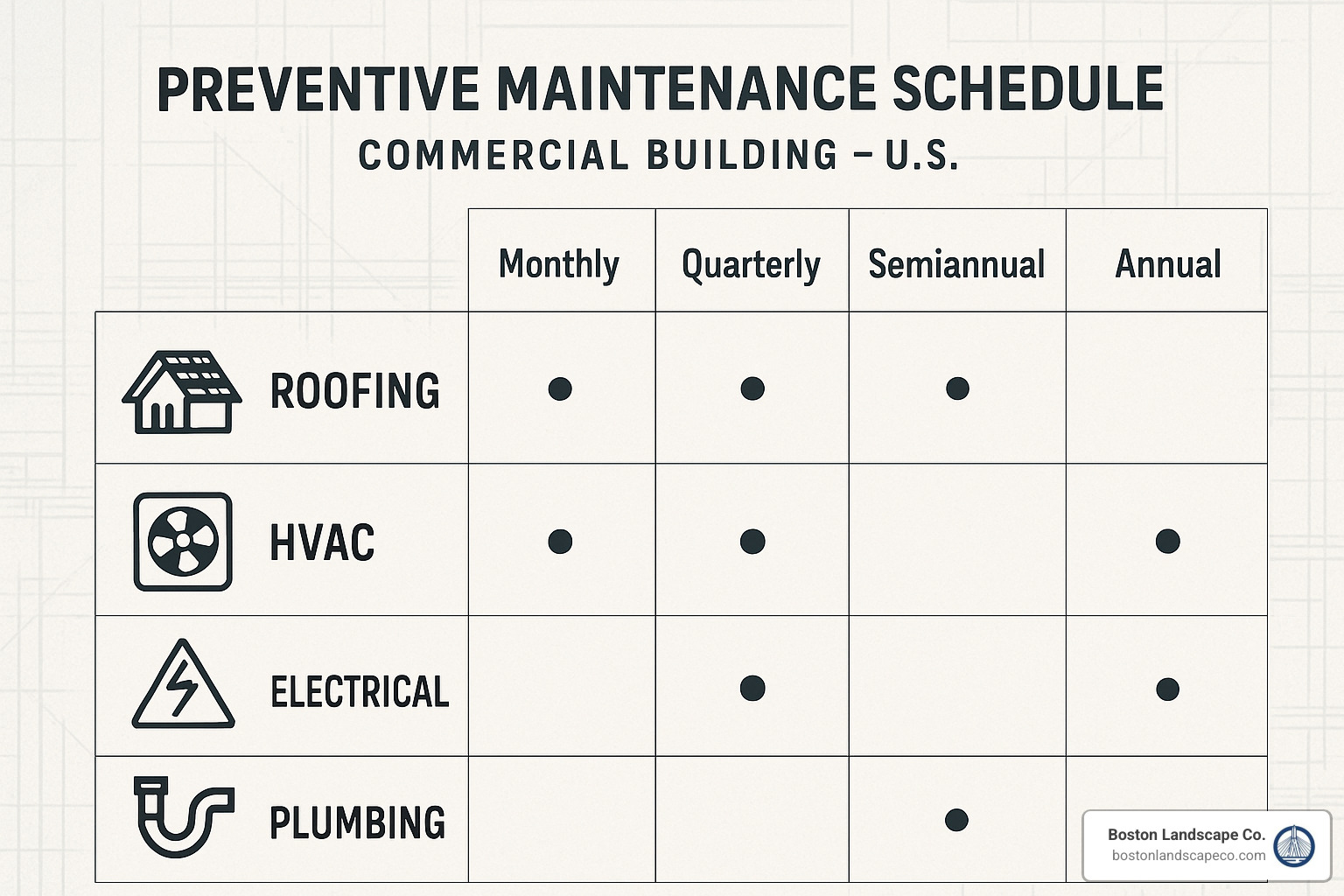
A truly effective preventive maintenance program combines several key elements. You’ll need regular inspection schedules custom to each building component—not everything needs the same frequency of attention. Many of our commercial clients use a Computerized Maintenance Management System (CMMS) to track when inspections and maintenance are due. This digital approach helps ensure nothing falls through the cracks.
The most successful property owners also practice proactive budgeting for anticipated replacements. They conduct reserve studies to plan for major capital expenditures and cultivate relationships with qualified vendors who specialize in particular systems.
Here’s how often we recommend inspecting key building components:
| Building Component | Inspection Frequency | Typical Lifespan |
|---|---|---|
| Roof systems | Semi-annually | 15-30 years |
| HVAC equipment | Quarterly | 15-25 years |
| Plumbing systems | Annually | 30-50 years |
| Electrical systems | Annually | 30+ years |
| Exterior envelope | Annually | 30-50 years |
| Structural elements | Every 3-5 years | 50+ years |
| Fire/life safety | Monthly | Varies by component |
“Building maintenance is one of the major challenges for operators,” our maintenance director often tells clients. “A systematic approach not only prevents costly emergency repairs but also extends the useful life of building components.”
For properties in the Boston area dealing with our unique weather challenges—from nor’easters to summer humidity—this systematic approach is even more crucial. You can learn more about our comprehensive approach at our Building Maintenance Agency page.
Setting a realistic annual building repair fund
Money matters when it comes to building repair management. I’ve seen too many property owners caught off-guard by major expenses that could have been planned for. The solution? Establish a dedicated maintenance and repair fund based on industry best practices.
For annual maintenance budgeting, the rule of thumb is allocating 1-4% of your building’s replacement value annually. Newer buildings can get away with the lower end of that range, while older structures or those with deferred maintenance issues should budget toward the higher end. It’s wise to separate your allocations between routine maintenance and capital improvements—they serve different purposes in your building’s lifecycle.
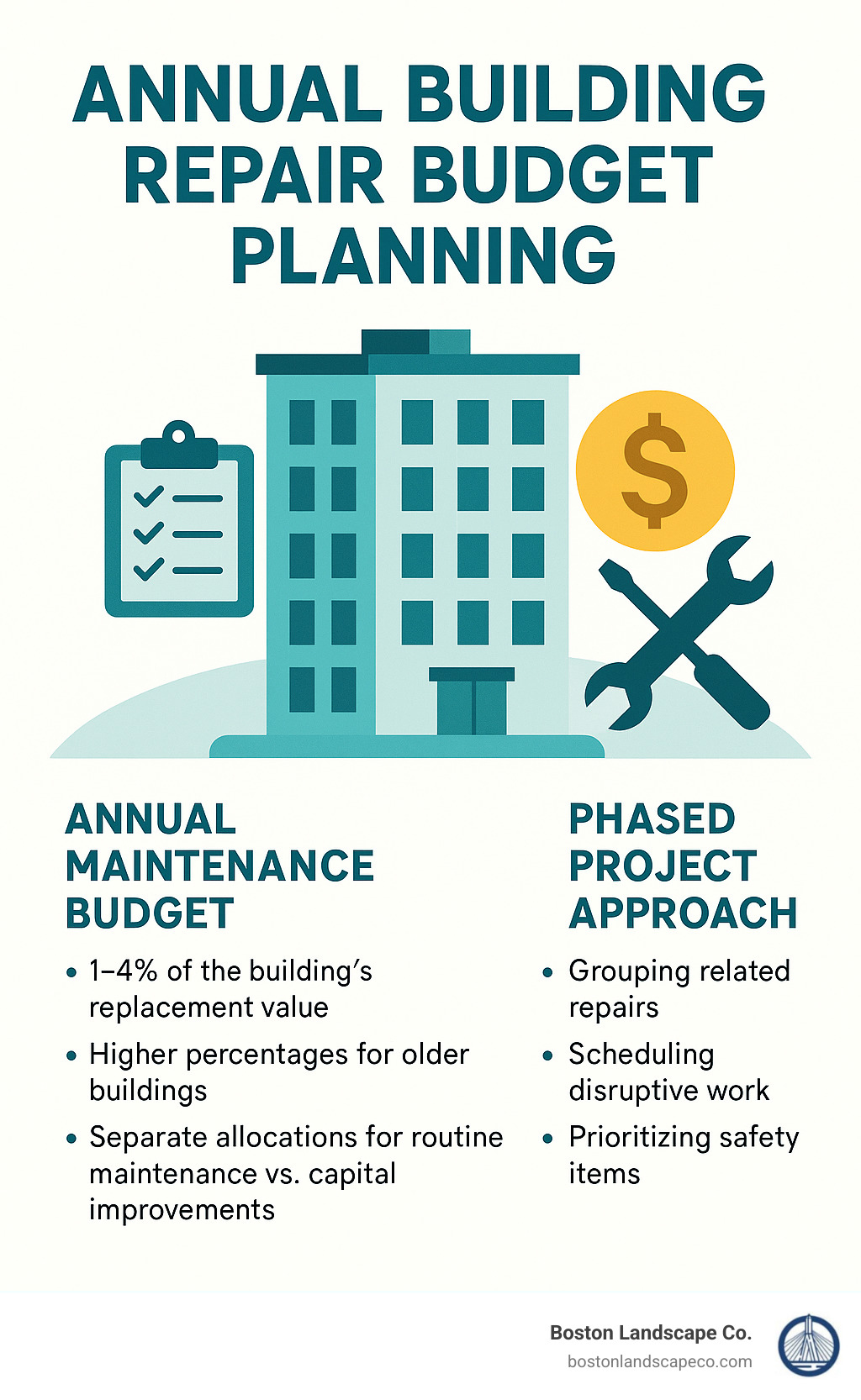
A phased approach to projects often delivers the best results. By grouping related repairs together, you’ll gain efficiency and cost savings. Smart property managers also schedule disruptive work during off-peak periods to minimize impact on operations. Always prioritize safety-related items and those that prevent further damage, and try to coordinate necessary structural repairs with cosmetic updates for maximum efficiency.
I remember working with a commercial client in Burlington who implemented our recommended maintenance fund approach. They set aside 2.5% of their building’s value annually. Within three years, they had saved enough to complete a major roof replacement without financing—saving approximately $18,000 in interest costs while maintaining their property value. That’s the power of planning ahead!
“Maintenance work is often taken for granted,” our facilities specialist likes to say. “But a strategic approach that combines regular inspections, timely minor repairs, and planned capital improvements delivers the best long-term value.”
The peace of mind that comes from knowing your building is well-maintained and that you’re financially prepared for future needs? That’s priceless. And in our New England climate, where weather can accelerate wear and tear, having that maintenance safety net is even more valuable.
Frequently Asked Questions about Commercial Building Repairs
How do I prioritize multiple repair needs?
When you’re staring at a lengthy list of building repair issues but have limited funds, making smart choices becomes crucial. I’ve seen this dilemma countless times with our commercial clients across Greater Boston.
Think of your building repair priorities as a pyramid. At the foundation are safety concerns that simply can’t wait. This includes structural weaknesses, fire hazards, and electrical problems that could harm your staff or visitors.
“We help clients develop a strategic repair roadmap,” explains our project manager. “This allows them to address critical needs immediately while planning for less urgent items in future budget cycles.”
Just above safety issues, prioritize anything involving water intrusion. I’ve seen how a small leak can transform into catastrophic damage within weeks. Water is relentless and creates a cascade of secondary problems like mold, rot, and even concrete deterioration.
Next, focus on your building envelope – your roof, exterior walls, windows, and doors. These elements protect everything inside. A sound envelope prevents most water issues and preserves your investment’s structural integrity.
Once those critical areas are addressed, turn your attention to mechanical systems like HVAC, plumbing, and electrical components. These directly impact tenant comfort and operational efficiency.
Finally, interior finishes and cosmetic updates can typically wait unless they’re affecting your ability to retain tenants or maintain market-competitive rental rates.
Can routine maintenance really prevent major overhauls?
Absolutely – and the numbers prove it. Every dollar invested in preventive building repair typically saves $4-$8 in future emergency repairs. I’ve witnessed this reality play out repeatedly across our commercial properties in Stoneham, Billerica, and surrounding communities.
Consider one of our long-term clients in Burlington who religiously follows our semi-annual roof inspection program. Their 18-year-old commercial roof remains in excellent condition while nearby properties with similar roofing systems have already undergone complete replacements. The difference? Catching minor issues before they escalate.
We’ve documented similar patterns with HVAC systems. Buildings with regular maintenance schedules experience 30-50% fewer emergency breakdowns while operating 15-20% more efficiently. That translates to substantial utility savings alongside the avoided repair costs.
Even simple maintenance like exterior caulking and sealant inspection prevents moisture intrusion that can lead to repairs exceeding $10,000. As our maintenance director notes, “Building maintenance includes a wide variety of behind-the-scenes tasks that ensure a facility remains functional and comfortable.”
The evidence is clear: consistent maintenance isn’t just an expense—it’s one of your smartest investments.
What risks come with delaying critical repairs?
Postponing necessary building repair work is like ignoring that check engine light on your dashboard—eventually, you’ll find yourself stranded with a much bigger problem.
The financial impact hits hardest. What begins as a $500 roof leak repair can quickly escalate into a $15,000 structural repair when neglected. I’ve seen property values drop 10-15% simply due to visible deferred maintenance, not to mention the creeping increase in utility costs as systems become less efficient.
Then there’s the operational fallout. Emergency failures rarely happen at convenient times. Instead, they disrupt business operations, frustrate tenants, and make it nearly impossible to lease space at market rates. One of our commercial clients in Medford learned this lesson when postponing a minor plumbing repair led to a catastrophic pipe burst during a holiday weekend, resulting in business closure for nearly two weeks.
The legal implications can be even more severe. Code violations bring fines, increased liability exposure creates lawsuit risks, and you might even struggle to maintain occupancy permits for spaces with significant deferred maintenance.
As property preservation experts bluntly put it: “Someone always has to pay.” The question isn’t whether you’ll address the issues—it’s whether you’ll do so proactively on your terms or reactively in emergency conditions at premium prices.
Smart building owners recognize that timely repairs aren’t just expenses—they’re essential investments in protecting their property’s value, functionality, and legal compliance.
Conclusion
Think of your property as a living, breathing investment – one that needs regular care to thrive. Building repair isn’t just about fixing what’s broken; it’s about protecting your property’s future and the people who use it every day.
Throughout my years working with commercial buildings across Greater Boston, I’ve seen how a thoughtful approach to maintenance can transform a property’s performance and longevity. The difference between proactive owners and those who defer maintenance until problems become unavoidable is striking – both in terms of costs and building condition.
What have we learned on our journey through building repairs? A few critical insights stand out:
First, timing is everything. Addressing small issues before they balloon into major problems typically saves 30-50% in repair costs. That small roof leak that seems minor today could be causing hidden structural damage that will cost thousands more to fix next year.
Second, expertise matters deeply. Licensed engineers and specialized contractors bring crucial knowledge to complex building systems that general handymen simply can’t match. Their ability to diagnose root causes rather than just treating symptoms makes all the difference.
Third, having a clear priority system keeps you focused on what truly matters. Safety issues and water intrusion should always top your list, followed by building envelope and mechanical systems. Cosmetic concerns, while important for tenant satisfaction, should rarely take precedence over structural integrity.
Fourth, documentation isn’t just paperwork – it’s protection. Detailed records of all inspections, repairs, and improvements provide critical information for code compliance, insurance requirements, and future planning. When selling a property, this documentation becomes particularly valuable.
Finally, prevention truly is the best medicine. A structured maintenance program typically returns $4-$8 for every dollar invested through extended component life and reduced emergency repairs. That’s an ROI that’s hard to beat in any aspect of property management.
At Boston Landscape Co., we understand that your property represents both a significant financial investment and an essential operational asset. Our comprehensive building repair services are designed to protect that investment while ensuring your facilities remain safe, comfortable, and efficient for everyone who uses them.
From our locations throughout the Greater Boston area – including Stoneham, Billerica, Burlington, and beyond – we provide responsive, professional building maintenance services custom to your property’s specific needs and challenges.
Ready to take a more proactive approach to your property’s care? For more information about our commercial property services, visit our Commercial Property Landscape Maintenance page or contact us today to schedule a comprehensive property assessment. Your building deserves the best care possible – and so do you.
