
Wetlands Landscaping Ideas: 10 Best Stunning Designs 2025
Wetlands landscaping ideas offer creative ways to beautify your backyard while preserving one of nature’s most vital ecosystems. Wetlands are not only visually stunning landscapes but also crucial to our environment. Here are some quick ideas to consider:
- Native Plant Selection: Use grasses and wildflowers that thrive in wet areas.
- Water Features: Consider adding ponds or streams for aesthetic appeal and habitat.
- Sustainable Practices: Implement rain barrels and efficient irrigation systems to manage water use.
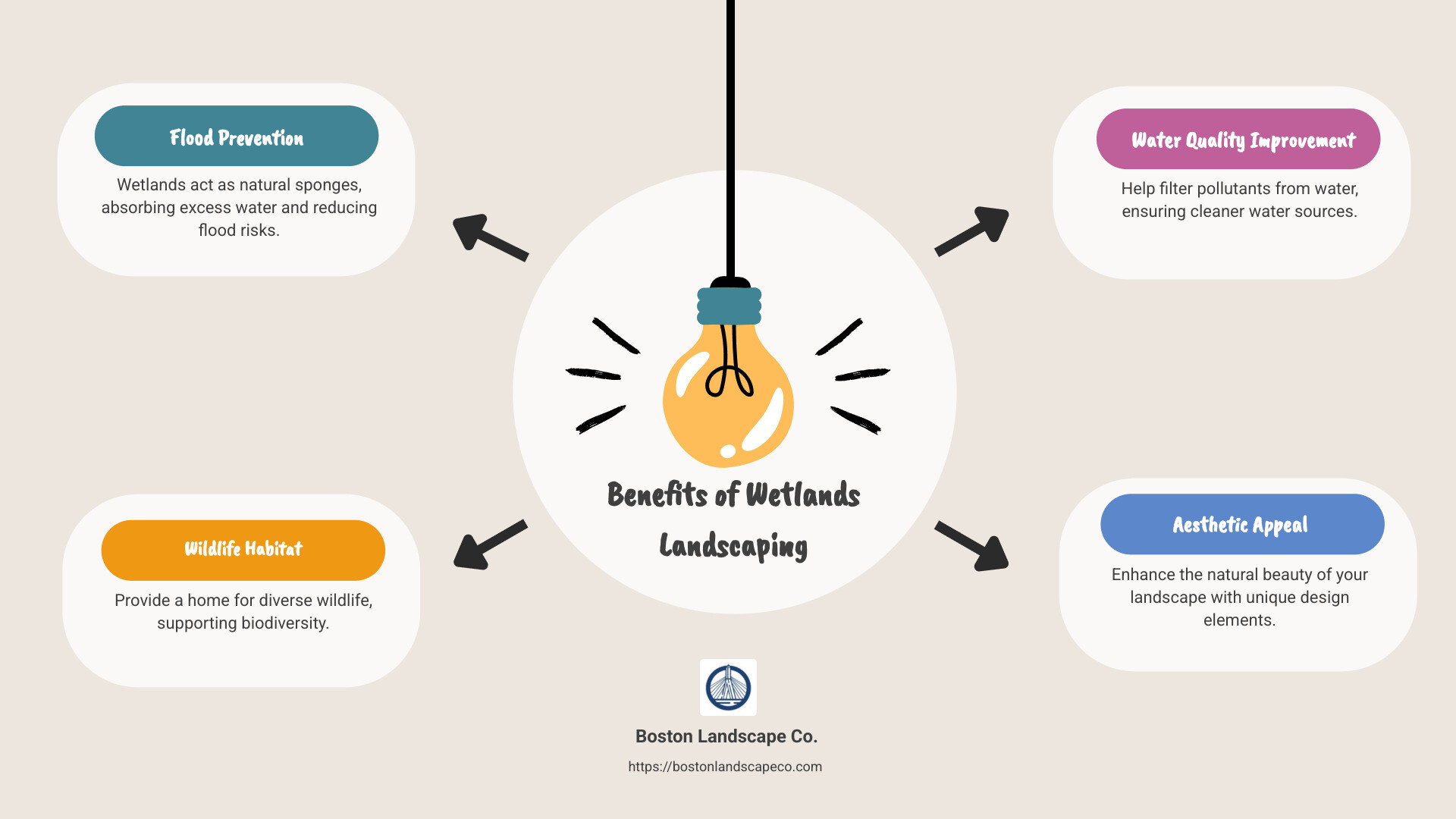
Wetlands act as nature’s sponges, absorbing excess water and preventing floods. They also provide habitat for diverse wildlife and help filter pollutants, ensuring cleaner water sources. By incorporating wetlands into your landscape, you’re not just enhancing beauty but contributing to ecological balance.
I’m Steve Schumacher, owner and operator of Boston Landscape Co. With over three decades in the landscaping industry, I’ve seen the incredible benefits of integrating wetlands landscaping ideas into properties. Our expertise ensures that we approach each project with care and precision, turning landscapes into eco-friendly havens.
Easy wetlands landscaping ideas word list:
– wetland design landscape architecture
– constructed wetlands in the sustainable landscape
– how to landscape wetlands on your property
Understanding Wetlands in Your Landscape
When you’re looking to transform your backyard with wetlands landscaping ideas, understanding the core components of wetlands is crucial. Wetlands are unique ecosystems defined by their hydrology, soils, vegetation, and wildlife. Let’s break down these elements to see how they contribute to a thriving wetland landscape.
Hydrology
Hydrology is the study of water movement, distribution, and quality. In wetlands, hydrology is all about how water flows and is retained. Wetlands act like sponges, absorbing and slowly releasing water. This process helps prevent flooding and maintains water quality. If you’re designing a wetland, consider how water moves through your landscape. Natural slopes or constructed channels can guide water to desired areas, creating beautiful ponds or streams.
Soils
Wetland soils, also known as hydric soils, are crucial for wetland functionality. They’re often waterlogged, creating an oxygen-poor environment. This unique soil condition supports specific plant types that thrive without much oxygen. When planning your wetland, it’s important to assess the soil type. You might need to amend the soil to improve its water retention or drainage capabilities.
Vegetation
Vegetation in wetlands is adapted to thrive in moist conditions. Plants like cattails, sedges, and rushes are common. These plants not only add beauty but also play a role in filtering pollutants and providing habitat for wildlife. Incorporating native plants is key. They require less maintenance and support local wildlife better than non-native species.
Wildlife
Wetlands are busy with life. They provide habitat for a wide range of wildlife, from birds and amphibians to insects and mammals. Creating a wetland area in your landscape invites biodiversity. You might see frogs hopping around or birds nesting among the reeds. To encourage wildlife, consider adding features like birdhouses or butterfly gardens. These elements improve the ecosystem and add to the charm of your wetland.
By understanding these components, you can design a wetland that is both functional and beautiful. Whether you’re creating a small bog garden or a larger wetland area, each element plays a vital role in the ecosystem’s health and sustainability.

Next, we’ll explore wetlands landscaping ideas focusing on design, aesthetics, and functionality to help you create a stunning and sustainable landscape.
Wetlands Landscaping Ideas
When it comes to wetlands landscaping ideas, the key is to blend design, aesthetics, and functionality. Whether you’re enhancing an existing wetland or creating a new one, these ideas will help you make the most of your space.
Creating a Natural Buffer
A natural buffer is essential for protecting your wetland area. It serves as a transition zone between your yard and the wetland, helping to filter pollutants and provide habitat for wildlife.
Native Grasses and Wildflowers
- Native Grasses: Planting native grasses like switchgrass or little bluestem can create a lush, natural look. These grasses are well-adapted to local conditions and require minimal maintenance.
- Wildflowers: Add color and diversity with wildflowers such as black-eyed Susans and coneflowers. These plants attract pollinators like bees and butterflies, enhancing biodiversity.
Native plants not only beautify your landscape but also support local ecosystems. They act as a natural filter for runoff, reducing pollutants reaching the wetland.
Integrating Water Features
Water features are a focal point in any wetland landscape. They add movement and sound, creating a tranquil environment.
Ponds and Streams
- Ponds: A pond can be a central feature in your wetland landscape. It provides habitat for amphibians and insects and can be improved with aquatic plants like water lilies.
- Streams: Create a natural-looking stream to connect different parts of your wetland. Streams help circulate water, improving oxygen levels and supporting aquatic life.
Bog Gardens
Bog gardens are perfect for areas with poor drainage. They mimic natural bogs, offering a unique habitat for specialized plants.
- Design: Use a mix of peat moss and sand to create the right soil conditions. Plant bog-loving species like pitcher plants and sundews for added interest.
- Functionality: Bog gardens help manage water by absorbing excess moisture. They also provide a habitat for unique wildlife, adding to your wetland’s diversity.
By implementing these wetlands landscaping ideas, you can create a space that is both beautiful and beneficial for the environment. Native plants and water features not only improve the aesthetic appeal but also support the ecological health of your wetland.
Next, we’ll dive into building and maintaining a healthy wetland area, focusing on plant selection and water management techniques.
How to Build and Maintain a Healthy Wetland Area
Building and maintaining a healthy wetland area involves careful planning and ongoing care. By focusing on the right plant choices and effective water management techniques, you can create a thriving ecosystem that benefits both the environment and your landscape.
Choosing the Right Plants for Wetlands
Marsh Plants
Marsh plants are key to a wetland’s health. They stabilize soil, filter pollutants, and provide habitat for wildlife. Consider planting species like cattails, sedges, and rushes. These plants thrive in wet conditions and help maintain the wetland’s ecological balance.
Water-Tolerant Trees
Trees like willows and bald cypress are excellent choices for wetland areas. They tolerate saturated soils and can withstand occasional flooding. These trees offer shade, reduce erosion, and provide nesting sites for birds.
Water Management Techniques
Effective water management is crucial for maintaining a healthy wetland. This involves irrigation, drainage, and natural filtration methods to ensure water levels are balanced and pollutants are minimized.
Irrigation
While wetlands are naturally moist, supplemental irrigation might be needed during dry spells. Drip irrigation systems can be an efficient way to deliver water directly to plant roots without disturbing the ecosystem.
Drainage
Proper drainage prevents waterlogging and helps maintain the wetland’s health. Create channels or swales to direct excess water away from sensitive areas. This prevents plant stress and supports a balanced hydrological cycle.
Natural Filtration
Wetlands are nature’s water filters. By allowing water to percolate through wetland soils, contaminants are naturally removed. Planting a variety of species can improve this filtration process. For example, reed grasses are known for their ability to absorb heavy metals and other pollutants.
By choosing the right plants and employing effective water management techniques, you can ensure your wetland area remains healthy and vibrant. Up next, we’ll explore how to improve your wetland with aesthetic elements and functional features like boardwalks and viewing areas.
Enhancing Wetlands with Aesthetic and Functional Elements
Enhancing your wetland landscape with aesthetic and functional elements can transform it into a beautiful, engaging, and environmentally friendly space. Let’s explore some creative ideas to enrich your wetland area.
Incorporating Recreational Features
Boardwalks and Paths
Boardwalks provide a safe and dry way to explore your wetland. They allow visitors to enjoy the scenery without disturbing the habitat. Paths can be made of natural materials like wood or stone, blending seamlessly with the environment.
Bridges and Viewing Platforms
Bridges add charm and functionality to your wetland. They offer a passage over water features and connect different areas. Viewing platforms serve as perfect spots to pause and appreciate the beauty of your landscape. They can be simple or elaborate, depending on your preference and budget.
Wildlife Encouragement Strategies
Birdhouses and Fish Habitats
Birdhouses attract various bird species, enhancing biodiversity. Install them on trees or poles around your wetland. Fish habitats, like submerged logs or rock piles, offer shelter and breeding grounds for aquatic life. These features support a balanced ecosystem and increase the area’s ecological value.
Butterfly gardens are a colorful addition to any wetland. Plant native wildflowers like milkweed and coneflowers to attract butterflies and other pollinators. These gardens not only beautify the landscape but also support local wildlife.
By incorporating these recreational features and wildlife encouragement strategies, you can create a wetland that is both functional and inviting. Next, we’ll tackle some frequently asked questions about wetlands landscaping to help you get started on your journey.
Frequently Asked Questions about Wetlands Landscaping
How to landscape around wetlands?
Landscaping around wetlands requires a thoughtful approach to preserve their ecological benefits. Here are a few tips to get started:
- Use Native Plants: Native grasses and wildflowers are ideal for creating a natural buffer around your wetland. They help prevent erosion and support local wildlife. Avoid invasive species that can disrupt the ecosystem.
- Incorporate Water Features: Consider adding ponds or streams to improve the aesthetics and functionality of your wetland. These features can help manage water flow and provide habitats for aquatic life.
- Create Pathways: Use natural materials like wood or stone to build paths and boardwalks. This allows you to explore the area without disturbing the habitat.
By following these steps, you can create a beautiful and sustainable landscape around your wetland.
What makes a wetland a wetland?
Wetlands are unique ecosystems characterized by three main features:
- Hydrology: Wetlands are areas where water covers the soil or is present near the surface for part of the year. This creates a distinct environment that supports specific plant and animal species.
- Soils: Wetland soils, also known as hydric soils, are saturated with water. They have a unique composition that supports wetland vegetation.
- Vegetation: Wetlands are home to water-tolerant plants like cattails, sedges, and willows. These plants are adapted to thrive in wet conditions.
Understanding these elements helps in identifying and preserving wetlands on your property.
How long does it take to create a wetland?
Creating a wetland can be a time-consuming process, but it’s worth the effort for the environmental benefits it provides. Here’s a general timeline:
- Planning and Design: This initial phase can take a few months. It involves assessing the site, obtaining permits, and designing the wetland layout.
- Construction: Building the wetland, including grading the land and installing water features, can take several weeks to a few months, depending on the complexity of the project.
- Planting and Establishment: Planting native vegetation and allowing it to establish can take one to two growing seasons. During this time, regular maintenance is crucial to ensure healthy growth.
Overall, creating a wetland is a long-term commitment, but the results are rewarding both for the environment and your landscape.
Next, let’s explore how Boston Landscape Co. can help you achieve a sustainable and beautiful wetland area.
Conclusion
Creating and maintaining a wetland is a rewarding journey that improves both the environment and your landscape. By integrating nature-based solutions, we can contribute to a healthier planet while beautifying our surroundings. Wetlands offer numerous benefits like flood prevention, wildlife habitat preservation, and pollutant filtration. These ecosystems are vital for sustainability and must be protected.
At Boston Landscape Co., we are committed to crafting landscapes that are not only beautiful but also sustainable. Our approach to wetlands landscaping is rooted in understanding the unique characteristics of these ecosystems and using that knowledge to improve their natural beauty and functionality. From selecting native plants to incorporating innovative water management techniques, we ensure that your wetland area thrives.
Our comprehensive range of services is designed to meet your specific needs, whether you’re looking to restore an existing wetland or create a new one. By choosing Boston Landscape Co., you’re partnering with a team that values sustainability and excellence. We are dedicated to changing your outdoor spaces into vibrant, eco-friendly environments.
Ready to make your wetland vision a reality? Explore our Wetland Services and let us help you create a sustainable landscape that benefits both nature and your property.
Together, let’s build a greener future, one wetland at a time.
