
Wetland Design Landscape Architecture: Top 5 Exciting Tips
Wetland design landscape architecture is a powerful tool for enhancing both ecological needs and aesthetic appeal in urban spaces. By effectively integrating natural processes into the built environment, wetland design offers a distinct blend of functionality and beauty. Here’s what you need to know:
- Understand Ecological Needs: Wetlands play a critical role in water retention and nutrient cycling.
- Achieve Aesthetic Harmony: Designed wetlands can seamlessly incorporate into existing landscapes.
- Functional Integration: These landscapes improve stormwater management and provide wildlife habitats.
Creating successful wetland environments requires a deep understanding of both natural processes and landscape architecture principles.
As Steve Schumacher, with over 30 years in the landscaping industry and as the owner of Boston Landscape Co., I have experience in wetland design landscape architecture. I’ve seen how these projects can enrich urban environments by balancing ecological benefits with aesthetic considerations.
Stay tuned as we dive deeper into understanding the core elements of wetland design landscape architecture, exploring how these landscapes can transform urban spaces.
Wetland design landscape architecture word list:
– constructed wetlands in the sustainable landscape
– how to landscape wetlands on your property
– Wetland Landscaping Services
Understanding Wetland Design Landscape Architecture
When it comes to wetland design landscape architecture, understanding the foundational elements is crucial. Wetlands are not just waterlogged pieces of land; they are dynamic systems that play a vital role in the environment. Let’s break down the key concepts:
Wetland Systems
Wetland systems are complex and diverse. They act as natural sponges, soaking up rainwater and slowly releasing it, which helps prevent flooding. These systems are also essential for filtering pollutants and providing habitats for wildlife. In urban areas, wetlands can transform into beautiful, functional landscapes that support biodiversity and improve water quality.
Catchment Area
The catchment area is the land area where water collects and drains into the wetland. This area is crucial because it determines the volume of water the wetland will handle. An effective wetland design must consider the size and characteristics of its catchment area to ensure it can manage stormwater efficiently. For example, the Staten Island Bluebelt Drainage Basins successfully use strategically placed wetlands to manage stormwater from a vast 14,000-acre watershed.
Aspect Ratio
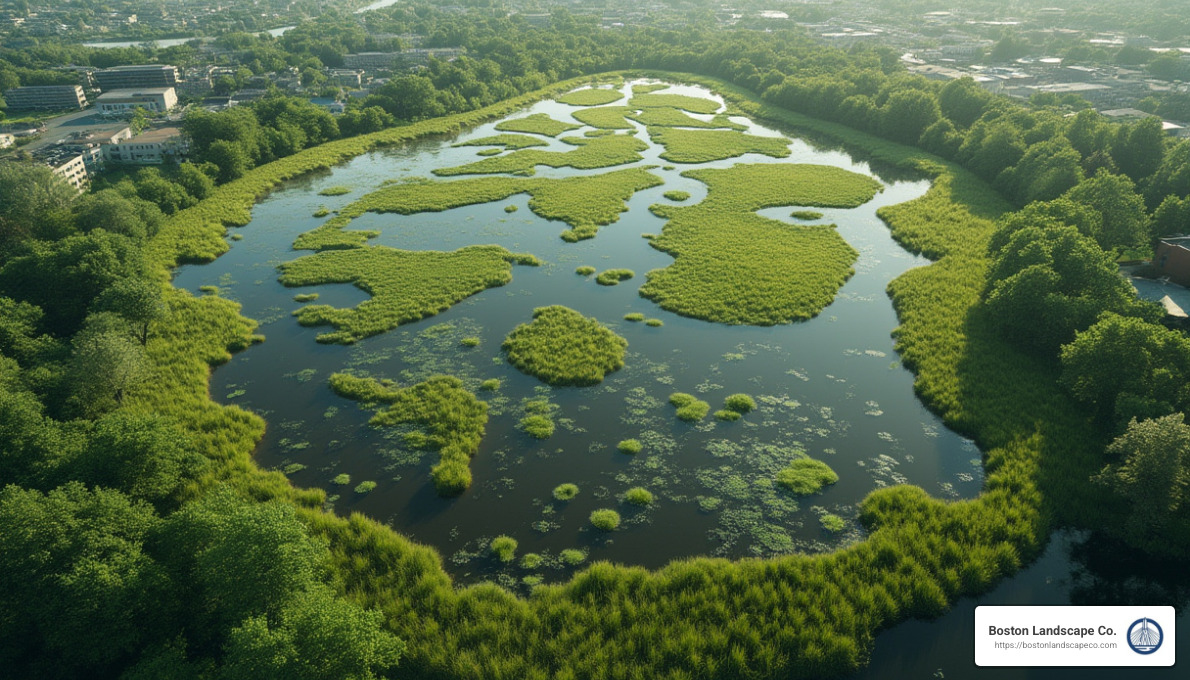
The aspect ratio of a wetland refers to its shape and proportions. An ideal wetland shape often resembles an ovoid, which allows for optimal water flow and retention. This shape helps maximize the wetland’s efficiency in processing water and nutrients.
A well-designed wetland with the right aspect ratio can greatly improve its ecological functions, supporting plant and animal life while also serving as a beautiful landscape feature in urban settings.
Understanding these elements is key to creating wetlands that are not only functional but also a harmonious part of the urban environment. By considering the wetland system, catchment area, and aspect ratio, landscape architects can design spaces that offer both ecological and aesthetic benefits.
Stay with us as we explore the key elements of wetland design, diving into the specifics of water retention, vegetation selection, and nutrient cycling.
Key Elements of Wetland Design
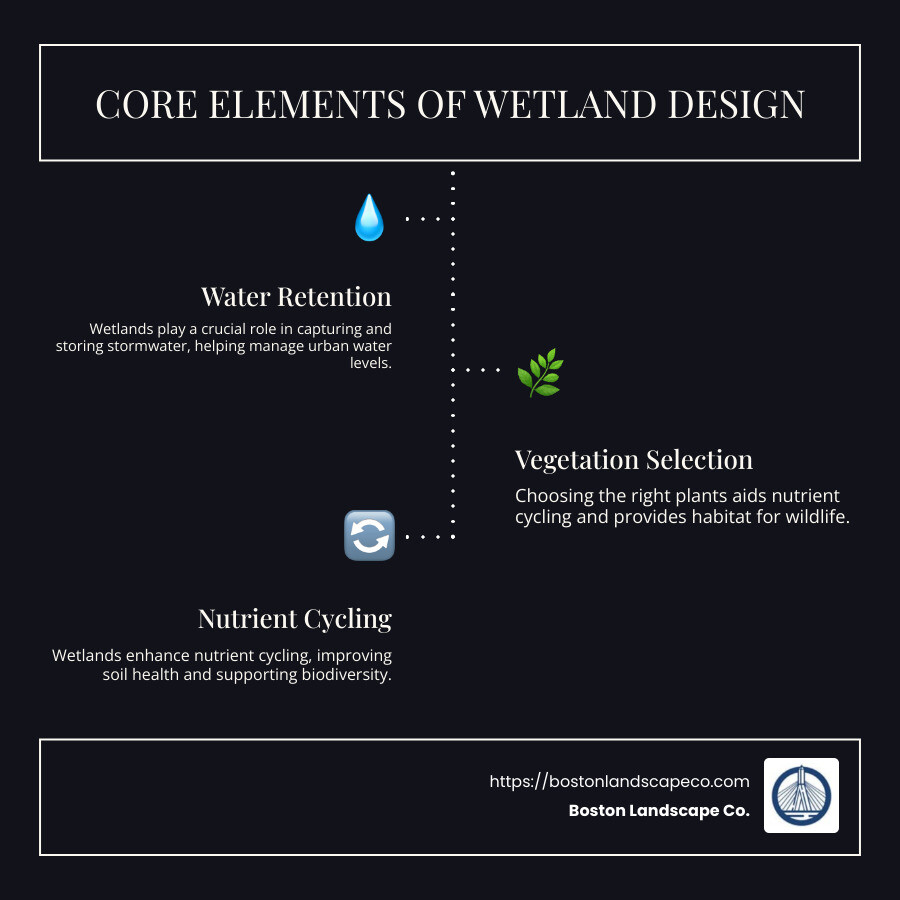
When designing a wetland, three critical elements come into play: water retention, vegetation selection, and nutrient cycling. These components are essential for creating a thriving wetland environment that can manage stormwater, support wildlife, and improve water quality.
Water Retention
Water retention is the wetland’s ability to hold water, acting like a natural reservoir. This capability is vital for flood control and maintaining a stable wetland environment. Constructed wetlands, like those in the Staten Island Bluebelt, can store and filter large volumes of stormwater, up to 350,000 gallons during storm events. This storage capacity helps prevent urban flooding and reduces the need for costly sewer systems.
Vegetation Selection
Choosing the right plants is crucial for a successful wetland. Vegetation in wetlands not only adds beauty but also plays a significant role in filtering pollutants and providing habitat for wildlife. Plants like cattails and bulrushes are excellent choices because they thrive in wet conditions and help remove nutrients from the water. While constructed wetlands might not have the same diversity as natural ones, selecting species for performance can create an effective and vibrant ecosystem.
Nutrient Cycling
Nutrient cycling is the process by which wetlands break down and recycle organic matter. This natural function is essential for maintaining water quality and supporting plant and animal life. According to the EPA, constructed wetlands can remove approximately 45% of total nitrogen and 60% of total suspended solids from the water. This nutrient removal is crucial for preventing pollution and eutrophication in urban waterways.
By focusing on these key elements, wetland design landscape architecture can create functional and aesthetically pleasing environments. These wetlands not only manage water effectively but also contribute to urban biodiversity and ecological health.
In the next section, we’ll explore the benefits of constructed wetlands, highlighting their role in stormwater management, wildlife habitat creation, and cost savings.
Benefits of Constructed Wetlands
Constructed wetlands offer a myriad of benefits that make them a valuable addition to urban landscapes. Let’s dig into their advantages in stormwater management, wildlife habitat creation, and cost savings.
Stormwater Management
One of the standout benefits of constructed wetlands is their ability to manage stormwater effectively. These wetlands act as natural sponges, absorbing and storing large volumes of water during heavy rainfalls. For instance, the Staten Island Bluebelt in New York City uses strategically placed wetlands to manage up to 350,000 gallons of stormwater during storm events. This system not only prevents urban flooding but also reduces the strain on traditional sewer systems, leading to significant infrastructure savings.
Wildlife Habitat
Constructed wetlands also serve as vital habitats for a diverse range of wildlife. By mimicking natural wetland ecosystems, they provide a sanctuary for species that thrive in water-rich environments. The Seadrift water treatment facility in Texas is an excellent example. Its 110-acre constructed wetland has been operational for over 15 years, offering a home to deer, bobcats, and birds. These habitats improve urban biodiversity and provide educational opportunities for local communities, fostering a closer connection between people and nature.
Cost Savings
From a financial perspective, constructed wetlands can lead to substantial cost savings, both in capital and operational expenses. The Seadrift project illustrates this well, where the wetland solution cost between $1.2 to $1.4 million, compared to a staggering $40 million for a traditional gray infrastructure alternative. Additionally, wetlands require minimal maintenance, no energy, or additives, and eliminate the need for biosolids disposal. This translates into lower operational costs and a reduced environmental footprint, making constructed wetlands an economically and ecologically sound choice.
By integrating constructed wetlands into urban planning, cities can enjoy these multifaceted benefits. They offer a sustainable solution for managing stormwater, enhancing biodiversity, and achieving financial savings.
In the next section, we’ll discuss how to design wetlands for urban environments, focusing on integrating green infrastructure and hydrological systems.
Designing Wetlands for Urban Environments
Incorporating wetlands into urban environments is a brilliant way to blend nature with city life. These areas, known as urban wilds, offer a unique opportunity to improve urban spaces with green infrastructure and hydrological systems. Let’s explore how this is done.
Urban Wilds
Urban wilds are untouched, spontaneously vegetated areas within cities. They bring nature closer to city dwellers, offering spaces for recreation and relaxation. These areas can be viewed as “opportunity-filled” spaces and are rich with biodiversity. In Berlin, for example, urban wilds are celebrated for their openness and hybrid uses. By conserving these spaces, cities can maintain a natural balance and provide residents with a green escape.
Green Infrastructure
Green infrastructure is key to making cities more sustainable. This includes everything from parks and green roofs to constructed wetlands. These elements help manage stormwater, reduce heat, and improve air quality. In New York City, the “Green Infrastructure Plan” allocates $1.6 billion to develop various green solutions, including wetlands. By prioritizing green spaces, cities can tackle environmental challenges while beautifying urban areas.
Hydrological Systems
Integrating hydrological systems into urban planning is crucial for effective water management. Constructed wetlands, for instance, are designed to mimic natural water processes. They capture and filter stormwater, reducing pollution and preventing flooding. The Sponge Parks in New York City are a great example. These parks capture stormwater runoff before it enters polluted waterways, showcasing how thoughtful design can address urban water challenges.
By designing wetlands for urban environments, cities can create vibrant, resilient spaces that support both people and nature. In the next section, we’ll tackle some frequently asked questions about wetland design landscape architecture.
Frequently Asked Questions about Wetland Design Landscape Architecture
What is the ideal shape for a wetland system?
When it comes to designing wetlands, shape matters. An ovoid shape is often ideal for wetland systems. This shape helps with water flow and distribution, ensuring that water moves evenly throughout the wetland. The aspect ratio, which is the relationship between the length and width of the wetland, is also crucial. A well-designed ratio can improve water retention and nutrient cycling, making the wetland more effective at its ecological roles.
How do constructed wetlands benefit urban areas?
Constructed wetlands are powerhouses for urban sustainability. They excel at stormwater capture, acting like sponges to absorb excess rainwater. This helps prevent flooding in cities, especially during heavy storms. Moreover, these wetlands play a significant role in pollution reduction. They filter out pollutants from stormwater before it reaches larger water bodies, improving overall water quality. For instance, the Chicago Riverwalk features floating wetland gardens that educate visitors about river ecology while actively improving it.
What are common challenges in wetland design?
Designing wetlands, especially in urban settings, comes with challenges. One major issue is urban space limitations. Cities are crowded, leaving little room for expansive wetland areas. Designers must creatively use available space to incorporate wetlands without disrupting existing infrastructure.
Another challenge is maintaining ecological balance. Constructed wetlands must support diverse plant and animal life while performing their functions. This requires careful selection of vegetation and ongoing maintenance to ensure the wetland remains healthy and effective. The Seadrift water treatment facility in Texas is a great example, where a large wetland was constructed to replace a traditional treatment plant, balancing ecological needs with industrial requirements.
By understanding these aspects, landscape architects can create wetlands that thrive even in challenging environments. In the next section, we’ll conclude our exploration by highlighting how Boston Landscape Co. can improve outdoor functionality through thoughtful landscape improvements.
Conclusion
At Boston Landscape Co., we understand the transformative power of thoughtful landscape improvements. Our expertise in wetland design landscape architecture allows us to improve outdoor functionality while respecting the natural environment. We believe in creating spaces that not only look beautiful but also serve essential ecological roles.
Improving Outdoor Spaces
Our approach to landscape improvement is comprehensive. We focus on integrating natural elements that promote sustainability and resilience. By incorporating wetlands into urban and suburban landscapes, we address critical issues like stormwater management and pollution reduction. This not only improves the functionality of outdoor spaces but also contributes to the overall health of the community.
Enhancing Functionality
Functionality is at the heart of our designs. We create landscapes that are both aesthetically pleasing and practical. Whether it’s a residential garden or a commercial property, our designs aim to optimize space, improve usability, and promote ecological balance. For example, our projects often include features like rain gardens and permeable pavements that manage water efficiently while adding visual appeal.
Why Choose Boston Landscape Co.?
Our team is dedicated to crafting landscapes that meet the unique needs of our clients. With locations across Massachusetts, including Boston, Stoneham, and Woburn, we are well-positioned to serve a wide range of areas. Our commitment to quality and sustainability ensures that we deliver landscapes that are not only beautiful but also environmentally responsible.
As we continue to innovate in landscape design, we invite you to explore how our wetland services can transform your outdoor spaces. Visit our wetland services page to learn more about how Boston Landscape Co. can improve the functionality and beauty of your property.
