
watering and irrigation systems: 7 Powerful Ways to Save Big 2025
Why Choosing the Right Watering System Matters
Watering and irrigation systems are essential tools for maintaining healthy landscapes in the Greater Boston area. When selecting a system for your property, understanding the main options can save you time, money, and water.
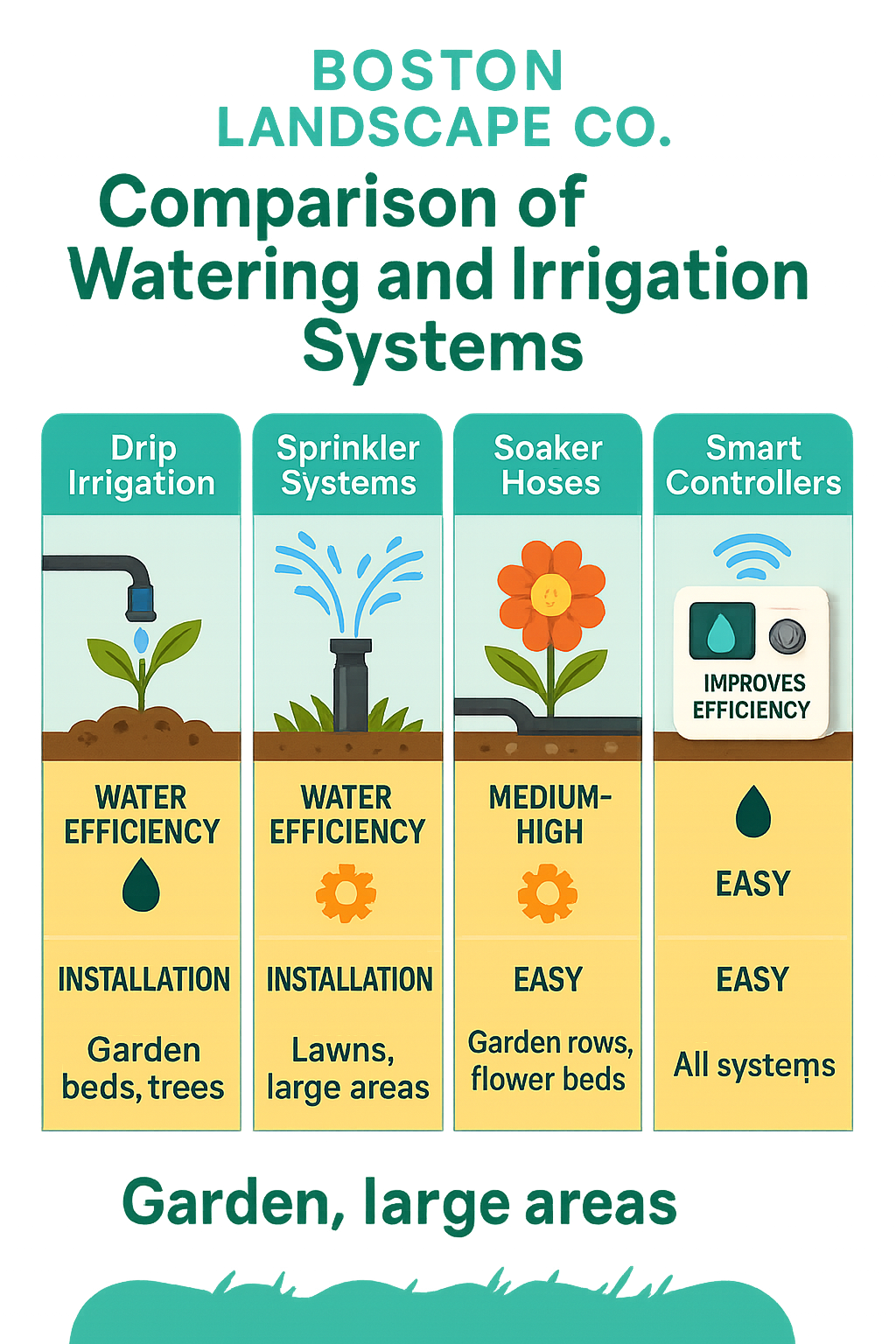
| System Type | Best For | Water Efficiency | Cost Range* | Maintenance Level |
|---|---|---|---|---|
| Drip Irrigation | Garden beds, trees, containers | High (30-50% savings) | $225-$1,200 | Medium |
| Sprinkler Systems | Lawns, large areas | Medium | $1,800-$5,200 | Medium-High |
| Soaker Hoses | Garden rows, flower beds | Medium-High | $30-$150 | Low |
| Smart Controllers | All systems | Improves efficiency by 15% | $100-$300 | Low |
*Average costs based on internet data, not actual Boston Landscape Co. pricing
The challenge of keeping plants properly hydrated while conserving water has never been more important. Whether you’re managing drought conditions or simply trying to reduce your water bill, choosing the right irrigation solution can make all the difference. Modern systems range from simple manual options to sophisticated automated networks that deliver precise amounts of water exactly where and when it’s needed.
I’m Steve Schumacher, owner of Boston Landscape Co, with over 30 years of designing and installing watering and irrigation systems throughout Massachusetts, where our unique climate presents specific challenges for keeping landscapes lush without wasting resources.
Understanding the Main Types of Watering and Irrigation Systems
When it comes to keeping your landscape hydrated, there’s no one-size-fits-all solution. Different areas of your property may require different watering and irrigation systems based on plant types, sun exposure, and soil conditions. Let’s explore the main options available to Massachusetts homeowners.
How Surface & Manual Methods Compare
The simplest irrigation methods have been around for thousands of years. While technology has advanced, sometimes these traditional approaches still make sense for certain situations.
Hand watering with a hose or watering can gives you precise control and works perfectly for container plants or small gardens. I still chuckle when I think about what a Medford homeowner told me: “I still hand-water my prized tomatoes even though I have a drip system. There’s something satisfying about that personal touch, and I can check each plant’s health as I go.”
For vegetable gardens on flat terrain, furrow irrigation creates small trenches between plant rows, directing water right to the root zones. It’s an ancient technique that still works well today, though it can be thirsty with water use.
Many of our clients use basin irrigation for newly planted trees and shrubs – simply creating a small depression around individual plants to hold water as it slowly soaks in. This method is particularly helpful during that crucial first year of establishment.
The biggest downside of these manual methods? They demand your time and energy. As one of our Lexington clients put it so perfectly: “I loved hand-watering my garden until it grew to over 500 square feet. That’s when I called Boston Landscape Co. for an automated solution!”
The Rise of Precision Drip Networks
Drip irrigation has truly revolutionized how we water gardens, offering remarkable efficiency and precision. These systems deliver water directly to plant roots through a network of tubes and emitters.
A well-designed drip system includes several key components working together. Emitters regulate water flow at 1-4 gallons per hour, while pressure regulators maintain consistent water pressure (usually 20-30 PSI) for optimal performance. Filters prevent clogging, and the system is connected through main lines (½” or ¾”) and smaller feeder lines (¼”) with various fittings to control water flow.
The water savings are impressive – drip irrigation can reduce usage by 30-50% compared to traditional sprinklers. This efficiency comes from minimal evaporation, runoff, and wind drift since water goes directly to the soil.
One clever gardener in Concord shared with me: “I installed a gravity-fed drip system in my garden. During a three-week vacation and drought, the system kept my vegetables thriving with just two 20-minute cycles daily from an liftd rain barrel.”
Drip systems excel in vegetable gardens, flower beds, shrub borders, and for watering trees. They’re particularly valuable in areas with irregular shapes or mixed plantings where sprinklers would waste water.
When Broadcast Sprinklers Make Sense
While drip irrigation offers superior efficiency, sprinkler systems remain the best choice for certain applications, particularly lawns and large, uniform planting areas.
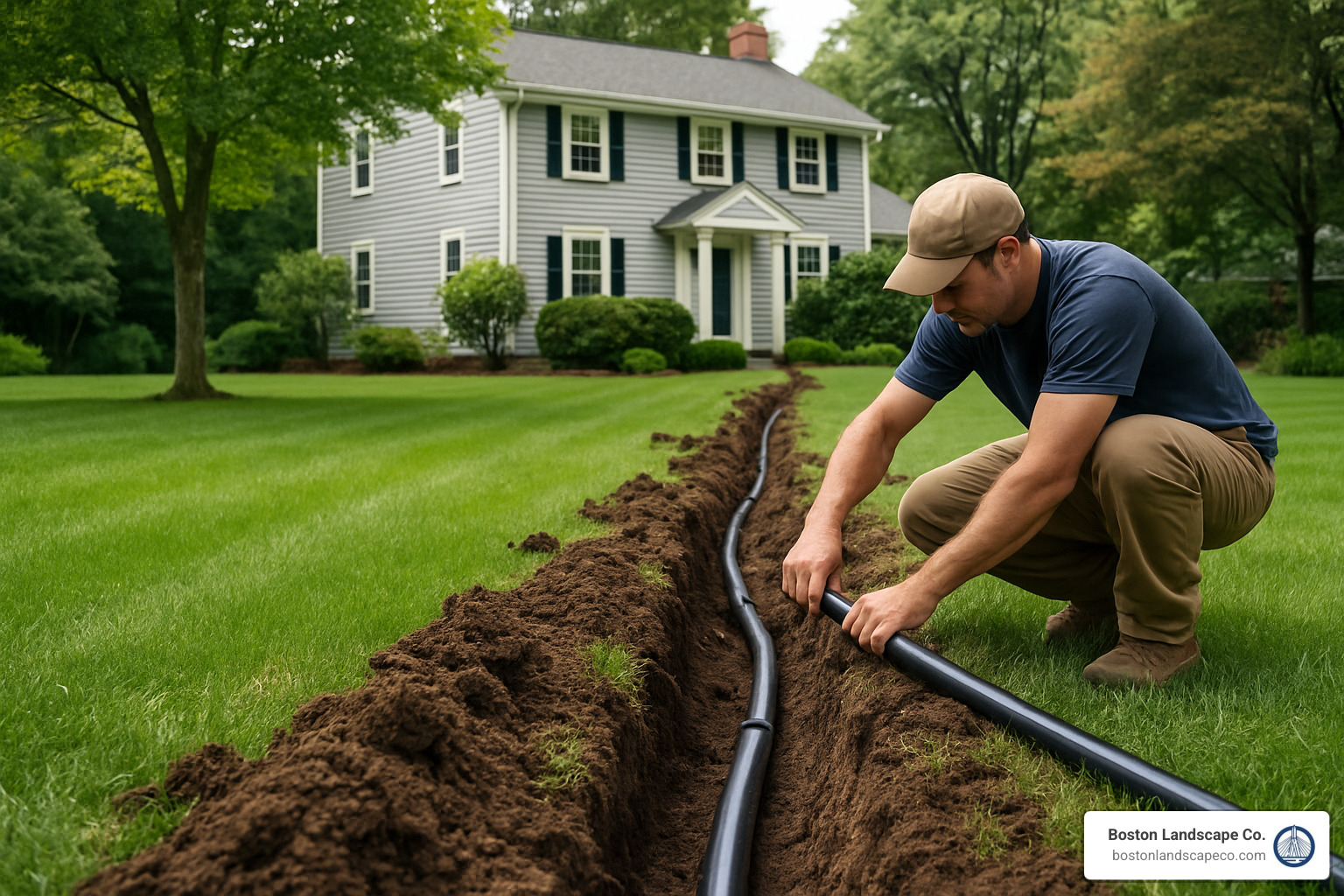
Modern sprinkler technology includes several types to match different needs. Rotor sprinklers rotate streams of water across a radius of 15-50 feet, making them ideal for medium to large lawns. Pop-up spray heads rise from the ground when activated, spraying in fixed patterns with a radius of 3-15 feet. For temporary above-ground use, oscillating sprinklers move back and forth in a rectangular pattern, while impact sprinklers create that distinctive clicking sound as they rotate.
Sprinklers distribute water over a wide area quickly, making them efficient for time (if not water). Today’s systems have improved with features like matched precipitation rate nozzles, ensuring even coverage regardless of the arc pattern.
A Winchester client perfectly summed up the convenience factor: “After years of dragging hoses and portable sprinklers across my lawn, installing an in-ground system was life-changing. My lawn stays consistently green with much less effort.”
For those interested in exploring more efficient irrigation approaches, check out this helpful resource: Get Started With More Efficient Irrigation Systems
Drip vs. Sprinkler: Which Is Best For Your Garden?
Choosing between drip irrigation and sprinklers isn’t always straightforward. As I’ve seen while installing watering and irrigation systems throughout Massachusetts, what works beautifully in one garden might be completely wrong for another. Let’s explore how to make the best choice for your unique landscape.
Decision Factors to Consider:
When I sit down with homeowners in Lexington or Winchester to plan their irrigation, we always start by considering their specific situation. Your beautiful vegetable garden needs something different than your front lawn, and your soil type plays a huge role too.
Massachusetts gardens face particular challenges in Zone 6 – we deal with both humid summers and freezing winters that can damage improperly winterized systems. Many towns also implement watering restrictions during summer months, making efficiency crucial.
The shape of your property matters tremendously too. Those beautiful sloping landscapes that make New England so charming? They can cause serious runoff problems with the wrong irrigation approach. And of course, budget considerations – both upfront costs and long-term water bills – will influence your decision.
Pros & Cons of Drip Systems — watering and irrigation systems in tight beds
Drip irrigation shines in garden beds, around trees, and for container plants. The magic happens because water goes exactly where plants need it – right at the root zone.
“When we installed drip irrigation in our Lexington perennial beds, we saw a 40% reduction in our summer water bill,” one of our customers told me recently. “Plus, the plants are healthier because they’re getting consistent moisture.”
That water efficiency – often 30-50% better than sprinklers – is drip’s biggest selling point. By delivering water directly to roots, you’ll see less evaporation and virtually no runoff. There’s also a wonderful side benefit: fewer weeds in pathways since you’re not watering between plants.
But drip isn’t perfect. The small emitters can clog, especially if you don’t have a good filter installed. The tubing can look a bit messy (though mulch hides it beautifully). And as one Stoneham gardener warned me, “Check your drip lines regularly. I once had a squirrel chew through a section, creating a mini geyser that went unnoticed for days!”
In Massachusetts, thorough winterization is absolutely essential for drip systems to prevent freeze damage – something we handle for many clients as part of our fall maintenance.
Pros & Cons of Sprinkler Systems — watering and irrigation systems for wide turf
Nothing beats a sprinkler system for a lush, green lawn. These systems excel at covering large, uniform areas quickly and evenly. With modern smart controllers, you can set them and forget them, adjusting automatically to weather conditions.
In-ground systems protect the components from damage and can boost your property value – something worth considering if you might sell your home in the future. The heads pop up only when operating, allowing you to mow right over them.
“My sprinkler system keeps my Wellesley lawn looking perfect,” a client recently shared, “but I did have to add drip zones for my perennial borders because the sprinklers were causing powdery mildew on my phlox.”
That highlights one of the main drawbacks – sprinklers wet foliage, which can increase disease problems. They’re also less water-efficient than drip, with some water lost to evaporation and wind drift. You’ll likely notice water landing on sidewalks or driveways too.
The initial cost runs higher for sprinklers (typically $1,800–$5,200 compared to $225–$1,200 for drip*), and they require professional winterization in our Massachusetts climate to prevent pipe damage.

Hybrid & Specialized Options
Sometimes the best solution isn’t strictly drip or sprinkler, but something in between. I’ve installed several specialized watering and irrigation systems that offer unique benefits for particular situations.
Soaker hoses are the perfect entry-level option for many gardeners. These porous tubes “sweat” water along their length – ideal for row plantings and garden beds. At $30-$150 for a basic setup, they’re remarkably affordable and can be buried under mulch for an almost invisible solution.
For established trees and shrubs, deep-pipe irrigation can work wonders. We install vertical pipes 12-24 inches into the soil, delivering water directly to deep root zones. One vineyard client saw their grape vine weight double compared to surface irrigation!
I’m seeing more interest in porous clay pots (ollas) lately – an ancient technique making a comeback. “I installed ollas in my raised vegetable beds in Burlington,” an urban gardener told me. “They maintain perfect soil moisture for my tomatoes and peppers, and I only need to refill them twice a week even during July heat waves.”
For lawns where water conservation is paramount, subsurface drip irrigation places drip lines 4-6 inches below the soil surface. It virtually eliminates evaporation but requires careful professional installation.
And don’t overlook micro-sprays – they’re my go-to solution for groundcover areas and dense plantings where drip emitters would be too limited but regular sprinklers would waste water.
The best system often combines several of these approaches, creating different zones for different parts of your landscape. At Boston Landscape Co., we specialize in designing these integrated systems that give each part of your garden exactly what it needs.
*Average costs are based on publicly available internet data and do not represent actual pricing from Boston Landscape Co.
Designing, Installing & Automating an Efficient System
Creating an effective irrigation system begins with thoughtful planning. Whether you’re considering DIY installation or professional services from Boston Landscape Co., understanding the design process helps ensure success.
Step-by-Step DIY Blueprint
If you’re feeling handy and want to tackle a simple system yourself, I’ve got you covered. After helping hundreds of Massachusetts homeowners with their watering and irrigation systems, I’ve found that good planning makes all the difference.
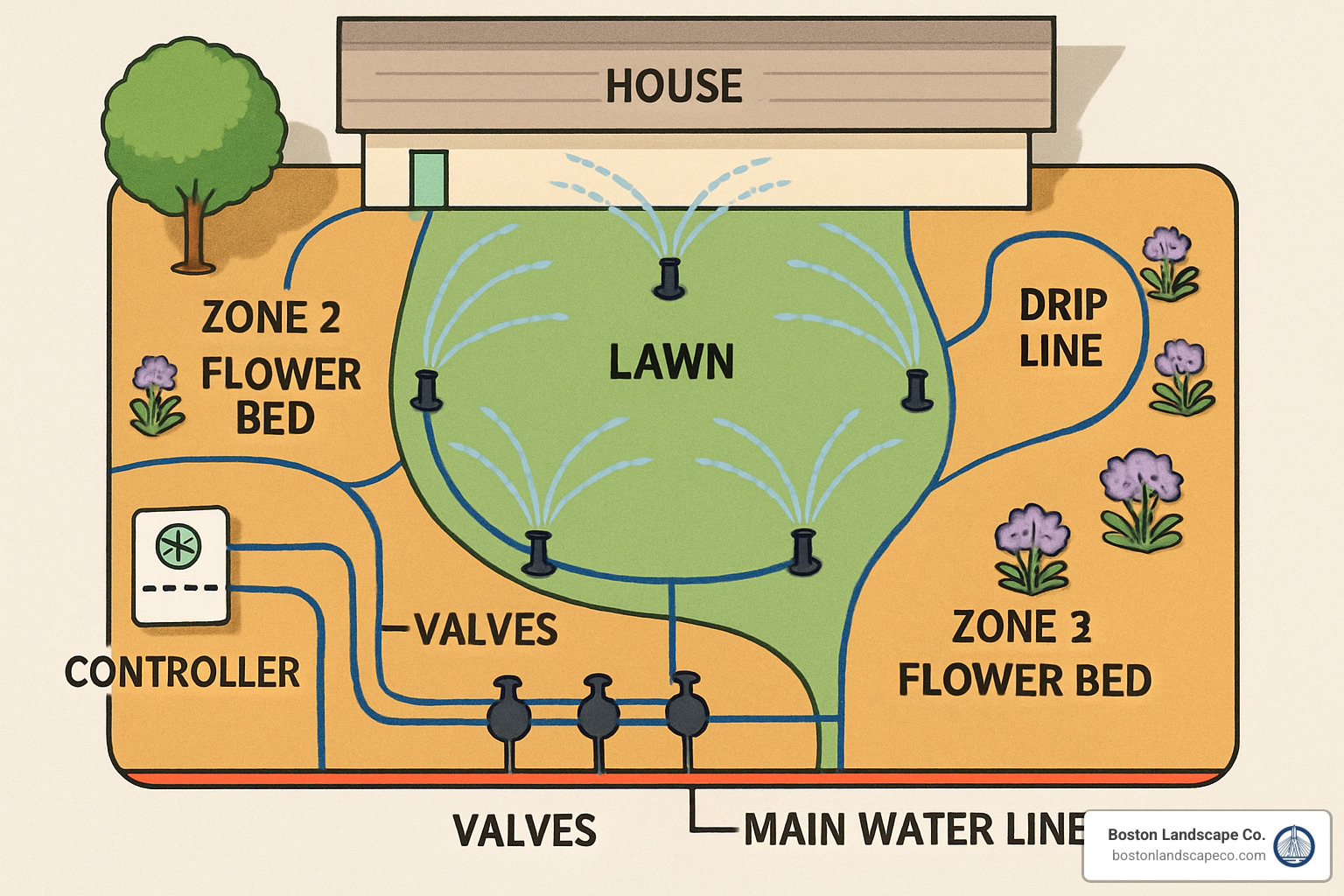
Start by creating a scaled map of your property on grid paper. It doesn’t have to be worthy of a museum, but make sure to mark important features like your house, driveway, garden beds, and water sources. Note the sunny and shady spots, any slopes, and different soil types—these all affect how water moves through your landscape.
Next, you’ll need to know your water flow. It’s simpler than it sounds! Just time how long it takes to fill a 5-gallon bucket from your outdoor faucet. This gives you your gallons per minute (GPM), which determines how many sprinklers or emitters your system can handle at once.
Dividing your yard into irrigation zones is crucial—especially in our varied Massachusetts landscapes. Your vegetable garden needs different watering than your lawn or shade perennials. Plus, your water supply can only support a limited number of sprinklers or emitters at once.
“I learned this the hard way,” laughs Mark from Bedford. “I tried to run my whole yard on one zone, and the pressure was so weak my sprinklers just dribbled. Breaking it into three zones solved everything.”
When selecting components, quality matters. For a basic drip system, you’ll need a backflow preventer (required by code), pressure regulator, filter, timer, tubing, fittings, and emitters. Spend a little extra on reliable parts—they’ll save you headaches down the road.
During installation, always flush your lines before adding emitters. I can’t tell you how many service calls we get for clogged systems that were never properly flushed! And don’t forget to test everything thoroughly before covering your handiwork with mulch.
For complex systems involving in-ground sprinklers or multiple zones with different pressure requirements, professional installation is often worth the investment. The proper trenching depth (usually 8-12 inches in Massachusetts to prevent freezing) and electrical connections for automated systems require specialized knowledge and equipment.
Smart Scheduling & Remote Control
The days of “set it and forget it” timers are fading fast, replaced by intelligent controllers that make your watering and irrigation systems work smarter, not harder.
Smart controllers have transformed how we manage landscape irrigation. They connect to your home WiFi and automatically adjust watering schedules based on local weather forecasts, seasonal changes, and even soil moisture levels. Many can detect when it’s rained (or about to rain) and skip scheduled waterings accordingly.
“My smart controller has been a game-changer,” says Sarah from Somerville. “Last July, we had that weird weather pattern with scattered thunderstorms. While my neighbor’s sprinklers were running during a downpour, mine stayed off. My water bill dropped by almost 30% that month!”
Most smart controllers offer user-friendly mobile apps that let you check and adjust your system from anywhere. Heading home early from vacation? Turn your system on with a tap on your phone to refresh those thirsty plants.
For an even more precise approach, soil moisture sensors take the guesswork out completely. These clever devices measure actual soil conditions and prevent irrigation when there’s adequate moisture. They’re particularly valuable in our fickle New England climate, where summer can bring both drought and sudden downpours.
If you’re sticking with a traditional timer, remember to adjust your schedule seasonally. In spring (April-May), water 2-3 times weekly for 10-15 minutes per zone. Summer (June-August) demands more frequent watering—3-4 times weekly for 15-20 minutes per zone. As things cool down in fall (September-October), scale back to 1-2 times weekly. And of course, winter means shutting down and winterizing your system to prevent freeze damage.
Always water in early morning (5-9am) when evaporation is low and plants have time to dry before evening, reducing disease risk. For more detailed guidance on irrigation scheduling for your specific landscape, check out How Are Irrigation Systems Installed?
Integrating Rain Barrels & Gravity Feed
There’s something deeply satisfying about putting nature’s bounty to work in your garden. Rain barrel systems not only conserve water but can significantly reduce your utility bills.
In Massachusetts, where we typically receive about 45 inches of rainfall annually, a single rain barrel can save approximately 1,300 gallons of water during summer months. That’s free water that would otherwise run off your property!
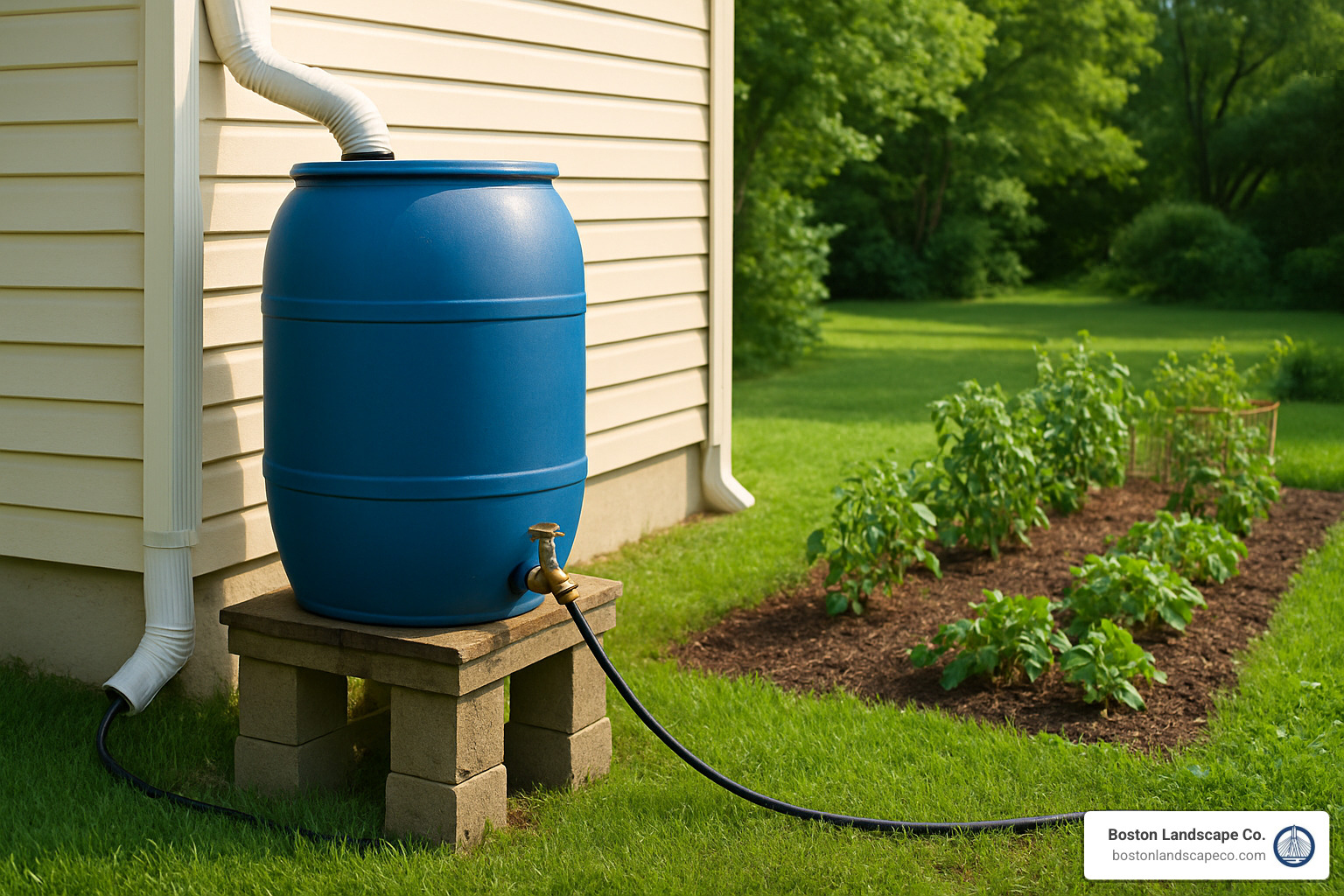
Setting up a basic rain barrel is surprisingly simple. Install a diverter on your downspout, position the barrel on a raised platform (crucial for creating pressure), connect an overflow hose, and add a spigot for your garden hose or drip system. The platform is key—every foot of height provides about 0.43 PSI of water pressure.
Watering and irrigation systems that use rainwater benefit from being free of chlorine and other chemicals found in municipal water. Many plants actually prefer rainwater, and you might notice improved growth after making the switch.
For larger properties or more ambitious gardeners, multiple barrels can be linked together, or you might consider larger storage options like 275-gallon IBC containers. These larger systems can supply entire vegetable gardens through gravity-fed drip irrigation.
Tom from Carlisle shared his setup with me: “We installed four connected 55-gallon barrels on a 2-foot platform behind our garage. The gravity pressure is enough to run our drip system throughout the vegetable garden. During a typical summer, we rarely need to supplement with town water. It’s saved us hundreds of dollars and feels great knowing we’re being more self-sufficient.”
For those with larger properties or more complex needs, Boston Landscape Co. can design integrated systems that combine rainwater harvesting with traditional irrigation. These systems use pumps and filters to ensure consistent pressure and clean water for your landscape, providing the best of both worlds.
Maintenance, Troubleshooting, Costs & Water Conservation
Owning a garden irrigation system is a bit like having a car—regular check-ups keep everything running smoothly and help avoid costly repairs down the road. Let me walk you through keeping your watering and irrigation systems in top shape while being kind to both your wallet and the environment.
Seasonal Maintenance Schedule
In Massachusetts, our distinct seasons demand specific attention to your irrigation system throughout the year.
When spring arrives in April, it’s time for the big wake-up call. I always tell my clients to start by walking their property to spot any obvious winter casualties—cracked pipes or damaged sprinkler heads that didn’t survive the freeze. Next comes the system flush, which is simply running water through the lines to clear out any debris that settled during winter.
“I learned the hard way about spring maintenance,” laughs Maria from Newton. “I skipped checking my filters one year and ended up with clogged emitters throughout my vegetable garden. Now I religiously clean those filters every April.”
During summer months, a quick monthly check keeps everything humming. Look for soggy spots in the yard (potential leaks), clean debris from sprinkler heads, and adjust your watering schedule as the temperature climbs. I often remind clients that July’s watering needs are very different from May’s.
Fall winterization is absolutely non-negotiable in our Massachusetts climate. By late October, you’ll want to shut off the water supply, blow out all lines with compressed air, and properly insulate any exposed components. As our technician Mark often says, “Proper winterization is absolutely critical in Massachusetts. Just one forgotten section of pipe can freeze, expand, and create costly repairs in spring.”
Water Conservation Strategies
Being water-wise doesn’t mean sacrificing your garden’s beauty. In fact, most plants actually prefer efficient watering to constant saturation.
Mulch is magical when it comes to water conservation. A 2-3 inch layer of organic mulch around your plants acts like a protective blanket, reducing evaporation and keeping soil temperatures moderate. Plus, it breaks down over time to enrich your soil. Most of my clients see about a 25% reduction in water needs after proper mulching.
Group plants with similar thirsts together—what professionals call “hydrozoning.” Your thirsty hydrangeas will appreciate different treatment than your drought-tolerant lavender. This approach lets you target water precisely where it’s needed without overwatering more resilient plants.
I’m a big believer in deep, infrequent watering rather than daily sprinkles. This encourages plants to develop deeper root systems that can better withstand dry spells. As my client in Reading finded, “After implementing these strategies with help from Boston Landscape Co., we reduced our summer water usage by nearly 40% while our garden actually improved in health and appearance.”
Soil moisture monitoring doesn’t require fancy equipment—a simple probe or even your finger pushed into the soil can tell you if watering is truly needed. The old gardener’s wisdom holds true: if soil sticks to your finger, it’s probably moist enough.
Cost Considerations and ROI
Let’s talk dollars and sense. While irrigation systems represent an investment, they often pay for themselves through water savings and plant preservation.
Initial installation costs* vary widely depending on your property size and system complexity:
– A DIY drip system might run $225-$1,200 for materials
– Professional drip installation typically ranges from $1,000-$3,600
– Full sprinkler systems generally cost between $1,800-$5,200
– Smart controller upgrades run $100-$400 plus installation
– Simple rain barrel setups average $120-$360
But the true value comes in the long-term benefits. Efficient systems can cut water usage by up to 50%, reducing utility bills significantly. Your plants thrive with consistent moisture, meaning fewer replacements of expensive landscaping. Most quality systems last 10-15 years with proper care, and professional irrigation can actually boost your property value by 5-10%.
“We view our irrigation system as an investment,” shared a homeowner from Waltham. “The initial cost was recouped within three years through water savings and not having to replace plants that previously died during dry spells.”
If budget constraints are a concern, consider a phased approach. At Boston Landscape Co., we often recommend starting with irrigation for your most valuable or vulnerable plantings, then expanding the system over time.
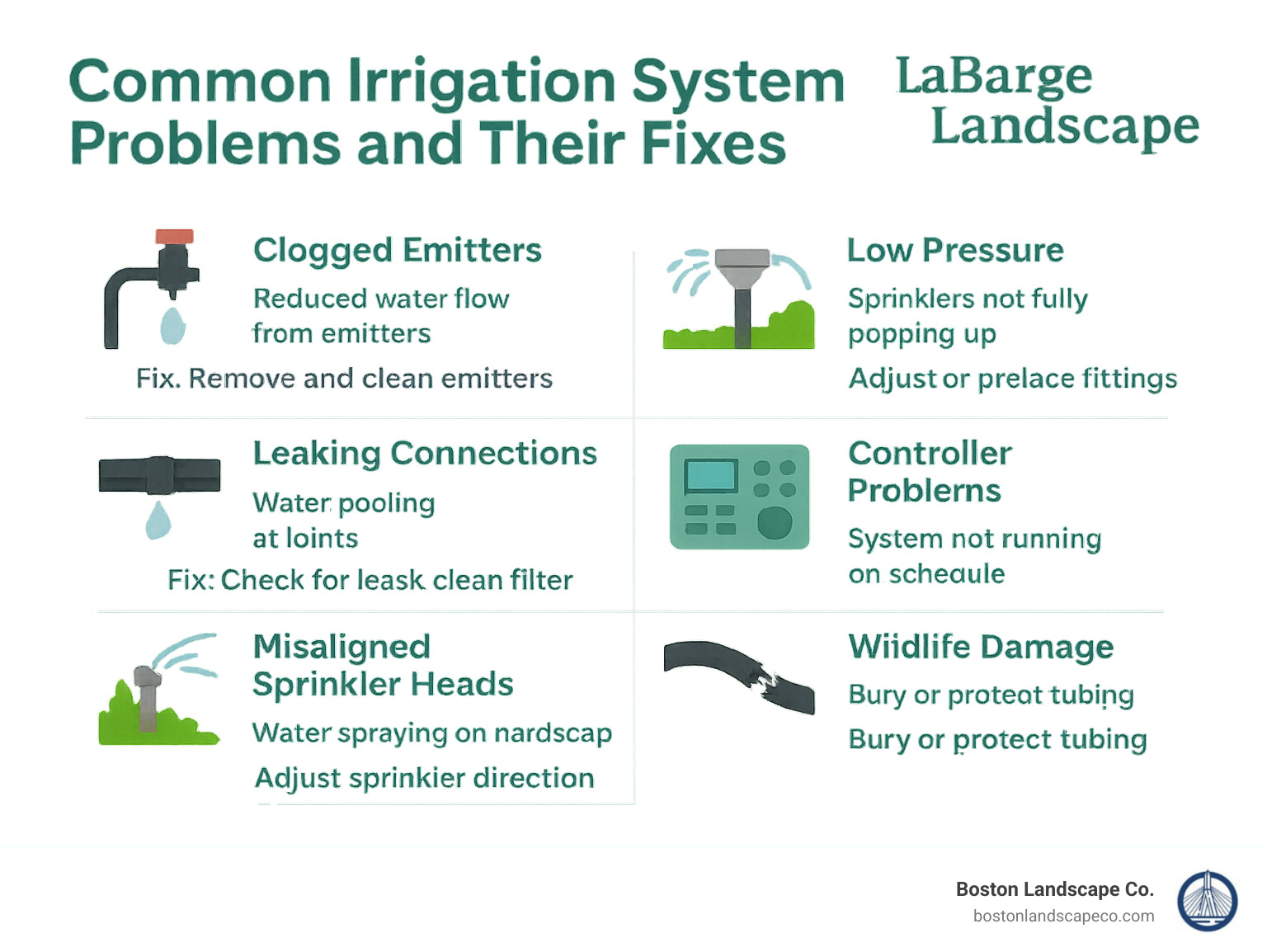
Common Problems & Quick Fixes
Even the best systems occasionally hiccup. Here’s how to handle the most common issues:
When emitters stop flowing, clogging is the likely culprit. Simply remove and clean the emitters, or replace them if they’re beyond saving. Always check your system’s main filter too—it’s often the source of widespread clogging issues.
Mysterious puddles near connections usually signal leaks. Tighten those fittings, replace any damaged parts, and consider using pipe tape on threaded connections for a better seal.
If your sprinklers seem lackluster or aren’t popping up fully, you’re probably experiencing pressure problems. Check for leaks first, then clean your filters, and consider running fewer zones simultaneously. Sometimes the issue is as simple as another water source (like a washing machine) running while your irrigation is active.
Controller confusion happens to everyone. If your system isn’t running on schedule, check the power source, verify your programming (especially after power outages), and replace the backup battery annually.
Wildlife can wreak havoc on irrigation components. After multiple repair visits for chewed tubing, one Burlington client shared this brilliant tip: “After squirrels kept damaging my drip lines, I started burying the main lines under mulch and using metal staples to secure them. Problem solved!”
FAQ Corner — watering and irrigation systems essentials
How often should I run my system in New England summers?
New England summers can be tricky—sometimes bone-dry, sometimes unexpectedly rainy. For established landscapes in Massachusetts, I typically recommend:
For lawns, aim for 3-4 weekly waterings, delivering about 1-1.5 inches total per week. Vegetable gardens usually need moisture every 2-3 days, while perennial beds do well with 2-3 deep waterings weekly. Trees and shrubs, with their deeper root systems, generally thrive with just one weekly deep soak.
Early morning watering (before 9am) is ideal—you’ll lose less to evaporation and reduce disease risk. And always adjust for Mother Nature’s contributions—delay irrigation if you’ve received more than ½ inch of rain.
What parts need replacing most frequently?
Based on our decades of experience at Boston Landscape Co., certain components simply have shorter lifespans than others. Sprinkler heads typically last 5-10 years but are vulnerable to lawnmower encounters and foot traffic. Drip emitters often need replacement every 2-3 years, especially with our mineral-rich Massachusetts water.
System filters should be cleaned regularly and replaced every 1-2 years. Valves—particularly their internal diaphragms and solenoids—generally remain reliable for 7-10 years. Controllers have variable lifespans, with basic models lasting 5-7 years and premium smart controllers often exceeding that.
Our annual maintenance program focuses on identifying these wear-prone components before they fail, saving our clients the headache of mid-season system failures.
Can I retrofit drip onto an existing sprinkler line?
Absolutely! This water-saving upgrade is one of our most requested services. The process is relatively straightforward—we cap unused sprinkler heads, install pressure-reducing adapters on strategic heads, connect drip tubing to these adapters, then run distribution lines to your planting zones.
One important adjustment: drip irrigation runs longer than sprinklers to deliver the same amount of water, so your controller timing will need updating.
A Lexington client recently told me, “We converted our shrub beds from sprinklers to drip last year. The plants are thriving with less water, and we no longer have water spraying on our windows and patio furniture.”
This retrofit makes perfect sense for mixed landscapes where lawns need sprinklers but your precious flower beds and vegetable gardens would benefit from the precision of drip irrigation.
*Average costs are based on publicly available internet data and do not represent actual pricing from Boston Landscape Co.
Conclusion
Choosing the right watering and irrigation systems for your Massachusetts property isn’t just about keeping plants alive—it’s about creating a thriving landscape that conserves resources and saves you time and money. Whether you’ve fallen in love with the precision of drip irrigation, need the broad coverage of sprinklers for your lawn, or see the benefits of combining both approaches, your decision will impact your garden’s health for years to come.
Here at Boston Landscape Co., we’ve spent decades helping homeowners throughout Greater Boston steer these choices. After installing hundreds of irrigation systems, we’ve seen how the right setup can transform a struggling garden into a lush oasis, even during those challenging July heatwaves.
I remember one client in Winchester who used to spend hours every evening with a hose in hand. After we installed a custom system with drip lines for her perennials and micro-sprays for her groundcover, she told me, “I’ve reclaimed my summer evenings!” That’s the kind of practical difference proper irrigation makes.
Water-smart landscaping represents both good environmental stewardship and practical property management. By investing in the right system, you’ll enjoy multiple benefits:
- Your plants will display noticeably improved health and vibrancy
- Your water bills will shrink as you eliminate waste from runoff and evaporation
- You’ll reclaim countless hours previously spent dragging hoses and setting timers
- Your property value will increase with a professionally installed system
- You’ll gain peace of mind during vacations, knowing your garden is receiving exactly the water it needs
Irrigation needs evolve as your landscape matures. Young trees need frequent watering to establish roots, while mature specimens require less frequent but deeper irrigation. Seasonal changes in Massachusetts—from our wet springs to occasionally drought-prone summers—also demand adjustments to your watering schedule.
That’s why Boston Landscape Co. offers ongoing support and maintenance services. We don’t just install and disappear—we’re here to ensure your system continues performing efficiently through all seasons and as your landscape develops.
Ready to explore what’s possible for your property? Contact us for a personalized consultation. Our team will walk your grounds, assess your specific needs, and design a custom solution that balances efficiency, performance, and value.
Water wisely, and watch your landscape thrive!
