What Does a Sprinkler System Actually Cost to Install?
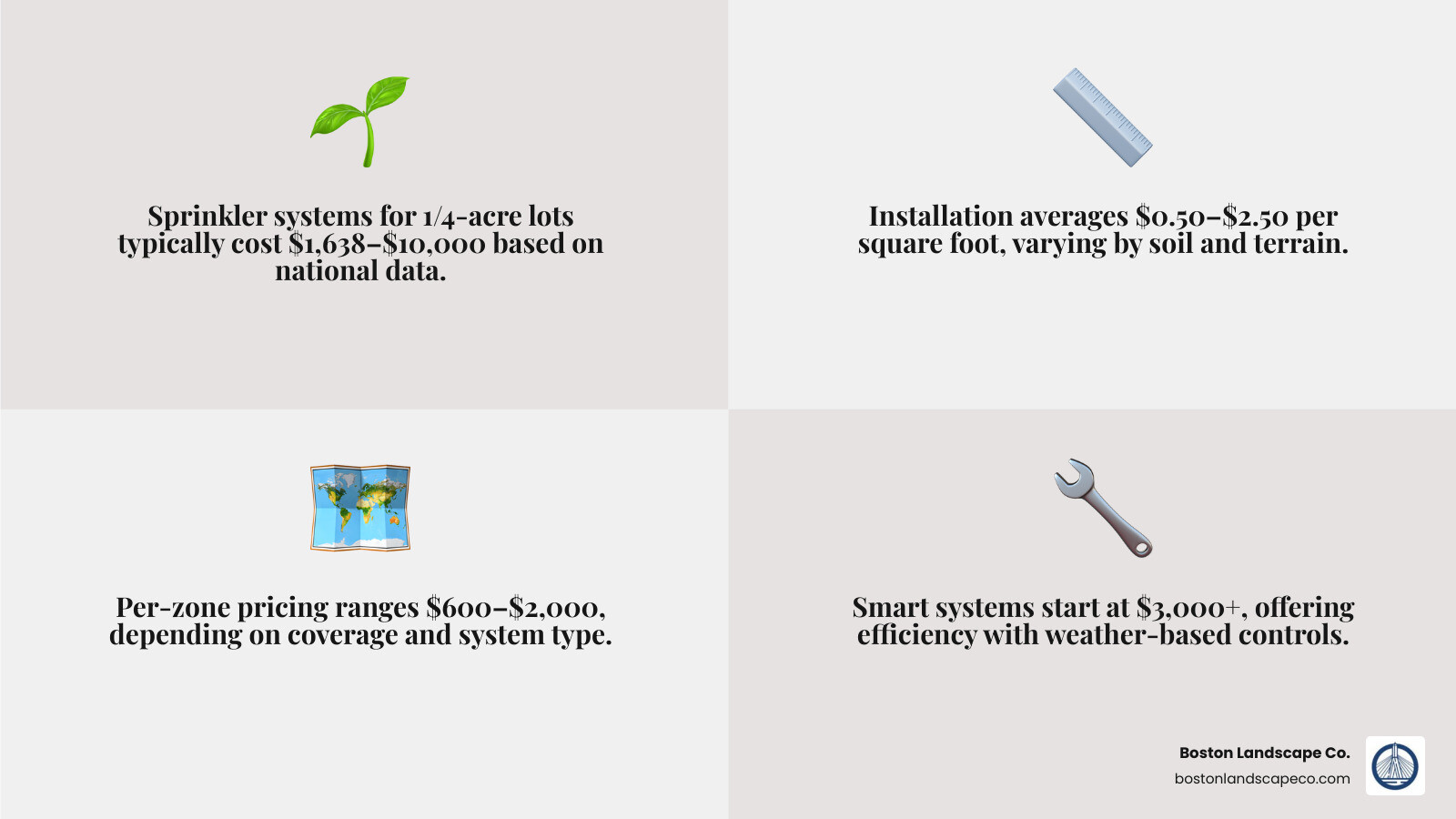
Sprinkler system install cost is one of the first things homeowners want to know before committing to a project — and the answer depends on several key variables. Here’s a quick snapshot based on average internet data (not Boston Landscape Co. pricing):
| Scenario | Estimated Average Cost (USD) |
|---|---|
| Per square foot | $0.50 – $2.50 |
| Per watering zone | $600 – $2,000 |
| 1/4-acre residential lot | $1,638 – $10,000 |
| Smart or premium system | $3,000 – $10,000+ |
Note: These are average costs based on national online data and do not reflect the actual rates of Boston Landscape Co. Real-world costs vary widely based on your property, region, and project scope.
A professionally installed system on a typical Greater Boston residential lot generally falls somewhere between $2,500 and $6,500, with larger or more complex properties running higher.
For many homeowners, the sticker price is the first hurdle — but understanding what drives that number is where the real planning begins. Factors like your lawn’s size, soil conditions (anyone who’s dealt with New England’s rocky ledge knows this well), the number of watering zones, and the type of system you choose all push costs up or down significantly.
I’m Steve Schumacher, owner-operator of Boston Landscape Co. since 1991, and over three decades of installing and maintaining irrigation systems across the Greater Boston area has given me a clear picture of what a realistic sprinkler system install cost looks like for properties in our region. In the sections below, I’ll walk you through every major cost factor so you can budget with confidence.
Breaking Down the Average sprinkler system install cost
When we talk about the sprinkler system install cost, we have to look at the project as a whole. It’s not just about the plastic heads popping out of the grass; it’s about the engineering beneath the surface. Based on broader internet benchmarks, most homeowners in the Northeast find that their investment scales with the size of their property.
It is important to remember that these figures are averages gleaned from national data. At Boston Landscape Co., we’ve seen properties in Winchester or Lexington where a small, intricate yard costs as much as a sprawling flat lawn in Billerica simply because of the terrain complexity.
| Property Size | National Average Cost Range | High-End / Complex Range |
|---|---|---|
| 1/8 Acre | $2,000 – $4,500 | $7,000+ |
| 1/4 Acre | $3,000 – $6,500 | $10,000+ |
| 1/2 Acre | $5,000 – $9,000 | $15,000+ |
| 1 Acre | $8,000 – $14,000 | $25,000+ |
For more detailed context, you can explore our resources on irrigation system installation cost and our lawn irrigation cost estimate guide.
Estimating the sprinkler system install cost per Square Foot
One common way to visualize the budget is by looking at the cost per square foot. On average, an automatic in-ground system ranges from $0.50 to $2.50 per square foot. However, most professionals prefer to price by “zones.” A zone is a group of sprinkler heads that turn on at the same time.
According to RawPixel data on square foot pricing, an automatic system typically costs between $0.88 and $1.65 per square foot for labor and materials. In the Greater Boston area, labor rates usually sit between $50 and $100 per hour, though specialized equipment for rocky soil can push those rates higher.
Residential vs Commercial Pricing Variations
The needs of a residential backyard in Stoneham are vastly different from a commercial office park in Burlington. Commercial systems must be built for “heavy traffic” and extreme durability. They often use high-density polyethylene (HDPE) pipes and heavy-duty brass valves to withstand the pressure of larger water volumes.
Commercial installations for a 1-acre property can range from $13,434 to over $40,000. The complexity increases with the need for larger backflow preventers, high-flow pumps, and sophisticated controllers that manage dozens of zones. You can learn more about how we handle these larger projects on our commercial landscaping page.
Key Factors Influencing Your Irrigation Investment
Why does one neighbor pay $3,000 while another pays $7,000 for a similar-sized yard? It usually comes down to what’s under the grass and the hurdles the installers have to jump over.

Impact of Soil Type and Terrain
In our service area—from the historic hills of Concord to the suburban lots of Woburn—soil type is the ultimate “wild card.”
- Rocky Ledge: If your property sits on New England granite, trenching becomes a slow, expensive process. While standard trenching costs $4 to $12 per linear foot, hitting rocky hardpan can add a premium of $0.40 or more per foot.
- Clay Soil: Clay doesn’t absorb water quickly. This requires “pulsating” sprinklers or shorter, more frequent watering cycles to prevent runoff.
- Sloped Lawns: Hills require specialized “check valves” to prevent water from pooling at the bottom of the slope once the system turns off.
The experts at This Old House often recommend different head types based on these conditions to ensure your sprinkler system install cost doesn’t lead to a soggy or underwatered lawn.
Additional Costs: Permits, Sensors, and Maintenance
Beyond the pipes and heads, there are several “hidden” costs to budget for:
- Permits: Most towns like Reading or Wellesley require a plumbing permit for backflow preventer installation. These range from $50 to $250.
- Smart Sensors: We highly recommend rain and soil moisture sensors. According to the EPA’s research on smart controllers, these can save over 7,000 gallons of water annually. They typically add $150 to $500 to the initial cost but pay for themselves in water savings.
- Winterization: In Massachusetts, you must blow out your lines before the first freeze. This annual service usually costs $75 to $250, depending on the number of zones.
For a comprehensive look at what goes into a full setup, check out our guide on watering and irrigation systems and general irrigation system maintenance.
Comparing System Types: From Drip to Smart Technology
Not all irrigation is created equal. The type of technology you choose will dictate both the upfront sprinkler system install cost and your long-term water bill.
Smart Controllers and Water Efficiency
We’ve come a long way from the old mechanical timers that watered the lawn even during a thunderstorm. Modern systems use Wi-Fi-connected controllers that pull local weather data.
- Pros: Adjusts watering based on real-time rainfall; manageable via smartphone apps.
- Cost: Smart controllers like those from Hunter Timer/Controller options typically add $200 to $600 to the project.
Drip Irrigation for Gardens and Shrubs
For the flower beds and ornamental shrubs common in Medford and Malden, drip irrigation is the gold standard. Instead of spraying water into the air (where it evaporates), drip lines deliver water directly to the root zone.
- Cost: Drip irrigation can cost $1.50 to $4.50 per square foot to install, but it dramatically reduces water waste.
- Brands: We often work with industry leaders like Hunter Sprinkler Heads and Rain Bird Sprinkler Heads to find the right balance of quality and budget.
Explore how these systems integrate with your turf in our article on drip irrigation for lawns.
Professional vs. DIY: Evaluating the Value
It’s tempting to think, “It’s just some pipes and a shovel, right?” While a DIY kit for a small garden might cost only a few hundred dollars, a full-scale in-ground system is a different beast.
Hidden Expenses in a DIY sprinkler system install cost
DIYers often overlook the cost of tool rentals. A power trencher can cost $150 to $300 per day to rent. Then there’s the risk: hitting an unmarked gas or water line can turn a “savings” project into a multi-thousand-dollar emergency.
Professional installations take 1 to 3 days, whereas a DIY project often stretches over several weekends. Furthermore, professional systems come with warranties and proper zoning, which prevents the “brown patch” syndrome caused by poor head placement. You can see the step-by-step professional process in our guide on how irrigation systems are installed.
Long-Term ROI and Home Value Increase
An irrigation system is one of the few landscaping upgrades with a quantifiable return on investment. According to Strong ROI data from NAR, homeowners can expect to recoup approximately 83% to 86% of the installation cost when they sell their home.
A Zillow report on smart features also suggests that homes with smart irrigation systems can sell up to a week faster than those without. It’s a signal to buyers that the property has been well-maintained.
Frequently Asked Questions about Sprinkler Systems
How many watering zones does my yard actually need?
Most residential yards in the North Shore require 4 to 7 zones. This isn’t just about size; it’s about “hydrozoning.” Your shady backyard needs less water than your sun-drenched front lawn. We group plants with similar needs into separate zones to maximize efficiency.
Does a sprinkler system significantly increase my water bill?
It can, but a well-designed system actually reduces waste compared to manual watering. By using rain sensors and smart controllers, you avoid overwatering. Most homeowners see a monthly water usage of 1,000 to 2,500 gallons during the peak summer months.
Can a sprinkler system be installed during the winter months?
In Greater Boston, we generally advise against it. Once the ground freezes in late December, trenching becomes nearly impossible and risks damaging the equipment. The best times for installation are spring and fall, when the soil is workable and the new grass seed or sod can establish quickly.
Conclusion
Investing in your property’s health is a big decision, and understanding the sprinkler system install cost is the first step toward a lush, worry-free lawn. Whether you’re in Stoneham, Billerica, or any of our surrounding North Shore communities, the key is to balance the initial investment with long-term water efficiency and property value.
At Boston Landscape Co., we pride ourselves on designing systems that thrive in our unique New England climate—rocks and all. If you’re ready to stop dragging the hose and start enjoying a greener yard, we’re here to help.