
Tree limb removal cost 2025: Ultimate Guide
Why Understanding Tree Limb Removal Cost Matters
Tree limb removal cost typically ranges from $75 to $250 for small branches, while large limb removal can cost $150 to $850 or more. Emergency services or complex jobs can exceed $2,500. The final bill is influenced by limb size, location, accessibility, and any additional services like debris hauling.
Note: These are average costs based on internet data and industry standards, not actual quotes from Boston Landscape Co.
Spring storm season in Massachusetts brings heavy winds and ice that can snap limbs without warning. A broken branch hanging over your roof is a safety hazard that could cause thousands in property damage. Understanding what drives tree limb removal cost helps you budget appropriately and avoid the sticker shock of emergency calls.
Whether dealing with storm damage or preventive maintenance, knowing the cost factors is key. Professional removal protects your property, family, and wallet in the long run.
I’m Steve Schumacher, owner of Boston Landscape Co. since 1991. For over three decades, I’ve helped Greater Boston homeowners make informed decisions about tree care. Our team specializes in safe, efficient limb removal that keeps properties beautiful and protected.
Understanding the Average Tree Limb Removal Cost
When a branch is dangling over your porch after a storm, the first question is, “What’s this going to cost?” While every situation is unique, we can review typical industry price ranges.
Just remember—these are national averages from online sources, not actual quotes from Boston Landscape Co. For precise pricing in Massachusetts communities like Boston, Stoneham, or Billerica, an on-site assessment is necessary.
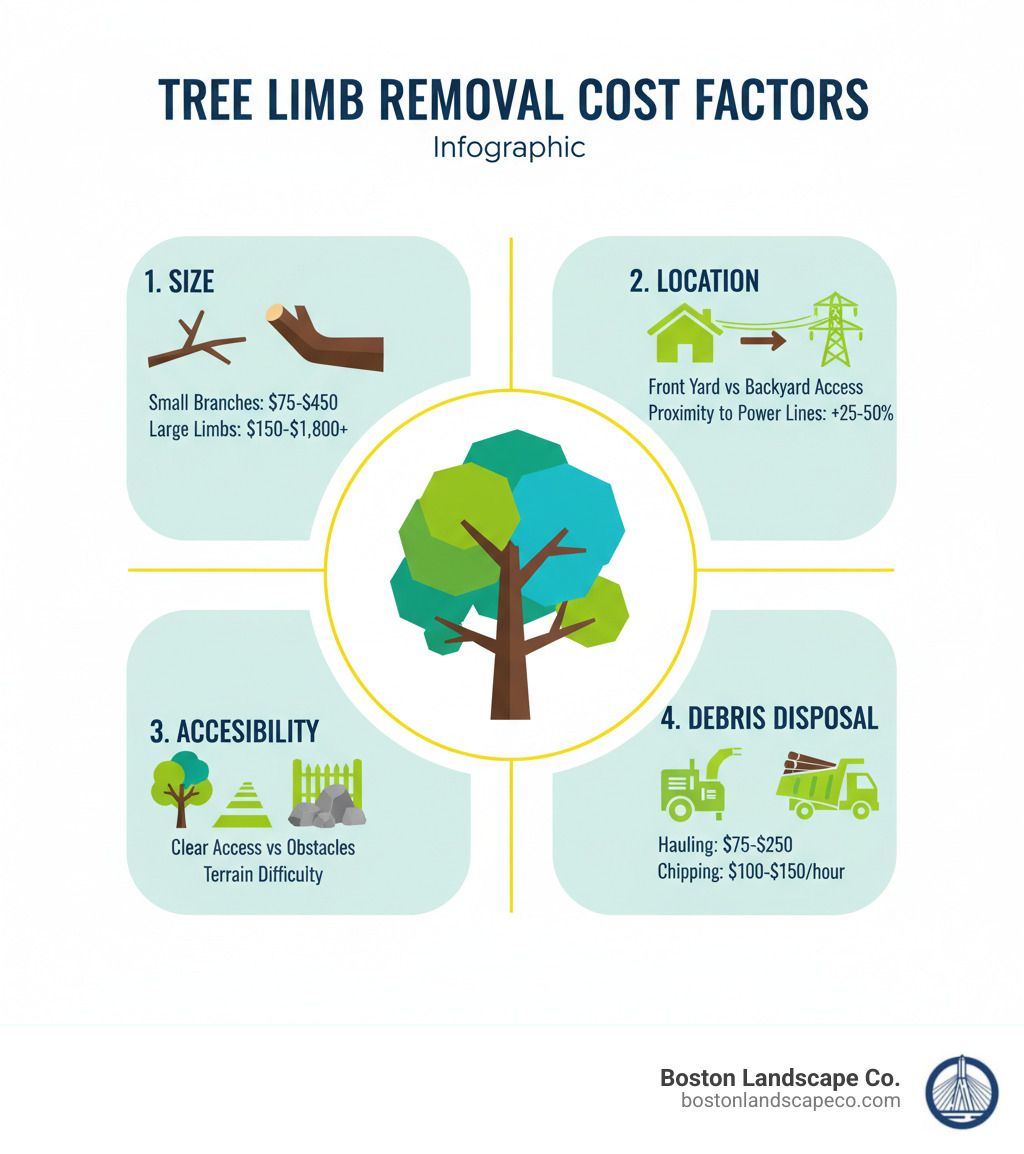
For a single limb, most homeowners pay between $75 and $850. The wide range is due to factors like size, location, and complexity. Jobs involving multiple limbs or challenging conditions typically run $900 or more per tree, with extra-large or tricky situations reaching $1,800 or beyond.
Some companies charge hourly, with standard rates between $50 and $125 per hour. However, emergency or after-hours work is more expensive, with rates jumping to $150 to $250 per hour or more.
Trees provide immense value through shade, beauty, and boosting property values. Understanding their care, including when limbs need removal, is part of responsible homeownership. For more on this, see this guide to tree benefits.
Cost Breakdown: Small vs. Large Limbs
The size of the limb is the biggest factor determining what you’ll pay. Snipping a thin branch is worlds apart from removing what’s essentially a small tree attached to your oak.
Small branches—those under 10 feet long that don’t require heavy equipment—typically cost between $75 and $250 to remove. If access is difficult or there are multiple branches, costs could climb toward $450.
Large limbs are a different beast, often over 10 feet long with a substantial diameter. They can weigh hundreds of pounds and require specialized equipment, rigging, and an experienced crew. The average tree limb removal cost for large limbs runs from $150 to $850. Exceptionally large or complex limbs, especially those threatening a house or power lines, can push costs to $1,800 or more.
A limb’s size is a combination of its diameter, length, and weight. A thick, heavy limb requires advanced cutting techniques, while a long limb needs careful sectioning to control its fall.
The Price of Procrastination: Emergency Limb Removal
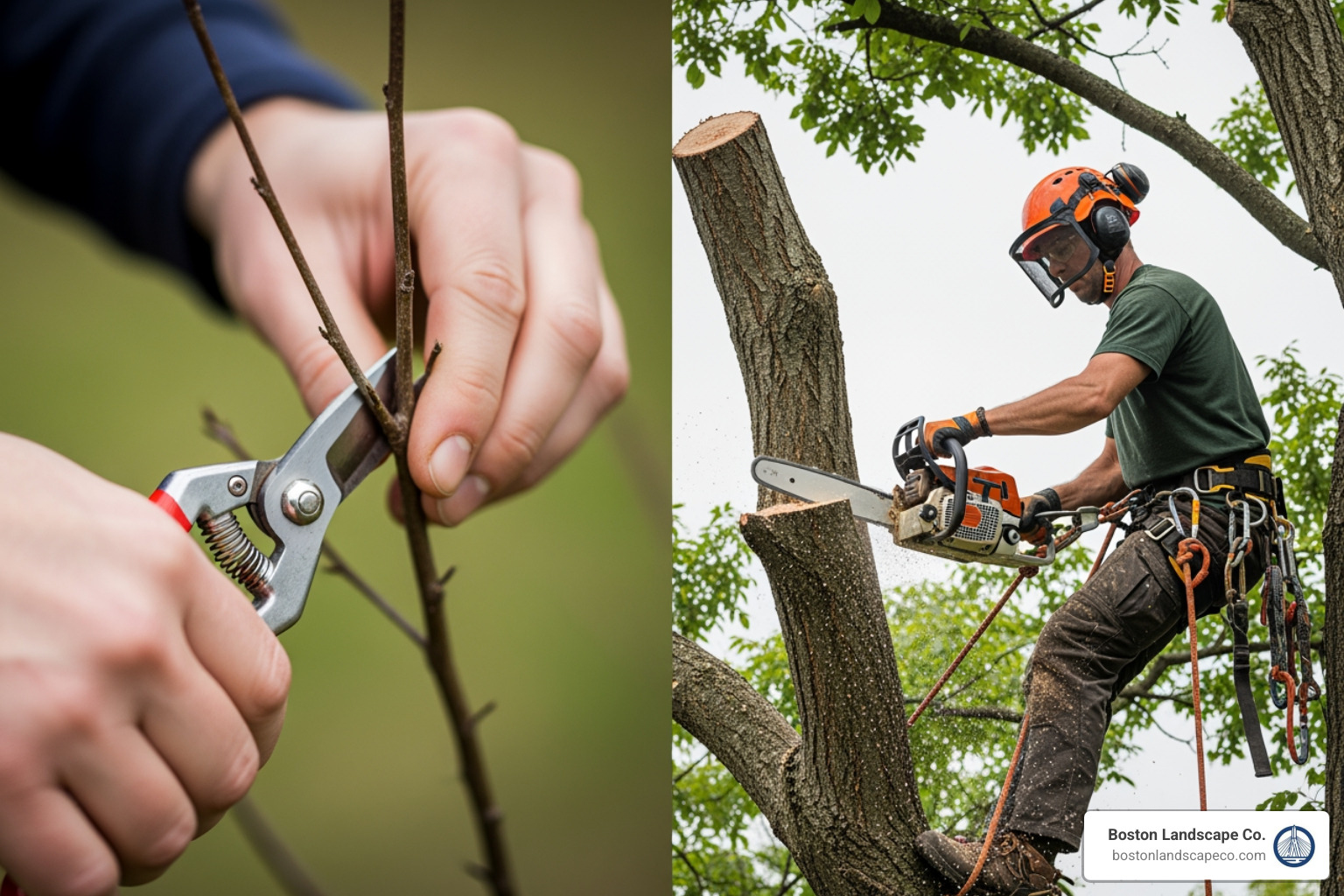
Massachusetts spring storms can snap limbs in an instant. When a massive branch is suddenly dangling over your roof, you need help now. This is emergency limb removal, and the urgency comes with a premium price.
A broken limb is an immediate safety hazard that demands a quick response, often outside of normal business hours. Emergency services typically run $150 to $250 per hour or more, reflecting the urgency and heightened danger. A partially failed branch is unstable, so crews need extra precautions and specialized equipment, driving up the cost.
After major storms, demand for tree services surges, which can also affect pricing. The good news is that proactive tree care can reduce your risk of facing an emergency. Regular maintenance identifies weak limbs before they become a crisis. Our Spring Yard Clean Up Services are designed to catch these problems early, saving you the stress and expense of an emergency.
Key Factors That Influence Your Final Bill
Beyond limb size, several other factors affect the final tree limb removal cost. These elements relate to the job’s complexity, risk, and labor requirements.
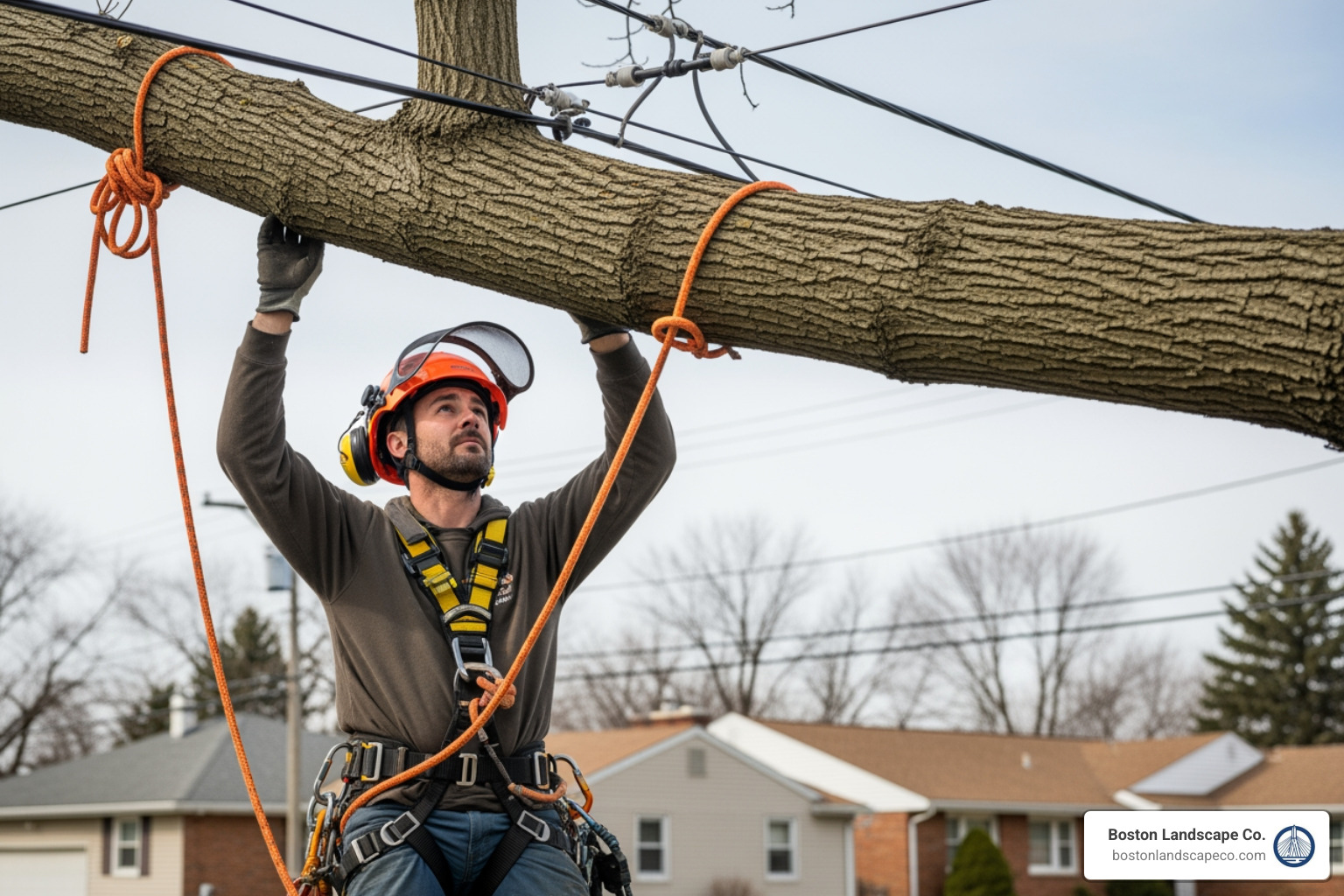
When our arborists visit your property in Lexington or Waltham, they assess the tree’s health, species, number of limbs, and site accessibility. A limb that’s difficult to reach will cost more to remove than one with clear access. Each factor affects the time, equipment, and expertise needed, which shapes your final bill.
How Limb Size, Type, and Condition Affect the Price
While we’ve covered size, the limb’s specific characteristics are also crucial. A thick limb may require being cut into smaller sections and lowered with ropes—a precise and time-consuming process.
The wood type also matters. Hardwoods like the oaks common in Massachusetts are dense and tough on equipment, which can increase labor time and costs. Softwoods like pine are easier and faster to cut.
Surprisingly, dead or diseased limbs often cost more to remove. Dead wood is unpredictable and can snap or crumble, making it dangerous to climb and work on. A limb weakened by pest infestations or disease is structurally compromised, requiring extra care and safety measures.
This spring’s freeze-thaw cycles have made many limbs brittle. Our Tree Assessment Services can identify these weak spots before summer storms arrive, preventing costly emergencies.
Location, Location, Location: Accessibility and Risk
The same limb in two different spots can have dramatically different removal costs, all due to access and nearby hazards.
- Front Yard vs. Backyard: A limb in the front yard is cheaper to remove because trucks and chippers have easy access. Backyard jobs may require navigating gates and gardens, increasing labor.
- Proximity to Structures: A limb over your roof, deck, or garage requires careful rigging to lower sections safely, preventing property damage. This precision work can add 25% to 50% to the tree limb removal cost.
- Power Lines: Limbs near electrical lines are a serious hazard. This work requires special training and coordination with the utility company. The risk involved with cutting it down near utilities is significant and adds to the cost.
- Difficult Terrain: Sloped, muddy, or obstructed ground makes it harder to stabilize equipment and work safely, increasing labor and potentially requiring specialized gear.
Beyond the Cut: Additional Services and Hidden Costs
Once a limb is on the ground, the job isn’t over. Several additional services, often quoted separately from the initial tree limb removal cost, may be needed. Understanding these helps avoid surprise charges.
Common add-ons include debris hauling, wood chipping, and stump grinding. While they add to the final bill, they provide convenience and a finished result.
Debris Hauling and Wood Chipping
After the limb is cut, you have to decide what to do with the wood and branches.
Debris hauling is when the crew loads all the wood and brush into trucks and takes it away. Most homeowners choose this option for a clean, finished job. This service typically adds $75 to $250 to your bill, depending on the volume of material.
Wood chipping involves processing branches and brush into mulch on-site with a commercial-grade chipper. This service usually runs $100 to $150 per hour, based on industry averages. The benefit is that you can keep the fresh wood chips, which are one of many great eco-friendly mulch options for your garden beds. This turns a tree problem into a landscape asset, especially during spring planting season.
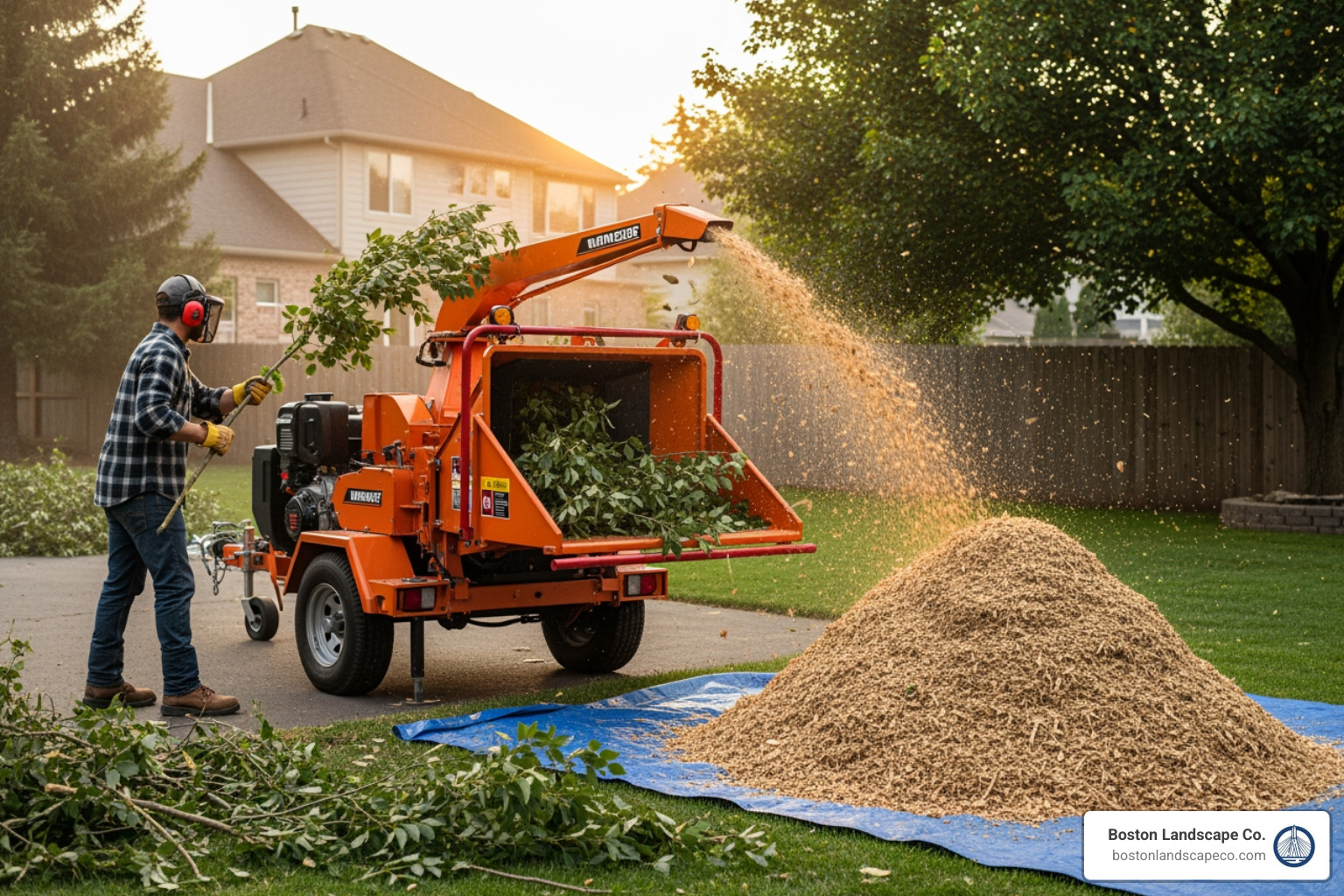
Our comprehensive Yard Clean Ups service can handle all debris removal and other seasonal tasks at once.
Note: These are average costs based on industry data and not specific quotes from Boston Landscape Co.
When to Remove the Whole Tree Instead of Just the Limbs
Sometimes, a problematic limb indicates the entire tree is unhealthy. While removing a whole tree costs more upfront (typically $200 to $2,000, up to $5,000 for emergencies based on national averages), it can be more cost-effective in the long run. Consider full removal if:
- More than 50% of the tree is damaged. The tree is unlikely to recover, and you may face repeated limb removal costs.
- The trunk is compromised. Large cracks or extensive decay mean the tree is a structural hazard, especially during New England storms.
- The root system is invasive. If roots are damaging your foundation or driveway, removing branches won’t solve the underlying problem.
- The tree has a chronic disease or pest infestation. A dying tree can be a liability and may infect other plants. Our Invasive Species Removal services can help protect your landscape.
A certified arborist can provide a cost-benefit analysis to help you decide, ensuring the safety and long-term health of your property.
DIY vs. Hiring a Professional
When you see a broken branch, the DIY urge can be strong. But while trimming a tiny twig from the ground is fine, tackling anything that requires a ladder or a chainsaw is more dangerous than it appears. The risks often far outweigh the potential savings compared to the professional tree limb removal cost.
| Feature | DIY Tree Limb Removal | Professional Tree Limb Removal |
|---|---|---|
| Cost | Low initial cost (tool rental/purchase) | Higher upfront cost (labor, equipment, expertise) |
| Tools | Hand pruners, pole saw, small chainsaw | Chainsaws, chippers, bucket trucks, cranes, rigging equipment |
| Safety Risks | High (falls, cuts, electrocution, falling limbs) | Low (trained crew, safety gear, insurance) |
| Time | Significant time commitment (cutting, cleanup, disposal) | Efficient, quick completion (often same-day) |
| Expertise | Limited (risk of improper cuts, tree damage) | Certified arborists ensure tree health and proper techniques |
| Outcome | Variable (potential for damage, incomplete removal) | Safe, thorough, clean, professional results |
| Insurance | None (homeowner liable for injury/damage) | Fully insured (liability, workers’ comp) |
| Disposal | Personal effort, extra trips to dump, dumpster rental | Included (chipping, hauling) |
The Risks and Realities of DIY Tree Limb Removal
Tree work is deceptively dangerous. While DIY may seem feasible for small, accessible branches you can reach with a pole saw from the ground, the risks multiply quickly. Essential safety gear like a helmet, gloves, and eye protection is a must. Tool costs can also add up, with a decent pole saw and chainsaw easily costing several hundred dollars.
The most significant concerns are personal injury and property damage. Falls from ladders and chainsaw accidents are common and can be devastating. Without proper rigging, a falling limb can crash through a roof or fence, turning a money-saving attempt into a multi-thousand-dollar disaster.
Furthermore, improper cuts can harm the tree, leaving it vulnerable to pests and disease. A cut made too close to the trunk can remove the branch collar, preventing the tree from healing properly and causing long-term damage.
Why Hiring a Certified Arborist is a Smart Investment
Hiring a professional, especially a certified arborist, is an investment in expertise, safety, and your property’s long-term health.
A certified arborist, such as one with credentials from the International Society of Arboriculture (ISA), has proven knowledge of tree biology, pruning, and safe removal. As the ISA Certification benefits show, they are required to stay current on the latest techniques. This expertise ensures the job is done right.
Professionals use proper equipment, like bucket trucks and advanced rigging systems, to work safely and efficiently. This specialized gear allows them to tackle jobs that are impossible or extremely dangerous for a homeowner.
Crucially, a reputable tree service carries full liability insurance and workers’ compensation. This protects you from financial responsibility in case of an accident or property damage. Always ask for proof of insurance before work begins.
Finally, a professional crew offers efficiency and safety. A job that could take a homeowner a full weekend can often be completed in just a few hours by a trained team. When you request an accurate quote, a certified arborist provides a thorough on-site inspection, ensuring a fair and transparent price custom to your specific situation.
At Boston Landscape Co., our certified arborists have provided professional tree care since 1991. We understand the factors behind tree limb removal cost and are committed to transparent pricing and exceptional service.
Frequently Asked Questions about Tree Limb Removal Cost
Over three decades, we’ve answered countless questions about tree limb removal cost. Here are the answers to the three most common ones we hear from homeowners in communities like Lexington and Waltham.
Will homeowners insurance cover tree limb removal?
This is the most common question, especially after a Massachusetts storm. The answer depends on the circumstances.
- When is it usually covered? If a limb falls on a covered structure (house, garage, fence) due to a “named peril” like wind or ice, your policy will typically cover removal and repairs. These are often called “Acts of God” in storm damage clauses.
- When might it be denied? If the limb was clearly dead or diseased before falling, your insurer might argue negligence and deny the removal claim (though they may still cover structural damage).
- What if it falls but hits nothing? Insurance usually does not cover removal in this case, unless it blocks a driveway or entryway, which is a rare exception.
Our advice: Document everything. Take photos of the damage before any work begins and keep detailed records of communications with your insurer and tree service.
What is the cheapest time of year for tree removal?
For a hazardous limb, safety comes first, regardless of the season. However, for non-urgent work, timing can affect your tree limb removal cost.
The busiest seasons for tree services are spring and summer. Demand is high, and prices reflect that.
The cheapest time is typically late winter (December through February). This is the off-season when tree companies are slower. The trees are dormant and leafless, making the work easier and potentially leading to discounts of 10-20%. You also benefit from greater scheduling flexibility and can proactively address hazards before spring storms, avoiding expensive emergency rates.
How can I get an accurate quote for my project?
Getting a fair, accurate quote requires a few key steps. A quick phone call is not enough.
- Insist on an on-site inspection. A reputable company will never give a firm quote without seeing the job in person. Too many variables—access, hazards, limb condition—can only be assessed on-site.
- Get at least three written quotes. This helps you compare the scope of services and professionalism, not just the price. The lowest bid might exclude necessary services like hauling.
- Verify insurance and credentials. Ask for proof of liability and workers’ compensation insurance. This protects you from liability. Also, ask if they employ ISA-certified arborists.
- Ask questions. A professional will be happy to explain their methods, equipment, and safety protocols. Evasiveness is a red flag.
For a comprehensive assessment and a detailed estimate in the Boston area, our team is ready to schedule a visit. We’ve served communities from Stoneham to Sudbury since 1991 with a commitment to transparency. You can also research professionals using resources like Find verified contractors.
Secure Your Property with Professional Tree Services
Spring storms in Massachusetts are a powerful reminder of why understanding tree limb removal cost is so important. While the price can range from $75 to over $1,800, this investment protects your family, home, and landscape.
By understanding the key cost factors—limb size, tree health, accessibility, and additional services like debris hauling—you can budget effectively and ask the right questions. Proactive tree care is not an expense; it’s an investment that pays dividends. Removing a hazardous limb in the off-season for a few hundred dollars is far better than paying for an emergency removal and costly home repairs after a storm.
A certified arborist does more than just cut limbs; they make proper cuts to promote tree health and spot problems before they become emergencies. They carry the right insurance and equipment to do the job safely and efficiently.
For a comprehensive assessment and a detailed estimate for your property in the Greater Boston area, trust the experts at Boston Landscape Co. Since 1991, we’ve helped homeowners from Stoneham to Lexington keep their properties safe and beautiful. We believe in transparent pricing and treating every property like our own.
Learn more about our Yard Cleanup services and costs and let us help you keep your landscape in top condition. Whether you need a single limb removed or a complete property assessment, we’re here to provide the professional service you deserve.
