
Residential Landscape Installation: 6 Ultimate Steps
Why Professional Residential Landscape Installation Transforms Your Property
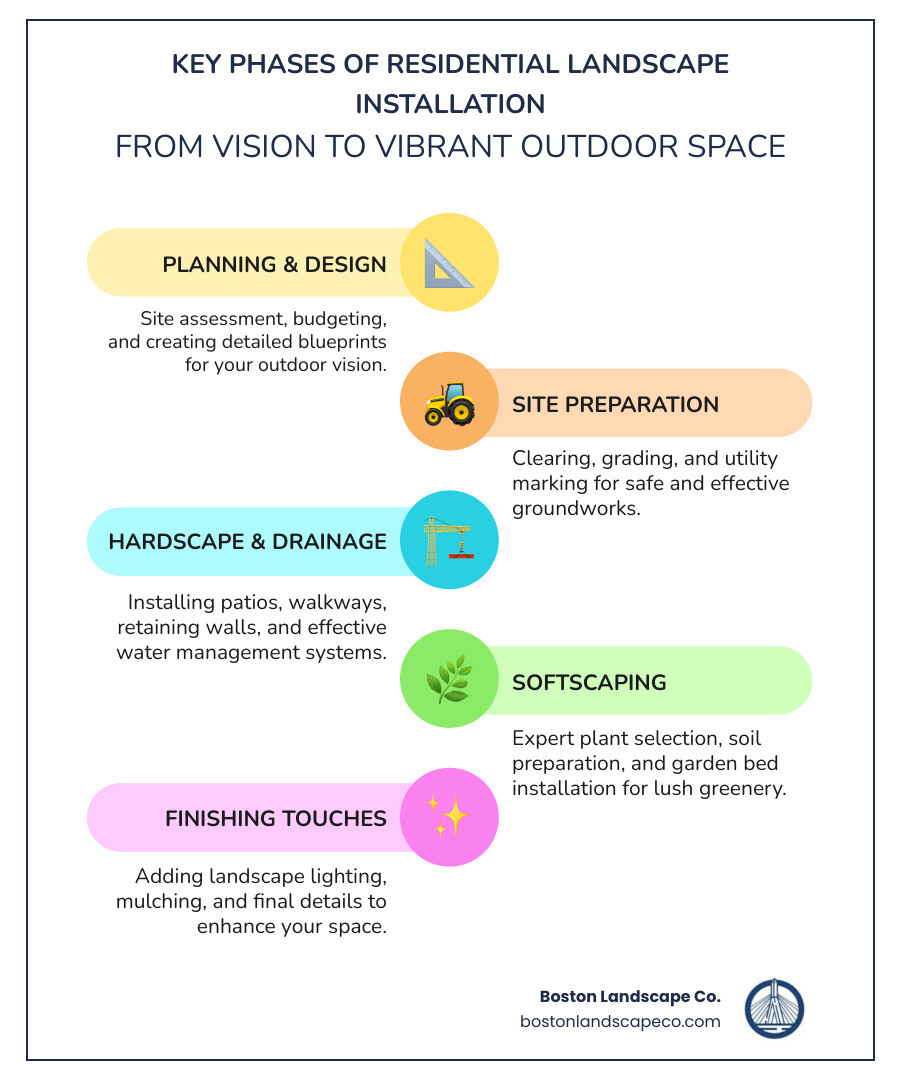
Residential landscape installation is the comprehensive process of designing and creating outdoor spaces that blend beauty, functionality, and value for your home. A professional project follows key phases—from planning and site preparation to hardscaping, softscaping, and finishing touches—to ensure your vision becomes a reality.
The U.S. landscaping services industry is valued at $113.7 billion in 2023, with homeowners seeing a return on investment of 100-200% for well-executed projects. Outdoor living spaces can increase your home’s value by up to 20%, making professional installation a smart financial decision.
Creating a beautiful landscape requires more than just planting flowers. From understanding soil conditions to selecting plants that thrive in New England’s climate, successful installation demands expertise that only comes with experience.
I’m Steve Schumacher, owner-operator of Boston Landscape Co since 1991, with over three decades of experience delivering exceptional residential landscape installation projects across the Greater Boston area. Our team specializes in changing outdoor spaces through comprehensive design, installation, and maintenance services.
Similar topics to residential landscape installation:
- residential landscape design and build services
- full-service residential landscape contractor
- residential landscape drainage
Phase 1: Planning Your Perfect Outdoor Space
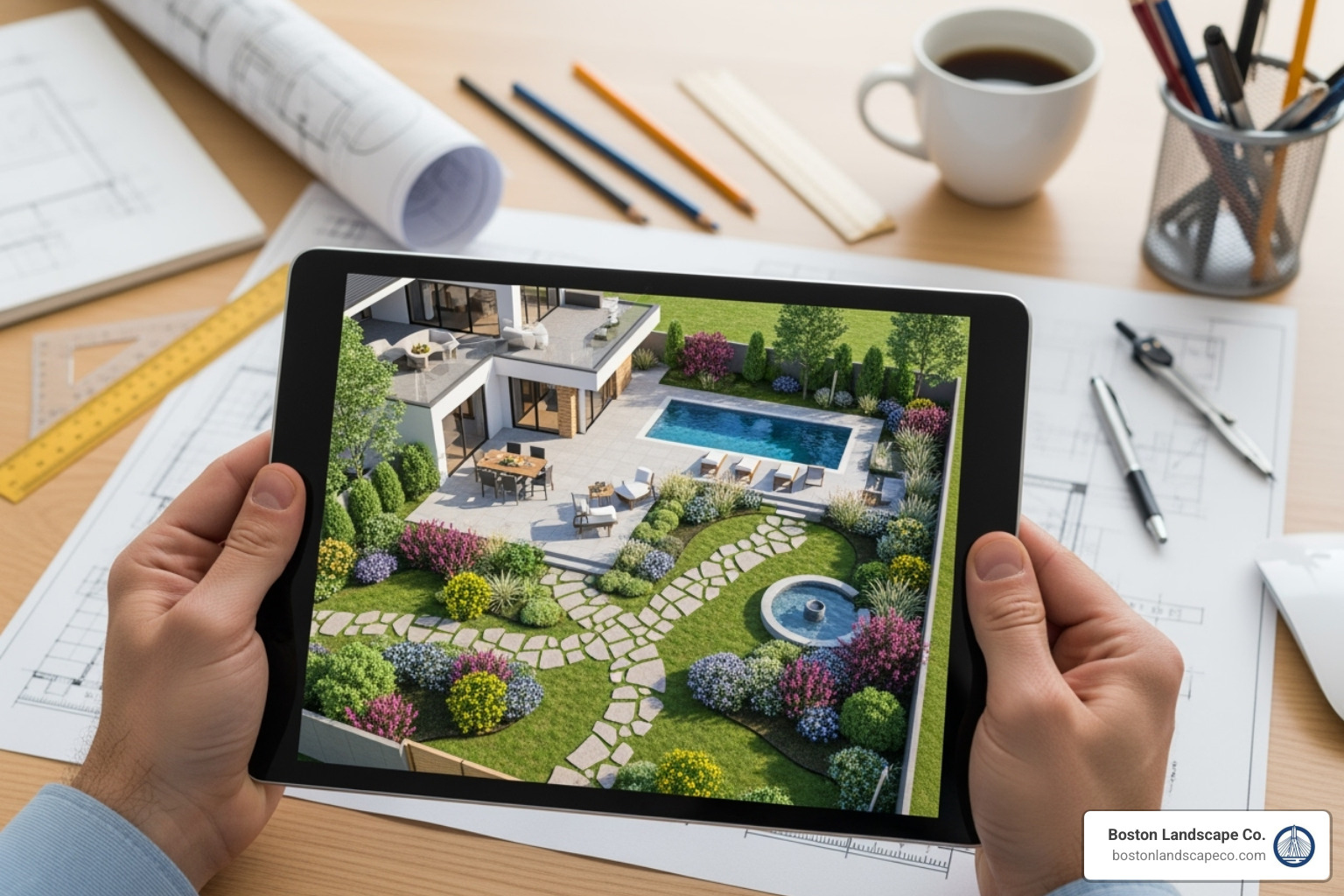
Every successful residential landscape installation begins with thoughtful planning that transforms your vision into a workable reality. At Boston Landscape Co., we collaborate with homeowners to blend their dreams with practical considerations like budget, lifestyle, and the unique character of their property. This ensures your finished landscape reflects your family’s needs.
Key Considerations for a Successful Residential Landscape Installation
Before breaking ground, we study every aspect of your property to prevent costly surprises and ensure your new landscape thrives for years.
- Site Analysis: We examine your property’s natural flow, existing features, and any challenges that need creative solutions.
- Sun Exposure: We map how sunlight moves across your property to ensure plants are placed where they will thrive.
- Soil Type: We test your soil’s composition and pH to determine if amendments are needed for healthy growth.
- Local Climate: Our New England experience helps us select plants that can withstand our region’s unique weather.
- Property & Utility Lines: We verify all boundaries and identify underground utilities to ensure a safe and smooth installation.
More info about Landscape Design Services
The Financials of Residential Landscape Installation
Even the most beautiful landscape needs to make financial sense. Residential landscape installation costs vary based on project size, material quality, design complexity, and labor rates. Phasing a project can help manage your budget over time. Landscaping is a smart investment, often returning 100-200% of its cost and boosting home value by up to 20%.
Cost ranges for residential landscape installation vary widely based on project scope and complexity. Simple projects might start around $3,000 for basic plantings and small improvements, while comprehensive renovations with extensive hardscaping, outdoor kitchens, and elaborate planting schemes can exceed $50,000. Most homeowners find their projects fall somewhere in the middle, typically ranging from $8,000 to $25,000 for substantial improvements that significantly improve their outdoor living experience.
Please note: cost estimates are based on broad internet data, not specific company pricing, and actual costs depend on your unique project requirements and material choices.
The Step-by-Step Residential Landscape Installation Process
Once the design is finalized, we move into the execution phase of your residential landscape installation. We generally work from the rear of the property to the front, prioritizing hardscaping before softscaping to avoid damaging new plants.
Our comprehensive approach ensures every element is installed correctly and efficiently.
More info about Hardscaping Services
Step 1: Site Preparation and Earthworks
This initial phase sets the foundation for the entire project:
- Clearing the Area: Removing any unwanted vegetation, rocks, or old structures.
- Grading: Reshaping the terrain to direct water away from your home’s foundation and prevent pooling.
- Excavation: Digging to create a stable base for patios, walkways, and other features.
- Utility Marking: Safety is our top priority. Before any digging, we always Call 811 to have underground utility lines marked. This prevents dangerous and costly damage.
Our experienced team is adept at identifying and overcoming unforeseen site conditions, such as rock formations or poor soil, to keep the project on track.
Step 2: Hardscape and Structures Installation
With the site prepared, we install the “bones” of your landscape. These non-living features provide structure, functionality, and visual interest:
- Patios & Walkways: Creating outdoor living areas and pathways with materials like pavers or natural stone.
- Retaining Walls: Managing slopes and defining spaces. Walls over 4 feet typically require permits, which we handle.
- Decks, Pergolas, & Outdoor Kitchens: Adding vertical interest, shade, and culinary function to your backyard.
- Outdoor Fireplaces & Fire Pits: Creating cozy gathering spots for cooler evenings.
The Power of Pavers: Advantages of Interlocking Materials
Interlocking pavers are a popular choice for their durability, design flexibility, and unique ability to be re-leveled if settlement occurs. This makes them a cost-effective and long-lasting alternative to poured concrete, which can crack and require complete replacement.
The Power of Pavers: Advantages of Interlocking Materials
Step 3: Mastering Landscape Drainage
Proper drainage is critical to protect your property from water damage. We evaluate your property’s topography and soil to design a comprehensive system.
Here are some of the solutions we employ:
- French Drains & Swales: To redirect subsurface and surface water.
- Permeable Pavers: To allow water to filter into the ground, reducing runoff.
- Catch Basins & Sump Pumps: To collect and remove water from low points.
Step 4: Bringing Your Garden to Life: The Art of Plant Selection
Once hardscaping is complete, we focus on the living elements that add beauty and color.
- Native Plants: We prioritize plants adapted to our local climate, which require less maintenance and support local wildlife.
- Perennials vs. Annuals: We use a mix of perennials (which return yearly) and annuals (which provide seasonal color) for year-round interest.
- Trees and Shrubs: These provide the structural backbone, selected for appropriate scale and mature size to avoid future problems.
- Soil Amendment & Mulching: We enrich soil with compost and apply mulch to retain moisture, suppress weeds, and regulate soil temperature.
- Sod Installation: For an instant, lush lawn, we offer professional sod installation, which requires consistent watering for the first two weeks to ensure successful rooting.
More info about Lawn Installation Services
The Tangible Returns: Boosting Home Value and Curb Appeal
Professional residential landscape installation creates powerful curb appeal, that crucial first impression that translates into real, measurable value. It tells a story of pride in your property. The numbers back this up: well-executed outdoor living spaces can boost your home’s value by up to 20%. Beyond finances, a thoughtful design extends your home’s footprint, creating functional living space for your family to enjoy.
Professional Installation vs. DIY: Making the Right Choice
The DIY approach can seem tempting, but it often comes with hidden costs and challenges. After three decades in this business, we’ve seen how easily weekend projects can turn into expensive headaches.
| Factor | Professional Installation | DIY Approach |
|---|---|---|
| Cost | Higher upfront cost, but often saves money long-term by avoiding costly mistakes and ensuring longevity. | Lower initial material costs, but hidden costs include tool rental, time investment, and potential for costly errors. |
| Time | Efficiently completed by experienced crews, saving you personal time and effort. | Significant time commitment for research, planning, execution, and troubleshooting. |
| Expertise | Access to horticultural knowledge, design principles, engineering, and installation techniques. | Relies on self-education, which can be extensive and prone to oversight. |
| Equipment | Professionals have specialized tools and machinery for efficient and precise work. | Requires purchasing or renting equipment, adding to cost and complexity. |
| Quality | High-quality materials and installation techniques ensure durability and aesthetic appeal. | Quality can vary greatly based on skill and attention to detail, potentially leading to premature failure. |
| Warranty | Reputable companies offer warranties on plants and labor, providing peace of mind. | No warranty; mistakes are your responsibility to fix. |
Common DIY pitfalls include improper drainage, poor plant selection, and failing hardscapes. The physical demands can also be overwhelming. Hiring professionals provides peace of mind, tapping into decades of knowledge about what works in New England’s challenging climate. Our experienced team ensures the job is done right, with complete transparency and a commitment to your satisfaction.
Modern Landscaping: Trends, Technology, and Sustainability

Today’s residential landscape installation blends beauty with smart technology and sustainability. Backyards are becoming true extensions of the home, with outdoor living rooms and kitchens growing in popularity. Homeowners also favor low-maintenance solutions like durable pavers and smart irrigation systems that conserve water and save time.
Illuminating Your Design: The Role of Landscape Lighting
Landscape lighting is a transformative addition that improves aesthetics, safety, and functionality. Using modern, energy-efficient LED technology, we can create magic in your garden after dark. Uplighting adds drama to trees, path lighting ensures safe passage, and subtle glows can highlight key features, extending the use of your patio and outdoor spaces into the evening.
Eco-Friendly Landscaping: Practices for a Greener Planet
Thoughtful residential landscape installation can improve the local ecosystem while reducing your home’s environmental footprint. These sustainable practices often reduce long-term maintenance costs while creating outdoor spaces that feel more connected to the natural world.
Key practices include:
- Sustainable Materials: Using locally sourced stone and permeable pavers to reduce stormwater runoff.
- Water Conservation: Employing smart irrigation, drip systems, and proper mulching to reduce water use by up to 50%.
- Native Plant Use: Selecting plants adapted to New England, which require less water and fertilizer while supporting local pollinators.
- Reducing Lawn Size: Using garden beds, hardscaping, and groundcovers to create visual interest while requiring less maintenance and water than traditional turf.
More info about Hydroseeding Services
Frequently Asked Questions about Residential Landscape Installation
How long does a typical landscape installation take?
The timeline for a residential landscape installation depends on the project’s scope. A simple sod installation may take a day or two, while a full backyard renovation with extensive hardscaping can take several weeks. Factors like weather, material availability, and unforeseen site conditions can also affect the schedule. We recommend planning during the winter for a smooth spring installation.
What maintenance is required after installation?
Your new landscape requires extra care initially. New sod and plantings need consistent watering for the first few weeks to establish strong roots. Ongoing maintenance includes weeding, seasonal pruning, and fertilization. To protect your investment without the hassle, many clients opt for a professional Landscape Maintenance plan to ensure everything stays healthy and beautiful year-round.
Do I need a permit for my landscaping project?
Permit requirements vary by town and project scope. Basic planting generally does not require a permit. However, structural elements like retaining walls over 4 feet high, new decks, pools, or projects that significantly alter drainage patterns typically do. With decades of experience in the Greater Boston area, we handle all necessary permit documentation for your project, preventing future headaches.
Transform Your Vision into a Vibrant Reality
Your journey through residential landscape installation ends with the exciting realization that your outdoor space can be a living, breathing extension of your home. A well-executed plan, built on thorough assessment and smart plant selection, creates a landscape that gets better with time.
At Boston Landscape Co., we combine design and installation to bring your vision to life. With over three decades of experience in the Greater Boston area, we are dedicated to creating lasting beauty and function that works for your family’s lifestyle and increases your home’s value. A beautiful, functional landscape is one of the best investments you can make in your home and your happiness.
Start planning your dream landscape with our Residential Landscaping Services
