
Residential landscape drainage: 5 Steps to Dry
Why a Soggy Yard is More Than Just an Inconvenience
Residential landscape drainage isn’t just about keeping your shoes clean0after a storm. When water can’t leave your property, it threatens your foundation, invites pests, and ruins costly landscaping.
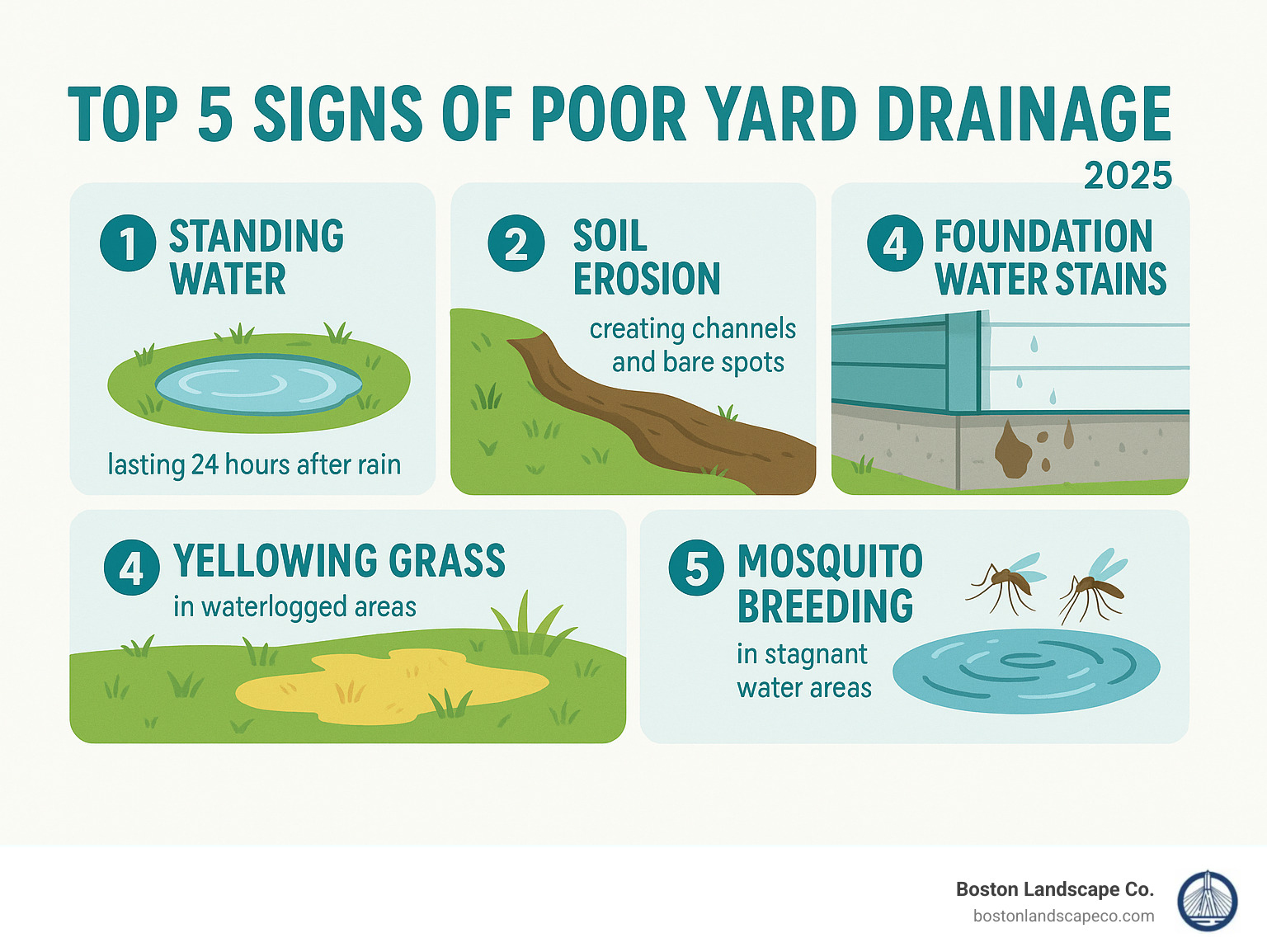
Top problems we see most often:
- Standing water that drowns grass and breeds mosquitoes
- Water stains on the foundation0 early hint of structural trouble
- Soil erosion that washes away topsoil and fresh mulch
- Basement leaks caused by water pooling against walls
- Dead or yellowing turf in constantly soggy areas
One frustrated homeowner told me, “All I see is water—why is there always so much?” After 30+ years serving Greater Boston, I know that feeling all too well.
The consequences go beyond curb appeal. Unchecked moisture encourages mold, destabilizes hardscapes, and can even shift your home on its footings. Fortunately, nearly every drainage headache has a proven fix—from a $15 downspout extension to a professionally installed French drain.
I’m Steve Schumacher, owner of Boston Landscape Co. My team and I have turned swampy backyards across Bedford, Billerica, Burlington, Concord, Lexington, Medford, Stoneham, Waltham, Winchester, and neighboring towns into dry, usable outdoor spaces—boosting property value and protecting homes in the process.
Want to dive deeper? Explore our services:
- Full-service residential landscape contractor
- Residential landscape architects
- Residential landscape design & build
Diagnosing the Problem: Signs and Causes of Poor Yard Drainage
Telltale Signs Your Landscape Needs Help
Picture this: it’s been two days since the last rainfall, but your backyard still looks like a small lake. If this sounds familiar, you’re not alone. After three decades of solving residential landscape drainage problems across Greater Boston, I’ve learned that early detection can save homeowners thousands in water damage and landscape replacement costs.
The most obvious warning sign is standing water that refuses to disappear more than 24 hours after rain stops. You’ll often find these puddles forming in the same trouble spots after every storm. When you walk across these areas, the ground feels soggy and spongy – almost like you’re walking on a waterbed instead of solid earth.
Your grass tells its own story too. Bare patches where grass has literally drowned, yellowing grass in consistently wet areas, and sections that feel mushy underfoot are all crying out for drainage help. I’ve seen beautiful lawns turn into patchy, unhealthy eyesores simply because water had nowhere to go.
But the problems don’t stop at aesthetics. Mosquitoes love breeding in stagnant water, turning your yard into a buzzing nightmare. Fungus growth starts appearing on your lawn and plants, while mulch washing away from garden beds creates a constant maintenance headache.
The scariest signs involve your home’s foundation. Water stains on foundation walls, basement leaks, and soil erosion creating channels around your property are red flags that demand immediate attention. According to Oklahoma State University Extension research, standing water can persist for weeks or even months without proper drainage systems, creating perfect conditions for both mosquito larvae and plant diseases.
Common Culprits Behind Water Woes
Understanding why water won’t behave in your yard is like solving a puzzle – and I’ve seen every piece over the years. Sometimes the culprit is right under your feet. Compacted soil from construction equipment or years of foot traffic creates an almost impermeable barrier that water simply can’t penetrate. It’s like trying to pour water through concrete.
Clay soil presents its own unique challenges. While it’s great for pottery, it’s terrible for drainage because it naturally retains water and drains incredibly slowly. Some properties also have a hardpan layer – a rock-hard soil layer beneath the surface that blocks water movement completely.
Grading issues cause some of the most frustrating drainage problems. Improper grading that slopes toward your foundation is like rolling out a red carpet for water damage. Negative slopes create natural collection points where water has nowhere to go, while flat terrain with insufficient fall means water just sits there, waiting for evaporation.
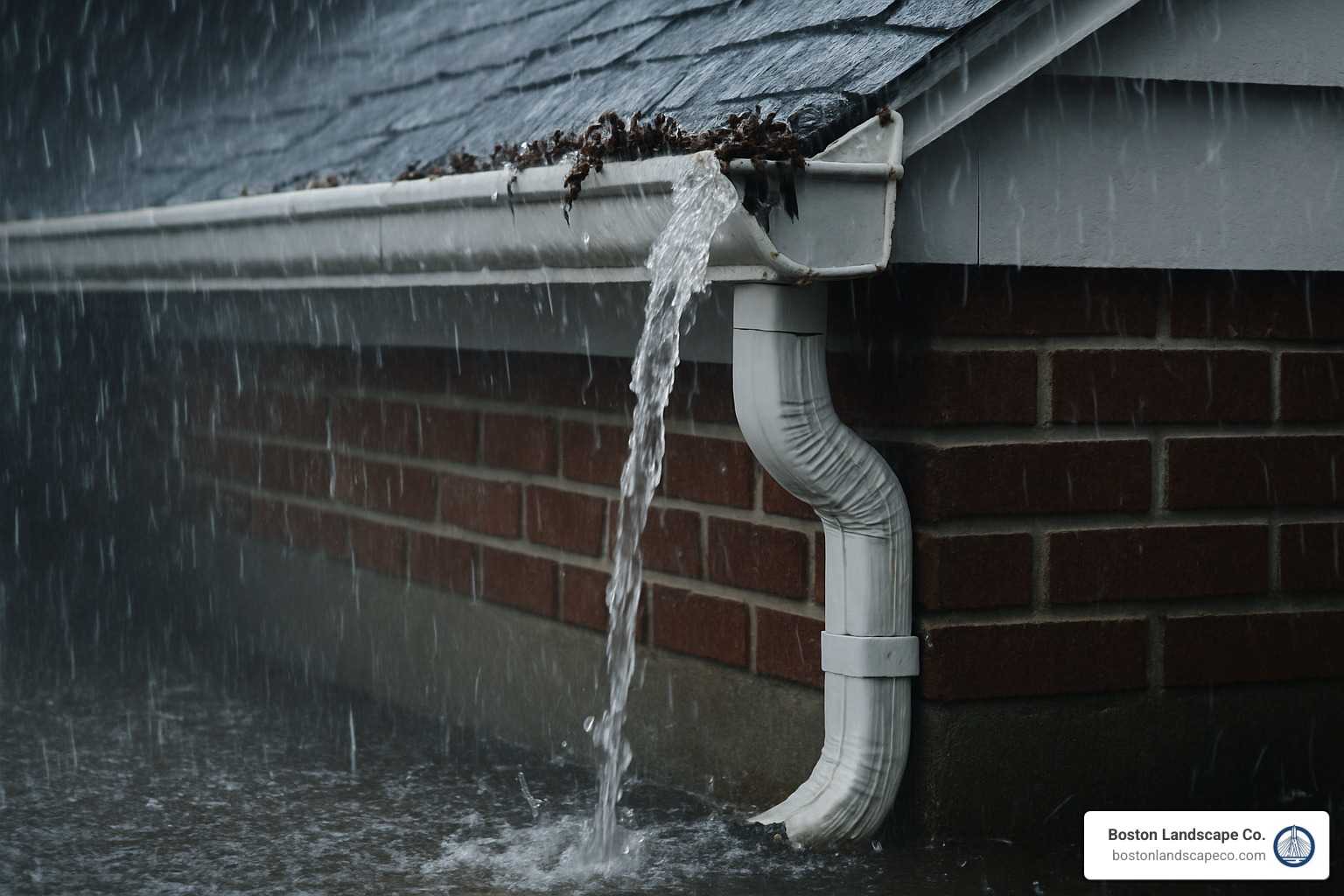
Don’t overlook your home’s infrastructure either. Gutter and downspout issues are drainage disaster waiting to happen. When gutters overflow or downspouts dump water right next to your foundation, you’re essentially creating your own flooding problem. Runoff from impervious surfaces like driveways and patios can overwhelm your yard’s natural drainage capacity.
Sometimes Mother Nature is the challenge. Properties with a high water table struggle with constantly saturated soil, while underground springs create persistent wet spots that seem to appear out of nowhere. And if you’re downhill from neighbors, their runoff can turn your yard into their personal drainage solution.
The good news? Once we identify the specific causes affecting your property, we can design a residential landscape drainage solution that addresses the root problem, not just the symptoms.
A Homeowner’s Guide to Residential Landscape Drainage Solutions
Simple DIY Fixes to Improve Drainage
Not every wet spot demands heavy equipment. Try these quick wins first:
- Downspout extensions – move roof water at least 6 ft. from the foundation.
- Gutter cleaning – twice yearly prevents overflow that creates foundation puddles.
- Core aeration – thousands of small holes relieve compaction so water soaks in.
- Compost amendments – mixing organic matter into clay boosts infiltration.
- Rain gardens – plant water-loving natives in natural low spots. EPA has a helpful overview here: https://www.epa.gov/soakuptherain/soak-rain-rain-gardens.
For bigger lawn upgrades, see our lawn installation and hydroseeding services.
Engineered and Aesthetic Drainage Systems
When simple fixes still leave puddles, step up to purpose-built systems:
- French drains – perforated pipe in gravel quietly redirects groundwater.
- Dry wells – underground chambers store roof runoff and let it percolate.
- Catch basins & channel drains – capture surface flow on drives and patios.
- Swales – shallow, grass-lined channels guide water safely downhill.
- Permeable pavers – hardscape that lets rainfall seep through joints.
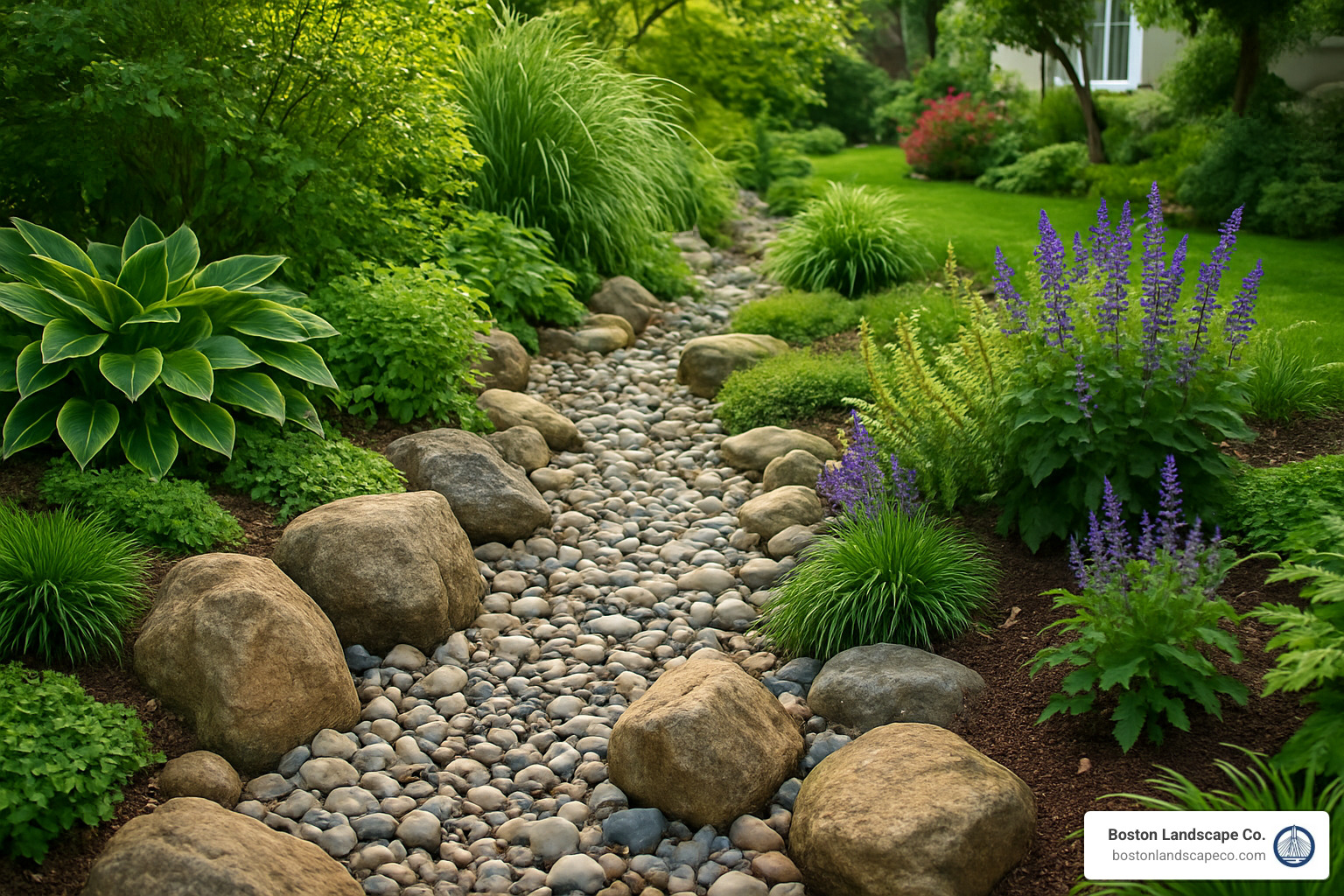
- Dry creek beds – a decorative way to shuttle stormwater while adding texture.
Our hardscaping services blend these elements so function never sacrifices curb appeal.
Special Considerations for Sloped Yards
Slopes speed up erosion, so drainage must slow water down:
- Terracing breaks a long grade into flat steps.
- Retaining walls with integrated drainpipes hold soil and relieve pressure.
- Bioswales – plant-filled swales that filter runoff (https://www.epa.gov/green-infrastructure/bioswales).
Every retaining wall we build includes hidden drains to keep the structure sound. Learn more about our retaining wall construction and slope stabilization options.
How Common Drainage Systems Work
The French Drain: The Unseen Workhorse
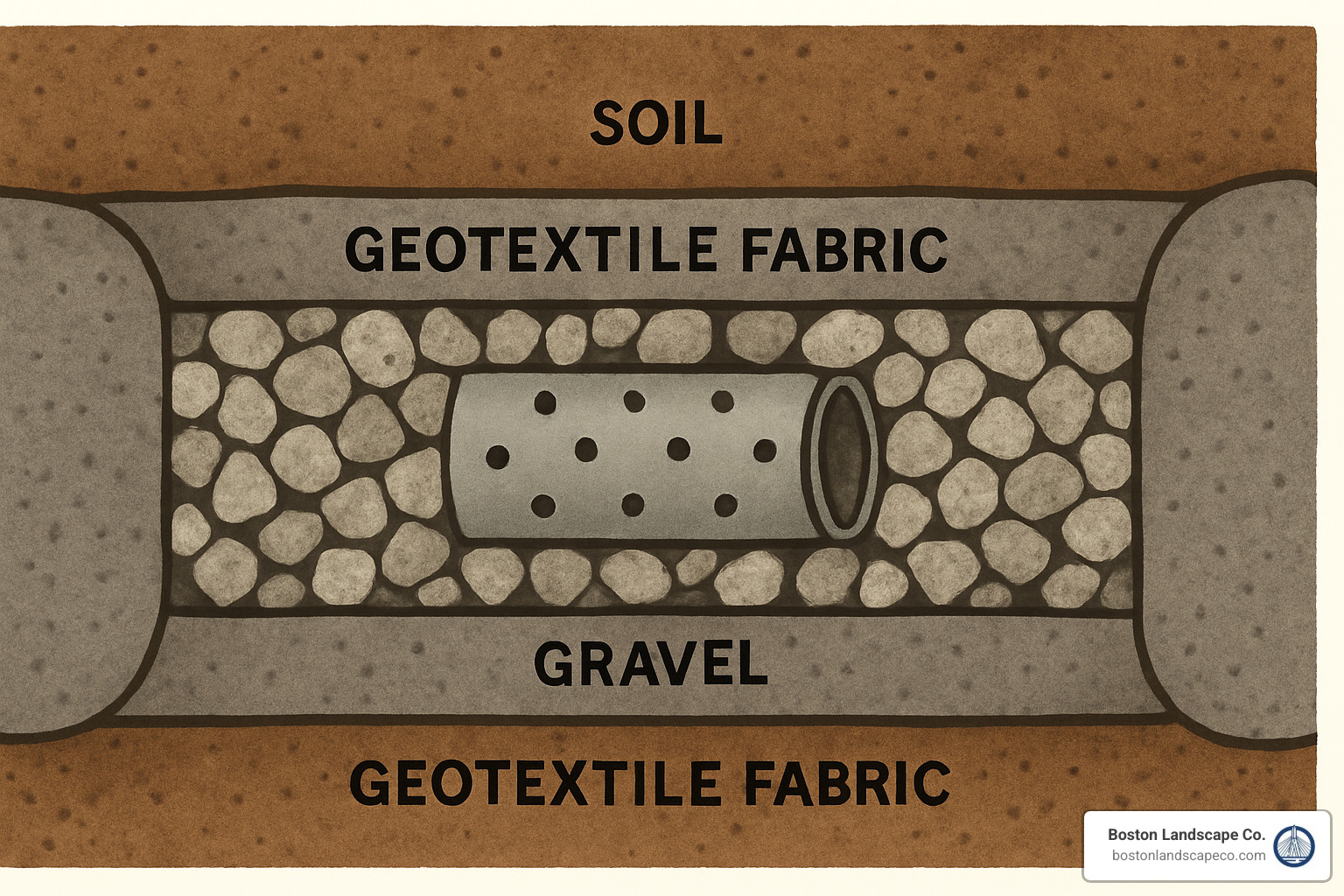
French drains are the unsung heroes of residential landscape drainage. While you’ll never see them working, they’re quietly solving water problems 24/7 beneath your feet. Think of them as underground highways that give water a clear path away from your home.
The magic happens through a simple but effective design. A perforated pipe sits at the bottom of a gravel-filled trench, wrapped in geotextile fabric that acts like a coffee filter. Water flows into the pipe through the holes, while the fabric keeps soil and debris from clogging the system.
Gravity does all the heavy lifting – literally. The system needs just a 1% slope (that’s only 1 inch of drop per 8 feet) to keep water flowing steadily toward the discharge point. The gravel backfill creates a drainage medium around the pipe, allowing water to move freely while supporting the soil above.
What makes French drains so effective is their ability to handle both groundwater collection and surface water interception. They catch water before it becomes a problem, whether it’s seeping up from below or running off from above.
Tools & Materials for a French Drain Project:
- Shovel and trenching spade
- Wheelbarrow for material transport
- Landscape fabric (geotextile)
- Perforated drain pipe (4-6 inches diameter)
- Clean gravel (3/4-inch stone)
- Pipe fittings and connectors
- Level for checking slope
Catch Basins and Channel Drains: Capturing Surface Water
When you need to grab water right where it lands, catch basins and channel drains are your best friends. These systems work like storm drains for your property, capturing surface water before it can pool or cause damage.
Catch basins are the workhorses for collecting water at low points. They feature grated inlets that let water flow in while keeping leaves and debris out. The water drops into an underground sump chamber, then flows through underground pipes to a safe discharge area.
These systems are ideal for patios and driveways where you can’t have standing water. Nobody wants to wade through puddles to get to their car or host a backyard party on a soggy patio.
Channel drains take a different approach with linear collection along a line. Instead of collecting water at a single point, they capture runoff along their entire length. This makes them perfect for the bottom of driveways, along walkways, or anywhere you need to intercept water flowing across a surface.
Both systems excel at preventing surface pooling and can connect to your existing drainage network. For properties needing comprehensive water management, our irrigation system installation services can integrate these drainage solutions with watering systems.
Dry Wells and Sump Pumps: Managing High Water Volumes
When your property deals with serious water volume, dry wells and sump pumps step up to handle the heavy lifting. These systems are built for the big jobs that basic drainage can’t handle alone.
Dry wells work like underground storage tanks, providing temporary holding for large water volumes during heavy storms. The water sits in the well and slowly infiltrates into the surrounding soil over time. This reduces runoff volume and prevents that rushing water from overwhelming downstream areas.
They’re particularly effective when they connect to downspouts or other drainage systems, managing roof water that would otherwise dump directly onto your landscape. Think of them as pressure relief valves for your drainage system.
Sump pumps take a more active approach with mechanical water removal. When water levels get too high, the pump kicks in and actively moves water away from problem areas. They’re essential for basement protection and can handle high-capacity situations that gravity-fed systems simply can’t manage.
These pumps are lifesavers in areas with high water tables or homes built below grade. Just remember to check your sump pump regularly – a pump that fails during a storm is worse than no pump at all.
For specialized applications like in-ground trampoline drainage, these high-volume systems ensure safety and proper water management around recreational installations.
DIY Project or Call a Pro? Making the Right Choice
Before You Dig: Essential Safety Precautions
Before you grab that shovel and start digging trenches for your residential landscape drainage project, let’s talk about keeping you safe and out of legal trouble. Trust me, after three decades in this business, I’ve seen what happens when homeowners skip the safety steps.
The most critical step is calling 811 to have utilities marked before any excavation. You don’t want to hit a gas line or electrical cable while installing your French drain. It’s free, it’s the law in most areas, and it could save your life.
Check your property lines before starting any drainage work. Nothing ruins a neighborhood relationship faster than accidentally installing your drain pipe on your neighbor’s property. While you’re at it, research local permits and codes – some drainage projects require permits, especially if you’re working near foundations or changing water flow patterns.
Personal protective equipment isn’t optional. Safety glasses, work gloves, and sturdy footwear are the bare minimum. If you’re digging trenches deeper than three feet, you’ll need proper shoring to prevent cave-ins. Excavation safety is serious business – soil is heavier than you think and can shift without warning.
When to DIY Your Residential Landscape Drainage
Some drainage projects are perfect weekend warrior territory. Small-scale projects like extending downspouts or building a modest rain garden can be tackled by most homeowners with basic tools and patience.
Downspout extensions are probably the easiest drainage fix you can make. It’s mostly about connecting pipes and fittings to move water at least six feet from your foundation. Similarly, cleaning gutters is regular maintenance that every homeowner should handle – just make sure you’re comfortable on ladders.
Building a small rain garden in a naturally low spot can be a rewarding DIY project. We’re talking about shallow depressions under 100 square feet, planted with native water-loving plants. It’s more gardening than engineering, and the results can be beautiful.
Amending soil in small areas by mixing compost into clay soil is another manageable project. You’re not changing the entire landscape – just improving drainage in problem spots where water tends to pool.
When to Hire a Professional for your residential landscape drainage
Here’s where I put on my professional hat and tell you when to step back and call the experts. Major regrading that involves changing your yard’s slope significantly isn’t a shovel-and-weekend project. It requires equipment, engineering knowledge, and often permits.
Any work within 10 feet of your foundation should involve professionals. Get this wrong, and you could create bigger problems than you started with. Foundation work is expensive to fix, and most homeowners don’t have the expertise to properly manage water flow around structures.
Large-scale systems like French drains over 100 linear feet require proper design, sizing, and installation techniques. We’re talking about moving significant amounts of soil and ensuring proper slopes for water flow. Severe erosion problems and high water table issues also fall into professional territory.
Complex slopes present unique challenges that require specialized knowledge of soil mechanics and erosion control. Steep or unstable terrain can be dangerous to work on and requires engineered solutions.
For the most challenging situations, our wetland services can handle even complex water management projects that involve environmental regulations.
Understanding the Costs of Drainage Solutions
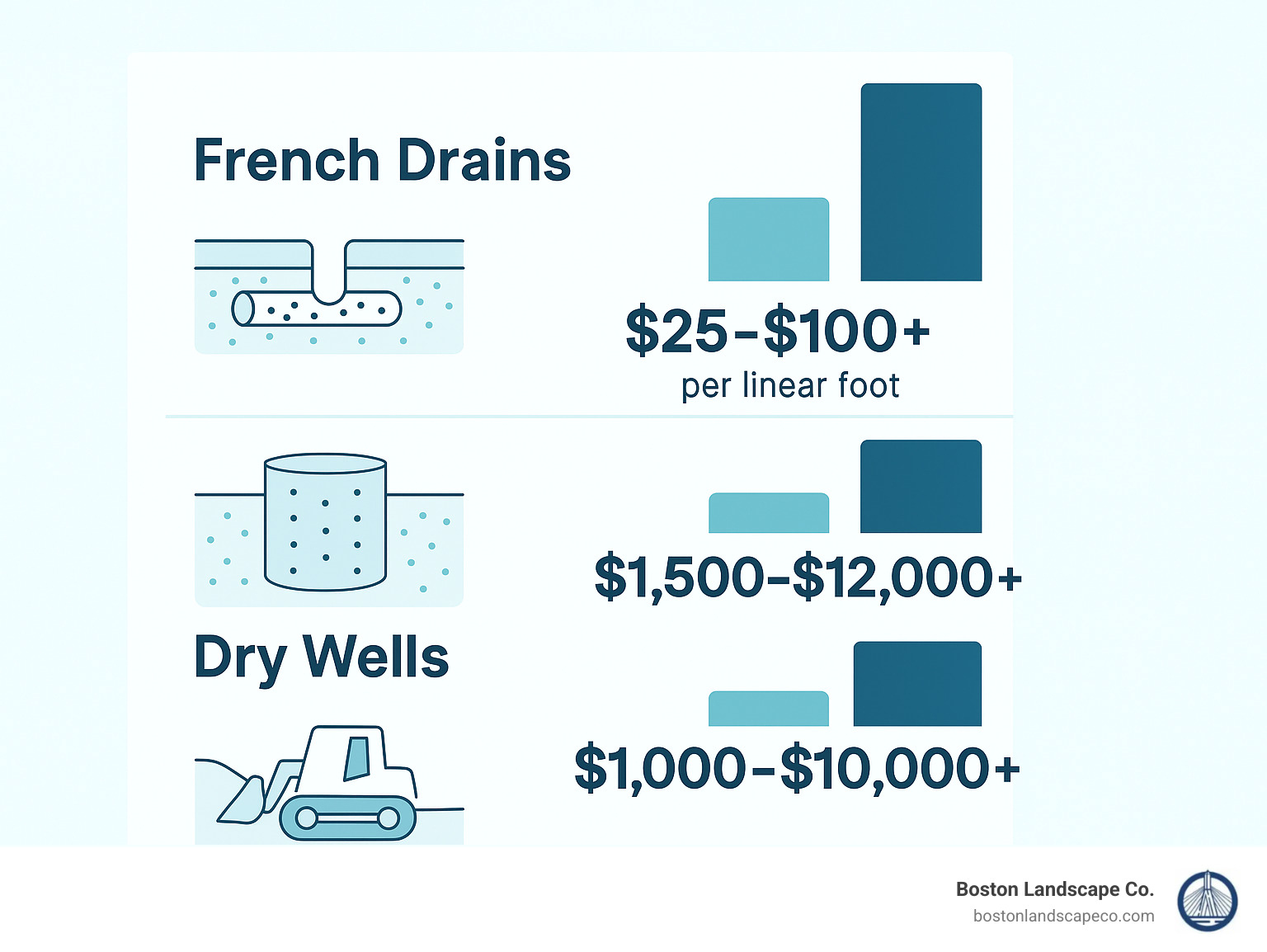
Let’s be honest about costs – residential landscape drainage solutions aren’t cheap, but they’re often less expensive than the water damage they prevent. These price ranges are national averages from online data, not quotes from Boston Landscape Co, and costs can vary dramatically based on your specific situation.
French drains typically run $25 to $100+ per linear foot, depending on depth, soil conditions, and materials used. A basic residential installation might cost $25-40 per foot, while complex installations in difficult soil can reach $100 or more per foot.
Dry wells range from $1,500 to $12,000+ depending on size and complexity. A simple residential dry well might cost $1,500-3,000, while large commercial installations can exceed $12,000. Yard regrading projects run $1,000 to $10,000+ – minor slope adjustments might cost $1,000-2,000, while major regrading can reach $10,000 or more.
Several factors affect your final cost. Project size obviously matters – larger systems cost more but often have better per-unit pricing. Soil type can significantly impact labor costs since clay and rocky soils are harder to excavate. Accessibility affects equipment costs – if we can’t get machinery close to the work area, hand digging increases labor time.
Quality materials cost more upfront but last longer. Cheap drainage pipe might save money initially, but replacing a failed system costs far more than doing it right the first time. Labor typically accounts for 60% of total project costs, which is why proper planning and design are so important.
Frequently Asked Questions about Residential Landscape Drainage
How much slope does a yard need for good drainage?
Getting the slope right is crucial for effective residential landscape drainage. Your yard needs a minimum 2% slope – that’s about a quarter-inch drop per foot – to move water away from your foundation effectively.
Think of it this way: if you measure 10 feet out from your house, the ground should be at least 2-3 inches lower than where it started. This might not look like much, but it’s enough to keep water flowing away from your foundation instead of pooling around it.
For drainage pipes themselves, you need less slope – just 1% grade (1-inch drop per 8 feet) will keep water moving through French drains and other underground systems. However, we often install steeper slopes up to 2% when possible because it improves performance and reduces the chance of sediment clogging the system over time.
Can a new drainage system increase my property value?
Absolutely! A well-designed residential landscape drainage system is one of those invisible improvements that smart buyers really appreciate. Here’s why it adds value to your property:
Foundation protection is the big one – water damage to foundations can cost tens of thousands to repair. When buyers see proper drainage, they know they’re not inheriting a potential disaster. Your drainage system also creates more usable outdoor space by eliminating those soggy areas where kids can’t play and guests can’t walk.
Curb appeal matters too. Nobody wants to buy a house with standing water, dead grass patches, or mosquito breeding grounds in the yard. Properties with proper drainage systems also signal to buyers that the homeowner takes maintenance seriously – which makes them more confident about the overall condition of the property.
How do I maintain my new landscape drainage system?
The good news is that most drainage systems are pretty low-maintenance once they’re installed properly. But like any home system, a little regular attention goes a long way.
Monthly tasks include cleaning debris from catch basin grates and channel drains – leaves, twigs, and other stuff love to clog these up. Seasonally, you’ll want to inspect your downspouts for clogs and make sure all connections are still tight. Don’t forget to check discharge outlets where water exits your system – sometimes they get blocked by landscaping or shifted by frost.
Here’s a simple test: run water through your system during dry weather to make sure everything’s flowing properly. If you notice slow drainage or backup, it’s time to investigate.
For subsurface systems like French drains, we recommend professional inspection every 3-5 years. These underground workhorses can develop issues like silt buildup, root intrusion, or pipe damage that aren’t obvious from the surface. Catching these problems early saves you from major repairs down the road.
Proper maintenance isn’t just about keeping your drainage working – it’s about protecting your investment in both the system and your property.
Conclusion: Reclaim Your Yard and Protect Your Investment

There’s nothing quite like stepping out onto a dry, healthy lawn after a heavy rainstorm instead of sloshing through muddy puddles. Residential landscape drainage transforms your outdoor space from a seasonal swamp into a year-round asset that you can actually enjoy.
The investment in proper drainage pays for itself in ways that go far beyond avoiding soggy socks. You’re protecting your home’s foundation from costly water damage that can run into tens of thousands of dollars. You’re creating a healthier landscape where your grass, plants, and trees can thrive instead of drowning in oversaturated soil.
But perhaps most importantly, you’re reclaiming your outdoor living space. That patio you couldn’t use for days after every storm? Now it’s ready for your morning coffee the next day. Those garden beds that turned into mini lakes? They’re showcasing your beautiful plants instead of hosting mosquito conventions.
The change extends to your property value too. Buyers notice when a yard manages water well, and they definitely notice when it doesn’t. A properly drained landscape signals a well-maintained property where they won’t inherit expensive water problems or unusable outdoor space.
Whether you start with simple fixes like extending downspouts and cleaning gutters, or need comprehensive solutions like French drains and catch basins, the key is taking action before water damage becomes expensive. Every day you wait, that standing water is potentially compromising your foundation, killing your grass, and creating the perfect breeding ground for pests.
Some homeowners can tackle basic drainage improvements themselves, but complex challenges require professional expertise. At Boston Landscape Co., we’ve spent over three decades helping families across Bedford, Billerica, Burlington, Concord, Lexington, Medford, Stoneham, Waltham, Winchester, and throughout the Greater Boston area solve their water management problems.
We understand that every yard is different, and every solution needs to be custom to your specific soil conditions, slope, and budget. That’s why we start with a thorough assessment to identify the root causes of your drainage issues before recommending the most effective approach.
Don’t let another rainy season turn your yard into an unusable marsh. The solution starts with understanding your options and taking that first step toward a drier, healthier outdoor space that you can actually enjoy.
Learn more about our comprehensive residential landscaping services and find how we can help you create the functional, beautiful outdoor space you’ve always wanted.
