
Lawn watering system installation 2025: Master Lush
Why Consider a Lawn Watering System?
A lawn watering system installation is a smart investment for any homeowner. It saves you precious time by eliminating the need to drag hoses and sprinklers around. An automated system saves effort, reduces water waste, and boosts your home’s curb appeal with a vibrant, healthy lawn.
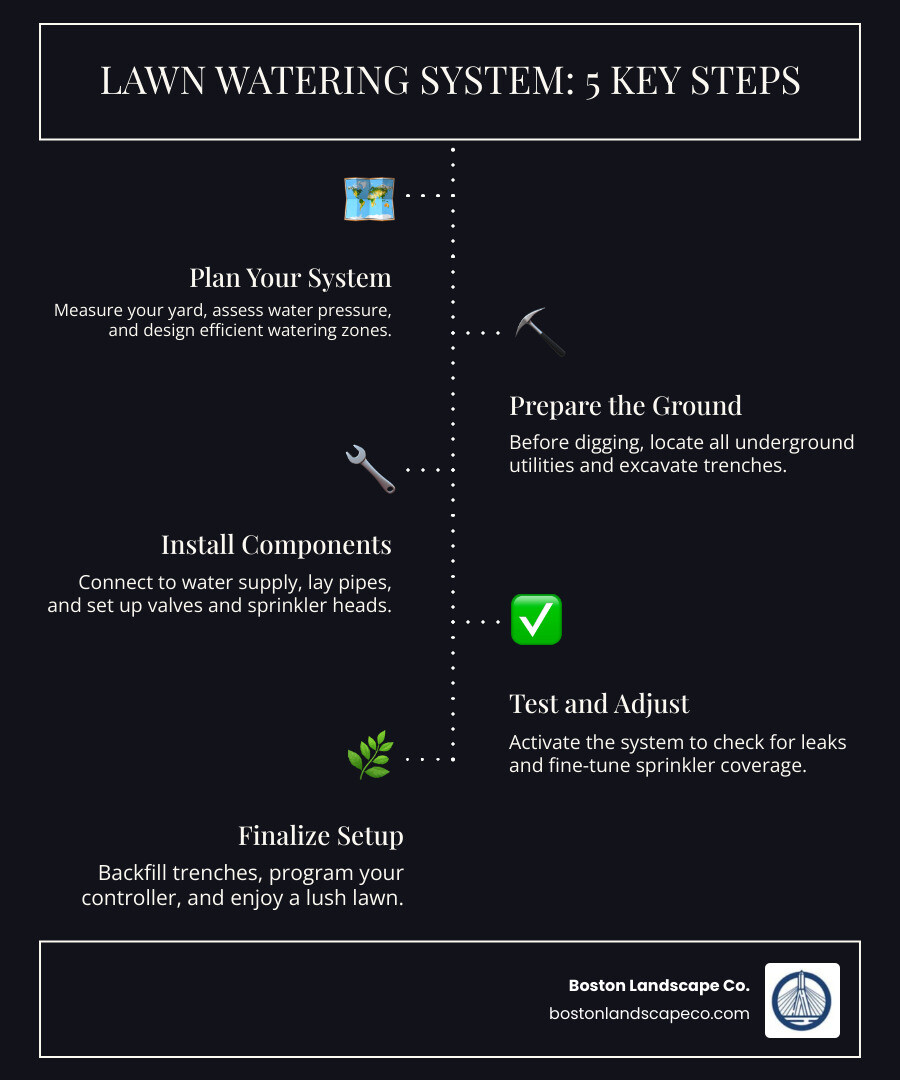
Ready to get started? Here are the main steps to install your own system:
- Plan Your System: Measure your yard, check water pressure, and design your zones.
- Prepare the Ground: Locate utilities and dig trenches.
- Install Pipes & Components: Connect to your water supply, lay pipes, and set up valves and sprinkler heads.
- Test and Adjust: Turn on the water, check for leaks, and fine-tune sprinkler coverage.
- Finalize: Bury the pipes and set your controller.
I’m Steve Schumacher, owner of Boston Landscape Co. For over three decades, my team has specialized in changing outdoor spaces, including expert lawn watering system installation for homes and businesses across the Greater Boston area. We deliver impressive solutions, from design to final installation.
Know your Lawn watering system installation terms:
Planning and Preparation: Your Blueprint for Success
Thorough planning is the key to a successful lawn watering system installation. This first step involves gathering information on your yard, local regulations, and your home’s water supply to design a system that works perfectly for your unique space.
First, check local regulations. You may need permits from your town before digging. These rules often require a backflow preventer, a crucial device that stops irrigation water from contaminating your drinking water supply. Check with your local building department for specific requirements.
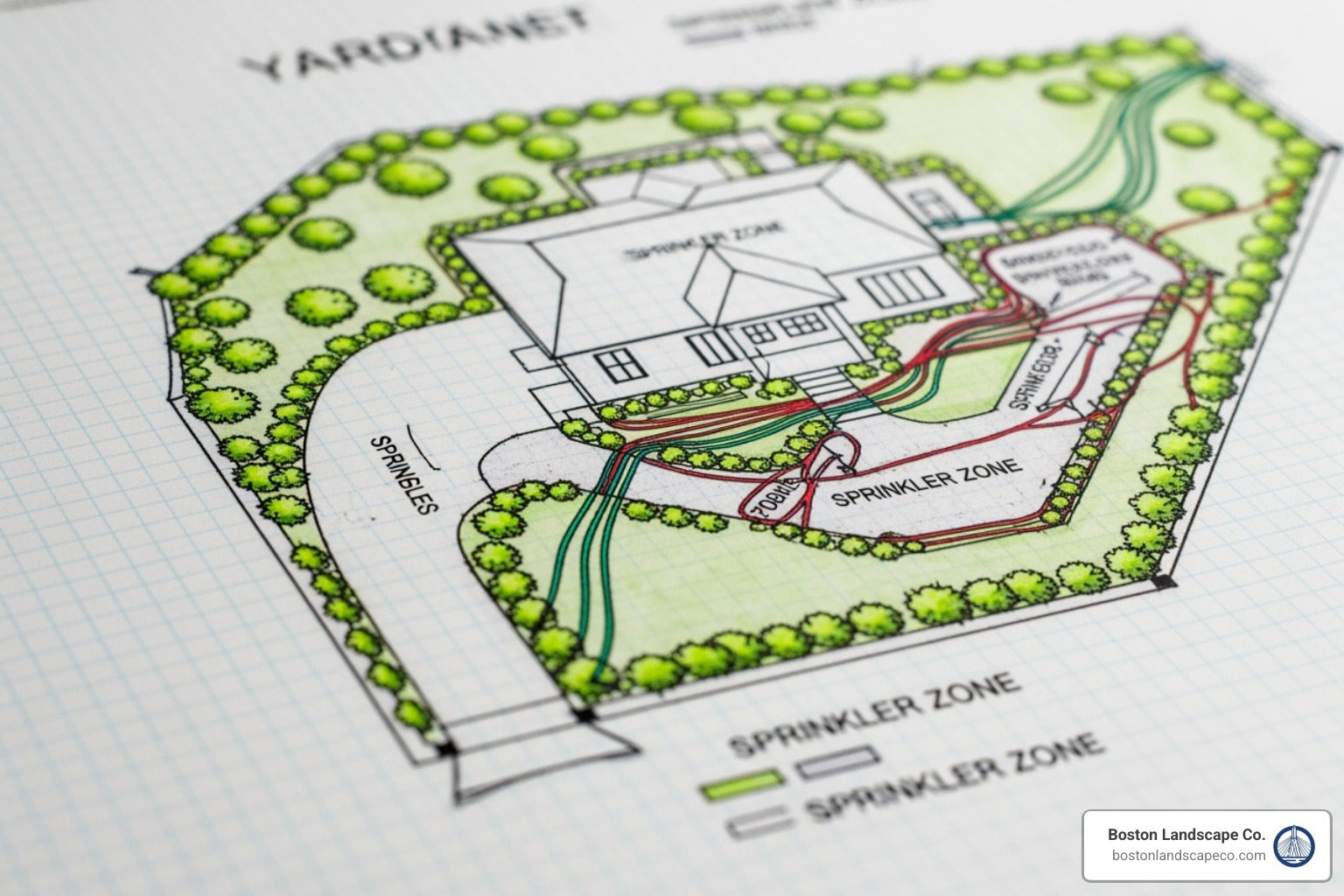
Next, measure your property and sketch a scaled map on graph paper. Mark all existing features: your house, driveway, walkways, trees, and garden beds. Note sunny vs. shady spots and any sloped areas, as these details will help in planning your watering zones.
The most important safety tip is to always call 811 before you dig. This free service marks underground utility lines (gas, power, water, etc.) to help you avoid dangerous and costly accidents.
Essential Planning for Your Lawn Watering System Installation
Once your yard is mapped, get technical with your water supply by taking two key measurements: water pressure (PSI) and water flow rate (GPM).
Check your water pressure (PSI) with a pressure gauge attached to an outdoor faucet. Most homes are between 40-70 PSI; a sprinkler system needs at least 30-35 PSI to operate effectively.
To find your water flow rate (GPM), time how long it takes to fill a 5-gallon bucket from an outdoor faucet on full blast. If it takes 30 seconds, your flow rate is 10 GPM (5 gallons / 0.5 minutes). This number determines how much water is available for your system.
With these numbers, you can start creating watering zones. Divide your lawn into sections based on water needs (e.g., sunny vs. shady areas, different plant types) and the available GPM. A zone’s capacity is limited by your flow rate.
When placing sprinkler heads, aim for “head-to-head coverage,” where the spray from one head reaches the next. This ensures even watering and prevents dry spots. Plan a pipe layout with minimal turns to maintain strong water flow.
For comprehensive support with designing and installing your lawn, check out our More info about lawn installation services.
Choosing Your System Type and Components
For a lawn watering system installation, the most common choices are in-ground sprinklers and drip irrigation systems.
- In-Ground Sprinkler Systems: The go-to for lawns. Pop-up sprinklers are great for small to medium lawns, while rotor sprinklers are ideal for larger areas.
- Drip Irrigation Systems: These are highly efficient for gardens, flowerbeds, and shrubs, delivering water directly to the plant base.
Here’s a quick look at the main types:
| System Type | Best For | Key Characteristics |
|---|---|---|
| In-Ground (Pop-up) | Small to medium lawns | Fixed or rotating spray, retracts when off, ideal for precise coverage of smaller turf. |
| In-Ground (Rotor) | Large lawns, extensive landscapes | Wide, circular spray, requires higher pressure, covers large areas efficiently. |
| Drip Irrigation | Gardens, flowerbeds, shrubs, potted plants | Delivers water directly to roots, highly water-efficient, reduces evaporation, prevents runoff. |
| Smart Sprinkler System | Any lawn, especially for water conservation | Uses sensors and Wi-Fi to adjust schedules based on weather/soil, remote control via app, optimizes water usage automatically. |
A typical lawn watering system installation uses several key parts:
- Controller (Timer): The system’s brain. It sets watering schedules. Smart controllers connect to Wi-Fi and adjust based on weather.
- Valves and Manifold: Valves control water flow to each zone and are grouped in an underground box.
- Backflow Preventer: Crucial for keeping your drinking water safe.
- Pipes: PVC Pipe is common in warmer climates, while flexible Polyethylene (Poly) Pipe is better for colder areas.
- Sprinkler Heads: Pop-up and rotor heads are the most common types for lawns.
- Risers and Fittings: These connect sprinkler heads to the pipes. Flexible “swing pipe” makes positioning heads easier.
You’ll also need the right tools:
- Measuring Tools: Tape measure, marking flags or spray paint.
- Digging Tools: Trenching shovel, pickaxe, or a rented power trencher.
- Pipe Tools: PVC pipe cutters, hacksaw, adjustable wrenches.
- Joining Tools: PVC cement and primer, or crimp rings and a tool for poly pipe. Teflon tape for threaded connections.
- Miscellaneous Items: Utility knife, screwdrivers, level, gravel, hose, 5-gallon bucket, and a pressure gauge.
Your Step-by-Step Lawn Watering System Installation Guide
With planning complete and materials gathered, it’s time for installation. Safety first: always double-check the utility markings from 811 before you begin.
A DIY lawn watering system installation can be rewarding but is a serious commitment. A small system can take 16-20 hours of work. For larger yards or if you’re short on time, professional installation ensures a precise and efficient setup.
Step 1: Trenching and Water Line Connection
This is where you prepare the ground for your new system.
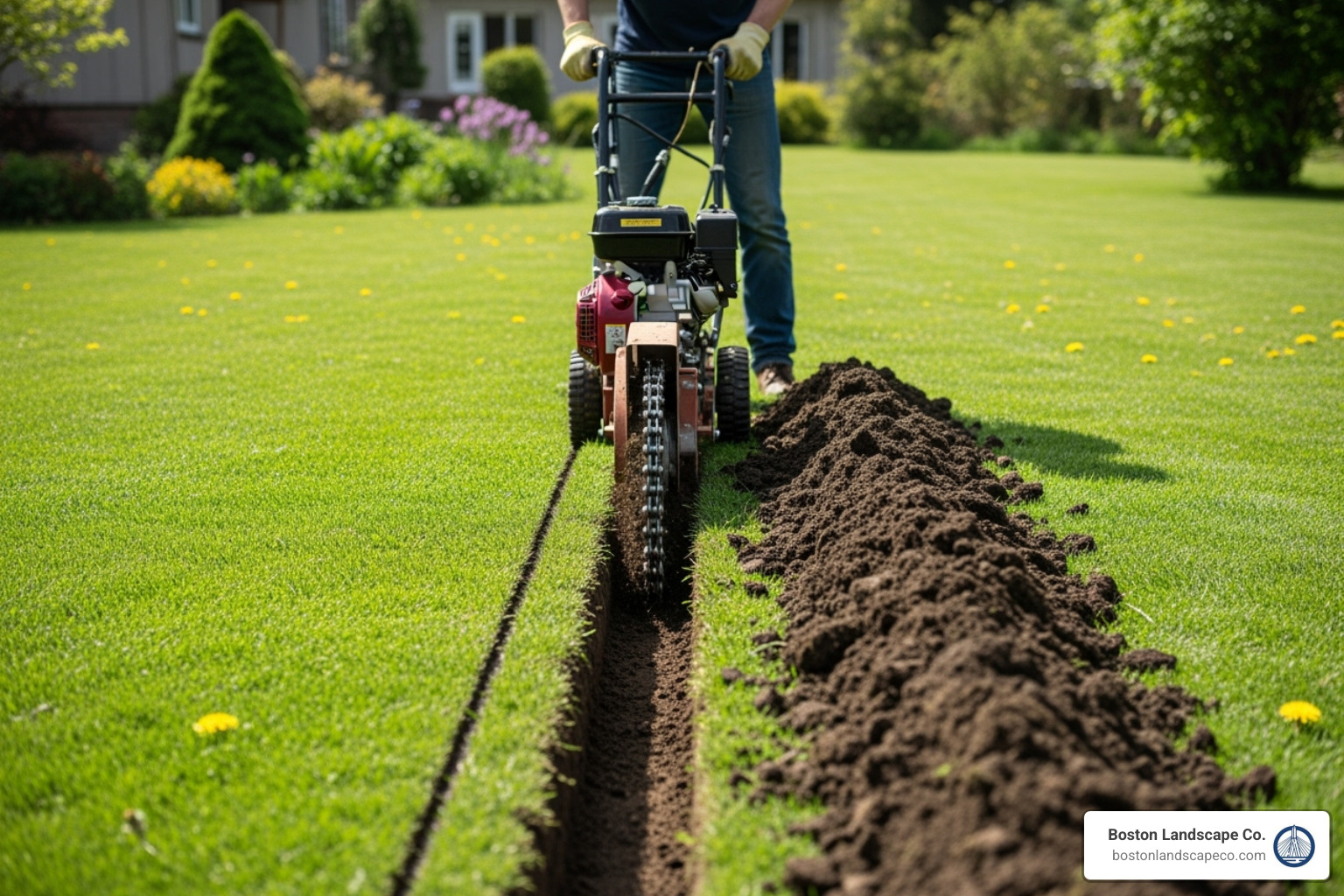
Trenching requires digging 6 to 12 inches deep. In Massachusetts, we recommend 12 inches for freeze protection. You can dig manually with a shovel, but a rented power trencher saves time in large or tough-soiled yards. To get under walkways, you can use water pressure to bore a path for the pipe.
Tapping the main water line is often the trickiest step; consider a licensed plumber if you’re not comfortable. A tee fitting is installed into your main water line (after the meter) to connect the system. A dedicated main shut-off valve for the irrigation system is installed next, allowing you to turn off the sprinklers without affecting your home’s water.
Finally, connect the backflow preventer. This vital device stops irrigation water from contaminating your home’s drinking water. Install it according to local codes, which often require it to be at least 12 inches above the highest point of your yard.
Step 2: Assembling the Valve Manifold and Pipes
With trenches ready, it’s time to build the system’s heart: the valve manifold.
The valve manifold groups all zone valves. Assemble it above ground, leaving space between valves for future repairs. Place the assembled manifold in a hole lined with gravel for drainage and cover it with a protective valve box.
Next, lay the pipes in the trenches according to your plan. For PVC pipe, measure, cut, and apply PVC cement to the fitting and pipe, pushing them together with a quarter-turn. For polyethylene (poly) pipe, use barb fittings secured with stainless steel crimp rings. Tip: Cover open pipe ends with tape during installation to prevent debris from entering. Use a poly pipe cutter for clean cuts.
Step 3: Installing Sprinkler Heads and Final Connections
This is where your system comes to life.
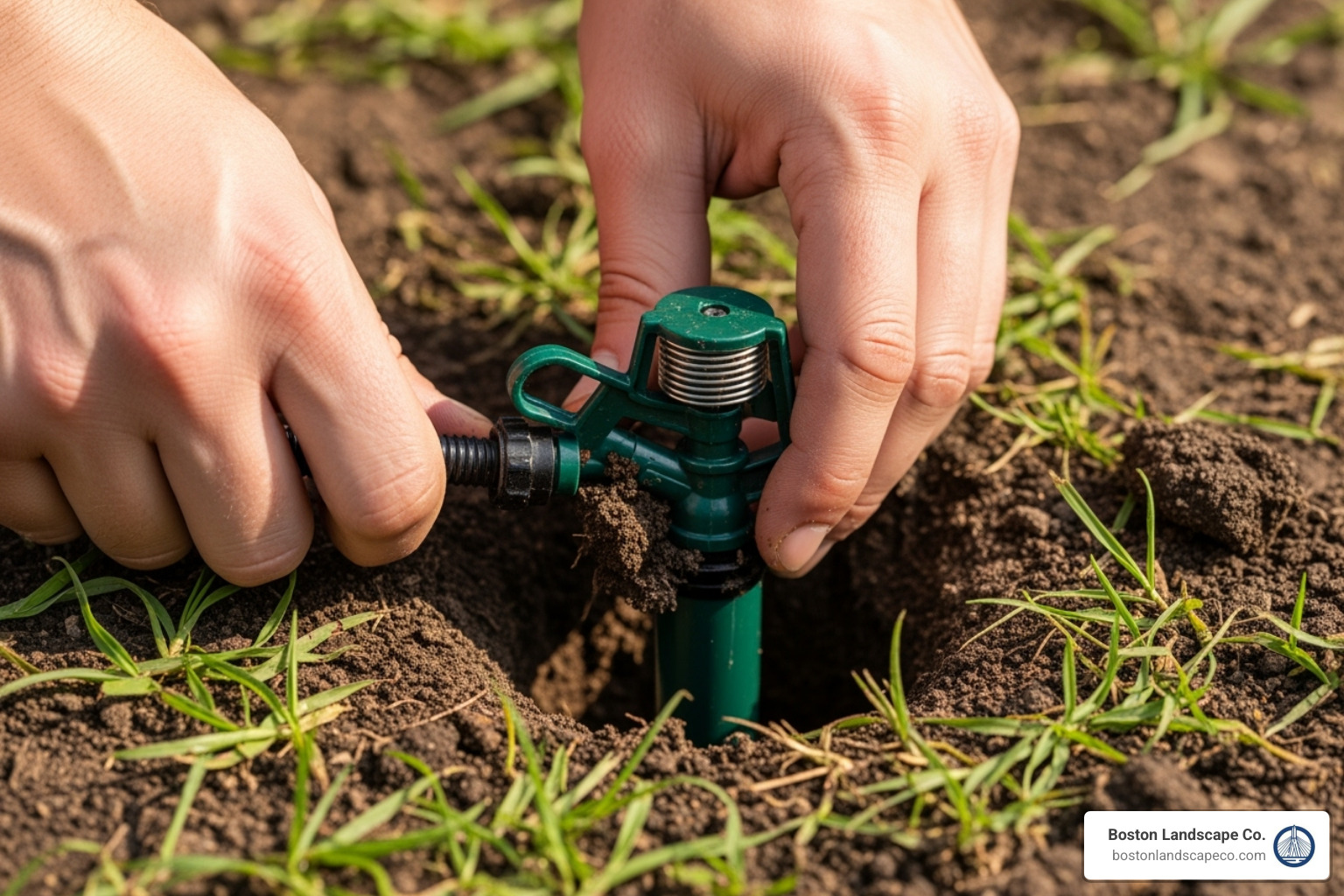
Connect sprinkler heads to the lateral lines using flexible swing pipe. This makes positioning easier and protects heads from damage. Install pop-up heads level with the ground.
A crucial step is flushing the system. Before attaching sprinkler heads, turn on the water and open each valve to flush out any dirt or debris from the pipes. Skipping this prevents clogged heads.
Wire the valves to the controller by running low-voltage underground wire from the controller to each valve. A common wire must connect all valves back to the controller. Use waterproof direct-burial connectors in the valve box to protect connections from moisture.
Finally, attach the sprinkler heads and begin testing and adjustment. Turn on each zone to check for leaks and ensure proper spray patterns and “head-to-head coverage.” Adjust as needed. Once satisfied, carefully backfill the trenches, tamping the soil in layers to prevent settling.
Cost, Maintenance, and Water Efficiency
A lawn watering system installation is a significant investment that pays off in convenience, a beautiful lawn, and water savings. Understanding the costs and maintenance is key to enjoying its benefits.
Several factors influence the price: lawn size and complexity, soil type (rocky soil is harder to trench), system type (in-ground vs. drip), and component quality. High-efficiency components and smart controllers may cost more upfront but save money on water bills later. Permit and inspection fees also contribute to the total cost.
A DIY lawn watering system installation can save money, with material costs for a small system around $1,000 to $1,500, plus 16-20 hours of labor. However, professional installation is recommended for most homeowners. On average, professional installation ranges from $2,500 to over $7,500. For very large or complex properties, costs can reach $25,000 or more. Please note these are industry average costs based on internet data, not a quote from Boston Landscape Co. For an accurate price for your property, please contact us for a custom quote!
For comprehensive care that goes beyond just watering, explore our More info about residential lawn care services.
Proper System Maintenance and Troubleshooting
Even the best lawn watering system installation needs regular care to run perfectly.
We recommend seasonal maintenance:
- Spring Startup (April-June): Slowly turn on the water supply, checking for leaks that may have formed over winter. Adjust sprinkler heads for proper coverage and test each zone.
- Mid-Season Checks (July-August): In the summer, check for clogged heads, misaligned sprays, or leaks. Adjust your watering schedule based on the weather.
- Winterization (Sept-Nov): This is critical in cold climates like Massachusetts to prevent pipes from bursting. The best method is a “blow-out,” using an air compressor to force all water from the lines. Valves must also be drained and insulated.
Common issues include:
- Clogged Heads: Usually caused by dirt or debris. The nozzle and filter can often be removed and cleaned.
- Leaks: Look for wet spots or a higher water bill. Leaks can occur at fittings, pipes, or sprinkler bases and require digging to repair.
- Uneven Coverage: Can be caused by misaligned heads, wrong nozzles, or low water pressure. Adjust heads and ensure only one type is used per zone.
For full-service lawn maintenance, including expert sprinkler system care, visit our More info about full-service lawn maintenance.
Tips for Water Efficiency and Optimal Performance
A modern lawn watering system installation offers incredible potential for water savings.
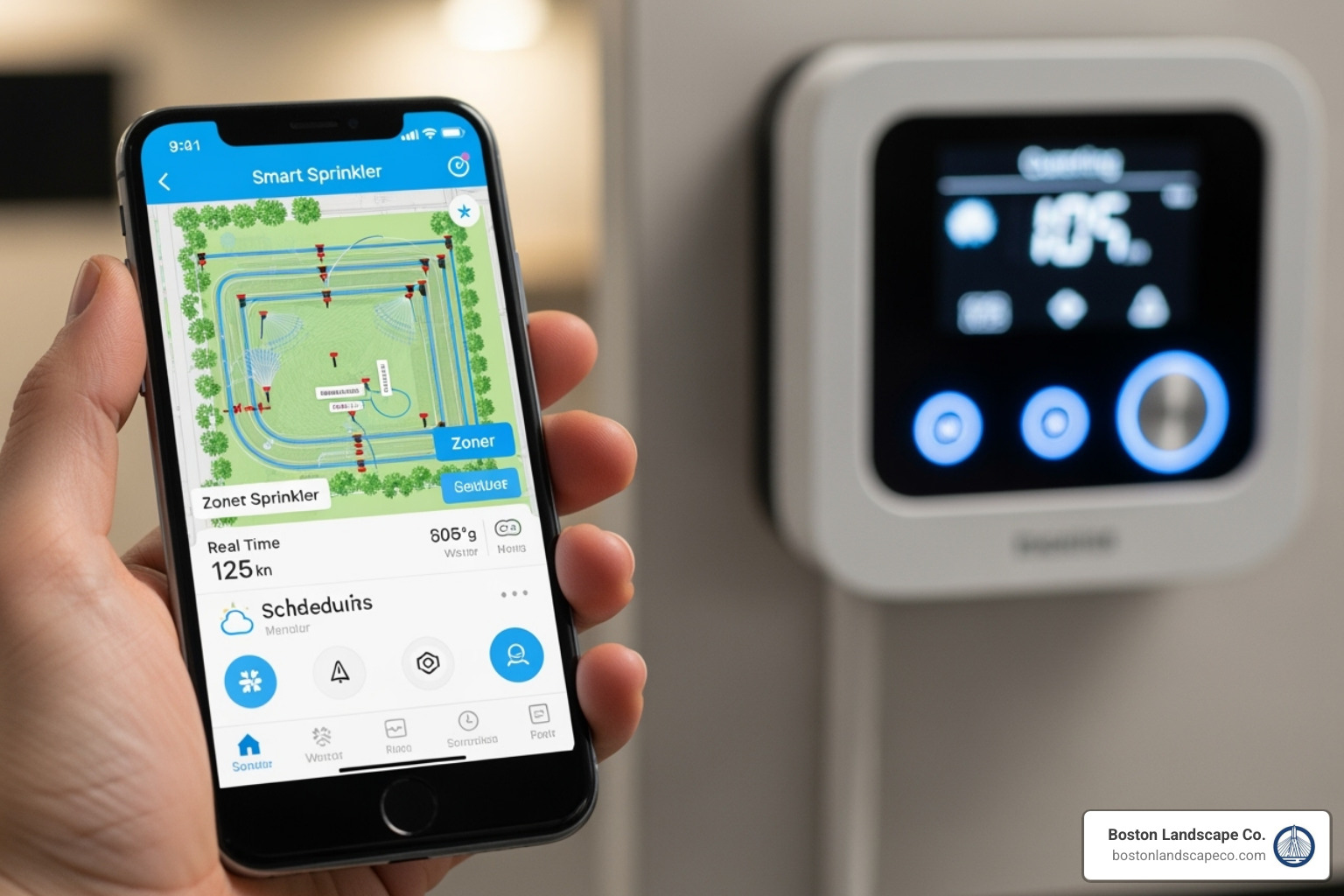
- Smart Controllers and Sensors: These devices use Wi-Fi and sensors to adjust watering based on real-time weather and soil moisture, saving water and money.
- Best Time to Water: Water early in the morning (4 AM to 8 AM) to minimize evaporation from wind and heat, allowing water to soak into the soil.
- Adjusting Schedules Seasonally: Water less in the cooler spring and fall and more during hot summer months. Deep, infrequent watering (1-2 inches per week, including rain) encourages strong roots.
- Regular System Audits: Periodically turn on each zone to check for dry spots, runoff, or malfunctioning heads.
- Grouping Plants with Similar Water Needs: Design zones to group plants with similar water requirements to avoid over- or under-watering.
We often recommend exploring Weather-based watering technology to help optimize your system’s performance even further.
Frequently Asked Questions about Sprinkler Installation
Here are answers to some of the most common questions we receive about lawn watering system installation.
How deep should sprinkler lines be buried?
We recommend burying sprinkler lines 6 to 12 inches deep. This depth protects pipes from damage from activities like lawn aeration. In colder climates like Massachusetts, a depth closer to 12 inches is best to prevent pipes from freezing and bursting.
Can I mix different types of sprinkler heads in the same zone?
No, it is not recommended. Different sprinkler head types (sprays, rotors, etc.) apply water at different rates (precipitation rates). Mixing them in the same zone causes uneven watering—some spots get too much water, others too little. This wastes water and harms your lawn. For best results, each zone should use only one type of sprinkler head.
How much does a professional lawn watering system installation cost?
The cost varies based on factors like lawn size, complexity, soil type, and chosen components. A DIY installation might cost $1,000 to $1,500 in materials. Professional installation for an average residential yard typically ranges from $2,500 to over $7,500, but can reach $25,000 or more for large or complex properties.
Please remember, these are industry average costs based on internet data and not an actual quote from Boston Landscape Co. For an accurate price custom to your property, we recommend contacting us for a custom quote!
Achieve a Healthier Lawn with a Professional Irrigation System
A lawn watering system installation is a smart investment in your home’s beauty and your lawn’s health. A well-designed system ensures your landscape gets the right amount of water exactly when needed, leading to a consistently lush, vibrant lawn.
While a DIY installation is possible, a professional design ensures optimal coverage, water efficiency, and long-term peace of mind. A professionally installed system is built to last for decades, adding significant value to your home.
At Boston Landscape Co., we’ve helped homeowners across the Greater Boston area, from Stoneham to Billerica, transform their outdoor spaces. Our expert team doesn’t just install systems; we custom-design them to fit your unique property and comply with all local codes. Our goal is to exceed your expectations and help you achieve the beautiful, thriving landscape you’ve always wanted.
Ready to take the next step? For expert help with your lawn, look no further than our professional irrigation system installation services. Let us handle the digging, piping, and programming so you can relax and enjoy your stunning, healthy lawn!
