
Landscaping Contractor: 7 Proven Steps to Stress-Free Success 2025
Navigating the Landscape: How to Find the Right Professional for Your Outdoor Space
A landscaping contractor is a licensed professional who plans, installs, and maintains outdoor spaces A0
including plantings, hardscaping, irrigation, and outdoor structures. They hold the required state licensing (for example, a C-27 in California), carry insurance, and balance both aesthetics and technical construction skills.
Quick Guide to Landscaping Contractors:
* Services: Design, installation, hardscaping, irrigation, lighting, maintenance
* Licensing: Required for projects over $500 in most states
* Insurance: Should carry general liability ($300K9 A0$1M) and workers’ compensation
* Hiring Process: Get 3+ bids, check licenses, verify insurance, review portfolios, check references
* Contract: Should include detailed scope, timeline, materials, costs, and warranties
Landscaping projects can run anywhere from $2,000 for basic plantings to $60,000+ for full outdoor living spaces (industry averages not Boston Landscape Co. pricing). Choosing the right contractor up front protects both your budget and your property.
I’m Steve Schumacher, owner-operator of Boston Landscape Co. since 1991. Over three decades serving Greater Boston have shown me that the contractor client relationship is what turns design ideas into long-lasting, worry-free outdoor spaces.
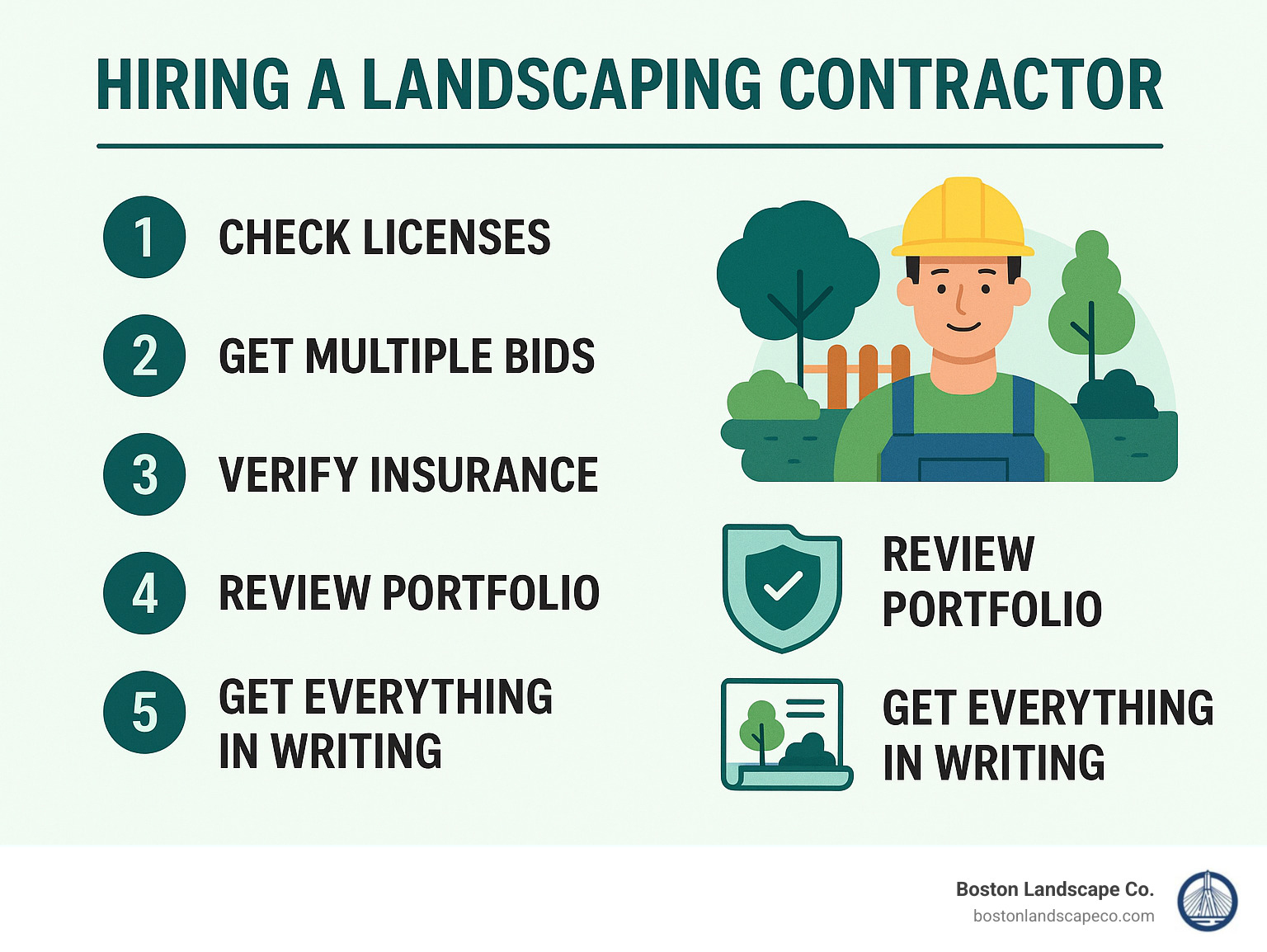
Landscaping contractor word list:
– Retaining wall construction
– Outdoor kitchen design
– Stone walkway design
What Is a Landscaping Contractor & What Do They Do?
Think of a landscaping contractor as the wizard who transforms your outdoor dreams into reality. Unlike general contractors who build homes, we’re the folks who make the space around your home come alive with beauty and function.
In Massachusetts (and most states), any landscaping project costing $500 or more requires a licensed professional. This isn’t just red tape—it’s protection for you, ensuring whoever touches your property has the skills and knowledge to do it right.
As a landscaping contractor, my team at Boston Landscape Co. handles the complete lifecycle of your outdoor space. We design it, build it, and keep it looking gorgeous year after year. We’re the boots-on-the-ground professionals who know how to operate heavy equipment on Monday and can still tell you which hydrangea variety will thrive in your partially shaded corner on Tuesday.
| Professional | Primary Focus | Education/Licensing | Typical Projects |
|---|---|---|---|
| Landscaping Contractor | Installation and construction of landscape elements | State contractor license (e.g., C-27), 4+ years experience | Patios, irrigation systems, planting, retaining walls, outdoor structures |
| Landscape Architect | Master planning and detailed design | Bachelor’s/Master’s degree, state license | Large-scale design plans, construction documents, environmental assessments |
| Garden/Landscape Designer | Aesthetic design and plant selection | Certificate or degree in design (not always required) | Planting plans, garden layouts, color schemes |
| Landscape Gardener | Maintenance and care of existing landscapes | Horticultural training (not always required) | Pruning, mowing, seasonal care, small planting projects |
Many of our clients appreciate that we provide both installation and maintenance services—it means you work with the same team from concept to ongoing care, which creates a seamless experience and better results.
Core Services of a Landscaping Contractor
When you hire a landscaping contractor like us, you’re getting access to a range of specialized skills that blend artistry with technical know-how.
The living elements—trees, shrubs, perennials, and lawns—form what we call the softscape. We don’t just plop plants in the ground; we consider growth patterns, seasonal interest, and how they’ll interact with your specific soil and light conditions.
The hardscape elements form the backbone of your outdoor space—patios, walkways, retaining walls, and features like pergolas or outdoor kitchens. These permanent structures require precise technical skills to ensure they’re not only beautiful but also structurally sound for decades to come.
Lighting transforms your landscape after dark, extending your enjoyment while improving safety and security. A thoughtful lighting design highlights architectural features, creates ambiance, and ensures safe navigation through your outdoor spaces.
Proper drainage might not be glamorous, but it’s absolutely critical. Without it, you risk erosion, foundation damage, and plant loss. We assess water flow patterns and implement solutions that protect your investment for the long term.
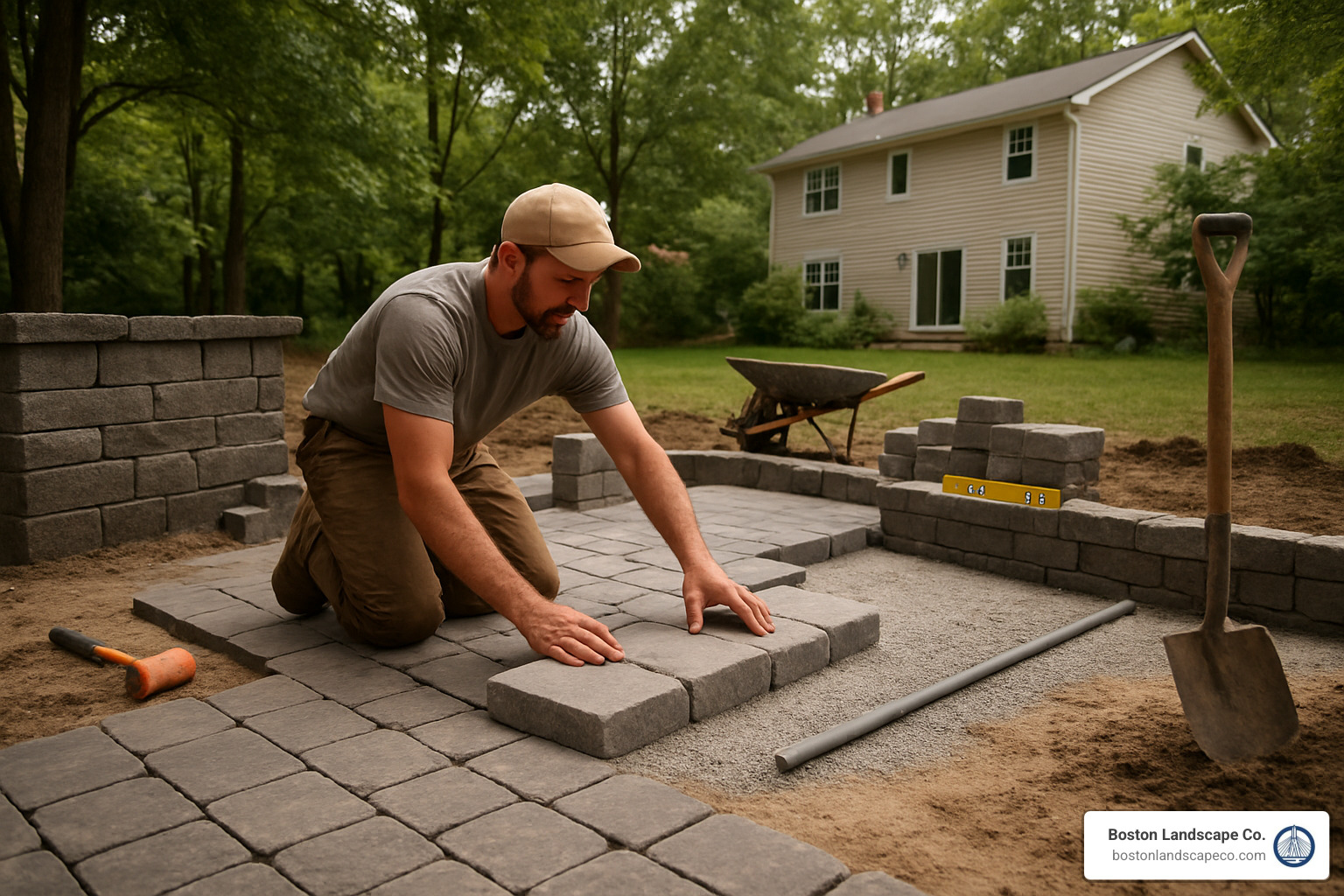
For a deeper dive into our complete service offerings, check out our landscaping services page.
How a Landscaping Contractor Differs From Other Green-Industry Pros
The outdoor professional world can be confusing, so let me break it down:
Landscape architects are the big-picture planners with formal degrees and licenses. They create detailed construction documents and often work on larger projects.
Garden designers focus on the plants, colors, and textures that make your garden beautiful. They’re plant experts who create planting plans but usually don’t handle installation.
Landscaping contractors like us are the builders who make it all happen. We have the equipment, crews, and technical knowledge to physically construct your landscape features, from planting trees to building patios.
Landscape gardeners maintain what’s been created. They’re the regular caretakers who handle mowing, pruning, and seasonal upkeep.
At Boston Landscape Co., we often work alongside landscape architects and designers while providing the skilled installation and maintenance services that bring their plans to life.
Licensing, Insurance & Credentials Demystified
Let’s face it – the paperwork side of hiring a landscaping contractor isn’t exactly thrilling, but it might be the most important part of your decision. These credentials are your safety net, protecting both your property and your peace of mind.
In Massachusetts, landscaping contractors need to be properly registered with the state for projects above certain values. While our state doesn’t use the specific C-27 license that California does, legitimate contractors still must meet important state requirements.
Before you sign anything, take time to verify these essential credentials:
Business Registration – Make sure your contractor is legitimately registered to operate in Massachusetts. This basic step weeds out fly-by-night operations that might disappear mid-project.
Insurance Coverage – This is your financial shield. Look for general liability insurance (typically $300,000 to $1 million for homes, and at least $1 million for commercial projects), workers’ compensation for any employees, and automobile insurance for company vehicles.
Professional Affiliations – When a landscaping contractor belongs to industry organizations like the Massachusetts Association of Landscape Professionals, National Association of Landscape Professionals, or maintains a good Better Business Bureau (BBB) rating, it shows they’re committed to professional standards and ongoing education.
Certifications – Specialized certifications like Certified Irrigation Technician, Certified Landscape Professional, or Snow and Ice Management certification tell you the contractor has expertise in specific areas of landscape work.
At Boston Landscape Co., we maintain all necessary licensing, comprehensive insurance coverage, and regularly participate in professional development to ensure we deliver the highest quality service throughout Greater Boston.
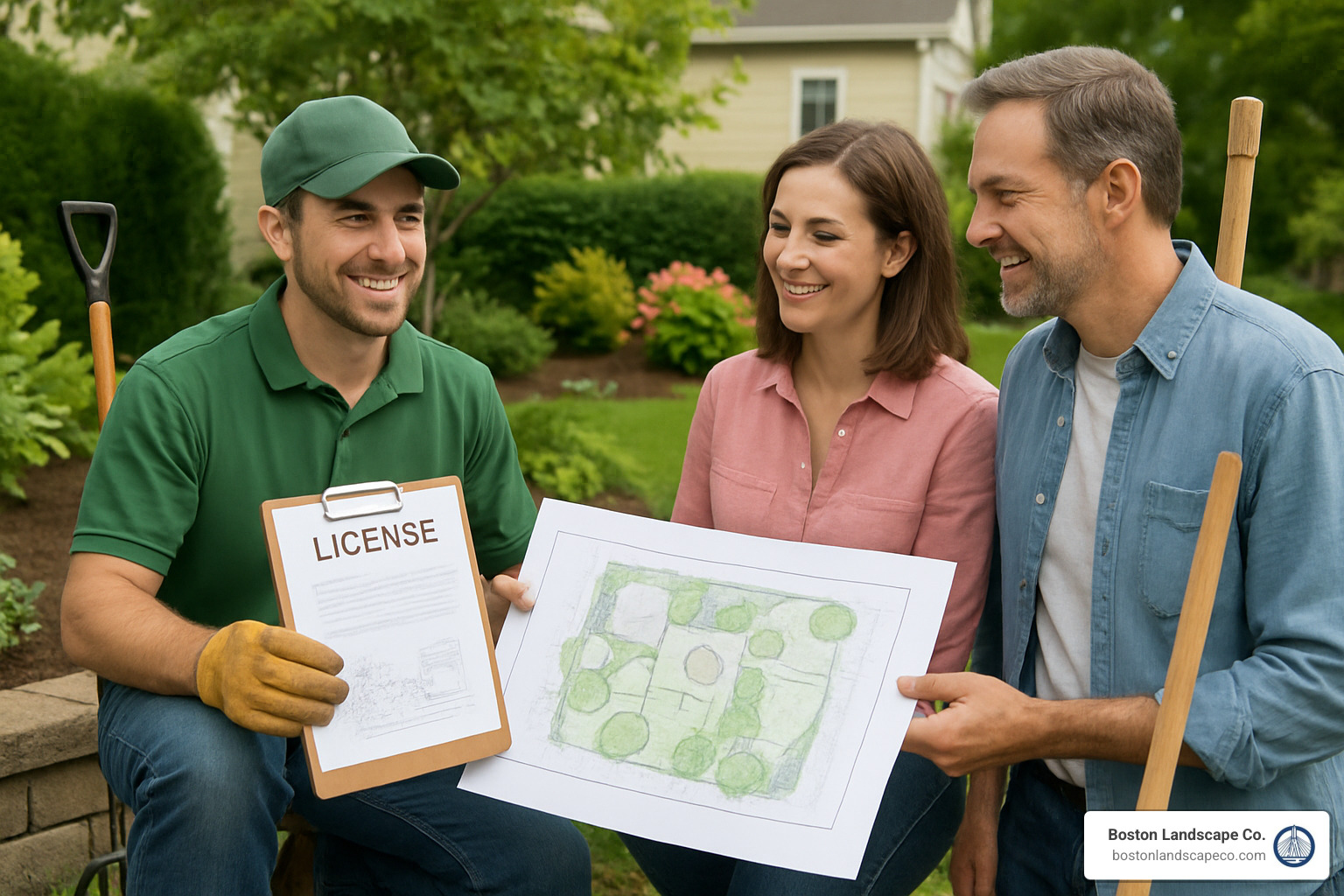
Checking a Landscaping Contractor License Online
Gone are the days of taking someone’s word for it – verifying credentials is now just a few clicks away. While the exact process varies by state, here’s how you can check a landscaping contractor’s license in Massachusetts:
Start with the Massachusetts Office of Consumer Affairs and Business Regulation to verify professional credentials. You can also confirm their business registration through the Secretary of the Commonwealth’s website.
For insurance verification, simply ask for certificates of insurance and take the extra step of calling the insurance company directly to confirm the policy is active. It takes just a few minutes but provides tremendous peace of mind.
Don’t forget to check their BBB rating, which ranges from A+ (excellent) to F (problematic). This gives you insight into their customer service history and complaint resolution.
Watch out for these red flags when checking credentials:
– They seem reluctant or defensive about providing license numbers or insurance certificates
– Their licenses are expired or under a completely different business name
– They have unusually low bond limits that wouldn’t adequately protect you
– There are unresolved complaints or disciplinary actions on their record
Why Insurance & Certifications Protect You
Working with a properly insured and certified landscaping contractor isn’t just about paperwork – it’s about protecting yourself from significant financial and legal headaches.
General liability insurance is your first line of defense. If a contractor accidentally damages your property, their insurance covers the repair costs. Without it, you’d be chasing the contractor – or worse, paying out of pocket.
Workers’ compensation insurance protects you if someone gets injured on your property. Without this coverage, you could potentially be responsible for medical bills if a worker gets hurt installing your new patio or irrigation system.
Specialized certifications demonstrate that your contractor has gone beyond the basics. Water management certifications ensure they’ll design irrigation systems that won’t waste water or damage your foundation. Hardscape certifications mean they understand proper installation techniques that prevent settling and cracking.
Step-by-Step Guide to Hiring the Right Landscaping Contractor
Finding your perfect landscaping contractor shouldn’t feel like searching for a needle in a haystack. After helping hundreds of Boston-area homeowners transform their outdoor spaces, I’ve developed a straightforward approach that takes the stress out of hiring.
Start by getting crystal clear about what you want. Before making a single phone call, spend some time thinking about your landscape dreams, realistic budget, and ideal timeline. Having these basics sorted makes every conversation more productive—whether you’re dreaming of a simple garden refresh or a complete outdoor living space.
Once you know what you want, build a shortlist of potential landscaping contractors. The best leads often come from people you trust, so ask neighbors with beautiful yards who did their work. Online searches can supplement these recommendations, but nothing beats seeing a contractor’s actual work in your neighborhood.
Credentials matter enormously in this business. A reputable landscaping contractor will happily provide proof of insurance, licensing information, and professional affiliations. This step isn’t just formality—it protects you from significant liability if something goes wrong during your project.
When comparing bids, cheapest rarely means best value. I always recommend getting at least three comparable estimates for any substantial project. If one bid comes in dramatically lower than the others, that’s usually a red flag, not a bargain.
The in-person meeting at your property is perhaps the most revealing step. Pay attention to how the landscaping contractor listens to your ideas, whether they ask thoughtful questions, and if they offer creative solutions to challenges.
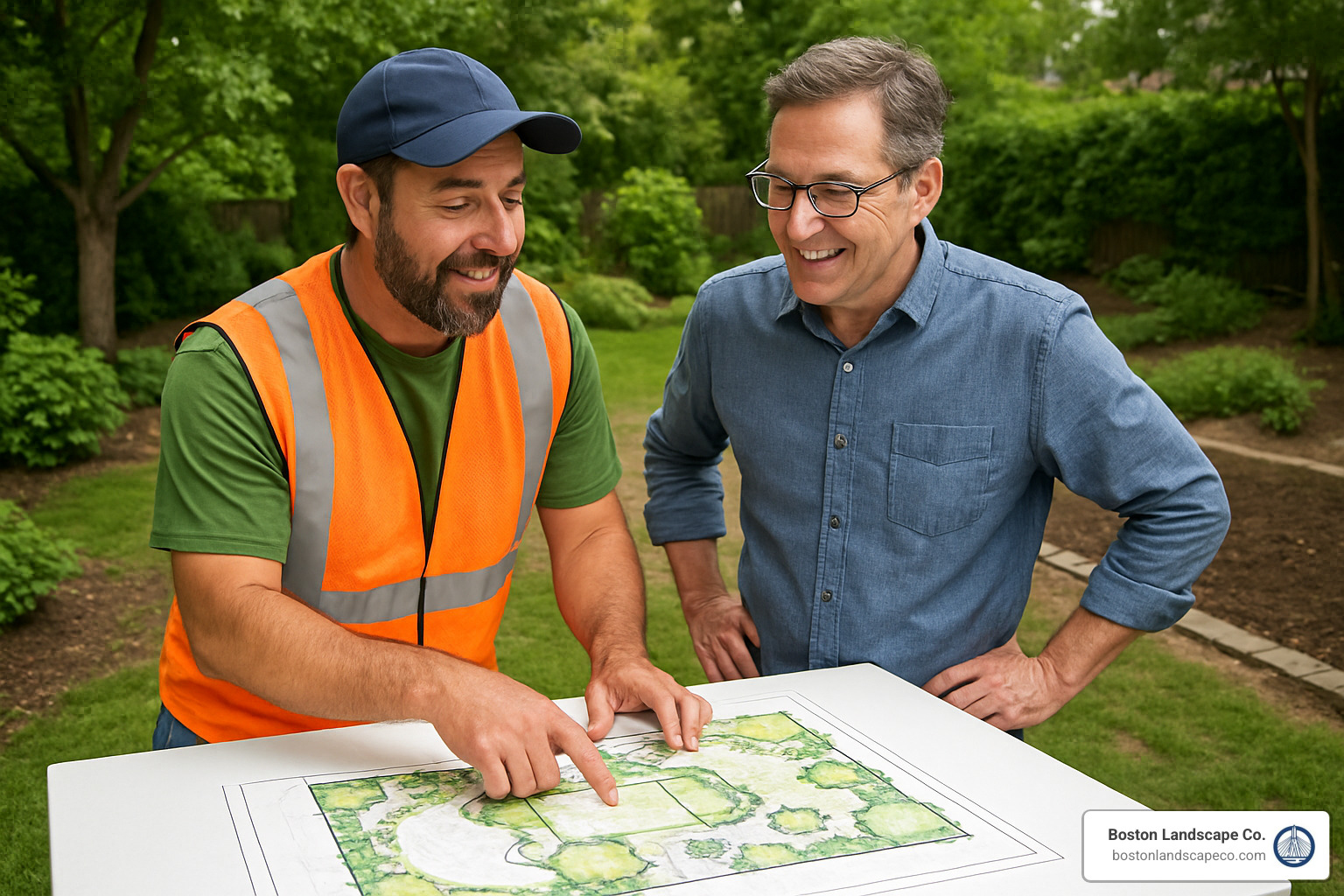
At Boston Landscape Co., we welcome this thorough vetting process and are happy to provide references, portfolio examples, and detailed proposals to help you make an informed decision. Request an estimate to start the conversation about your landscape project.
The 7 Key Questions to Ask Your Landscaping Contractor
When you sit down with potential landscaping contractors, having the right questions ready can reveal volumes about their expertise and reliability.
“How many years have you been in business, and what’s your experience with projects like mine?” Experience matters tremendously in landscaping. A contractor who’s weathered at least five years in business has proven their stability and likely encountered (and solved) most common challenges.
“Can I see a portfolio of your completed projects and speak with recent clients?” Any confident landscaping contractor should be eager to showcase their work and connect you with satisfied clients.
“What permits will my project require, and who handles obtaining them?” This question reveals their knowledge of local regulations and their willingness to handle paperwork.
“How do you approach sustainability and water management?” Their answer reveals both their environmental consciousness and technical knowledge.
“Who will be on-site during my project, and how is work supervised?” Understanding the team structure helps set expectations about who you’ll see daily and who’s accountable for quality.
“What warranties do you offer on plants, hardscaping, and irrigation systems?” Strong warranties indicate confidence in workmanship and materials.
“How will we communicate throughout the project, and how do you handle changes?” This reveals their communication style and flexibility.
Verifying Reputation & Quality
Beyond credentials and conversations, taking time to verify a landscaping contractor’s reputation can save you from potential disappointments.
Online reviews provide valuable insights, but look beyond the star ratings. Pay special attention to how contractors respond to negative feedback—do they address concerns professionally or become defensive?
When contacting references, ask specific questions that reveal the real working relationship. “Was the project completed on time and within budget?” provides more useful information than “Were you happy with the work?” Ask about how the contractor handled unexpected challenges—because every landscape project encounters them.
If possible, visit completed projects in person—especially ones that are several years old. This shows you how their work stands up to time and weather, which matters far more than how it looks immediately after installation.
Costs, Contracts & Payment Structures
Let’s talk money—the part everyone wants to know about but sometimes feels awkward discussing. When you’re planning a landscape change, understanding costs and contracts upfront helps prevent those stomach-dropping moments when bills arrive.
The investment in professional landscaping varies widely based on your property and vision. Based on industry averages (not specific to Boston Landscape Co.), here’s what you might expect to invest:
Basic landscaping projects typically range from $2,000-$8,000, covering simple plantings, mulch beds, and minor improvements. Mid-range landscape renovations with some hardscaping elements usually fall between $8,000-$25,000. For comprehensive landscape changes with multiple features, expect to budget $25,000-$60,000+. And those magazine-worthy luxury outdoor living spaces with all the bells and whistles? They generally start around $60,000 and can exceed $200,000+ for estate-sized properties.
These figures represent general industry ranges based on internet data, not actual costs for Boston Landscape Co. services. Your specific project cost depends on several factors: your property’s size and accessibility, existing conditions, material choices, design complexity, regional labor costs, and even the time of year you schedule the work.
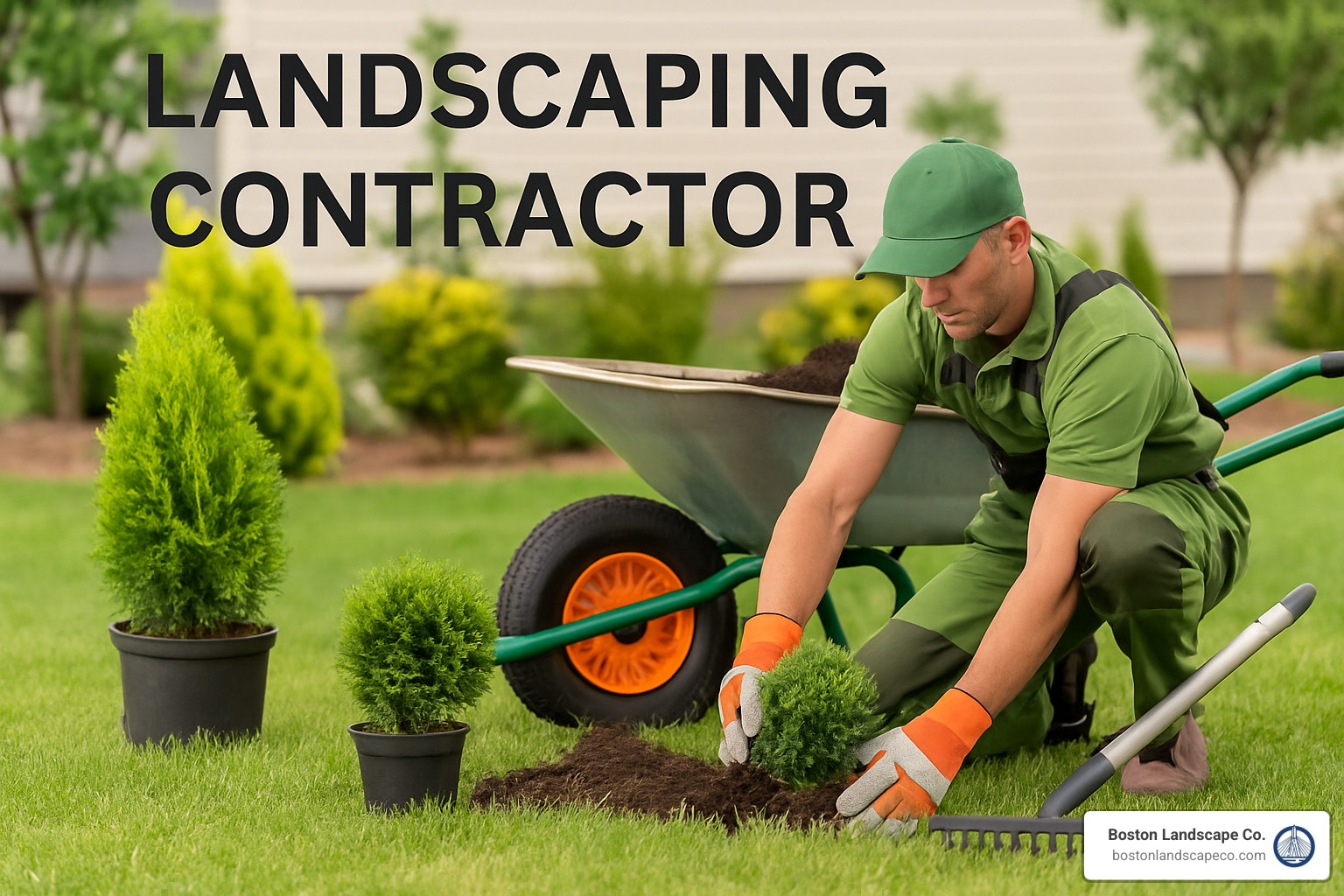
At Boston Landscape Co., we believe in transparent pricing. We provide detailed proposals that clearly outline all costs and payment schedules before any work begins, so you know exactly what to expect throughout your project.
What Should Be in a Landscaping Contractor Agreement
A solid contract is your roadmap and protection when working with a landscaping contractor. Think of it as the instruction manual for your project—the more detailed, the better.
Your agreement should start with complete contact information for both parties, including the contractor’s license number. This creates a clear record of who’s responsible for the work.
The heart of any good landscape contract is the scope of work section. This should read almost like a movie script of your project, detailing exactly what will happen from start to finish. Look for specific descriptions of site preparation work, hardscape elements with exact dimensions and materials, plant quantities with species and sizes listed, irrigation components, and lighting specifications.
Material specifications matter tremendously in landscaping. Your contract should name brands, grades, colors, and quantities of all materials. This prevents surprises like finding your “stone patio” is actually made from the cheapest concrete pavers available.
Timeline expectations should be clearly established, including a start date, phase completion dates, and final completion date. Smart contracts also address weather contingencies—after all, no one can control Mother Nature.
Paying for Your Project Without Surprises
Managing payments for your landscape project shouldn’t require an accounting degree, but it does deserve careful attention.
First, accept the concept of phased payments. Just as you wouldn’t pay for a full meal before seeing the menu, you shouldn’t pay for your entire landscape upfront. A reasonable payment structure might include an initial deposit (limited to 10% or $1,000 in many states), followed by payments after major material deliveries, hardscape completion, planting installation, and a final payment after you’ve approved the completed project.
Consider your payment method carefully. Credit cards offer consumer protections that cash payments don’t, including dispute resolution if problems arise. Many landscaping contractors now accept credit cards, though some may add a processing fee.
For larger projects, ask your contractor about lien releases with each payment. These simple documents confirm that subcontractors and suppliers have been paid, protecting you from potential liens against your property if the main contractor fails to pay their bills.
Sustainable Success: Collaboration, Maintenance & Common Pitfalls
Creating a sustainable landscape requires thoughtful planning, professional installation, and ongoing maintenance. Here’s how to ensure long-term success with your landscaping contractor:
Collaboration with Other Professionals
For complex projects, your landscaping contractor may need to coordinate with:
- General Contractors: For projects involving structures or major renovations
- Landscape Architects: For comprehensive design plans
- Engineers: For drainage, structural elements, or soil stabilization
- Utility Companies: For locating underground utilities before excavation
- Municipal Officials: For permits and inspections
At Boston Landscape Co., we have established relationships with professionals throughout the Greater Boston area, allowing for seamless collaboration on complex projects.
Sustainable Landscaping Practices
Look for a landscaping contractor who incorporates sustainable practices:
- Water Management: Efficient irrigation systems, rainwater harvesting, and permeable surfaces reduce water usage and runoff.
- Native Plant Selection: Plants adapted to local conditions require less water, fertilizer, and maintenance.
- Soil Health: Proper soil preparation and organic amendments create healthier, more resilient landscapes.
- Integrated Pest Management: This approach minimizes chemical use while maintaining plant health.
- Energy-Efficient Lighting: LED fixtures and smart controls reduce energy consumption.
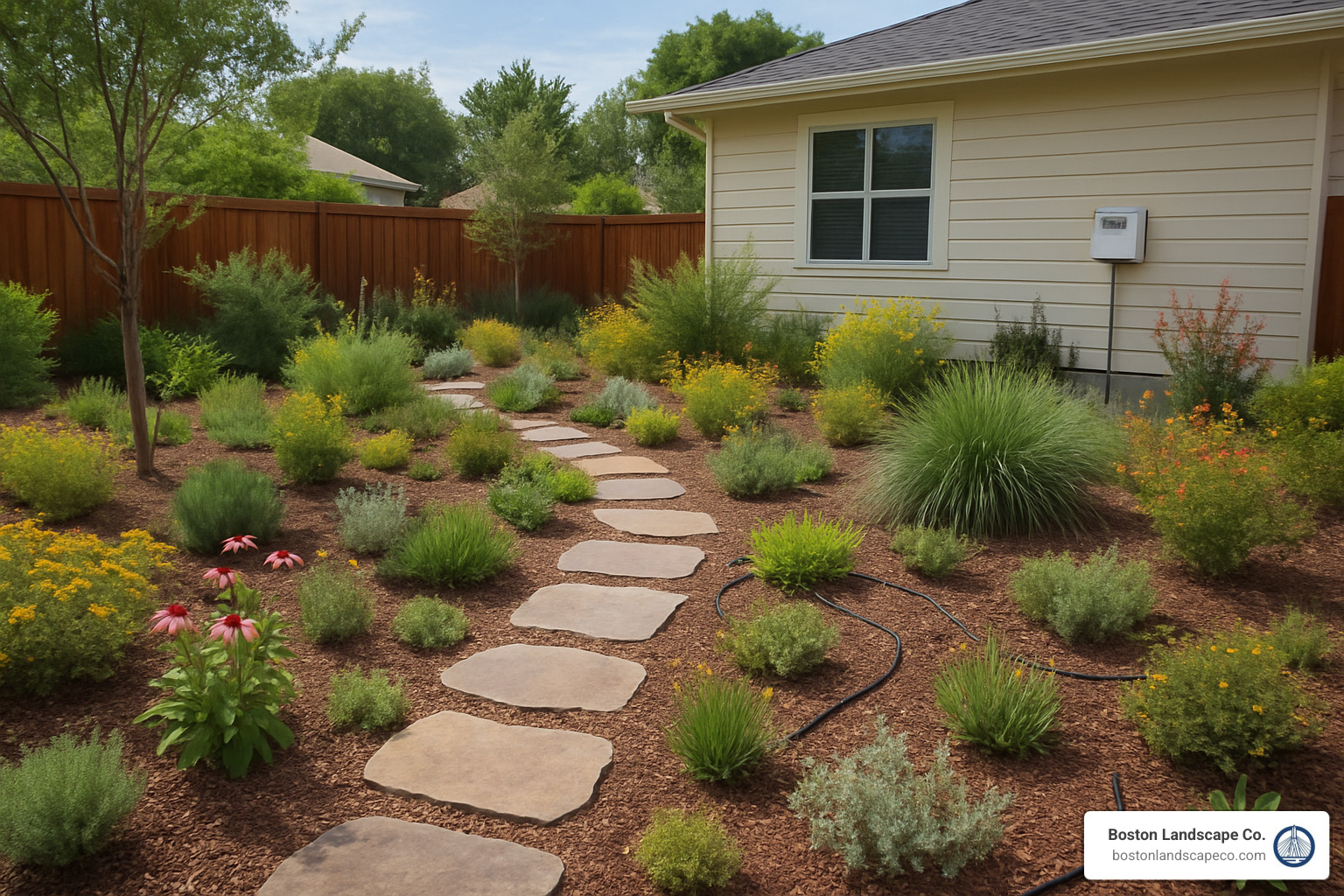
We at Boston Landscape Co. are committed to environmentally responsible practices in all our projects. Our landscape design services incorporate these principles to create beautiful, sustainable outdoor spaces. Learn more about our landscape design services.
Post-Installation Care Tips From a Landscaping Contractor
Even the best landscape installation requires proper maintenance. Here are essential care tips:
- Watering Schedule: Follow your contractor’s specific instructions for watering new plants and lawns. Generally, deep, infrequent watering is better than frequent shallow watering.
- Mulching: Maintain 2-3 inches of mulch around plants to conserve moisture, suppress weeds, and regulate soil temperature. Keep mulch away from direct contact with stems and trunks.
- Seasonal Pruning: Different plants require pruning at specific times. Follow the schedule provided by your contractor.
- Irrigation System Maintenance: Have your system inspected and adjusted seasonally. Winterize in fall to prevent freeze damage.
For comprehensive maintenance services, visit our lawn maintenance services page.
Top Mistakes to Dodge When Hiring a Landscaping Contractor
Avoid these common pitfalls when selecting and working with a landscaping contractor:
- Ignoring Licensing and Insurance: Never hire an unlicensed or uninsured contractor, regardless of price.
- Accepting Vague Proposals: Insist on detailed specifications for all aspects of your project.
- Making Large Upfront Payments: Never pay more than 10% or $1,000 upfront.
- Choosing Based on Price Alone: The lowest bid often results in cut corners, inferior materials, or additional charges later.
- Skipping the Reference Check: Always contact previous clients and view completed projects.
Frequently Asked Questions about Landscaping Contractors
How far in advance should I book a landscaping contractor?
Planning ahead is one of the smartest moves you can make when working with a landscaping contractor. For larger projects that involve design work, hardscaping, or complete yard makeovers, I recommend reaching out at least 3-6 months before you hope to break ground.
Think of it this way: the most reputable landscaping contractors tend to fill their schedules quickly, especially for the prime installation seasons of spring and summer. If you’re dreaming of enjoying your new outdoor space by July 4th, you’ll want to start those conversations in January or February!
The winter “off-season” is actually the perfect time to begin the design process. While we might not be able to dig in frozen ground, we can certainly plan, design, and order materials so we’re ready to hit the ground running when the weather breaks.
Do landscaping contractors handle permits for hardscaping features?
Yes! A professional landscaping contractor should absolutely handle the permitting process for any features that require municipal approval. This is one of the many headaches we take off your plate.
The permitting requirements vary by town and project type, but typically include:
- Retaining walls over a certain height (usually 4 feet in most municipalities)
- Permanent structures like pergolas, outdoor kitchens, or pool houses
- Projects that significantly alter drainage patterns
- Any work near wetlands or in conservation-restricted areas
- Electrical installations for landscape lighting systems
A thorough landscaping contractor will identify all necessary permits during the initial planning phase and include these costs in your proposal. We’ll also schedule any required inspections throughout the project and be present when inspectors visit.
Can a landscaping contractor help me qualify for local water-saving rebates?
Absolutely! Many homeowners don’t realize that there’s money available to help make their landscapes more sustainable. A knowledgeable landscaping contractor should be familiar with local rebate programs and can design your project specifically to qualify.
Throughout Massachusetts, various water utilities and municipalities offer incentives such as:
- Rebates for converting water-hungry lawns to drought-tolerant landscapes
- Cash back for installing smart irrigation controllers that adjust watering based on weather
- Credits for installing permeable paving that allows rainwater to soak into the ground rather than run off
- Financial incentives for rainwater harvesting systems like rain barrels or cisterns
For more information about water conservation in landscaping, check out the EPA’s WaterSense program which provides excellent resources on water-efficient landscaping practices.
Conclusion
After guiding countless homeowners through landscape changes since 1991, I’ve seen how the right landscaping contractor partnership creates outdoor spaces that families enjoy for decades. The journey doesn’t have to be complicated or stressful when you approach it methodically.
Think of this guide as your roadmap to a successful landscape project. The most important steps are often the ones taken before the first shovel hits the ground. Verifying credentials might seem tedious, but it’s your best protection against costly mistakes. I’ve heard too many stories of homeowners who skipped this step and faced headaches that could have been easily avoided.
Detailed proposals aren’t just paperwork—they’re your blueprint for success. When everything is specified in writing, from plant varieties to paver patterns, you create clarity that benefits everyone involved.
While it’s natural to compare costs, looking beyond price often leads to better long-term value. The difference between an average installation and an exceptional one often comes down to experience, attention to detail, and quality materials—elements that may cost more initially but pay dividends for years.
Even the most beautiful landscape needs care to thrive. Planning for maintenance from the beginning ensures your investment appreciates rather than deteriorates. Whether you handle the upkeep yourself or arrange professional service, having a clear maintenance strategy is essential.
Perhaps most importantly, clear communication establishes the foundation for a successful project. The best contractor relationships involve regular updates, transparent discussions about challenges, and a collaborative approach to decision-making.
At Boston Landscape Co., we’ve built our reputation on these principles. Our team approaches each project—from intimate garden spaces to comprehensive outdoor living areas—with the same dedication to quality and service. We understand that your landscape is more than just plants and patios; it’s an extension of your home and lifestyle.
Ready to transform your outdoor space? We’d love to show you how our decades of experience can bring your vision to life. Explore our hardscaping services and reach out when you’re ready to discuss your project. Let’s create something beautiful together.
