
Irrigation system backflow preventer installation Secure 1st
Why Backflow Prevention Is Critical for Your Water Safety
Irrigation system backflow preventer installation is a crucial safety measure protecting your drinking water from contamination. Properly installed, these devices prevent fertilizers, pesticides, bacteria, and other harmful substances from flowing backward into your home’s potable water supply.
Here’s what you need to know about irrigation system backflow preventer installation:
- Purpose: Prevents contaminated irrigation water from entering your drinking water system
- Types: Pressure Vacuum Breaker (PVB), Reduced Pressure Zone (RPZ), Double Check Valve Assembly (DCVA), and Atmospheric Vacuum Breaker (AVB)
- Installation location: After the main water shut-off valve, before irrigation zone controls
- Professional requirement: Most municipalities require certified installers for compliance
- Testing: Annual testing required by state law for most types
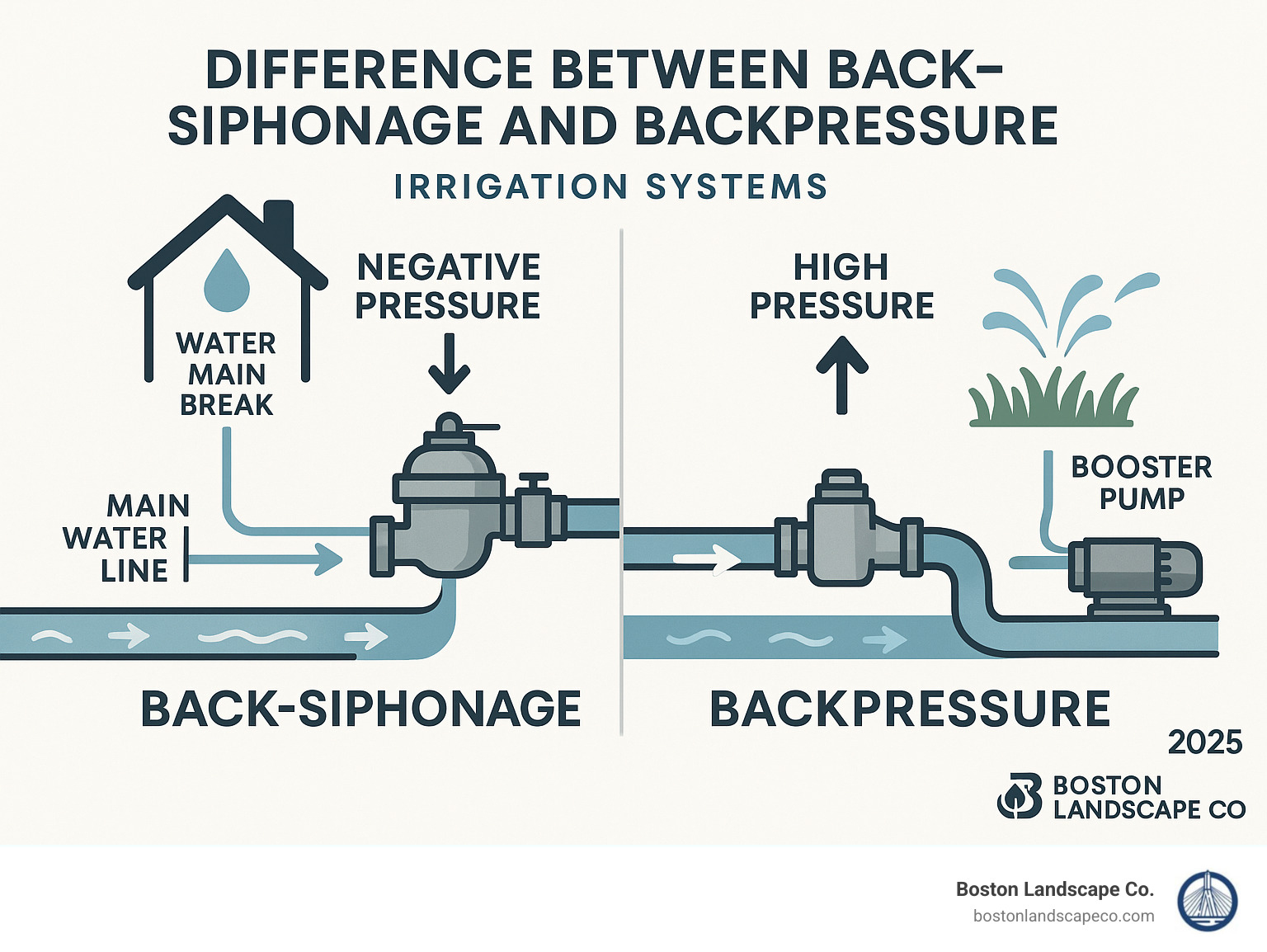
Backflow occurs through back-siphonage (caused by negative pressure in the water system) or backpressure (when irrigation system pressure exceeds municipal water pressure). Without a preventer, your sprinkler system could introduce dangerous contaminants into your home’s water.
As the Hon. Dennis O’Connor stated in the Walkerton Inquiry report: “Water providers should have active programs, working together with building inspectors and public health agencies, to detect and deter cross-contamination.”
The installation process involves selecting the right device, ensuring proper mounting height, and following testing procedures. Most installations require permits and must meet local plumbing codes.
I’m Steve Schumacher, owner-operator of Boston Landscape Co with over three decades of landscaping experience since 1991. I’ve overseen countless irrigation system backflow preventer installations and understand its critical importance for water safety.
Relevant articles related to irrigation system backflow preventer installation:
- how are irrigation systems installed
- irrigation system installation cost
- watering and irrigation systems
Why a Backflow Preventer is Essential for Your Irrigation System
An irrigation system backflow preventer installation is designed to prevent a very real scenario: fertilizers and pesticides from your lawn flowing backward into your home’s drinking water. Your irrigation system creates a cross-connection, a potential pathway for contaminated water to enter your clean water supply.
Backflow happens in two main ways:
Back-siphonage occurs with a sudden drop in main supply line pressure, such as from a water main break. This drop can suck contaminated irrigation water back into your home’s pipes.
Backpressure happens when your irrigation system’s pressure becomes greater than the municipal water pressure, often due to booster pumps or temperature changes, forcing water to flow in reverse.
The health risks are significant. Irrigation water can contain fertilizers, pesticides, herbicides, and animal waste. This mixture introduces bacteria and harmful chemicals that can cause serious illness. A properly installed backflow preventer acts as a one-way valve, ensuring water flows only in the correct direction. It’s a small investment that protects your family’s health and your community’s water supply, as contamination can spread through the municipal system.
More info about Watering and Irrigation Systems
Understanding Local Codes and Regulations
Understanding local plumbing codes for backflow prevention is essential. These are not suggestions but legal requirements. Regulations are set by local water authorities and can vary significantly by town; requirements in Stoneham might differ from those in Winchester or Woburn.
In Massachusetts, inspectors often prefer indoor installations to protect against freezing, though outdoor installation is permitted with proper freeze protection. State law requires that irrigation system backflow preventer installation be performed by a licensed plumber or a supervised apprentice. This is not a job for an unlicensed contractor.
At Boston Landscape Co., we are experts in irrigation system design and partner with licensed plumbing professionals for the backflow preventer installation to ensure full compliance. The specific code depends on whether the assembly provides “service protection” (protecting the public water system) or “internal protection” (protecting water within your building).
Before any work, check with your local water supplier for their specific requirements and approved device list. This call can save you from the significant cost of redoing an improper installation.
Choosing the Right Type of Backflow Preventer
Selecting the right backflow preventer depends on your system’s hazard level. Irrigation systems are generally considered moderate to severe hazards, meaning simple, non-testable devices are insufficient for irrigation system backflow preventer installation.
Atmospheric Vacuum Breakers (AVB) are a basic, testable option for low-hazard situations. They protect against back-siphonage only and must be installed at least 6 inches above all downstream piping.
Pressure Vacuum Breakers (PVB) are common for residential systems. They protect against back-siphonage, are testable, and must be installed at least 12 inches above all downstream piping.
Double Check Valve Assemblies (DCVA) protect against both backpressure and back-siphonage. They are testable and can be installed at any height, provided they won’t be submerged.
Reduced Pressure Zone (RPZ) assemblies offer the highest level of protection for high-hazard situations. They protect against both backflow types but have higher pressure loss and require drainage as they are designed to discharge water.
It’s crucial to distinguish between a non-testable Dual Check Valve and a testable Double Check Valve Assembly. For most residential irrigation systems, we recommend testable devices like PVBs, DCVAs, or RPZs. Some water districts require RPZs for all dedicated irrigation services. It’s always better to over-protect your water source than to under-protect it.
Step-by-Step Irrigation System Backflow Preventer Installation
While we’ll walk you through the general process, irrigation system backflow preventer installation is a precise job that demands professional expertise for safety and compliance. This guide is for informational purposes to help you understand what the job entails.
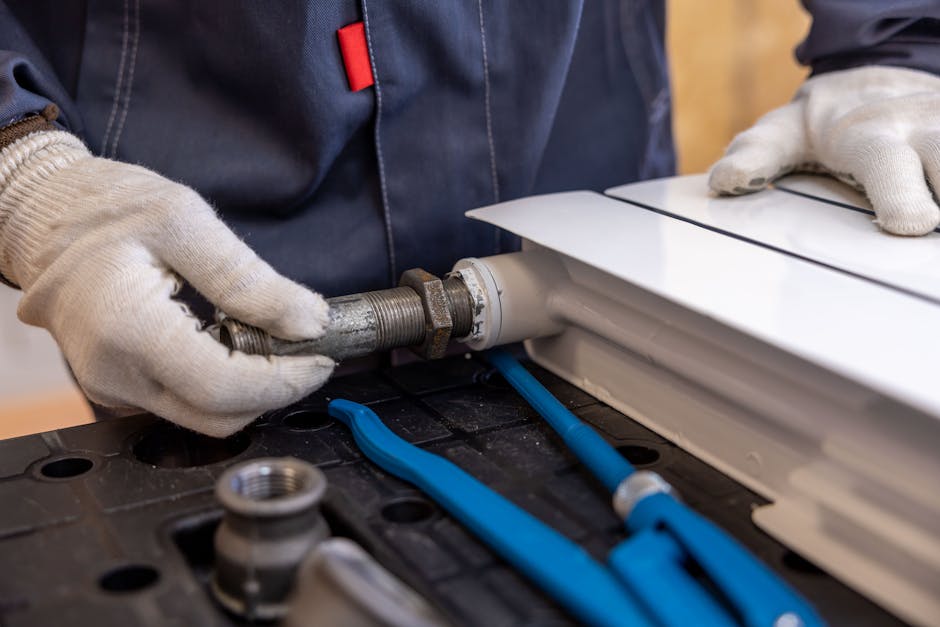
Safety is paramount. Always shut off your main water supply and drain the pipes by opening a nearby faucet before starting any work. Necessary tools include wrenches, pipe cutters, the backflow preventer unit, pipes and fittings, and sealing compounds.
Step 1: Pre-Installation Preparation and Planning
Proper preparation is key. Gather your tools and materials: your chosen backflow preventer (PVB, RPZ, or DCVA), pipe cutters, wrenches, thread sealant tape, connecting pipes, fittings, a measuring tape, and a level. For PVC pipes, you’ll also need PVC cement and primer.
Turn off your main water shut-off valve, usually located near the water meter. Open a faucet to drain the remaining water and relieve pressure.
Locate the installation point. The device must be installed after your main water meter and home’s primary shut-off valve, but before any irrigation zone control valves. The location must be easily accessible for future servicing, testing, and winterization. PVBs and RPZs typically need to be installed 12 inches above the highest sprinkler head.
More info about how irrigation systems are installed
Step 2: Assembling and Mounting the Device
This step requires precision to avoid leaks. Take your time and follow these steps carefully.
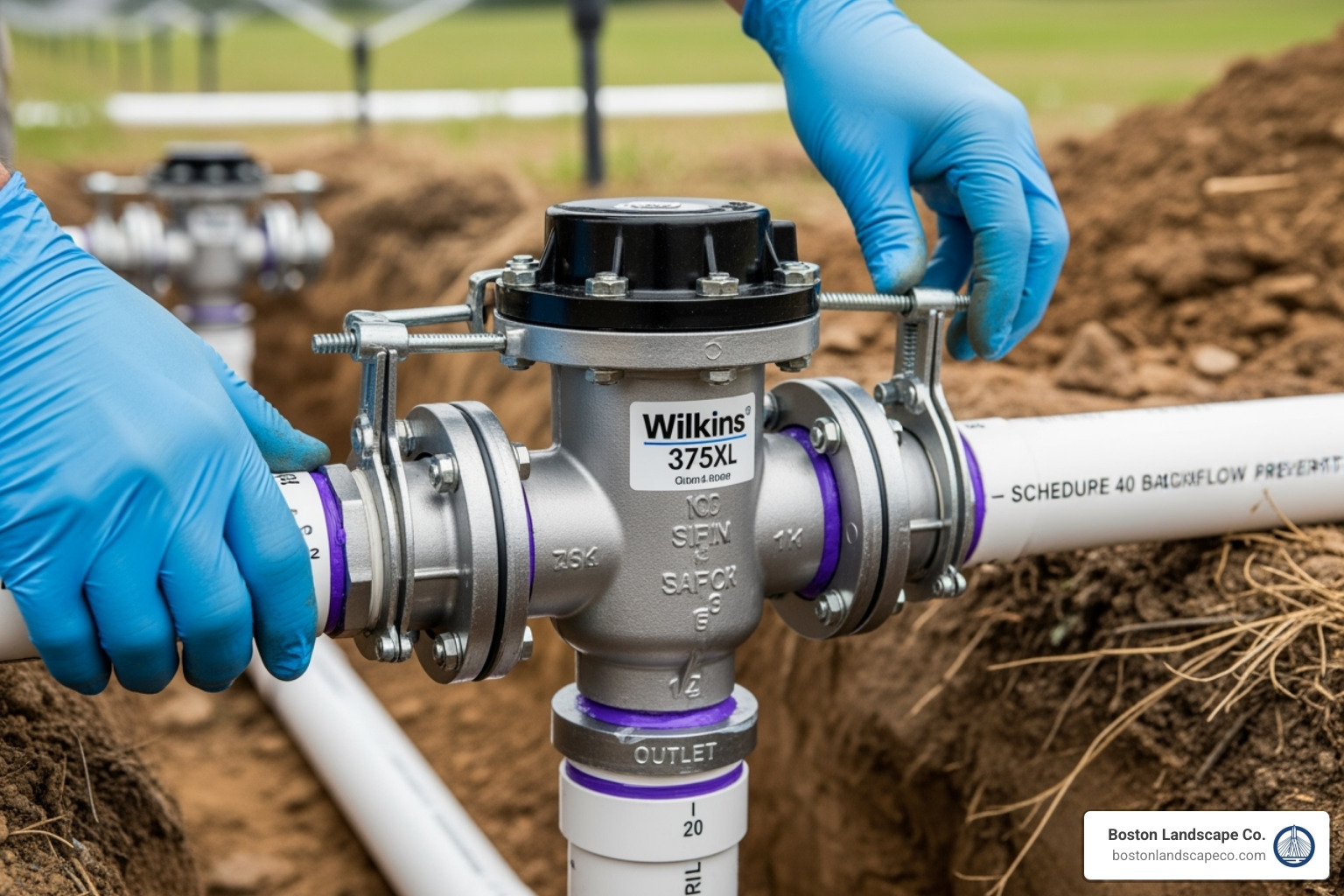
First, cut your main water line at the designated installation point. Ensure the cut is clean and straight, and remove any burrs from the edges.
Next, install the necessary adapters and fittings for your pipe material (copper, PVC, PEX). Apply thread sealant tape (wrapped clockwise) or pipe dope to all threaded connections to create a watertight seal.
Mount the backflow preventer securely using suitable brackets or straps. Ensure it’s installed in the correct orientation by following the water flow arrow on the device. Use a level to confirm it’s perfectly vertical or horizontal as required by the manufacturer.
Finally, connect the cut ends of the main line to the inlet and outlet of the backflow preventer. Hand-tighten first, then use wrenches to snug the connections. Tighten enough to prevent leaks but not so much that you crack the fittings.
Step 3: Connecting to the Irrigation System
Now, connect the backflow preventer to your irrigation system. The outlet of the backflow preventer connects to the main supply line that feeds your system’s zone control valves, which are typically housed in a valve box.
Ensure all connections are tight and leak-free to maintain system pressure and performance. Use high-quality pipes, fittings, and sealing methods.
Proper pipe support is crucial to prevent sagging or stress on connections. For underground installations, main lines are typically buried 10-12 inches deep, while lateral lines to sprinkler heads are buried 8-10 inches deep. Position the valve box in an accessible location and install it with drainage gravel to prevent settling, which can damage pipes.
Step 4: Testing After Your Irrigation System Backflow Preventer Installation
Testing is the final, critical step to verify proper function and regulatory compliance. Slowly turn the water back on. Rushing this can damage the system. Listen for any sounds of rushing water and visually inspect for leaks.
Conduct an initial leak check of every connection point. Address any drips immediately by tightening connections or reapplying sealant.
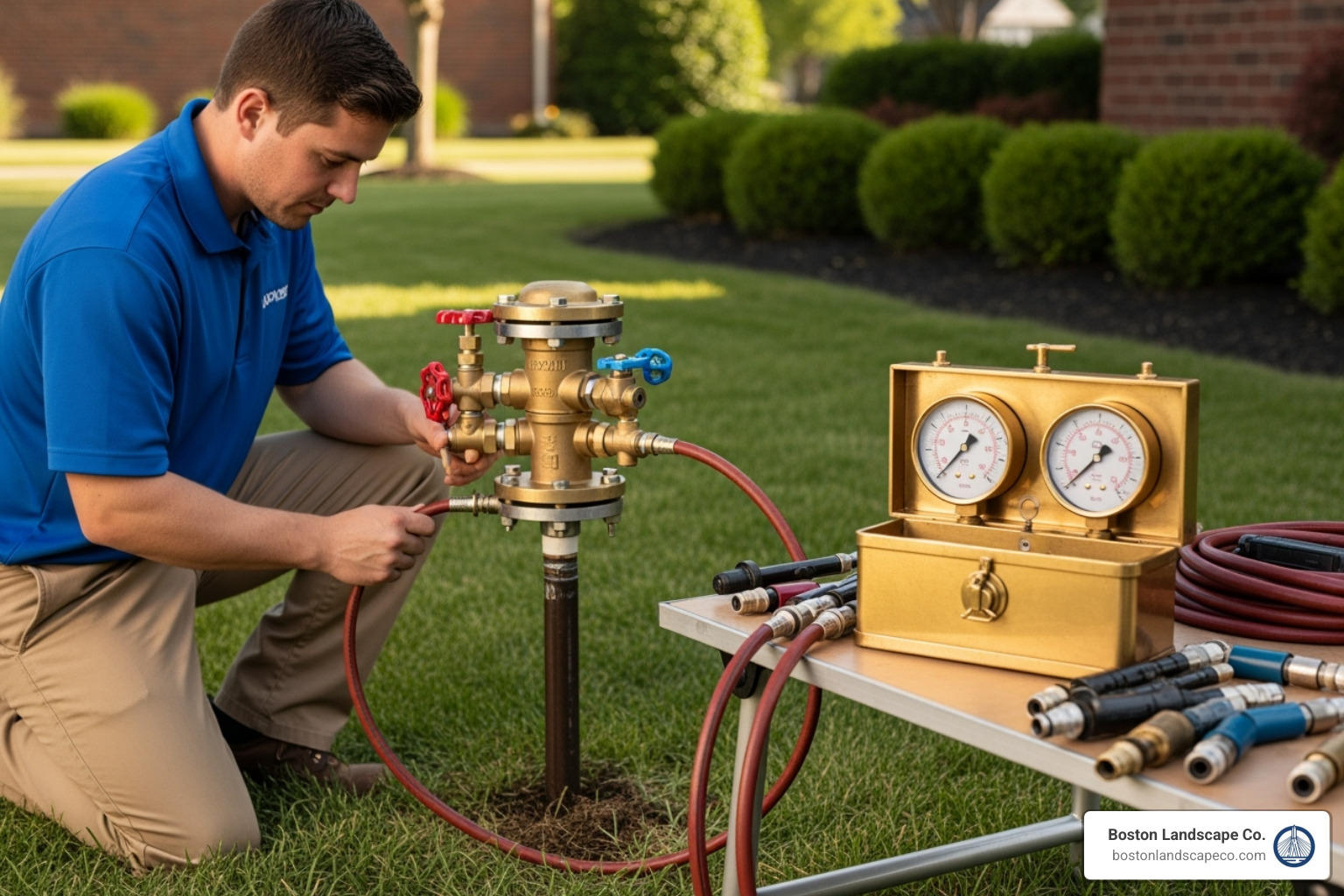
Professional testing and certification are required for most testable devices (PVB, DCVA, RPZ) immediately after installation. A certified backflow technician uses specialized gauge kits to measure pressure and ensure all components are working correctly.
Massachusetts state law requires annual testing of PVB and RP assemblies. This is an essential safety protocol, as mechanical parts can wear out over time. This annual test confirms your system is compliant and your drinking water is safe. We cannot overstate the importance of having this testing done by a qualified professional.
More info about installation criteria
Maintenance and When to Call a Professional
Your irrigation system backflow preventer installation is complete, but it’s not a “set it and forget it” device. It requires ongoing care to continue protecting your water supply. The internal springs, check valves, and moving parts can wear down from constant pressure and mineral buildup, compromising its effectiveness.
A backflow preventer that isn’t properly maintained is like having no protection at all—a risk not worth taking with your family’s drinking water.
Best Practices for Winterizing and Maintenance
Massachusetts winters can freeze and crack your backflow preventer, leading to expensive repairs. Proper winterization is critical for any outdoor unit.
The process involves blowing out your irrigation system with an air compressor to expel all water from the lines and the backflow preventer itself. After the blowout, drain the backflow preventer completely using its drain valves. For extra protection, use an insulating cover designed for backflow preventers.
Throughout the year, perform regular visual inspections for drips, cracks, or corrosion. Catching problems early is always easier and cheaper to fix.
Finally, the annual testing requirement for PVB and RP assemblies is mandated by Massachusetts state law for a reason. These devices can fail silently, and only a certified test can confirm your protection is still effective.
More info about Lawn Irrigation
When a Licensed Plumber is Required
Most work related to irrigation system backflow preventer installation and maintenance requires a licensed professional for safety and compliance.
Local building codes in most Massachusetts communities mandate that only licensed plumbers or certified backflow technicians can install and test these devices. DIY work or hiring an unqualified person can lead to fines and failed inspections.
If your system uses fertigation or chemical injection, it’s a high-hazard situation requiring the most robust protection (typically an RPZ assembly) and expert installation and testing.
Complex installations on properties with challenging terrain or multiple water sources also demand specialized knowledge to ensure proper pressure, flow, and code compliance.
The peace of mind from professional installation and maintenance is invaluable. You’ll know your family’s water is protected and your system meets all regulations.
At Boston Landscape Co., we understand this. While we design the irrigation system, we partner with licensed plumbing professionals to ensure every backflow installation meets the highest safety standards.
Frequently Asked Questions about Backflow Preventer Installation
Here are answers to common questions we receive about irrigation system backflow preventer installation.
What is the typical cost for an irrigation system backflow preventer installation?
The cost of irrigation system backflow preventer installation varies widely based on several factors. The price depends on the type of device, with a basic AVB being more affordable than a high-protection RPZ assembly. Labor costs for a licensed plumber are another major factor, influenced by the complexity of the installation.
Permit fees from your local municipality can also add to the total cost. Based on average costs we see across the internet, irrigation system backflow preventer installation typically ranges from $150 to over $1,000, with some complex installations reaching $3,000 or more. These are average costs based on internet data and not actual costs for Boston Landscape Co. The wide range reflects everything from a simple replacement to a new, complex installation with extensive piping.
For an accurate quote, a professional must assess your specific property and system requirements.
More info about Lawn Irrigation Cost Estimate
Where is the best location to install a backflow preventer?
Proper location is crucial for effectiveness and maintenance. The ideal spot is right after your main water shut-off valve, where the irrigation line branches off from your home’s main supply. It must be installed before any zone control valves.
Height requirements are non-negotiable. AVBs need to be at least 6 inches above the highest downstream piping, while PVBs and RPZs require a minimum of 12 inches. These are physics-based requirements for the devices to function correctly.
Accessibility is also key. The device needs to be easy to reach for annual testing and maintenance. While outdoor installation is common, it requires proper winterization. Interior installation offers better freeze protection but may not always be feasible.
Can I install a backflow preventer myself?
While the DIY spirit is admirable, we strongly recommend professional installation for irrigation system backflow preventer installation.
Plumbing codes are specific, vary by town, and are legal requirements designed to protect public health. An incorrect installation can lead to fines and costly re-work.
The technical complexity is significant. These devices require precise orientation, fittings, and height. A small mistake can render the device useless, putting your drinking water at risk.
Most importantly, testable backflow preventers require annual certification by a licensed technician using specialized equipment. You cannot perform this test yourself, and without it, your installation is not compliant.
The safety stakes are too high when it comes to your family’s drinking water. The peace of mind from a professional, code-compliant installation is invaluable.
Secure Your Water Supply with Professional Installation
With three decades in the landscaping business, I’ve learned that taking shortcuts on critical safety systems is a mistake. For irrigation system backflow preventer installation, there is no substitute for doing it right the first time.
A properly installed backflow preventer is your silent guardian, ensuring the water from your tap remains pure. It creates a reliable barrier between your irrigation system—which can carry fertilizers and pesticides—and your home’s drinking supply. The risk of contamination from a simple drop in water pressure is too great to ignore.
At Boston Landscape Co., we’ve worked across Massachusetts communities from Stoneham to Billerica, Bedford to Burlington, and everywhere in between. We understand the local codes and property challenges, whether in Lexington, Medford, or Winchester.
Professional installation ensures long-term system health. We integrate the backflow preventer seamlessly with your entire irrigation system, ensuring it’s accessible for testing and durable enough for New England weather. A professional job avoids the risks and costs associated with failed DIY attempts and ensures your system is safe, compliant, and reliable.
Your outdoor space is an extension of your home. We ensure every system we install keeps your landscape beautiful while keeping your family safe.
Get a professional irrigation system installation
