
Invasive Species Removal: Top 5 Proven Methods for 2025
Why Invasive Species Removal Matters for New England Properties
Invasive Species Removal is the process of identifying, controlling, and eliminating non-native plants and animals that harm local ecosystems, property values, and native biodiversity. Here are the essential steps:
Quick Action Guide:
• Identify invasive species using apps like iNaturalist
• Prioritize new arrivals and species threatening trees
• Choose method – mechanical (hand-pulling), chemical (herbicides), or biological (natural predators)
• Time it right – remove before seed set, typically spring/fall
• Follow up – monitor and replant with natives
Some invasive species are sharp, some are spotted and some are slithery, but all invasive species are bad for public lands. What many homeowners don’t realize is that a single invasive plant can produce thousands of seeds, spreading rapidly through wind, water, wildlife, and human activities.
These problematic species cost billions in economic damage annually. They outcompete native plants, degrade wildlife habitat, increase wildfire risk, and can even damage property infrastructure. Purple loosestrife crowds out native wetland plants. Japanese knotweed cracks foundations. Emerald ash borer has killed tens of millions of ash trees across North America.
The good news? Early detection and rapid response can prevent small problems from becoming expensive nightmares. Whether you’re dealing with a few invasive seedlings or an established infestation, understanding your options helps you make smart decisions about when to tackle removal yourself versus calling professionals.
I’m Steve Schumacher, and over my three decades operating Boston Landscape Co, I’ve helped countless property owners develop effective Invasive Species Removal strategies that protect both their investment and local ecosystems. From mechanical removal to integrated pest management, we’ve seen what works in New England’s unique climate and growing conditions.
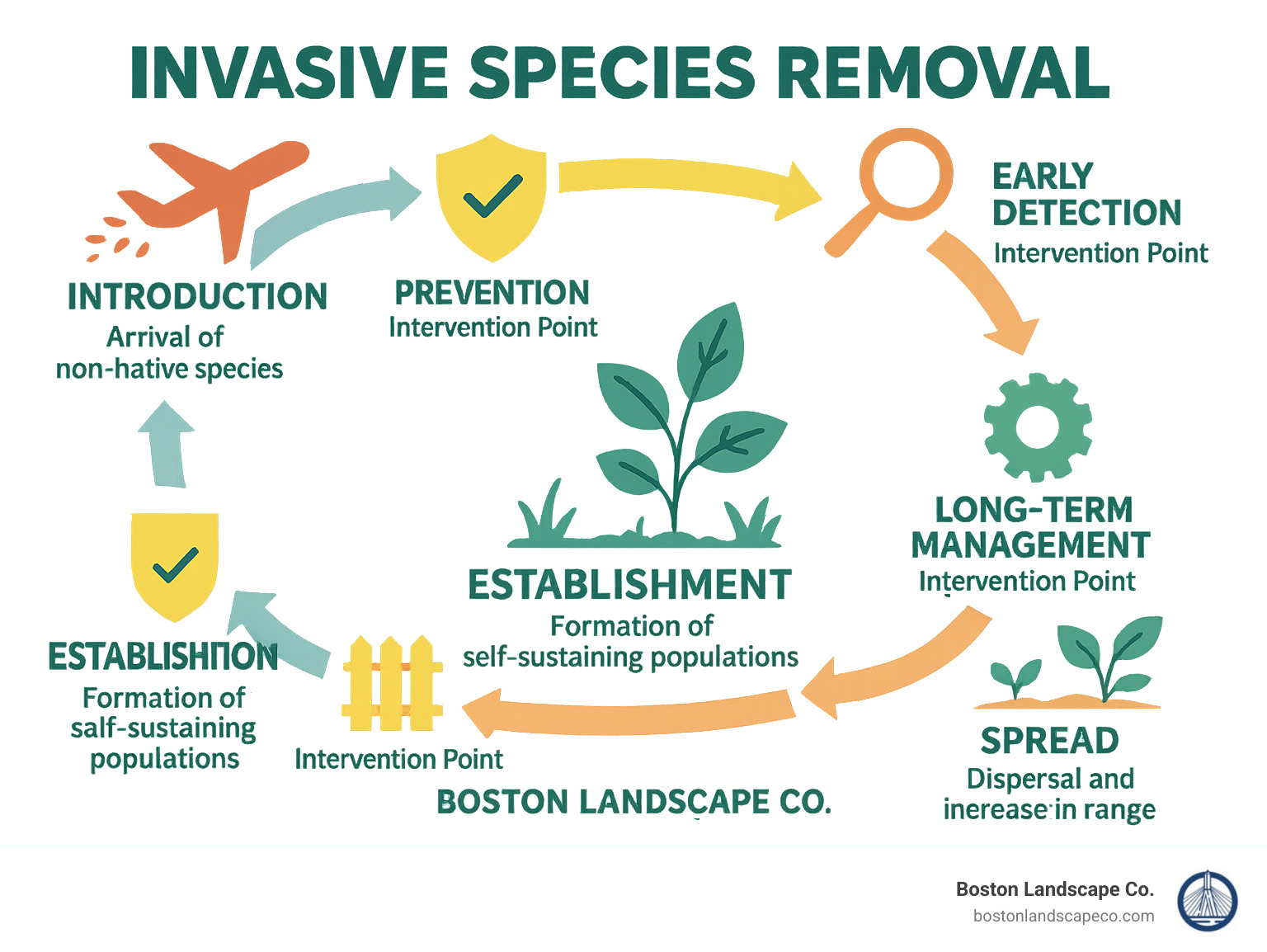
Easy Invasive Species Removal glossary:
– Ecological Restoration
– Compensatory Mitigation
– Wetland Protection
Understanding Invasive Species: Identification & Impact
Think of invasive species management like catching a cold—the earlier you spot the symptoms, the easier it is to treat. Early detection is absolutely your best defense against these unwelcome guests taking over your property.
Here’s a sobering fact: research shows that nearly 80% of priority marine and freshwater invasive species in the US and Canada are spreading beyond management jurisdiction. Once they’re established across multiple properties and regions, complete eradication becomes virtually impossible. This is why understanding the invasion curve matters so much—every day you wait, the problem gets more expensive and difficult to solve.
The good news is that scientists have developed a smarter approach called functional eradication. Instead of chasing the impossible dream of eliminating every last invasive plant, functional eradication focuses on reducing invader populations below the point where they cause serious ecological damage. For example, researchers found that keeping red lionfish populations at around 25 fish per hectare prevents them from decimating native fish communities.
This concept revolutionizes how we approach Invasive Species Removal on your property. You don’t need to stress about finding every single invasive seedling—you just need to keep populations low enough that they can’t dominate your landscape.
Citizen science tools like iNaturalist have made species identification incredibly accessible. I encourage all our clients to download this free smartphone app and start cataloging what they find on their property. Not only does your data contribute to important regional monitoring efforts, but you’ll also build a valuable record of your removal progress over time.
Red Flags: How to Recognize a Potential Invader
Learning to spot invasive species isn’t as tricky as you might think. Most invasive plants have telltale aggressive behaviors that set them apart from well-mannered natives.
The biggest red flag is rapid, aggressive spread. Native plants typically grow in balanced communities with other species. Invasive plants? They’re the bullies of the plant world, quickly forming dense patches where nothing else can survive.
Timing can also tip you off. If you notice a plant flowering way earlier or later than everything else around it, that’s worth investigating. Purple loosestrife’s distinctive magenta flower spikes bloom when most wetland natives are winding down for the season.
Physical features often give invasives away too. Garlic mustard has heart-shaped leaves that smell like garlic when you crush them—not exactly subtle. Oriental bittersweet produces those beautiful orange berries that look lovely in fall arrangements but spell doom for any tree they’re climbing.
Here’s where things get tricky though: not every aggressive plant is invasive. Some native species like goldenrod spread rapidly and might look “weedy,” but they’re actually providing essential food for native insects and birds. The key difference is that true invasive species are always non-native and cause measurable ecological or economic harm.
App-based identification tools have become incredibly sophisticated. Many can identify plants from a simple photo, though I always recommend double-checking with local extension services if you’re planning major removal efforts.
Why They’re a Problem for Wetlands, Forests & Backyards
Invasive species don’t discriminate—they threaten every type of habitat across Massachusetts, often in ways that aren’t immediately obvious to homeowners.
In wetlands, species like purple loosestrife and Phragmites create biological deserts. They form such dense stands that waterfowl can’t find nesting sites, and the diverse plant communities that support everything from dragonflies to herons simply disappear. What looks like a lush, green wetland is actually an ecological wasteland.
Forest invasions often start quietly in the understory. Garlic mustard doesn’t look threatening when it first appears, but it releases chemicals that prevent native wildflowers from germinating. Meanwhile, invasive vines like Oriental bittersweet work more dramatically, eventually growing heavy enough to topple mature trees during storms.
Your backyard faces similar pressures, with real economic consequences. Japanese knotweed might seem like just another tall plant, but its root system can crack foundations and damage septic systems. Some invasive grasses increase wildfire risk by creating more flammable fuel loads than native vegetation.
The broader economic impacts are staggering. Invasive species cost the US economy billions annually through agricultural losses, infrastructure damage, and management expenses. Invasive mussels clog water intake pipes. Noxious weeds reduce crop yields and force farmers to spend more on herbicides and cultivation.
But the ecological losses hit closer to home. Research consistently shows that invasive species are major drivers of biodiversity loss worldwide. In practical terms, this means fewer native birds visiting your feeders, fewer butterflies in your garden, and fewer beneficial insects helping with natural pest control. Native plants and the wildlife that depend on them simply can’t compete when invasive species dominate the landscape.
The cascade effect is particularly troubling. When invasive plants replace natives, they break the intricate food webs that have evolved over thousands of years. A single native oak tree supports over 500 species of moths and butterflies, while most invasive trees support fewer than 10. That’s why effective Invasive Species Removal isn’t just about aesthetics—it’s about maintaining the complex ecological relationships that keep our local environments healthy and functional.
Invasive Species Removal Methods: Mechanical, Chemical, Biological & IPM
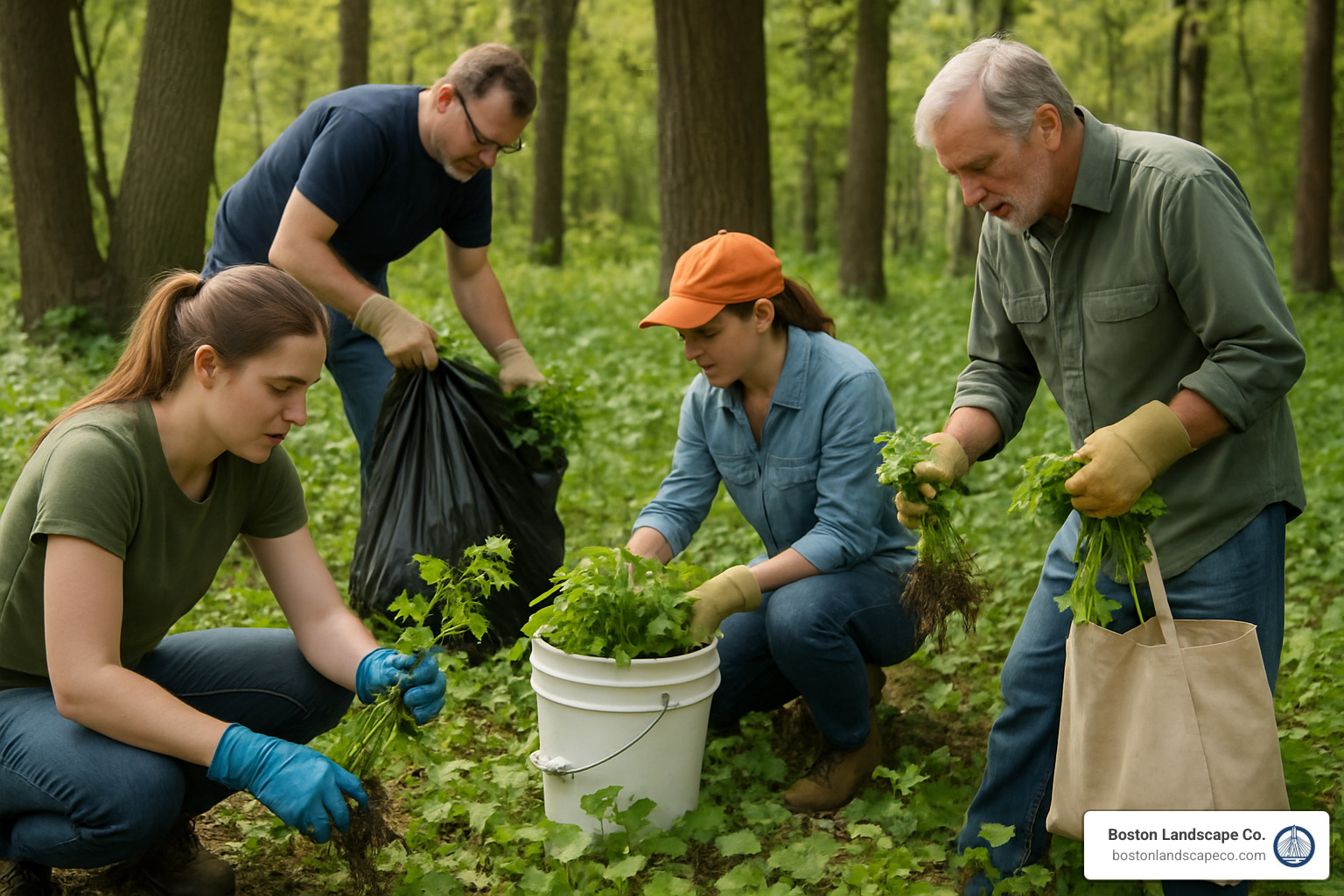
Invasive Species Removal success depends on matching the right method to your specific situation. Integrated Pest Management (IPM) approaches, supported by more than $19.6 million in funding for 76 projects addressing high priority pest management issues in the US, combine multiple strategies for long-term effectiveness.
The choice between suppression and eradication depends on your goals and resources. Complete eradication works best for new arrivals or small infestations, while suppression to functional thresholds is more realistic for established populations. Timing and seasonality significantly affect success rates—removing invasive plants before they set seed prevents exponential population growth.
Biological Control of Invasive Species represents the cutting edge of sustainable management, though it requires careful planning and professional oversight.
Invasive Species Removal: Mechanical Approaches
Mechanical removal remains the most environmentally friendly option for most small to medium infestations. Hand-pulling works best for herbaceous plants when soil is moist—we recommend pulling after at least two days of rain when roots extract more completely.
Effective Mechanical Methods:
| Method | Best For | Timing | Effectiveness |
|---|---|---|---|
| Hand-pulling | Small seedlings, soft soil | After rain, before seed set | 90%+ for annuals |
| Cut-stump treatment | Woody stems 1-3 inches | Dormant season | 85% with follow-up |
| Mowing | Large grass infestations | 3-4 times per season | 70% over 3-5 years |
| Girdling | Large trees | Late spring/early summer | 95% over 2 years |
Specialized tools like the Weed Wrench™ and Root Jack can remove woody stems up to three inches in diameter with the entire root system intact. For larger areas, we use brush cutters and forestry mulching equipment that can process invasive vegetation into beneficial mulch.
Soil solarization using UV-stabilized plastic sheeting works well for persistent infestations. The plastic must extend at least five feet beyond the infestation edges and remain in place for at least two years to kill all vegetation and deplete the seed bank.
Invasive Species Removal: Chemical Approaches
Chemical control becomes necessary for large infestations or species that readily resprout from root fragments. The key principle: “the label is the law.” Always follow herbicide instructions precisely and obtain proper licensing for commercial applications.
Common Herbicide Options:
– Glyphosate: Non-selective, kills all plants it contacts
– Triclopyr: Selective for woody plants, spares grasses
– Aquatic formulations: Required for wetland applications
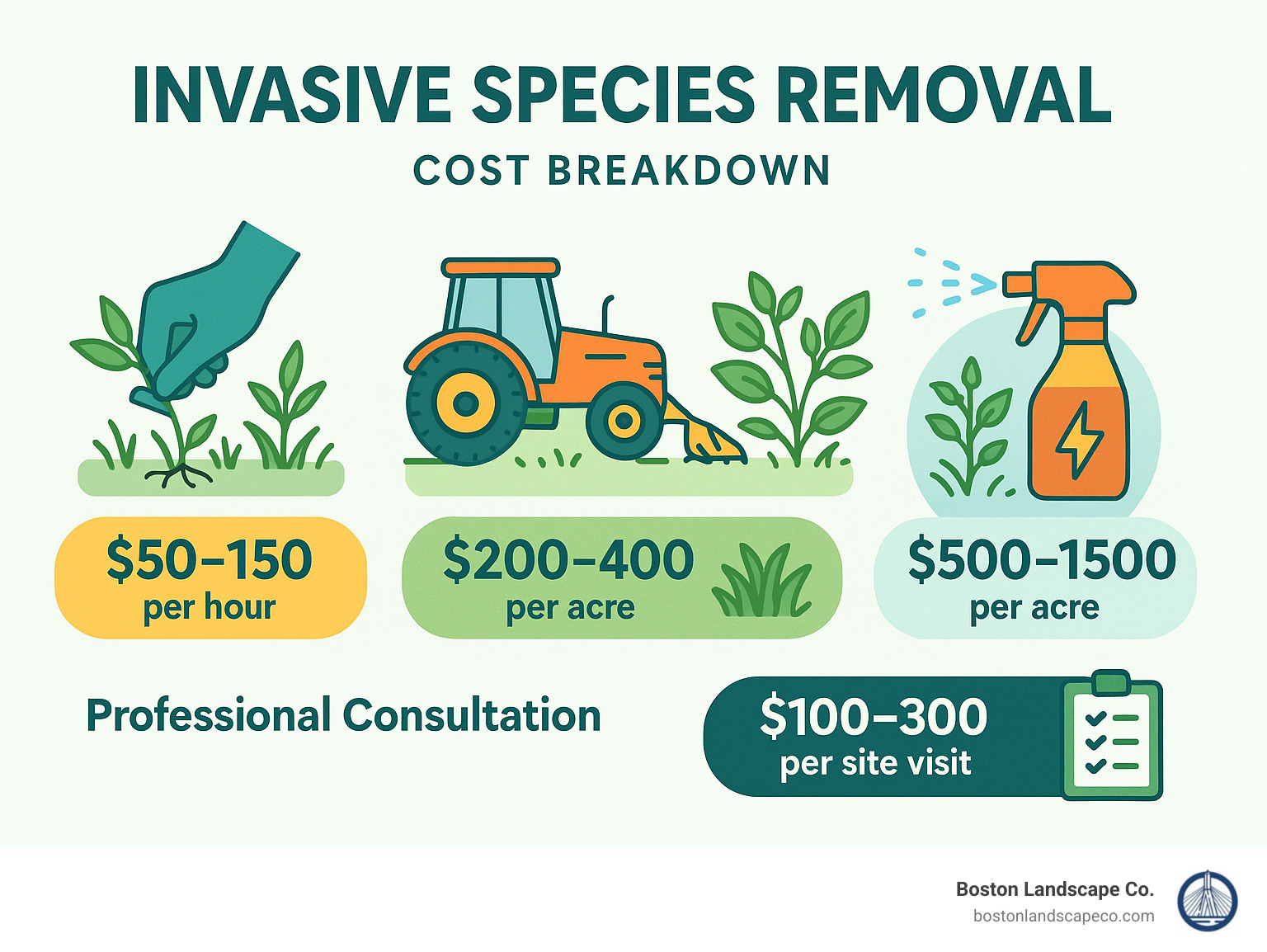
Average costs for chemical control range from $60 to $500 per acre based on internet data, though costs can reach $1,500 or more for complex treatments requiring specialized equipment. These are not actual costs for our services—contact us for specific pricing.
Personal protective equipment (PPE) is mandatory when handling herbicides. We always recommend hiring certified applicators for large projects or sensitive areas near water bodies. Chemical treatments work best when combined with mechanical methods—cutting stems and immediately painting with herbicide prevents regrowth while minimizing environmental impact.
Invasive Species Removal: Biological & Cultural Approaches
Classical biological control offers the only means of reducing permanently and over large areas the harm invasive species cause, short of eradication. A single lady beetle can devour hundreds of aphids in its lifetime, demonstrating nature’s pest control potential.
However, research shows that biocontrol allies are dwindling, making careful agent selection even more critical. Beetles, flies, and moths are among the most commonly used biological control agents against invasive weeds in North America.
Cultural Control Methods:
– Targeted grazing: Goats and sheep can reduce invasive brush biomass by 70-90%
– Cover cropping: Dense native plantings prevent invasive establishment
– Prescribed fire: Reduces invasive seed banks and favors native species
– Mulching: Suppresses invasive seedlings while retaining soil moisture
Targeted grazing has proven particularly effective for multiflora rose and autumn olive. Professional grazing services typically cost $200-$600 per acre based on internet data, with costs potentially reaching $1,800 for difficult terrain or specialized fencing requirements.
Building an IPM Road Map
Successful Invasive Species Removal requires a systematic approach that our property maintenance services can help you implement:
IPM Planning Steps:
1. Scout regularly: Monthly surveys during growing season
2. Set thresholds: Determine acceptable invasive density levels
3. Choose methods: Combine compatible approaches for maximum impact
4. Monitor results: Track population changes and adjust strategies
5. Prevent reintroduction: Clean equipment and control pathways
The most economical and safest way to manage invasive species is prevention. Once established, management activities focus primarily on suppressing population densities rather than complete eradication—57% of marine and 21% of freshwater invasions are managed through suppression rather than elimination.
Planning & Prioritizing Your Removal Strategy
Think of Invasive Species Removal planning like triage in an emergency room—you tackle the most urgent cases first. Whether you’re managing a sprawling country property or a cozy backyard, the same smart prioritization principles will save you time, money, and frustration.
Start by taking inventory of what you’re actually dealing with. Walk your property with a smartphone and use apps like iNaturalist to identify and catalog every invasive species you find. This might feel overwhelming at first, but trust me—knowing your enemy is half the battle won.
New arrivals get top priority, period. That single Japanese knotweed shoot you spotted near your driveway? Deal with it this weekend before it becomes a foundation-cracking nightmare next year. Tree-threatening vines like Oriental bittersweet come next—these silent killers can topple mature trees worth thousands of dollars.
Focus your energy on high-impact species that cause visible ecological damage. Purple loosestrife choking your wetland or garlic mustard carpeting your woodland understory should move up your priority list. Finally, be realistic about what you can actually control with your available time and budget.
Here in New England, we see the same troublemakers again and again: purple loosestrife dominating wetlands, Japanese knotweed cracking foundations, Oriental bittersweet strangling forest trees, autumn olive taking over old fields, garlic mustard blanketing forest floors, multiflora rose creating impenetrable thickets, tree of heaven colonizing disturbed sites, and European buckthorn invading woodlands.
Research from Virginia demonstrates that even modest removal efforts sustained over just a few seasons can create dramatic ecosystem improvements. The secret isn’t tackling everything at once—it’s setting achievable goals and building momentum through early wins.
Mapping & Measuring the Infestation
Accurate mapping transforms your removal efforts from random battles into strategic victories. Your smartphone’s GPS capabilities can record exact locations of invasive patches, while consistent photo monitoring documents your progress over time.
Take pictures from the same spots each season to create a visual timeline of your success. Record GPS coordinates for every treatment area so you can find them again for follow-up work. Measure infestation sizes to estimate treatment costs and track reduction over time.
Don’t forget to document the native plants you want to protect. That patch of wild ginger under the invasive garlic mustard deserves special care during removal. For larger properties, establishing baseline monitoring plots helps quantify invasive coverage before treatment begins.
This mapping data becomes invaluable for measuring success and can even help secure funding for ongoing management if you’re working with conservation organizations or municipal programs.
Timing Is Everything: Seasonal Windows for Success
Timing can make or break your Invasive Species Removal efforts. Miss the right window, and you might waste an entire year’s work. The golden rule is removing invasive plants before they set seed, but optimal timing varies dramatically by species and control method.
Spring brings opportunities to cut autumn olive before it leafs out and hand-pull garlic mustard before it flowers. Summer means treating Japanese knotweed when its leaves are fully expanded and actively transporting herbicides to the roots.
Fall offers the best window for foliar herbicide applications when plants are moving energy down to their root systems for winter storage. Winter reveals woody invasives clearly, making it perfect for cutting and treating species that hide behind summer foliage.
For seed-spreading species like Japanese stiltgrass, timing removal before late-summer seeding prevents population explosions the following year. One missed season can mean dealing with thousands of new seedlings instead of dozens of established plants.
The seasonal calendar becomes your strategic advantage—work with nature’s rhythms instead of against them, and your removal efforts will be far more effective with less effort.
Post-Removal Recovery & Prevention
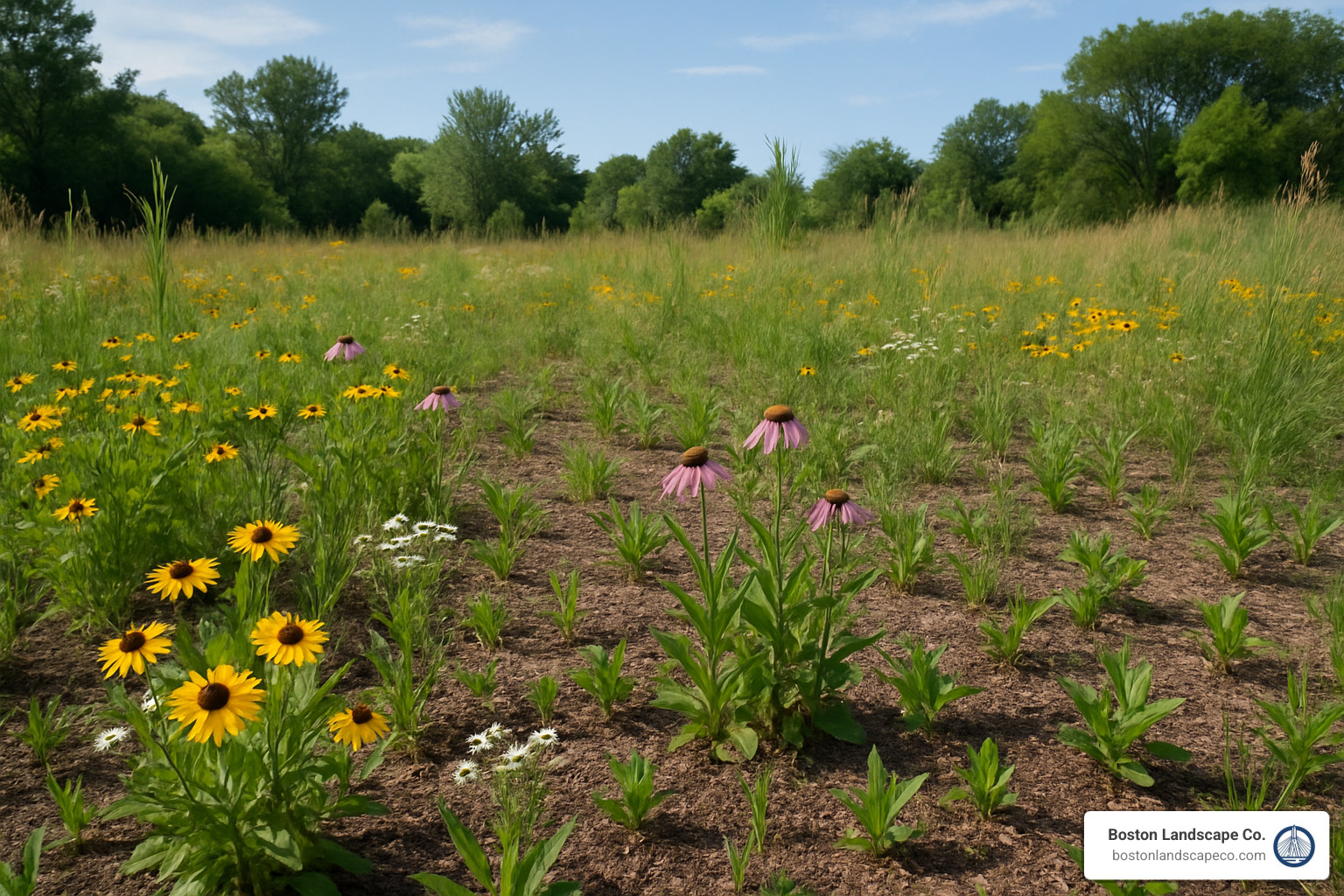
Success with Invasive Species Removal doesn’t end when you pull the last plant or apply the final herbicide treatment. The real challenge begins now—keeping those invasive species from coming back while helping native plants reclaim their rightful place.
Think of freshly cleared areas like blank canvases. Without quick action, invasive seeds will rush in to fill that empty space faster than you can say “purple loosestrife.” Research shows that native seeds struggle to establish in areas previously dominated by invasive plants, which is why weed management should begin at least one season before seeding native plants—preferably two seasons to truly deplete that hidden seed bank lurking in your soil.
Native revegetation becomes your secret weapon against reinvasion. Within 30 days of removal, we recommend getting native plants in the ground. These aren’t just pretty additions to your landscape—they’re actively competing with invasive seedlings for space, light, and nutrients. Our ecological restoration team has seen how quickly the right native plants can transform a former invasion site into thriving habitat.
Mulch barriers provide immediate protection while your native plants establish. Apply 3-4 inches of certified weed-free mulch around new plantings, but make sure that mulch comes from a trusted source. We’ve witnessed too many properties get reinfested because someone used contaminated mulch that was basically a delivery system for invasive seeds.
For slopes where you’ve removed aggressive vines like English ivy, erosion control becomes critical. Install jute netting or other biodegradable materials to hold soil in place while native groundcovers spread. Nobody wants to watch their hard work wash away in the next heavy rainstorm.
Follow-up monitoring might sound tedious, but monthly inspections during growing season catch problems while they’re still manageable. It’s much easier to pull a few invasive seedlings than to start your removal project all over again next year.
Keeping Invaders Out for Good
Prevention works like a good security system—multiple layers of protection that make invasion much less likely. The PlayCleanGo principles form the foundation: clean your boots, clean your gear, and clean your vehicles between sites. Those innocent-looking mud clumps on your hiking boots could be carrying thousands of invasive seeds just waiting for their chance.
Boot-brush stations at trailheads and property entrances give people an easy way to clean off before they explore. We’ve installed these simple systems for clients who host community events or allow public access to their land. A stiff brush and some basic signage can prevent countless invasions.
Weed-free materials sound expensive, but they’re cheaper than dealing with new infestations. Always specify certified sources for mulch, soil, and gravel. Yes, it costs a bit more upfront, but we’ve seen contractors accidentally introduce Japanese stiltgrass through contaminated topsoil—an expensive mistake that took years to correct.
Clean-gear protocols should become second nature. Wash mowers, tools, and vehicles after working in infested areas. Even professional landscaping crews can spread invasive plant fragments between properties if they’re not careful about equipment cleaning.
Community volunteers and outreach signage help spread awareness beyond your property boundaries. Invasive species don’t respect property lines, so the more your neighbors understand the threats, the better protected everyone becomes. Simple signs explaining invasive species identification can turn visitors into early detection allies.
Monitoring & Adaptive Management
Long-term monitoring separates successful removal projects from expensive failures. Even after perfect Invasive Species Removal, dormant seeds can wait underground for years before germinating. New invasions arrive constantly through wind dispersal, wildlife transport, and human activities.
Annual surveys each spring help you catch problems early. Walk your entire property with camera and notebook, documenting any suspicious plants. Photo-points at established monitoring locations create a visual record of your progress—and they’re incredibly satisfying to review after a few years of successful management.
Adaptive management means staying flexible with your strategies. If hand-pulling isn’t controlling garlic mustard effectively after two seasons, it’s time to consider targeted herbicide applications. If targeted grazing reduced your multiflora rose by 90%, schedule follow-up grazing sessions to maintain that control.
Adjust thresholds based on what you learn about your specific site. Some areas might tolerate a few scattered invasive plants without ecological harm, while sensitive habitats need more aggressive management. The goal isn’t perfection—it’s maintaining invasive populations below levels that cause unacceptable damage to your native ecosystem.
Cost, Safety & When to Call Professionals
Invasive Species Removal projects can range from a weekend DIY effort to a multi-year professional campaign. Based on internet data, average project costs span from $500 to $5,000, though complex projects requiring specialized equipment or permits can reach $15,000 or more. These are not actual costs for our services—we provide customized quotes based on your specific situation and property needs.
Several factors dramatically influence your final investment. Infestation size is the biggest driver—a small patch of garlic mustard might cost a few hundred dollars to treat, while Japanese knotweed covering several acres could require thousands. Species type matters too, since woody invasives like autumn olive demand more labor and equipment than herbaceous plants you can hand-pull.
Site accessibility adds another layer of complexity. We’ve tackled invasive removal projects on steep riverbanks where equipment access was nearly impossible, significantly increasing labor costs. Remote locations or areas requiring special disposal of invasive debris also bump up the price tag.
Safety considerations go far beyond wearing gloves and long sleeves. Proper chemical handling requires understanding label requirements, mixing ratios, and application timing. Many herbicides need specific protective equipment, and some states restrict certain pesticides entirely. Applications near water bodies require aquatic-approved formulations and often special permits.
Licensing laws vary by state, but Massachusetts requires certification for commercial pesticide applications. Professional applicators carry liability coverage that protects both your property and neighboring areas from accidental damage. We’ve seen DIY herbicide applications go wrong when homeowners didn’t understand wind drift or mixing ratios.
Wetland permits add another regulatory layer. Any work within 100 feet of wetlands typically requires local conservation commission approval. The permitting process can take months, but it’s essential for protecting water quality and avoiding hefty fines.
One often-overlooked cost factor is re-sprout risk. Many invasive species regrow vigorously from root fragments or stumps. Japanese knotweed, for instance, can regenerate from root pieces smaller than your thumb. Professional treatments account for this by scheduling follow-up visits and using appropriate herbicide timing.
DIY vs Pro: Decision Checklist
The sweet spot for DIY Invasive Species Removal involves small infestations of species that respond well to mechanical removal. If you’re dealing with less than 1,000 square feet of garlic mustard or a few multiflora rose bushes, rolling up your sleeves makes financial sense.
Budget considerations often drive the initial decision, but factor in your time investment too. Hand-pulling invasives is meditative for some folks and pure drudgery for others. A small infestation might take a weekend to remove but require monthly monitoring for three years to prevent reestablishment.
Infestation size becomes the tipping point around one acre. At that scale, professional equipment like forestry mulchers or boom sprayers dramatically reduce treatment time and often provide better long-term results than piecemeal DIY efforts.
Chemical handling expertise separates professionals from weekend warriors. We’ve invested in specialized equipment for precise herbicide application and understand how weather, plant growth stage, and soil conditions affect treatment success. The wrong herbicide or poor timing can waste money and delay control by an entire growing season.
Specialized equipment needs push many projects into professional territory. Removing large invasive trees requires chainsaws, stump grinders, and often cranes for safe removal. Aquatic invasive control demands boats and submersible pumps for herbicide application.
We often recommend a hybrid approach that maximizes your budget while ensuring long-term success. Professional crews handle the initial knockdown of large infestations using specialized equipment, then property owners maintain control through regular monitoring and spot treatments. This strategy typically costs 40-60% less than full professional management while achieving better results than pure DIY efforts.
The decision ultimately comes down to matching your resources—time, budget, and expertise—with the scope of your invasive species challenge. For more information about our approach to invasive species management, check out our invasive plant removal companies near me resource page.
Frequently Asked Questions about Invasive Species Removal
When I talk with property owners about Invasive Species Removal, I hear the same questions over and over. Let me share the answers to the most common concerns that come up during our consultations.
What is the difference between suppression and eradication?
Think of eradication as trying to eliminate every last invasive plant from an area—not a single seed or root fragment left behind. It sounds ideal, but here’s the reality: research shows this is achieved in 0% of marine and only 11% of freshwater invasions once species become established. The numbers tell the story of how challenging complete elimination really is.
Suppression takes a more practical approach. Instead of chasing perfection, we focus on keeping invasive populations below levels that cause serious damage. This strategy is used in 57% of marine and 21% of freshwater invasions because it actually works long-term.
Functional eradication offers the sweet spot between these approaches. We reduce invader densities below levels that cause unacceptable ecological effects without obsessing over every last plant. Think of it like managing weeds in your lawn—you don’t need zero dandelions to have a healthy, attractive yard.
This approach often provides better return on your investment than pursuing complete elimination. You get the ecological benefits without the endless expense of chasing phantom plants.
How safe are herbicides for pets and pollinators?
This question keeps many homeowners up at night, and rightfully so. The safety of herbicides depends entirely on proper application and smart product selection. When glyphosate and triclopyr are used according to label directions, they pose minimal risk to mammals but can harm beneficial insects during application.
Here’s how we protect both your pets and the environment. We time applications when pollinators are less active—early morning or evening when bees and butterflies aren’t foraging. We choose selective herbicides that target specific plant types rather than broad-spectrum products that affect everything.
Keep pets indoors during and immediately after application—usually just a few hours until the product dries. Always follow label restrictions for grazing animals and food crops. These aren’t suggestions; they’re legal requirements designed to protect your family.
Aquatic formulations deserve special mention. These products are specifically designed for use near water and break down more quickly than terrestrial herbicides. If you have wetlands or streams on your property, never use regular herbicides near water—the environmental and legal consequences aren’t worth the risk.
Can I compost invasive plant debris?
I wish I could give you a simple “yes” here, but most invasive plant material should NOT be composted. Seeds and plant fragments are incredibly resilient—they can survive the composting process and spread when you use the finished compost. It’s like giving invasive species a free ride to new locations.
There are a few exceptions worth knowing about. Thoroughly dried material without seeds can sometimes be composted safely. Commercial facilities that reach temperatures above 140°F can handle some invasive debris. A few specific species without persistent seeds or vegetative reproduction might be okay, but these are rare.
Never compost Japanese knotweed, purple loosestrife, or other species that reproduce vegetatively. These plants can regrow from tiny root fragments, turning your compost pile into an invasive species nursery.
We recommend bagging invasive debris for municipal disposal or burning where permitted by local regulations. It might seem wasteful, but it prevents accidentally spreading the problem to new areas. Trust me—the extra disposal cost is nothing compared to dealing with a full-blown invasion later.
Conclusion
The battle against invasive species never truly ends, but with the right approach, you can win the war for your property. Invasive Species Removal isn’t just about pulling weeds—it’s about protecting the ecological and economic value of your land for generations to come.
Think of it this way: every invasive plant you remove today prevents thousands of seeds from spreading tomorrow. That small patch of garlic mustard might seem harmless now, but left unchecked, it could dominate your woodland understory within five years. The key is acting while you still have the upper hand.
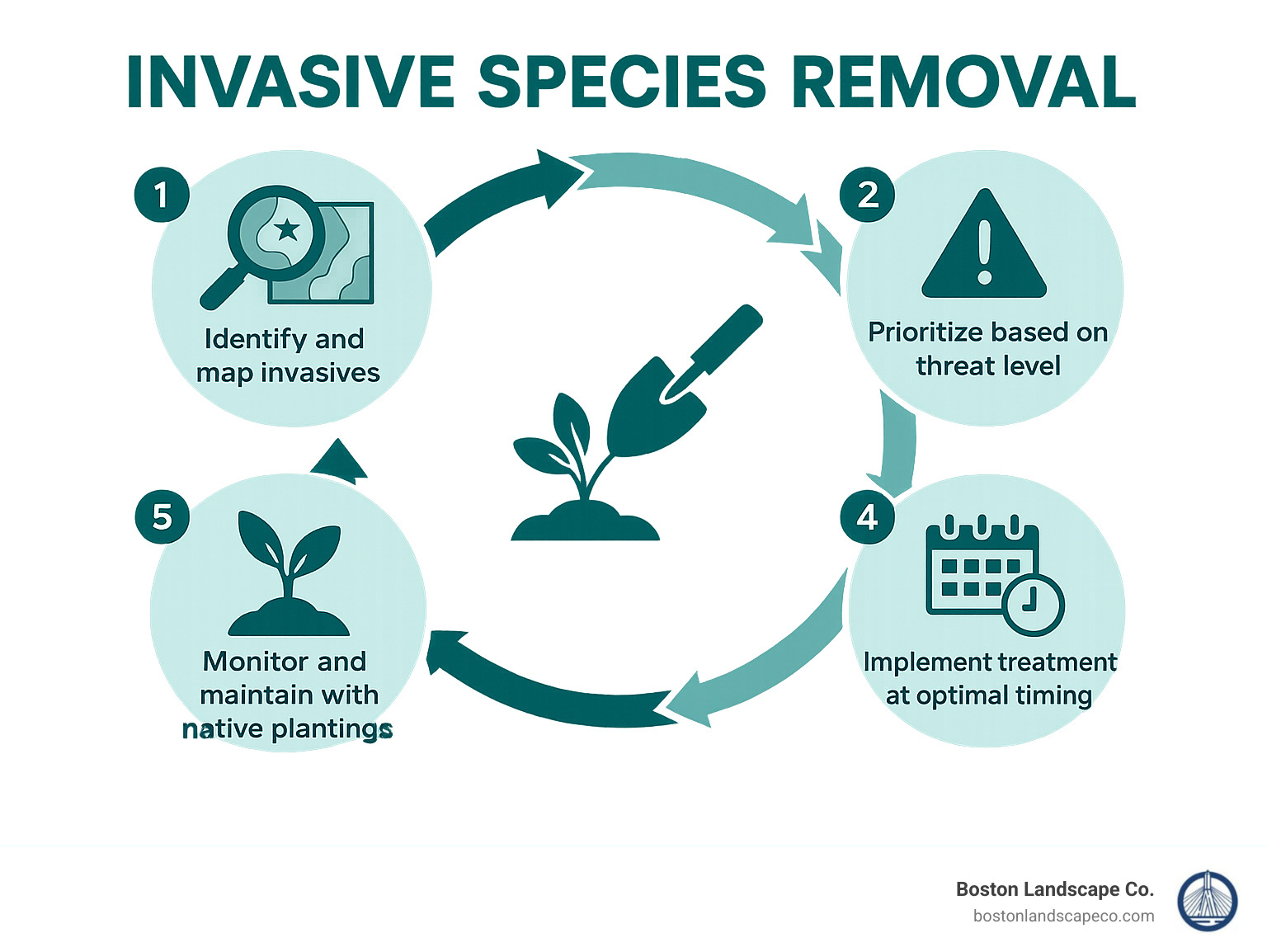
The five-step cycle shown above—identify, prioritize, select methods, implement at the right time, and monitor with native plantings—gives you a roadmap that works whether you’re tackling a backyard invasion or managing hundreds of acres. Start small, build momentum, and celebrate your victories along the way.
Prevention beats treatment every time. Cleaning your boots after hiking, using certified weed-free materials, and planting natives instead of non-native ornamentals stops problems before they start. It’s like brushing your teeth—a little effort now prevents big problems later.
Don’t feel like you have to go it alone. Professional help makes sense for large infestations, chemical treatments, or work near sensitive areas like wetlands. At Boston Landscape Co, we’ve seen property owners successfully combine DIY efforts with professional support to get the best results within their budget.
The research is clear: integrated approaches work best. Combining mechanical removal, targeted herbicide use, and biological controls creates sustainable solutions that adapt to changing conditions. What matters most is getting started and staying consistent with your efforts.
Native revegetation transforms removal sites from bare soil into thriving habitat that naturally resists future invasions. Our wetland services include specialized restoration approaches for aquatic environments where invasive species pose the greatest threats to water quality and wildlife.
Your property is worth protecting. Whether it’s a small suburban lot or a large rural estate, Invasive Species Removal preserves the natural beauty and ecological function that makes New England special. The sooner you start, the easier and less expensive your long-term management becomes.
Ready to take action? The best time to begin Invasive Species Removal was yesterday—the second-best time is today.
