In-Ground Trampoline Drainage: Top 4 Proven Solutions
In-ground trampoline drainage is crucial in preventing water-related issues that could affect the safety and longevity of your trampoline. As these entertaining backyard additions become increasingly popular, understanding their drainage needs can make all the difference. Here’s a quick overview of key elements for managing water:
- Importance: Prevents water accumulation, ensuring safety and trampoline longevity.
- Safety Concerns: Reduces risks of rust, deterioration, and loose soil which can lead to instability.
- Effective Options: Simple pump solutions, drain pipes, and French drains are viable methods.
Providing proper drainage not only preserves your investment but also improves safety for the whole family. The lack of adequate drainage could lead to water buildup, which might result in rust, frame weakening, and potential injury risks due to instability.
As an expert with over three decades in landscaping, including specializing in in-ground trampoline drainage, I’m Steve Schumacher, owner of Boston Landscape Co. Throughout my career, I’ve learned the ins-and-outs of landscape solutions, ensuring functionality and aesthetics coexist seamlessly in outdoor spaces.
Let’s explore how to ensure your trampoline remains safe and functional even in the wettest conditions.
Quick in-ground trampoline drainage definitions:
– how to build trampoline in ground
– how to install an in ground trampoline
– can i put a normal trampoline in the ground
Understanding In-Ground Trampoline Drainage
When installing an in-ground trampoline, understanding the drainage system is key to maintaining its safety and longevity. The type of soil, the water table level, and the climate all play a significant role in how you should approach in-ground trampoline drainage.
Soil Types
The type of soil in your yard can greatly affect drainage. Sandy soils allow water to drain quickly, which is ideal for trampolines. However, clay soils retain water, leading to potential flooding. If you have clay soil, consider adding gravel to improve drainage. This helps create a stable base and prevents water accumulation.
Water Table
The water table is the level below which the ground is saturated with water. In areas with a high water table, water can easily seep into the trampoline pit, causing it to fill up. In such cases, installing a more robust drainage system, like a French drain, might be necessary to keep the area dry.
Climate Impact
Climate also impacts how you manage drainage. In regions with frequent rain, like the northeastern United States, it’s crucial to have a reliable drainage system. A permanent pump solution can be beneficial, as it automatically drains excess water, preventing buildup after heavy rainfall.

In contrast, drier climates might only require a simple ‘as and when’ pump solution. This involves using a pump to remove water only when necessary, making it a more cost-effective option for areas with occasional rain.
Understanding these factors will help you choose the right drainage solution for your in-ground trampoline. Proper preparation ensures your trampoline remains a safe and enjoyable feature in your backyard, regardless of the weather conditions.
Options for In-Ground Trampoline Drainage
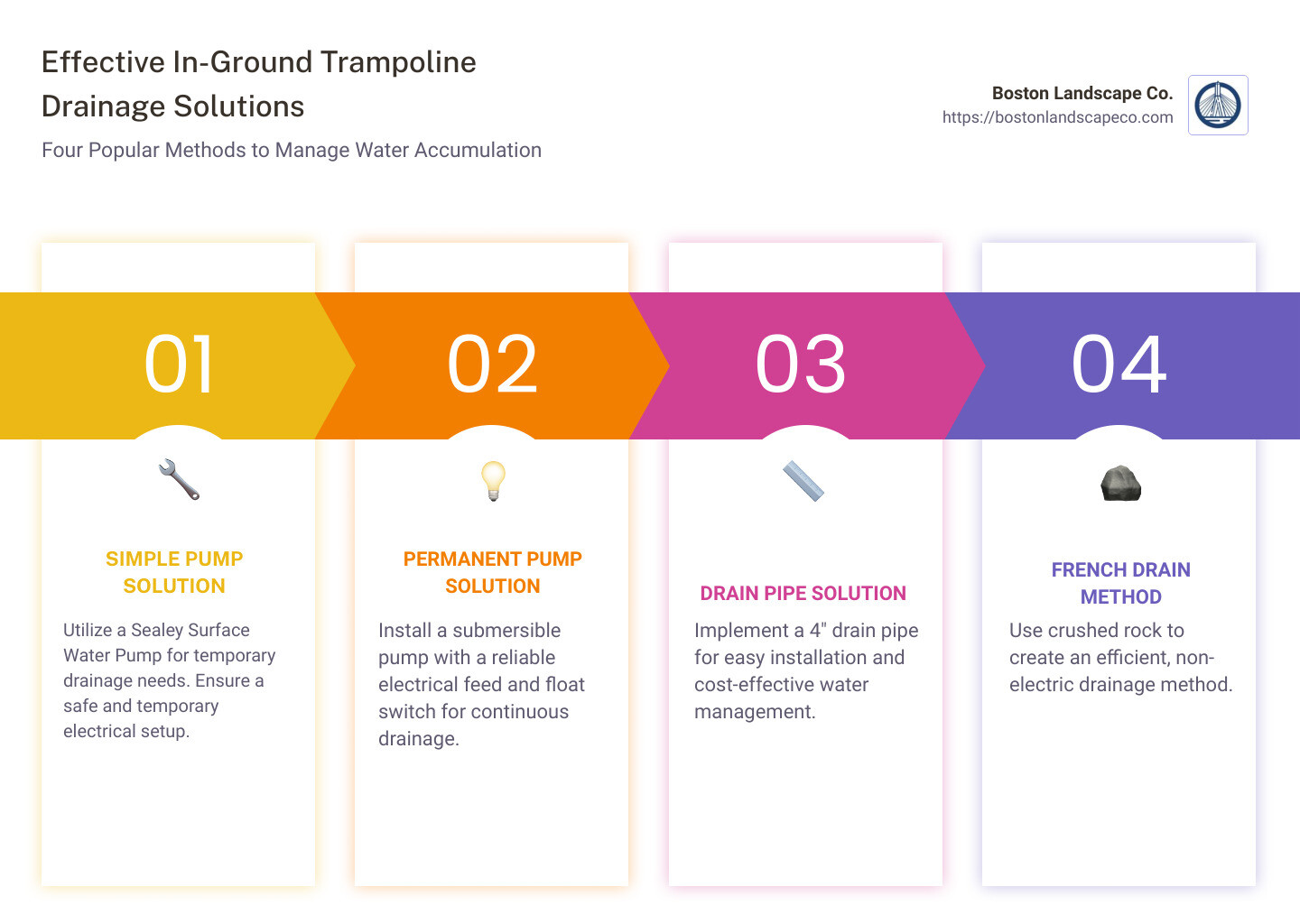
When it comes to in-ground trampoline drainage, there are several effective solutions to consider. Each option has its benefits and is suited to different situations and climates. Let’s explore four main drainage solutions:
Simple ‘As and When’ Pump Solution
This is a straightforward approach ideal for areas with infrequent rainfall. You can use a Sealey Surface Water Pump to quickly remove water from the trampoline pit whenever it fills up.
Here’s how it works:
- Temporary electrical supply: Simply connect the pump to an extension cord from a nearby power source.
- Place the pump in the pit and direct the outflow hose to a suitable drainage area in your yard.
This method is cost-effective and easy to implement, especially if water accumulation is not a constant problem.
Permanent Pump Solution
For regions with frequent rain or high water tables, a permanent pump solution is more reliable. This involves placing a submersible pump at the bottom of the trampoline pit, connected to a permanent electrical feed.
- Float switch: This device automatically activates the pump when water levels rise, ensuring your pit stays dry without constant monitoring.
While the initial setup requires more effort, including digging a trench for cables and hoses, it provides peace of mind and long-term protection against water buildup.
Drain Pipe Solution
The drain pipe solution is another practical choice, especially for properties with a natural slope.
- Install a 4″ drain pipe to direct water from the trampoline pit to a lower area, like a ditch or garden bed.
- This option is easy to install and doesn’t require electricity, making it a cost-effective and low-maintenance choice.
By using gravity to move water away, you can maintain a dry trampoline area with minimal intervention.
French Drain Method
Lastly, the French drain method offers a non-electric solution to water drainage.
- Dig a small pit within the trampoline area and fill it with crushed rock.
- This setup allows water to seep through the rocks, dispersing it naturally into the surrounding soil.
This method is highly efficient for managing water without the need for pumps or electricity, making it an excellent choice for those who prefer a more natural approach.
By selecting the right drainage option, you can ensure your in-ground trampoline remains safe and functional, no matter the weather conditions. Each method has its unique advantages, allowing you to choose the best fit for your landscape and climate needs.
Installation Tips for Effective Drainage
Ensuring proper in-ground trampoline drainage starts with a well-executed installation. Here are some key tips to help you achieve effective drainage for your trampoline:
Digging Techniques
When preparing the hole for your in-ground trampoline, precision is crucial.
- Depth and Width: Dig the hole about 3 feet deep, ensuring it’s slightly larger than the trampoline frame. This extra space allows for easy installation and maintenance.
- Drainage Pit: Include a dedicated drainage pit within the main hole. This smaller pit should be about 2 feet by 2 feet and a couple of feet deep, serving as a collection point for water.
Using the right tools, such as a small backhoe for larger projects or a shovel for smaller ones, can make the digging process more efficient.
Positioning
The position of your trampoline can significantly impact its drainage efficiency.
- Slope Awareness: If your yard has a natural slope, position the trampoline at the highest point. This reduces the risk of water pooling around the trampoline and helps direct water flow away from the area.
- Avoid Low Spots: Avoid placing the trampoline in natural low spots where water tends to collect. This minimizes the risk of waterlogging and potential damage.
Slope Considerations
Creating a slight slope within the trampoline hole can greatly improve drainage.
- Internal Slope: Ensure the bottom of the hole slopes slightly towards the drainage pit. This encourages water to flow naturally into the pit, preventing stagnation.
- External Slope: Surround the trampoline area with a gentle slope leading away from the trampoline. This helps divert surface water runoff away from the trampoline, keeping the area dry.
By following these installation tips, you can ensure that your in-ground trampoline is not only safe and enjoyable but also well-protected against water issues. Proper digging techniques, strategic positioning, and thoughtful slope considerations are key to achieving effective drainage.
Preventative Measures and Maintenance
Once you’ve installed your in-ground trampoline with proper drainage, it’s important to keep it functioning smoothly with regular maintenance.
Regular Checks
Performing regular checks can help you catch small issues before they become big problems.
- Inspect the Drainage System: Every month, check the drainage pit, pipes, and any pumps for signs of blockages or damage. Look for leaves, dirt, or debris that might clog the system.
- Check for Water Accumulation: After heavy rain, inspect the trampoline area to ensure water is draining properly and not pooling around the trampoline.
Clearing Blockages
Blockages can lead to water buildup, which can damage your trampoline and the surrounding area.
- Remove Debris: Clear any leaves, sticks, or other debris from the drainage area regularly. A simple garden rake or your hands can do the trick.
- Clean Drainage Pipes: If you have a drain pipe installed, flush it with water occasionally to remove any sediment or small debris that might have settled inside.
Seasonal Adjustments
Different seasons bring different challenges for your trampoline drainage system.
- Spring and Fall: These seasons often bring more rain, so check your drainage system more frequently. Ensure that nearby trees or bushes aren’t shedding leaves into the drainage area.
- Winter: If you live in an area prone to freezing temperatures, ensure your drainage system is prepared. Clear any snow buildup around the trampoline and check that water isn’t freezing in pipes or pumps, which can cause damage.
By staying on top of these preventative measures and maintenance tasks, you can extend the life of your in-ground trampoline and ensure it remains a safe and fun feature in your yard. Regular checks, clearing blockages, and making seasonal adjustments are key to effective in-ground trampoline drainage management.
Frequently Asked Questions about In-Ground Trampoline Drainage
Do all in-ground trampolines need drainage?
Not every in-ground trampoline requires drainage, but it’s a smart idea to have it. Drainage is crucial if you live in an area with frequent rain or a high water table. Without proper drainage, water can accumulate in the pit, causing damage to the trampoline and the surrounding soil.
In drier climates, you might get away without a drainage system. However, it’s always better to be proactive. As one expert put it, “Unless your residing area is of a very low water table, then the trampoline hole is at risk to be filled with water when the storm will rage on.”
How to check if your in-ground trampoline drainage is working?
Checking your in-ground trampoline drainage system is straightforward. After a rainstorm, observe the trampoline area:
- No Standing Water: Ensure there’s no water pooling around or under the trampoline. If water is draining properly, the area should be dry or drying quickly.
- Inspect the Drainage Components: Look at the drainage pipes or pumps. Are they clear of debris? If you have a pump, listen to ensure it’s functioning when water is present.
- Check the Soil: The soil around the trampoline should not be soggy. If it’s waterlogged, your drainage system might not be working effectively.
Can drainage systems be installed after the trampoline is in place?
Yes, drainage systems can be added after installation. It’s a bit more challenging but entirely doable. Many trampoline designs allow for drainage solutions to be retrofitted.
- Temporary Solutions: You can start with a temporary pump to manage immediate water issues.
- Permanent Additions: For a long-term fix, consider adding a French drain or a drain pipe. These can be installed by digging trenches around the trampoline, even after the trampoline is in place.
It’s never too late to improve your trampoline’s drainage. Installing a system after the fact can prevent future damage and extend the life of your trampoline.
Conclusion
Investing in proper in-ground trampoline drainage is not just a smart move for immediate peace of mind; it also offers significant long-term benefits. Effective drainage systems prevent water accumulation, which can lead to rusting and structural damage. This means your trampoline will last longer and perform better, saving you money on repairs or replacements down the line.
Moreover, a well-drained trampoline area improves safety for users. With a dry and stable environment, the risk of slips and falls is minimized, ensuring that your family can enjoy their backyard fun without unnecessary hazards.
At Boston Landscape Co., we understand the importance of a well-designed landscape that functions seamlessly with your lifestyle. Our team specializes in creating custom outdoor solutions that include expert installation of in-ground trampolines with effective drainage systems. We are committed to ensuring your trampoline is not only a fun addition to your yard but also a safe and durable one.
For more information on our installation services and how we can help you with your in-ground trampoline project, visit our service page. Let us help you transform your backyard into a safe and enjoyable space for unforgettable memories.