
How to Landscape Wetlands on Your Property: Top 3 Marvelous Tips
How to landscape wetlands on your property is not just a way to increase your outdoor space’s visual appeal; it can offer a multitude of ecological and financial benefits. By embracing sustainable landscaping practices, such as utilizing native plants and minimizing soil disturbance, you can transform wetlands into vibrant landscapes that improve biodiversity and boost property value. The key is to respect the unique characteristics of wetlands while integrating natural solutions that align with conservation efforts. Whether you’re a homeowner or a property manager, understanding how to landscape wetlands on your property is essential for leveraging the natural beauty and resilience of these areas.
Welcome to “From Marsh to Marvel: Landscaping Wetlands on Your Property.” In Boston and its neighboring areas, wetlands play a vital role in our local ecosystems. If managed thoughtfully, they can become a valuable asset, both aesthetically and economically. My name is Steve Schumacher, the owner of Boston Landscape Co. With over 30 years of experience, I’ve guided numerous clients on how to landscape wetlands on your property. You’ll find practical and regulatory insights that will transform wetlands into beautiful, sustainable landscapes.
How to landscape wetlands on your property word roundup:
– Wetland Landscaping Services
– allowable wetlands landscaping
– constructed wetlands in the sustainable landscape
Understanding Wetlands
When it comes to landscaping wetlands on your property, the first step is understanding what wetlands are and the role they play in our ecosystem. Wetlands are not just soggy patches of land; they are dynamic ecosystems that support a wide range of wildlife and plant species.
Wetland Types
Wetlands can be marshes, swamps, or bogs, each with its unique characteristics. Marshes are dominated by grasses and reeds, swamps are characterized by woody plants and trees, and bogs are acidic wetlands with mosses and shrubs. These diverse landscapes can be permanently or seasonally flooded, and each type supports different kinds of wildlife and plants.
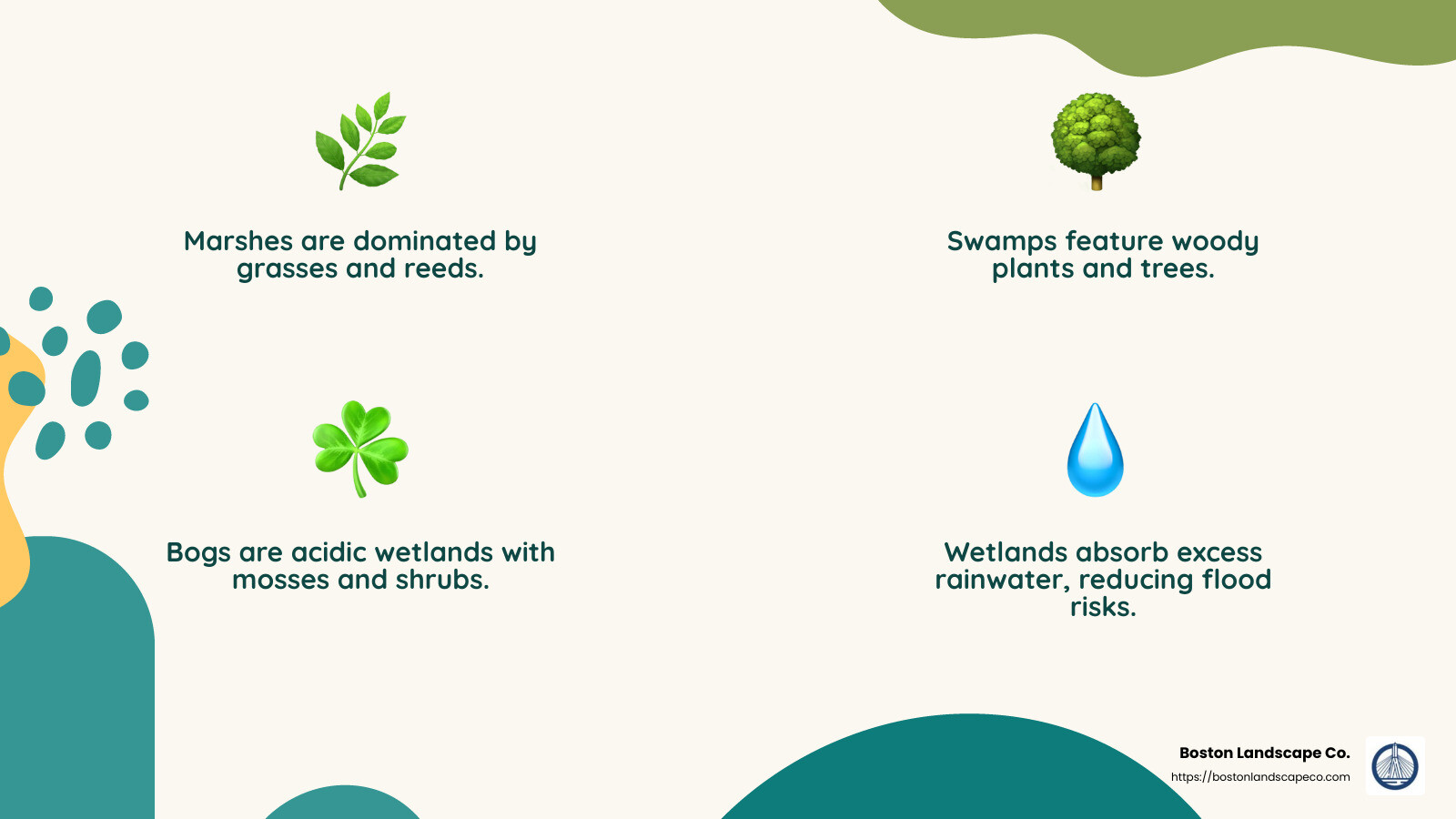
Understanding the type of wetland on your property is crucial. It helps you decide the best approach for landscaping and conservation.
Ecosystem Benefits
Wetlands are like nature’s sponges. They absorb excess rainwater, reducing the risk of floods. As Barbara Walther, a senior ecologist, explains, wetlands “hold excess water and release it slowly,” which helps manage stormwater and prevent erosion. They also act as natural filters, purifying water by trapping sediments and breaking down pollutants.
Moreover, wetlands are biodiversity hotspots. They provide breeding, feeding, and sheltering grounds for various species, from birds to amphibians. A healthy wetland can even deter mosquitoes by supporting predators like frogs and birds.
Regulations
Navigating the regulations surrounding wetlands is essential for any landscaping project. In the U.S., wetlands are protected under the Clean Water Act, administered by the U.S. Army Corps of Engineers and the Environmental Protection Agency. This act regulates activities that may impact wetlands, such as construction or landscaping, to prevent the loss of these crucial ecosystems.
For property owners in places like Boston, understanding local regulations is equally important. States may have additional rules to protect water quality and public trust, often managed by departments like the Massachusetts Department of Environmental Protection.
Before starting any project, it’s wise to consult with regulatory staff. They can guide you through the permitting process, ensuring your landscaping efforts comply with federal, state, and local laws.
Understanding these aspects of wetlands will help you make informed decisions and transform your property into a thriving, sustainable landscape. Up next, we’ll dive into how to select native plants for your wetland, enhancing its natural beauty and ecological value.
How to Landscape Wetlands on Your Property
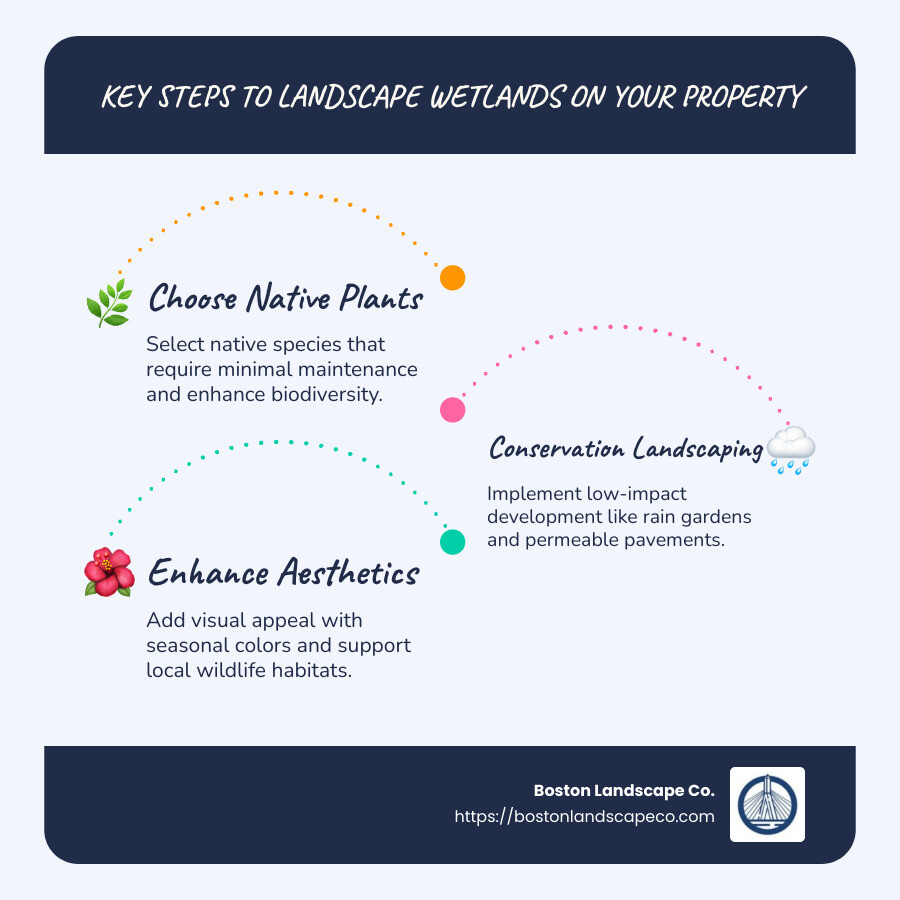
When considering how to landscape wetlands on your property, choosing the right plants and techniques is crucial. By focusing on native plants and conservation landscaping, you can create a beautiful, sustainable space that supports local ecosystems.
Choosing Native Plants
Native plants are the stars of wetland landscaping. These plants have adapted to the local environment over centuries, making them resilient and low-maintenance. They require less water and fewer fertilizers, which means less effort and cost for you.
Using native plants is not just about ease. It’s also about supporting biodiversity. Native species provide food and shelter for local wildlife, helping to maintain the ecological balance. For example, incorporating plants like sweet gum, tamarack, blueberries, and cranberries can add seasonal color while attracting birds and pollinators.
Here’s a quick list of benefits when choosing native plants:
- Minimal maintenance: Once established, they thrive with little care.
- Biodiversity support: They offer habitats for local wildlife.
- Pollution reduction: They help filter runoff before it reaches waterways.
Implementing Conservation Landscaping
Conservation landscaping involves using strategies that protect natural resources while enhancing the beauty of your property. Here are some techniques to consider:
Low-Impact Development
Low-impact development focuses on managing stormwater and reducing environmental footprints. This approach minimizes disruption to the natural landscape and helps preserve the wetland’s ecological functions.
Rain Gardens
A rain garden is a shallow, planted depression that collects rainwater runoff from roofs and driveways. This allows water to slowly seep into the ground, reducing erosion and filtering pollutants. The James River Association’s Rain Garden Installation Guide is a great resource for setting up a rain garden.
Permeable Pavement
Instead of traditional concrete, opt for permeable pavement. This type of surface allows water to pass through, reducing runoff and helping recharge groundwater supplies. It’s an effective way to maintain the natural hydrology of your wetland area.
By incorporating these strategies, you can create a thriving wetland landscape that is both aesthetic and ecologically beneficial. Up next, we’ll explore how to improve the visual appeal of your wetland while supporting the local wildlife.
Enhancing Wetland Aesthetics
When it comes to enhancing the aesthetics of wetlands on your property, you can achieve a harmonious blend of beauty and ecological function. By thoughtfully selecting plant species and designing spaces that cater to both human enjoyment and wildlife needs, your wetland can become a vibrant and lively part of your landscape.
Creating Visual Appeal
To create visual appeal in your wetland, consider incorporating plants that offer seasonal color and interest. Species like sweet gum and tamarack are excellent choices. Sweet gum trees are known for their star-shaped leaves that turn brilliant shades of red, orange, and purple in the fall. Tamaracks, on the other hand, are unique deciduous conifers that add a splash of bright yellow before shedding their needles in autumn.
For ground cover and edible landscaping, blueberries and cranberries are both practical and attractive. These native shrubs not only provide seasonal color with their fruits and foliage but also attract birds and pollinators. The vibrant berries stand out against lush green leaves, offering a feast for the eyes and a source of nourishment for local wildlife.
Supporting Wildlife
A well-landscaped wetland does more than just look good—it supports a thriving ecosystem. By focusing on creating habitats, you can ensure that your wetland serves as a wildlife sanctuary.
- Food Sources: Planting a variety of native species like blueberries and cranberries provides essential food for birds and mammals. These plants produce berries that are a favorite among many species, ensuring your wetland is a busy hub of activity.
- Shelter and Breeding Sites: Incorporating shrubs and trees like sweet gum and tamarack offers shelter and breeding sites for wildlife. Dense foliage provides protection from predators and harsh weather, creating a safe haven for nesting birds and small mammals.
- Diverse Habitats: By varying plant types and heights, you create a range of habitats. This diversity supports different species, from ground-dwelling insects to canopy-nesting birds, enhancing the overall biodiversity of your wetland.
By focusing on beautification and wildlife habitat, you can transform your wetland into a picturesque and ecologically rich environment. Next, we will address common questions about wetland landscaping and how to steer the challenges that come with it.
Frequently Asked Questions about Wetland Landscaping
What to do if I have wetlands on my property?
If you find that you have wetlands on your property, the first step is to report and consult with the appropriate authorities. In many areas, including Massachusetts, the Department of Natural Resources (DNR) is a valuable resource for understanding your responsibilities. They can provide guidance on how to protect and manage your wetland ecosystem effectively.
Wetlands are vital ecosystems that offer numerous benefits, such as water filtration, wildlife habitat, and flood control. It’s crucial to approach any landscaping or development projects with these ecological functions in mind.
How do you landscape around wetlands?
When landscaping around wetlands, it’s important to use native marsh grasses and plants that thrive in wet conditions. Native species are adapted to the local environment, requiring less maintenance and providing habitat for local wildlife.
To reduce environmental impact, aim to minimize paved surfaces around your wetland. Instead, consider using permeable materials that allow water to soak through, reducing runoff and erosion.
Using mulch can also be beneficial. It helps retain soil moisture, suppress weeds, and improve soil health. Be sure to choose organic mulch materials that are free from invasive seeds or chemicals that could harm the wetland ecosystem.
Do wetlands decrease property value?
The presence of wetlands on a property can have varying impacts on market value. While some may view wetlands as development challenges due to regulatory restrictions, others see them as valuable natural assets that improve the property’s appeal and ecological value.
Permitable wetlands offer opportunities for creative landscaping and sustainable development. By working with professionals and obtaining the necessary permits, you can develop around wetlands in a way that is both beautiful and compliant with regulations.
In many cases, well-maintained wetlands can increase property value by providing unique outdoor spaces and contributing to the overall health of the local environment. It’s important to weigh the ecological benefits and potential development limitations when considering property value.
Conclusion
At Boston Landscape Co., we believe that wetlands are not just patches of soggy land but valuable ecosystems that can improve your property. Our expertise in wetland management helps transform these areas into beautiful, functional outdoor spaces.
Wetland Management
Wetlands are crucial for maintaining biodiversity, managing floodwaters, and improving water quality. Proper management ensures these benefits are preserved. We work closely with wetland scientists to restore and maintain these ecosystems, ensuring compliance with state and local regulations.
Our wetland services include everything from restoration and mitigation to invasive species removal. We aim to improve the natural beauty and ecological function of your wetlands.
Outdoor Space Improvement
With thoughtful landscaping, wetlands can become the highlight of your property. By choosing native plants and employing conservation landscaping techniques, we create spaces that are both stunning and sustainable. Whether it’s installing rain gardens or using permeable pavements, our goal is to blend functionality with aesthetics.
Wetlands, when managed well, can offer unique recreational opportunities and a serene natural setting right in your backyard. They can become a haven for wildlife, a place for reflection, and a beautiful complement to your home.
Let’s turn your wetland from a marsh to a marvel. Contact us today to explore how we can improve your outdoor space with our expert wetland landscaping services.
