
Hardscape repair near me: Top 3 Expert Fixes
Why Hardscape Repair Near Me Matters for Your Property
Hardscape repair near me is a top search for homeowners after a harsh New England winter. If you’re seeing sunken pavers, cracked walkways, or shifting retaining walls, you’re not alone—and you need answers fast.
Quick Answer: What to Know About Local Hardscape Repair:
- Common Issues: Sinking pavers, cracked concrete, retaining wall separation, weeds in joints.
- Repair vs. Replace: Repair localized damage with a sound foundation; replace for widespread structural failure.
- Average Costs: Patio repairs average $750 nationally ($400–$3,000+), varying by material and damage.
- Finding Pros: Look for insured local contractors with portfolios and detailed written estimates.
- Timeline: Professional repairs that fix root causes can last 25+ years.
Your outdoor hardscapes—patios, walkways, and retaining walls—take a beating from our freeze-thaw cycles. Cracked concrete creates trip hazards, sunken pavers collect puddles, and bulging retaining walls threaten your property’s safety and value.
The good news is that most damage is repairable if caught early. The key is to address the root cause, whether it’s poor drainage, an inadequate base, or simple wear and tear.
I’m Steve Schumacher, founder of Boston Landscape Co. Since 1991, I’ve helped hundreds of Greater Boston homeowners restore their outdoor spaces with expert hardscape repair near me services. We know proper repairs mean fixing what’s wrong underneath to ensure your investment lasts for decades.
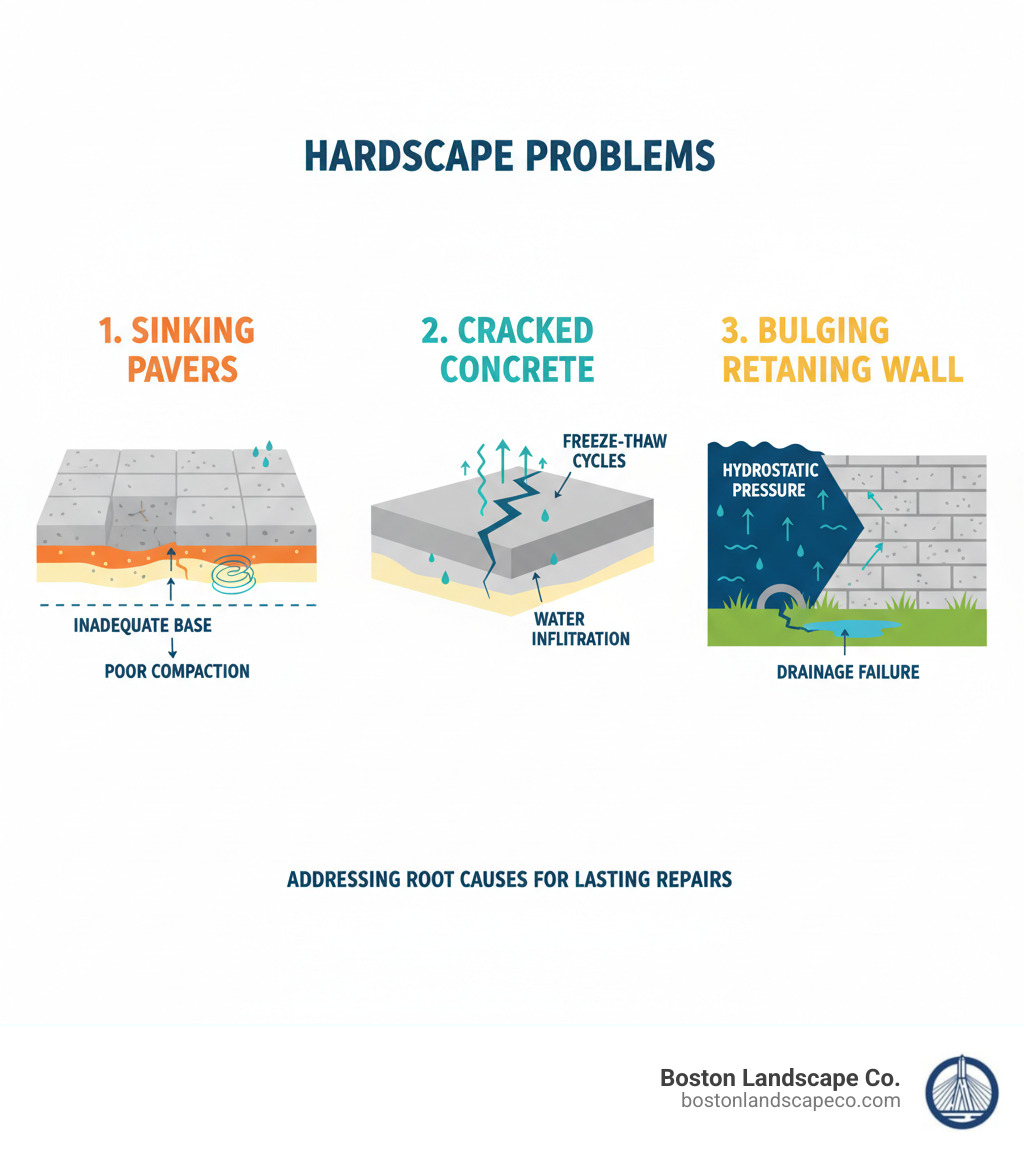
Quick look at hardscape repair near me:
Telltale Signs Your Hardscape Needs Repair This Season
As the snow melts, you might find your patio or walkway took a beating from our harsh New England winter. Catching hardscape problems early can save you from bigger headaches and repair bills down the road.
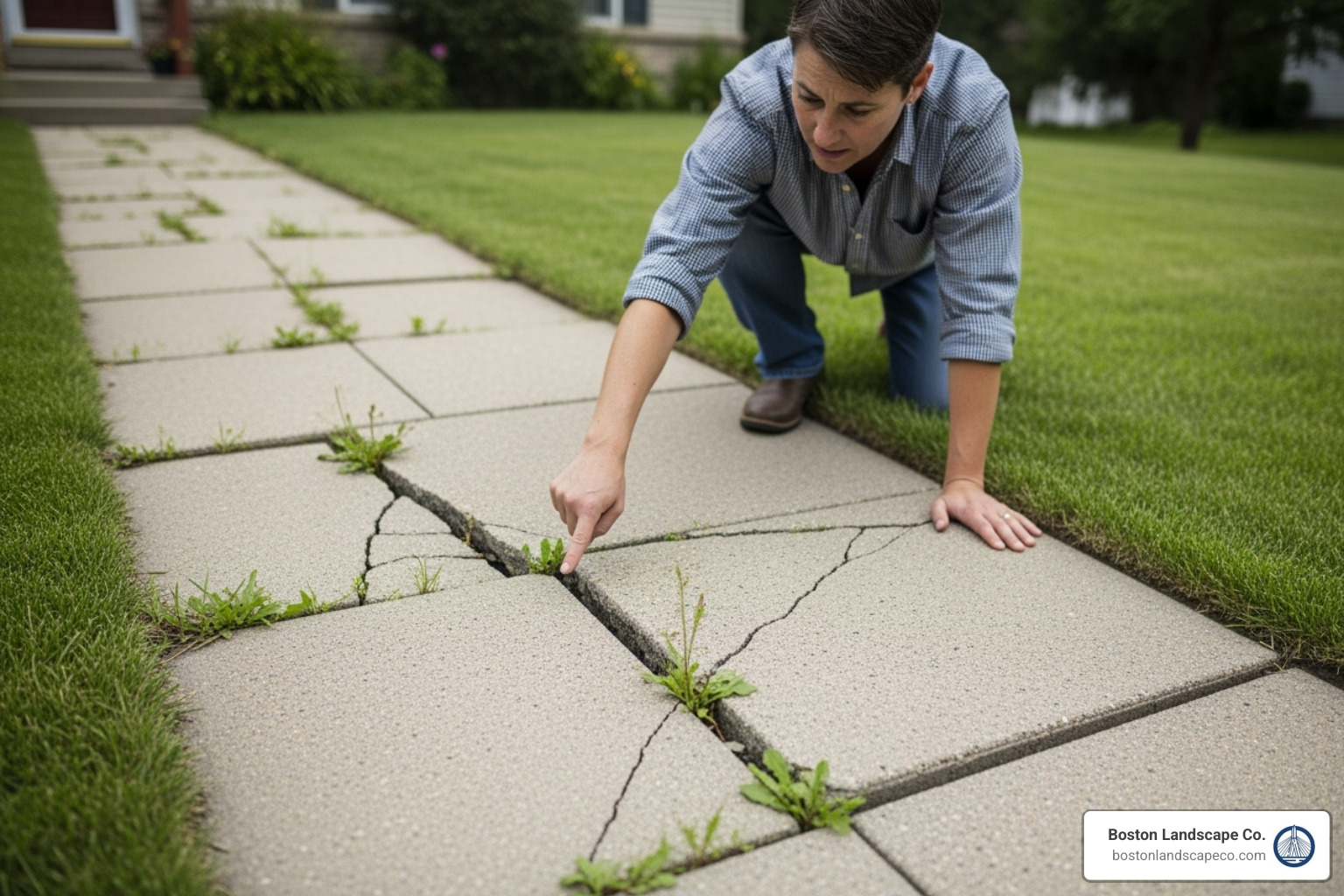
Sinking, Settling, and Uneven Surfaces
When pavers or concrete slabs sink or settle, it’s both annoying and dangerous. The main culprit is often New England’s freeze-thaw cycle, where water seeps into gaps, freezes, expands, and then thaws, causing the ground to shift. Look for these signs:
- Wobbly patio furniture that won’t sit level.
- Puddles that stick around long after a spring rain, breeding mosquitoes.
- Noticeable dips or heaving in the surface.
- Tripping hazards that put your family and guests at risk.
Cracks, Gaps, and Separation
Not all cracks are created equal, but they all signal a problem. In paver patios, you might see joints widening between stones, creating a home for weeds. For concrete, what starts as a hairline crack can let water in, which freezes and expands, turning it into a structural crack that compromises the entire slab.
Retaining walls need special attention. Gaps between stones or crumbling mortar are red flags that the wall is losing structural integrity. A failing retaining wall is a serious safety hazard.
If you’re dealing with any of these issues, it’s worth learning more about our hardscaping services to understand your repair options.
Weeds, Moss, and Discoloration
Even cosmetic issues can point to deeper concerns.
- Persistent weed growth between pavers means you’re losing jointing sand, which locks everything in place and prevents water from reaching the base.
- Slippery moss or algae in shady spots indicates poor drainage, which can affect your hardscape’s foundation.
- Stains from rust, leaves, or grills might seem superficial, but they can be stubborn to remove and detract from your home’s appearance.
Searching for hardscape repair near me is the first step toward fixing these issues before they become major problems. A thorough inspection can determine if you need a simple cleaning or more substantial repairs.
Common Causes of Hardscape Failure (And How to Fix Them)
Understanding why your hardscape is failing is the key to a lasting repair. Most issues trace back to problems beneath the surface, often related to the base, water, and New England’s relentless freeze-thaw cycles.
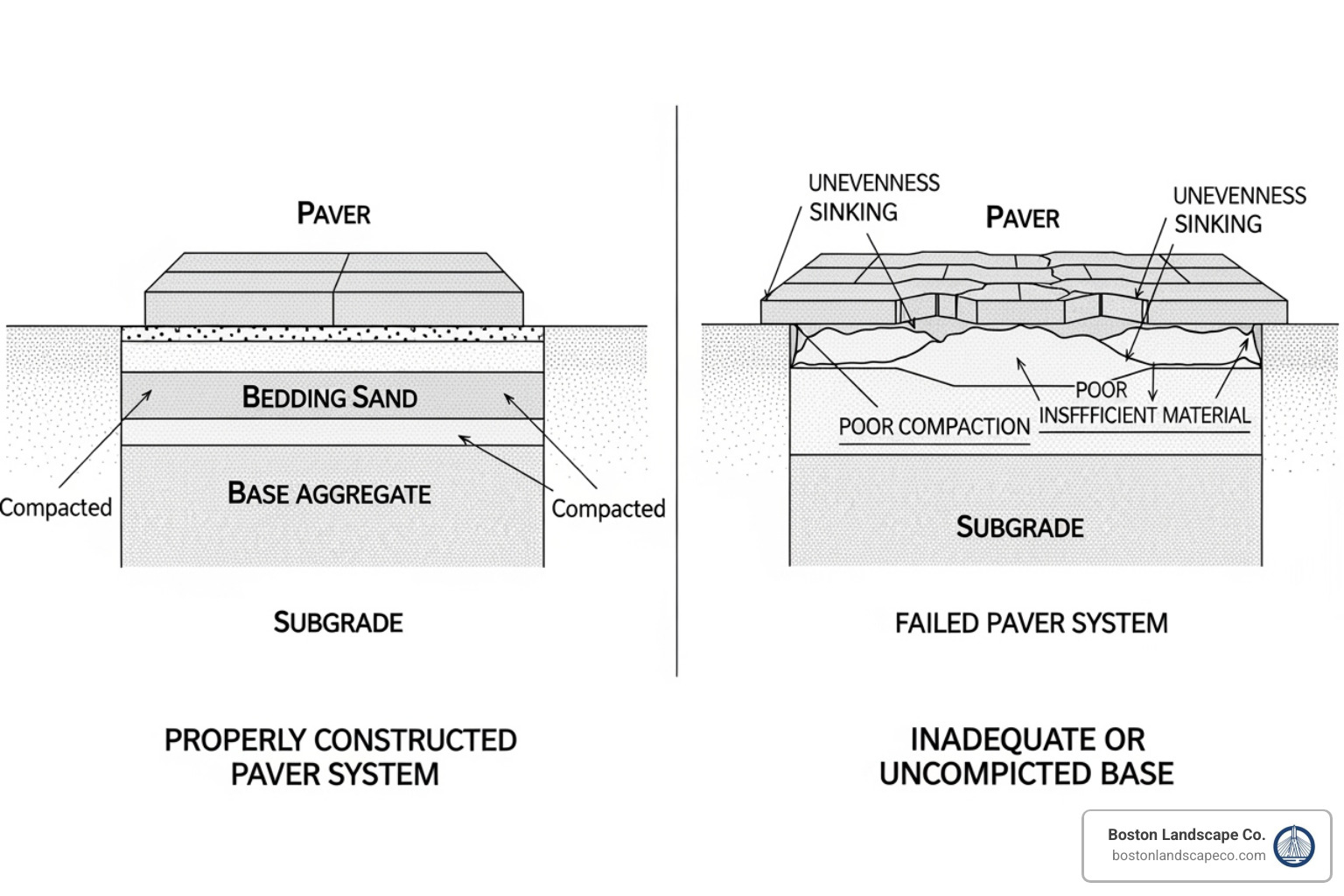
The Unstable Foundation: Base and Compaction Issues
The most common culprit behind sinking pavers and failing retaining walls is an inadequate base. Patios need at least 6 inches of compacted base material, and driveways require 12 inches or more. If an installer skipped proper compaction or used the wrong material, the hardscape will inevitably settle and shift.
Fixing this involves lifting the affected pavers, excavating to inspect the base, and then re-grading and re-compacting. We add new, well-graded base material in layers, compacting each one to ensure a solid foundation. Once the base is stable, we add a layer of bedding sand, re-lay the pavers, and finish with polymeric sand. This special sand hardens to lock pavers in place, prevent weeds, and resist erosion. For more details, see our hardscaping services.
The Power of Water: Drainage and Freeze-Thaw
Water exploits a weak base and turns minor flaws into major failures. Poor grading leads to pooling water that softens the base, while for retaining walls, trapped water creates hydrostatic pressure that can push a wall out of alignment.
Add in the freeze-thaw cycle, and the damage multiplies. Water freezes and expands with incredible force, heaving pavers and cracking concrete. Proper drainage is the solution. Installing French drains, adding weep holes to retaining walls, and re-grading the area can prevent most of these issues. For retaining walls, proper drainage behind the wall is essential for a stable, lasting structure.
Material-Specific Repair Processes
The repair approach depends on the material and damage.
- Paver Repair: This is often the most straightforward. We can lift individual pavers or sections, fix the base underneath, and reset them with new polymeric sand for a seamless repair.
- Concrete Repair: For hairline cracks, we use specialized fillers to prevent water infiltration. For surface issues like spalling, a concrete overlay can restore the look and function. However, major structural cracks or widespread crumbling may require replacement.
- Natural Stone and Retaining Wall Repair: This requires a craftsman’s touch. We reset loose stones, replace crumbling mortar, and add reinforcement like rebar if needed. For significant structural issues, engineering input may be necessary to ensure safety and longevity.
The key to any successful hardscape repair near me is addressing the root cause. Fixing the symptom without solving the underlying problem means you’ll be making the same repair again next year.
The Big Decision: Should You Repair or Replace Your Hardscape?
When facing a damaged patio or walkway, homeowners often wonder: “Should I repair this, or start over?” The right choice depends on the extent of the damage, the condition of the underlying foundation, your long-term goals, and your budget.
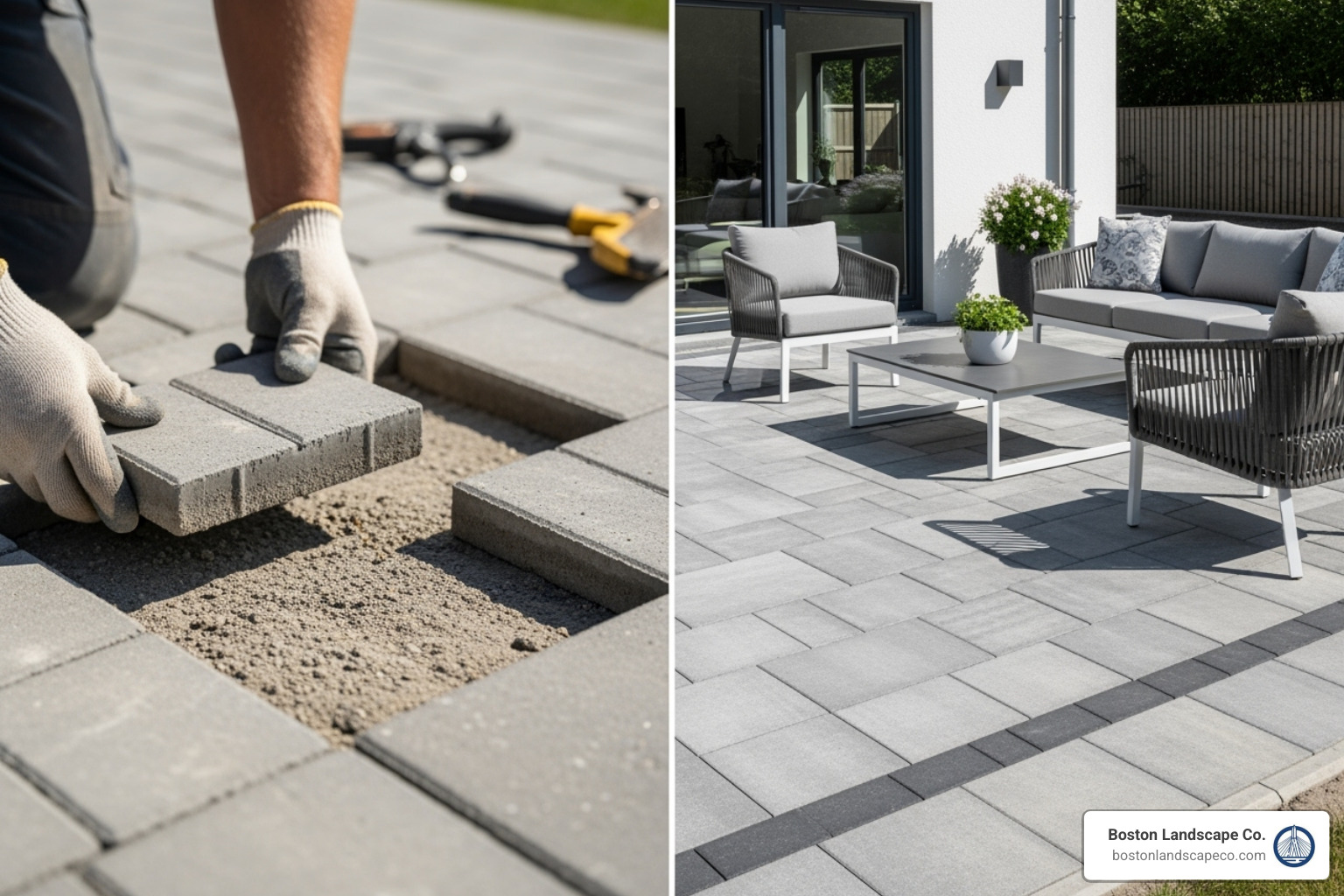
When to Repair: The Cost-Effective Fix
Repair is usually the best option for localized or surface-level issues. Consider repairing if:
- The damage is confined to a specific area, like a few sunken pavers or minor cracks.
- The underlying foundation is still sound and properly compacted.
- You’re dealing with surface problems like stains, weeds, or discoloration.
- Your budget is tight, as targeted repairs cost a fraction of a full replacement.
- You still like your hardscape’s design and it fits your home’s style.
View our portfolio of completed projects to see how effective targeted repairs can be.
When to Replace: A Fresh Start
Sometimes, a repair isn’t enough. Replacement becomes the more practical choice when:
- You’re facing widespread, systemic failure, such as a base that has failed across a large area.
- There are major structural problems, like a dangerously leaning retaining wall or concrete that is crumbling beyond repair.
- You’re ready for an upgrade to a new material, a modern style, or a completely different layout.
While replacement has a higher upfront cost, it’s a better long-term investment for extensive damage. A new installation can provide decades of enjoyment and boost your home’s curb appeal and value.
The right contractor for “hardscape repair near me” will be honest about which option makes the most sense. Addressing the problem now—before it gets worse—is always the right move.
Finding a “Hardscape Repair Near Me”: Your Guide to Hiring a Pro
Choosing the right professional for hardscape repair near me is crucial for ensuring lasting quality and safety. It’s about more than just a quick fix; it’s an investment in your property.
DIY vs. Professional Hardscape Repair
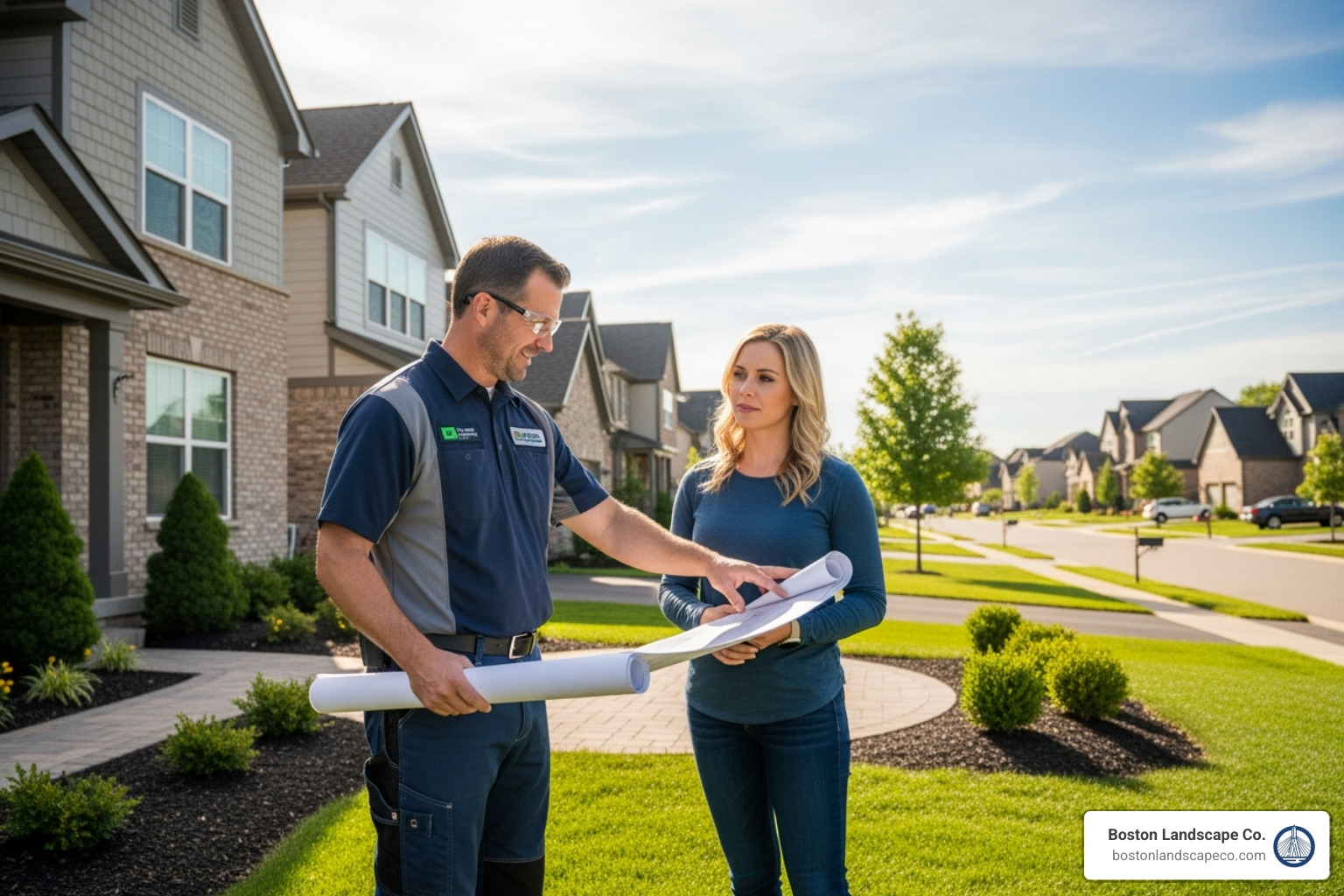
While DIY is fine for simple maintenance like pulling weeds or cleaning, structural issues are a different story. Problems like sinking pavers, widening cracks, or a leaning retaining wall require specialized equipment and expertise. A professional can diagnose the root cause—such as a faulty base or poor drainage—and perform a repair that lasts, often with a warranty for your protection. Hiring a pro ensures the job is done right the first time, saving you from future headaches.
How to Hire the Right Contractor
Searching for a qualified contractor can feel overwhelming. Here’s what to look for to ensure you hire a true professional:
- Local Experience: Choose a contractor who understands the Greater Boston climate and how our freeze-thaw cycles affect hardscapes.
- Repair-Specific Portfolio: Ask to see examples of their repair work, not just new installations. Repairing requires a different skill set, including damage assessment and material matching.
- Insurance and Estimates: Always verify proof of liability insurance to protect yourself. Insist on a detailed, written estimate that outlines the scope of work, materials, and total cost.
- Reviews and References: Read online reviews and ask for local references. Call them and ask about the quality of the work, communication, and whether the repair has held up.
- Repair Specialization: Confirm that the contractor specializes in repairs. A company focused on new builds may not have the diagnostic expertise needed for complex fixes.
For homeowners in the Boston area, our hardscaping services offer comprehensive repair solutions backed by decades of local expertise.
Understanding the Cost of Hardscape Repair
When searching for hardscape repair near me, one of the biggest questions is cost. The price can vary significantly, so it’s important to understand the factors involved.
Important Disclaimer: The following are national averages based on internet data and not a quote for services from Boston Landscape Co. Costs vary based on location, materials, and job complexity.
Key Factors Influencing Price
Several factors determine the final cost of a repair:
- Extent of Damage: A few sunken pavers will cost less to fix than an entire patio with a failed base.
- Type of Material: Pavers can often be reset individually, while cracked concrete may need more extensive work. Natural stone requires skilled labor, which can increase costs.
- Site Accessibility: Difficult access for equipment or navigating tight spaces can increase labor time and costs. Square Foot Costs provide a rough guide, but site-specific issues are key.
- Labor and Complexity: A simple joint sand replacement is quick, but excavating and rebuilding a base takes several days.
- Permit Requirements: Major structural work, like repairing a tall retaining wall, may require permits and engineering oversight, adding to the project cost.
Average Repair Costs: A National Snapshot
To give you a ballpark idea, here are some national averages based on internet research (not Boston Landscape Co. pricing):
- Patio Repair: Costs average around $750 nationally. Minor fixes like resetting a few pavers might be as low as $400, while extensive work involving base reconstruction can exceed $3,000.
- Retaining Wall Repair: The range is wide. Minor fixes like repointing mortar could be $400–$1,200. However, major structural repairs that address bulging or drainage failure can easily surpass $5,000, especially if engineering is required.
These are national averages based on internet data and not actual pricing for Boston Landscape Co. services. The only way to get an accurate estimate is through a personalized assessment of your property.
Frequently Asked Questions about Hardscape Repair
How long does a professional hardscape repair last?
A proper repair that addresses the root cause—like a faulty base or poor drainage—can last for many years, often as long as a new installation. A professionally installed hardscape can last over 25 years, and a quality repair aims to restore that same longevity. The key is fixing the underlying problem, not just the surface-level symptom.
Can you match my existing pavers or stones?
Yes, in many cases we can find an exact or very close match for your existing pavers or stones. If the original product has been discontinued, a skilled contractor can find a close alternative that blends naturally. Another creative solution is to take pavers from a less visible area of your property to use for the repair, then use the new, closely matched pavers in that hidden spot. This keeps the most prominent areas of your hardscape looking seamless.
What is polymeric sand and why is it important for “hardscape repair near me”?
Polymeric sand is a crucial material for modern paver repair. It’s a fine sand mixed with a binding agent that activates with water, hardening to lock pavers firmly in place. Its importance for hardscape repair near me comes down to three key benefits:
- Stability: It prevents pavers from shifting or settling after a repair.
- Protection: It creates a durable barrier that inhibits weed growth and deters ants from nesting in the joints.
- Durability: It resists erosion from rain and snowmelt, protecting the joints and the base material underneath from water damage.
Using polymeric sand is a low-maintenance solution that significantly improves the durability and appearance of your paver hardscape, ensuring the repair lasts for years.
Conclusion: Protect Your Investment with Proactive Care
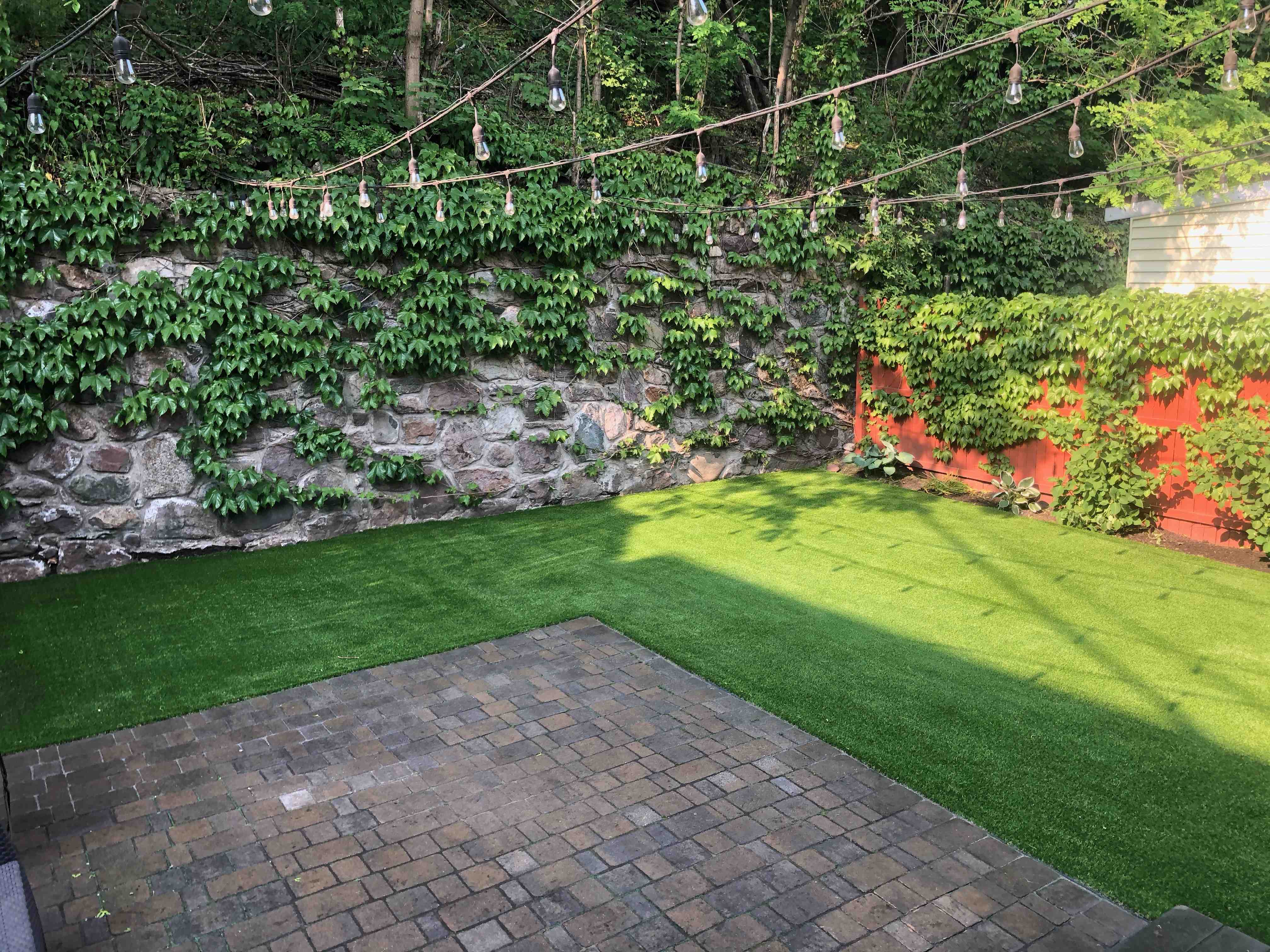
After a long New England winter, your hardscape deserves attention. With early detection and a focus on addressing root causes, most issues can be resolved before they become major headaches. Proactive care protects your investment and keeps your outdoor spaces safe for family and guests.
Professional expertise is key. A skilled contractor diagnoses the underlying problem—be it poor drainage, an inadequate base, or soil erosion—to deliver a repair that can last 25 years or more. This approach ensures your hardscape is not just patched, but properly restored.
For homeowners in the Boston area, Boston Landscape Co. offers solutions built on three decades of experience with Massachusetts weather and soil. We ensure your hardscape is safe, beautiful, and ready to enjoy.
Your outdoor spaces should be a source of pride, not a liability. Whether you have a wobbly patio, a cracked walkway, or a shifting retaining wall, the right repair will protect your investment and restore your peace of mind.
Ready to restore your patio, walkway, or retaining wall? Explore our professional hardscaping services and request an estimate today. Let’s get your outdoor spaces ready for the seasons ahead.
