
hardscape for small backyard: 4 Genius Ideas You’ll Love 2025
Maximizing Tiny Outdoor Spaces with Hardscape
Ever looked at your pocket-sized backyard and thought, “What on earth can I do with this?” You’re not alone! When it comes to hardscape for small backyard changes, I’ve seen even the tiniest spaces become outdoor sanctuaries with the right approach.
Let me walk you through the most effective small yard hardscaping solutions we’ve implemented for countless Boston homeowners:
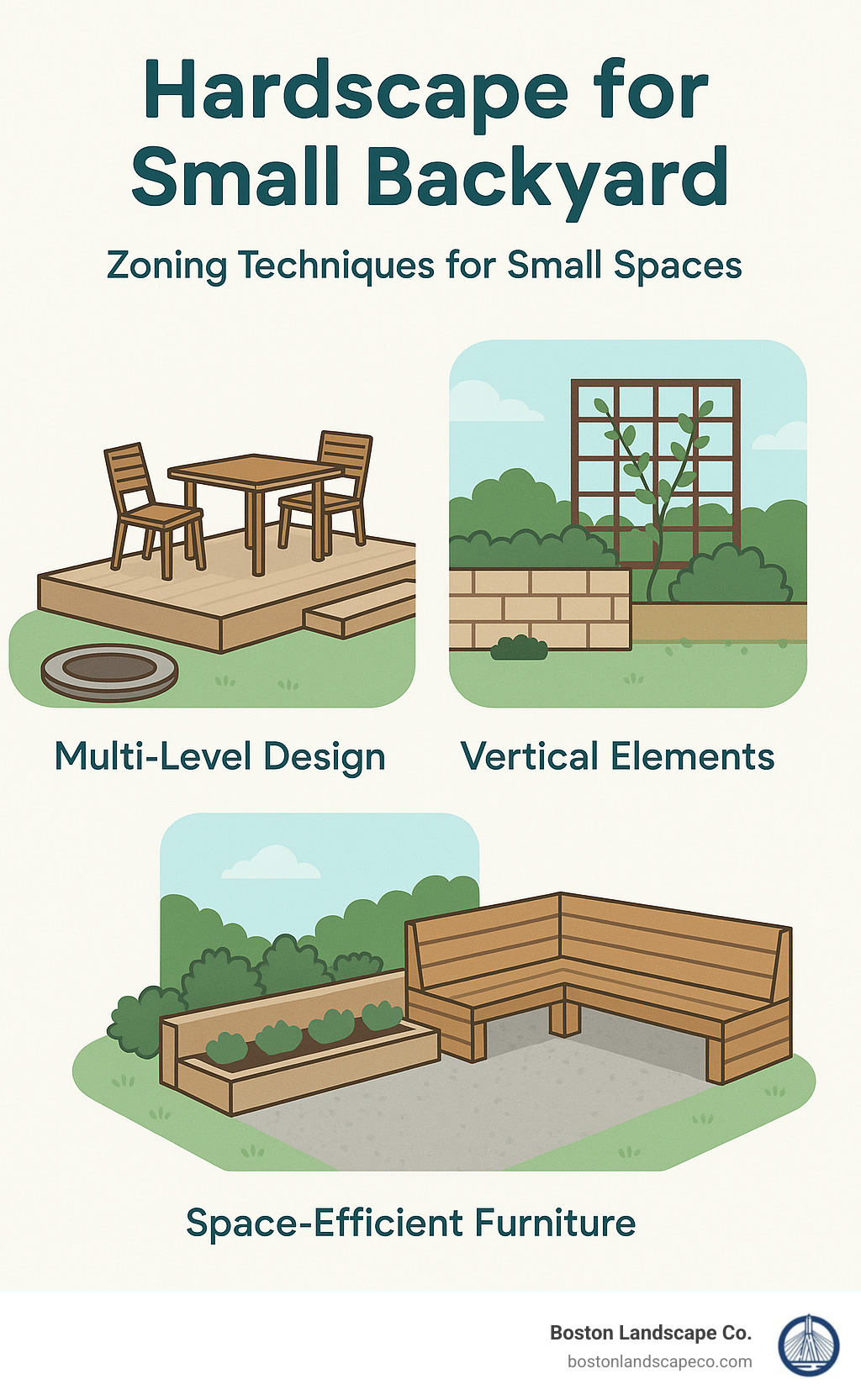
Compact Patios create an instant outdoor room using materials like budget-friendly gravel ($1.50-$10/sq ft) or more refined pavers ($6-$30/sq ft). These become the foundation for everything else.
Vertical Elements are your secret weapons! Retaining walls, raised garden beds, and trellis screens add dimension while maximizing your limited square footage.
Multi-Level Features like tiered decks and floating steps can transform sloped areas into usable space, while sunken fire pits create natural gathering spots without consuming valuable real estate.
Built-In Furniture is the space-saving hero every small yard needs—integrated seating, storage benches, and planter borders pull double-duty without the clutter of movable furniture.
Unlike landscaping (all those lovely but sometimes sprawling plants), hardscape for small backyard designs focus on the non-living structural elements that give your outdoor space bones and purpose. Think of hardscaping as creating outdoor “rooms” with patios, walkways, walls, and built-in features that make your tiny yard feel twice as large.
I’ve seen how a thoughtfully designed patio or deck can increase usable living space by nearly 30% in compact yards. Those vertical elements I mentioned? They’re not just pretty—they create additional planting areas without sacrificing precious ground space.
Hi there! I’m Steve Schumacher, and after 30+ years helping Boston homeowners transform their postage stamp-sized yards, I’ve learned that limitations often spark the most creative solutions. There’s something incredibly satisfying about turning a cramped, awkward space into an outdoor retreat that feels spacious and welcoming.
Why Hardscape for Small Backyard Matters
Small backyards might feel limiting, but with the right approach, they can become your favorite part of home. Hardscape for small backyard isn’t just about making things pretty—it’s about changing that pocket-sized space into an extension of your living area that works harder for you.
Maximizing Functionality
When your outdoor space is limited, thoughtful hardscaping helps you squeeze every drop of usefulness from it. By creating distinct zones for different activities, even the tiniest yard becomes multi-functional.
“I wanted a garden for people, as much as plants,” says Jacqueline Koch, who transformed her tiny cottage backyard after years of maintaining a large suburban lot. Her story reflects what many Boston homeowners find—small spaces can deliver big on functionality when properly designed.
Boosting Property Value
Your backyard is an investment opportunity waiting to happen. Real estate research shows that upgrading your landscape from average to excellent can increase your property’s value by 5-15%. For a $300,000 home in Greater Boston, that translates to an additional $15,000-$45,000! A well-executed patio or deck installation is particularly valuable, potentially adding up to $25,000 to your home’s market price, according to scientific research on outdoor living space value.
Solving Drainage Issues
New England weather can be tough on small yards, often creating drainage headaches. Strategic hardscape for small backyard solutions help direct water away from your foundation while creating usable space. Permeable pavers, gravel beds, and properly graded patios don’t just look good—they actively manage water in your compact outdoor area, preventing those post-rainstorm puddles that can turn your yard into a mini-marsh.
Creating Privacy Solutions
Living in close quarters with neighbors in Somerville, Medford, or Winchester? Privacy can feel like a luxury. Vertical hardscape elements like decorative walls, raised planters, and trellis screens create boundaries without eating up precious square footage.
Rebecca Sears, Chief Gardening Guru for Ferry-Morse, puts it perfectly: “Vertical gardening is a great way to beautify a small space by growing plants on an existing wall or fence or by adding a trellis.” These solutions give you the feeling of seclusion without sacrificing your limited space.
Extending Visual Sight Lines
Here’s a designer secret: diagonal or curved hardscape lines draw the eye through your space, making it appear larger than it actually is. Angled pathways, curved patio edges, or circular fire pit areas create visual interest and a sense of journey even in the smallest yards. These sight-line tricks fool the eye and make your compact space feel expansive and inviting.
Looking for professional help with your small backyard change? Learn more about Hardscaping Boston MA and find how local experts can help maximize your compact outdoor space with solutions custom to New England’s unique challenges.
4 Space-Savvy Hardscape Ideas
1. Compact Patio: The Classic Hardscape for Small Backyard
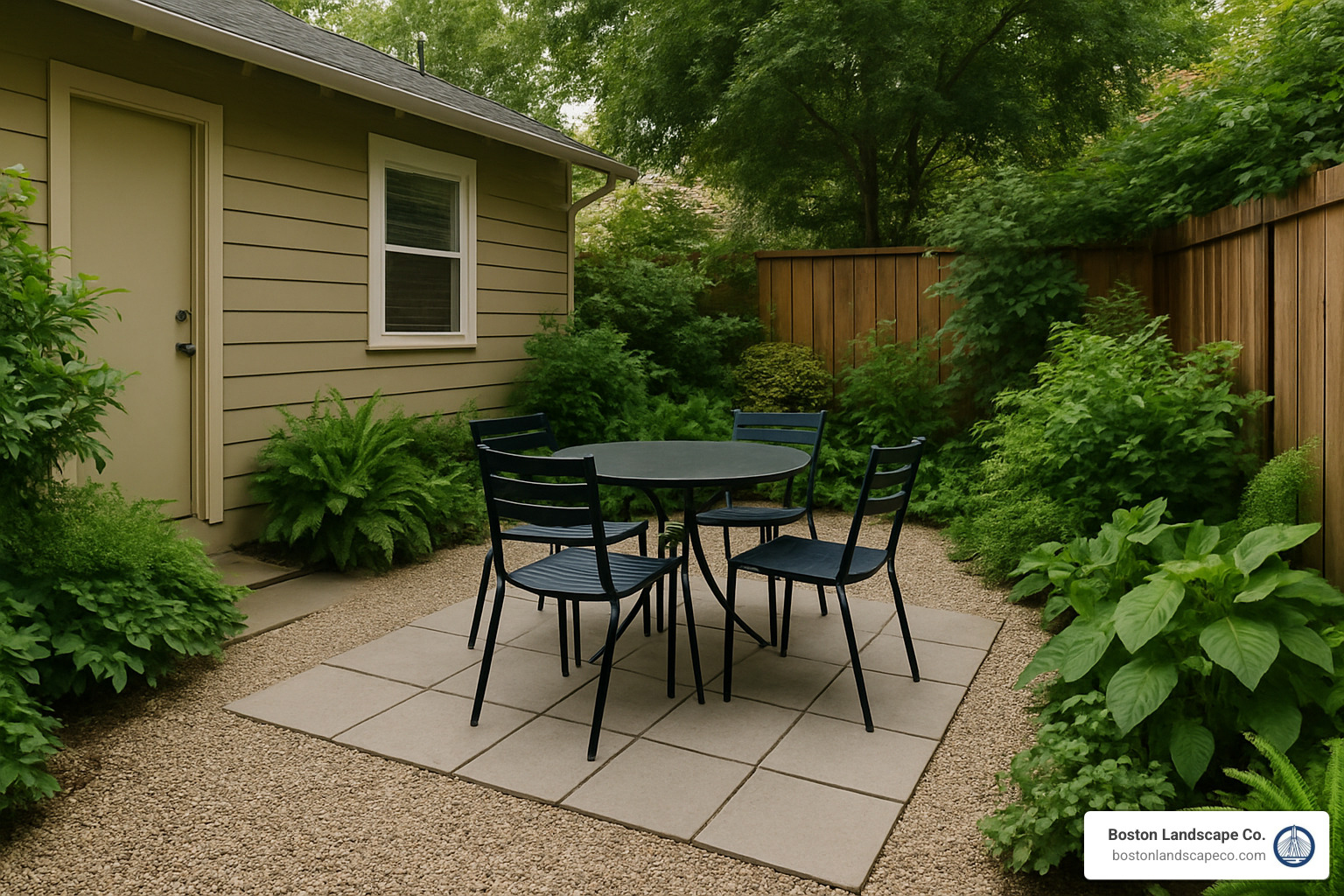
The patio is perhaps the most versatile and essential hardscape for small backyard spaces. Even in the tiniest yard, a well-designed patio creates an instant outdoor room for dining, lounging, or entertaining.
Material Options for Small Patios
When space is limited, your material choices can make a big difference in both look and budget. Gravel patios offer wonderful bang for your buck at just $1.50-$10 per square foot. They provide excellent drainage and can be shaped to fit virtually any space. As one landscape designer I know often tells clients, “Gravel patios are among the most cost-effective hardscape options, with installation costs averaging $1.50–$3.00 per square foot, compared to $6–$10 per square foot for concrete pavers.”
For a more structured look, concrete pavers come in countless shapes, sizes, and colors. While they’ll set you back a bit more ($6-$30 per square foot), they offer incredible durability and design flexibility that can visually expand your space through creative patterns.
If you’re looking for that classic New England charm that complements homes in Lexington or Winchester, brick pavers add instant warmth and character. They’re particularly effective when you want your patio to feel like it’s always been part of your home.
Space-Maximizing Patio Tips
To make your small patio feel more spacious, try using uniform flooring materials throughout connected spaces. This creates a seamless flow that tricks the eye into seeing a larger area. I love recommending darker materials for patio edges as they create definition and a subtle illusion of more space.
Consider going beyond the standard square layout – diagonal or curved designs can make a huge difference in how spacious your patio feels. And don’t forget to incorporate multi-purpose elements like bench seating with hidden storage underneath. One of my clients in Medford transformed a tiny 6×12 foot backyard into a gorgeous Japanese-inspired retreat using carefully placed pavers and decorative gravel. “From what I’ve read,” she told me, “the main things to keep in mind are to avoid symmetry and to mimic a scene from nature.”
Want to learn more about creating the perfect patio? Check out our Driveway Paver Installation page for material ideas that work beautifully for patios too.
2. Tiered Decks & Floating Steps
If your small backyard has a slope—common in many Boston-area neighborhoods—turn this challenge into an opportunity with multi-level hardscaping.
Changing Sloped Yards
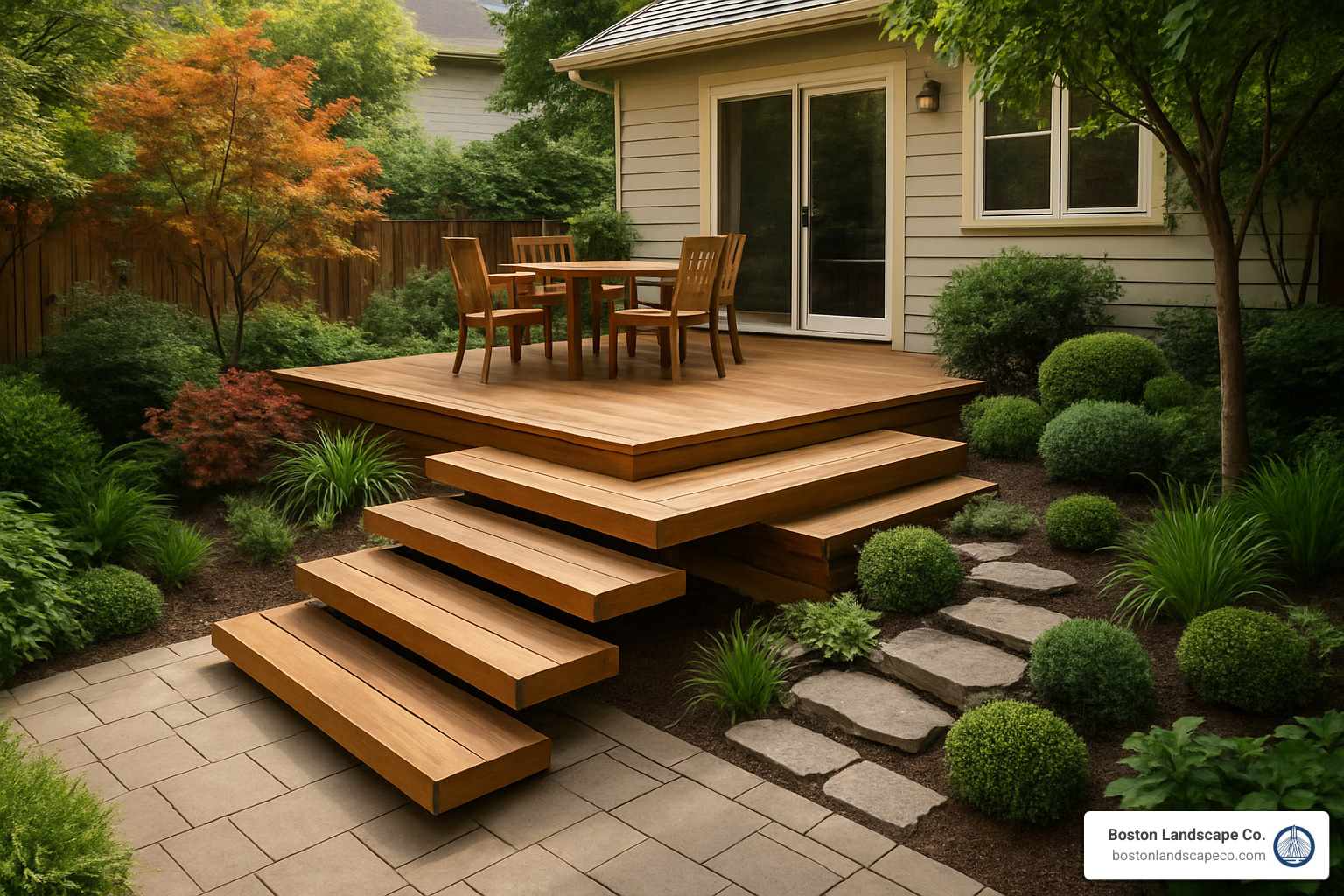
Those tricky slopes that might seem unusable? They’re actually golden opportunities for dramatic multi-functional spaces. By creating distinct levels with tiered decking or terraced patios, you effectively multiply your usable space while adding visual interest.
“A small patio or deck can increase usable living space by up to 30% in a compact backyard,” according to design experts I’ve worked with. This is especially true when you incorporate multiple levels that create separate “rooms” within a tiny yard. I’ve seen sloped yards transformed from awkward, unused spaces into stunning multi-level retreats where every inch serves a purpose.
Illuminated Step Solutions
One of my favorite ways to lift tiered hardscaping is with thoughtful lighting. LED riser lights create a magical floating effect for steps while improving safety after dark. Under-deck lighting extends your outdoor enjoyment well into evening hours, and stair tread lights add drama while preventing trips and falls.
As a designer friend once noted, “Use of LED-lit steps creates a floating-appearance and extends usability into evening hours.” This lighting not only serves a practical purpose but transforms your hardscape into a nighttime focal point that you can enjoy from inside your home too.
Material Combinations
For small, multi-level spaces, mixing materials creates visual interest without overwhelming the area. Wood decking with metal railings offers a contemporary look that feels both substantial and airy. Stone steps with gravel landings provide wonderful textural contrast that engages the senses. For a modern approach, composite decking with glass panels maximizes views and light.
I recently worked with a homeowner in Burlington who created a split-level deck in a yard less than 200 square feet. The upper deck provides a perfect dining space, while the lower level offers a cozy conversation area—effectively doubling the functional space in this tiny yard. The combination of composite decking and metal cable railings keeps the space feeling open while defining each zone.
3. Built-In Seating & Fire Pit Nooks
Built-in features are the secret weapon for small backyard hardscaping. They eliminate the need for bulky furniture while creating permanent, weather-resistant gathering spaces that feel custom-designed for your yard.
Space-Efficient Seating Designs
When space is tight, built-in seating works wonders. U-shaped bench arrangements create instant conversation areas that feel cozy and intentional. L-shaped corner benches maximize awkward spaces that might otherwise go unused. Wall-top seating doubles as a boundary element, and step seating serves multiple functions in a tiered yard.
“Built-in seating and banquettes carved directly from stone or stucco offer seamless integration” in small spaces, as one landscape architect I collaborate with often points out. These permanent features become part of the architecture of your yard, reducing visual clutter and creating a more spacious feel overall.
Sunken Fire Pit Considerations
A fire pit creates an instant focal point and gathering space in even the smallest yard. For compact Boston-area spaces, sunken fire pit areas create a cozy, defined space that feels separate from the rest of the yard. Circular designs with curved bench seating maximize space by eliminating sharp corners, while gas-powered options eliminate the need for wood storage – a real bonus in tight quarters.
If you’re really tight on space, consider portable fire bowls that offer maximum flexibility in tiny yards. You can move them when needed and store them away during summer months.
Just remember that in Massachusetts, fire pit installations need to follow local codes. In most communities, fire pits must be at least 10-25 feet from any structure and installed on a non-combustible base. Want to learn more? Check out our Fire Pit Construction page for details.
Evening Ambiance Solutions
The right lighting and accessories transform a simple fire pit area into a magical retreat. Punched metal lanterns cast interesting shadow patterns on surrounding surfaces. String lights overhead create a canopy effect that defines the space vertically. And reflective materials like glass fire beads amplify firelight, creating more ambiance with less flame.
A client in Reading created a cozy fire pit corner in their narrow backyard using a gravel surround and decorative lanterns. “The fire pit is on a firm base of level stones and surrounded by gravel,” they explained, creating an inviting spot that has become the family’s favorite gathering place year-round.
4. Vertical Hardscape for Small Backyard Privacy Walls
When ground space is limited, think upward! Vertical hardscaping elements add privacy, visual interest, and even growing space without consuming valuable floor area.
Retaining Walls with Multiple Functions
In small yards, retaining walls should always serve multiple purposes. They can create level areas on sloped sites while providing seating edges around patios. Many of my clients incorporate built-in planters for herbs or flowers directly into their retaining walls. These walls also help define outdoor “rooms” within a tiny space, making the yard feel more organized and intentional.
“Retaining walls and raised beds are among the top three most popular hardscape features for small backyards,” according to industry research I follow closely. They provide both structure and additional planting space – a win-win for tight quarters. Learn more about your options with our Retaining Wall Construction services.
Raised Bed Integration
Raised beds aren’t just for gardening—they’re architectural elements that add dimension to flat yards. I love designing staggered heights to create visual interest in otherwise flat spaces. L-shaped arrangements define corners beautifully while creating casual seating opportunities. For a more contemporary look, Corten steel adds modern flair that weathers beautifully in our New England climate. And don’t forget that capstone edges provide casual seating opportunities without requiring additional furniture.
One creative approach I saw in a Lexington backyard used concrete block raised beds with capstones that doubled as seating. “Vertical gardening allows growth of herbs and flowers without using ground space,” noted the homeowner, who maximized their tiny yard with this dual-purpose solution.
Trellis Screens for Living Walls
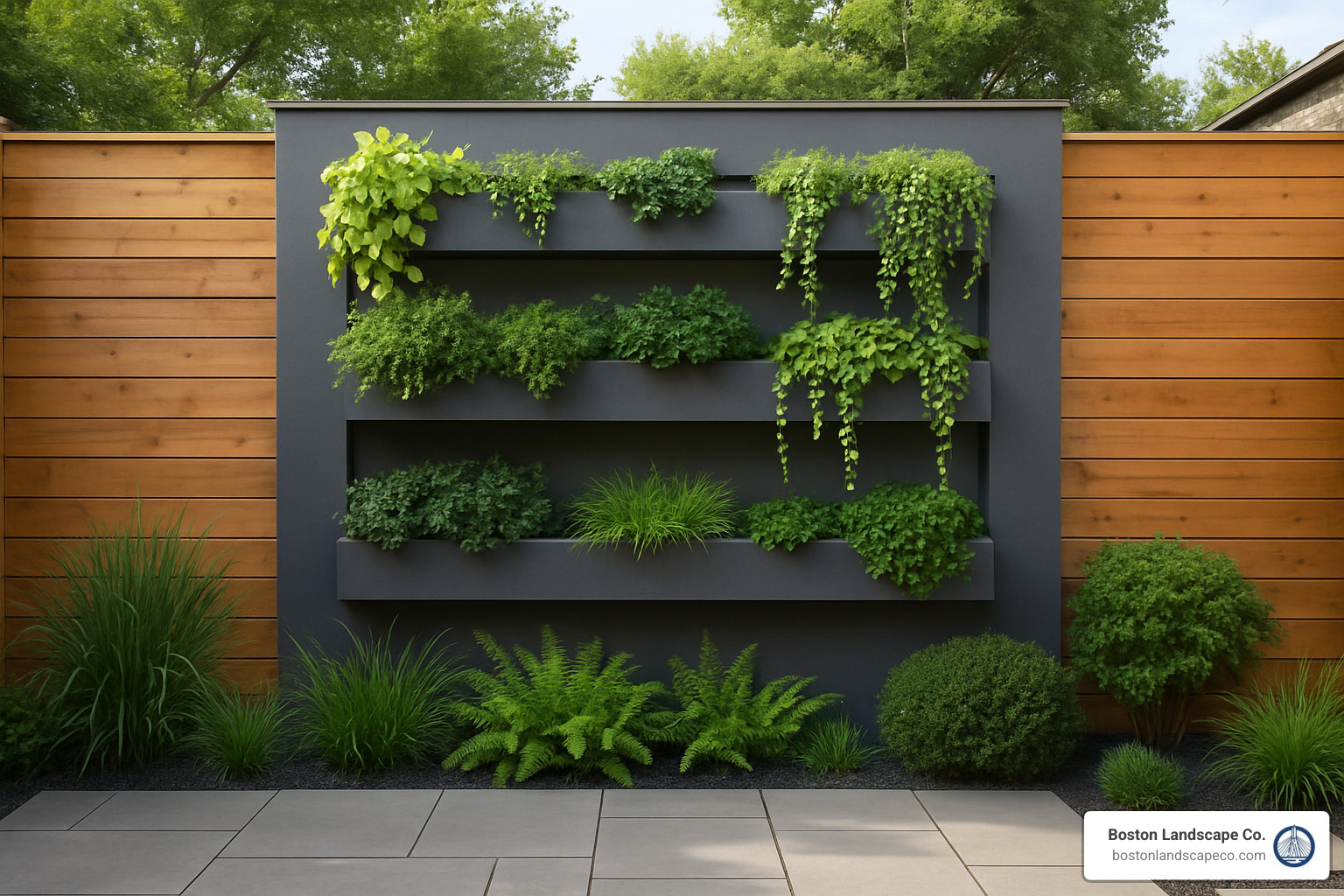
Trellises and screens create instant privacy while supporting vertical plantings. Wire grid panels support fast-growing vines like morning glory or clematis. Slatted wood screens filter views without blocking light – perfect for creating a sense of enclosure without feeling boxed in. For a more contemporary look, metal panels with decorative cutouts cast interesting shadows that change throughout the day.
For the ultimate space-maximizer, living walls with integrated irrigation systems become vertical gardens that pack tremendous visual punch in minimal space. “Vertical gardening and wall planters can increase planting area by up to 50% in small backyards,” according to design experts I’ve studied.
This approach is particularly valuable in urban settings like Somerville or Malden, where yard space is at a premium. One of my Winchester clients installed 8-foot-tall wire screens along their property line and planted fast-growing sweet peas for seasonal privacy. “Train a fast-growing perennial on a trellis for privacy, shade and beauty,” they told me, noting how this vertical approach transformed their exposed yard into a private retreat in just one growing season.
Material, Cost & Maintenance Guide
Selecting the right materials for your hardscape for small backyard project involves balancing aesthetics, durability, maintenance requirements, and budget. Here’s a comprehensive guide to help you make informed choices:
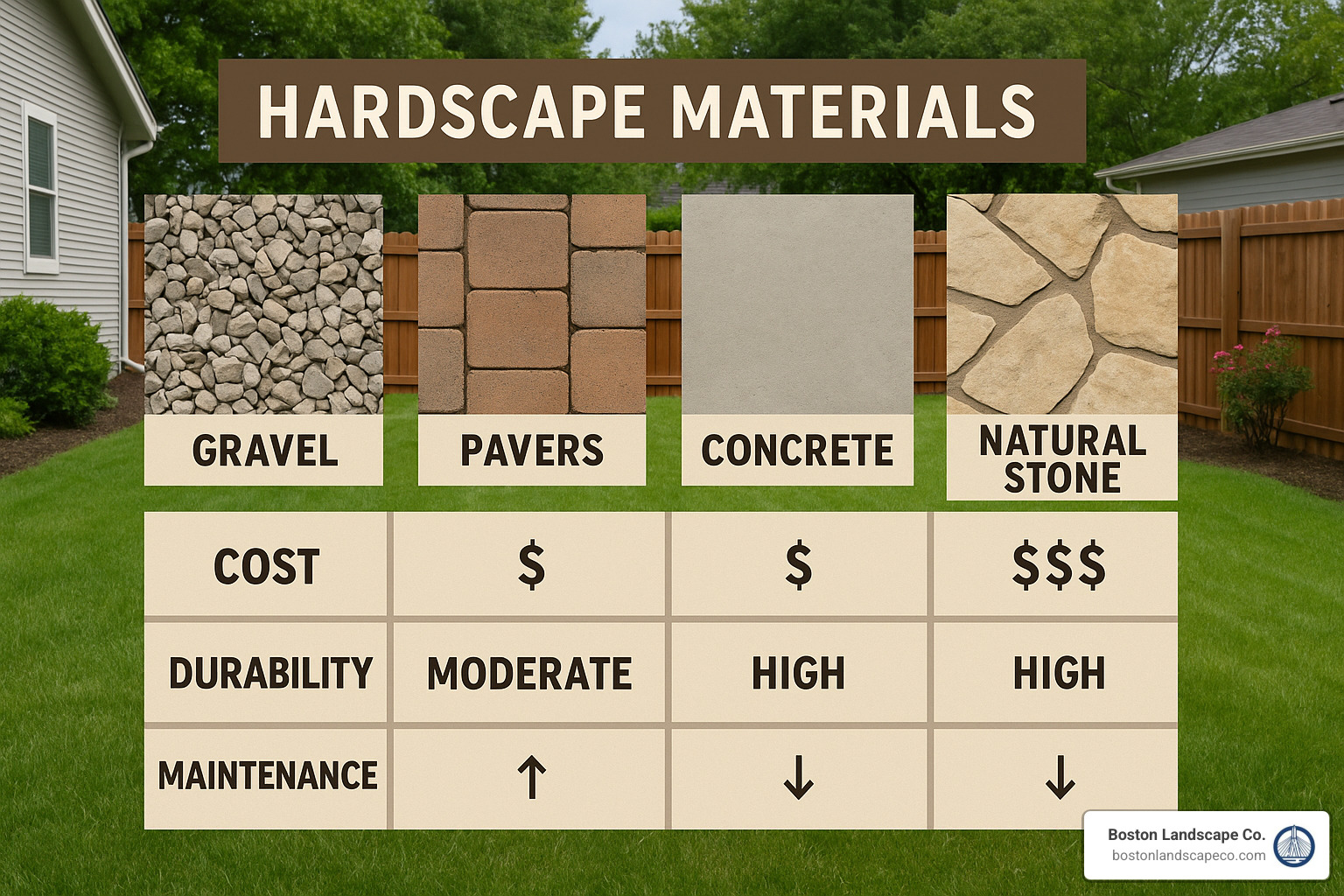
Material Options and Pricing
When I meet with homeowners in Somerville or Winchester, they’re often surprised by the range of materials available for their small spaces. Let’s break down the most popular options:
| Material | Cost Range ($/sq ft) | Durability | Maintenance Level | Best For |
|---|---|---|---|---|
| Gravel | $1.50-$10 | Medium | Medium | Pathways, patios, fire pit surrounds |
| Concrete | $4-$24 | High | Low | Patios, walkways, pool decks |
| Brick Pavers | $6-$30 | High | Medium | Traditional patios, walkways |
| Natural Stone | $15-$45+ | Very High | Low | Premium patios, steps, walls |
| Composite Decking | $20-$60 | High | Very Low | Liftd decks, seating areas |
| Wood | $15-$45 | Medium | High | Decks, pergolas, screens |
Note: These are average costs based on internet data and not actual costs for Boston Landscape Co. Prices can vary significantly based on site conditions, material quality, and design complexity.
I’ve found that gravel offers the most bang for your buck in small spaces. At just $1.50-$10 per square foot, it’s perfect for creating charming pathways or casual patios. One Medford client transformed their tiny side yard into a French-inspired gravel courtyard for less than $500 in materials.
On the other end of the spectrum, natural stone creates an best premium feel. Yes, it starts around $15 per square foot and can exceed $45 for specialty stones, but the durability and timeless appeal often justify the investment for key focal areas like steps or seating walls.
Low-Maintenance Choices for Busy Homeowners
Life in Greater Boston keeps us all busy, which is why I always discuss maintenance requirements with my clients. For those with limited gardening time, certain materials really shine.
Composite decking has revolutionized small backyard spaces. While it costs more upfront ($20-$60 per square foot), it requires virtually no maintenance beyond occasional cleaning. No staining, no splinters, no warping—just years of enjoyment. As one Lexington client told me, “I haven’t touched my composite deck in five years except to sweep it!”
Permeable pavers deserve special mention for small yards. They allow water to drain through rather than run off, reducing puddles and basement moisture issues—a common problem in older Boston-area homes. They require minimal upkeep while helping manage our sometimes intense New England rainfall.
For vertical elements, aluminum railings provide the perfect combination of style and convenience. Unlike wood, they won’t need regular painting or staining, and they won’t rot after our harsh winters.
Installation Considerations for Small Spaces
Working in compact urban yards presents unique challenges that require thoughtful planning. Access limitations often determine what’s possible—I’ve had projects where all materials needed to be hand-carried through narrow side passages or even through the house!
Proper drainage planning becomes even more critical in confined spaces. Without room for water to naturally dissipate, small hardscaped areas need careful grading and drainage solutions. One essential element that’s often overlooked is proper drainage fabric installation beneath gravel or paver patios. This simple step can dramatically reduce long-term maintenance by preventing weeds and stabilizing your hardscape.
Our Massachusetts freeze-thaw cycles can wreak havoc on hardscaping if not properly installed. This is why foundation preparation is absolutely crucial—cutting corners here leads to shifting, cracking, and expensive repairs down the road. When properly installed, materials like concrete pavers withstand our challenging New England climate beautifully.
Edge treatments take on greater importance in small spaces where every detail is visible. Clean, well-defined borders between different materials create a polished look that makes compact areas feel intentional rather than cramped.
For more detailed information about hardscaping options for your specific neighborhood, check out our Hardscaping Services Near Me page. And if you’re specifically interested in cost-effective patio solutions, the latest research on affordable patios provides excellent insights into maximizing your investment.
Frequently Asked Questions about Hardscape for Small Backyard
What is the least expensive hardscape option?
When budget is a top concern, gravel stands out as the most wallet-friendly hardscape for small backyard material. With costs typically ranging from $1.50-$10 per square foot including installation, it’s no wonder many homeowners start here. What I love about gravel is that ambitious DIYers can install a simple patio over a weekend with just basic tools and minimal ground preparation.
“Gravel patios are among the most cost-effective hardscape options,” as one of our landscape designers often tells clients, “with installation costs averaging $1.50–$3.00 per square foot, compared to $6–$10 per square foot for concrete pavers.”
If you’re watching pennies but still want some visual interest, consider what I call the “best of both worlds” approach: use gravel as your primary surface with strategically placed stepping stones or concrete pavers creating pathways within it. This gives you the look of premium materials without the premium price tag. I’ve seen stunning changes where this hybrid approach created a high-end look for about a third of the cost.
How can hardscaping help a tiny yard drain better?
Poor drainage can turn a small yard into a muddy mess, but thoughtful hardscaping can be your secret weapon against water problems. In New England, where we deal with everything from summer downpours to spring snowmelt, drainage planning is crucial.
Permeable materials like gravel or specialized pavers allow water to infiltrate rather than run off, reducing puddles and erosion. Creating a slight grade (just 1-2% slope) directs water away from your home and toward planted areas where it can be beneficial. French drains concealed along hardscape edges collect and redirect water, while decorative dry creek beds can serve as both attractive features and functional drainage channels.
I’ve worked with several homeowners in low-lying areas who incorporated rain gardens adjacent to their patios. These slightly depressed planted areas capture runoff, allowing it to slowly percolate into the soil while supporting moisture-loving native plants.
“Hardscape surfaces like stone and gravel eliminate the need for mowing and reduce maintenance,” as one client in Somerville finded after years of dealing with a perpetually soggy lawn. The permeable patio we installed not only stays dry year-round but also “provides excellent drainage” for the entire property.
Do I need a permit for a small backyard patio in Massachusetts?
Navigating permit requirements can feel like solving a puzzle, especially since they vary across Massachusetts municipalities. Generally speaking, patios at ground level typically don’t require permits if they’re not attached to your home. However, once you start adding more complex elements, the permit picture changes.
Raised decks almost always require permits due to structural considerations and safety codes. Retaining walls over 4 feet tall usually need engineering documentation and permits, while fire pits may require special approval in many communities, particularly in denser urban areas. Any structures with roofs like pergolas or gazebos often need permits regardless of size.
I always recommend checking with your local building department before starting any project. This is especially true in communities like Lexington, Winchester, and Concord, where historic district guidelines or conservation zones may add another layer of requirements.
One Winchester homeowner learned this lesson the hard way: “I had to modify my retaining wall plans after finding our property backed up to a wetland buffer zone. The conservation commission had specific requirements I hadn’t anticipated.”
At Boston Landscape Co., we help steer these requirements as part of our service. We’ve developed relationships with building departments across the region and can often anticipate potential issues before they become problems. A quick consultation upfront can save headaches and expenses down the road.
Conclusion
Changing a small backyard with thoughtful hardscaping isn’t just about maximizing limited space—it’s about creating an outdoor sanctuary that feels like a natural extension of your home. As we’ve explored throughout this guide, even the tiniest yards can become functional, beautiful retreats with the right hardscape for small backyard approach.
The magic happens when you strike that perfect balance between hardscape elements and strategic softscaping. Think of it this way: your patios, walls, and built-in features provide the structure and function, while your plants and greenery soften the edges and breathe life into the space. This harmony creates an outdoor area that feels both organized and organic.
At Boston Landscape Co., we’ve helped countless homeowners throughout the Greater Boston area find the hidden potential in their compact outdoor spaces. Our team understands the unique challenges that come with New England’s climate and the distinct character of local communities—from the historic charm of Lexington to the urban vibe of Somerville.
Maybe you’re dreaming of a cozy gravel patio where you can enjoy your morning coffee, or perhaps a series of vertical garden walls to create privacy from nearby neighbors. You might even be considering a multi-level deck to make the most of a sloped yard that seems unusable. Whatever your vision, we can help transform these ideas into reality.
The value of professional hardscaping extends beyond just aesthetics. A well-designed outdoor space can increase your property value by 5-15%, while also improving drainage, reducing maintenance, and creating usable living space that improves your daily life. It’s an investment that pays dividends in both enjoyment and resale value.
Ready to see what’s possible in your small backyard? Contact our hardscaping experts for a personalized consultation. We’ll visit your property, listen to your goals, and create a custom plan that brings your outdoor dreams to life—no matter how limited your space might seem.
The most beautiful backyards aren’t necessarily the largest ones—they’re the ones that have been thoughtfully designed to reflect the homeowners’ lifestyle while making the most of every square inch. Let us help you find the potential hiding in your small backyard today.
