
Fall Lawn Clean Up: Ultimate 2025 for a Better Spring
Why Autumn is Your Lawn’s Most Important Season
Fall lawn clean up is the most important seasonal task for ensuring a healthy, vibrant lawn come spring. Here’s what you need to do:
Essential Fall Lawn Clean Up Tasks:
- Remove leaves and debris – Prevents grass suffocation and fungal diseases
- Continue mowing – Cut 1-2 inches shorter for final mow
- Aerate compacted soil – Improves water and nutrient penetration
- Apply fall fertilizer – Strengthens root system for winter survival
- Clean garden beds – Remove dead plants and add protective mulch
- Prune trees and shrubs – Remove damaged branches before winter storms
While colorful autumn leaves look beautiful, they can become your lawn’s worst enemy. Excess debris left on lawns over winter creates ideal conditions for fungal diseases and prevents grass from absorbing nutrients before dormancy.
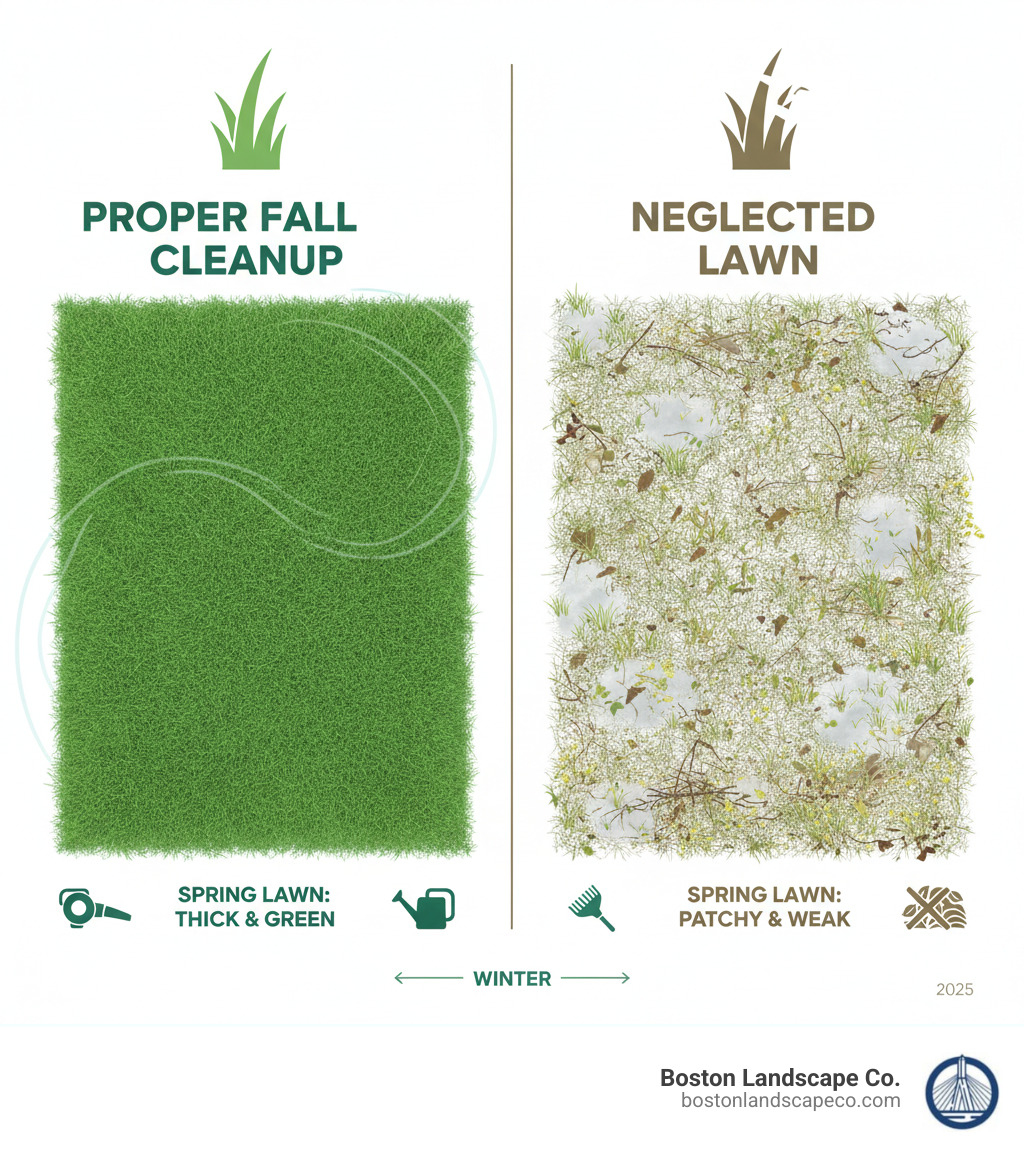
The stakes are high. A lawn that enters winter unprepared faces snow mold, dead patches, pest infestations, and weak root systems. But a properly cleaned and prepped lawn emerges in spring thick, green, and ready to thrive.
Fall is also your last chance to strengthen your lawn’s root system through strategic fertilizing and aeration. The cooler temperatures and increased moisture create perfect conditions for grass to absorb nutrients and store energy for the long winter ahead.
I’m Steve Schumacher, and in my three decades with Boston Landscape Co, I’ve seen how proper fall lawn clean up makes the difference between a struggling lawn and one that’s the envy of the neighborhood. The work you do in October and November determines what your yard looks like in April and May.
Getting Started: Timing and Tools for Your Fall Cleanup
Successful fall lawn clean up is all about timing. In Massachusetts, waiting too long can turn a manageable cleanup into a real headache.
Start early, finish strong. We recommend beginning fall preparations in late September. Tackle your early fall tasks like the first round of leaf removal, applying fall fertilizer, and aerating compacted soil while the weather is still pleasant.
As we move into October and November, your focus shifts to the late fall tasks – that final strategic mow, the last stubborn leaves, winterizing your irrigation system, and tucking your garden beds in for their long winter nap. The Massachusetts climate can be unpredictable, so having this extended timeline gives you flexibility.
Spreading your cleanup over several weeks makes it less overwhelming and is better for your lawn than one massive disruption.
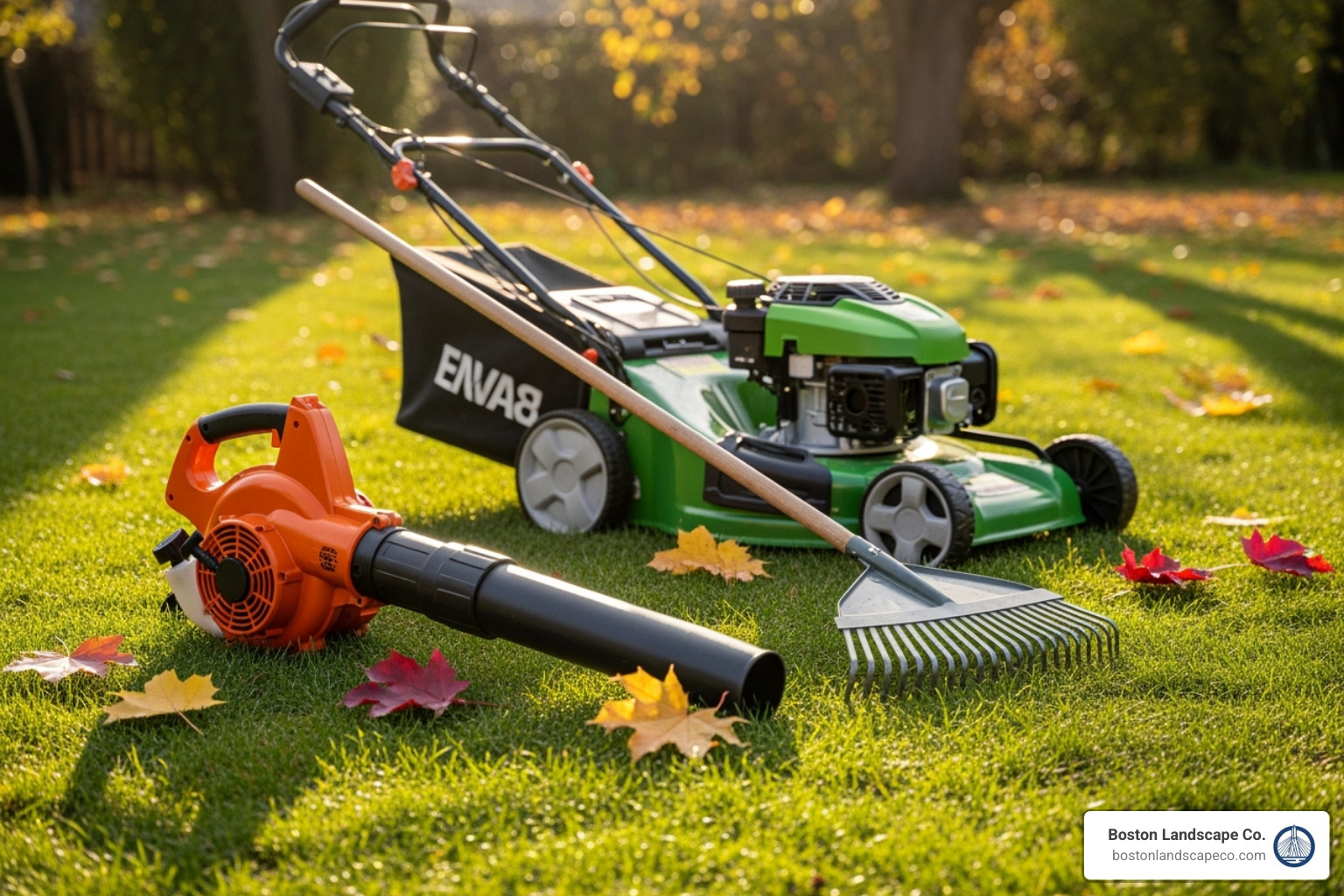
Having the right tools makes all the difference and prevents frustration. A leaf blower is essential for moving large leaf piles from corners and garden beds where rakes can’t reach.
You’ll want both hard and soft rakes – the sturdy hard rake powers through thick leaf layers, while the softer rake is gentler on delicate perennials. Your lawn mower needs either mulching or bagging capability, as you’ll decide whether to chop leaves into nutrient-rich confetti or haul them away.
A good aerator (manual for small yards, powered for large ones) opens up compacted soil so water and nutrients can reach grass roots. A fertilizer spreader ensures even coverage, preventing stripes of over-fertilized grass in spring.
Sharp pruning shears make quick work of cutting back perennials and removing dead branches. A wheelbarrow or yard tarp saves your back when moving debris. Always use quality gloves and safety glasses to prevent injuries.
The right equipment doesn’t just make the job easier – it helps ensure you’re actually improving your lawn’s health rather than just making it look tidy.
The Ultimate Fall Lawn Clean Up Checklist
This comprehensive fall lawn clean up checklist guides you through each step to prepare your lawn for dormancy, ensuring its health and setting the stage for a spectacular spring.
1. Master Leaf and Debris Management
A thick layer of fallen leaves suffocates grass by blocking oxygen and sunlight, which can lead to dead patches in spring. The trapped moisture also creates ideal conditions for fungal diseases like snow mold. This debris layer prevents your lawn from absorbing nutrients before it enters winter dormancy.
We use several effective methods for removing leaves. For larger areas, our powerful leaf blowers are fantastic for gathering leaves into manageable piles. For more delicate areas or smaller yards, traditional raking is still a reliable option. Mulching leaves with a lawnmower is an easier lawn maintenance task than raking and is highly beneficial for your lawn. The shredded leaves break down, returning valuable organic matter and nutrients to the soil. If the leaf volume is too high, we’ll collect them for composting or proper disposal.
Don’t forget about acorns if you have oak trees! They can create a bumpy surface, attract pests, and sprout into unwanted trees. We use specialized tools like nut gatherers or powerful leaf vacuums to efficiently collect them. Collected acorns can be turned into mulch, donated to local farms, or simply disposed of.
For a deeper dive into how we handle yard cleanups in the Woburn area, you can find more information here: More info about yard clean ups in Woburn.
2. Continue Mowing (But with a Strategy)
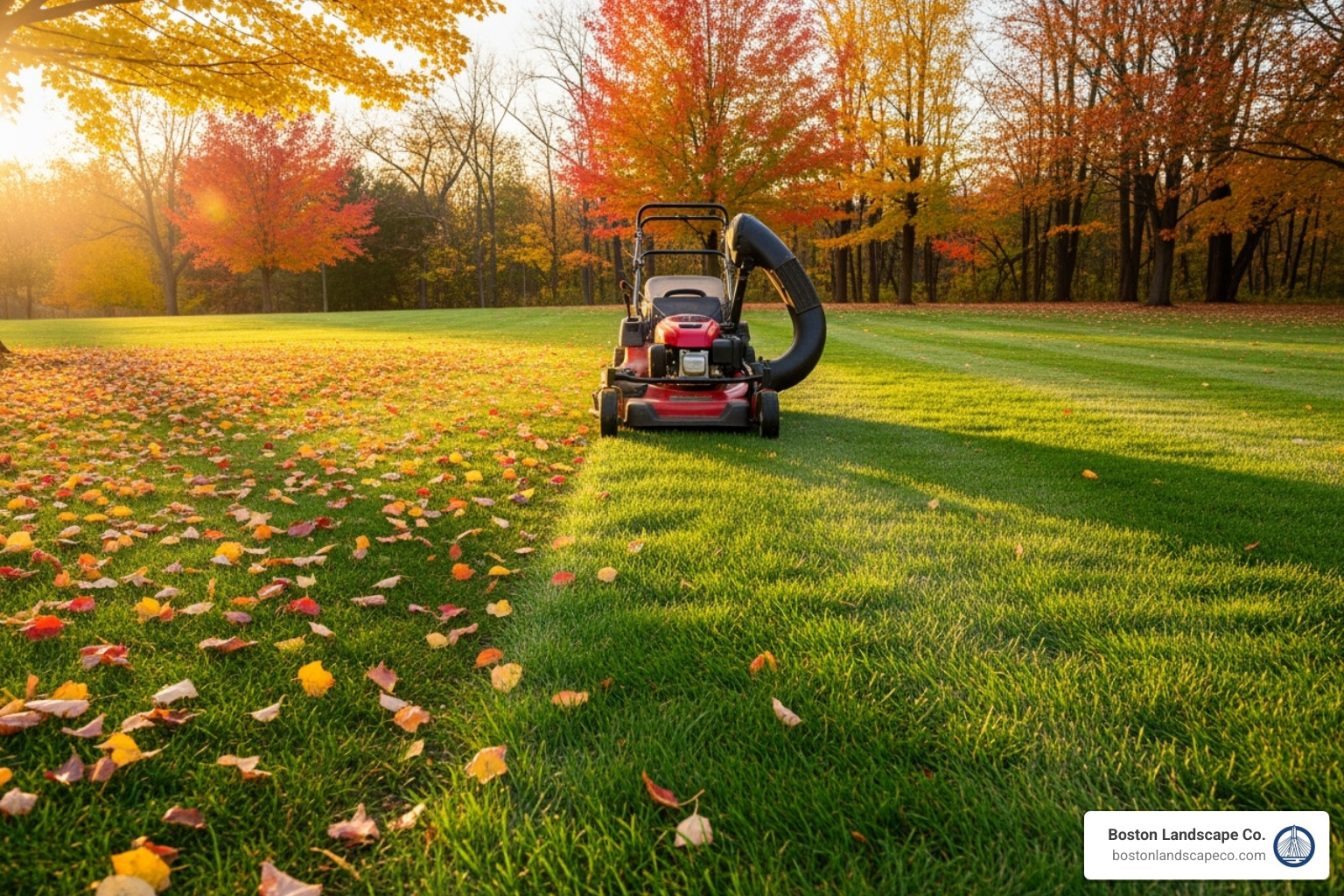
Continue mowing your lawn through the fall with a strategic approach. As grass is still growing, frequent mowing helps thicken the lawn, control weeds, and manage fallen leaves. We typically mow weekly through the fall.
As autumn progresses, we gradually adjust our mowing strategy. In late fall, we drop our mower down and cut your lawn 1 to 2 inches shorter than we have the rest of the growing season. This shorter height, usually around 2 to 2.5 inches for the final cut, is crucial. It allows more sunlight to reach the crown of the grass, helps the soil dry out faster in spring, and significantly reduces the risk of snow mold and other fungal diseases. We’ll continue this until the grass completely stops growing, which can sometimes be quite late into the season here in New England.
3. Aerate and Dethatch for Better Breathing
Thatch is a layer of organic matter between the soil and grass blades. A thick layer (over ½ inch) can choke your lawn by preventing water, air, and nutrients from reaching the roots. De-thatching (removing excess thatch) is best done in the fall, as the cooler, moist conditions help the grass recover quickly.
Aeration, often performed with de-thatching, involves creating small holes in the soil to alleviate compaction. This allows grass roots to penetrate deeper, access more nutrients, and absorb water more efficiently. Aerating your lawn in the fall allows grass to heal and fill open areas more quickly. This process is vital for improving turf health, encouraging stronger root development, and enhancing the effectiveness of fall fertilization. We often use core aerators, which pull out small plugs of soil, for the most effective results.
For a more in-depth understanding of the process and benefits, we highly recommend this authoritative guide: Authoritative guide on Lawn Aeration.
4. Feed Your Lawn for a Strong Winter
Fall fertilizing is the most important feeding of the year. It helps your lawn develop a stronger root system for winter, leading to a thicker lawn in spring. Unlike spring feeding that promotes top growth, fall applications focus on root development and nutrient storage.
We use a “winterizer” fertilizer, which typically has a higher phosphorus and potassium content. Phosphorus is essential for root growth, and potassium helps with overall plant health and winter hardiness. Applying this fertilizer in the fall gives the grass roots the necessary nutrients to store energy throughout the cold months. This stored energy allows your lawn to emerge greener and healthier much earlier in the spring. We usually apply a fall fertilizer in early to mid-fall, and sometimes a second application 6-8 weeks later, ensuring the lawn is well-nourished before the ground freezes. Watering after fertilizing is optional, but it will activate the fertilizer and begin the feeding process.
If you’re considering enhancing your lawn’s health and appearance, especially if you’re thinking about new lawn installation, our hydroseeding services could be a great option: More info about our hydroseeding services.
Beyond the Grass: Prepping Your Entire Yard for Winter
A successful fall lawn clean up extends beyond the grass. Your entire landscape needs attention to survive New England’s harsh winters and emerge healthy in spring. Preparing your plants, trees, and tools is essential.
After thirty years of helping Massachusetts homeowners prepare their properties for winter, I’ve learned that the work you do in your garden beds and with your trees can be just as important as lawn care. A comprehensive approach protects your investment and saves you headaches come spring.
Tending to Garden Beds and Plants
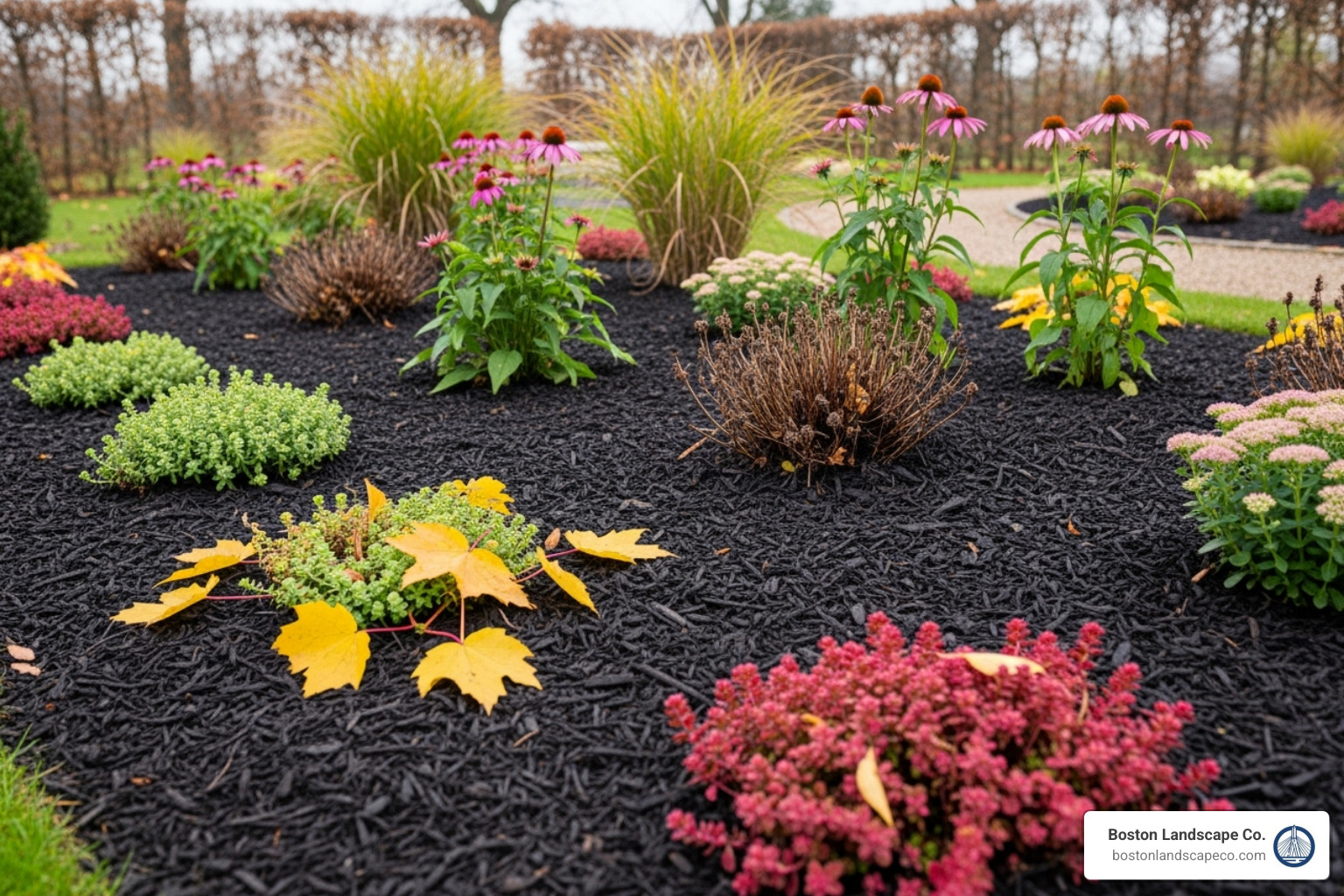
Clean your garden beds thoroughly to prevent problems next year. Start by removing dead annuals, as they won’t survive winter and can harbor pests and diseases.
Perennials require a more thoughtful approach. Some plants, like hostas, benefit from being cut back after blooming, while others should stay standing through winter. Those seed heads and sturdy stems provide crucial food and shelter for beneficial insects and birds. It’s a balancing act between tidiness and supporting local wildlife.
Final weeding in fall pays huge dividends later. Those perennial weeds you pull now won’t drop seeds that sprout all over your lawn next spring.
Adding a protective mulch layer is like giving your plants a warm winter coat. We apply 2-3 inches of fresh mulch around plants, which insulates roots from freeze-thaw cycles, retains moisture, and suppresses weeds. Just keep mulch a few inches away from plant stems to prevent rot.
Don’t forget about watering new trees and shrubs during fall. These young plants need extra moisture to build resilience for their first winter. Even established plants benefit from deep watering before the ground freezes, especially during dry falls.
For comprehensive garden bed care and more details about our approach, check out our yard clean ups in Boston.
Pruning Trees and Shrubs
Fall pruning focuses on health and safety rather than shaping. Trimming dead or damaged branches is essential – these weak spots become hazards when loaded with snow and ice. I’ve seen too many beautiful trees lose major limbs because dead branches weren’t removed before winter storms.
Improving air circulation by removing crossed or inward-growing branches helps prevent fungal problems. Better airflow means healthier plants and fewer disease issues next growing season.
Preventing snow and ice damage starts with smart pruning. Remove any branches that hang over walkways, driveways, or structures. When winter storms hit, you’ll be glad you took care of potential problems ahead of time.
Shaping shrubs can be done now for most plants, but be careful with spring bloomers like lilacs and forsythia. These set their flower buds in fall, so pruning now means fewer blooms next spring. For these plants, stick to removing obviously dead wood and save major pruning for right after they bloom.
Cleaning and Storing Your Tools for Spring
Properly caring for your tools after the growing season prevents rust, extends tool life, and ensures they work perfectly next spring.
Start by cleaning all soil and debris from shovels, rakes, pruners, and hoes. A stiff brush and some elbow grease remove stubborn dirt that can cause corrosion over winter. Sharpening blades on pruners, hoes, and spades makes next year’s work much easier and more effective.
Apply a light coat of oil to metal parts – even vegetable oil works well for preventing rust. Wipe wooden handles with linseed oil to prevent cracking and splitting.
Proper storage means keeping tools in a dry, protected area. Hanging them up prevents damage and makes spring startup much smoother. For power equipment like mowers and blowers, change the oil, clean air filters, and add fuel stabilizer before storing.
Taking care of these details now means your tools will be ready to go when spring fever hits and you’re eager to get back outside.
This comprehensive guide offers excellent tips for maintaining your tools: Guide to Cleaning, Sharpening, and Lubricating Tools.
Common Mistakes and When to Call a Professional
It’s easy to make mistakes during your fall lawn clean up that can set your lawn back for months. Fortunately, most of these pitfalls are avoidable once you know what to watch for.

Top Fall Cleanup Mistakes to Avoid
One of the biggest mistakes I see is cutting grass too short too early in the season. While that final shorter mow is essential, scalping your lawn in September can stress the grass before it’s ready for dormancy. This weakens the root system and makes your lawn vulnerable to disease just when it needs to be building strength.
Pruning at the wrong time is another common error that can cost you dearly. Late fall pruning on certain plants stimulates new growth that won’t have time to harden off before frost hits. The result? Winter kill and disappointed homeowners come spring. Understanding your specific plants and their pruning schedules makes all the difference.
Perhaps the most damaging mistake is leaving a thick layer of leaves blanketing your lawn. I can’t stress this enough – those beautiful autumn leaves become your grass’s worst enemy when left to pile up. They block sunlight, trap moisture, and create the perfect breeding ground for snow mold and pests.
Forgetting to fertilize in fall is like sending your lawn into winter without a coat. That crucial fall feeding builds strong roots and stores nutrients for spring growth. Skip it, and you’ll have a weaker lawn that’s slow to green up next season.
Finally, over-mulching garden beds seems helpful but can backfire spectacularly. More than 3-4 inches of mulch suffocates plants, traps excess moisture, and invites rot and pests. Keep that mulch away from plant stems and tree trunks too.
Deciding to Hire a Fall Lawn Clean Up Service
Fall lawn clean up can be overwhelming. Knowing when to call a professional isn’t admitting defeat; it’s being smart with your time and ensuring the job gets done right.
Lack of time is probably the most common reason homeowners reach out to us. Between work, family, and everything else life throws at you, finding entire weekends for yard work isn’t always realistic. A professional crew can knock out in one day what might take you several weekends to accomplish.
If you’re dealing with a large property loaded with mature trees, the sheer volume of leaves and debris can be staggering. What looks manageable in October can quickly become an avalanche of work once those leaves really start falling. Our crews have the equipment and manpower to handle even the most leaf-heavy properties efficiently.
Physical limitations are nothing to ignore either. Fall cleanup is genuinely hard work – lots of bending, lifting, and repetitive motion. If you have health concerns or simply want to avoid the physical strain, there’s no shame in letting our experienced team handle the heavy lifting.
The guaranteed results factor is huge too. Our crews know exactly what your lawn needs for optimal winter preparation. We understand the specific challenges of New England winters and have the right tools to address them properly.
When considering professional services, it’s helpful to understand typical investment levels. Based on general online data, professional fall lawn clean up services can range from $200 to over $750, depending on your property size, number of trees, and specific tasks like extensive pruning or debris removal. These are average costs based on internet data and not actual costs for Boston Landscape Co. – we provide personalized estimates custom to your specific property’s unique needs.
Frequently Asked Questions about Fall Yard Cleanup
When it comes to fall lawn clean up, we hear the same questions year after year from homeowners across the Boston area. Let me share some insights from three decades in the landscaping business.
How do fallen leaves actually harm a lawn if left over winter?
A thick layer of leaves smothers the grass, blocking essential sunlight and air. This creates a damp, dark environment perfect for fungal diseases like snow mold, which can lead to dead patches in the spring. These leaf piles also provide a habitat for pests to overwinter, leading to problems for your lawn and garden when they emerge.
Is it better to mulch leaves with a mower or rake them all up?
Both methods are effective, and a combination is often best. Mulching leaves with your mower chops them into fine pieces that decompose and return valuable nutrients to the soil. However, if the leaf layer is too thick, it can still smother the grass. In that case, it’s best to rake and remove the bulk of the leaves first, then mulch the remaining lighter layer. This gives you a clean lawn while still providing soil benefits.
What is the very last thing I should do for my lawn before winter?
The final mow of the season is crucial. Cut your grass down to about 2 to 2.5 inches. This shorter height prevents the grass from matting down under snow, which reduces the risk of snow mold and other fungal diseases. After the final cut, apply a winterizer fertilizer to give the roots a nutritional boost to store for spring. Finally, drain and store your hoses and shut off outdoor water systems to prevent freeze damage.
Conclusion: A Healthier Spring Starts with a Clean Fall
The work you do this autumn is more than just tidying up—it’s an investment in your property’s health that gives your lawn the best chance to emerge strong in the spring. Every leaf raked and every fertilizer application will pay dividends for years to come.
Think of fall lawn clean up as your lawn’s insurance policy against winter’s harsh conditions. When you remove suffocating leaves, you prevent snow mold. When you aerate, you ensure roots can breathe and absorb nutrients. And when you apply fall fertilizer, you give your lawn the stored energy it needs to green up quickly when warmer weather returns.
The difference between a prepared and a neglected lawn is clear every spring. A properly maintained lawn will be thick and green, while others may have dead patches, weeds, and thin grass.
The long-term value of proper fall care extends far beyond just lawn health. A well-maintained landscape increases your property value, reduces the need for costly spring repairs, and gives you more time to enjoy your outdoor space instead of trying to fix winter damage.
If tackling your entire fall lawn clean up checklist feels overwhelming, or if you simply want the peace of mind that comes with professional expertise, you don’t have to go it alone. The experienced team at Boston Landscape Co. has been helping New England homeowners prepare their properties for winter for over three decades. We understand the unique challenges our climate presents and have the tools and knowledge to handle everything from leaf management to soil preparation.
Whether you decide to tackle the work yourself or bring in the professionals, the important thing is that you take action. Your future self will thank you next spring when you’re admiring a lush, healthy lawn while others are still dealing with winter’s aftermath.
Ready to give your lawn the care it deserves? Get a professional fall cleanup for your yard or request an estimate today to see how we can help transform your outdoor space.
