
Ecological Restoration: 7 Powerful Success Stories in 2025
Understanding Ecological Restoration: Healing Our Natural World
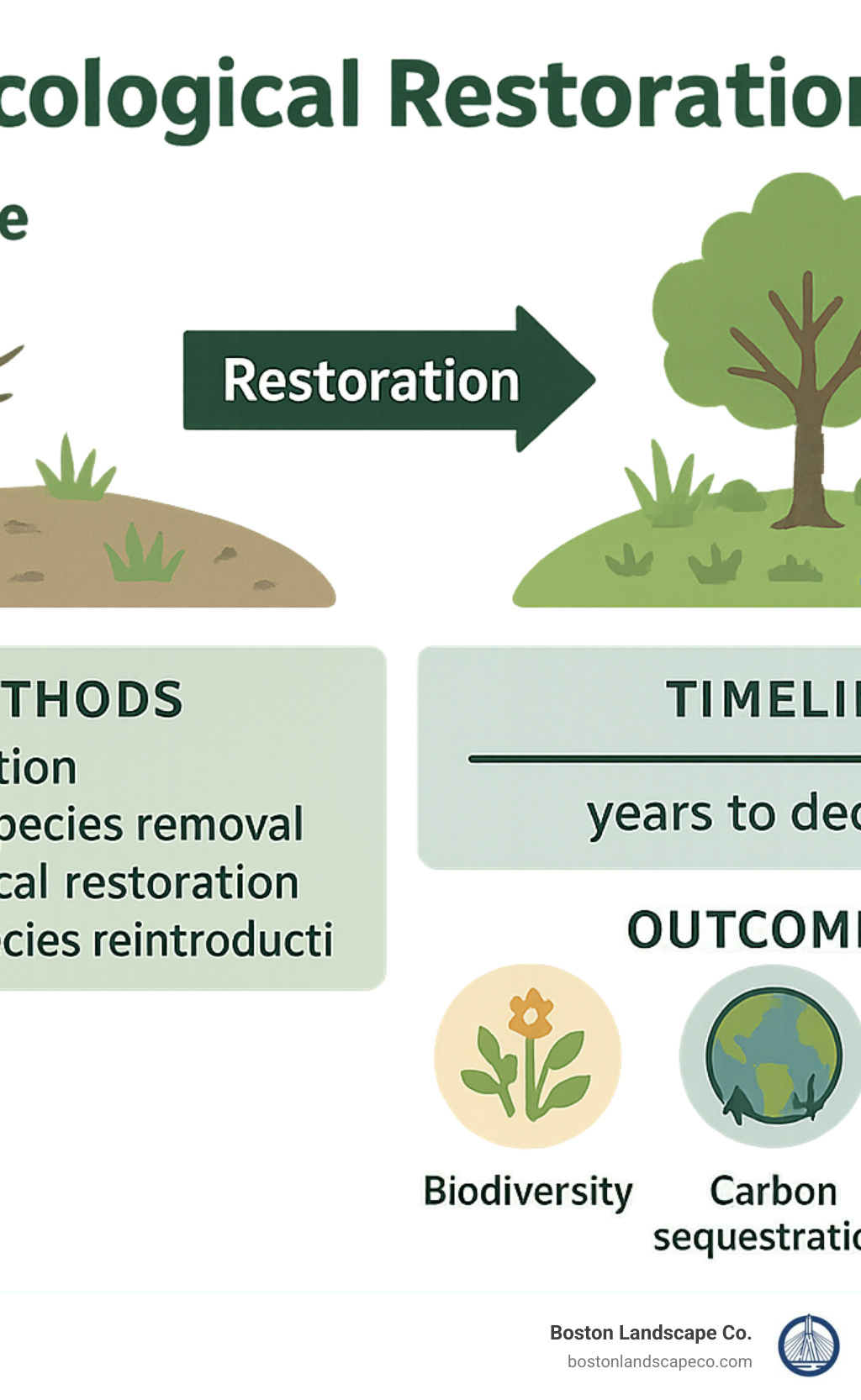
Ecological restoration is the process of assisting the recovery of ecosystems that have been degraded, damaged, or destroyed. If you’re looking to understand this vital environmental practice, here’s what you need to know:
Ecological Restoration at a Glance:
– Definition: Assisting the recovery of degraded ecosystems toward a self-sustaining trajectory
– Primary Goals: Improve biodiversity, improve ecosystem functions, mitigate climate change
– Common Methods: Reforestation, invasive species removal, hydrological restoration, native species reintroduction
– Timeline: Can take years to decades, depending on ecosystem complexity
– Benefits: Improves water quality, sequesters carbon, creates wildlife habitat, provides ecosystem services
The health of our planet depends on functioning ecosystems, yet human activities have degraded many natural habitats beyond their ability to recover without intervention. Ecological restoration isn’t simply about planting trees or creating pretty landscapes—it’s about recreating the complex web of relationships between plants, animals, soil microbes, and the physical environment that allow ecosystems to function.
When done correctly, restoration projects can transform barren, degraded land into thriving ecosystems that support biodiversity, sequester carbon, improve water quality, and provide countless other benefits to both wildlife and humans.
As Steve Schumacher, owner of Boston Landscape Co since 1991, I’ve incorporated ecological restoration principles into our landscape designs for over three decades, helping property owners transform their outdoor spaces into functional ecosystems that support local wildlife while remaining beautiful and practical.
Quick look at Ecological Restoration:
– Compensatory Mitigation
– constructed wetlands in the sustainable landscape
– biological control invasive species
What Is Ecological Restoration and Why It Matters
Ecological restoration isn’t just about planting a few trees or creating pretty green spaces. It’s a deeply intentional process that breathes life back into our natural world. According to the Society for Ecological Restoration (SER), the leading global authority on this subject, ecological restoration is “the process of assisting the recovery of an ecosystem that has been degraded, damaged, or destroyed.”
When you look around at our changing planet, the need for this work becomes crystal clear. Our natural world is under extraordinary pressure. Scientists have found that species are disappearing at a rate 1,000 to 10,000 times faster than the normal background rate of extinction. This isn’t just concerning—it’s a planetary emergency.
Think about the scale of what we’re facing:
The vast grasslands, shrublands, and savannahs that blanket nearly half of our planet’s land surface are rapidly being converted to farmland. Meanwhile, agriculture has already claimed more than one-third of Earth’s land. Our oceans and seas—covering over 70% of our blue planet—face relentless pollution and overfishing. Perhaps most alarming are our freshwater ecosystems, which provide homes for a third of all vertebrate species, yet rank among our most endangered natural systems.
But here’s where hope enters the picture. Restoring ecosystems makes economic sense too. Between now and 2030, if we restore 350 million hectares of degraded land and water systems, we could generate an estimated US$9 trillion in ecosystem services while removing 13 to 26 gigatons of greenhouse gases from our atmosphere. That’s restoration paying dividends for both our planet and our economy.
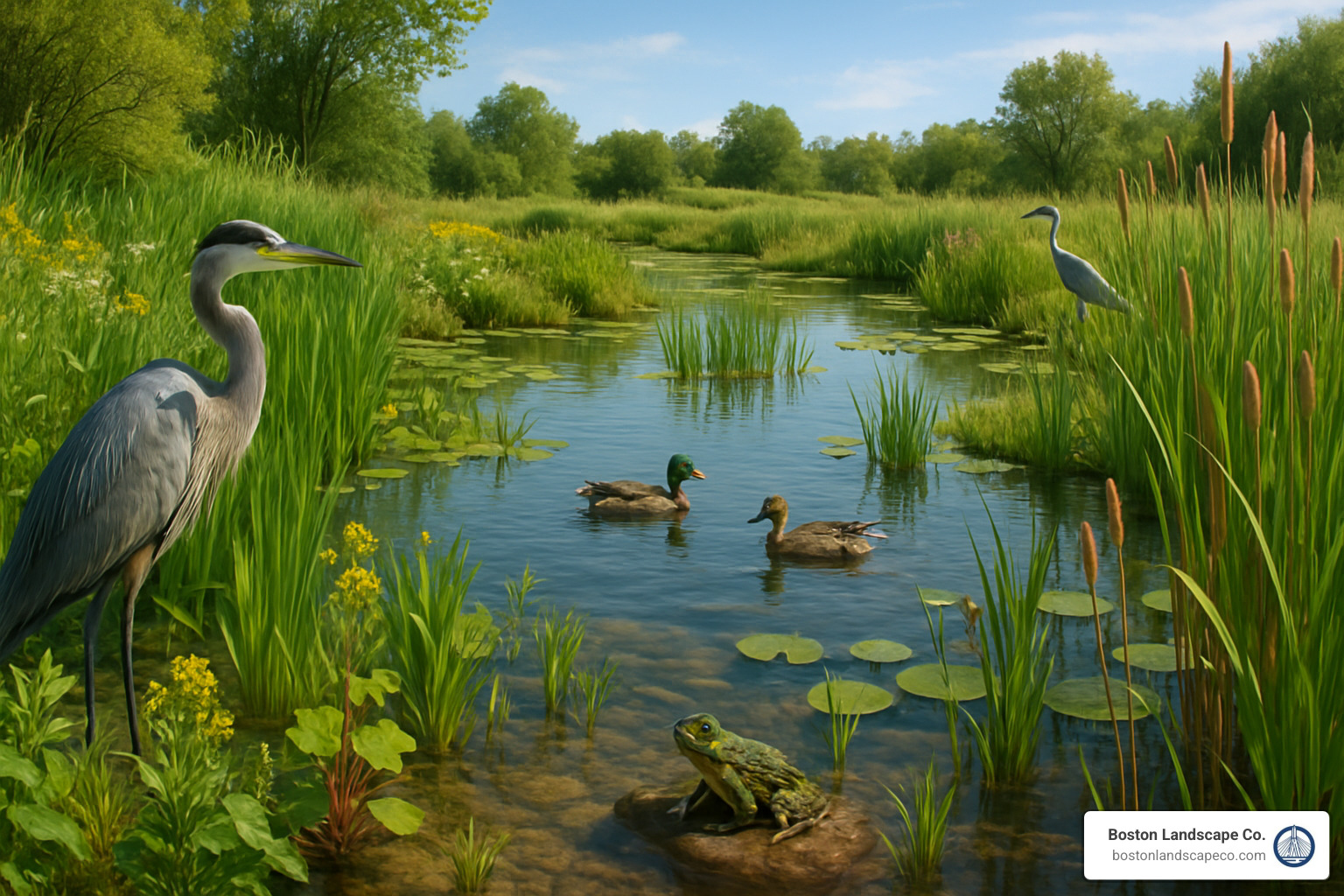
Definition by Leading Organizations
The Society for Ecological Restoration hasn’t just defined ecological restoration—they’ve refined its meaning through decades of scientific research and hands-on application. Their International Principles and Standards for the Practice of Ecological Restoration now serve as the gold standard for restoration projects worldwide, giving practitioners clear guidelines based on sound science. You can explore their comprehensive resources at the SER website.
Recognizing the urgency of this work, the United Nations declared 2021-2030 the UN Decade on Ecosystem Restoration. They define restoration as “assisting in the recovery of ecosystems that have been degraded or destroyed, as well as conserving the ecosystems that are still intact.” This global initiative aims to prevent, halt, and reverse ecosystem degradation on every continent.
Restoration exists along what experts call a “restorative continuum”—ranging from fully recovering an ecosystem to its historic state to creating novel ecosystems that provide specific ecological functions. As noted restoration ecologist Eric Higgs beautifully puts it: “Ecological Restoration brings together the two essential components of restoration: science and community.” It’s where hard data meets human heart.
Ecological Restoration vs. Conservation & Rehabilitation
While they might seem similar at first glance, ecological restoration, conservation, and rehabilitation represent distinct approaches to caring for our environment:
Conservation works to prevent future harm to intact ecosystems through protection and preservation. Think of it as saving what’s still healthy.
Rehabilitation improves some ecosystem functions without necessarily aiming for full recovery. It might improve certain aspects of an ecosystem without addressing the whole.
Ecological restoration actively repairs damage to return an ecosystem to its historic trajectory, addressing the root causes of degradation and setting the stage for natural recovery.
What makes restoration unique is its forward-looking approach while honoring historic conditions. We’re not trying to create museum pieces frozen in time—we’re helping set natural systems on self-sustaining paths toward recovery, acknowledging that ecosystems are dynamic and ever-changing.
The Society for Ecological Restoration wisely notes that “Restoration is not a substitute for conservation and should not be used to justify further destruction or unsustainable use.” The smartest environmental strategy combines both approaches: protecting what remains healthy while actively healing what’s been damaged.
At Boston Landscape Co., we understand that ecological restoration represents one of the most powerful tools we have for addressing climate change, protecting biodiversity, and creating resilient landscapes that benefit both people and wildlife. Whether it’s restoring a small urban lot or helping with larger wetland restoration projects, every effort contributes to healing our natural world.
Goals, Principles & Science Behind Ecological Restoration
The magic of ecological restoration happens when science meets stewardship. At its heart, restoration aims to heal wounded landscapes and set them on a path toward natural recovery. Having worked with Massachusetts ecosystems for over three decades at Boston Landscape Co., I’ve seen how even small restoration projects can spark remarkable changes.
When we talk about restoration goals, we’re really talking about bringing ecosystems back to life. This means rebuilding biodiversity, creating systems that can sustain themselves without constant human tinkering, and building resilience against climate change. It’s about reconnecting people with the natural world around them and using nature’s power to provide clean water, absorb carbon, and prevent flooding.
Whether we’re working on a small backyard in Lexington or a commercial property in Burlington, these fundamental goals guide our approach to every project.
Core Ecological Principles You Must Know
Understanding how nature works is essential for helping it heal. Several key principles inform our restoration work:
Disturbance regimes shape ecosystems in profound ways. From fires that regenerate forests to floods that reshape riverbanks, these natural events aren’t disasters—they’re reset buttons that many ecosystems depend on. When we restore land, we need to understand and sometimes mimic these natural patterns.
Ecological succession is nature’s rebuilding process. Think of it as a relay race, with early pioneer plants preparing the ground for later species. In restoration, we often try to jumpstart or guide this process, helping landscapes move more quickly through these natural stages of healing.
The challenge of fragmentation affects nearly every landscape we work with. When habitats get chopped into isolated islands, plants and animals struggle to survive. Many of our projects focus on creating corridors and connections between these fragments.
Beneath the visible beauty of nature lies the complex machinery of ecosystem function—the cycling of nutrients, the flow of energy, and the movement of water. Successful restoration means getting these underlying processes working again.
Community assembly is about more than just planting native species. It’s understanding which plants and animals naturally come together, how they support each other, and how they arrive at a site. Sometimes restoration means removing barriers to natural assembly rather than controlling every element.
The invisible dimension of population genetics has become increasingly important in restoration. We now know that local plant populations often have genetic adaptations to specific conditions. Using locally-sourced seeds and considering genetic diversity can make the difference between a thriving restoration and one that struggles.
Setting Targets & Measuring Success in Ecological Restoration
How do you know when a restoration project is successful? This question is trickier than it might seem. As the Society for Ecological Restoration points out, “Restoration is complete when a self-organizing ecosystem is on a trajectory toward full recovery, which may take years to centuries.”
Effective restoration requires both vision and practicality. We help our clients develop clear targets by using reference ecosystems as models—healthy nearby natural areas that show what’s possible. But we’re also realistic about what can be achieved given current conditions, especially with climate change altering the playing field.
The most successful projects use SMART goals that are Specific, Measurable, Achievable, Relevant, and Time-bound. Rather than vague aspirations to “improve habitat,” we might aim to “establish five native shrub species that support monarch butterflies within three years.”
Monitoring programs are the feedback loops that tell us whether we’re on track. This might be as simple as photo points that document visual changes or as detailed as scientific sampling of soil microbes and plant diversity. The table below shows some typical metrics we track:
| Metric | Reference Site | Restored Site (Year 1) | Restored Site (Year 5) |
|---|---|---|---|
| Native plant species | 45 species | 12 species | 28 species |
| Soil organic matter | 4.5% | 1.2% | 2.8% |
| Bird diversity | 24 species | 8 species | 17 species |
| Water infiltration rate | 2.5 in/hour | 0.5 in/hour | 1.8 in/hour |
Perhaps most importantly, we practice adaptive management—being willing to change course when monitoring shows something isn’t working. Nature is full of surprises, and flexibility is essential.
Restoration faces real challenges. Full recovery often takes decades, far longer than most funding cycles or human patience. Climate change means historical conditions may no longer be achievable targets. And sometimes we’re creating novel ecosystems with no historical precedent because conditions have changed so dramatically.
At Boston Landscape Co., we help clients steer these complexities, setting realistic restoration goals whether it’s creating a pocket of pollinator habitat in a Wellesley backyard or restoring a degraded streambank at a Waltham office park. Every project, no matter how small, contributes to the healing of our local landscapes.
Common Restoration Methods: From Forests to Wetlands
Ecological restoration comes alive through various techniques custom to each ecosystem’s unique needs. Here in Massachusetts, we’ve seen remarkable changes when the right methods meet dedicated implementation. Let’s explore the approaches that bring damaged landscapes back to life:
Reforestation & Afforestation Tactics
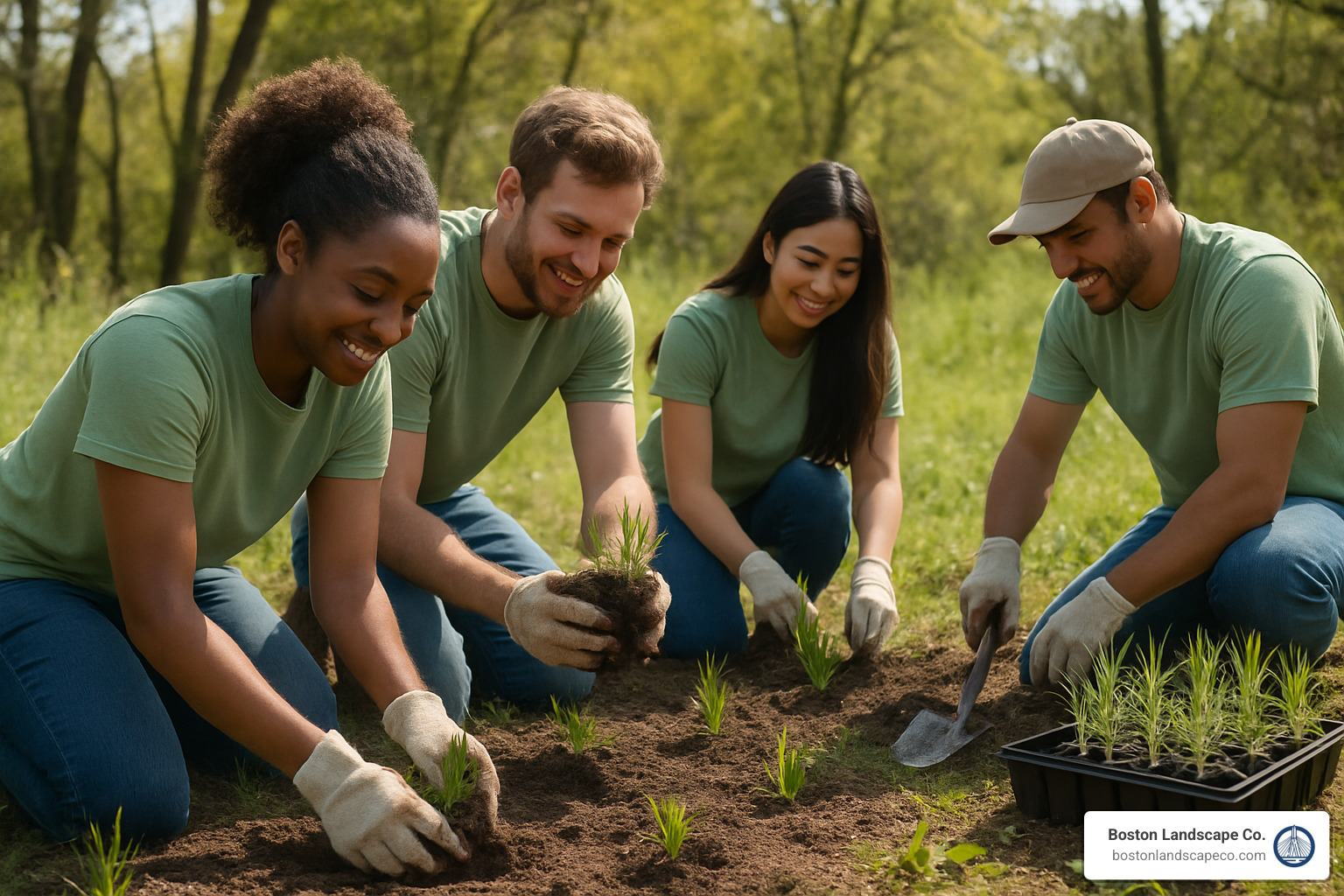
Walking through a newly planted forest area, you can almost feel the potential in those young saplings. Whether we’re replanting previously forested areas (reforestation) or establishing trees where none existed before (afforestation), success hinges on thoughtful planning.
The magic happens when we match the right trees to the right places. We carefully select native species mixes like red maple, white oak, and eastern white pine that belong in our Massachusetts landscapes. Their provenance matters too—we source seeds and saplings from appropriate genetic stock that’s adapted to local conditions.
With climate change reshaping our environment, climate resilience has become non-negotiable. We’re increasingly selecting species and genotypes that can thrive not just today, but in the warmer, more unpredictable New England of tomorrow. And rather than creating tree farms, we aim for structural diversity—multi-layered forests with trees of different ages and sizes that mimic natural ecosystems.
Invasive Species Control & Native Re-seeding
Invasive plants are like uninvited guests who overstay their welcome and eat all the food. They choke out native species and prevent natural recovery. Dealing with these botanical bullies requires a strategic approach.
We often start with mechanical removal—rolling up our sleeves to pull, cut, or mow problematic plants. When necessary, we’ll use chemical treatments as a targeted last resort, always mindful of minimizing environmental impact. For certain invasives, biological controls offer neat solutions, using natural predators to keep problem species in check. And sometimes, simply changing how we manage the land can tip the balance in favor of natives.
The real artistry comes after removal. We don’t just clear invasives and walk away—we immediately fill that ecological vacuum with native seeds and plants sourced from local nurseries. This prevents reinvasion while jumpstarting the return of Massachusetts’ natural plant communities.
Hydrological & Wetland Landscaping Services
Water shapes landscapes like nothing else. Many of our most dramatic restoration successes come from letting water flow naturally again. Our wetland landscaping services restore these vital ecosystems through thoughtful interventions.
Streams confined to straight channels yearn to meander. Through channel re-design, we restore natural curves and pool-riffle sequences that support diverse aquatic life. Where obsolete dams block fish passage, their removal can trigger remarkable ecological revivals. In dried-out wetlands, water table management brings moisture back to thirsty soils.
Erosion threatens both land and water quality, so we use bioengineering techniques that harness plants’ natural abilities to stabilize soil. Sometimes creating entirely new wetlands through constructed wetland projects provides water filtration while creating wildlife havens.
These approaches feel especially meaningful in Massachusetts, where historic wetland losses have compromised water quality and wildlife habitat. From tiny backyard rain gardens in Winchester to extensive wetland restorations in Concord, each project helps rebuild our region’s ecological health.
Wildlife Reintroduction & Assisted Gene Flow
Plants form the stage, but animals bring the performance to life. Sometimes restoration requires bringing back missing players in the ecosystem drama.
Keystone species exert influence far beyond their numbers—think of beavers reshaping entire watersheds. Pollinators like native bees and butterflies enable plant reproduction, while seed dispersers spread plant communities across the landscape. In some cases, assisted gene flow introduces genetic diversity that helps populations adapt to changing conditions.
Even modest suburban properties can support wildlife recovery. A thoughtfully designed yard with native plants provides food, water, shelter, and nesting sites for local creatures. I’ve watched homeowners beam with pride as their restored landscapes buzz with life that had been absent for generations.
At Boston Landscape Co., we’ve been privileged to apply these restoration methods across properties throughout the Greater Boston area, watching as nature reclaims its rightful place in our communities—one restored ecosystem at a time.
Social, Economic, and Climate Benefits of Ecological Restoration
The beauty of ecological restoration isn’t just in the recovered landscapes—it’s in the remarkable ripple effects that benefit our communities, economies, and climate. When we heal ecosystems, we’re making an investment that pays dividends in multiple ways. According to UN research, every dollar invested in restoration yields at least nine dollars in economic benefits, while choosing inaction costs us at least three times more than taking restorative action.
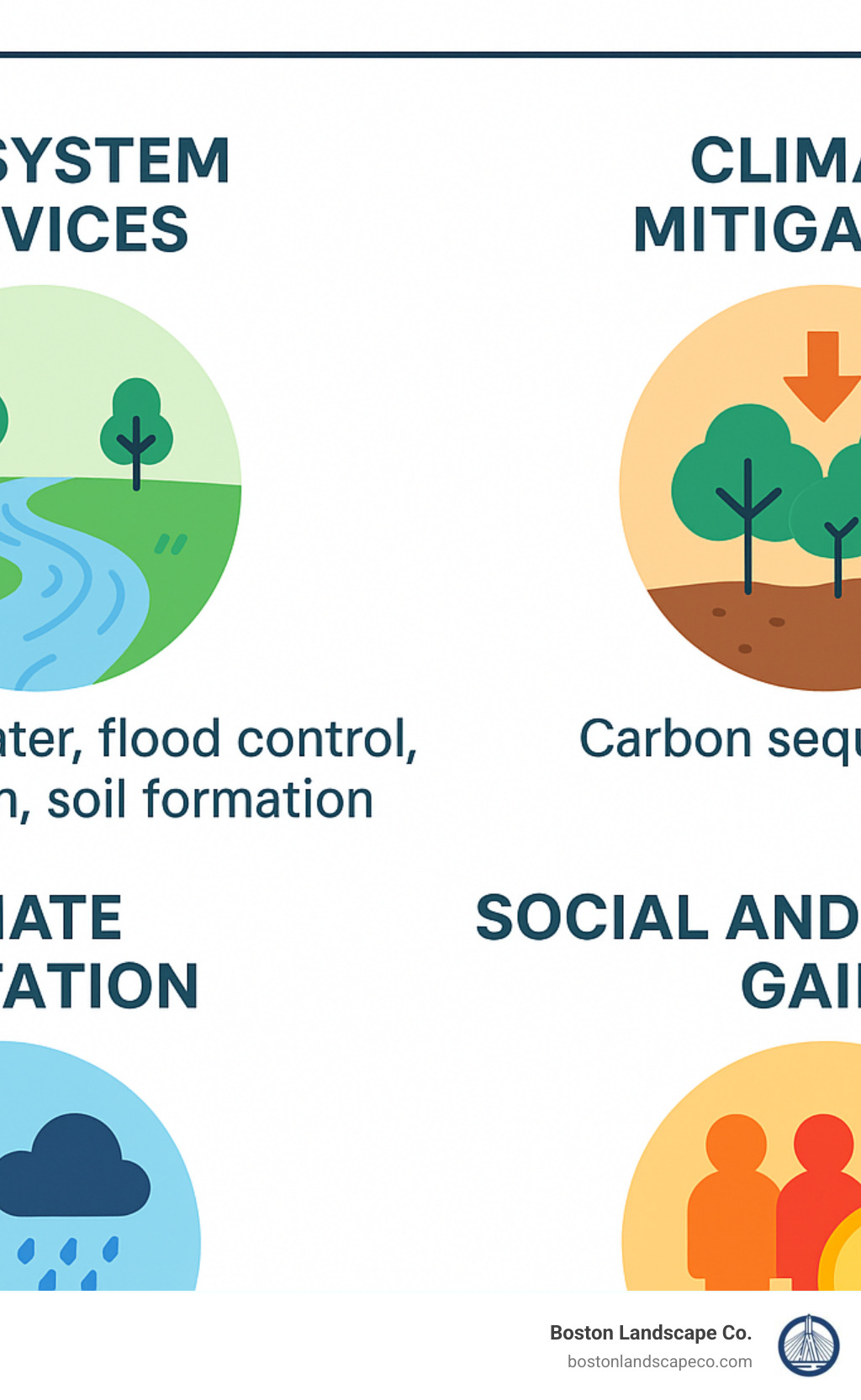
At Boston Landscape Co., we’ve seen how restoration transforms not just landscapes but lives. When we restore a wetland or replant a forest edge, we’re not just helping plants and animals—we’re creating value for everyone.
Restored ecosystems provide essential ecosystem services that would cost millions to replace with technology. Clean water flows from healthy watersheds. Intact wetlands absorb floodwaters during storms, protecting homes and businesses. Native flowering plants support pollinators that our food systems depend on. Healthy soils form naturally when ecosystems function properly.
The climate benefits are equally impressive. Thriving ecosystems serve as natural carbon sinks, pulling CO₂ from the atmosphere and storing it in plants and soils. A single acre of restored wetland can sequester several tons of carbon annually. At the same time, these ecosystems help communities adapt to climate change by moderating temperatures, reducing flooding, and providing natural buffers against extreme weather.
The economic impact goes beyond avoided costs. Restoration projects create jobs—more jobs per dollar invested than oil and gas or road construction. These range from entry-level positions planting trees to specialized roles in ecological assessment and design. In Massachusetts alone, the ecological restoration sector supports thousands of jobs and contributes significantly to the state economy.
Perhaps most meaningful are the cultural and health benefits. Restoration projects often lead to cultural revival, especially when they reconnect communities with landscapes that hold traditional or historical significance. Access to restored natural areas provides documented health benefits, from improved air quality to mental health improvements that come from time spent in nature.
Community & Indigenous Leadership in Projects
The most successful restoration efforts don’t just happen to communities—they happen with them. We’ve learned that when local residents and Indigenous peoples lead or co-lead restoration projects, the outcomes are more sustainable and equitable.
Traditional Ecological Knowledge represents centuries of careful observation and stewardship. This knowledge often includes nuanced understanding of local ecosystems that scientific research alone might miss. The Society for Ecological Restoration recognizes this through their Full Circle Award, celebrating projects that effectively bridge Indigenous and non-Indigenous approaches.
Effective restoration increasingly accepts co-management models where decision-making power is shared. This ensures that restoration goals align with community needs and values. It also promotes equity by making sure the benefits of restoration—from improved environmental quality to economic opportunities—are fairly distributed among all community members.
We’ve found that the most resilient projects recognize the deep connection between bio-cultural diversity—understanding that cultural practices and biological diversity often evolved together and continue to support each other. At Boston Landscape Co., even on smaller residential projects, we value incorporating local knowledge and preferences into our designs.
Global Initiatives Driving Restoration
Ecological restoration has grown from isolated local efforts to a global movement with impressive momentum. Several major initiatives are accelerating this work:
The UN Decade on Ecosystem Restoration (2021-2030) represents an unprecedented commitment to prevent, halt, and reverse ecosystem degradation worldwide. This framework is helping coordinate efforts across countries and sectors, from governments to private businesses.
In Europe, the EU Nature Restoration Law has set ambitious targets: restoring 20% of EU land and sea areas by 2030, with a longer-term goal of addressing all degraded ecosystems by 2050. This policy framework is creating both requirements and opportunities for restoration work.
The Bonn Challenge aims to restore 350 million hectares of degraded land globally by 2030—an area larger than India. This effort has already secured commitments for over 210 million hectares from countries, organizations, and private landowners worldwide.
The 30×30 Initiative seeks to protect 30% of land and ocean areas by 2030, creating a complementary approach where conservation and restoration work together. This initiative recognizes that we need both to protect what remains intact and actively restore what has been damaged.
These global initiatives provide frameworks, funding sources, and political momentum that help support our local restoration work here in Massachusetts. Whether we’re creating a backyard pollinator garden in Newton or restoring a streambank in Weston, we’re contributing to these larger global goals for a healthier planet.
For more information about how restoration can benefit your property, explore our wetland landscaping services or read more about the science behind restoration economics.
Real-World Case Studies: Successes & Lessons Learned
The world of Ecological Restoration is filled with inspiring stories and valuable lessons. By examining what’s working (and what isn’t) in projects around the globe, we at Boston Landscape Co. continually refine our approach to habitat restoration right here in Massachusetts.
Success Stories in Ecological Restoration
When restoration works, the results can be truly breathtaking. Take Gondwana Link in Australia, where conservationists have reconnected 15,500 hectares of fragmented habitat across southwestern Australia. What makes this project special isn’t just its scale, but how it demonstrates the power of connectivity – creating wildlife corridors that allow species to move freely between previously isolated habitat patches.
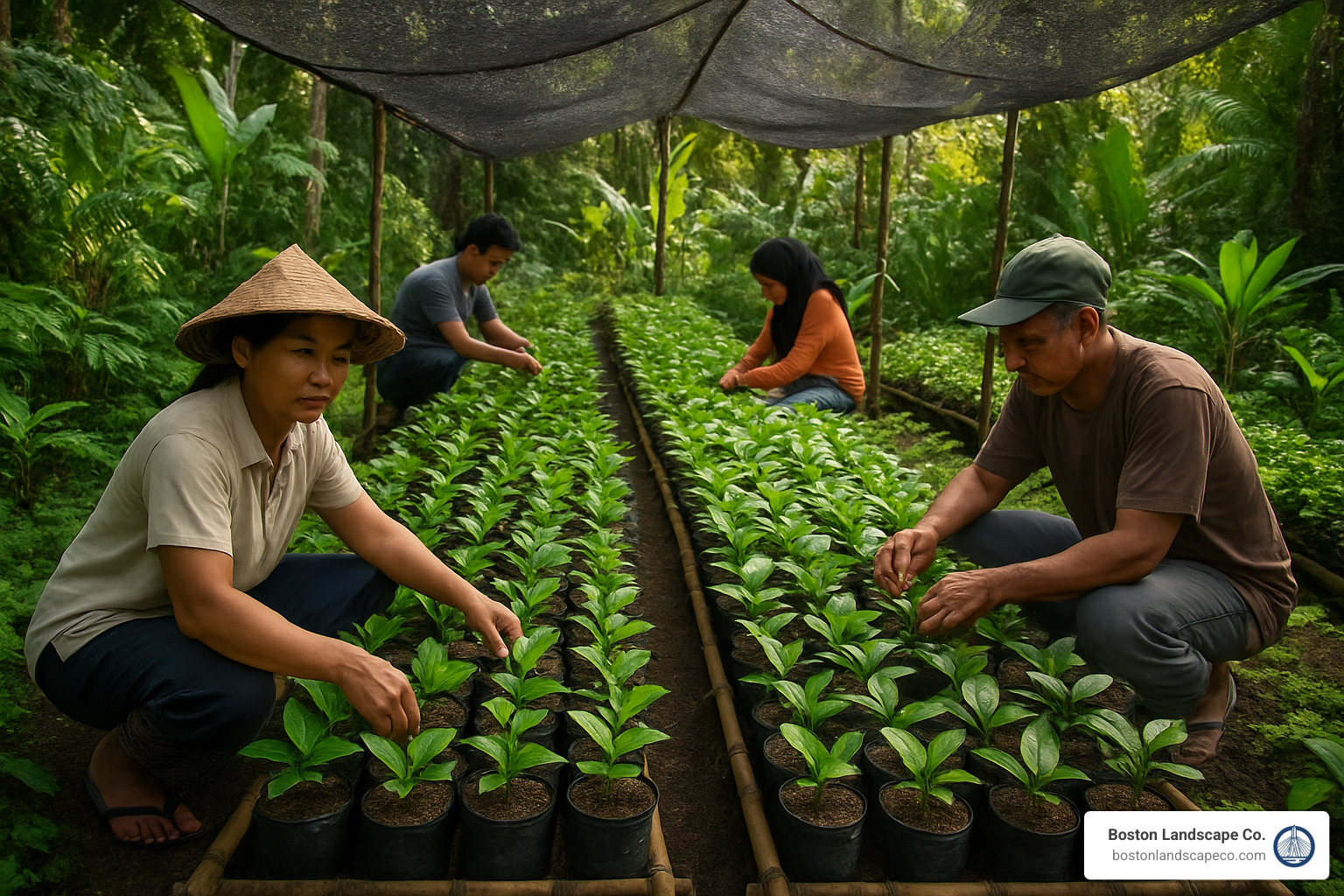
In Southeast Asia, the 100 Million Trees for Borneo initiative shows how human communities and forests can heal together. Local villagers, many of whom once relied on logging for income, now grow native seedlings and plant trees across 620 hectares of damaged rainforest. The project doesn’t just restore habitat – it restores livelihoods and cultural connections to the land.
You might not think about underwater restoration, but Project Seagrass in the UK has successfully brought back 10 hectares of vital marine meadows. These underwater grasslands serve as nurseries for fish, filter water, and store carbon more efficiently than many land-based forests. The project reminds us that restoration isn’t limited to dry land.
Even here in Massachusetts, we’ve witnessed remarkable recoveries. Salt marshes along our coastline have bounced back after decades of degradation. Dam removals on rivers like the Shawsheen have reopened miles of habitat for migratory fish. Even in urban areas like Boston’s Emerald Necklace, we’re seeing the return of wildlife to formerly degraded spaces.
When Projects Fail—and How to Avoid Pitfalls
Not every restoration story has a happy ending. Understanding why projects fail helps us avoid making the same mistakes.
Inadequate site assessment is perhaps the most common pitfall. You can’t restore what you don’t understand. At Boston Landscape Co., we spend significant time analyzing soil conditions, hydrology, and existing vegetation before designing any restoration plan.
Many projects falter because of inappropriate species selection. That gorgeous native plant might look perfect on paper, but if it can’t handle the site’s specific conditions or future climate scenarios, it’s doomed to fail. We’re particularly careful about matching plants to sites in our New England projects, where microclimates can vary dramatically.
The science-practice gap trips up many well-intentioned efforts. Academic research often takes years to make its way into field applications. We stay connected with research institutions and restoration networks to incorporate the latest science into our designs.
Perhaps the most heartbreaking failures come from neglected maintenance. Young restoration sites need care, especially in the first few years. A beautiful planting can be quickly overrun by invasives without proper follow-up. That’s why our restoration contracts always include maintenance plans custom to each site’s needs.
Some projects set unrealistic expectations, trying to recreate historical conditions that simply can’t exist in today’s environment. We focus on creating resilient, functioning ecosystems that might not be identical to what existed 300 years ago but can thrive in current and future conditions.
Finally, many projects fail by not addressing root causes of degradation. Planting trees won’t help if soil contamination persists, or if stormwater continues to erode streambanks. Our holistic approach tackles underlying issues first, ensuring our restoration efforts have staying power.
By learning from both successes and failures, we continue to refine our restoration practices for Massachusetts landscapes – from suburban backyards to corporate campuses to municipal conservation lands.
Frequently Asked Questions about Ecological Restoration
How long does an ecological restoration project take?
When clients ask me about timelines for ecological restoration, I always smile and say, “Nature works on her own schedule.” The truth is, restoration isn’t like building a deck where you know exactly when it’ll be finished.
Different ecosystems recover at dramatically different rates. A meadow might look established and beautiful within just 1-3 years, while a forest could take generations to fully mature. The Society for Ecological Restoration puts it well: “Recovery can take years, decades, or even hundreds of years.”
Here’s what we typically see in Massachusetts:
A wildflower meadow will show gorgeous blooms by year two, but reaches its ecological prime around years 5-10. Wetlands might trap sediment and manage water within 5-10 years, but developing the complex food web and full ecosystem services takes 20+ years. Forest projects are the ultimate exercise in patience—you’ll see canopy closure in 10-30 years, but those magnificent old-growth characteristics? That’s a 50-200+ year journey.
At Boston Landscape Co., we design projects that give you beautiful results to enjoy right away, while also setting the stage for deeper ecological benefits that unfold year after year. It’s like planting a legacy that gets richer with time.
What does ecological restoration cost on average?
I wish I could give you a simple answer about restoration costs, but it’s a bit like asking, “How much does a house cost?” It depends on so many factors.
Based on industry data (not Boston Landscape Co. specific pricing), here’s what you might expect to invest:
Converting land to native meadow typically runs between $1,500-$15,000 per acre. Wetland creation is more intensive, ranging from $5,000-$75,000 per acre. Forest restoration generally falls between $2,000-$50,000 per acre. And stream restoration is the most complex, often costing $50,000-$500,000 per mile.
What drives these wide ranges? Accessibility makes a huge difference—is the site easy to reach with equipment? Soil conditions matter tremendously—are we dealing with healthy soil or compacted clay? The presence of aggressive invasive species can double the work required. And planting density—how many plants per acre—directly affects both costs and recovery speed.
While these numbers might seem substantial, the UN’s research shows the economic benefits of restoration typically exceed costs by a factor of nine. Clean water, flood protection, pollination, carbon storage—these services have real economic value that compounds over time.
Can small urban lots really support meaningful restoration?
“My yard is too small to make a difference.” I hear this all the time, and I love proving it wrong! Small spaces can have enormous ecological impact.
Think of it this way: while a single backyard might seem insignificant, urban and suburban properties collectively make up millions of acres across America. Your quarter-acre lot becomes powerful when connected to your neighbor’s yard and the park down the street.
Even modest spaces can contribute meaningfully to ecological restoration through thoughtful design. A native plant garden the size of a parking space can support dozens of pollinator species. A small rain garden can manage thousands of gallons of stormwater annually while creating habitat for frogs and beneficial insects. Removing invasive plants from your property prevents them from spreading seeds to nearby natural areas.
Some of our most rewarding projects have been in typical suburban yards in Lexington, Winchester, and Medford, where we’ve helped homeowners transform cookie-cutter landscapes into vibrant mini-ecosystems that buzz with life—while still having space for the kids to play.
Wildlife biologists now recognize the crucial role these small restored patches play as “stepping stones” that help animals and plants move through fragmented landscapes. Your backyard could be the critical link that helps a monarch butterfly complete its migration or gives a songbird the resources it needs to raise its young.
In restoration, size isn’t everything—connectivity and quality matter tremendously. Your small space can be a mighty contribution to healing our natural world.
Conclusion
Ecological restoration isn’t just a scientific practice—it’s a journey of hope and healing for our natural world. When we help damaged ecosystems recover, we’re not just planting trees or reshaping landscapes; we’re reconnecting vital threads in the web of life that sustains us all.
Throughout Massachusetts, from coastal salt marshes to suburban backyards, the principles of restoration can transform degraded spaces into thriving, resilient ecosystems. The science is clear: healthy ecosystems provide services worth billions of dollars, from clean water and flood protection to carbon storage and wildlife habitat.
At Boston Landscape Co., we’ve spent over three decades bringing these restoration principles to properties across the Greater Boston area. We’ve seen how even small projects can make a meaningful difference—a rain garden in Winchester that provides habitat for native frogs, a meadow restoration in Lexington that brings back butterflies, or a wetland creation in Concord that filters runoff and supports waterfowl.
What makes restoration so rewarding isn’t just the environmental benefits. It’s watching a property transform over time, seeing the gradual return of birds and beneficial insects, and knowing you’ve created something that will continue to grow and evolve long after the initial work is complete.
Whether you’re a homeowner with a quarter-acre lot or a business with extensive grounds, you can participate in this vital work. Even modest projects contribute to the ecological network that wildlife depends on, creating stepping stones between larger natural areas.
Ready to start your own restoration story? Our team at Boston Landscape Co. brings together ecological knowledge and practical landscaping expertise to create beautiful, functional landscapes that work with nature rather than against it. From initial site assessment to long-term maintenance, we’ll guide you through the process of changing your property into a haven for both people and wildlife.
Learn more about our wetland landscaping services or contact us to discuss how we can tailor ecological restoration approaches to your specific property and goals. Together, we can heal our local habitats and build a greener, more resilient future for Massachusetts—one landscape at a time.
