
Eco-Friendly Tree Care: 2025’s Smart Guide
Why Sustainable Tree Care Matters
Eco-friendly tree care is a holistic approach to maintaining trees using natural methods that benefit both your landscape and the environment. Instead of relying on harsh chemicals and unsustainable practices, this approach focuses on:
- Organic fertilization using compost and natural materials
- Natural pest control with beneficial insects and non-toxic treatments
- Water conservation through smart irrigation techniques
- Responsible pruning during dormant seasons
- Native species selection for local climate adaptation
- Soil health improvement through organic mulching
Trees are powerhouses for our environment. A single mature tree can produce enough oxygen for two people per year while absorbing 48 pounds of carbon dioxide annually. They also filter stormwater, prevent soil erosion, and provide essential habitat for wildlife.
The shift toward sustainable tree care isn’t just about being environmentally conscious – it’s about creating healthier, more resilient landscapes that require less maintenance over time. When you choose eco-friendly methods, you’re investing in the long-term health of your trees and the broader ecosystem.
As Steve Schumacher, owner-operator of Boston Landscape Co for over three decades, I’ve witnessed how eco-friendly tree care practices create more vibrant and sustainable landscapes. Our commitment to environmentally responsible methods has consistently delivered superior results for clients while protecting the natural environment we all depend on.
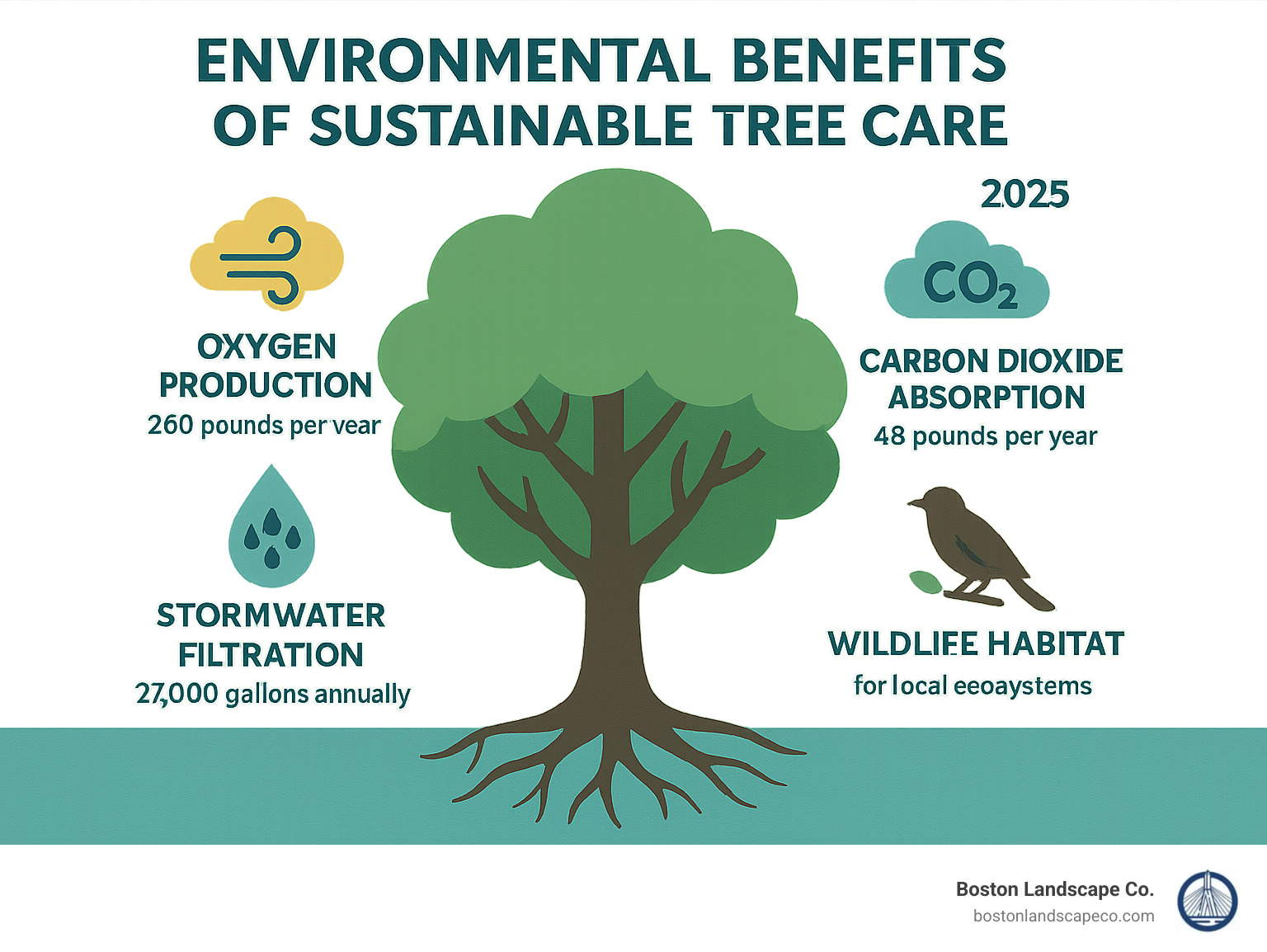
Simple guide to eco-friendly tree care terms:
Core Principles of Eco-Friendly Tree Care
Nourishing Your Trees: An Eco-Friendly Tree Care Approach
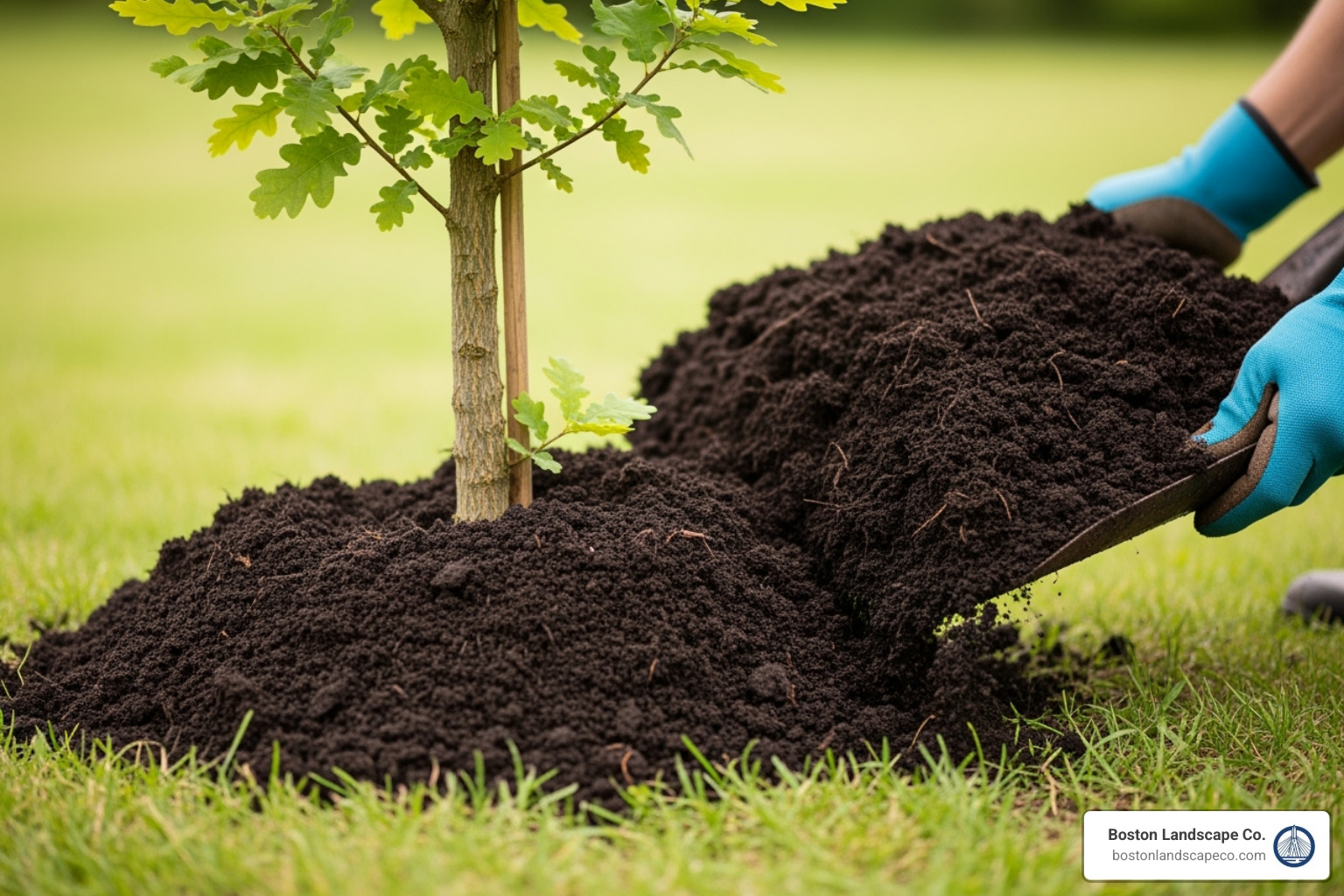
Think of your tree’s soil as its personal pantry. When that pantry is well-stocked with nutrients and busy with beneficial microorganisms, your trees naturally become stronger and more resistant to diseases and pests. This is where eco-friendly tree care really shines – working with nature instead of against it.
Organic fertilizers are the secret weapon of sustainable tree care. Unlike synthetic fertilizers that can shock your trees with a sudden nutrient dump, organic options like aged manure and compost act like a slow-release vitamin system. They feed your trees gradually while actually improving the soil structure underneath. We’ve found that late fall fertilization works particularly well because trees are focusing their energy on root development during this time.
Now, let’s talk about mulching – honestly, it’s probably the single most effective thing you can do for your trees. A proper 3-4 inch layer of organic mulch around your tree’s base is like giving it a protective blanket that works overtime. It retains water during dry spells, naturally suppresses weeds without chemicals, and regulates soil temperature so your tree’s roots stay comfortable year-round.
Our Mulch Billerica MA service uses only organic materials like wood chips and bark that break down naturally to enrich your soil. Just remember the golden rule: keep mulch a few inches away from the trunk to prevent rot and pest problems – nobody wants to create a cozy home for unwanted critters!
When you’re shopping for organic products, look for OMRI-approved products. These meet strict organic standards, so you know you’re truly practicing sustainable care that’s good for your trees and the environment.
Smart Watering for Sustainable Landscapes
Water conservation doesn’t mean your trees have to go thirsty – it means being smart about when and how you water. Deep, infrequent watering is the name of the game here. Think of it like teaching your trees to fish instead of just giving them a fish. When you water deeply but less frequently, you encourage strong root development that helps your trees become naturally drought-tolerant.
The best approach is soaker hoses or drip irrigation that delivers water slowly over about an hour, focusing on the root zone rather than the leaves. Morning watering is your friend because it reduces evaporation and gives trees time to absorb moisture before the day heats up. During dry periods, do the finger test – stick your finger 2-3 inches into the soil near your tree. If it’s dry, it’s time to water.
Consider rainwater harvesting systems to supplement your watering needs while reducing your environmental footprint. Our Watering And Irrigation Systems can cut water waste by up to 50% compared to traditional sprinklers by delivering water directly where it’s needed most.
Natural Pest and Weed Management

Integrated Pest Management (IPM) is like having a game plan instead of just swinging blindly at problems. Instead of reaching for broad-spectrum pesticides that kill the good bugs along with the bad ones, IPM focuses on understanding pest life cycles and using targeted, environmentally friendly solutions.
Beneficial insects are nature’s own pest control team, and they work for free! Using ladybugs for biocontrol can dramatically reduce aphid populations without any chemicals. We’ve seen properties where introducing beneficial insects completely eliminated pest problems – it’s pretty amazing to watch nature balance itself out.
When you do need to step in with treatments, natural pesticides offer effective alternatives that won’t harm the environment. Neem oil disrupts insect feeding and reproduction cycles without toxic residues. Diatomaceous earth provides mechanical pest control that’s safe for pets and children. For specific pest larvae, Bacillus thuringiensis (Bt) targets problem insects without affecting beneficial ones.
Manual weed removal might sound old-fashioned, but it completely eliminates the need for herbicides. Companion planting with pest-repelling plants like marigolds, garlic, and chives creates natural barriers around your trees. It’s like having a bodyguard system that looks beautiful and smells great too!
Structural Health: Sustainable Pruning and Planting
Responsible Pruning for Longevity
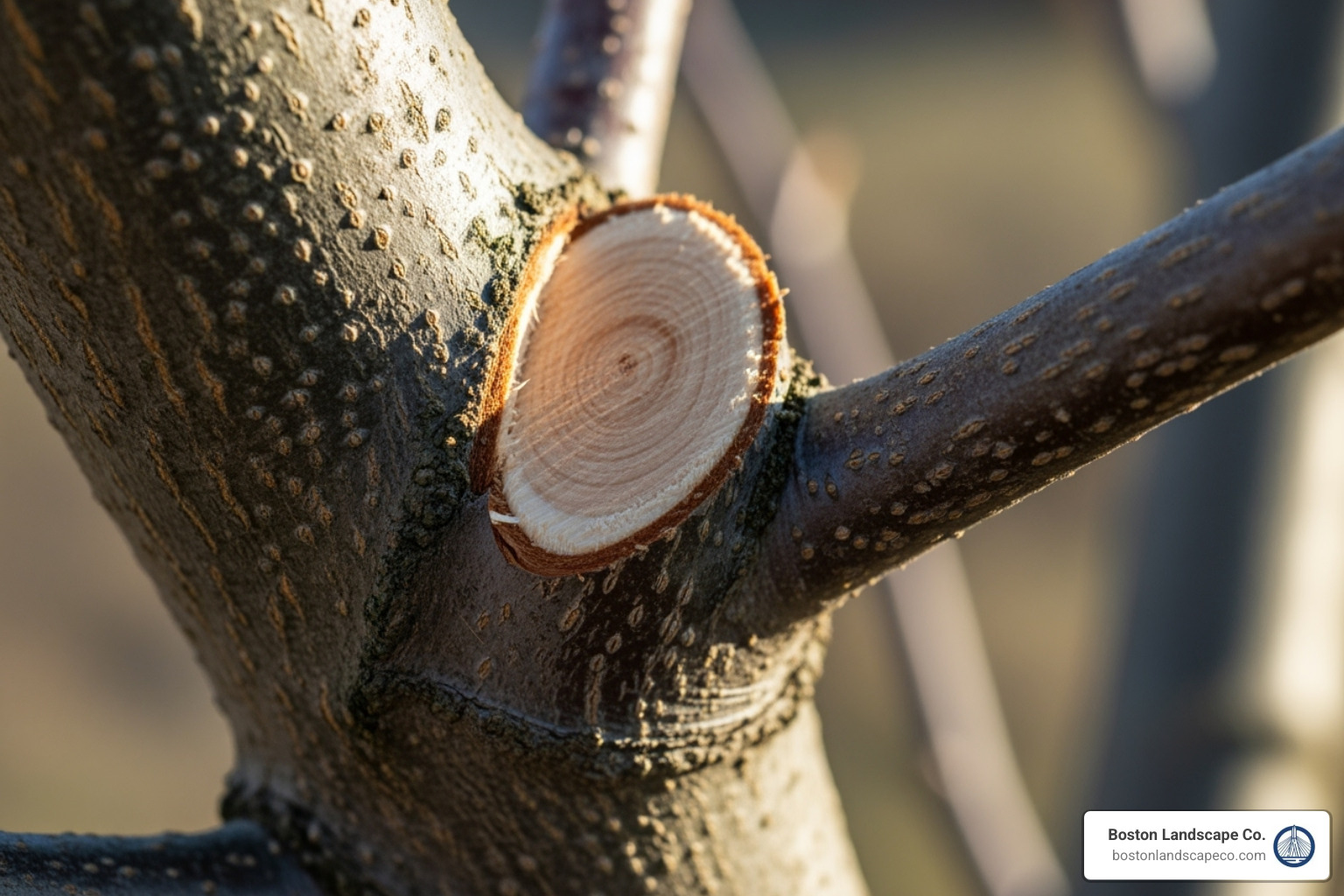
Proper pruning is an art that promotes tree health while maintaining structural integrity. The key is understanding that pruning establishes how a tree grows and develops throughout its life.
Timing is everything – prune during the dormant season (late winter to early spring) when trees are less stressed and disease risk is minimized. This timing also allows trees to heal quickly once growing season begins.
Essential pruning principles include:
- Use sharp, clean tools to make precise cuts
- Remove dead, diseased, or crossing branches first
- Cut just outside the branch collar (the swollen area where branch meets trunk)
- Never remove more than 25% of a tree’s canopy in one season
- Focus on improving air circulation and light penetration
Avoid the temptation to “top” trees – this harmful practice weakens trees and makes them vulnerable to disease and pest infestation. Instead, selective pruning maintains natural tree shape while addressing specific issues.
Our Yard Clean Ups Topsfield MA service includes responsible pruning as part of comprehensive property maintenance.
Planting for the Future: The Role of Native Species
The “right tree, right place” principle is fundamental to sustainable landscaping. Native trees are naturally adapted to local climate, soil conditions, and pest pressures, making them inherently more sustainable choices.
Benefits of native tree species include:
- Reduced water requirements after establishment
- Natural resistance to local pests and diseases
- Lower maintenance needs
- Support for local wildlife and pollinators
- Contribution to regional biodiversity
When selecting trees, consider mature size, growth rate, and environmental requirements. A Japanese elm might thrive in the Pacific Northwest but struggle in our Massachusetts climate. Choosing appropriate species prevents future problems and reduces long-term maintenance costs.
Our Invasive Species Removal service helps restore native plant communities, while our Landscape Design Cambridge MA team specializes in incorporating native species into beautiful, sustainable designs.
Common Mistakes to Avoid for a Greener Yard
| Harmful Practice | Eco-Friendly Alternative | Why It Matters |
|---|---|---|
| Tree Topping | Selective Pruning | Maintains tree health and structure |
| Chemical Fertilizers | Organic Compost/Manure | Prevents root burn and soil imbalance |
| Broad-Spectrum Pesticides | Integrated Pest Management | Protects beneficial insects |
| Volcano Mulching | Proper Mulch Application | Prevents trunk rot and pest issues |
| Overwatering | Deep, Infrequent Watering | Encourages strong root development |
| Non-Native Species | Native Tree Selection | Reduces maintenance and supports ecosystem |
Even the most well-intentioned homeowners can unknowingly harm their trees through common mistakes. Understanding these pitfalls is crucial for successful eco-friendly tree care and helps you avoid costly problems down the road.
Tree topping remains the most heartbreaking mistake I encounter in my three decades of landscaping. This “buzz cut” approach might seem like a quick fix for an overgrown tree, but it’s essentially tree torture. When you remove a tree’s natural crown, you’re creating weak branch attachments that make the tree vulnerable to breaking during storms. The result? A tree that looks terrible and often needs removal within just a few years.
Over-fertilizing is another well-meaning mistake that backfires spectacularly. Many homeowners think more fertilizer equals healthier trees, but excessive feeding actually encourages rapid, weak growth that attracts pests like aphids and scale insects. Chemical fertilizers can also burn delicate root systems and upset the natural soil balance that trees depend on.
The environmental damage from chemical runoff extends far beyond your property line. When synthetic fertilizers and pesticides wash into storm drains, they pollute waterways and harm beneficial soil organisms throughout entire watersheds. This contamination affects fish populations, drinking water quality, and the health of ecosystems miles away from your yard.
Soil compaction might seem minor, but it’s devastating to tree health. Heavy foot traffic, construction equipment, or even repeatedly parking on grass damages the soil structure that tree roots need to breathe and absorb nutrients. Compacted soil prevents proper water infiltration, creating drought stress even when you’re watering regularly.
One of the most common mulching mistakes is volcano mulching – piling mulch high against tree trunks like a volcanic cone. This practice traps moisture against the bark, creating perfect conditions for rot and pest infestations. Proper mulch application keeps material several inches away from the trunk while still providing all the benefits of moisture retention and weed suppression.
Broad-spectrum pesticides might eliminate your pest problem, but they also wipe out beneficial insects like ladybugs, lacewings, and parasitic wasps that naturally control harmful pests. This approach is like using a sledgehammer to swat a fly – it works, but it destroys everything else in the process.
Finally, planting non-native, high-maintenance species sets you up for ongoing struggles. That beautiful ornamental tree from another climate zone might look stunning in the nursery, but it’ll require constant watering, fertilizing, and pest treatments to survive in our Massachusetts climate. Native species naturally thrive here with minimal intervention once established.
The good news? Every one of these mistakes has a simple, sustainable solution that creates healthier trees and a more beautiful landscape. Making these changes doesn’t just benefit your property – it contributes to a healthier environment for everyone.
The Future of Arboriculture: Professionals and Technology
The Role of Professionals in Eco-Friendly Tree Care
When it comes to eco-friendly tree care, sometimes the best investment you can make is calling in the experts. Certified Arborists bring years of specialized training that can mean the difference between a thriving tree and an expensive mistake.
Think of Plant Health Care (PHC) programs as comprehensive wellness plans for your trees. These aren’t just about fixing problems after they occur – they’re about creating conditions where problems never develop in the first place. Professional soil testing reveals exactly what your trees need, eliminating the guesswork that leads to over-fertilization or nutrient deficiencies.
Accurate disease diagnosis is where professionals truly shine. What looks like a simple brown spot to most homeowners might actually be early signs of a serious fungal infection. Catching these issues early means using targeted, minimal treatments instead of broad-spectrum chemicals later.
Complex pruning jobs require both knowledge and specialized equipment. Professional arborists understand tree biology well enough to make cuts that promote healing rather than create entry points for disease. They also have the safety equipment needed for working around power lines or removing large branches without damaging property.
Our Professional Landscaping Services Near Me team includes certified professionals who understand how trees interact with the broader ecosystem. We’ve seen too many well-intentioned DIY projects that ended up harming trees because the homeowner didn’t understand the underlying science.
Property risk assessments are another area where professional expertise pays dividends. A trained eye can spot structural weaknesses that might not be obvious until a storm brings down a major branch. This proactive approach protects both your property and your family’s safety.
How Technology Improves Sustainability
Modern technology is changing how we approach sustainable tree care, and the results are impressive. Route optimization software has revolutionized efficiency in our industry – companies using these systems report fuel consumption reductions of up to 20%. That’s not just good for the environment; it’s good for keeping service costs reasonable.
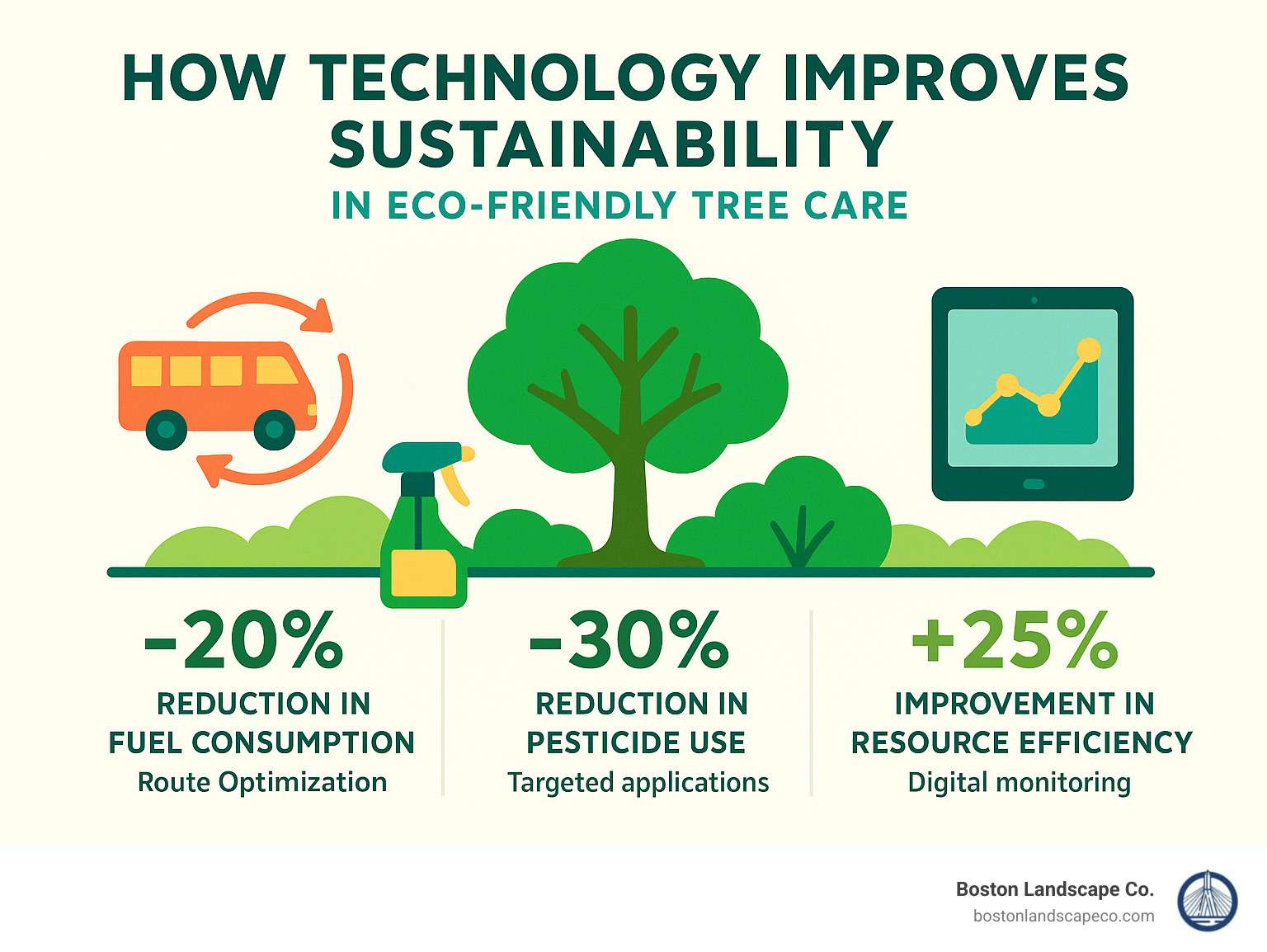
Resource management systems help us track exactly how much water, fertilizer, and organic treatments we’re using. This precision prevents waste and ensures we’re applying only what’s needed for optimal tree health. Digital monitoring tools can detect early signs of stress or disease, allowing for intervention before problems become severe.
Equipment advances are making sustainable practices more practical than ever. Battery-powered chainsaws eliminate emissions entirely while providing the power needed for professional work. Electric chippers run much quieter than gas models, which your neighbors will definitely appreciate during early morning work sessions.
The Arboriculture software benefits extend beyond just scheduling and routing. These systems help track tree health over time, identifying patterns that might not be obvious from year to year. This long-term perspective is essential for truly sustainable tree care.
Precision application systems represent perhaps the biggest advancement in sustainable pest management. Instead of blanket treatments, these systems deliver targeted applications exactly where they’re needed. This approach uses significantly less material while achieving better results.
The combination of professional expertise and modern technology creates opportunities for eco-friendly tree care that simply weren’t possible a decade ago. We can now provide more effective service while reducing our environmental impact – a win-win situation for everyone involved.
Long-Term Rewards of Sustainable Tree Management

When you invest in eco-friendly tree care, you’re not just maintaining your landscape – you’re building a legacy that grows more valuable with each passing year. The mature oak shading your home today might have started as a sapling decades ago, quietly working to transform your property into something extraordinary.
Increased property value is one of the most tangible benefits you’ll see. Real estate professionals consistently report that mature, healthy trees can boost property values by 10-15%. But the financial benefits go deeper than market value. Strategic tree placement can slash your energy bills by up to 30% through natural cooling in summer and wind protection in winter.
The magic happens when your trees become truly healthier and more resilient. Trees maintained with sustainable practices develop what we like to call “tree immunity” – they’re simply better equipped to handle drought, pests, and diseases. This means fewer emergency calls, less worry during storms, and reduced long-term maintenance costs.
Your yard becomes a wildlife magnet when you accept sustainable practices. Attracting beneficial wildlife isn’t just pleasant to watch – it’s practical. Birds control insect populations, bees pollinate your garden, and beneficial insects keep harmful pests in check. You’ve essentially hired nature’s own maintenance crew.
Beneath the surface, something remarkable is happening to your soil. Improved soil structure from years of organic mulching and composting creates a underground network that holds water like a sponge, prevents erosion, and feeds your trees naturally. This creates a beautiful cycle where healthy soil grows healthy trees, which in turn improve the soil even more.
Creating a thriving local ecosystem might sound grand, but it’s exactly what happens in your backyard. Native trees support local wildlife, organic practices encourage beneficial insects, and healthy soil filters stormwater naturally. You’re not just caring for individual trees – you’re nurturing a living system that becomes more self-sustaining and beautiful over time.
The most rewarding part? Each season brings new evidence of your investment. Spring blooms are more abundant, summer shade is deeper and cooler, and fall colors are more vibrant. Your trees aren’t just surviving – they’re thriving, and they’re taking your entire landscape along for the ride.
Conclusion: Cultivating a Sustainable Legacy
Eco-friendly tree care isn’t just about being kind to the environment – it’s about creating something lasting that will benefit your family and community for decades to come. When you choose organic fertilization over synthetic chemicals, or select native species instead of high-maintenance exotics, you’re making decisions that ripple outward in ways you might not even realize.
Think about it this way: the tree you plant and care for sustainably today could be providing shade for your grandchildren’s children. That’s the kind of legacy we’re talking about – one that grows stronger and more valuable with each passing year.
The journey toward sustainable tree care doesn’t require a complete overhaul of your current practices. Start small. Maybe this season you’ll switch to organic mulch instead of synthetic fertilizers. Next year, you might install a rain barrel to collect water for your trees. The following season, you could plant a native oak instead of that ornamental species that never quite thrived.
Each step builds on the last, creating a landscape that becomes more self-sustaining over time. Your trees will develop stronger root systems, better disease resistance, and deeper connections to the local ecosystem. The beneficial insects you attract will provide natural pest control. The healthy soil you’ve built will retain moisture better during dry spells.
What’s particularly rewarding is watching your property transform into a haven for wildlife. Birds that once flew overhead will start nesting in your trees. Butterflies will visit your native plantings. Your neighbors might even ask for advice on creating their own sustainable landscapes.
At Boston Landscape Co, we’ve had the privilege of helping families throughout the greater Boston area create these kinds of transformative landscapes for over thirty years. There’s something deeply satisfying about revisiting a property we worked on years ago and seeing how the sustainable practices we implemented have created a thriving, low-maintenance ecosystem.
The environmental benefits extend far beyond your property lines. Every tree you nurture with eco-friendly tree care methods contributes to cleaner air and water for your entire community. You’re part of a growing movement of homeowners who understand that small, thoughtful actions can have profound impacts.
By adopting these methods, you contribute to a healthier planet, one tree at a time. For expert guidance on creating a sustainable and beautiful landscape, explore our professional landscaping services. Together, we can cultivate landscapes that don’t just survive – they thrive, creating beauty and value that grows stronger with each passing season.
