
Ultimate Drip irrigation for lawns: Greener 2025
Understanding Drip Irrigation for Your Lawn
Drip irrigation for lawns is a water-efficient method that delivers water directly to grass roots through a network of buried tubes with small emitters. Unlike traditional sprinklers that spray water above ground, this system operates below the surface to minimize water waste and promote healthier turf growth.
Quick Answer: Is Drip Irrigation Good for Lawns?
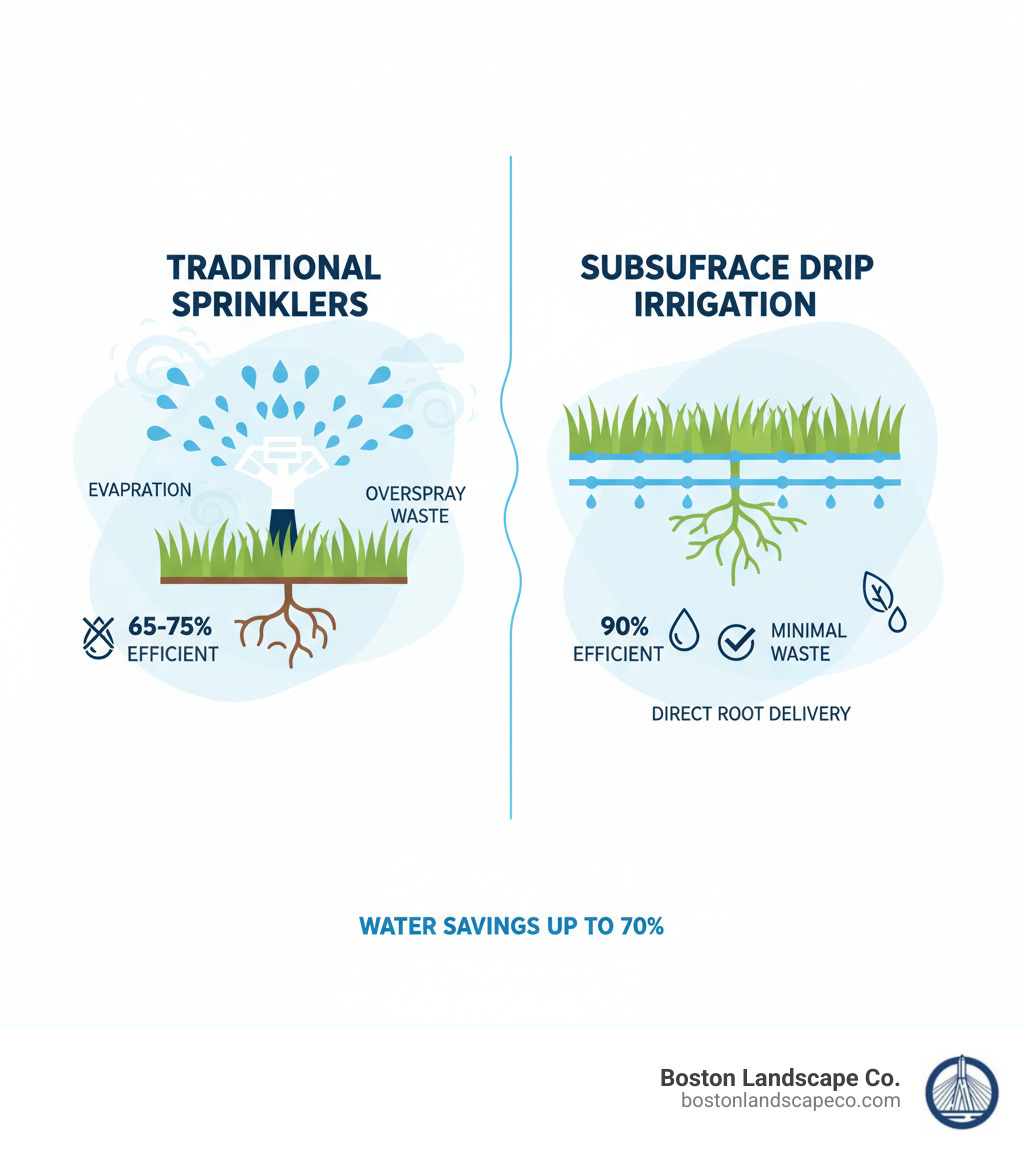
- Water Efficiency: 90% efficiency vs. 65-75% for sprinklers
- Water Savings: Can save 30-70% more water than traditional systems
- Best For: Slopes, irregular shapes, areas with water restrictions
- Main Challenge: Higher upfront cost and maintenance complexity
- Type: Subsurface Drip Irrigation (SDI) works best for turf applications
In contrast, traditional sprinklers can waste up to 35% of water through evaporation, wind, and runoff. Subsurface drip irrigation (SDI) solves this by placing emitter lines 6-12 inches underground, delivering water slowly and directly to the root zone.
This method is popular with Boston-area homeowners facing water restrictions. The system is invisible once installed, preserving your lawn’s aesthetic while reducing water bills.
While the technology has been used in agriculture for decades, its adaptation for residential lawns is a game-changer for homeowners seeking a greener lawn with less environmental impact.
I’m Steve Schumacher, owner of Boston Landscape Co. With over three decades of experience since 1991, I’ve seen how drip irrigation for lawns can transform properties struggling with water waste. While not for every situation, it can be a game-changer for the right lawn.
Simple Drip irrigation for lawns glossary:
- Lawn watering system installation
- cost to install irrigation system
- how are irrigation systems installed
Drip Irrigation vs. Traditional Sprinklers: A Head-to-Head Comparison
Choosing how to water your lawn comes down to two different approaches. Traditional sprinklers spray water into the air, while drip irrigation for lawns delivers it directly to the roots.
Traditional sprinklers spray water into the air, but only 65-75% of that water reaches the grass. The rest is lost to evaporation, wind, or runoff because it’s applied too quickly for the soil to absorb. A typical system uses 12 to 30 gallons per minute.
Drip irrigation for lawns uses subsurface drip irrigation (SDI) to deliver water underground to the roots at a slow rate of 1 to 4 gallons per hour. This precise method is about 90% efficient, ensuring almost no water is wasted.
| Feature | Drip Irrigation | Traditional Sprinklers |
|---|---|---|
| Water Efficiency | 90% | 65-75% |
| Evaporation Loss | Minimal | High |
| Weed Growth | Reduced | Higher |
| Initial Cost | Higher | Lower |
| Ideal Use | Slopes, irregular areas | Flat, regular lawns |
Advantages of a Drip System
The benefits of a drip system extend beyond water conservation.
- Water Savings: Expect water savings of 30-70% compared to traditional sprinklers. Some studies show SDI can save up to 90% of water, leading to significantly reduced water bills.
- Eliminates Runoff: By delivering water slowly underground, drip irrigation prevents runoff and soil erosion, which is ideal for sloped properties.
- Healthier Lawn: Keeping grass blades dry prevents fungal diseases. Direct root watering encourages deeper root growth, making your lawn more resilient.
- Uniform Coverage: A well-designed system provides uniform water distribution, eliminating dry and soggy spots. This is especially useful for slopes and irregular shapes where sprinklers struggle.
- Aesthetic and Quiet: The system is invisible and operates silently, so it won’t detract from your lawn’s appearance or disturb your peace and quiet.
For more information about how we can design an efficient watering solution for your property, check out our Lawn Irrigation services.
Disadvantages and Challenges
It’s important to consider the potential downsides of drip irrigation for lawns.
- Higher Initial Cost: The upfront installation cost is generally higher than for traditional sprinklers due to more complex labor and specialized components.
- Clogging Potential: The small emitters can become clogged with sediment or mineral deposits, especially in areas with hard water. A good filtration system and regular maintenance are essential.
- Difficult to Monitor: Since the system is buried, clogs or small leaks can go unnoticed until dry spots appear on your lawn.
- Vulnerable to Damage: The buried lines can be damaged by aeration, digging, or root intrusion from nearby trees if not installed with root-resistant materials.
- Requires Professional Design: Proper design and installation are critical. Factors like soil type, lawn size, and water pressure must be carefully calculated to avoid uneven watering. This is not a simple DIY project.
- Not for Every Lawn: For a perfectly flat, regularly shaped lawn with good soil, traditional sprinklers may be a more cost-effective choice. Drip systems excel on challenging properties.
The Ultimate Guide to Subsurface Drip Irrigation (SDI) for Lawns
For lawns, drip irrigation almost always means Subsurface Drip Irrigation (SDI). Unlike above-ground lines used in gardens, SDI is buried, protecting it from damage and keeping it out of sight.
SDI uses specialized tubing buried 6-12 inches deep. Emitters spaced along the tubing slowly release water directly to the grass roots, ensuring nearly all water is absorbed by the soil with minimal waste.
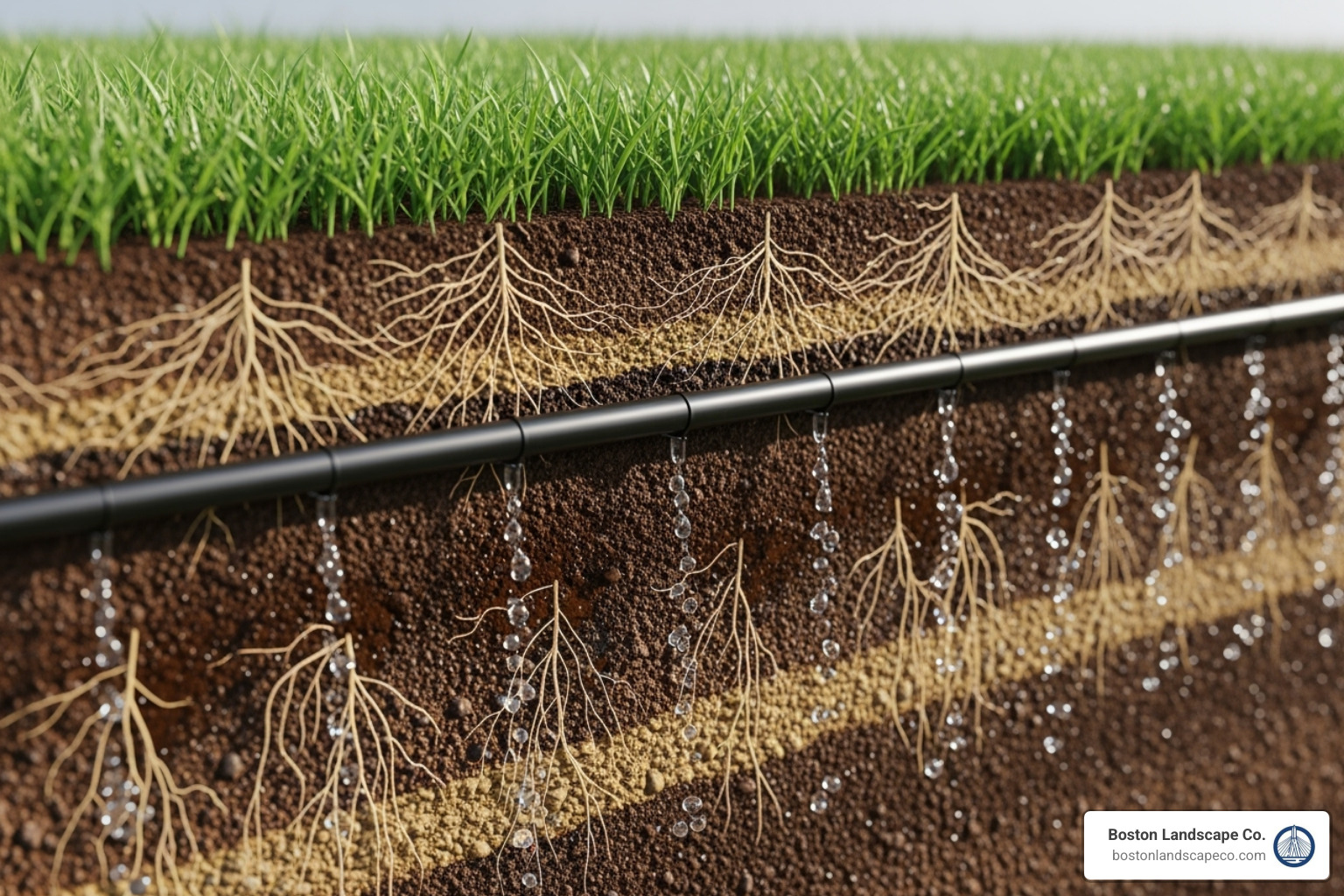
This direct watering promotes deeper, stronger roots, creating a more resilient lawn. By keeping the foliage dry, SDI reduces turf disease and discourages weeds that thrive on surface moisture. The silent, invisible system offers up to 70% more efficiency than traditional methods, making it highly cost-effective.
Key Components for Drip Irrigation for Lawns
A successful SDI system relies on several key components working together.
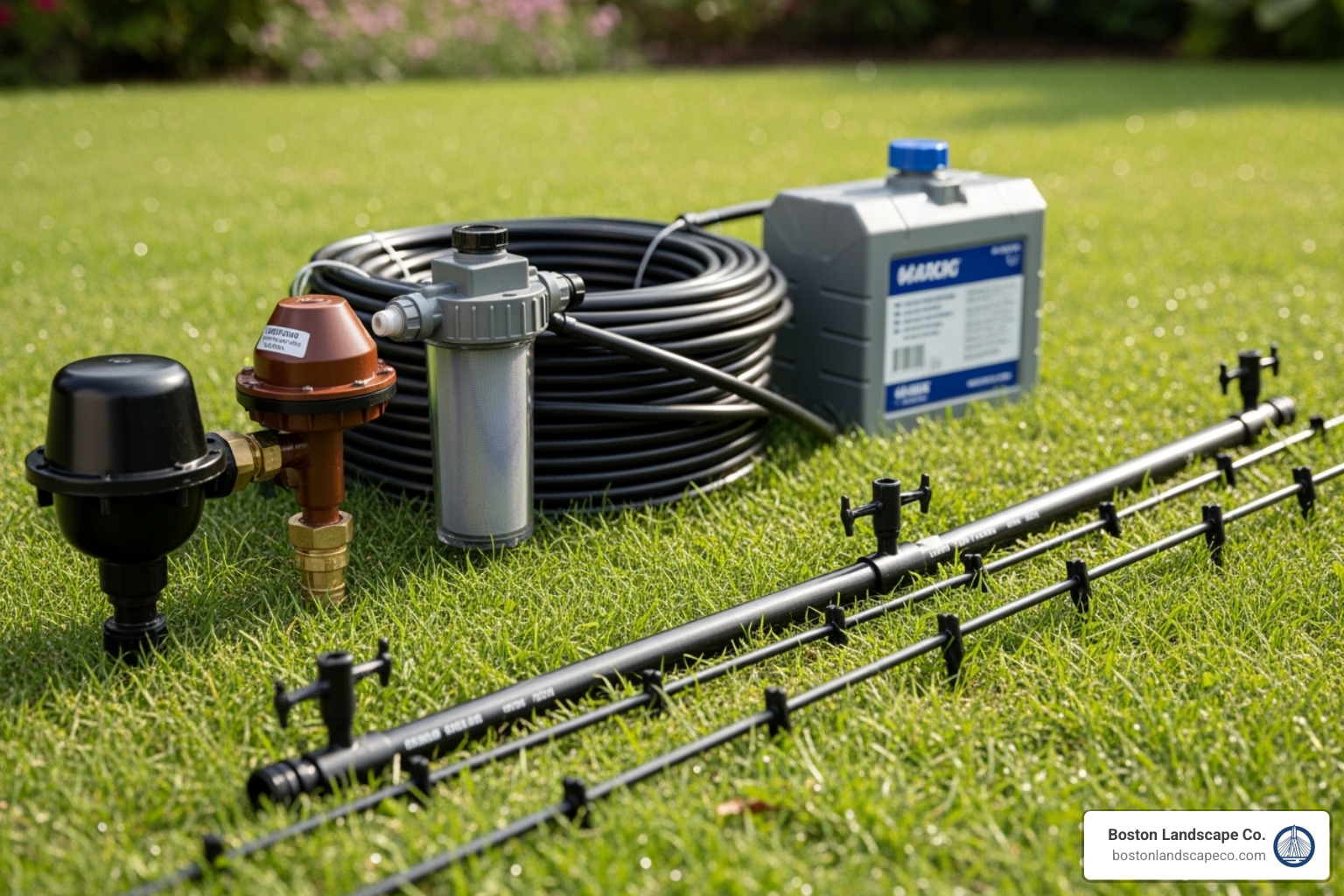
- Drip Tubing (Emitter Lines): Specialized poly tubing with pre-installed, pressure-compensating (PC) emitters to ensure uniform watering. Tubing with root barrier technology is used to prevent clogs.
- Backflow Preventer: A required safety device that prevents irrigation water from contaminating your drinking water supply.
- Pressure Regulator: Reduces incoming water pressure to the optimal range for a drip system (typically 10-30 PSI) to prevent damage.
- Water Filter: An essential mesh or disc filter that removes sediment and debris from the water to prevent emitter clogs.
- Main and Sub-Main Lines: Larger pipes that transport water from the source to the different zones of drip tubing.
- Air Release Valve: Prevents a vacuum from forming when the system shuts off, which could suck dirt into the emitters.
- Flush Valve: Located at the end of a drip line, this allows you to periodically flush out accumulated sediment.
For a deeper dive into how these components come together, check out our Drip Irrigation System Installation Guide.
Designing and Installing Your System
Proper design and installation are crucial for an effective drip irrigation for lawns system.
- Know Your Soil Type: Clay soils hold water longer and need wider drip line spacing (18-24 inches), while sandy soils drain quickly and need closer spacing (12-18 inches).
- Consider Your Climate and Lawn’s Watering Needs: Design the system to meet the specific water requirements of your grass type and local climate, allowing for seasonal adjustments.
- Assess Lawn Size and Shape: Large or irregularly shaped lawns may need to be divided into multiple zones to manage water pressure and customize schedules.
- Calculate Water Pressure and Flow Rate: Determine your home’s water pressure (PSI) and flow rate (GPM) to properly size the system and ensure it operates effectively.
- Design the System Layout: Sketch your lawn, mapping out the water source, mainlines, and drip tubing runs. Drip lines should run parallel to each other, with spacing based on soil type.
- Trenching and Installation:
- Carefully remove sod where you plan to trench.
- Dig trenches 6-12 inches deep for the drip tubing.
- Install the components, connecting the backflow preventer, regulator, and filter near the water source.
- Lay the mainlines and connect the drip tubing.
- Test the system for leaks or clogs before backfilling the trenches.
- Carefully backfill the trenches and replace the sod.
- Professional Installation Benefits: While DIY is an option, hiring a professional ensures proper design, component selection, and adherence to local codes, saving you headaches and costly repairs.
For more in-depth guidance on planning, the University of Georgia Extension offers valuable considerations for designing an SDI system.
Keeping Your System Flowing: Maintenance and Troubleshooting
A drip irrigation for lawns system requires regular maintenance to ensure longevity. Proactive care prevents costly repairs and keeps the system running smoothly for years. Key maintenance includes making seasonal adjustments to watering schedules and watching for dry or overly lush spots, which can indicate an underground issue.
Common Problems and How to Fix Them
Even well-installed systems can have issues. Here are the most common problems and their solutions.
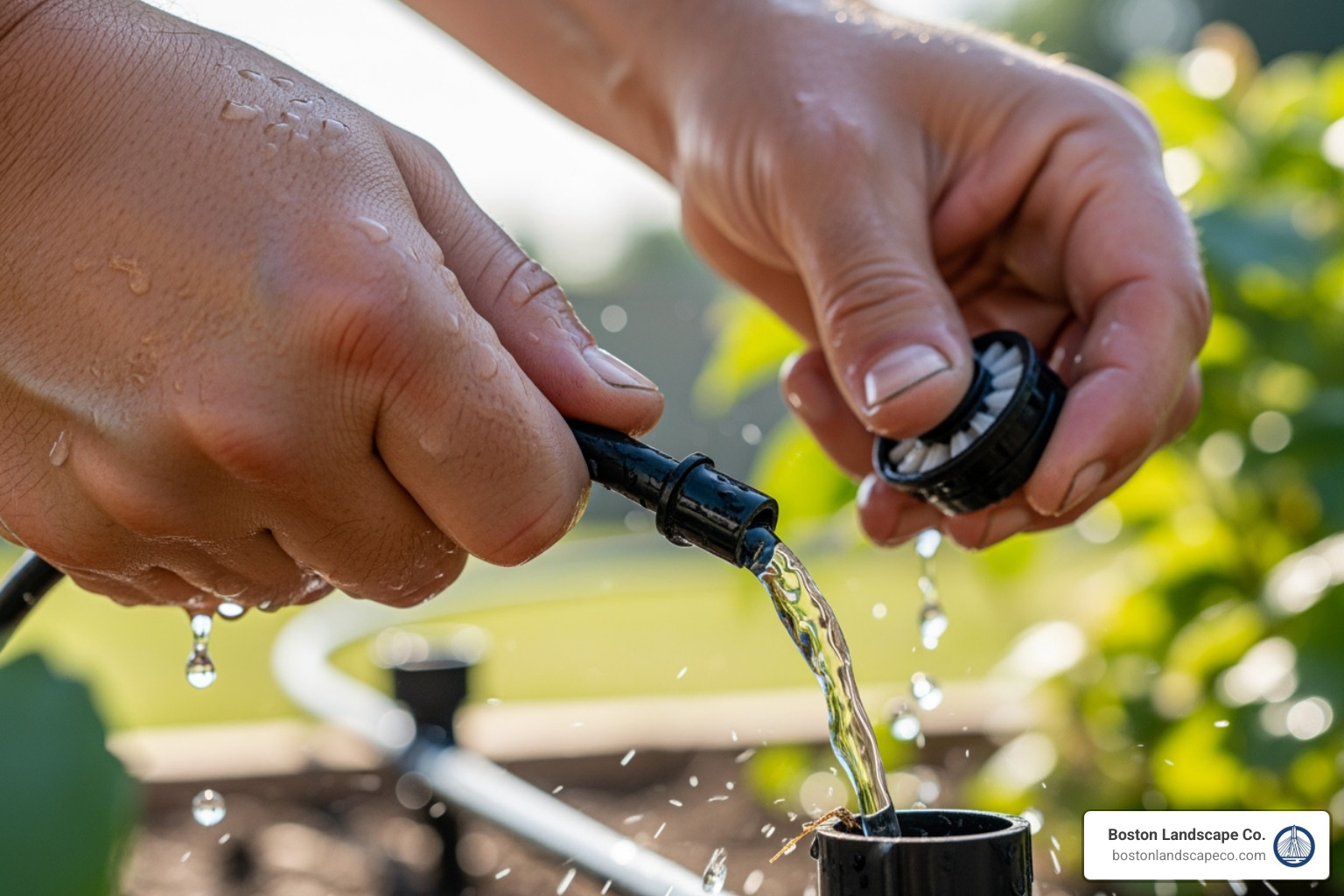
- Clogged emitters: Sediment or mineral buildup can block emitters, causing dry spots. Regular system flushing is the primary fix. A clean filter is also crucial.
- Root intrusion: Tree and shrub roots can grow into emitters. Using drip tubing with built-in root barriers is the best prevention. If intrusion occurs, the affected section of tubing may need to be replaced.
- Leaks and breaks: Buried lines can be damaged by shovels, aeration equipment, or soil settling. Small punctures can be fixed with repair fittings, while larger breaks require splicing in a new section of tubing. Scientific research on irrigation leaks shows how even small leaks can waste significant water over time.
- Uneven watering: This often points to pressure issues or clogged emitters. Check your pressure regulator and flush the system. If the problem persists, the design may need professional adjustment.
- Pressure problems: Too much pressure can damage fittings, while too little results in inadequate watering. Ensure your pressure regulator is correctly calibrated. Low pressure might also indicate a blockage or an oversized zone.
Best Practices for Maintaining Drip Irrigation for Lawns
Follow these habits to keep your drip irrigation for lawns system in top condition.
- Regular system flushing: Use the flush valves at the end of each zone once or twice per season to clear out sediment.
- Filter cleaning schedule: Clean the main filter at least once or twice a year, or more often if you notice reduced flow.
- Annual inspections: Walk your property while the system is running to look for soggy spots (leaks) or dry patches (clogs).
- Winterization: In our Massachusetts climate, blow out all water from the system with an air compressor before the first hard freeze to prevent pipe damage. We offer professional winterization services to prevent costly freeze damage.
- Monitoring for dry spots: Persistent brown patches are a key indicator of an underground problem that needs investigation.
- Seasonal adjustments: Adjust your watering schedule based on the season. A smart controller with a rain sensor can automate this process for maximum efficiency.
For homeowners who prefer comprehensive care that covers irrigation maintenance plus everything else your lawn needs, explore our Full Service Lawn Maintenance services. Sometimes the best maintenance strategy is having professionals handle the details while you enjoy the results.
Frequently Asked Questions about Lawn Drip Irrigation
How much water does drip irrigation for lawns actually save?
The water savings are significant. Traditional sprinklers are only 65%-75% efficient, losing a large amount of water to evaporation, wind, and runoff.
Drip irrigation for lawns, especially subsurface systems, is around 90% efficient. Research on SDI-irrigated turf shows water savings of 50-90% compared to sprinklers. In practical terms, a summer water bill of $150 could drop to as low as $50-$75 with a drip system, providing real savings every month.
Can you aerate a lawn with a subsurface drip system?
Yes, but with extreme caution. Standard core aeration can easily damage buried drip lines, which are typically installed 6-12 inches deep.
Liquid aeration is a much safer alternative, as it uses soil conditioners to break up compaction without physically penetrating the ground. If you must use a mechanical aerator, you must know the exact depth and location of your lines. Always consult your installer first; at Boston Landscape Co., we keep detailed layouts of our installations to ensure maintenance can be done safely.
What is the average cost to install a drip irrigation system?
The Cost to Install an Irrigation System varies widely depending on factors like lawn size, complexity, soil conditions, and whether it’s a DIY or professional job.
Based on national data from home service websites, costs can range from around $2,000 for a small, simple lawn to $12,000 or more for larger, complex properties. Please note these are national averages and not a quote for our services; actual costs in Massachusetts will vary. While the upfront cost is typically higher than for traditional sprinklers, the long-term water savings often offset the initial investment.
Conclusion: Is a Drip System the Right Choice for Your Boston Lawn?
Is drip irrigation for lawns worth the investment? For many Boston-area homeowners, especially those with challenging properties, the answer is yes.
A drip system is ideal if you have sloped areas prone to runoff, narrow or irregularly shaped turf, high water bills, or face local water restrictions. If this sounds familiar, drip irrigation for lawns could be your solution.
The benefits are substantial: water savings of 30-70%, deeper and stronger roots, fewer weeds, and less lawn disease. This leads to a healthier lawn that is more resilient to New England’s weather.
However, the challenges include a higher upfront investment and a need for more detailed maintenance. You must be careful with aeration, and troubleshooting can be more difficult since the system is underground.
With increasing drought conditions and watering restrictions in Massachusetts, water conservation is critical. A drip system helps you comply with these rules while maintaining a beautiful lawn on less water.
The long-term value is compelling. The initial investment is often offset by lower water bills and reduced need for disease control. Your lawn becomes healthier and more drought-resistant due to deeper root growth and even water distribution, eliminating the dry and soggy spots common with sprinklers.
At Boston Landscape Co., our three decades of experience in Massachusetts means we understand how to design systems for local soil conditions, from the clay around Stoneham to the sandier soils near Billerica. We’ve seen the right system transform struggling lawns.
Bottom line: if you want to save water, have difficult terrain, or simply want the most efficient system, drip irrigation for lawns deserves serious consideration. For the right property, the results are remarkable.
Ready to find out if your property is a good candidate? For a professional assessment and installation of the best watering solution for your property, explore our Irrigation System Installation services. Let’s work together to open up the secret to a truly greener, more sustainable lawn that you can be proud of year after year.
