
Understanding Design-Build Landscape Architecture
Navigating a landscape project can feel complex. You might hear terms like “design-only” or “design-bid-build.” But for many, the most effective approach is design build landscape architecture. This method unifies the entire project, from initial concept to final construction, under a single team.
Here’s a quick look at what it means:
- Single Team: One company handles both the design and the installation.
- Integrated Process: Design and construction work together from day one.
- Smoother Flow: Less miscommunication and fewer delays between steps.
- Budget Control: Construction costs are considered during the design phase.
This integrated approach helps deliver your vision more efficiently and often with better results than splitting design and construction between different companies.
I’m Steve Schumacher, owner-operator of Boston Landscape Co. With over three decades in the landscaping industry, I’ve seen how the right approach to design build landscape architecture can transform outdoor spaces. My team is dedicated to providing top-notch landscape contracting services, ensuring precision and attention to detail from concept to completion.
What is Design-Build Landscape Architecture?
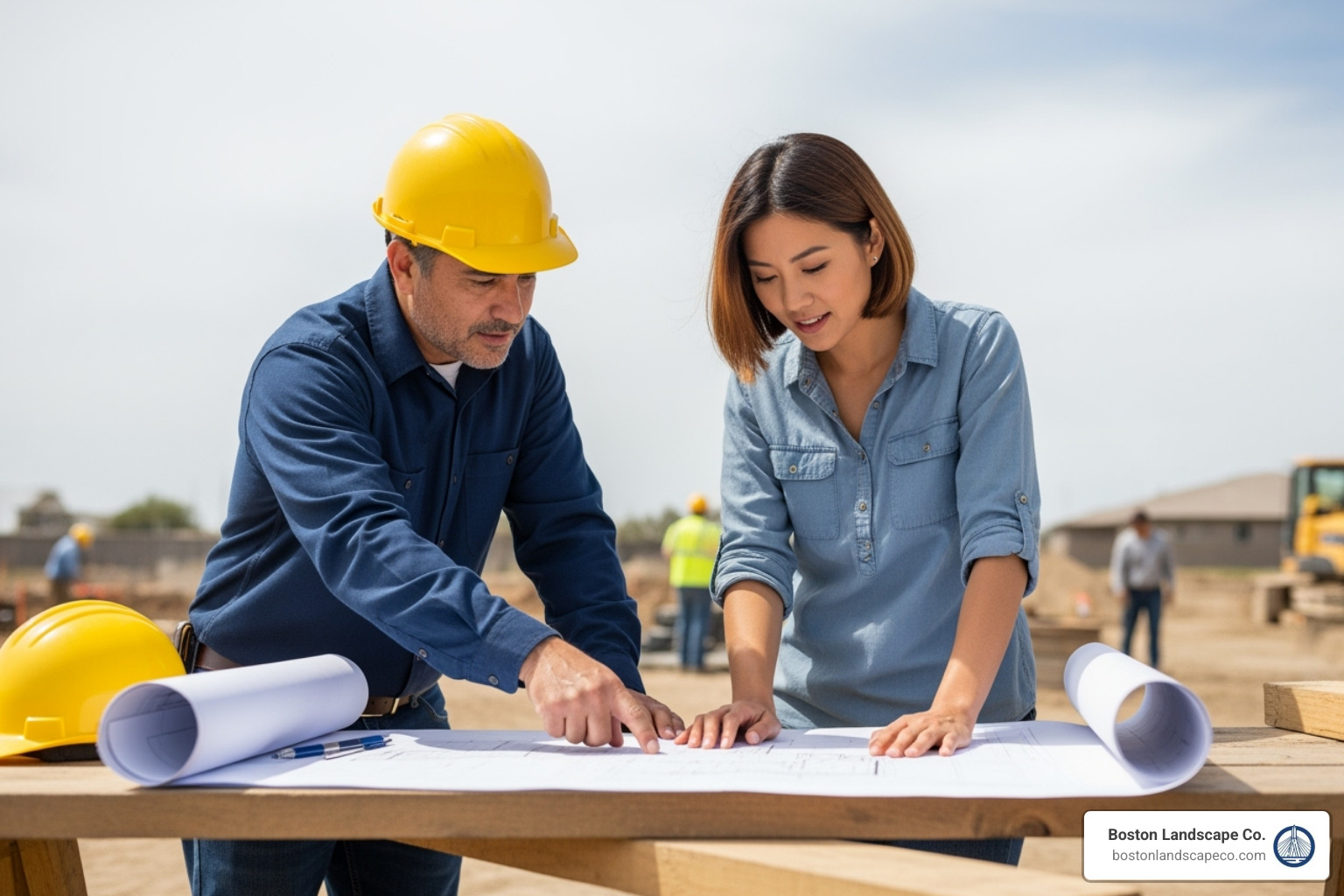
Picture this: you’re dreaming of a stunning outdoor space with a beautiful stone patio, lush gardens, and maybe even an outdoor kitchen. With design build landscape architecture, that dream becomes reality through one unified team that handles everything from the initial sketches to the final plantings.
Unlike traditional approaches where you hire separate companies for design and construction, design-build brings both services under one roof. We become your single partner, providing both the creative vision and the skilled hands to build it. This integrated approach means our landscape architects work side-by-side with our construction crews from day one, creating a seamless flow from concept to completion.
Here’s how it works in practice: our landscape architects don’t just create beautiful designs in isolation. They’re constantly talking with our construction foremen, discussing what’s possible, what’s practical, and what will give you the best value. Meanwhile, our builders aren’t just following plans blindly – they understand the vision and can suggest improvements during construction.
This collaboration fuses vision and execution in a way that traditional methods simply can’t match. When design and construction teams work together from the start, you get better results, fewer surprises, and a project that truly reflects your original vision.
More info about our design services
The Core Concept: A Single Point of Responsibility
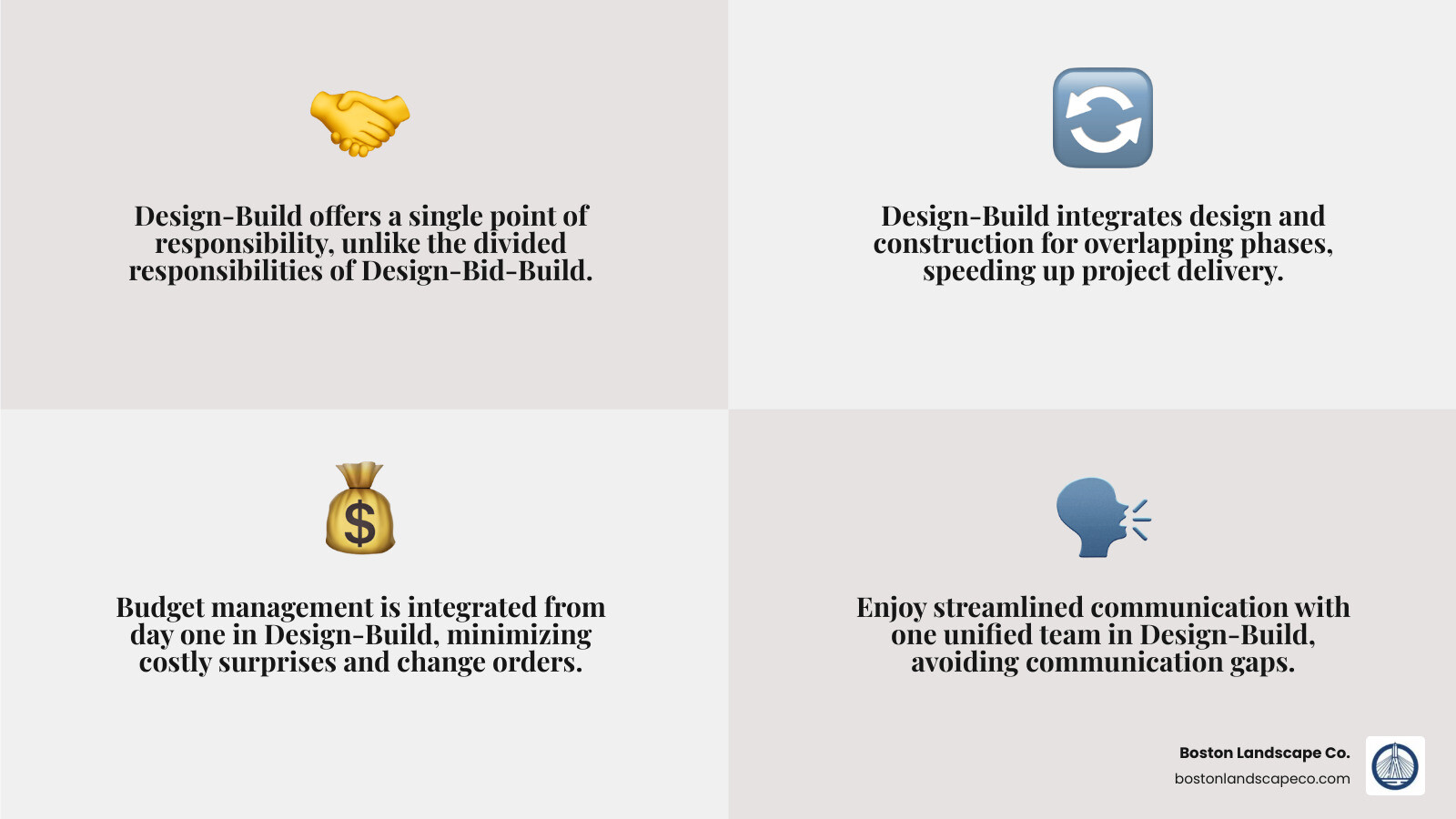
The beauty of design build landscape architecture lies in its simplicity: one team, one contact, one responsibility.
Think about a typical backyard renovation in Winchester or Wellesley. In the traditional approach, you might find yourself juggling phone calls between your designer, your hardscape contractor, your planting crew, and your irrigation specialist. When something goes wrong – and something always does – you’re stuck playing referee while everyone points fingers at each other.
With design-build, that headache disappears. You have one primary contact who coordinates everything. Our designers are always thinking about how their plans will actually be built, and our construction teams understand exactly what the design is trying to achieve.
This unified workflow means fewer miscommunications, faster problem-solving, and no more blame games. When issues arise (and they do in every project), we solve them internally without dragging you into the middle of it.
It’s what we call designer-led construction with builder-informed design. Our designers lead the creative process, but they’re constantly getting input from our construction experts about what works best in the real world.
How is it Different from Traditional Methods?
To really understand why design build landscape architecture is so effective, let’s look at what it replaces.
The traditional Design-Bid-Build model works like this: first, you hire a design-only firm to create detailed plans. Once those plans are finished, you send them out to multiple contractors for bids. Usually, the lowest bidder wins the job.
Sounds straightforward, right? But here’s where it gets tricky. The contractor who wins might interpret the plans differently than the designer intended. Or they might find issues during construction that weren’t obvious on paper. Suddenly, you’re facing change orders, cost overruns, and delays.
Even worse, you’re stuck in the middle, trying to coordinate between separate contracts and potentially conflicting priorities. The designer wants their vision preserved, the contractor wants to build efficiently, and you just want your project finished on time and on budget.
Design-only firms create another challenge. While they excel at creating beautiful, innovative designs, their job ends when the plans are complete. You’re left to find a contractor, manage that relationship, and hope they can execute the vision properly.
With our design-build approach, we eliminate these communication gaps and potential conflicts. Our team is invested in both the creative vision and the practical execution, ensuring your project flows smoothly from start to finish.
A Brief History of the Design-Build Method
Although it feels modern, the concept of a single entity handling both design and construction dates back thousands of years. Historic structures such as the Parthenon were created under what we would now label a design-build arrangement, where master builders oversaw every phase of work. The formal term “design-build” was popularized much later and now has its own entry on Wikipedia, outlining how this delivery method re-emerged in the 20th century as a response to the inefficiencies of compartmentalized construction contracts.
Government agencies and private developers alike have acceptd the process because it reduces disputes, speeds delivery, and encourages creative problem-solving. In fact, a 2021 study by the Design-Build Institute of America noted that design-build projects in the U.S. were completed 102% faster from design through completion than comparable Design-Bid-Build projects.
Why Design-Build Is Perfect for New England Homes
Greater Boston’s unique blend of historic architecture, unpredictable weather, and tight urban lots creates special challenges for outdoor living spaces. A patio in Stoneham might need to shed snow efficiently, while a garden in Lexington must balance native plants with deer resistance. Because our designers and builders collaborate under one roof, we can anticipate these regional quirks early in the process, selecting freeze-thaw-resistant pavers, specifying locally sourced bluestone, or choosing irrigation components that can be winterized quickly.
This local expertise also streamlines permitting. Many towns north of Boston—such as Woburn, Burlington, and Concord—require detailed drainage plans before construction can begin. Our integrated team can produce the civil drawings, consult on storm-water best practices, and build the approved solution without handing the project off to multiple firms. The result is a smoother path from the first sketch to that satisfying moment when you step onto your new terrace and realize your vision is now reality.
Design-Build vs. Design-Bid-Build: A Clear Comparison
To make an informed decision for your outdoor project, it’s incredibly helpful to see the design build landscape architecture model side-by-side with the more traditional Design-Bid-Build approach. Think of it like choosing the right partner for a dance – do you want someone who knows all the steps with you from the start, or someone who comes in halfway through?
Let’s lay out the key differences to help you understand why one might be a better fit for your vision:
| Key Factor | Design-Build | Design-Bid-Build | Budgeting | Upfront & Ongoing (predictable costs) | Post-Design Surprise (costs unknown until bidding) |
| Timeline | Overlapping Phases (faster project delivery) | Linear (design must be fully complete before construction starts) |
| Responsibility | Single-Source (one point of contact for the entire project) | Divided (separate entities for design and construction, potential for finger-pointing) |
| Client Role | Collaborator (active participant in a unified team) | Coordinator (manages communication between separate design and construction firms) |
The Traditional Path: Design-Bid-Build
Picture your landscape project as a relay race. In the traditional Design-Bid-Build model, the first runner is the independent architect or designer. They take your vision, create detailed plans, and pass the baton when the design is entirely finished. Then, you, the client, become the coach, taking those plans and soliciting bids from multiple contractors. The idea is that the lowest bidder wins, but this can sometimes lead to a “gotcha” moment.
Why? Because the contractor who bids might not have been involved in the design discussions. They might interpret the plans differently, or find unforeseen challenges on site, leading to potential disconnects and costly value engineering post-design (which basically means redesigning parts to fit the budget after you thought the design was done). You’re left to coordinate between two separate entities, often leading to communication gaps and unexpected cost surprises down the road. It’s a sequential process, meaning one step must be fully completed before the next can even begin.
The Integrated Path: Design-Build
Now, imagine that same project as a well-oiled machine with a single, highly coordinated team. That’s the beauty of design build landscape architecture. From day one, our designers and builders work hand-in-hand. This collaborative process means that as the design takes shape, our construction team is already providing practical input on materials, techniques, and, crucially, budget is considered from day one. There are no surprises because everyone is on the same page, continuously communicating.
This integrated approach often leads to faster project delivery because design and construction phases can overlap, moving seamlessly from one to the next. You get a truly cohesive vision where what’s designed is realistically and beautifully built, without the headaches of managing multiple contracts or dealing with blame games. It’s about bringing your dream landscape to life with efficiency and peace of mind.
Ready to see how our unified team can bring your vision to life? Explore our landscaping contracting services and find the difference a single, dedicated partner makes.
