
Commercial Snow Plowing: Top 6 Essential Benefits 2024
Commercial snow plowing plays a crucial role in maintaining safety and operational continuity during winter months. For business owners in cities like Chicago, as experienced by many snow removal experts, timely and effective snow removal is not just about convenience—it’s about ensuring safety, minimizing business disruption, and avoiding potential legal liabilities. Here’s a quick summary of what you should know:
- Factors Affecting Cost: Size and complexity of property, frequency of snowfall, equipment used.
- Essential Services Offered by Professionals: Snow plowing, de-icing, sidewalk shoveling.
- Benefits: Safety, liability reduction, maintaining business operations.
When you dig deeper into commercial snow plowing, you’ll see it’s a complex job that requires planning, the right equipment, and expert execution. As Syracuse, New York finded with its tech-enabled operations, smart snow management can make all the difference.
I’m Steve Schumacher. With over 30 years in the landscaping industry, I’ve seen how effective commercial snow plowing can lift a property’s safety and aesthetics. At Boston Landscape Co., we provide expert snow management services to keep your property safe and welcoming all winter long.
Understanding Commercial Snow Plowing
Commercial snow plowing is more than just clearing snow; it’s about efficiency, profitability, and using the right equipment. For business owners, especially in snow-heavy regions like Chicago or Toronto, understanding these elements can make a big difference.
Profitability
Snow plowing can be a profitable business, but success depends on several factors. The hourly rate for snow plowing varies widely, typically ranging from $50 to $150 per hour, depending on location and contract terms. To maximize profitability, it’s crucial to balance pricing with efficiency. For instance, using technology like Toronto’s traffic optimization system can reduce fuel costs and vehicle wear, leading to higher profit margins.
Equipment
The right equipment is essential for efficient snow removal. A basic setup might include:
- Snow Plow: The backbone of any snow removal operation.
- Snow Blower: Ideal for smaller areas or where plows can’t reach.
- Salt Spreader: To prevent ice formation and ensure safety.
Investing in quality equipment is key. It might seem costly upfront, but reliable machines reduce downtime and maintenance costs over time. Plus, they help ensure timely service, which clients value highly.
Best Trucks
Choosing the right truck for snow plowing is crucial. Pickup trucks are popular due to their versatility and power. Look for models with:
- 4WD Capability: Essential for navigating snowy and icy conditions.
- Durability: Trucks that can withstand heavy use and harsh weather.
- Aftermarket Support: Availability of plow mounts and other modifications.
In New York City, the investment in new sanitation trucks has shown that having a robust fleet can significantly improve snow clearing efficiency and service quality.
By understanding these core aspects of commercial snow plowing, businesses can ensure they are equipped to handle winter’s challenges effectively. The right mix of profitability, equipment, and trucks not only improves operational efficiency but also boosts client satisfaction.
Types of Snow Removal Contracts
When it comes to commercial snow plowing, choosing the right type of snow removal contract is crucial. The choice affects your budget, service level, and peace of mind during winter. Let’s explore the three main types of contracts: pay per push, seasonal, and full-service.
Pay Per Push
The pay per push contract is straightforward: you pay each time snow is cleared from your property. This option is ideal for businesses looking to pay only when services are rendered. It’s a flexible choice, especially if you anticipate a mild winter or have a tight budget.
- Pros: You only pay for services when it snows. This can be cost-effective in winters with fewer snow events.
- Cons: Costs can quickly add up in a harsh winter with frequent snowfalls. There’s also less predictability in budgeting.
Retail property managers often prefer this model because it provides an itemized list of services, making it easier to track expenses.
Seasonal Contract
A seasonal contract offers a fixed price for the entire winter season, regardless of how many snow events occur. This option is perfect for businesses that want consistent budgeting and no surprises.
- Pros: Predictable costs make budgeting easier. There’s no need to worry about fluctuating expenses.
- Cons: If the winter is mild, you might end up paying more than you would with a pay per push contract.
This type of contract is favored by homeowners’ associations and businesses that prefer stability in their financial planning.
Full-Service Contract
The full-service contract is the most comprehensive option. It includes not only snow plowing but also additional services like de-icing, snow hauling, and sidewalk shoveling.
- Pros: Ensures your property is always safe and accessible. It covers all aspects of snow management.
- Cons: Typically the most expensive option, but it provides peace of mind and convenience.
Full-service contracts are ideal for businesses that require a high level of service, such as hospitals or large complexes, where safety and accessibility are top priorities.
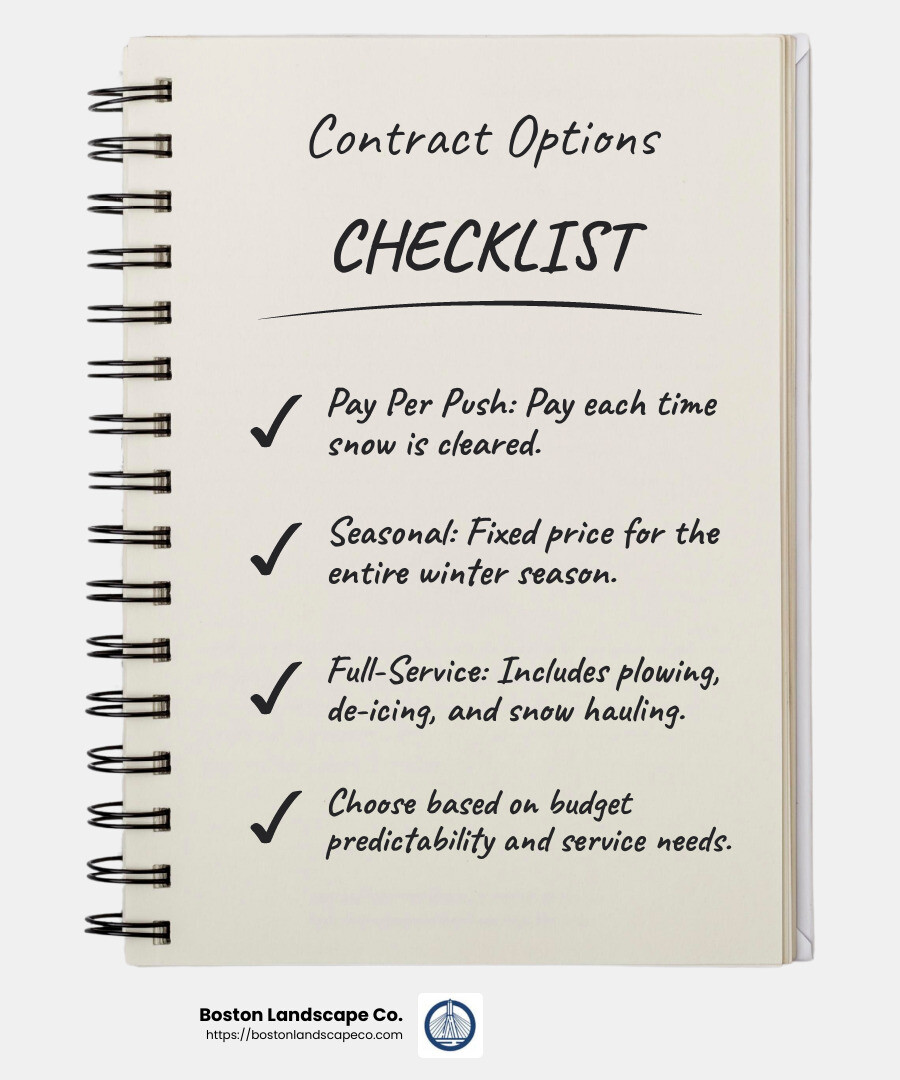
Choosing the right contract depends on your business needs, budget, and the level of service you require. Whether you opt for pay per push, seasonal, or full-service, the key is to ensure your property remains safe and accessible throughout the winter months.
Essential Equipment for Commercial Snow Plowing
To tackle commercial snow plowing effectively, having the right equipment is key. Let’s break down the essentials you’ll need to keep those parking lots and pathways clear and safe.
Snow Plow
A snow plow is the backbone of any snow removal operation. It’s typically mounted on a truck and used to push snow off roads and parking areas. Different types of plows are available, from straight blades to V-plows, each suited to different conditions and tasks.
- Straight Blade: Best for large, open areas like parking lots.
- V-Plow: Offers versatility, allowing you to change the blade angle to manage different snow depths and types.
The choice of plow depends on the specific needs of your property and the typical snow conditions in your area.
Snow Blower
A snow blower is essential for clearing smaller areas like sidewalks and pathways. Unlike a plow, which pushes snow, a blower lifts and throws it out of the way. This makes it ideal for areas where snow piles can’t be left behind.
- Single-Stage Blowers: Lightweight and easy to maneuver, perfect for light snow.
- Two-Stage Blowers: More powerful, capable of handling heavier, deeper snow.
Investing in a reliable snow blower ensures that even the tightest spaces are kept clear and safe.
Salt Spreader
After the snow is cleared, a salt spreader is used to apply salt or other de-icing materials to prevent ice formation. This step is crucial for maintaining safety on walkways and driveways.
- Walk-Behind Spreaders: Best for smaller properties or areas.
- Truck-Mounted Spreaders: Ideal for large commercial properties, allowing for quick and efficient coverage.
Using a salt spreader not only improves safety but also helps in maintaining the longevity of your surfaces by reducing ice-related damage.
Having these essential tools at your disposal ensures that your snow removal efforts are both efficient and effective. Each piece of equipment plays a vital role in managing snow and ice, keeping your property safe and accessible during the winter months.
Benefits of Professional Snow Removal Services
When winter hits hard, commercial snow plowing is more than just pushing snow around. It’s about ensuring safety, reducing liability, and keeping your business running smoothly.
Safety First
Snow and ice can turn any parking lot or walkway into a hazard. Slips and falls are common, and they can lead to serious injuries. Professional snow removal services make sure your property is safe for everyone—employees, customers, and visitors. It’s like having a safety net that catches problems before they happen.
“Safety is paramount,” says a Boston Landscape Co. expert. “By promptly removing snow and ice, we create a safer environment.”
Liability Reduction
Accidents on your property can lead to costly lawsuits. Many regions have laws requiring businesses to keep their premises clear of snow and ice. If someone gets hurt because you didn’t shovel, you might be in legal trouble. Hiring professionals shifts some of that responsibility. They know the rules and make sure your property complies with local regulations.
Business Continuity
Snowstorms can disrupt operations. Imagine a day where customers can’t reach your store because of blocked entrances or slippery paths. That’s lost revenue and unhappy customers. Professional snow removal ensures your business stays open and accessible, even during the worst weather. This means no interruptions, no downtime, and no lost profits.
A case study from New York City showed how investing in snow removal technology improved operations and saved money. By prioritizing snow plows in traffic, the city reduced fuel costs and emissions.
Positive Image
A property buried under snow looks neglected. It can deter customers and harm your reputation. On the other hand, a well-maintained property shows you care about your customers’ safety and satisfaction. It’s a small detail that makes a big difference.
In summary, professional snow removal is not just a nice-to-have service; it’s essential for any business facing harsh winters. It protects your people, your property, and your profits.
Frequently Asked Questions about Commercial Snow Plowing
How profitable is snow plowing?
Snow plowing can be a lucrative business, especially in areas with heavy snowfall. Earnings vary based on factors like location, frequency of snow events, and the size of the area serviced. Many contractors charge an hourly rate, which can range from $25 to over $100 per hour, depending on the complexity and urgency of the job.
Profitability also depends on managing overhead costs effectively. These include equipment maintenance, fuel, insurance, and labor. Successful snow plowing businesses often balance competitive pricing with efficient operations to maximize profit.
What equipment do you need to start a snow removal business?
Starting a snow removal business requires some essential equipment:
- Pickup truck: A reliable truck is crucial for transporting equipment and handling snow plow attachments.
- Snow plowers: These are used for clearing large areas like parking lots and roads.
- Snow blowers: Ideal for smaller spaces such as sidewalks and driveways.
- Salt spreader: Used to distribute salt or ice-melting treatments, preventing slippery surfaces.
Investing in quality equipment is important. It ensures efficiency and reduces downtime due to breakdowns. Regular maintenance is key to keeping your gear in top shape throughout the winter season.
How do you calculate commercial snow plowing costs?
Calculating costs involves considering several factors:
- Hourly rate: Determine how much you will charge per hour of work. This can vary based on the size of the area and the complexity of the job.
- Overhead costs: These include expenses like fuel, equipment maintenance, insurance, and labor. It’s important to account for these to ensure profitability.
- Type of contract: Different contracts, such as “pay per push” or “seasonal contracts,” can affect pricing. Seasonal contracts may offer steady income, while pay-per-push contracts can fluctuate based on snowfall.
By understanding these components, you can set competitive and profitable pricing for your commercial snow plowing services.
Conclusion
As we wrap up our discussion on commercial snow plowing, it’s clear that effective snow management is crucial for maintaining property safety and ensuring business continuity during winter months. At Boston Landscape Co., we understand the challenges that winter weather brings and are committed to providing top-notch snow removal services to keep your property safe and accessible.
Winter preparedness is not just about having the right equipment; it’s about having a reliable partner who can respond swiftly to changing weather conditions. Our team is equipped with state-of-the-art tools and a deep understanding of the complexities involved in commercial snow removal. We work closely with property managers to develop custom snow management plans that meet the unique needs of each client.
By choosing Boston Landscape Co., you’re not just hiring a service provider; you’re partnering with a team dedicated to enhancing the safety and functionality of your outdoor spaces. Whether it’s clearing parking lots or ensuring walkways are safe for pedestrians, we are here to help you steer the winter season with ease.
Stay prepared and protect your property this winter. For more information about our comprehensive snow removal services, visit our Commercial Snow Removal page. Let’s work together to ensure your property remains safe and operational, no matter what winter throws your way.
