
Commercial Landscaping Design: Top Benefits for 2024
Why Commercial Landscape Design is Crucial for Your Business
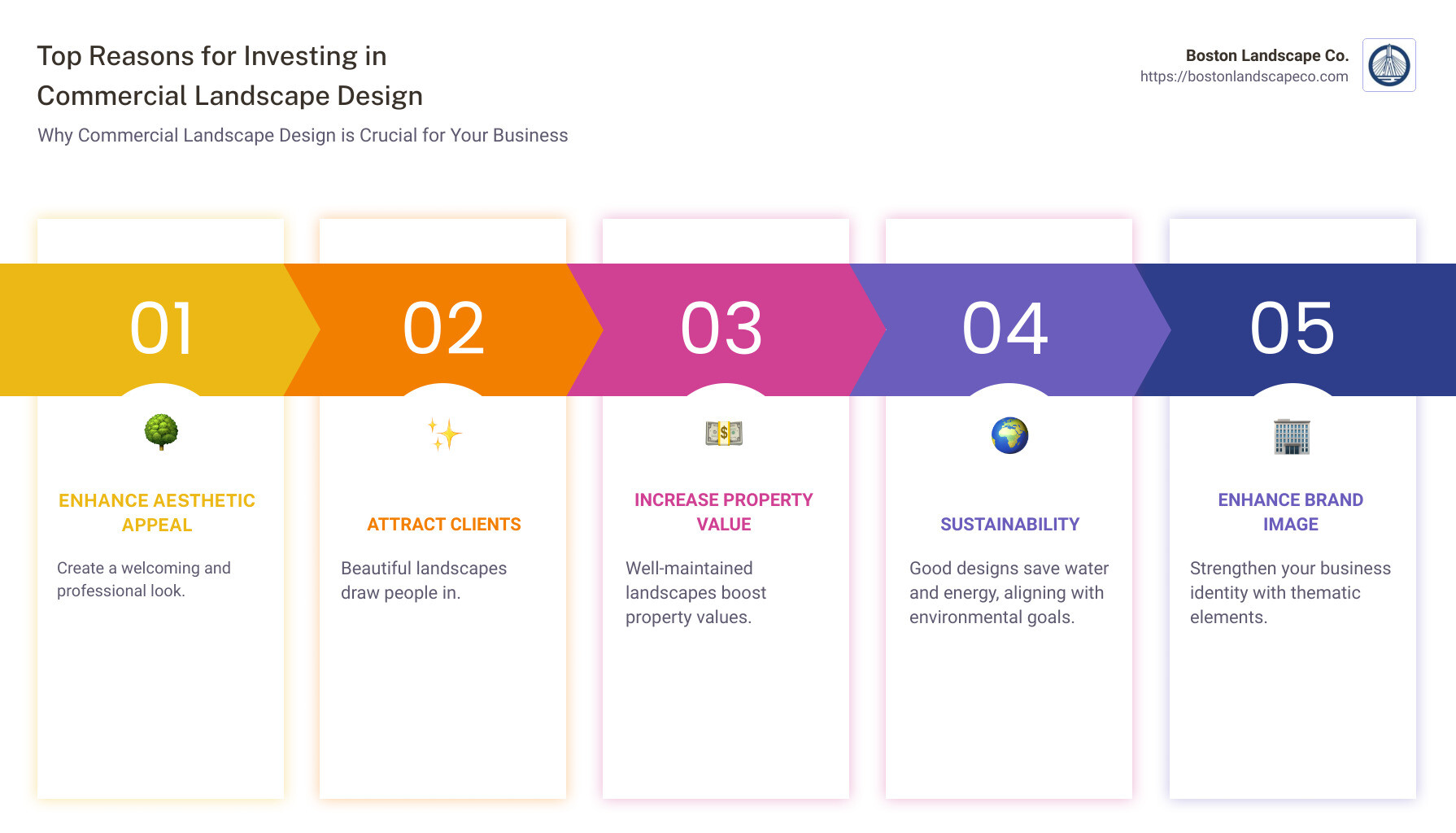
Commercial landscaping design is not just about keeping your property looking nice. It’s a strategic way to improve your business’s image, attract more customers, and increase property value. Here’s a quick overview of why it’s important:
- Improve aesthetic appeal: Create a welcoming and professional look.
- Attract clients: Beautiful landscapes draw people in.
- Increase property value: Well-maintained landscapes boost property values.
- Sustainability: Good designs save water and energy, aligning with environmental goals.
I’m Steve Schumacher, the owner of Boston Landscape Co., with over three decades of experience in commercial landscaping design. Let’s explore how the right landscape can transform your business space.
Why Invest in Commercial Landscape Design?
Commercial landscape design is a powerful tool that goes beyond aesthetics. It can transform your business space and offer numerous benefits. Let’s break down why investing in professional landscape design is a smart move for your business.
Improve Image
First impressions matter. A well-designed landscape creates a welcoming and professional look that reflects your brand’s values. Imagine walking into a business with beautifully manicured gardens, clean walkways, and vibrant plantings. It immediately sets a positive tone.
“Landscape design must deliver the right image,” as noted in the research. Whether you want to project a sustainable, fun, professional vibe or a soothing, healing environment, your landscape can communicate that message effectively.
Attract Clients
A beautiful landscape is more than just eye candy; it’s a magnet for clients. According to industry data, the landscaping industry has a market value of $129 billion in 2022 and is expected to grow. This shows how important attractive outdoor spaces are to businesses.
For example, adding large planters with colorful flowers at your entrance can create a cheerful and inviting entryway. Similarly, creating comfortable outdoor seating areas with ample shade can make your space more appealing for customers to relax and enjoy.
Increase Property Value
Well-maintained landscapes significantly boost property values. Strategic plantings can act as natural windbreakers, reducing heating costs during colder months. Additionally, a properly maintained landscape minimizes the risk of damage to structures, reducing repair costs.
A study by Boston Landscape Co. found that businesses with professional landscaping saw an increase in property value by up to 15%. This is a substantial return on investment that makes your property more attractive to potential buyers or tenants.
Sustainability
Sustainable landscaping practices are not only good for the environment but also for your bottom line. Efficient irrigation systems and drought-resistant plants can help conserve water and reduce maintenance costs.
“Effective water management is essential,” as the research highlights, especially in areas with variable weather like Boston. By incorporating native plants adapted to the local climate, you can reduce maintenance needs and ensure the plants thrive year-round.
Green roofs and strategically placed trees can provide shade during summer and block cold winds during winter, reducing energy costs. These practices align with environmental goals and can improve your business’s reputation as a responsible corporate citizen.
Next, we’ll dig into the key elements of commercial landscape design, exploring how hardscape and softscape features, along with proper irrigation and lighting, can create a functional and visually appealing outdoor space.
Key Elements of Commercial Landscape Design
When it comes to commercial landscape design, there are four key elements to consider: hardscape, softscape, irrigation, and lighting. Each plays a crucial role in creating a functional and visually appealing outdoor space.
Hardscape Elements
Hardscape involves the non-living components of landscaping like patios, walkways, retaining walls, and water features. These elements provide structure, define spaces, and add functionality to your landscape.
-
Patios: Patios are versatile spaces that can be used for outdoor dining, meetings, or relaxation. They can be made from materials like concrete, pavers, or natural stone, and are designed to withstand heavy foot traffic.
-
Walkways: Walkways guide visitors through your landscape, improving flow and accessibility. Textured materials like pavers or natural stone can improve traction and safety.
-
Retaining Walls: Retaining walls help manage elevation changes and prevent soil erosion. They can also serve as seating areas or decorative features, enhancing the overall aesthetic.
-
Water Features: Water features like fountains or ponds add a soothing element to the landscape. They can create a focal point and contribute to a calming atmosphere.
Softscape Elements
Softscape includes the living components of landscaping such as gardens, lawns, shrubs, and trees. These elements add color, texture, and life to your outdoor space.
-
Gardens: Gardens can range from simple flower beds to intricate designs with a variety of plants. They improve the visual appeal and can be custom to reflect your brand’s image.
-
Lawns: A well-maintained lawn provides a lush, green area that can be used for various activities. It also adds a sense of openness and cleanliness to the landscape.
-
Shrubs: Shrubs offer structure and can be used to create borders, hedges, or focal points. They come in various shapes and sizes, adding depth and interest.
-
Trees: Trees provide shade, improve air quality, and add vertical elements to the landscape. They can be strategically placed to improve energy efficiency by providing shade in summer and blocking cold winds in winter.
Irrigation and Lighting
Proper irrigation and lighting are essential to maintain the health and safety of your landscape.
-
Irrigation Systems: Efficient irrigation systems ensure that plants receive the right amount of water without waste. This is crucial for maintaining a lush and healthy landscape, especially during dry months. Automated systems can be programmed to water at optimal times, reducing water usage and labor costs.
-
Energy-Efficient Lighting: Lighting improves safety and extends the usability of outdoor spaces into the evening. Energy-efficient options like LED lights are cost-effective and environmentally friendly. They can be used to illuminate pathways, highlight architectural features, or create ambiance.
Designing for Functionality and Aesthetics
When designing a commercial landscape, balance functionality with aesthetics. This involves considering the flow of traffic, the brand message you want to convey, and how to engage visitors.
Next, we’ll explore how to design a landscape that is both functional and visually appealing, ensuring it meets the needs of your business and attracts visitors.
Designing for Functionality and Aesthetics
Creating a commercial landscape that looks great and works well is key. You want to make sure your space not only attracts visitors but also serves a purpose. Let’s explore how to achieve this balance.
Conveying the Right Message
Your landscape should reflect your brand. Think about what message you want to send. Are you aiming for a calm and soothing atmosphere, or something more vibrant and fun?
-
Brand Image: Use elements that match your brand’s personality. For example, a healthcare facility might use Zen gardens to create a healing environment, while a tech company might opt for sleek, minimalist designs to convey innovation.
-
Thematic Elements: Incorporate features that reinforce your theme. Native grasses and wildflower plantings can emphasize sustainability, while dancing fountains can add a playful touch.
-
Visual Appeal: Choose colors and textures that complement your building. Bright flowers can draw attention, while greenery can create a serene backdrop.
Directing Traffic Flow
Guiding people through your space efficiently is crucial. You want to make sure visitors can easily find their way to entrances and key areas.
-
Entrance Highlights: Make entrances stand out with bold plants, trees, or even a unique sign. This not only directs traffic but also creates a welcoming first impression.
-
Pathways: Use walkways to guide visitors. Line them with shrubs or use different materials like pavers or natural stone for better traction and safety. Lighting can also help direct traffic, especially at night.
-
Visual Cues: Employ visual cues like brick or stone wall features to lead people where you want them to go. These elements are functional and add to the landscape’s aesthetic.
Enhancing Engagement
Encouraging visitors to stay and enjoy your space can make a big difference. Create areas where people can relax, socialize, or even work.
-
Seating Areas: Add benches, tables, and chairs to invite people to sit and linger. Comfortable seating can make your landscape more inviting.
-
Outdoor Lounges: Go a step further with outdoor lounges. Fire pits, lawn games, and cozy seating can turn your space into a social hub, encouraging longer visits.
-
Interactive Features: Include interactive elements like fountains or art installations. These features can engage visitors and make your landscape more memorable.
By focusing on these aspects, you can create a commercial landscape that is both functional and beautiful. Next, we’ll dive into sustainable landscaping practices that can save you money and help the environment.
Sustainable Landscaping Practices
Sustainable landscaping is not just a trend; it’s a necessity. By adopting eco-friendly practices, you can save money, conserve resources, and create a beautiful, lasting landscape. Let’s dig into some key sustainable landscaping techniques.
Water Conservation Techniques
Water conservation is critical in commercial landscaping. Efficient irrigation systems and drought-resistant plants can make a huge difference.
-
Efficient Irrigation: Installing smart irrigation systems, like drip irrigation, can reduce water usage significantly. These systems adjust watering schedules based on weather conditions and soil moisture levels.
-
Drought-Resistant Plants: Opt for plants that thrive with minimal water. Examples include succulents, lavender, and ornamental grasses. These plants reduce the need for frequent watering and are easier to maintain.
Incorporating Native Plants
Native plants are a cornerstone of sustainable landscaping. They are adapted to the local environment, require less maintenance, and support local biodiversity.
-
Local Flora: Using plants native to your region ensures they will thrive with minimal care. Native plants are more resistant to local pests and diseases, reducing the need for chemical treatments.
-
Low Maintenance: Native plants typically require less water and fertilizer, making them a cost-effective choice. They are well-suited to the local climate, which means they can withstand local weather extremes better than non-native species.
-
Biodiversity: Native plants support local wildlife, including pollinators like bees and butterflies. This not only improves the beauty of your landscape but also contributes to the local ecosystem.
Green Roofs and Energy Savings
Green roofs offer multiple benefits, including energy savings and improved air quality. They can be a game-changer for commercial properties.
-
Green Roofs: These are roofs covered with vegetation. They provide insulation, reducing heating and cooling costs. Green roofs also absorb rainwater, reducing runoff and the risk of flooding.
-
Shading: Trees and plants can provide natural shade, lowering temperatures and reducing the need for air conditioning. Strategically placed trees can block cold winds in the winter, further saving on energy costs.
-
Windbreaks: Planting trees and shrubs as windbreaks can protect buildings from harsh winds, reducing heating costs in the winter. Windbreaks also create a more comfortable outdoor environment for visitors.
By implementing these sustainable practices, you can create a landscape that is not only beautiful but also environmentally friendly and cost-effective. Up next, we’ll explore how to make your landscaping look professional with simple yet effective techniques.
How to Make Your Landscaping Look Professional
Creating a professional-looking landscape involves strategic planning and regular maintenance. Here are some key tips to achieve a polished and attractive commercial landscape design.
Layering for Height and Contrast
Layering is an essential technique in landscape design. It involves arranging plants of different heights to create depth and visual interest.
- Plant Heights: Start with tall plants like trees or large shrubs at the back. These serve as a backdrop and provide structure.
- Backdrop Evergreens: Use evergreens for year-round greenery. They maintain their foliage throughout the seasons, ensuring your landscape always looks lush.
- Mid-Sized Shrubs: Place medium-sized shrubs in front of the taller plants. These add fullness and help transition from tall to short plants.
- Ground Covers: Finally, use low-growing plants or ground covers at the front. They fill in gaps and create a cohesive look.
This method not only improves visual appeal but also ensures each plant gets the necessary sunlight and space to grow.
Maintenance Tips
Regular maintenance is crucial to keep your landscape looking its best. Here are some tips to maintain a professional appearance:
- Regular Care: Consistent care is key. This includes watering, weeding, pruning, and fertilizing. Regular maintenance prevents overgrowth and keeps plants healthy.
- Professional Services: Hiring professional landscapers can save time and ensure high-quality care. They have the expertise to handle complex tasks and provide seasonal services.
- Seasonal Tasks: Different seasons require different maintenance activities. In spring, focus on planting and mulching. Summer is for watering and pest control. Fall involves leaf removal and preparing plants for winter. Winter tasks include protecting plants from frost and snow removal.
By following these tips, you can create a landscape that is both beautiful and functional. Up next, we’ll address some frequently asked questions about commercial landscaping design.
Frequently Asked Questions about Commercial Landscaping Design
Why is landscape design so expensive?
Landscape design can seem pricey, but several factors contribute to the cost:
- Plants and Materials: High-quality plants, natural stones, and premium materials add to the expense. Shipping costs for non-local materials can also increase the budget.
- Labor: Skilled labor is essential for tasks like planting, excavation, and hardscape installation. This expertise ensures your landscape is built to last.
- Irrigation and Lighting: Installing efficient irrigation systems and energy-saving lighting requires both materials and technical know-how. These systems help maintain your landscape and reduce long-term costs.
- Design Expertise: Professional landscape designers bring a wealth of knowledge about ecology, aesthetics, and functionality. Their expertise ensures your design is both beautiful and practical.
How do landscape designers make money?
Landscape designers earn money through various avenues:
- Hourly Rates: Many designers charge an hourly rate for their services. Rates vary based on experience and complexity of the project.
- Project Fees: Some designers charge a flat fee for an entire project, which includes planning, design, and sometimes even overseeing the installation.
- Consultation Fees: Initial consultations to discuss ideas and scope can also be a source of income.
- Additional Services: Offering maintenance plans, seasonal updates, and specialized installations (like water features or green roofs) can provide additional revenue streams.
What should be included in a landscape design?
A comprehensive landscape design typically includes:
- Hardscape Elements: These are the non-plant features like patios, walkways, retaining walls, and water features. Hardscape provides structure and functionality to the space.
- Softscape Elements: These include all the living components like gardens, lawns, shrubs, and trees. Softscape adds color, texture, and life to the landscape.
- Functional Elements: Seating areas, outdoor lounges, and interactive features improve usability and engagement. These elements make the space inviting and practical.
- Irrigation and Lighting: Efficient irrigation systems ensure plants get the right amount of water with minimal waste. Energy-efficient lighting highlights key features and improves safety after dark.
By understanding these components and costs, you can better appreciate the value of professional landscape design. Next, we’ll explore some sustainable landscaping practices to make your space eco-friendly and cost-effective.
Conclusion
At Boston Landscape Co., we believe that exceptional commercial landscape design is more than just aesthetics—it’s about functionality, sustainability, and creating a welcoming environment for clients and employees alike.
Comprehensive Services
We offer a wide range of services to meet all your commercial landscaping needs. From initial design and planning to installation and maintenance, our team has the expertise to handle every aspect of your project. Whether you need routine lawn care, intricate garden designs, or efficient irrigation systems, we ensure your property looks its best year-round.
Custom Solutions
Every property is unique, and so are our solutions. We customize our services to fit your specific needs and goals. Our deep understanding of the Boston area’s climate and environmental conditions allows us to select the most suitable plants and techniques for your landscape. This ensures a design that not only looks stunning but also thrives in its environment.
Improve Outdoor Spaces
A well-designed landscape can transform your business space, making it more inviting and functional. With features like seating areas, outdoor lounges, and interactive elements, we can create spaces that encourage people to stay longer and engage more with your business. Our designs also incorporate sustainable practices like efficient water management and the use of native plants, contributing to environmental conservation and cost savings.
Investing in professional commercial landscaping design with Boston Landscape Co. is an investment in your property’s health and attractiveness. Let us help you create beautiful, functional outdoor spaces that reflect your business’s quality and commitment to excellence.
For more information on how we can transform your commercial property, visit our Commercial Landscaping in Natick, MA page.
