How Much Is Lawn Mowing? Here’s What to Expect
How much is lawn mowing depends on a few key factors, but here are the national averages based on online data to give you a quick starting point:
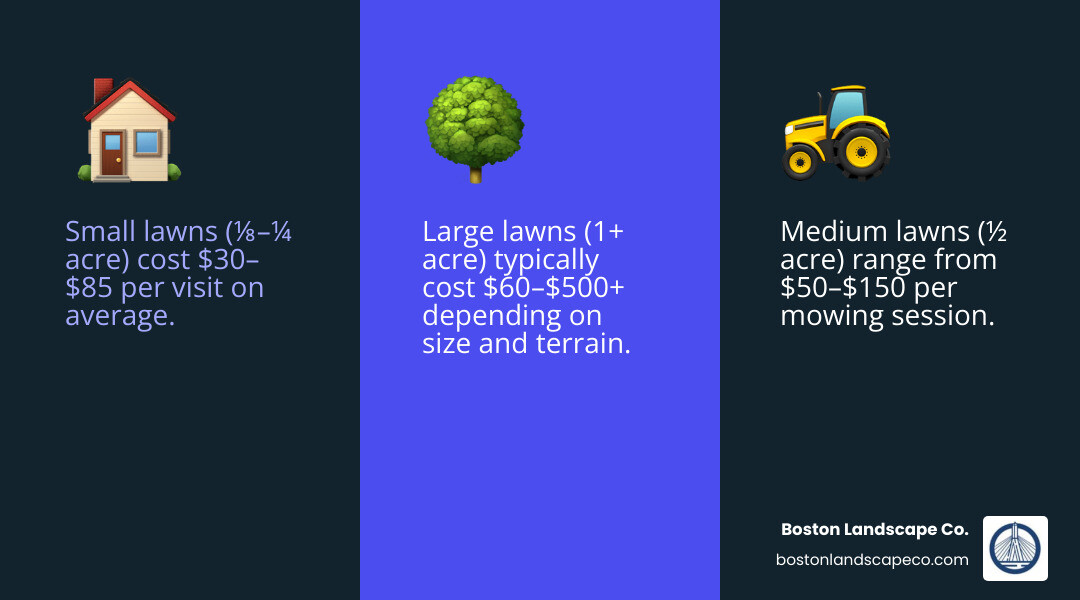
| Lawn Size | Typical Cost Per Visit |
|---|---|
| Small (⅛ – ¼ acre) | $30 – $85 |
| Medium (½ acre) | $50 – $150 |
| Large (1 acre) | $60 – $200 |
| Very Large (2+ acres) | $150 – $500+ |
Quick facts:
- National average per visit: around $50 – $123
- Hourly labor rates: $40 – $80 per hour
- Annual cost for a ¼-acre yard: $900 – $2,000
Please note: All prices in this guide are average costs based on national online data and do not reflect the specific rates of Boston Landscape Co.
A well-kept lawn does more than look nice. It signals pride of ownership, boosts curb appeal, and can add real value to your property. But figuring out what professional mowing actually costs — and what drives those costs up or down — can feel surprisingly complicated.
Pricing varies widely based on yard size, grass condition, location, and the services included. A small suburban lot in Greater Boston is priced very differently than a sprawling one-acre property with slopes, trees, and tight access points.
I’m Steve Schumacher, owner of Boston Landscape Co. since 1991, and after more than three decades of managing lawn care across the Greater Boston area, I’ve seen how confusing it can be for homeowners to answer the question how much is lawn mowing — especially when every yard is different. In the sections below, I’ll break down exactly what shapes your mowing costs so you can budget with confidence.
Key terms for how much is lawn mowing:
National Averages: How Much is Lawn Mowing per Visit?

When you start searching for how much is lawn mowing, you will find a wide spectrum of figures. According to national online data, the average price for a single mowing visit typically falls between $49 and $203, with a national average of approximately $123 per visit. However, in high-demand areas or for complex properties, these costs can easily reach $400 or more per visit.
The variability in these prices stems from the reality that no two lawns are identical. A flat, rectangular lot in a subdivision is much faster to service than a historic property in Lexington or Concord with stone walls, narrow gates, and steep embankments. Most professional companies aim for a specific profit margin per hour, meaning the time your yard takes to service is the biggest driver of the final bill.
Average Rates by Property Size
Size is the most common metric used to provide an initial estimate. Based on Lawnstarter.com Regional prices based on national average market rates, here is how the acreage typically translates to your wallet:
- Quarter-Acre ($30–$150): These are typical residential lots found in towns like Stoneham or Malden. They are usually serviced with walk-behind or small stand-on mowers.
- One-Acre ($60–$250): Larger suburban properties often require zero-turn mowers to remain efficient. The price jump reflects the increased time and fuel used.
- Large Estates (2+ Acres) ($150–$500+): For expansive properties in areas like Carlisle or Wellesley, prices scale upward quickly. Large equipment is a must, and the sheer volume of grass to be cut and edges to be trimmed adds significant labor time.
Hourly vs. Flat Rate Pricing
While most homeowners prefer a flat rate for predictability, many professionals calculate that rate based on 32-68 per hour for lawn care professionals. In some cases, especially for the first visit of the season or a specialized cleanup, you might see an hourly quote.
This hourly figure covers more than just the person pushing the mower. It includes:
- Equipment Overhead: The cost of purchasing and maintaining commercial-grade mowers, which can cost upwards of $15,000.
- Travel Time: The “windshield time” spent getting a crew and trailer from a base in Billerica to a job site in Waltham.
- Insurance and Labor: Workers’ compensation and general liability insurance protect your property, but they are a fixed cost for the business.
Pricing disclaimer: Please note that all prices listed in this guide are average costs based on national online data and do not reflect the specific rates of Boston Landscape Co.
Key Factors Influencing Your Mowing Estimate
If you’ve ever wondered why your neighbor pays less for their mow than you do, the answer usually lies in the “complexity” of the yard. When we evaluate a property for professional lawn care services, we look at several variables beyond just square footage.
- Terrain Complexity: Is the yard flat or does it resemble a ski slope? Mowing on a steep incline is not only slower but requires specialized equipment or additional safety precautions. Check out this image of green grass on slope with tree to see how obstacles and grades change the workflow.
- Accessibility: If a crew has to use a small 21-inch push mower because your backyard gate is too narrow for a standard commercial mower, the labor time will double or triple.
- Obstacles: Every flower bed, swing set, trampoline, and birdbath is something the mower has to navigate around. This often requires more “string trimming” (weed whacking) time, which is more physically demanding and slower than actual mowing.
How much is lawn mowing for overgrown grass?
We have all been there—the rain doesn’t stop for ten days, or the mower breaks down, and suddenly the backyard looks like a meadow. According to the 2025 Lawn Mowing Cost — Average Prices To Cut Grass reports, you should expect to pay a significant surcharge for overgrown grass.
Typically, if the grass is over 6 to 10 inches tall, professionals may charge 1.5 to 3 times their normal rate. This is because:
- Equipment Strain: Tall grass can clog mower decks and dull blades faster.
- The One-Third Rule: To keep grass healthy, you should never cut more than one-third of the blade height at once. Very tall grass may require two separate passes at different heights to get it back to a manageable level.
- Cleanup: Overgrown lawns produce a massive amount of clippings that must be bagged or dispersed properly to avoid “clumping,” which can suffocate the turf underneath.
How much is lawn mowing with additional maintenance?
A “standard” service often includes more than just the cut. When reviewing a list of lawn maintenance services, homeowners often choose to bundle tasks for a cleaner look.
Common add-ons include:
- Perimeter Edging: Creating that sharp, vertical line between your grass and the sidewalk or driveway. This typically costs $2.50–$11 per linear foot if done as a standalone service, though many lawn care service providers include basic edging in their flat rate.
- String Trimming: Cutting the grass in areas the mower can’t reach, such as against the foundation of the house or around trees.
- Hard Surface Blowing: Using a leaf blower to clear clippings off your driveway, walkways, and patio so the property looks spotless when the crew leaves.
- Debris Removal: If there are fallen branches or excessive leaves, you may need to ask what services do lawn care companies provide? regarding light cleanup before the mower can even start.
Frequency and Contract Pricing Models
How often you see your mowing crew has a direct impact on the price per visit. Most companies offer three main scheduling options:
- Weekly Service: This is the gold standard for a healthy lawn. It keeps the grass at a consistent height, prevents weeds from going to seed, and ensures the “one-third rule” is followed. Because the job is predictable and the grass never gets too long, weekly visits often have the lowest per-visit price.
- Bi-Weekly Visits: This might seem like a way to save 50% on your bill, but it rarely works out that way. Because the grass is twice as long, it takes the crew longer to cut and clean up. Many companies charge 20% to 50% more per visit for bi-weekly service compared to weekly.
- Annual Contracts: For total peace of mind, many homeowners opt for full service lawn maintenance contracts. These typically cover 25 to 35 visits per year, spanning from the first spring green-up in April through the final fall cleanup in November.
Residential vs. Commercial Rates
There is a distinct difference between mowing a backyard in Winchester and a corporate office park in Billerica. Commercial landscaping rates are often calculated differently due to the scale of the work.
Commercial properties benefit from “efficiency gains”—large, open expanses of grass that can be handled by wide-area mowers. However, they also require higher liability insurance limits and often have stricter requirements for service timing (e.g., no mowing during business meetings). While the per-acre rate might be lower for a 10-acre commercial site than a 1-acre residential site, the total contract value is much higher.
Professional Service vs. DIY: A Cost Comparison
Many homeowners contemplate doing it themselves to save money. While the “free” labor of DIY is tempting, the actual costs can sneak up on you. When you ask how much does full service lawn care cost?, you have to weigh it against these DIY expenses:
- Equipment Purchase: A decent self-propelled gas mower costs $400–$800. A small riding mower can cost $2,000–$4,000.
- Maintenance: Blades need sharpening, oil needs changing, and spark plugs need replacing. This usually costs $50–$150 per year if you do it yourself, or more if you take it to a shop.
- Time Investment: If it takes you 90 minutes to mow, trim, and blow your yard every Saturday, that’s 6 hours a month. Over a 30-week growing season, that’s 45 hours—more than a full work week of your “free” time.
- The “Oops” Factor: Professionals have the expertise to spot lawn diseases or pest infestations before they kill your grass. A DIYer might miss these signs, leading to a much higher bill later to replace the turf.
Frequently Asked Questions about Mowing Costs
How often should my lawn be mowed?
In the Greater Boston area, the answer changes with the weather. During the peak growing season (May and June), your lawn may need a cut every 5 to 7 days. As the summer heat hits in July and August, growth may slow down, allowing for a 10-day interval.
The goal of full service lawn care is to keep the grass at a height of about 3 to 3.5 inches. This height shades the soil, reducing water evaporation and preventing weed seeds from germinating.
What is included in a standard mowing service?
While every company is different, a standard lawn care service package usually includes:
- Mowing the entire turf area.
- String trimming around all edges, trees, and obstacles.
- Edging along sidewalks and driveways (often once or twice a month).
- Blowing all clippings off hard surfaces like porches and driveways.
How can I save money on lawn care?
If you’re looking to trim your budget, consider these strategies:
- Neighborhood Discounts: If you and three neighbors on the same street in Stoneham or Reading use the same company, the provider saves on travel time and may pass those savings on to you.
- Bundling Services: You can often get a better rate if you combine mowing with fertilization, aeration, or fall leaf removal.
- Consistent Maintenance: Don’t skip weeks to save money. Overgrown grass fees usually wipe out any savings you gained by waiting.
- Clear the Debris: Before the crew arrives, make sure the lawn is clear of dog toys, garden hoses, and branches. If the crew has to spend 10 minutes cleaning up your yard before they can mow, they may eventually increase your rate to cover that extra labor.
Conclusion
Investing in your lawn is an investment in your home’s value. Whether you are in the historic streets of Concord or a modern subdivision in Woburn, understanding how much is lawn mowing helps you make the best decision for your property and your schedule.
At Boston Landscape Co., we pride ourselves on bringing local expertise to every yard we service. From Stoneham to Billerica and throughout the North Shore, we understand the specific needs of Massachusetts turf. We don’t just cut grass; we maintain your property investment so you can spend your weekends enjoying your yard rather than working in it.
Ready to see what professional care can do for your curb appeal? Request an Estimate today and let us take the “chore” out of your outdoor chores.