
Astro turf for backyard: #1 Ultimate Guide 2025
From Muddy Mess to Green Oasis: Why New England Homeowners Are Switching
Astro turf for backyard installations are increasingly popular among Greater Boston homeowners, and for good reason. If you’re tired of the endless cycle of mowing, watering, and fertilizing a traditional lawn that turns muddy in spring and brown in summer, artificial turf offers a stunning, low-maintenance alternative that stays perfectly green 365 days a year.
Quick Answer: Key Benefits of Astro Turf for Your Backyard
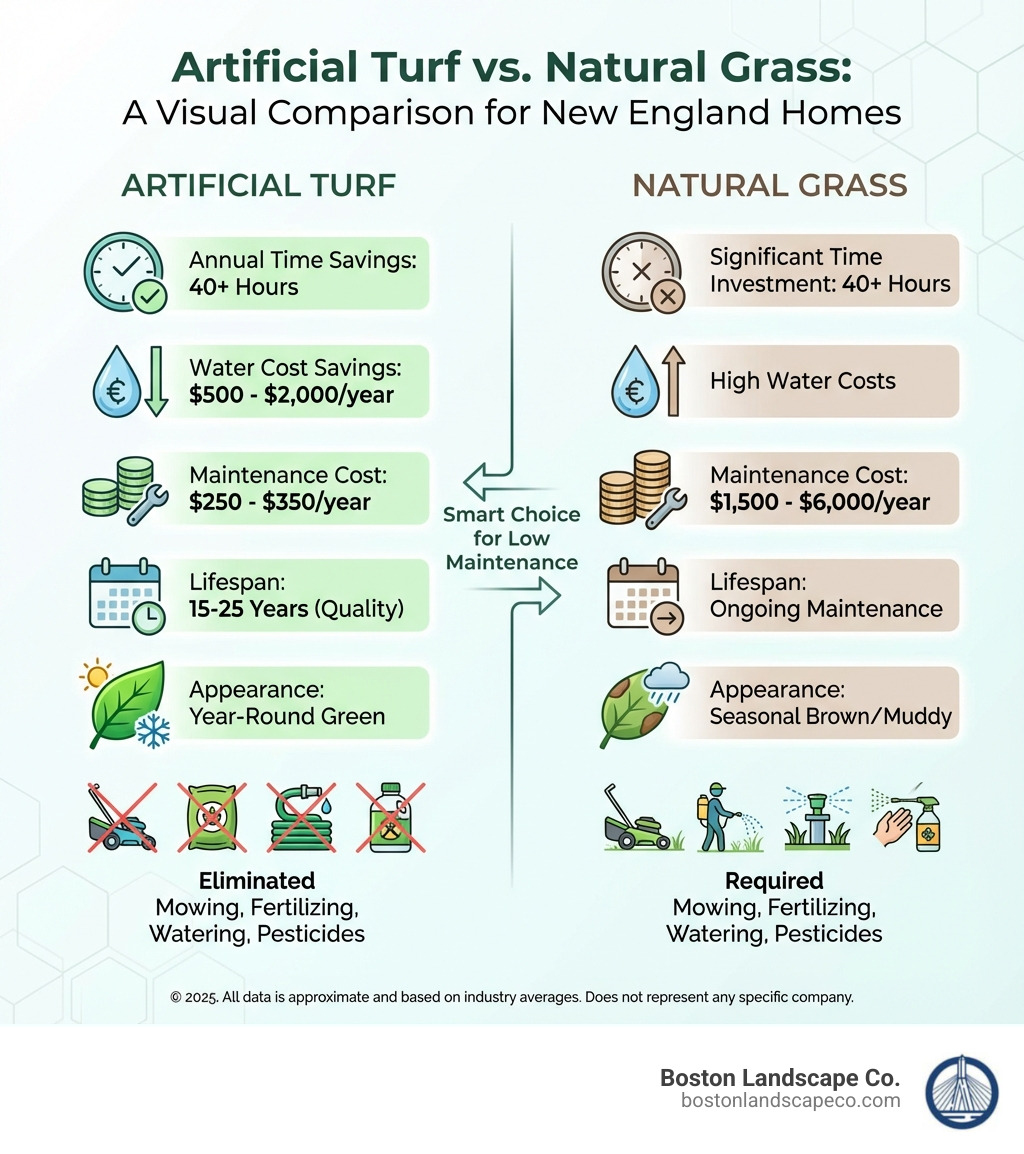
- No more mowing – Eliminates weekly lawn care (saves 40+ hours per year)
- Dramatic water savings – No watering required, reducing bills by hundreds annually
- Always green – Stays lush through New England’s harsh winters and hot summers
- Pet and kid-friendly – Provides a clean, mud-free play surface with superior drainage
- Long-term value – Lasts 15-25 years with minimal maintenance ($250-$800/year vs. $1,500-$6,000/year for natural grass)
- No chemicals needed – Eliminates fertilizers, pesticides, and herbicides
This spring, as you watch your neighbors wrestle with muddy yards and the first mow of the season, you could be enjoying a pristine, maintenance-free lawn. Modern artificial turf has evolved far beyond the stiff, fake-looking surfaces of the past. Today’s products feature realistic textures, multiple fiber colors, and advanced drainage systems that handle New England’s unpredictable weather with ease.
I’m Steve Schumacher, owner-operator of Boston Landscape Co. since 1991. Over three decades, I’ve helped countless Greater Boston homeowners solve their lawn problems by guiding them toward solutions like astro turf for backyard spaces that stay beautiful year-round. Whether you’re dealing with shady areas, high-traffic mud zones, or simply want to reclaim your weekends, this guide will help you make an informed decision.
Basic astro turf for backyard vocab:
The Fundamentals: What is Artificial Turf and What Are Its Benefits?
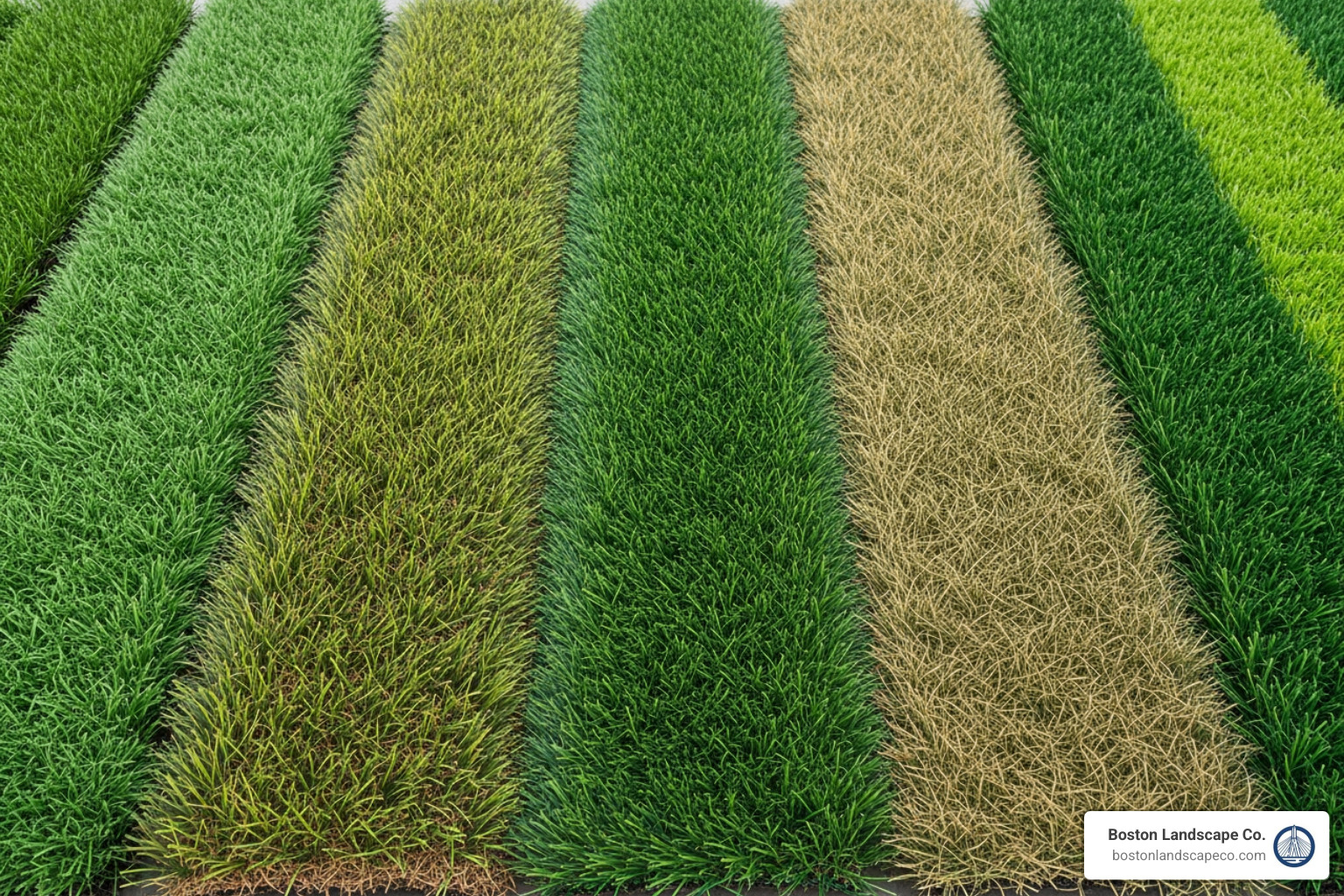
Artificial turf—often called astro turf for backyard applications—is a surface of synthetic fibers made to look like natural grass. Unlike a real lawn, it’s an engineered solution that offers consistent green aesthetics without the constant care, making it perfect for New England weather. Technology has advanced dramatically from the stiff, plastic-looking carpets of the past. Today’s turf features varied blade shapes and multiple fiber colors for a soft, natural feel and appearance.
So, what makes it so appealing? The benefits are compelling for homeowners in our region:
- Low Maintenance: Say goodbye to mowing, fertilizing, and weeding. While not zero-maintenance, it dramatically cuts down on chores, freeing up your weekends.
- Water Conservation: Artificial turf requires no watering, significantly reducing your water bills and environmental footprint, which is crucial during New England’s summer droughts.
- Year-Round Green: Your lawn stays lush and vibrant through harsh New England winters and scorching summer heatwaves, maintaining its pristine appearance and curb appeal all year.
- Durability and Resilience: Designed to withstand heavy foot traffic, playful children, and energetic pets, artificial turf is incredibly durable and stands up to weather without fading or degrading.
- Pet and Child Friendly: High-quality turf is lead-free, non-toxic, and hypoallergenic. It eliminates the need for harmful pesticides and fertilizers. For pet owners, specialized Artificial Grass for Dogs offers superior drainage for easy cleanup and no muddy paws.
- Mud-Free Zone: Say goodbye to muddy spring yards. Your lawn remains a clean, playable surface rain or shine—a huge plus for kids, pets, and a tidy home.
A Perfect Lawn, 365 Days a Year
One of the biggest advantages of astro turf for backyard use is its consistent aesthetic appeal. Unlike natural grass, which suffers from brown patches or seasonal changes, artificial turf maintains a perfectly manicured look all year, instantly boosting your home’s curb appeal. Our turf solutions are designed with UV protection to prevent fading and can be installed with freeze-resistant backing to withstand harsh winters. This means your lawn will look just as good in January as it does in July. It’s also a fantastic solution for problem areas where grass won’t grow, like shady spots or high-traffic zones.
Major Long-Term Savings
While the initial investment for astro turf for backyard projects is significant, the long-term financial benefits are substantial. Consider the savings:
- Reduced Water Bills: No irrigation means major savings on your water bill.
- No Lawn Care Equipment: You won’t need to buy, maintain, or fuel a lawnmower.
- Eliminate Chemical Costs: Say goodbye to buying fertilizers, herbicides, and pesticides.
- Time Savings: Reclaim over 40 hours a year you would have spent mowing.
The annual maintenance cost difference is striking. Traditional lawns can cost $1,500 to $6,000 per year to maintain, while artificial grass maintenance is typically $250 to $800 annually. Over its 15-25 year lifespan, the savings make it a smart financial choice. For a deeper dive, learn More info about Artificial Grass Installation Cost.
The Ultimate Guide to Astro Turf for Backyard Investments
This section details the financial aspects of installing artificial turf. Please note: The costs mentioned here are national averages based on industry research and are for informational purposes only. They do not reflect our exact pricing. For a precise quote on your project in the Boston area, a direct consultation is necessary.
Breaking Down the Cost of an Artificial Lawn
The cost to install astro turf for backyard spaces varies, typically ranging from $8 to $35 or more per square foot. This accounts for materials, labor, and project complexity. A professionally installed lawn is a significant investment, similar to a paver patio, and a 1000 sq. ft. project could exceed $25,000.
Here’s a breakdown of factors that influence the cost:
- Material Cost: The turf type is a major price factor, with material costs from $2 to $6 per square foot based on quality.
- Labor Cost: Professional installation is a major cost but ensures a long-lasting result. Complex jobs on slopes or with intricate cuts increase labor costs, with curves adding 15-20% and slopes 50-60%.
- Site Preparation: This includes grass removal ($0.50-$2/sq ft), laying a proper aggregate base for drainage, and installing landscape edging ($2-$20/linear ft).
- Project Size: Larger projects may have a lower cost per square foot due to bulk material discounts.
- Yard Shape: Irregularly shaped yards cost more due to extra cutting, labor, and material waste compared to simple rectangular areas.
- Additional Features:
- Infill: Materials like silica or ceramic-coated sand provide support and cushioning.
- Extra Padding: For play areas, shock pads can be installed underneath, adding $1 to $3 per square foot.
- UV Protection: Extra treatments can add 10-15% to the cost but provide better long-term fade protection.
For a comprehensive understanding of pricing for your location, check out More info about Artificial Turf Installation Near Me.
Choosing the Right Astro Turf for Your Backyard
The market offers a variety of artificial turf types. Understanding these differences is key to selecting the best astro turf for backyard use.
| Turf Type | Feel | Durability | Cost Range (Material/sq ft) | Best Use |
|---|---|---|---|---|
| Polypropylene | Slightly coarser, less natural | Low to Moderate | $2 – $6 | Decorative areas, low-traffic zones, small putting greens |
| Polyethylene | Soft, natural, most popular for homes | Moderate to High | $2.50 – $8 | Residential lawns, playgrounds, pet areas, general landscaping |
| Nylon | Stiff, highly resilient, most realistic | Highest, extremely durable | $5 – $15 | High-traffic areas, sports fields, commercial applications, premium lawns |
- Polypropylene: The most budget-friendly option, best for low-traffic or decorative areas. It’s less durable and realistic than other types.
- Polyethylene: A popular choice for homes, offering a great balance of soft, natural feel and durability. Ideal for lawns, play areas, and pet spaces.
- Nylon: The most durable and resilient option, nylon is ideal for high-traffic areas and mimics real grass closely. It is the premium, most expensive choice.
Long-Term Value of Astro Turf for Your Backyard
While the upfront cost is an investment, the long-term value of astro turf for your backyard makes it a smart financial decision and a lifestyle upgrade. A high-quality installation can last 15 to 25 years, with manufacturer warranties often covering 8 to 15 years.
Consider the annual maintenance cost comparison:
- Traditional Natural Grass Lawns: Can cost between $1,500 to $6,000 per year for mowing, watering, fertilizing, and other services.
- Artificial Turf Lawns: Annual maintenance costs typically range from $250 to $800. This covers occasional brushing, rinsing, and minor infill replenishment.
Over two decades, the difference in maintenance costs can amount to tens of thousands of dollars, making artificial turf a worthwhile investment that pays for itself over time.
Installation and Upkeep: From Dirt to Dream Lawn

A flawless artificial lawn requires meticulous, expert installation. While DIY is an option for astro turf for backyard projects, professional installation is a worthwhile investment to avoid common pitfalls. In New England, professional expertise is key to handling our unique soil, drainage, and weather challenges, ensuring your turf performs beautifully for years.
The Professional Installation Process
Our professional installation process ensures durability, proper drainage, and a stunning finish:
- Excavation: We excavate the existing grass and 3-4 inches of topsoil.
- Base Preparation: We lay and grade a layer of aggregate (crushed stone) for proper water runoff.
- Compaction: The aggregate base is heavily compacted to create a solid, stable foundation.
- Weed Barrier: A commercial-grade weed barrier is installed to prevent weed growth.
- Laying the Turf: Turf rolls are carefully laid out, ensuring the grain runs in the same direction for a uniform look.
- Seaming: Seams between turf rolls are carefully cut and joined to be virtually invisible—a common failure point in DIY projects.
- Securing Edges: The turf perimeter is securely fastened to prevent lifting or shifting.
- Infill Application: Infill material (like silica sand) is spread and brushed into the fibers to help blades stand upright, add cushioning, and protect the backing.
- Final Grooming: The turf is thoroughly brushed to lift the fibers and create a lush, natural appearance.
For detailed insights into the process, you can refer to More info about How to Install Artificial Turf.
Simple Maintenance for Lasting Beauty
Astro turf for backyard use is low-maintenance, not no-maintenance. A little care ensures its longevity and pristine look.
- Debris Removal: Regularly remove leaves and debris with a leaf blower or non-metal rake to prevent matting, especially during New England falls.
- Rinsing: An occasional rinse with a hose washes away dust and pollen, keeping the turf clean.
- Brushing: Periodically use a stiff-bristled broom on high-traffic areas to brush fibers against the grain, helping them stand upright.
- Spot Cleaning: Blot spills and rinse with water. Use a mild detergent for tougher stains, then rinse thoroughly.
- Pet Waste Management: Remove solid waste as usual. The turf’s drainage handles liquid waste, but we recommend rinsing the area regularly and using an enzyme neutralizer to prevent odors. Use bio-friendly cleaners like those on the EPA Safer Choice list. For more details, visit More info about Artificial Pet Turf.
Key Considerations Before You Commit
Before installing astro turf for backyard spaces, it’s wise to consider all angles—from safety to environmental implications and property value.
Is Artificial Turf Safe for Kids and Pets?
The safety of children and pets is paramount, and modern artificial turf is designed with this in mind.
- Lead-Free and Non-Toxic: High-quality artificial turf is manufactured using lead-free and non-toxic materials.
- Hypoallergenic: Artificial turf eliminates pollen and grass allergens, offering a significant advantage for families with allergies.
- No Harmful Chemicals: The elimination of pesticides, herbicides, and chemical fertilizers means no exposure to harsh chemicals for your children or pets.
- Shock Absorption Pads: For play areas, optional shock absorption pads can be installed underneath for extra cushioning.
- Infill Options: Modern infill options include safer alternatives like ceramic-coated or silica sand, which are non-toxic and provide necessary support without the concerns of older materials like crumb rubber. For more on this, you can read about Understanding infill safety concerns.
- Superior Drainage: Excellent drainage prevents puddles, makes pet cleanup easier, and helps control odors.
Environmental Impact and Property Value
The environmental impact of astro turf for backyard installations deserves a balanced perspective.
- Water Conservation: This is a major environmental positive. Eliminating irrigation conserves a critical resource, especially during droughts.
- Reduced Carbon Emissions: No mowing means no emissions from gas-powered lawnmowers, contributing to cleaner air.
- End-of-Life Disposal: A key environmental concern is disposal, as most used turf currently ends up in landfills. The industry is working on better recycling solutions.
- Impact on Home Value: This is nuanced. A pristine, low-maintenance lawn can be a major selling point for busy buyers in the Greater Boston area. However, some sources suggest it may lower a home’s value by up to 5% for buyers who prefer natural grass. A high-quality installation that complements your home is a strong asset. For more on this, see More info about Synthetic Grass.
Frequently Asked Questions about Backyard Artificial Turf
We often get asked a lot of great questions about astro turf for backyard applications. Here are some of the most common ones:
How long does astro turf for a backyard last?
A high-quality, professionally installed artificial lawn lasts 15-25 years, depending on the material, traffic, and maintenance. Manufacturer warranties typically cover 8-15 years, ensuring your investment provides decades of beauty and use.
Does artificial turf get hot in the summer?
Yes, it can get hotter than natural grass in direct sun. However, modern turf has heat-reflective technology to reduce this. A quick rinse with a hose cools it down, and choosing lighter-colored turf and infill also helps minimize heat, a good tip for pool areas.
Can you put artificial turf over an existing concrete patio?
Absolutely. It’s a great way to transform a hard patio into a soft, green area. Proper installation requires ensuring good drainage, often with a special underlayment. Adding a shock-absorbing pad increases comfort, making it ideal for play or relaxation. This is a popular option for urban homes in Boston seeking to maximize outdoor space. For more ideas, see More info about Fake Grass for Patio for Dogs.
Ready to Reclaim Your Backyard?
Choosing to install astro turf for backyard spaces is an investment in your home and your lifestyle, freeing you from the constant upkeep of a natural lawn and giving you a beautiful, usable space year-round. From creating a safe play area for your kids and pets to designing a stunning, low-maintenance landscape that stands up to New England’s seasons, the possibilities are endless. Imagine spring without the mud, summer without the watering, and fall without the endless raking.
If you’re in the Greater Boston area—including towns like Bedford, Billerica, Burlington, Carlisle, Concord, Lexington, Malden, Medford, Reading, Somerville, Stoneham, Waltham, Wellesley, Winchester, and Woburn—and ready to explore how a synthetic lawn can transform your property, the team at Boston Landscape Co. is here to help. We pride ourselves on providing expert guidance and professional installation to ensure your outdoor space becomes the green oasis you’ve always dreamed of.
Contact us to discuss your synthetic artificial lawns project!
