
Commercial Landscape Contracts: Master 5 Essential Tips
Why Solid Contracts are Your Greatest Growth Tool
Commercial landscape contracts are formal agreements defining services, timelines, payment terms, and responsibilities between property owners and landscaping companies. They are the foundation for successful business relationships in the industry.
Key elements of commercial landscape contracts include:
- Scope of services – detailed list of maintenance tasks (mowing, pruning, fertilization)
- Payment terms – scheduling, amounts, and late fee policies
- Timeline – start/end dates and service frequency
- Insurance requirements – liability and workers’ compensation coverage
- Termination clauses – notice periods and cancellation procedures
- Change order process – how to handle additional work requests
The commercial landscaping industry is worth over $150 billion and growing by 3% annually. With over 641,000 landscaping businesses competing for contracts, a solid agreement is your competitive advantage.
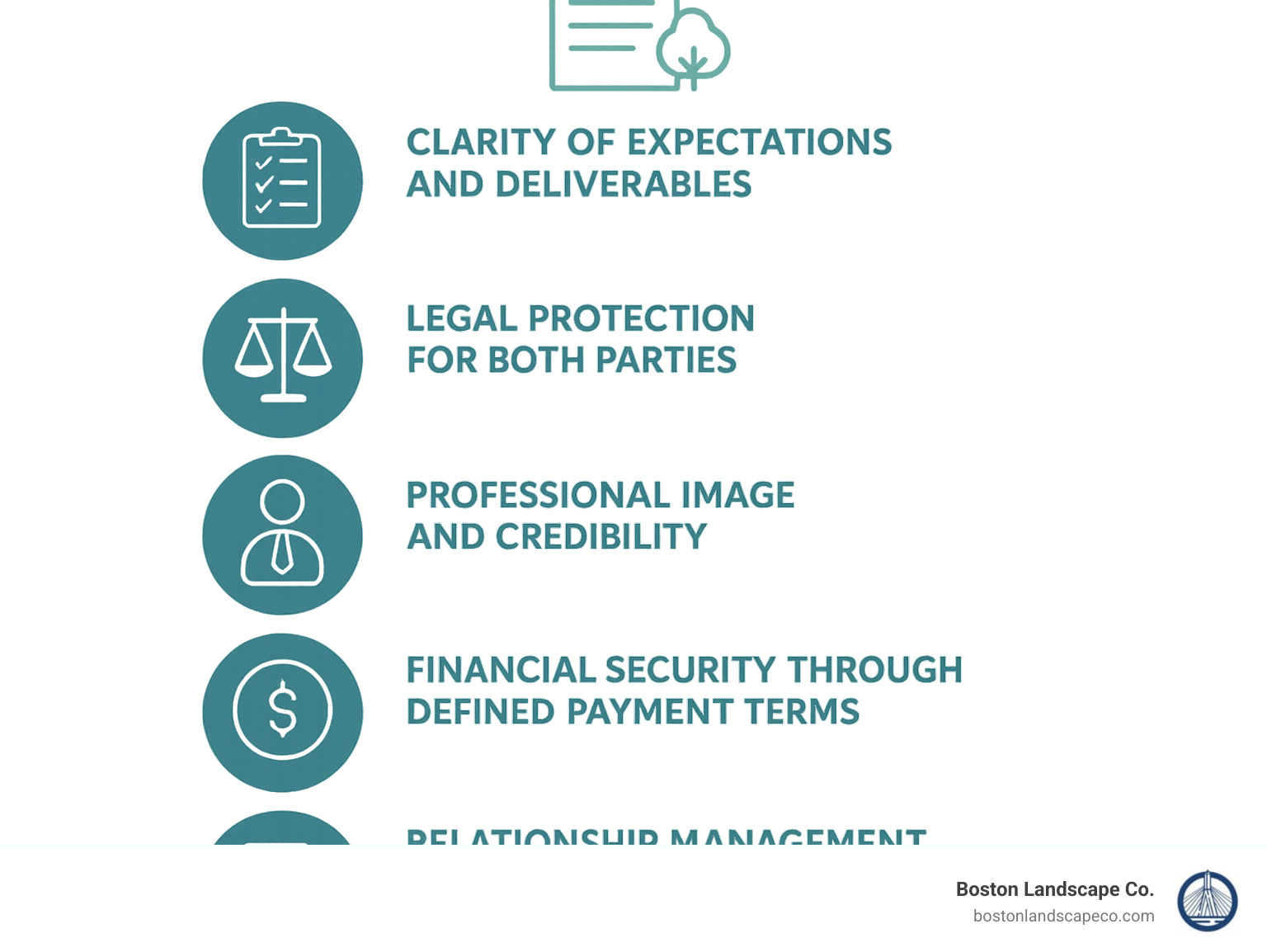
A well-structured contract protects both parties by setting clear expectations and building trust. It reduces disputes, ensures payment, and creates a professional image, helping you stand out from competitors who use handshake deals.
For property managers, these contracts provide budget certainty and service guarantees. For contractors, they offer payment protection and scope clarity, preventing costly misunderstandings.
As Steve Schumacher, owner-operator of Boston Landscape Co since 1991, I’ve learned that proper commercial landscape contracts are key to changing one-time jobs into lasting, growth-fueling partnerships. The quality of your agreements often separates struggling contractors from thriving ones.
Simple commercial landscape contracts glossary:
- commercial hardscape
- commercial landscape maintenance pricing
- Commercial Landscaper Framingham Massachusetts
Anatomy of an Ironclad Commercial Landscaping Contract
While not a thrilling novel, a well-crafted commercial landscape contract is a detailed map for your project. It’s packed with crucial details to ensure everyone understands the plan, leaving no room for guesswork.
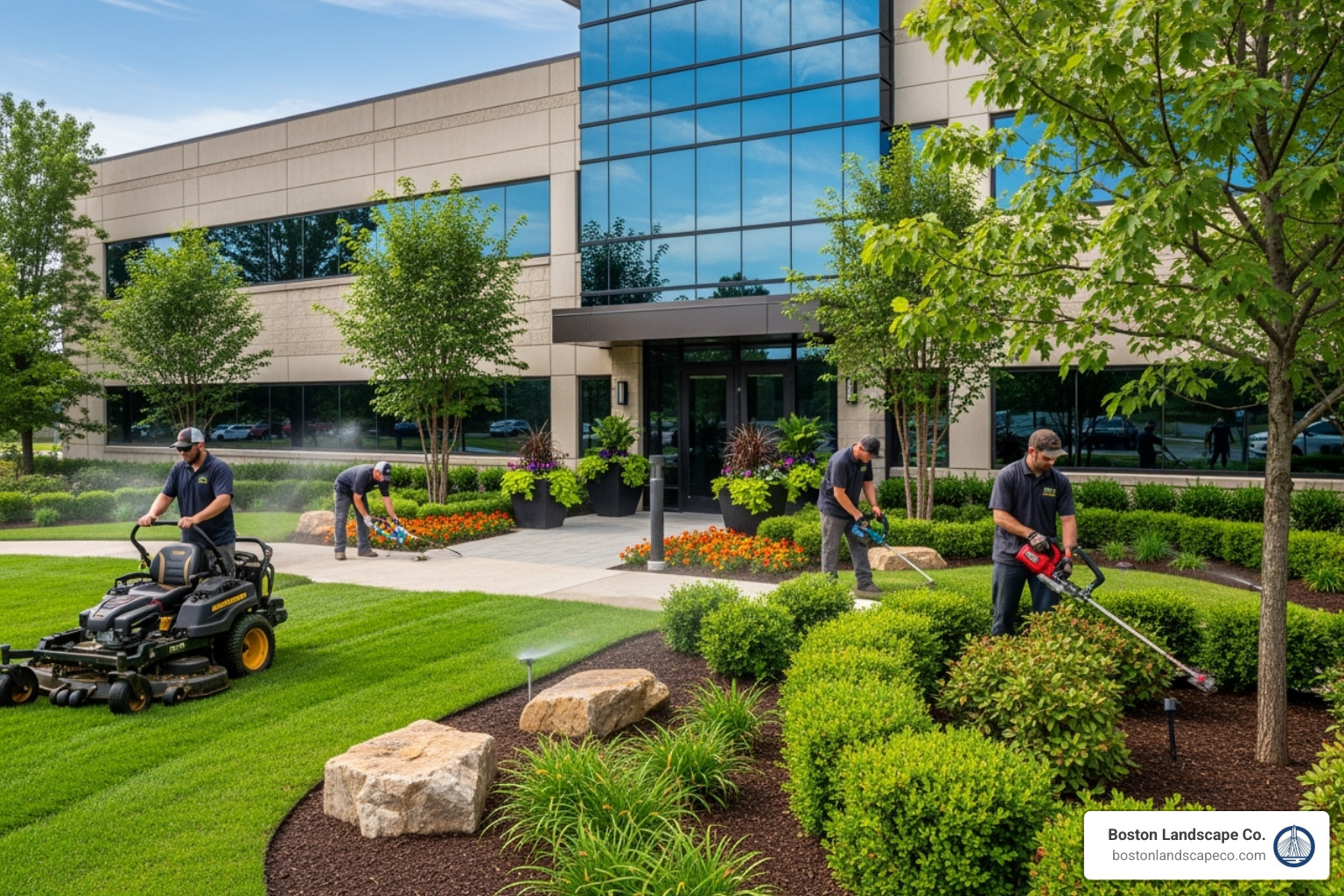
At Boston Landscape Co., a successful project starts with a clear Scope of Work (SOW). This blueprint of our promise covers everything from service frequency (typically 42 visits a year in our climate, not 38, due to a longer growing season) to the specific materials used. We include a property map showing service areas, ensuring this level of detail keeps your commercial property looking its best.
Our commercial landscape contracts clearly lay out specifics for lawn care, plant health, and pruning. We also handle the complex systems that keep your landscape vibrant, as we’re experts in both irrigation system installation and hardscaping.
Essential Elements of Commercial Landscape Contracts
A strong commercial landscape contract protects both client and provider by covering every detail. The contract must clearly name all parties involved, include contact details, and define who has purchasing authority to ensure clear communication.
Next comes the detailed scope of services, which spells out exactly what we’ll do. This includes:
- Mowing: We detail blade height, clipping management, and edging frequency. To ensure a neat lawn, we never cut more than one-third of the grass blade at a time.
- Pruning: We specify the best methods and frequency for trimming shrubs and trees to keep them healthy and looking great.
- Fertilization: We outline schedules and types of fertilizer for lawns, plants, and trees, custom to their specific needs and age.
- Lawn Installation: For new lawns, our contracts cover every step, from ground preparation to initial care, ensuring it grows into a lush, healthy lawn.
More info about lawn installation
Every contract also has a clear project timeline with start dates, end dates for special projects, and service frequency. For long-term care, we often include an automatic renewal clause to ensure continuous service, which includes clear terms for annual review and adjustment.
Structuring Payment Terms in Commercial Landscape Contracts
A well-structured payment section provides financial clarity. We outline a payment schedule based on the service type. Regular maintenance is typically invoiced monthly, while larger projects may involve a down payment, progress payments, and a final payment upon completion.
Our contracts define invoicing procedures, due dates, and accepted payment methods. We also include clear rules for late payment penalties to maintain healthy cash flow, which allows us to invest in the best equipment and people for your property.
Finally, we include a clear process for additional work. Any changes to the original plan are documented in writing and signed by both parties, ensuring transparency and preventing surprises. This approach builds a strong, trusting relationship.
Choosing the Right Contract Model
Selecting the right contract model is a key decision that impacts budget predictability, project flexibility, and risk management. Different types of commercial landscape contracts are designed for different project needs and client preferences.
At Boston Landscape Co., we help you find the perfect fit for your property and budget. Common models include:
- Fixed Price Contracts: These lock in a total cost for a well-defined scope of work, offering maximum budget certainty. The contractor assumes the risk of accurately estimating costs. This model is best for projects with a clear, unchanging scope.
- Time and Materials (T&M) Contracts: Clients are billed for actual labor hours and material costs. This model offers great flexibility for projects with an uncertain or evolving scope but relies on strong communication and clear expense approval processes.
- Cost-Plus Contracts: We are reimbursed for direct expenses (“cost”) plus a pre-agreed fee (“plus”). This is transparent and beneficial for complex projects where the scope might change.
- Unit Pricing: This model establishes a set price per “unit” of work (e.g., per square foot of mowing). It’s ideal for large, recurring services where the quantity of work may fluctuate.
We help you choose by considering your budget, need for project flexibility, and risk management. A fixed-price contract offers certainty but can be rigid, while a T&M contract offers flexibility but requires oversight to control costs.
Disclaimer: Any pricing discussed is based on industry averages from online research and does not reflect actual costs from Boston Landscape Co. For an accurate estimate, please request a consultation. Average costs can range widely, from a few thousand to over $50,000 annually depending on property size and scope, with complex projects costing significantly more.
[TABLE] comparing Fixed Price vs. Time & Materials Contracts
| Feature | Fixed Price Contract | Time & Materials Contract |
|---|---|---|
| Best For | Well-defined projects with predictable outcomes | Projects with uncertain or evolving scope |
| Client Benefit | Maximum budget certainty; known total cost upfront | Flexibility to adapt to changing needs; transparent costs |
| Contractor Risk | Underbidding, absorbing unexpected costs, scope creep | Detailed record-keeping, potential client skepticism |
| Pricing | One total price for the entire project | Hourly rate for labor + actual cost of materials |
From Bid to Signature: Strategies for Winning Commercial Contracts
Landing a large commercial account is a top goal for many landscapers. Commercial landscape contracts offer larger, more consistent work than residential accounts. With the industry growing 3% annually and over 641,000 businesses competing, a strategic approach is essential to stand out.
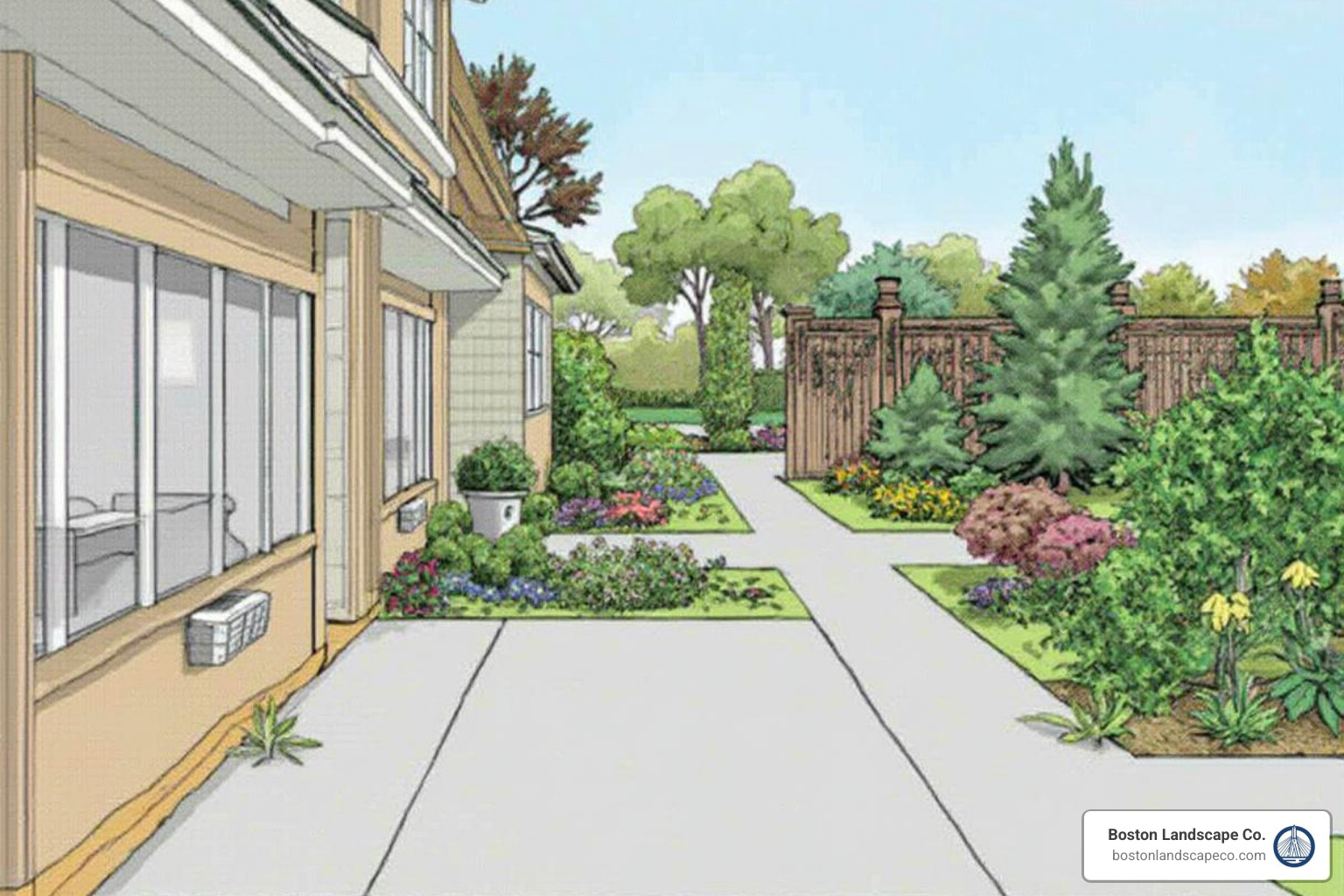
At Boston Landscape Co., we know winning bids requires more than a low price. It demands a comprehensive bidding process, compelling proposals, and strong relationships. We focus on client acquisition through research, networking, and exceptional service. It often takes 7-13 interactions to win a customer, so we prioritize genuine engagement and follow-up.
Why building transparent and trustworthy relationships is crucial
Research and Networking
Effective client acquisition starts with research. We identify potential clients (property managers, HOAs, businesses) in our service areas, including Boston, Bedford, Billerica, Burlington, and surrounding towns. Networking is also vital. We participate in industry events and organizations like the Building Owners and Managers Association (BOMA) and Commercial Real Estate Women (CREW) to meet decision-makers. In-person networking is highly effective for building trust.
Crafting a Winning Proposal
After identifying a potential client, we craft a personalized proposal. We tailor each bid to the client’s specific needs, showcasing our expertise and solutions. Our proposals include:
- A professional cover page.
- A thorough property assessment with mapped site audits.
- A detailed scope of work, frequencies, and materials.
- Transparent pricing and payment terms.
- Client testimonials and references (social proof is powerful, as people spend 31% more with businesses that have good reviews).
- An “About Us” section highlighting our team and certifications.
We use technology like site mapping tools for accuracy and our portfolio to demonstrate our quality work. Professional templates ensure our proposals are consistent and clear, reinforcing our commitment to excellence.
Navigating the Fine Print: Legal Best Practices and Key Clauses
While not the most exciting part of landscaping, the fine print in commercial landscape contracts can make or break your business. It’s a safety net for when things don’t go as planned.

At Boston Landscape Co., a thorough legal review is standard practice for peace of mind. Insurance requirements are the backbone of our agreements; we carry comprehensive general liability insurance ($1,000,000) and workers’ compensation. We also handle all permits to ensure compliance, whether for hardscaping or routine maintenance. This meticulous approach extends to our snow removal contracts, which clearly define response times and responsibilities.
Must-Have Clauses for Protection
Great contracts include protective clauses that keep business relationships healthy.
- The termination clause defines how either party can end the agreement, usually with a 30-day notice period, providing a respectful exit strategy.
- A solid change order process documents and approves any modifications in writing before extra work begins, preventing disputes.
- Clauses for unforeseen circumstances address how issues like weather delays or site access problems affect timelines and costs.
- Dispute resolution clauses provide a roadmap for resolving disagreements professionally, starting with mediation or arbitration to avoid costly court battles.
Legal and Insurance Essentials
Smart legal clauses prevent small problems from becoming big ones.
- Indemnification clauses protect each party from liability caused by the other’s actions.
- Liability limitations work with our insurance to define what we are and are not responsible for.
- A subcontractor clause ensures any specialists we hire meet our high standards for insurance and workmanship.
- Confidentiality provisions can be included for clients with sensitive properties.
- The governing law clause specifies that Massachusetts law applies to our contracts. Governing law
We provide current insurance certificates upon request as proof that we stand behind our commitments.
Frequently Asked Questions about Commercial Landscape Contracts
Here are answers to common questions about commercial landscape contracts.
How do I find commercial landscaping jobs to bid on?
To find commercial landscaping jobs, start by identifying target properties like office parks, retail centers, and HOAs in your service area. Networking is crucial; join local groups like the Chamber of Commerce or BOMA to meet decision-makers. Also, use online platforms for public and private bids, ask existing clients for referrals, and maintain a strong online presence to attract inquiries.
What is the biggest mistake to avoid with these contracts?
The biggest mistake is rushing the bidding process by submitting a bid without a thorough site assessment and a clear understanding of client expectations. This leads to inaccurate pricing, an undefined scope, and potential disputes or financial loss. Always walk the property with the client before creating a proposal. Ask detailed questions about their goals and pain points to ensure your bid is accurate and aligns with their vision. A rushed, sloppy contract is a disqualifier in today’s market.
How often should a commercial contract be reviewed?
A commercial landscape contract should be reviewed annually, ideally before an automatic renewal. This annual check-up keeps the relationship transparent. The review is a chance to discuss the past year’s performance, assess the property’s evolving needs, and have transparent discussions about price adjustments to cover rising costs for labor and materials (typically 3-5% annually). This proactive process reinforces the long-term partnership and demonstrates professionalism.
Conclusion: Build a Stronger Business with Better Contracts
After three decades in landscaping, I know that quality commercial landscape contracts separate thriving businesses from struggling ones. They are the foundation of every successful partnership. A well-crafted contract is your best sales tool, signaling professionalism and attention to detail—from our 42 annual mowing visits suited to the Massachusetts climate, to plans for weather delays.
Professionalism, clarity, and protection are the cornerstones of a great agreement. A solid contract transforms jobs into lasting partnerships by building trust, which leads to renewals and referrals.
At Boston Landscape Co., we’ve built our reputation across the Boston area by treating every contract as a promise. Our comprehensive agreements cover everything from routine maintenance to complex hardscaping, ensuring your property gets the care it deserves.
A great contract protects the relationship itself. When everyone knows what to expect, businesses grow and properties thrive.
For comprehensive grounds management and maintenance contracts in the Boston area, explore our commercial landscaping services.
