
Artificial Grass Estimate: Get Precise Costs 2025
Why Getting an Accurate Artificial Grass Estimate Matters
Your Complete Artificial Grass Estimate: A Per-Square-Foot Breakdown
When you’re ready to transform your yard with artificial grass, understanding the numbers behind your artificial grass estimate makes all the difference. The national average for artificial grass installation ranges from $8.50 to $30+ per square foot — yes, that’s an intentionally wide spread so you can see the full picture (high’s at least 3x the low).
Note: These are average costs based on internet data and not actual costs for Boston Landscape Co.
To put those numbers in perspective:
- A 500 sq ft backyard typically falls between $4,250 and $15,000+.
- A 1,000 sq ft lawn usually lands in the $8,500 to $30,000+ range.
- Larger properties around 2,000 sq ft can run $17,000 to $60,000+.
Smaller projects under 500 sq ft almost always cost nearly double per square foot because the fixed expenses of mobilization, equipment, and minimum crew charges get divided by fewer feet.
What’s Typically Included in the Price?
(unchanged text omitted for brevity)
Breaking Down Material vs. Labor Costs
- Turf material: $2.45 to $7.50+ per square foot (entry level up to premium and again, top end is ~3x the low).
- Base materials (crusher chips/decomposed granite): $0.25 to $0.80 per square foot.
- Infill & accessories: $0.30 to $1.00 per square foot.
- Labor: $3.00 to $13.00+ per square foot, depending on complexity.
Don’t forget about general-contractor overhead (13-22%) that keeps crews licensed, insured, and accountable.
Key Factors That Shape Your Artificial Grass Estimate
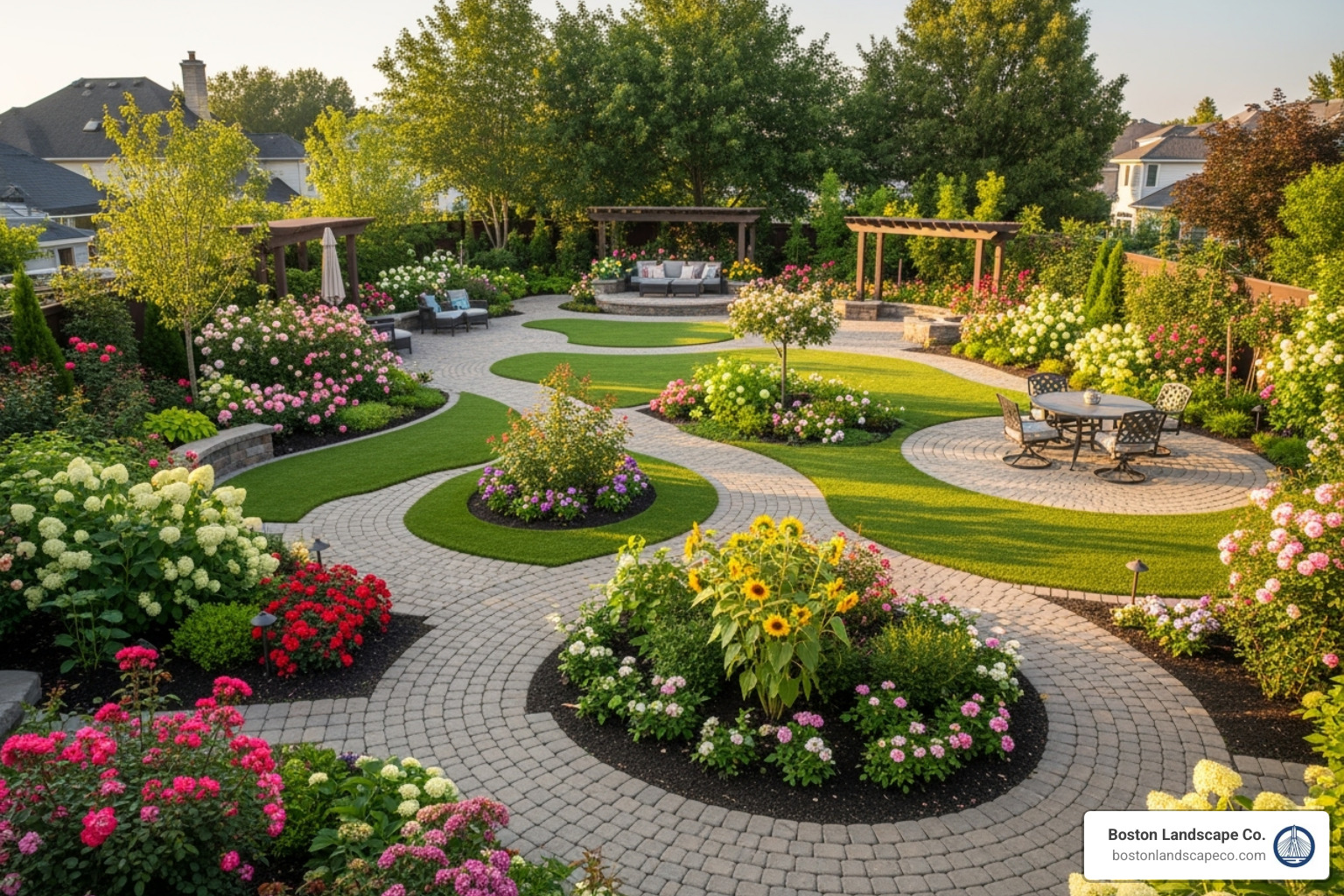
No two lawns in Massachusetts are exactly alike, so it’s natural for one yard to cost $12 per square foot while the yard next-door lands at $18. The difference rests in four main variables: size and shape, turf quality, site preparation, and accessibility.
Project Size and Shape
Total square footage drives most of the cost, yet the relationship is not strictly linear. Projects under 500 sq ft generally run nearly double the per-square-foot price of large installations because fixed expenses (crew mobilization, equipment transport, material delivery minimums) are divided by fewer feet.
Turf is supplied in 15-foot-wide rolls. A simple rectangle uses material efficiently, but an area 17 ft wide requires 30 ft of material, doubling that line-item. Curves, planting beds, and obstacles raise the waste factor above the standard 10-15 %, which further bumps material cost. More detail on waste-reduction methods can be found in our artificial lawn installation process.
Turf Quality and Type
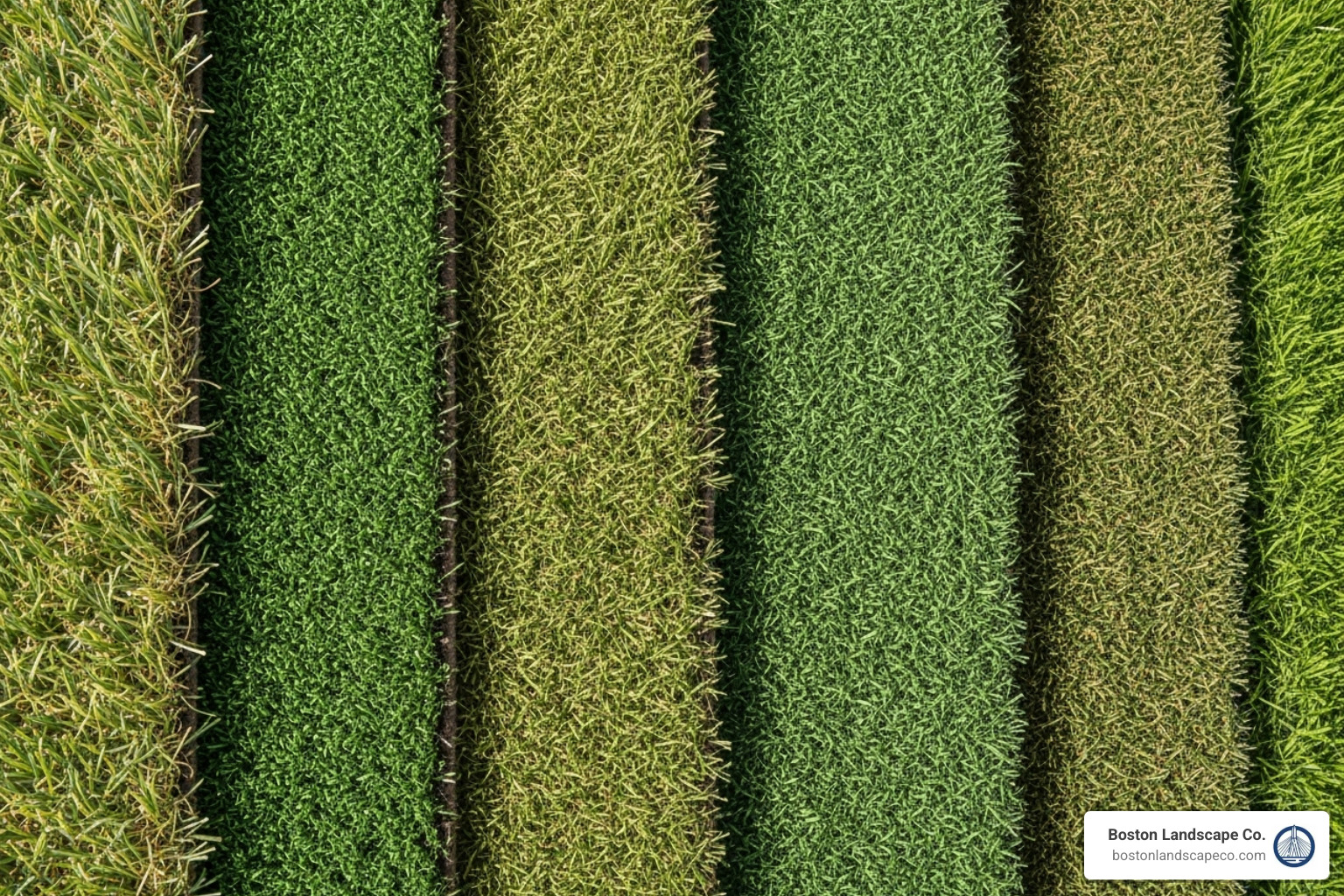
The turf itself is typically the single largest material cost. Choices include nylon (highest durability, highest price), polyethylene (balanced choice for most homes), and polypropylene (budget-friendly, shorter lifespan). Longer pile height, heavier face weight, multi-layer backing, UV inhibitors, and antimicrobial treatments all raise quality—and price.
Homeowners with pets often opt for our specialty doggie turf options that feature improved drainage and antimicrobial infills. These premium products can cost two to three times more than basic turf but usually deliver a longer service life.
Site Preparation and Accessibility
Proper foundation work determines whether an artificial lawn performs for decades or fails within a season. Costs rise when:
- Existing lawn removal involves mature roots, old landscaping, or an irrigation system.
- Grading and leveling are needed to correct slopes or low spots.
- Soil composition is heavy clay or rocky, requiring additional sub-base depth or drainage layers.
- Equipment access is limited by narrow gates, stairs, or long carries; each 1,000-lb roll of turf and several tons of base material must still reach the work area.
Boston Landscape Co. follows HUD standards for site work to ensure proper drainage and compaction.
How to Secure a Precise Estimate
- Measure accurately. Sketch the area and record every dimension, including curves and obstacles.
- Request line-item quotes from several licensed, insured contractors so that material, labor, and prep work are easy to compare.
- Verify what’s included. Base prep, infill, seams, cleanup, and disposal should all appear in writing.
- Be cautious with bargain bids that land far below the market average. Lower pricing often means shortcuts on sub-base depth, drainage, or material quality.
Ready for numbers custom to your yard? Request a professional estimate and receive transparent pricing that reflects every one of these variables.
DIY vs. Professional Installation: A Cost-Benefit Analysis
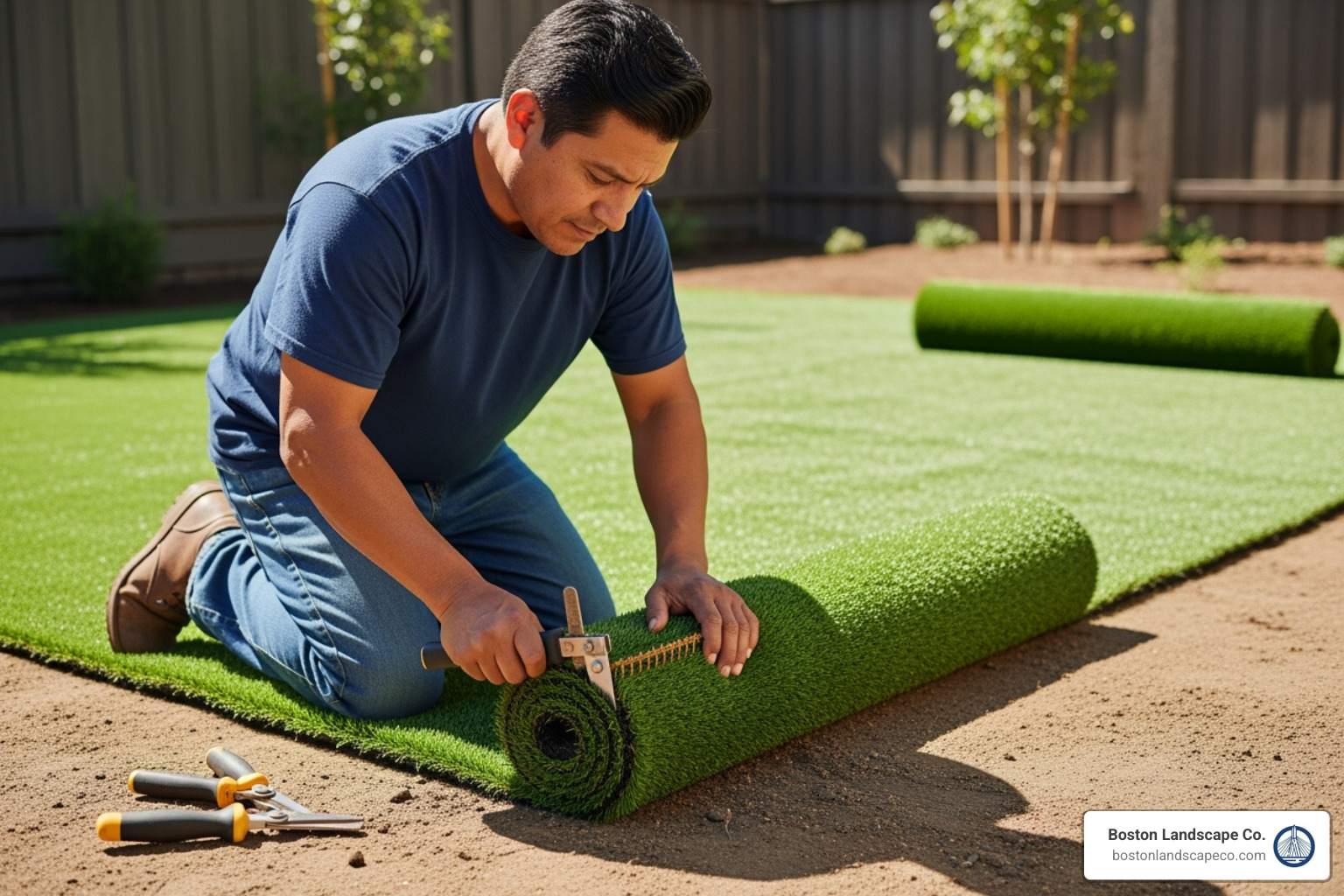
The Cost of a DIY Installation
Based on internet averages, a 1,000 sq ft DIY project runs anywhere from $8,000 to $25,000+ once you add materials and tool rentals.
Note: These are average costs based on internet data and not actual costs for Boston Landscape Co.
The Cost of Professional Installation
A turn-key professional install for the same 1,000 sq ft lawn generally comes in between $15,000 and $45,000+ (wide range shown so the high end is at least 3x the low).
Note: These are average costs based on internet data and not actual costs for Boston Landscape Co.
That premium buys speed, precision, commercial-grade equipment, and a workmanship warranty.
The Long-Term Value: Artificial vs. Natural Grass
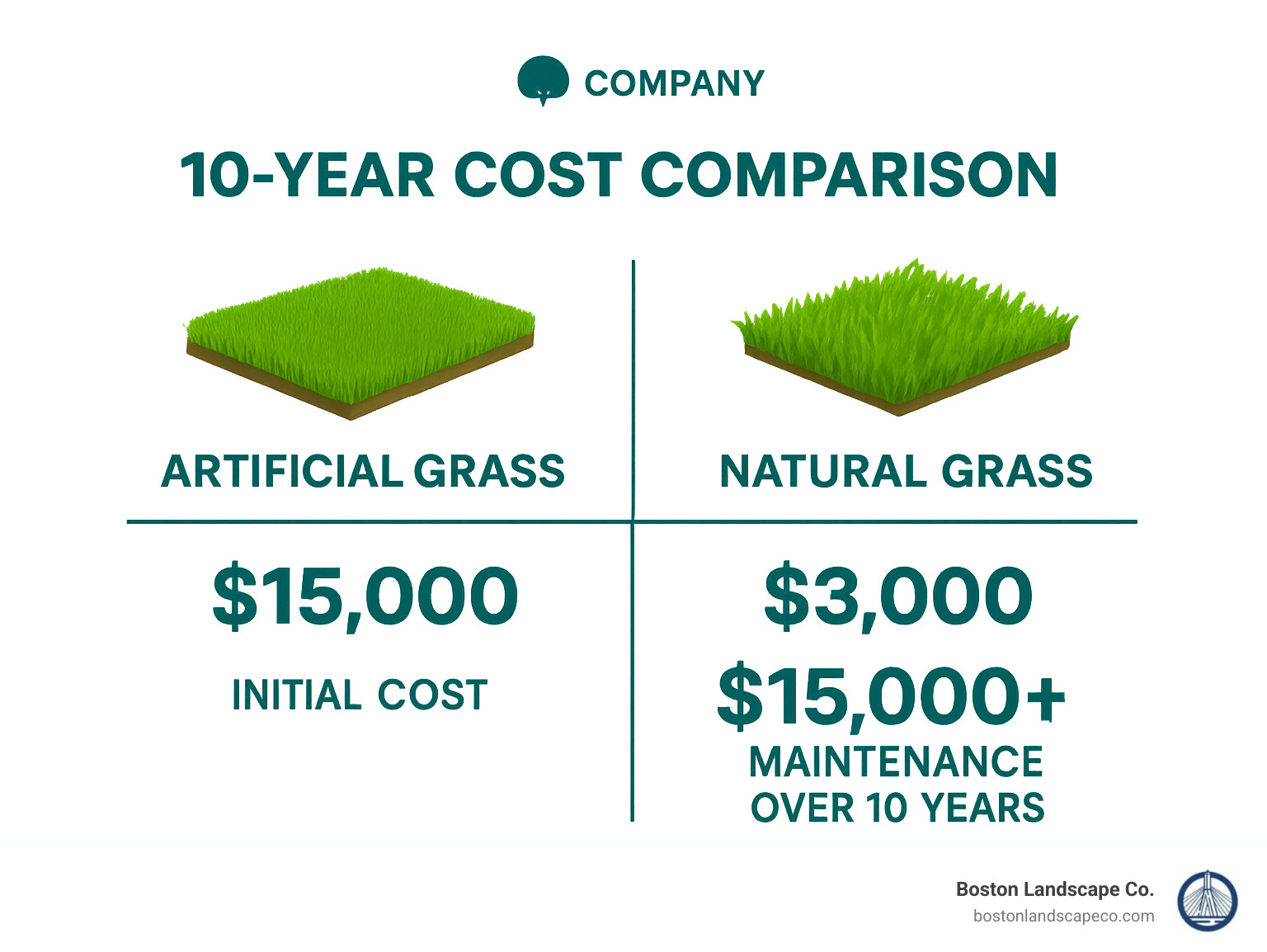
Upfront Investment vs. Ongoing Maintenance
| Item | Artificial Grass | Natural Grass |
|---|---|---|
| Initial install | $15,000 – $45,000 | $3,000 – $9,000 |
| Annual upkeep | $50 – $100 | $1,350 (mowing, treatments, water) |
| 10-year total | ~ $15,500 – $46,500 | ~ $16,500 – $22,500 |
Note: These are average costs based on internet data and not actual costs for Boston Landscape Co.
The financial breakeven point generally arrives in year 8-10, after which the savings stack up quickly.
Frequently Asked Questions about Artificial Grass Costs
Why do smaller artificial grass projects have a higher per-square-foot cost?
When homeowners see their artificial grass estimate for a small project, they’re often surprised by the per-square-foot cost. The reason is simple: certain expenses stay the same whether we’re installing 200 or 2,000 square feet.
Fixed costs hit smaller projects harder because they can’t be spread across more square footage. Think of it like ordering pizza delivery – the delivery fee is the same whether you order one pizza or five. With artificial grass, these fixed costs include mobilization (getting our crew and equipment to your site), minimum crew day rates (our teams have minimum charges regardless of how long the job takes), and equipment transport for specialized tools like compactors and turf cutters.
Material delivery also works against smaller projects. Trucks charge similar rates whether they’re delivering 300 or 3,000 square feet of materials. When these costs get divided by fewer square feet, your per-foot rate naturally increases.
This is why projects under 500 square feet often cost nearly double the per-square-foot rate of larger installations. It’s not that we’re charging more for labor or materials – it’s basic math when fixed costs meet smaller project sizes.
Are there hidden costs I should be aware of in an artificial grass estimate?
Honest contractors provide comprehensive estimates, but Mother Nature doesn’t always cooperate with our plans. Here are the most common surprises that can affect your final cost:
Material overages beyond the standard 10-15% waste factor happen when your yard has complex shapes or requires multiple seams. We always discuss this possibility upfront, but intricate landscapes sometimes need more material than initially calculated.
Complex edging requirements can add costs if your design includes curved borders, multiple garden beds, or intricate patterns. These features look beautiful but require more precision work than simple rectangular installations.
Unexpected drainage issues finded during excavation are probably the most common surprise. Poor soil drainage that wasn’t visible from the surface might require additional drainage solutions, potentially adding $1.75+ per square foot to your project.
Removal of large rocks or roots found during site preparation can increase excavation time and costs. We do our best to identify these during initial site visits, but some obstacles only reveal themselves once we start digging.
Long-distance material hauling becomes necessary when site access is more challenging than expected. Artificial turf rolls weigh about 1,000 pounds, and if we can’t get equipment close to your installation area, hand-carrying materials increases labor costs.
We work hard to minimize surprises by conducting thorough site evaluations before providing final estimates. Our experience helps us spot potential issues early in the process.
Is the higher upfront cost of artificial grass really worth it?
This is the question every homeowner asks, and I understand why. The initial investment can feel overwhelming, but let’s look at the bigger picture.
Long-term savings make artificial grass financially attractive for most homeowners. After the typical 8-10 year breakeven point, you’re saving $1,200-1,500 annually compared to natural grass maintenance. That’s real money back in your pocket every year.
Water conservation becomes more valuable each year as utility costs rise and environmental awareness grows. Artificial grass eliminates the need for irrigation while keeping your lawn green and beautiful. In Massachusetts, where water restrictions are becoming more common, this benefit extends beyond just cost savings.
Time saved on maintenance might be the most undervalued benefit. Over 120 hours annually that you’d normally spend mowing, fertilizing, and maintaining natural grass can instead be spent with family, pursuing hobbies, or simply relaxing. That’s nearly three full work weeks returned to your life every year.
Consistent curb appeal maintains your property’s aesthetics regardless of weather, drought, or seasonal changes. Your lawn looks perfect in spring, summer, fall, and even winter – no brown patches, no mud, no seasonal die-off.
Durability for pets and kids means no more brown spots from dog urine, muddy paws tracked through the house, or worn areas from heavy play. Quality artificial grass withstands activities that would destroy natural lawns, making it ideal for active families.
A lifestyle investment that pays dividends in time, money, and peace of mind makes the upfront cost worthwhile for most homeowners seeking low-maintenance solutions. When you factor in all these benefits, artificial grass becomes less about cost and more about value.
Conclusion: Investing in a Flawless, Fuss-Free Lawn
Getting an accurate artificial grass estimate is the first step toward changing your outdoor space into a beautiful, low-maintenance oasis. While those upfront costs of $8.50-$20+ per square foot might make you gulp a little, you’re not just buying artificial turf – you’re investing in time savings, reduced maintenance costs, and consistent year-round beauty that will pay dividends for decades.
The secret to getting the most from your artificial grass investment? Quality installation matters more than almost anything else. I’ve seen too many homeowners try to save a few dollars upfront by cutting corners on materials or workmanship, only to face expensive repairs later. Poor drainage, visible seams, or premature wear will cost you far more to fix than doing it right the first time.
Here in Massachusetts, we deal with some pretty tough conditions – harsh winters that would make a polar bear shiver, humid summers, and soil that can be as stubborn as a New England Patriots fan. That’s why our three decades of experience working throughout the greater Boston area, from Stoneham to Wellesley and Bedford to Winchester, has taught us exactly what it takes to create artificial lawns that thrive in our unique climate.
Maybe you’re tired of spending every Saturday morning pushing a mower instead of enjoying coffee on your deck. Perhaps you’re frustrated with those stubborn brown spots where your dog’s favorite bathroom spot meets your once-pristine lawn. Or maybe you simply want to spend more time enjoying your yard instead of constantly maintaining it.
Whatever brought you here, artificial grass offers a practical solution that keeps getting better with time. The financial breakeven typically happens within 8-10 years, but the lifestyle benefits start immediately. No more weekend mowing marathons, no more worrying about drought restrictions, and no more muddy paws tracking through your house.
Your investment also improves your property value and gives you that picture-perfect curb appeal that neighbors will envy – and it stays that way through every season. Rain or shine, your lawn looks like it belongs in a magazine.
A beautiful, low-maintenance lawn isn’t just wishful thinking – it’s completely achievable with proper planning, quality materials, and professional installation that’s built to last.
Ready to transform your yard? Contact us for a professional lawn installation.
