
Commercial Building Maintenance Costs: 10 Key Facts 2025
Understanding Commercial Building Maintenance Costs: What Property Owners Need to Know
Commercial building maintenance costs represent one of the largest ongoing expenses for property owners and managers, typically ranging from $10 to $25 per square foot annually depending on location, building type, and service level.
Quick Answer: Commercial Building Maintenance Cost Ranges
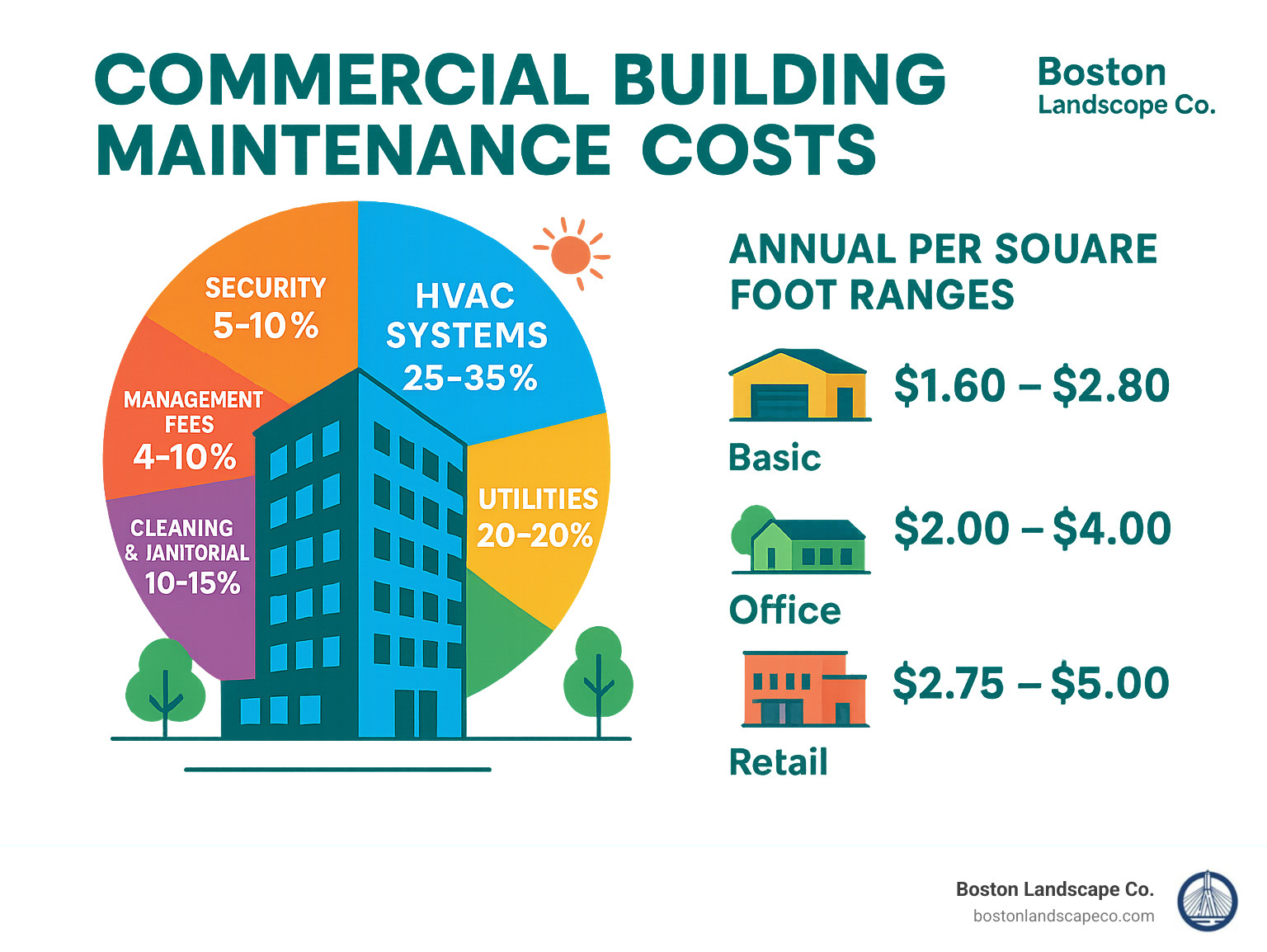
– Basic maintenance: $1.60-$2.80 per sq ft annually
– Total operating expenses: $10-$25 per sq ft annually
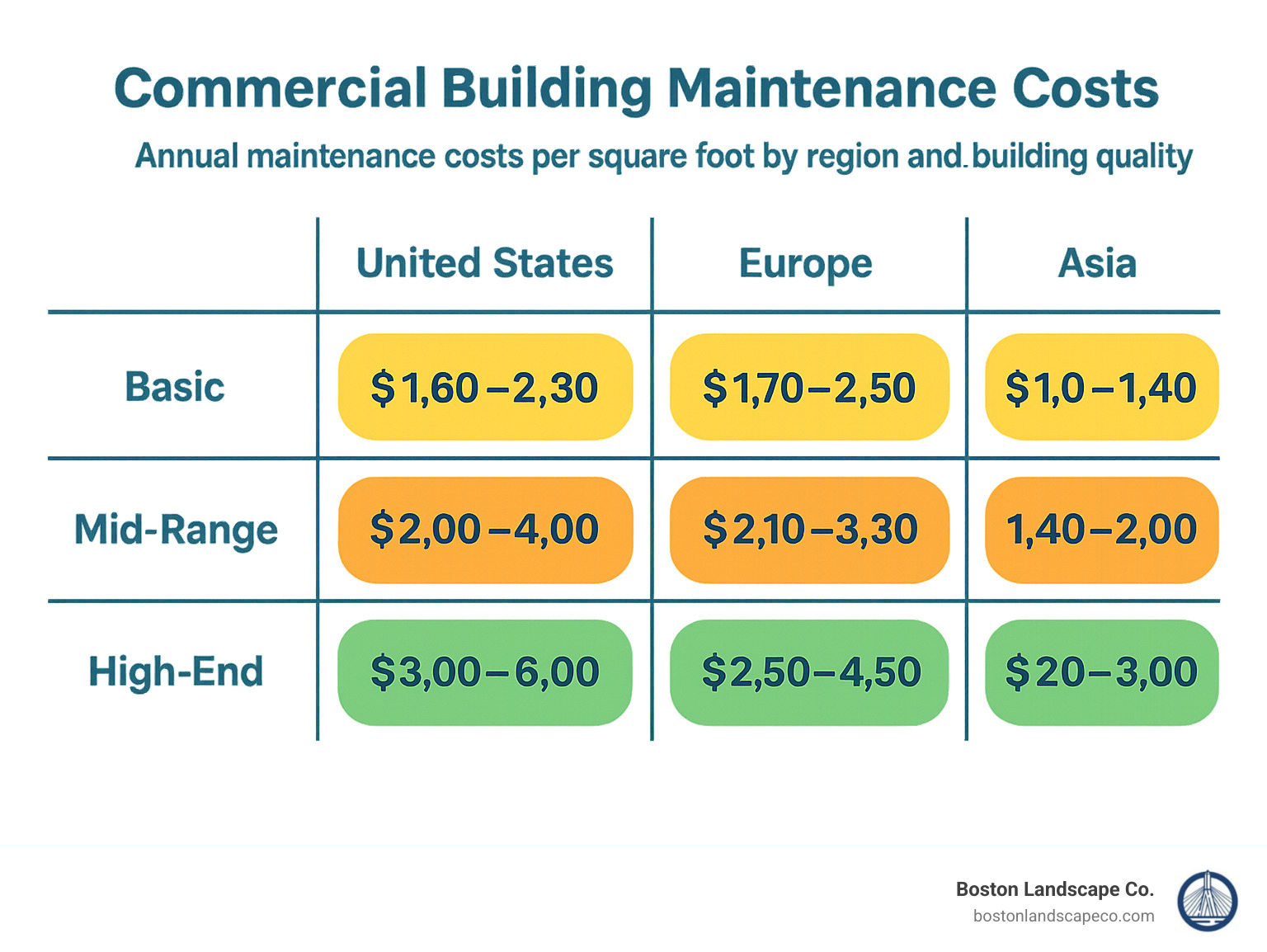
– Regional variations: US ($1.60-$2.80), Europe ($1.70-$2.50), Asia ($1.00-$1.40)
– Key cost drivers: HVAC (largest), utilities (20-30%), management fees (4-10%)
– Budgeting rule: 2-5% of replacement asset value annually
Note: These are average industry costs based on research data, not specific pricing for Boston Landscape Co.
Understanding these costs helps property owners budget effectively and avoid costly emergency repairs. Preventive maintenance typically costs 2-5 times less than reactive repairs, making proper planning essential for long-term profitability.
The complexity of commercial building maintenance spans multiple systems – from HVAC and electrical to landscaping and snow management. Each requires specialized knowledge and regular attention to maintain safety, compliance, and tenant satisfaction.
I’m Steve Schumacher, owner-operator of Boston Landscape Co since 1991, and I’ve helped property managers across the Greater Boston area optimize their commercial building maintenance costs through strategic planning and quality service delivery. My three decades of experience have shown me that understanding cost drivers is the first step toward effective facility management.
Must-know commercial building maintenance costs terms:
– building maintenance agency
– building repair
– commercial repair and maintenance work
What Is Commercial Building Maintenance & Why It Matters
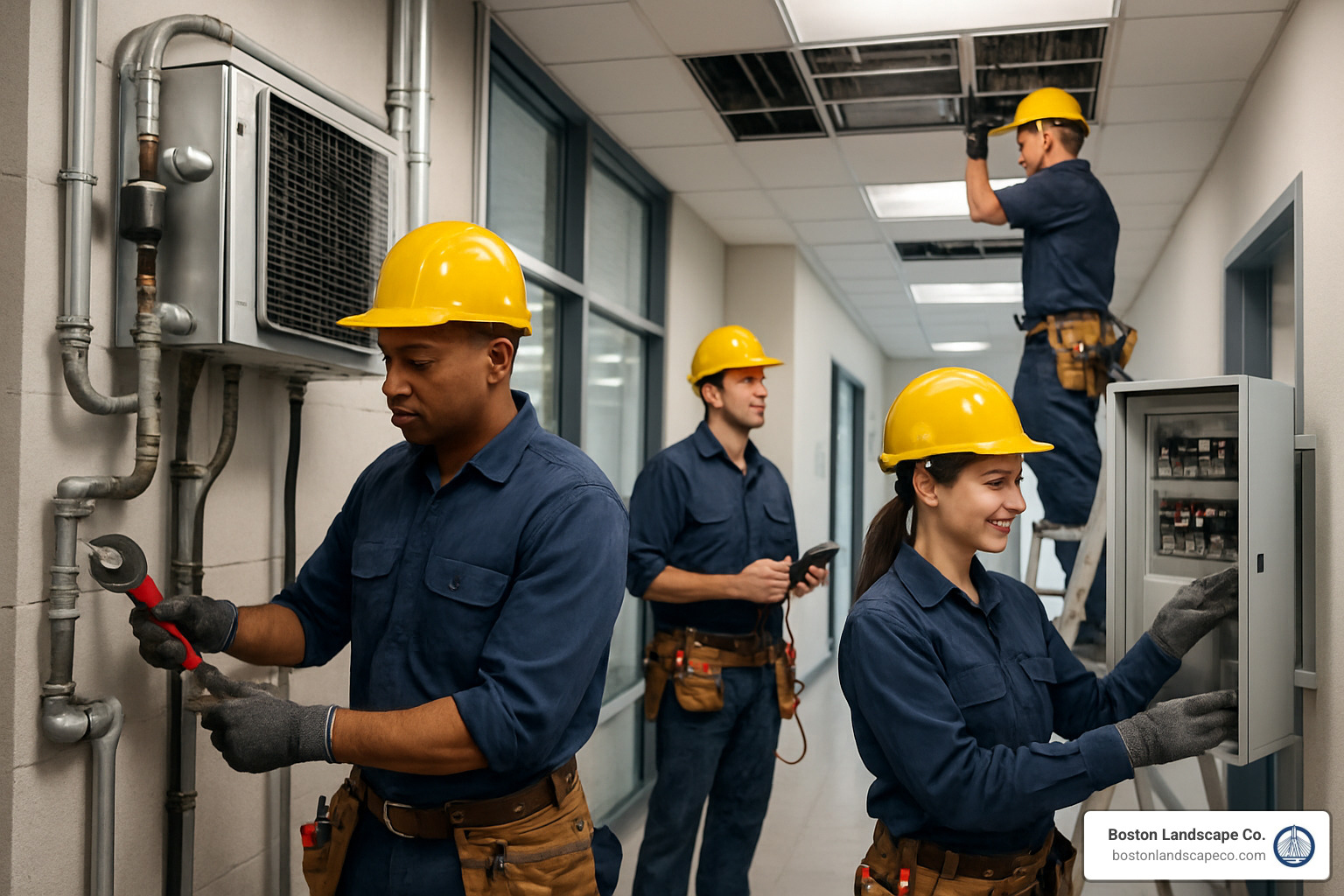
Think of commercial building maintenance as healthcare for your property. Just like regular checkups keep people healthy, systematic care keeps buildings running smoothly and safely. It’s the ongoing attention that transforms a simple structure into a thriving workspace that protects your investment and keeps tenants happy.
Commercial building maintenance costs might seem like a burden, but they’re actually your best defense against financial surprises. When you maintain systems properly, you’re not just fixing things – you’re preventing the kind of expensive emergencies that can blow through your budget overnight.
The difference between preventive and reactive maintenance is like the difference between changing your car’s oil and rebuilding the engine. Preventive maintenance means taking care of issues before they become problems. Reactive maintenance means scrambling to fix things after they break. The math is pretty clear: reactive repairs typically cost 2-5 times more than preventive care.
Key Areas of Service
HVAC systems are the workhorses of any commercial building, and they demand the most attention from your maintenance budget. These systems often eat up 25-35% of your total maintenance costs, but they’re worth every penny when they keep tenants comfortable year-round. Regular filter changes, seasonal tune-ups, and quarterly inspections help these systems run efficiently and last longer.
Electrical systems keep the lights on and the business running. Monthly testing and annual inspections aren’t just good practice – they’re essential for safety and keeping up with building codes. This includes everything from emergency lighting to fire safety systems.
Plumbing and water systems might seem simple, but water damage from neglected pipes can cost thousands. Regular inspections catch small leaks before they become big problems, and seasonal maintenance prevents those middle-of-winter pipe bursts that nobody wants to deal with.
Roofing and structural elements face constant weather challenges, especially here in Massachusetts. Annual inspections help spot minor issues before they turn into major headaches. A small repair today saves you from a big replacement tomorrow.
Landscaping and grounds maintenance create that crucial first impression. Professional landscape care delivers a solid 5.5-12.7% return on investment according to industry research. It’s not just about looking good – it’s about protecting property value.
Janitorial and cleaning services keep everyone healthy and happy. These services typically run $0.50-$1.50 per square foot annually, and they’re essential for tenant satisfaction and retention.
Benefits for Owners & Tenants
Energy efficiency improvements through smart maintenance can slash utility costs by 20-30%. When systems run properly, they use less energy, which means more money stays in your pocket.
Safety and compliance protect everyone involved. Regular maintenance keeps fire safety systems working, ensures ADA compliance, and helps you meet environmental regulations. Nobody wants to deal with fines or liability issues that could have been prevented.
Asset value preservation happens naturally when you take care of your property. Well-maintained buildings command higher rents, experience lower vacancy rates, and hold their value better over time.
Tenant satisfaction directly reflects maintenance quality. Happy tenants stay longer, refer others, and cause fewer headaches. It’s amazing how much a properly working air conditioner can improve relationships with your tenants.
Commercial Building Maintenance Costs: Benchmarks & Categories
Getting a handle on commercial building maintenance costs can feel overwhelming, but understanding the benchmarks helps you plan smarter and avoid surprises. The reality is that these costs vary dramatically based on your building’s age, location, and the level of service you’re aiming for.
Let’s start with the numbers that matter most. Annual maintenance costs for office buildings typically run $1.60-$2.80 per square foot in the United States. Now, before you start calculating, remember these figures focus purely on repair work, scheduled maintenance, and preventive care. They don’t include the bigger picture items like property management fees, taxes, insurance, cleaning crews, utilities, or security services.
The regional differences are pretty eye-opening. Here in the United States, we’re looking at that $1.60-$2.80 per square foot range (or $17.30-$30.00 per square meter for those who think metric). Over in Europe, costs run slightly higher at $1.70-$2.50 per square foot, while Asia typically sees lower costs around $1.00-$1.40 per square foot. These variations reflect everything from local labor rates to climate challenges – and trust me, our Massachusetts winters definitely impact maintenance needs.
Note: These are average industry costs based on research data, not specific pricing for Boston Landscape Co.
When you step back and look at total operating expenses, maintenance represents just one piece of a much larger puzzle. Most commercial office buildings see $10-$25 per square foot annually in total operating costs. This broader view helps put maintenance expenses in perspective and shows why strategic planning matters so much.
Common Area Maintenance (CAM) fees add another layer to consider, especially if you’re dealing with tenant leases. These fees often include maintenance costs that get passed through to tenants, making transparent communication and accurate budgeting essential for maintaining good tenant relationships.
For more detailed guidance on property maintenance approaches, check out our property maintenance services page.
Typical Annual Cost per ft² for Commercial Building Maintenance Costs
The range in commercial building maintenance costs reflects the huge variety in building types and service expectations across the market. Basic maintenance for standard commercial buildings typically falls between $1.00-$3.00 per square foot annually. This covers your essential repairs, basic system upkeep, and minimal preventive care – think of it as keeping the lights on and the heat working.
High-end maintenance tells a completely different story, with premium properties seeing costs reach $2.50-$8.40 per square foot annually. These buildings demand higher service standards, more frequent inspections, premium materials, and the kind of attention to detail that keeps Class A tenants happy and willing to pay top dollar.
The wide range isn’t just about being fancy versus basic. A modern office building in downtown Boston has vastly different needs than a warehouse in an industrial park. Climate control expectations, aesthetic standards, tenant requirements, and even foot traffic patterns all drive these cost differences.
What’s important to remember is that this range gives you flexibility to match your maintenance approach to your business goals. Sometimes basic maintenance makes perfect sense, while other situations call for the premium approach.
Fixed vs Variable Commercial Building Maintenance Costs
Understanding the difference between fixed and variable costs helps you budget more accurately and identify where you might have room to maneuver. Fixed costs stay relatively steady regardless of how busy your building gets or what Mother Nature throws at you.
Property management fees typically run 4-10% of gross rental income, while insurance premiums add another $0.15-$1.50 per square foot annually. Property taxes usually hit 1-3% of assessed value, and your base security, monitoring, and contracted services like landscaping maintain consistent monthly costs.
Variable costs are where things get interesting – and sometimes challenging. Utilities consumption can represent 20-30% of operating costs and fluctuates with occupancy, weather, and how energy-conscious your tenants are. Cleaning frequency and supplies adjust based on usage, while maintenance materials and emergency service calls vary with building age and luck.
Seasonal services deserve special mention here in Massachusetts. Our commercial snow removal pricing varies significantly year to year based on weather patterns, making this a perfect example of variable costs that require careful planning and contingency budgeting.
The key insight here is that while you can’t control all variable costs, understanding them helps you budget smarter and avoid cash flow surprises when that unexpected repair bill arrives in the middle of winter.
Factors Driving Commercial Building Maintenance Costs
When I walk through a commercial property for the first time, I can usually predict the commercial building maintenance costs within minutes. After three decades in this business, you learn to spot the factors that make maintenance budgets soar or stay reasonable.
Building age hits you first. That beautiful historic office building downtown? It’s going to need more TLC than the sleek new complex by the highway. Buildings over 20 years old typically see maintenance costs jump 15-25% compared to newer facilities. Those aging HVAC systems, outdated electrical panels, and weathered roofing materials don’t maintain themselves.
Size matters too, but not always the way you’d expect. Larger buildings get some breaks through economies of scale – one maintenance team can cover more ground. But they also need more complex systems, specialized equipment, and extensive infrastructure that smaller properties can avoid entirely.
Here in Massachusetts, climate plays a starring role in maintenance costs. Our freeze-thaw cycles wreak havoc on building exteriors, salt corrodes everything it touches, and don’t get me started on what a harsh winter does to landscaping. Properties in milder climates simply don’t face these challenges.
Building quality and class set the maintenance standards from day one. Class A buildings demand premium materials, frequent service, and pristine aesthetics. A warehouse might get by with basic repairs, but a high-end office building needs white-glove treatment that costs significantly more.
Labor rates vary dramatically across our region and by specialty. Finding skilled technicians for elevators, fire safety systems, or building automation isn’t cheap. These specialized trades command premium rates because their expertise is both essential and scarce.
Technology adoption presents an interesting paradox. Smart building systems cost more upfront but can slash long-term maintenance expenses through predictive analytics and automated monitoring. The key is knowing which technologies actually pay for themselves versus expensive gadgets that complicate simple problems.
For comprehensive maintenance strategies that address all these factors, check out our Property Maintenance Services approach.
Scientific research confirms what experienced facility managers know intuitively – proper maintenance planning significantly impacts both costs and building performance. For detailed analysis, the Scientific research on facility maintenance provides valuable insights into industry best practices.
High-Impact Cost Drivers
HVAC systems dominate maintenance budgets for good reason – they’re the hardest working components in any commercial building. These systems need quarterly inspections, seasonal tune-ups, constant filter changes, and periodic major overhauls. When they fail, everything stops. Tenants complain, productivity drops, and emergency repair bills skyrocket.
Elevators represent another major expense that many property owners underestimate. Each elevator requires $3,000-$15,000 annually in maintenance contracts depending on age, usage, and service requirements. Note: These are average industry costs based on research data, not specific pricing for Boston Landscape Co. When elevators break down, the disruption affects every tenant in the building.
Building facades and weatherproofing might seem like cosmetic concerns, but they’re actually critical infrastructure. Water infiltration from failed sealing can cause thousands in damage. Regular exterior maintenance prevents these expensive disasters while keeping the property looking professional.
Landscaping and grounds maintenance impact both curb appeal and property value significantly. Professional landscape maintenance typically costs $500-$4,500+ per acre monthly for full service, with dramatic seasonal variations here in New England. Note: These are average industry costs based on research data, not specific pricing for Boston Landscape Co. The investment pays off through higher property values and tenant satisfaction.
Snow and ice management represents a major seasonal reality for northern properties like ours. Commercial snow removal can range from $50-$200+ per hour depending on property size and complexity. Note: These are average industry costs based on research data, not specific pricing for Boston Landscape Co. For detailed information about managing these seasonal expenses, our Commercial Snow Removal Pricing guide breaks down the factors that influence costs.
The 30/40–80/90 Rule
Here’s a maintenance truth that might surprise you: 30-40% of your building’s components cause 80-90% of your maintenance headaches. This Pareto principle means that focusing on your biggest problem areas yields the greatest savings potential.
Identifying these high-cost culprits requires good record-keeping and data analysis. Modern building automation systems excel at tracking which equipment costs the most to maintain. That ancient boiler that breaks down monthly? The elevator that needs constant adjustment? These are your focus areas.
Smart maintenance strategies for high-cost assets often justify premium service levels, predictive maintenance technologies, and proactive replacement schedules. It’s cheaper to prevent expensive failures than react to them after they happen.
The savings potential from this focused approach can be substantial. Properties that identify and optimize their highest-cost 30-40% of assets often achieve 15-25% reductions in total maintenance expenses. That’s real money that goes straight to your bottom line.
Estimating & Budgeting Commercial Building Maintenance Costs
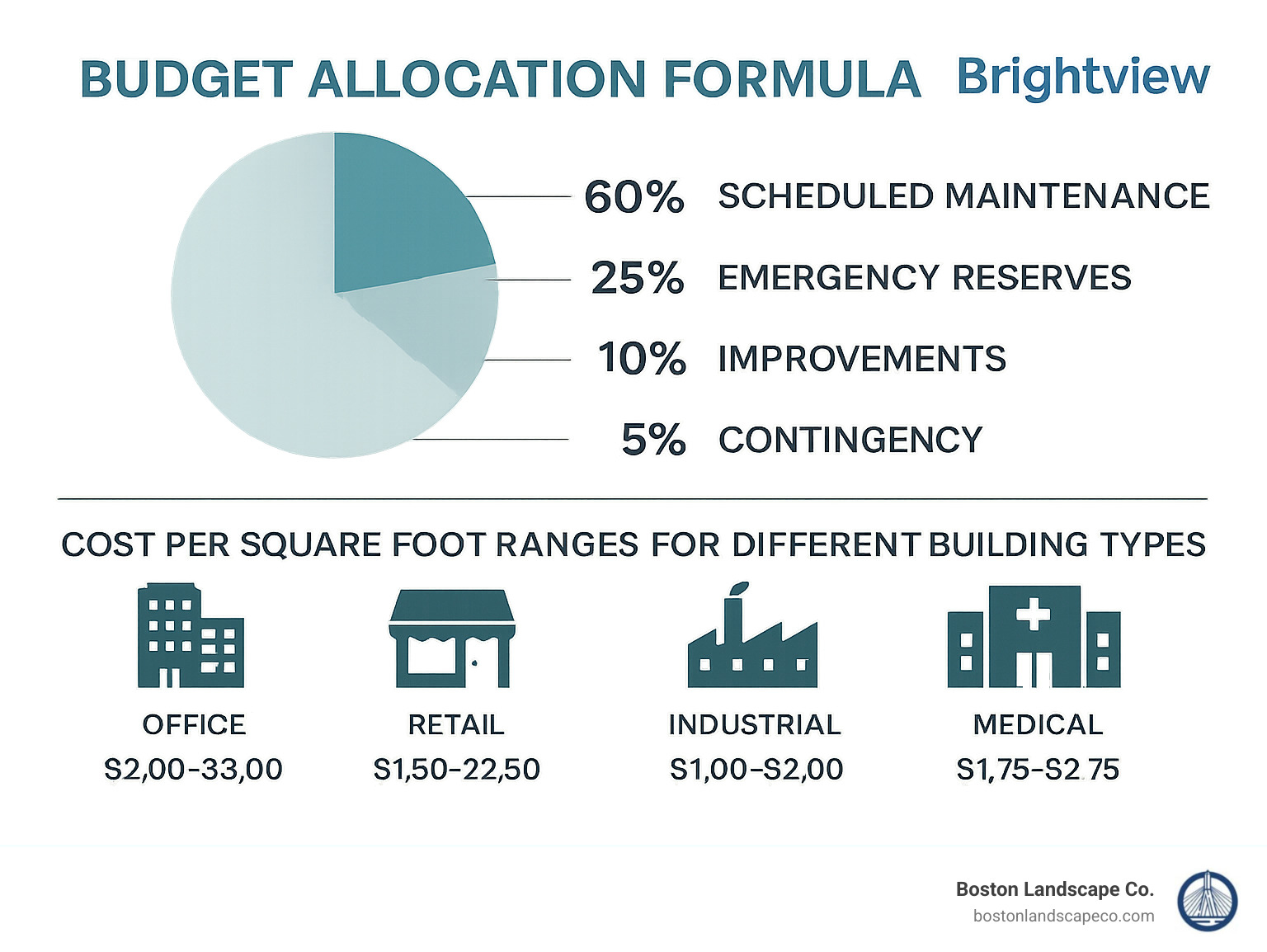
Creating an accurate budget for commercial building maintenance costs can feel overwhelming, but breaking it down into manageable pieces makes the process much simpler. Think of it like planning a family vacation – you need to account for the obvious expenses plus those unexpected detours that always seem to pop up.
The smart property managers I’ve worked with over the years use three proven methods to estimate their maintenance budgets. Each approach offers a different perspective, and using them together gives you the most reliable picture of what you’ll actually spend.
Preventive planning is where the real magic happens. When you schedule regular maintenance instead of waiting for things to break, you’re typically looking at costs that are 60-80% less than emergency repairs. It’s like changing your car’s oil regularly instead of waiting for the engine to seize up – much cheaper in the long run.
Modern software tools and building management systems have revolutionized how we track and predict maintenance needs. These platforms analyze patterns from your maintenance history and help predict when equipment might need attention. It takes the guesswork out of budgeting and helps you spot potential problems before they become expensive headaches.
For property owners who want comprehensive support with their maintenance planning, our Building Maintenance Agency services can help you develop a strategic approach that fits your specific property needs.
Method 1: Square-Foot Benchmarks for Commercial Building Maintenance Costs
The square-foot method is probably the easiest place to start when estimating commercial building maintenance costs. Industry averages show that office buildings typically need about $2.15 per square foot annually for maintenance, while other types of commercial facilities average around $1.63 per square foot.
But here’s where it gets interesting – not all buildings are created equal. Building class makes a huge difference in what you’ll actually spend. Class A buildings with their premium finishes and high tenant expectations typically require $2.50-$8.40 per square foot annually. Class B properties usually fall in the $1.80-$5.40 range, while Class C buildings often manage with $1.00-$3.60 per square foot.
Note: These are average industry costs based on research data, not specific pricing for Boston Landscape Co.
The wide ranges reflect real-world differences in tenant expectations, building age, and service levels. A gleaming downtown office tower requires different maintenance standards than a basic warehouse facility.
Contingency reserves are absolutely critical – I can’t stress this enough. Add 15-25% to your base estimates to cover those unexpected repairs that always seem to happen at the worst possible times. If your building has aging systems or you’re dealing with New England’s harsh weather conditions, consider bumping that contingency percentage even higher.
Method 2: % Replacement Asset Value for Commercial Building Maintenance Costs
The 2-5% Replacement Asset Value (RAV) rule offers a completely different lens for viewing maintenance costs. This method suggests your annual maintenance spending should stay within 2-5% of what it would cost to replace all your building’s systems and components today.
This approach makes intuitive sense – you shouldn’t spend more maintaining something than a reasonable percentage of its replacement cost. Depreciation tracking becomes important here because as your building systems age, their replacement values change, which affects your optimal maintenance spending levels.
The tricky part is separating CAPEX from maintenance costs. Major renovations, complete system replacements, and significant improvements should be classified as capital expenditures rather than maintenance. Mixing these categories will throw off your percentage calculations and make budgeting much harder.
Method 3: Common Area Maintenance (CAM) Calculations
For multi-tenant properties, Common Area Maintenance calculations determine how you’ll split maintenance costs among your tenants. The basic pro-rata share calculation divides each tenant’s leased square footage by the property’s total gross leasable area to determine their percentage of shared expenses.
Different lease types handle CAM charges differently, and understanding these distinctions helps with accurate budgeting. Gross leases typically roll most maintenance costs into the base rent, making budgeting simpler but potentially reducing your flexibility. Net leases pass maintenance costs directly through to tenants via CAM charges, which shifts more budget risk to tenants but requires more detailed tracking and reporting.
CAM audit tips help ensure fair and defensible charges. Always provide detailed expense breakdowns to tenants, verify that charges actually benefit tenant spaces rather than owner-specific areas, exclude personal owner expenses like tax preparation, and double-check your pro-rata calculations. Transparent CAM management builds better tenant relationships and reduces disputes down the road.
Cost-Control & Savings Strategies
Smart property owners know that controlling commercial building maintenance costs isn’t just about cutting expenses – it’s about making strategic investments that reduce long-term costs while improving property value. After three decades in the industry, I’ve seen how the right approach can transform maintenance from a cost center into a competitive advantage.
The most effective cost control strategy starts with preventive maintenance programs. Think of it like regular check-ups with your doctor – catching small issues early prevents expensive emergencies later. Properties with solid preventive programs typically see 20-30% lower total maintenance costs compared to those that only fix things when they break.
Smart technology integration has revolutionized how we approach building maintenance. Modern systems provide real-time monitoring that tells you exactly what’s happening with your equipment before problems develop. Building automation systems often reduce energy costs by 10-20% while making maintenance more efficient and predictable.
Energy efficiency retrofits represent some of the best investments property owners can make. These improvements pay for themselves through reduced utility bills while keeping tenants comfortable and happy. The key is choosing upgrades that deliver both immediate savings and long-term value.
Professional landscaping management plays a bigger role in cost control than many people realize. Well-designed landscapes with appropriate plant selection require less water, fewer chemicals, and reduced maintenance over time. The right approach can actually improve your property’s appearance while lowering costs. For comprehensive solutions that balance beauty with efficiency, check out our Commercial Property Landscape Maintenance services.
Effective subcontractor management through competitive bidding and performance monitoring ensures you get quality service at fair prices. Building relationships with reliable contractors also reduces those expensive emergency service premiums that can blow your budget.
Quick Wins Under 12 Months
LED lighting conversions offer one of the fastest paybacks in building maintenance. These upgrades typically pay for themselves within 2-3 years through reduced energy costs and dramatically lower maintenance requirements. LED bulbs last 10-25 times longer than traditional options, which means fewer service calls and replacement costs.
Occupancy sensors and smart controls automatically adjust lighting, HVAC, and other systems based on actual usage patterns. It’s amazing how much energy gets wasted in empty conference rooms and after-hours common areas. These systems can reduce energy consumption by 15-30% in areas that aren’t constantly occupied.
Water-smart irrigation systems make a huge difference for properties with significant landscaping. Modern controllers use weather data and soil moisture sensors to deliver exactly the right amount of water when plants need it. This typically reduces landscape water consumption by 30-50% while keeping your grounds looking their best.
Programmable thermostats and HVAC scheduling optimize heating and cooling based on when people actually use the space. Smart thermostats can reduce HVAC energy consumption by 10-20% without anyone noticing a difference in comfort levels.
Long-Term Investments
Building automation systems (BMS) represent a more substantial investment but deliver impressive returns over time. These platforms integrate multiple building systems for centralized monitoring and control. While the upfront costs can be significant, most BMS installations reduce operating costs by 15-25% through improved efficiency and predictive maintenance capabilities.
Predictive analytics and IoT sensors take maintenance planning to the next level by monitoring equipment performance to predict failures before they happen. This technology can extend equipment life by 20-30% while eliminating the surprise breakdowns that disrupt operations and blow budgets.
Building envelope upgrades including improved insulation, high-performance windows, and air sealing address the building’s fundamental efficiency. These improvements reduce both energy loads and maintenance requirements while often qualifying for utility rebates and tax incentives that improve the payback timeline.
Renewable energy systems like solar panels offer significant long-term value for properties with appropriate roof space and sun exposure. Many systems pay for themselves within 7-12 years through energy savings and available incentives, while improving the property’s sustainability profile for environmentally conscious tenants.
Frequently Asked Questions about Commercial Building Maintenance Costs
Understanding commercial building maintenance costs can feel overwhelming, especially when you’re trying to balance quality service with budget constraints. After three decades of helping property owners steer these challenges, I’ve heard the same questions countless times. Let me share straightforward answers to the most common concerns.
What is a reasonable annual budget for maintenance?
Here’s the honest truth: there’s no one-size-fits-all answer, but industry data gives us solid guidelines. Most property owners should budget 2-5% of their building’s replacement asset value annually for maintenance, which typically translates to $1.60-$2.80 per square foot for office buildings.
Note: These are average industry costs based on research data, not specific pricing for Boston Landscape Co.
But here’s where it gets interesting – your actual needs depend heavily on your specific situation. Building age plays a huge role in determining your budget. I’ve worked with brand-new facilities that barely touch the lower end of this range, while older properties often need budgets well above the upper range just to stay ahead of problems.
Climate makes a massive difference too. Here in Massachusetts, we deal with brutal freeze-thaw cycles that wreak havoc on building systems. Salt exposure from winter road treatments, ice dam issues, and the constant expansion and contraction of materials mean our maintenance budgets need to account for challenges that Florida property owners never face.
Your building’s class and tenant expectations also drive costs significantly. If you’re managing a Class A office building in downtown Boston, your tenants expect premium maintenance standards that cost considerably more than basic warehouse upkeep. It’s all about matching your service level to your property type and market position.
The preventive versus reactive approach you choose will dramatically impact your total costs. Properties that invest in comprehensive preventive maintenance programs typically spend 20-30% less overall than those constantly fighting fires with emergency repairs.
How are CAM costs calculated in a triple-net lease?
Common Area Maintenance calculations might seem complex, but they follow a straightforward formula once you understand the basics. The key is the pro-rata share method – essentially, each tenant pays their fair percentage based on the space they occupy.
Start with the tenant’s percentage share by dividing their leased square footage by the property’s total leasable area. So if your tenant leases 5,000 square feet in a 50,000 square foot building, they’re responsible for 10% of the CAM costs.
Next, calculate your total qualifying CAM expenses for the year. This includes landscaping and grounds maintenance, parking lot upkeep, snow removal, common area utilities, janitorial services for shared spaces, security, building system maintenance like HVAC and elevators, and typically management fees of 8-15%.
Apply the percentage to get the tenant’s share. That 10% tenant pays 10% of all qualifying CAM expenses – it’s that simple.
But watch out for important exclusions that shouldn’t be passed through to tenants. Capital improvements that don’t directly benefit tenants, your income tax preparation costs, rent collection expenses, and anything that solely benefits you as the property owner should stay off the CAM bill. Keeping these calculations transparent and fair helps maintain positive tenant relationships.
How often should a maintenance budget be reviewed?
Budget reviews need to happen on multiple timelines to stay effective and avoid costly surprises. Think of it like maintaining your car – you check the oil monthly but do major tune-ups annually.
Annual comprehensive reviews should happen in the fourth quarter as you prepare for the following year. This is when you dig deep into actual expenses versus what you budgeted, adjust for inflation, account for aging equipment, and plan for any major changes in service needs.
Quarterly performance checks help catch budget variances before they become serious problems. I recommend focusing on your major expense categories during these reviews – HVAC, landscaping, utilities, and any unexpected costs that popped up. This gives you time to make mid-year corrections if needed.
Monthly expense monitoring keeps you connected to your spending patterns and helps identify trends early. You’re not doing deep analysis every month, just tracking whether you’re on target and watching for any red flags.
Major system reviews every 3-5 years help you plan for equipment replacement and technology upgrades. This longer-term perspective is crucial for avoiding surprise capital expenditures and optimizing your preventive maintenance investments.
Don’t forget annual market rate reviews for all your contracted services. The maintenance industry changes constantly, and you want to ensure you’re getting competitive pricing for landscaping, cleaning, security, and specialized services. Sometimes a simple bid comparison can save thousands without sacrificing quality.
Conclusion
Managing commercial building maintenance costs effectively is like tending a garden—it requires patience, planning, and the right expertise to flourish. After three decades in the Greater Boston area, I’ve seen how smart maintenance strategies can transform a property’s bottom line while keeping tenants happy and systems running smoothly.
The numbers don’t lie: proactive planning consistently outperforms reactive approaches. Properties that budget 2-5% of replacement asset value annually for maintenance and focus on that critical 30-40% of assets driving most costs see remarkable results. We’re talking about 15-25% lower total operating costs and significantly fewer middle-of-the-night emergency calls.
Preventive maintenance isn’t just a buzzword—it’s your financial lifeline. When you catch HVAC issues during quarterly inspections instead of waiting for system failures, you’re not just saving money. You’re protecting your investment, keeping tenants comfortable, and avoiding those dreaded emergency service premiums that can blow budgets apart.
Technology has revolutionized how we approach commercial building maintenance costs. Smart sensors, predictive analytics, and building automation systems aren’t luxury add-ons anymore—they’re essential tools for cost control. These systems help identify problems before they become expensive headaches, optimize energy usage, and extend equipment life by 20-30%.
Here in Massachusetts, we face unique challenges that southern properties never see. Freeze-thaw cycles, salt damage, and snow removal requirements add layers of complexity to maintenance planning. But these challenges also create opportunities for property owners who plan ahead and partner with experienced local professionals.
At Boston Landscape Co., we’ve built our reputation on understanding these regional nuances. Whether it’s implementing water-smart irrigation systems that save thousands annually or developing comprehensive snow management plans that keep properties accessible all winter, we know what works in our New England climate.
The truth about maintenance costs is simple: it’s not about spending less—it’s about spending smarter. LED lighting upgrades, occupancy sensors, and efficient landscaping practices often pay for themselves within months while improving property value and tenant satisfaction.
Our team serves communities throughout the Greater Boston area, from busy Boston neighborhoods to quiet suburban towns like Bedford, Billerica, Burlington, Carlisle, Concord, Lexington, Malden, Medford, Reading, Somerville, Stoneham, Waltham, Wellesley, Winchester, and Woburn. Each location has its own character and challenges, but the principles of smart maintenance remain constant.
Success in commercial property maintenance comes from understanding that every dollar spent on prevention saves multiple dollars in emergency repairs. It comes from recognizing that well-maintained landscapes don’t just look good—they deliver measurable ROI. Most importantly, it comes from partnering with professionals who understand your local market and long-term goals.
Ready to optimize your property’s maintenance strategy? Our comprehensive Commercial Property Landscape Maintenance services are designed to protect your investment while controlling costs. Let’s work together to create a maintenance plan that makes financial sense and keeps your property performing at its best.
