
Commercial Snow Removal Pricing: Top 5 Proven Tips
Commercial snow removal pricing is a crucial consideration for businesses in the Greater Boston area seeking efficient snow and ice management. Since the cost of commercial snow removal pricing varies, understanding the key factors can help you budget effectively. Here are some quick facts:
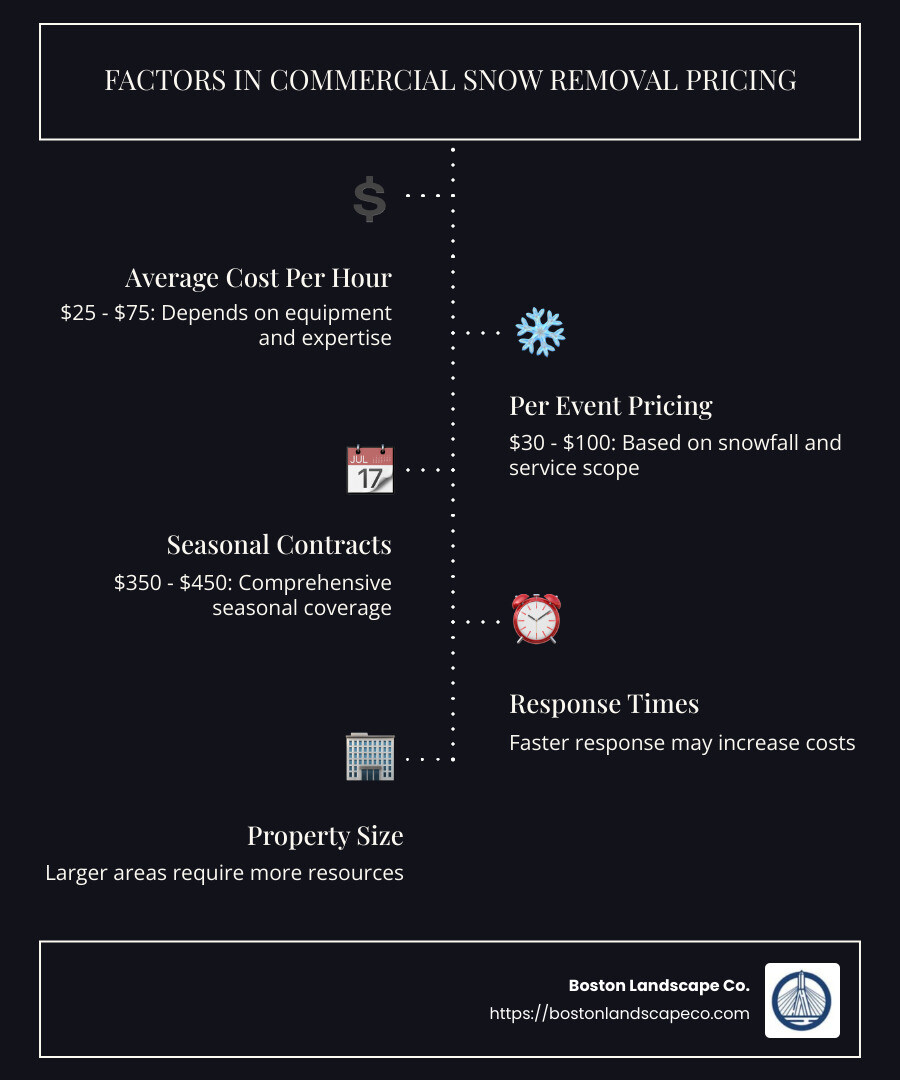
- Average Cost Per Hour: $25 – $75
- Per Event Pricing: $30 – $100
- Seasonal Contracts: $350 – $450
Knowing these ranges helps you plan according to your specific needs.
In Boston, snow management isn’t just about business continuity—it’s a safety imperative. Prompt snow removal minimizes accidents, complies with local regulations, and protects property. Snow buildup can damage infrastructure and tarnish reputations if neglected. With proper planning, these risks can be mitigated effectively and at a manageable cost.
I’m Steve Schumacher, owner of Boston Landscape Co., with over 30 years of experience in landscaping and snow management. Through our expertise in snow removal, we ensure that businesses in the area handle snow-related challenges efficiently, keeping their property safe and accessible. Now, let’s dig into the details of how commercial snow removal pricing works.
Commercial snow removal pricing vocab explained:
– commercial snow plowing
– commercial snow plowing contracts
– commercial snow removal services
Understanding Commercial Snow Removal Pricing
When it comes to commercial snow removal pricing, several key factors come into play. Understanding these elements can help businesses make informed decisions and avoid unexpected costs.
Pricing Factors
1. Overhead Costs:
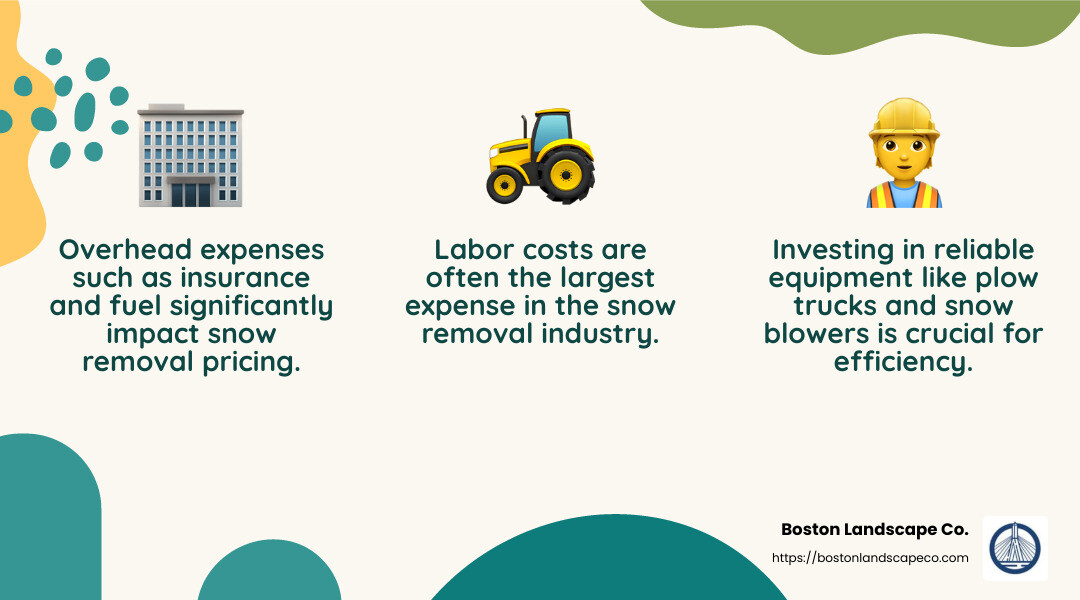
Every snow removal business has overhead expenses that affect pricing. These include insurance, employee wages, fuel, and business operations. For instance, insurance is crucial to cover any potential liabilities during snow removal operations. Employee wages need to be competitive to attract skilled workers, and fuel costs fluctuate, impacting the overall cost structure.
2. Equipment Costs:
Snow removal requires specialized equipment like plow trucks, snow blowers, and salt spreaders. Maintenance, fuel, and depreciation of this equipment are significant factors in pricing. Investing in reliable machinery ensures efficiency but comes with a cost that must be factored into service pricing.
3. Labor Costs:
Labor is often the most substantial expense in snow removal. The duration and intensity of snow events directly affect labor costs. For example, if a job requires two workers for two hours at a $20 hourly rate, the labor cost is $80. However, this is just one component of the overall pricing.
Equipment and Technology
Modern snow removal companies leverage technology to streamline operations and improve accuracy. Tools like GPS mapping and weather monitoring systems help in estimating plowable square footage and anticipating snow events. This technological edge not only improves efficiency but also supports precise and competitive pricing.
The Importance of Market Research
Understanding the local market is crucial. Prices vary based on location and community wealth. Wealthier areas might be willing to pay a premium, while less affluent regions may require more competitive pricing. Checking what other businesses charge can provide a benchmark and help in setting strategic rates.
Real-World Examples
In Massachusetts, the cost of snow removal can range significantly. For instance, clearing a large commercial parking lot might cost between $350 and $450 for a seasonal contract, depending on the factors mentioned above. These contracts offer predictability in budgeting, especially in areas prone to heavy snowfall.
By understanding these elements, businesses can better steer the complexities of commercial snow removal pricing, ensuring they receive quality service at a fair price. Next, we’ll explore different pricing models that can be custom to your specific needs.
Pricing Models for Commercial Snow Removal
Choosing the right pricing model for commercial snow removal is crucial. It ensures you get the best value while meeting your business needs. Let’s explore the most common pricing models:
Per Hour
Charging per hour is straightforward and flexible. This model works well for properties with unpredictable snow conditions. The cost depends on the number of workers and the time they spend on the job. For example, if two workers charge $100 per hour and take four hours, the total cost would be $800.
Per Event
In areas with sporadic snowfall, per event pricing might be ideal. You pay a flat rate for each snowstorm or significant snowfall. This model eliminates the need for detailed calculations based on time or snow depth. It’s simple: one storm, one price.
Per Season
Seasonal contracts are like a subscription for snow removal. You pay a fixed amount for the entire winter, regardless of how many snow events occur. This model provides budget predictability and is popular in regions with heavy snowfall. For example, a seasonal contract for a large parking lot might start at $20,000.
Per Inch
Some companies charge based on the amount of snow, measured in inches. This model is easy to understand: more snow means higher costs. It’s common to have tiered pricing, such as one rate for 1-3 inches and another for 3-6 inches. Anything over 6 inches might be charged hourly.
Multi-Season Contracts
For businesses looking for long-term solutions, multi-season contracts offer stability. These agreements lock in pricing for several years, protecting against inflation and price hikes. They often come with discounts compared to single-season contracts.
Each pricing model has its pros and cons. The right choice depends on your business’s specific needs, snowfall patterns, and budget preferences. Next, we’ll look at the factors influencing these costs to help you make an informed decision.
Factors Influencing Snow Removal Costs
When it comes to commercial snow removal pricing, several key factors come into play. Understanding these can help businesses anticipate costs and make informed decisions.
Snow Depth
The depth of the snow is a major factor in determining removal costs. More snow means more time and resources to clear it. Pricing models like “per inch” directly reflect this, with costs increasing as snow depth rises. For instance, clearing 1-3 inches might be priced lower than 4-6 inches due to the extra effort required.
Property Size
The size of the property directly impacts the cost. Larger areas, like expansive parking lots, require more time and equipment to clear. This means higher costs compared to smaller properties. Accurately estimating the plowable square footage using tools like GPS mapping can lead to more precise pricing.
Location
Where your property is located can also affect pricing. Urban areas might have higher costs due to increased demand and logistical challenges. Conversely, rural areas could see increased costs due to travel time and accessibility issues. Additionally, local weather patterns play a role; areas with frequent snowfalls might benefit from seasonal contracts for cost efficiency.
Equipment Used
Different equipment comes with varying costs. For example, using a snow blower might be cheaper than deploying a large plow truck. Equipment maintenance, fuel, and depreciation add to the overall expense. It’s essential to choose the right tools for the job to balance efficiency and cost.
Response Time
How quickly you need the snow removed can also influence pricing. Faster response times often come at a premium. This is especially true during peak snow events when demand for services is high. Planning ahead and securing contracts before the snow season can help manage these costs.
Understanding these factors can help businesses better steer the complexities of commercial snow removal pricing. By considering snow depth, property size, location, equipment, and response time, companies can tailor their snow removal strategy to fit their budget and operational needs.
Tips for Effective Snow Removal Pricing
In commercial snow removal pricing, getting your pricing strategy right can mean the difference between profit and loss. Here are some tips to ensure your pricing is both competitive and profitable.
Market Research
Understanding your market is crucial. Research what other companies in your area are charging for similar services. This will help you set competitive prices without underselling your services. You can gather this information through online research, customer feedback, and networking with industry peers.
Estimating Job Length
Accurately estimating how long a job will take is essential. Consider factors like snow depth, property size, and equipment needed. For example, clearing a large commercial parking lot will take more time than a small residential driveway. Use past job data to refine your estimates and ensure you’re charging appropriately for the time spent.
Digital Marketing
Your first interaction with potential clients often happens online. Make sure your digital presence is strong. Set up a professional website showcasing your services and expertise. Use social media to engage with your community and advertise special deals or seasonal contracts. Don’t forget to optimize your Google Business page with up-to-date contact information and customer reviews. This makes it easy for clients to find and contact you.
Customer Engagement
Building strong relationships with your customers can lead to repeat business and referrals. Communicate clearly about your pricing models and what they include. Consider offering loyalty discounts or multi-season contracts to encourage long-term partnerships. Engage with customers through newsletters or follow-up calls to ensure satisfaction and address any concerns.
By focusing on these areas, you can develop a pricing strategy that not only covers your costs but also improves your business reputation and customer satisfaction.
Frequently Asked Questions about Commercial Snow Removal Pricing
How do you calculate commercial snow plowing?
Calculating the cost of commercial snow plowing involves several key pieces of information. First, gather detailed business information about the client, including the property address and any specific customer information that might affect the job, like special access requirements or operational hours.
Next, assess the scope of services required. This includes understanding the size of the area to be cleared, the type of snow removal needed (plowing, shoveling, de-icing), and any special conditions such as obstacles or uneven terrain.
Consider the terms of agreement, which should clearly outline the responsibilities of both parties. This includes payment terms, whether they are per visit, per hour, or a seasonal contract. For example, pricing might vary significantly if the job requires additional services like de-icing or snow relocation.
What should a snow removal contract include?
A well-structured snow removal contract is crucial for setting clear expectations. It should start with the terms of agreement, detailing the responsibilities of both the service provider and the client. This includes the exact scope of services to be performed, such as plowing, de-icing, or sidewalk clearing.
Payment terms should be clearly defined, specifying whether charges are calculated per event, per hour, or as part of a multi-season contract. Additionally, the contract should include any penalties for late payments or cancellations.
Include any special conditions, like response time requirements for emergency services, and ensure there is a clause covering liability and insurance to protect both parties.
How much does snow removal cost in Massachusetts?
Commercial snow removal pricing in Massachusetts can vary based on several factors, including the size of the property, the complexity of the job, and the frequency of service required. On average, businesses might expect to pay:
- $50-$150 per hour for clearing commercial parking lots.
- $90-$160 per hour for additional snow removal in complex areas with obstacles.
- $900 per snowfall for larger properties with difficult terrain, such as a 50,000 square-foot area.
For residential services, prices can range from $30-$75 per visit for driveway and sidewalk clearing. That these are average costs and can fluctuate based on specific service requirements and location within Massachusetts.
By understanding these costs and factors, businesses can better plan their snow removal budgets and ensure they receive the services they need to maintain safe and accessible properties.
Conclusion
At Boston Landscape Co., we pride ourselves on offering comprehensive snow management services that are custom to meet the unique needs of each client. Our expertise in both residential and commercial landscaping, coupled with our commitment to safety and efficiency, ensures that your property remains accessible and secure throughout the winter months.
Our approach to commercial snow removal pricing is built on transparency and flexibility. We understand that each property presents its own challenges, from varying snow depths to complex terrains. That’s why we offer custom solutions that are designed to fit your specific requirements, ensuring you get the best value for your investment.
Our team is equipped with state-of-the-art technology and a fleet of modern snow removal equipment, allowing us to handle everything from small sidewalks to expansive commercial lots. With our 24/7 monitoring and rapid response capabilities, we ensure that your tenants, customers, and employees can steer your property safely, no matter the weather conditions.
Whether you’re looking for a one-time service or a long-term contract, Boston Landscape Co. is here to provide reliable and efficient snow removal solutions. Our dedication to customer satisfaction and our deep understanding of the local climate make us the ideal partner for your snow management needs.
Learn more about our services and how we can help you maintain a safe and functional property by visiting our Commercial Snow Removal page. Let’s work together to keep your property clear and accessible all winter long.
