
Biological Control Invasive Species: Top 3 Effective Ways
Biological control invasive species is a powerful approach to managing unwanted plants and pests using natural methods. This strategy involves using nature’s own defenses—like insects, mites, or pathogens—to keep invasive populations in check. It is environmentally friendly, cost-effective, and sustainable, reducing the need for chemicals and lessening environmental impact.
Here’s a quick look at the key benefits of biological control invasive species:
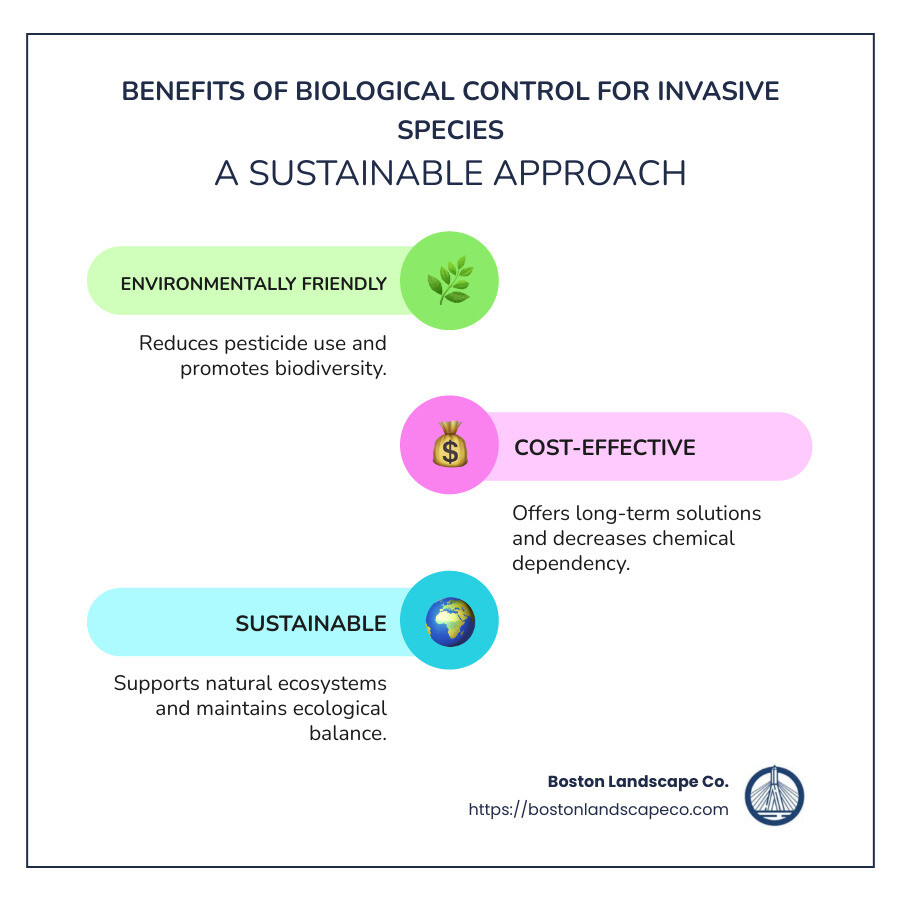
- Environmentally Friendly: Reduces pesticide use and promotes biodiversity.
- Cost-Effective: Offers long-term solutions and reduces reliance on expensive chemical treatments.
- Sustainable: Supports natural ecosystems and maintains ecological balance.
I’m Steve Schumacher, owner-operator of Boston Landscape Co. With over 30 years in the landscaping industry, my focus has been on practical, eco-friendly solutions like biological control invasive species. From my extensive experience, I help homeowners and property managers in Boston create outdoor spaces that thrive naturally.
Biological control invasive species vocab explained:
markdown

- [Wetland Landscaping Services](https://bostonlandscapeco.com/wetland-landscaping-services/)

- [allowable wetlands landscaping](https://bostonlandscapeco.com/allowable-wetlands-landscaping/)

- [constructed wetlands in the sustainable landscape](https://bostonlandscapeco.com/constructed-wetlands-in-the-sustainable-landscape/)
What is Biological Control?
Biological control is a method of managing invasive species by using their natural enemies—often referred to as biocontrol agents. These agents include a variety of organisms like insects, mites, pathogens, and herbivores. The goal is to control the pest populations naturally, without relying on chemical interventions.
Types of Biological Control Agents
Biocontrol agents are diverse and can be categorized into several types:
- Insects: Beetles, flies, and moths are commonly used. They target specific parts of the plant, like leaves or roots, to suppress growth.
- Mites: These tiny organisms can help manage pest populations by feeding on them or competing for resources.
- Pathogens: Fungi, bacteria, and viruses can infect and weaken invasive plants, making them less competitive.
- Herbivores: Larger animals, like certain fish or mammals, can be used to graze on invasive plants, reducing their spread.
History and Effectiveness
Biological control has been around for over 100 years and has proven to be an effective strategy in various successful programs. One notable example is the control of alligator weed (Alternanthera philoxeroides) in Florida. In the 1960s, three South American insects were introduced to manage this invasive plant, which was affecting over 80% of Florida’s public waters. These insects collectively stressed the weed in different ways, leading to a significant reduction in its impact. Today, alligator weed is still present but at manageable levels, demonstrating the long-term effectiveness of classical biological control.
Classical biological control involves the introduction of non-native natural enemies to establish a permanent population that provides long-term control. This method has been successful in numerous cases, including the management of pests like the hemlock woolly adelgid and mile-a-minute weed.
Biological control is not just about eradicating the invasive species but rather bringing their populations down to a manageable level. This approach supports long-term management and helps maintain ecological balance. By reducing the reliance on chemical treatments, biological control promotes a healthier environment and protects native species.
In summary, biological control is a sustainable and effective way to manage invasive species through the intentional use of natural enemies. This approach has a rich history of success and continues to evolve with new research and technologies.
Benefits of Biological Control for Invasive Species
When it comes to tackling invasive species, biological control offers a host of advantages that make it an appealing choice for environmental management. Let’s explore the environmental and economic benefits of this approach.
Environmental Benefits
Environmentally Friendly and Sustainable
Biological control is a green solution. By using natural enemies to manage pest populations, we reduce the need for chemical pesticides. This not only minimizes chemical runoff into waterways but also lessens the impact on non-target species. It’s a win for the ecosystem, promoting a healthier and more balanced environment.
Promotes Biodiversity and Protects Native Species
Invasive species often outcompete native plants and animals, leading to reduced biodiversity. By controlling these invaders, biological control helps protect native species and supports diverse ecosystems. This method ensures that native plants and animals have a fighting chance to thrive in their natural habitats.
Reduces Pesticide Use
Biological control drastically cuts down on pesticide reliance. This is crucial because excessive pesticide use can harm beneficial insects, like pollinators, and disrupt food chains. By minimizing chemical interventions, biological control keeps ecosystems intact and functioning smoothly.
Economic Benefits
Cost-Effective and Long-Term Solutions
Biological control is not just good for the environment; it’s also budget-friendly. Once established, biocontrol agents can provide ongoing pest management without the recurring costs associated with chemical treatments. This makes it a cost-effective solution, particularly for large-scale infestations.
Reduces Crop Damage
In agriculture, invasive species can wreak havoc on crops, leading to significant losses. By reducing pest populations, biological control helps protect crops, ensuring better yields and reducing the need for costly interventions. This translates into savings for farmers and more stable food supplies.
Cost Savings
The initial investment in biological control can lead to substantial savings over time. With reduced reliance on pesticides and less crop damage, the overall costs of managing invasive species drop. This allows resources to be allocated to other vital areas, enhancing economic resilience.
Biological control offers a sustainable, eco-friendly, and economically sound approach to managing invasive species. By reducing chemical use and promoting biodiversity, it not only protects our environment but also supports long-term economic stability.
Biological Control Methods for Invasive Species
Biological control is a fascinating field that revolves around the intentional manipulation of natural enemies to manage invasive species. By integrating various strategies, we can effectively control pests while maintaining ecological balance. Let’s explore the different methods used in biological control.
Classical Biological Control
Classical Biological Control involves introducing non-native natural enemies to control invasive species. This method relies on the permanent establishment of these natural enemies in the environment, providing long-term control. A classic example is the successful management of alligator weed in Florida, where three South American insects were released to combat this invasive plant. Over time, these insects have kept the alligator weed at low levels, reducing the need for additional control measures.
This approach requires extensive research and testing to ensure that the introduced species will not harm native ecosystems. However, when successful, it offers a sustainable solution that can last for generations.
Augmentative Biological Control
Augmentative Biological Control focuses on the periodic release of natural enemies to boost their populations temporarily. This method is ideal for achieving short-term control in areas where the natural enemy population is insufficient to manage the pest effectively.
A notable example is the use of male mosquitoes carrying the Wolbachia bacterium to control the Asian Tiger Mosquito population. By periodically releasing these modified males, the pest’s ability to reproduce is significantly reduced, leading to a decrease in their numbers.
This strategy is particularly useful in regions where climatic conditions prevent the permanent establishment of natural enemies.
Conservation Biological Control
Conservation Biological Control emphasizes enhancing habitats to support and bolster populations of natural enemies already present in the environment. This method involves ecosystem management, creating conditions that allow beneficial organisms to thrive and naturally keep invasive species in check.
For instance, practices like planting cover crops and maintaining hedgerows can provide shelter and food for predators and parasitoids, increasing their effectiveness in controlling pests. By supporting these natural allies, we can achieve a balanced ecosystem with minimal intervention.
Incorporating these biological control methods into integrated pest management (IPM) strategies allows us to tackle invasive species more effectively. By using a combination of classical, augmentative, and conservation techniques, we can maintain pest populations at manageable levels without relying heavily on chemical controls. This not only preserves the environment but also ensures a sustainable approach to pest management.

Next, let’s dig into some examples of biological control programs that have achieved remarkable success in managing invasive species.
Examples of Biological Control Programs
Biological control programs have shown great promise in managing invasive species worldwide. Let’s look at some successful case studies and ongoing projects that highlight the effectiveness of these strategies.
Successful Case Studies
One standout organization in the field of biological control is CABI. With over 60 years of experience, CABI has been instrumental in developing biological control agents for invasive weeds. Their work has significantly contributed to controlling invasive species like leafy spurge and purple loosestrife in North America. One of their notable successes is the release of the weevil Bagous nodulosus to combat flowering rush, approved by the Canadian Food Inspection Agency in 2022.
The USDA APHIS (Animal and Plant Health Inspection Service) has also been crucial in biological control efforts. They have approved the release of various agents, such as the seed-feeding weevil Mogulones borraginis against houndstongue, to manage invasive plants in the United States.
Another remarkable program is the work done by the Forest Health Assessment and Applied Sciences Team (FHAAST-BC). They have implemented biological control measures against the hemlock woolly adelgid, a pest threatening hemlock trees. This program has helped preserve valuable forest ecosystems.
Ongoing Projects
Several ongoing projects continue to explore innovative solutions for managing invasive species. CABI is actively investigating potential biocontrol agents for around 20 invasive plants, focusing on regions like the US, Canada, Australia, and South Africa.
Among these projects is the effort to control Russian olive using the gall-forming mite Aceria angustifoliae. This approach aims to reduce the density of this invasive tree, which negatively impacts native plant communities.
Another ongoing initiative involves the control of garlic mustard in Canada. In 2018, the root-crown mining weevil Ceutorhynchus scrobicollis was released near Ottawa, with initial signs of establishment observed in 2022. This project marks a global first for biocontrol in the mustard family.
Additionally, the USDA APHIS is working on managing the mile-a-minute weed and the emerald ash borer, two invasive species causing significant ecological and economic damage. These efforts demonstrate the potential of biological control to provide long-term, sustainable solutions.
By leveraging the expertise of organizations like CABI, USDA APHIS, and FHAAST-BC, biological control programs continue to evolve and expand, offering hope for managing invasive species more effectively.
Next, let’s explore the challenges and considerations involved in implementing biological control methods.
Challenges and Considerations
Implementing biological control methods for invasive species is not without its challenges. While these methods offer promising solutions, they require careful consideration and extensive testing to ensure environmental safety and effectiveness.
Regulatory and Safety Measures
Before any biological control agent is released, it must undergo rigorous testing and approval processes. This includes host range tests to determine if the agent will target only the invasive species and not harm other organisms. These tests are crucial to avoid unintended consequences on native species and ecosystems.
Furthermore, environmental impact assessments are conducted to evaluate the potential effects of introducing a new organism into an ecosystem. These assessments help in identifying any possible risks and in ensuring that the biological control agent will not disrupt the ecosystem balance.
Approval processes for the release of biocontrol agents can be lengthy and complex, involving multiple regulatory bodies. For instance, the USDA APHIS plays a critical role in approving and monitoring the release of biological control agents in the United States to ensure they meet all safety standards.
Potential Risks and Mitigation
Despite the extensive testing, there are always potential risks associated with biological control. One of the main concerns is the possibility of non-target effects, where the control agent might affect species other than the intended invasive target. This could lead to imbalances in the ecosystem and unintended ecological consequences.
To mitigate these risks, continuous monitoring and evaluation are essential. This involves tracking the impact of the biocontrol agents on both the invasive species and the surrounding environment. By doing so, any negative effects can be identified early, and corrective measures can be taken promptly.
Another consideration is maintaining the ecosystem balance. Introducing a new species, even for control purposes, can alter existing relationships within an ecosystem. Therefore, it is vital to ensure that the benefits of the biological control agent outweigh any potential disruptions.
In conclusion, while biological control offers a sustainable and cost-effective solution for managing invasive species, it requires careful planning, testing, and monitoring to address potential risks and ensure environmental safety.
Next, we’ll explore some frequently asked questions about biological control of invasive species.
Frequently Asked Questions about Biological Control of Invasive Species
What is biological control and how does it work?
Biological control is a method that uses natural enemies, like insects or pathogens, to manage invasive species. Instead of relying on chemicals, this approach introduces these natural enemies to control the pest population. The idea is to restore balance by allowing nature to do the work.
For example, to control the invasive alligator weed in Florida, three South American insects were released. These insects helped reduce the weed’s presence in over 80% of Florida’s waters, showing how effective biological control can be.
How long does it take for biological control to be effective?
The time it takes for biological control to show results can vary. It depends on factors like the type of invasive species, the environment, and the biological control agent used.
Classical biological control, which involves introducing permanent natural enemies, may take longer but offers long-term solutions. For instance, it took several years for the insects released to control alligator weed to establish and show significant impact.
In contrast, augmentative biological control, which involves periodic release of natural enemies, may provide quicker, short-term results.
Are there any risks associated with biological control?
Yes, there are potential risks. One concern is non-target effects, where the control agent might harm other species besides the invasive one. This is why extensive testing and monitoring are crucial.
Another risk is disrupting the ecosystem balance. Introducing a new species, even as a control agent, can change existing relationships within an ecosystem. For this reason, environmental impact assessments and host range tests are conducted to minimize these risks.
Despite these challenges, when done carefully, biological control is a safe and effective way to manage invasive species. It reduces the need for chemical controls and promotes biodiversity, making it an environmentally friendly choice.
Conclusion
At Boston Landscape Co., we believe in creating beautiful and sustainable outdoor spaces. Our integrated approach to landscaping combines the best practices in environmental stewardship and innovative design. We focus on enhancing outdoor areas while being mindful of the ecosystem.
One of the ways we achieve this is by incorporating biological control methods in our landscaping projects. This approach not only helps manage invasive species but also reduces the reliance on chemical treatments. By using natural enemies to control pests, we promote biodiversity and protect native species.
Sustainable landscaping is at the heart of what we do. It means choosing the right plants, like native species that are adapted to the local environment. These plants require less water and maintenance, supporting local wildlife and ecosystems. Our team is skilled in selecting and installing these plants to create thriving landscapes that are both beautiful and functional.
Enhancing outdoor spaces is about more than just aesthetics. It’s about creating environments that are healthy and sustainable for both people and nature. Whether it’s a residential garden or a commercial property, we tailor our services to meet the unique needs of each client.
We invite you to explore our Wetland Landscaping Services to see how we can transform your outdoor space into a sustainable oasis. Together, let’s craft a landscape that not only looks stunning but also contributes to a healthier planet.
