Commercial Landscape Maintenance Pricing: Top 3 Benefits

When examining commercial landscape maintenance pricing, it’s crucial to understand that every property is unique, and costs can vary widely based on several factors. Quick insights include:
- Location: Will impact labor and material costs.
- Property Size: Larger properties generally incur higher maintenance costs.
- Frequency of Maintenance: Regular upkeep can prevent more costly issues down the road.
- Complexity and Customization: Specialized designs usually cost more.
- Climate Influences: Weather variations, such as those in Boston, can dictate season-specific needs.
Commercial landscape maintenance plays an essential role in enhancing the aesthetic appeal, improving the functionality, and ensuring the safety of green spaces. For businesses in Boston, a well-maintained landscape is more than just a visual asset—it’s a competitive advantage. Not only can it attract more customers and clients, but it also aligns with sustainable urban initiatives, promoting cleaner air and efficient stormwater management. Engaging the right services can transform your property into a vibrant, functional oasis, boosting both its value and your company’s image.
I’m Steve Schumacher, with over three decades of experience in the landscaping industry, guiding businesses in understanding the intricacies of commercial landscape maintenance pricing. With my expertise, you can ensure your property remains both visually appealing and eco-friendly year-round.
What is Commercial Landscape Maintenance?
Commercial landscape maintenance is a comprehensive service that ensures the outdoor spaces of businesses are well-kept, functional, and attractive. It goes beyond simple mowing and includes a variety of services custom to meet the specific needs of commercial properties.
Definition
At its core, commercial landscape maintenance involves the regular care and upkeep of outdoor areas surrounding business properties. This includes everything from routine lawn care to more specialized services like pest management and water management. The goal is to create a welcoming and professional environment that reflects positively on the business.
Services
The scope of commercial landscape maintenance is broad, encompassing several key services:
- Lawn Care: Regular mowing, edging, and fertilization to keep grass healthy and tidy.
- Tree and Shrub Care: Pruning, trimming, and health assessments to ensure trees and shrubs are safe and aesthetically pleasing.
- Pest Management: Integrated pest management (IPM) techniques to control pests without harming the environment.
- Seasonal Services: Snow and ice management during winter, and planting or mulching in spring and fall.
Scope
The scope of commercial landscape maintenance can vary significantly depending on the property’s needs. It covers everything from basic upkeep to complex landscape design and construction projects. Here’s a look at the typical scope:
- Regular Maintenance: Includes routine tasks like mowing, trimming, and cleanup.
- Design and Installation: Creating new landscape features or redesigning existing ones.
- Environmental Management: Implementing sustainable practices like efficient irrigation systems and water conservation techniques.

By investing in professional commercial landscape maintenance, businesses can improve their property’s curb appeal, improve safety, and even contribute to environmental sustainability. A well-maintained landscape not only attracts more visitors but also reflects the company’s commitment to quality and care.
Factors Influencing Commercial Landscape Maintenance Pricing
Understanding the commercial landscape maintenance pricing involves looking at several key factors. Each factor can significantly affect the overall cost, and knowing these can help businesses make informed decisions.
Project Size
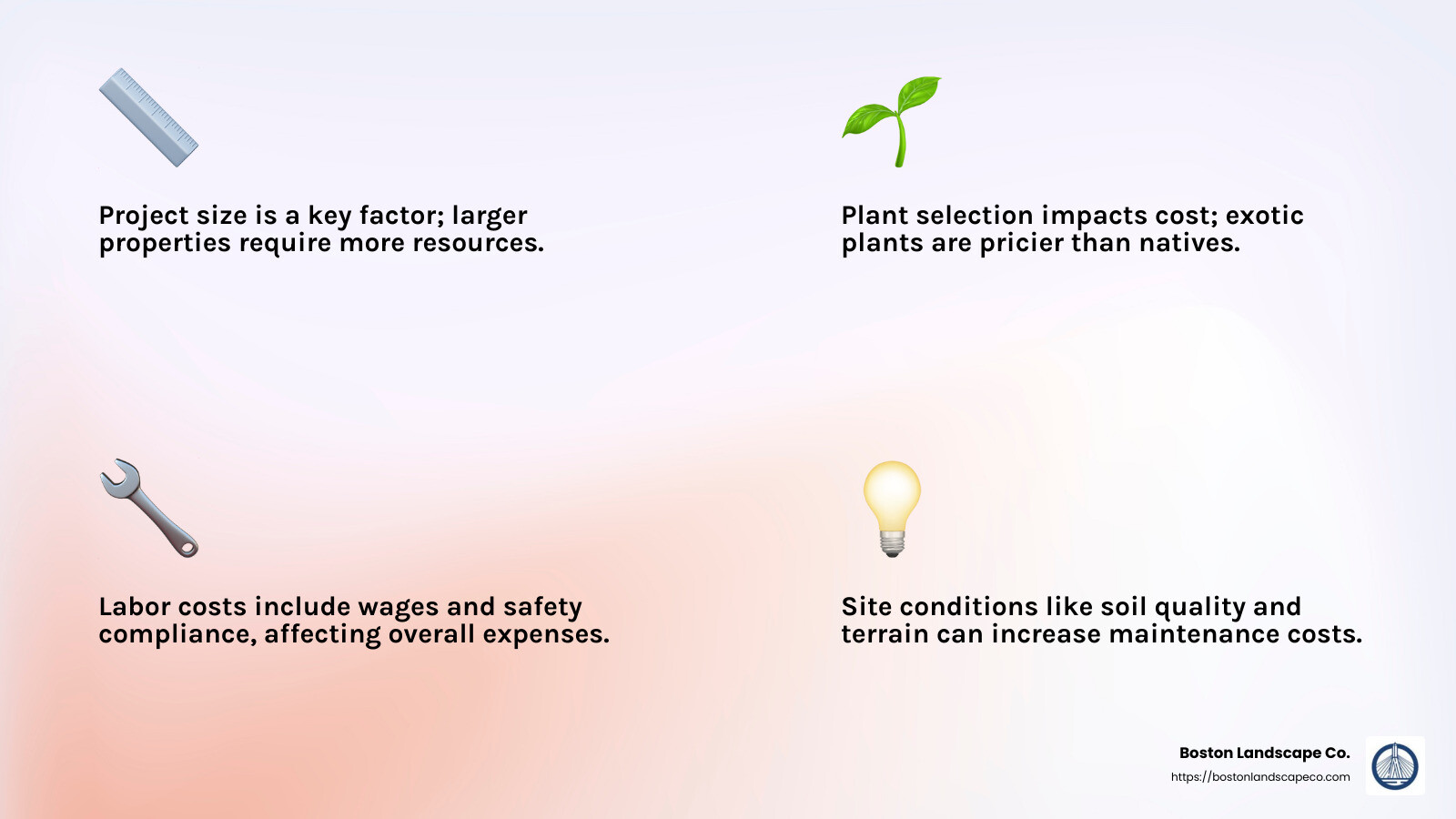
The size of the property is one of the most significant factors in determining cost. Larger areas require more time and resources for maintenance. For example, a one-acre site might take about an hour to complete, with rates around $85 per hour in some regions.
Site Conditions
Site-specific conditions can also impact pricing. Factors such as soil quality, existing vegetation, drainage issues, and terrain slope may require additional work or specialized equipment, increasing costs. Properties with challenging conditions might need more frequent or specialized care.
Plant Selection
The types of plants used in landscaping can vary in cost based on their species, size, and maturity. Exotic or rare plants tend to be more expensive. In contrast, native plants are often more affordable and require less maintenance, reducing long-term costs.
Materials
Materials such as mulch, paving stones, and turf also contribute to the cost. High-quality materials, like natural stone, will typically have a higher price tag. Additionally, shipping costs for non-local materials can increase expenses.
Labor Costs
Labor is a significant component of landscape maintenance costs. Experienced, well-trained teams command higher wages but often deliver superior results. Labor costs also include compliance with safety standards and legal employment practices, which can add to the overall expense.
Equipment
The use of specialized equipment can also affect pricing. Tasks such as excavation or the installation of hardscape features may require machinery like excavators or dump trucks, which add to the cost. Regular maintenance might only need basic tools, keeping costs lower.
Overhead Costs
Finally, overhead costs such as insurance, licenses, and business operations expenses are factored into pricing. Companies with higher overhead may charge more to cover these costs. However, they often provide more reliable and comprehensive services.
By understanding these factors, businesses can better assess the costs associated with maintaining their commercial landscapes and choose a provider that aligns with their budget and needs.
This understanding helps in making informed decisions when selecting a landscaping service, ensuring that the investment improves the property’s value and appeal.
Cost Breakdown by Service Type
When considering commercial landscape maintenance pricing, it’s crucial to understand the costs associated with different services. Here’s a breakdown of the typical services and their average costs.
Commercial Lawn Maintenance
Lawn maintenance is a fundamental service ensuring your property looks neat and inviting. This includes:
- Mowing: Essential for keeping grass at an optimal height. Costs range from $50 to $100 per visit, depending on frequency and property size.
- Edging and Pruning: These tasks keep borders tidy and plants healthy. Expect to pay around $300 to $800 for more extensive pruning services.
- Mulching: Mulching helps retain soil moisture and suppress weeds. The cost depends on the type of mulch used, with basic hardwood being more affordable than premium options.
Landscape Design and Installation
Creating a beautiful landscape involves thoughtful design and skilled installation:
- Design: Collaborating with a professional designer can transform your vision into reality. Design costs usually range from $4,500 to $20,000, influenced by project complexity.
- Installation: This includes planting, constructing pathways, and installing features. Costs vary widely based on the materials and scale of the project.
Integrated Pest Management
Keeping your landscape pest-free is vital for its health and longevity:
- IPM and Pest Control: Employing eco-friendly techniques to manage pests, costs range from $200 to $500. This approach minimizes pesticide use while effectively controlling infestations.
Tree and Shrub Care
Trees and shrubs add shade and beauty but require regular care:
- Trimming and Pruning: Regular maintenance prevents hazards and promotes growth. Average costs are $300 to $800 per tree or shrub.
- Fertilization: Ensures trees and shrubs receive the nutrients they need to thrive.
Additional Services
Enhancing your landscape’s health and appearance might involve several additional services:
- Aeration: Improves soil health by allowing air and nutrients to reach roots. Costs range from $100 to $350.
- Dethatching: Removes thick layers of dead grass to promote growth. This service can cost between $400 and $1,000.
- Fertilizing and Weed Control: Keeping your lawn lush and weed-free, these services range from $150 to $400 for fertilizing and $50 to $200 per weed treatment.
By understanding the costs associated with each service type, you can better plan your budget and select the right combination of services to maintain and improve your commercial landscape.
Pricing Models and Estimates
When it comes to commercial landscape maintenance pricing, understanding the various pricing models can help you make informed decisions. Let’s break down the common models used in the industry:
Per Square Foot
This model is straightforward and often used for larger properties. Prices typically range from $1 to $5 per square foot, which includes installation and maintenance of landscaping materials. The exact cost can vary based on the complexity of the project and materials used.
Per Hour
Hourly rates are common for services like lawn mowing or general maintenance. The national average is about $25 per hour, but this can fluctuate depending on regional labor costs and the scope of work. For example, in Peoria, commercial lawn maintenance is billed at $85 per hour.
Per Project
For comprehensive projects like landscape design and installation, a per-project pricing model is used. This approach considers all aspects of the project, including design, materials, and labor. Costs can vary widely, often ranging from $4,500 to $20,000 depending on complexity and scale.
Seasonal Contracts
Opting for a seasonal contract can offer financial benefits. These agreements typically include a set of services throughout a season at a discounted rate. For instance, some companies offer a 10% discount for seasonal contracts, providing a cost-effective way to maintain your landscape year-round.
Discounts
Discounts are often available for bundling services or for regular clients. Group maintenance with neighboring businesses can also lead to reduced rates. Keep an eye out for seasonal deals or loyalty discounts that can further lower your costs.
By understanding these pricing models, you can choose the one that best fits your needs and budget. Consider the size of your property, the services required, and any potential savings from seasonal contracts or bundled services.
How to Create a Lawn Care Bid
Creating a precise and professional lawn care bid is crucial for winning contracts and ensuring profitability. Here’s a simple guide to help you craft an effective bid.
Essential Details
- Business and Customer Information
Start by including your business address and contact details at the top of the bid. This not only looks professional but also makes it easy for the client to reach you.
Below your information, include the customer’s address. This helps in identifying the job location and ensures there’s no confusion about where the services will be provided.
- Bid Number and Date
Assign a unique bid number to each proposal. This helps in tracking and referencing the bid in future communications.
Include the date of the bid. This is important for both record-keeping and to ensure clarity about the timeline of the bid.
Cost Considerations
- Equipment Costs
Calculate and list the costs associated with the use of equipment. This includes depreciation, maintenance, and fuel. Reliable equipment is crucial for quality service, and clients appreciate transparency about these costs.
- Labor Costs
Factor in the wages of your team, including payroll taxes, which typically add about 18% to the base wage. Remember to consider the time needed for the project, as labor is often one of the largest expenses in landscape maintenance.
Additional Components
- Materials and Supplies: Include costs for any materials like mulch, sod, or fertilizer. These should be itemized to give the client a clear understanding of what’s included.
- Markup: Don’t forget to add your markup, which is your profit margin. For commercial work, a typical markup is between 10% and 15%. This ensures you’re compensated fairly for your efforts and expertise.
- Terms and Conditions: Clearly state payment terms, any warranties, and conditions of the bid. This helps manage expectations and reduces potential disputes.
By structuring your bid with these elements, you present yourself as a professional and reliable service provider. This approach not only helps in securing contracts but also in building long-term relationships with clients.
Frequently Asked Questions about Commercial Landscape Maintenance Pricing
How to Write a Lawn Care Bid?
Crafting a lawn care bid requires attention to detail and transparency. Here are the key components to include:
- Bid Sheet: This is your formal document where all details are recorded. It acts as a blueprint for the services you’ll provide.
- Business Logo and Information: Placing your logo at the top adds professionalism and brand recognition. Include your business address and contact details for easy communication.
- Bid Number and Date: Assign a unique bid number for tracking purposes and include the current date to establish a timeline.
- Equipment Costs: Detail the costs associated with equipment usage, including maintenance and fuel. This transparency helps clients understand the value of reliable equipment.
What Affects the Cost of Landscape Maintenance?
Several factors influence commercial landscape maintenance pricing:
- Project Size: Larger areas require more resources and time, increasing costs.
- Site Conditions: Challenging terrains or those requiring special care can lift expenses.
- Plant Selection and Materials: The choice of plants and materials like mulch or sod can significantly impact the budget.
- Labor Costs: This includes wages and payroll taxes, often a major part of the total cost.
- Equipment and Overhead Costs: Consider depreciation, maintenance, and operational costs. Overhead includes rent, insurance, and administrative expenses.
How Much Does Monthly Landscaping Cost?
Monthly landscaping costs vary based on several factors:
- Average Costs: On average, costs can range from $5,000 for basic maintenance to $75,000 for high-end projects.
- Service Frequency: Regular services like weekly mowing or seasonal clean-ups can affect pricing. More frequent visits will typically increase costs.
- Seasonal Contracts: These offer a comprehensive approach, bundling services across seasons. They can provide cost savings compared to ad-hoc maintenance.
Understanding these elements helps in planning and budgeting effectively for commercial landscape maintenance.
Conclusion
In summary, understanding commercial landscape maintenance pricing is crucial for making informed decisions about maintaining your property’s aesthetics and functionality. The costs can vary widely based on factors like project size, site conditions, plant selection, and labor. By breaking down these elements, property managers can better anticipate expenses and allocate their budgets effectively.
At Boston Landscape Co., we are committed to providing comprehensive landscaping solutions that cater to your unique needs. Our expertise in commercial landscaping in Framingham, Massachusetts ensures that your outdoor spaces not only look beautiful but also function optimally throughout the year. We pride ourselves on our attention to detail, from design and installation to regular maintenance and snow management.
If you’re ready to lift your commercial property’s landscape or have any questions about our services, don’t hesitate to reach out. Our team is here to assist you every step of the way. Visit our Commercial Landscaping Framingham, MA page for more information or contact us directly to discuss your project needs.
Thank you for considering Boston Landscape Co. as your trusted partner in creating and maintaining stunning commercial landscapes. We look forward to working with you to transform your property into a vibrant and welcoming space.